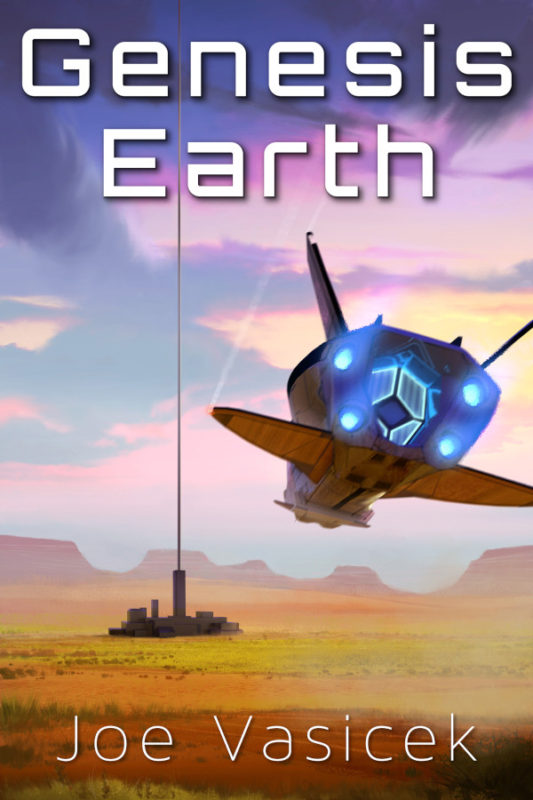
Is Genesis Earth for You?

Genesis Earth is an introspective, awe-driven, charactor-anchored YA science fiction novel. It’s not a laser-blasting space opera; rather, it’s a quiet, psychological odyssey through the cosmos, through the eyes of a lonely young explorer haunted by the memory of Earth. Through this book, readers will experience the loneliness of deep space, the mystery of first contact, and the fragile human connection between two young scientists flung far from home.

What Kind of Reader Will Love Genesis Earth?

This book is perfect for readers who:

  • Love hard SF stories of space exploration rooted in both plausible science and human emotion,
  • Enjoy classic SF from authors like Clarke and Asimov—thoughtful, concept-driven, but with relatable, human characters,
  • Appreciate slow-burn tension and stories that make them think, long after they set the book down,
  • Are fascinated by themes of first contact, isolation, coming-of-age, and the psychological cost of human exploration, and
  • Crave science fiction that feels possible, where the sense of wonder comes from realism, not fantasy.

If any of that describes you, then you should definitely give Genesis Earth a try!

What You’ll Find Inside

Genesis Earth follows a young scientist, Michael Anderson, and his mission partner Terra as they explore a dangerous anomaly on the far side of a wormhole, that could either threaten or hold the key to humanity’s future. The result is an immersive and contemplative book that starts as a psychological drama and turns into a story of discovery, both cosmic and personal: what it means to be human when Earth is a ghost and “home” is light-years away.

What Makes Genesis Earth Different

Fans of classic science fiction will recognize the trope of the lonely astronaut or scientist setting out to explore the unknown, but where most protagonists in classic hard SF are seasoned professionals, the explorers in Genesis Earth are barely adults, raised in isolation on board a space colony, and psychologically unprepared for what awaits them. The story explores beyond the question “can humanity survive?” and asks “what happens to the human soul when it’s untethered from home?”

Distinctive features include:

  • Psychological depth: The fraught relationship between Michael and Terra gives the story an undercurrent of tension and unease that’s rare in classic hard SF.
  • Tone: Quiet, human, and melancholic—more existential wonder than space adventure.
  • Perspective: Told through a deeply personal first-person lens, with an almost diary-like immediacy.
  • Balance: Seamlessly blends scientific authenticity (cryonics, wormholes, planetary science) with literary emotion.

What You Won’t Find

This book is not for readers seeking:

  • Fast-paced, action-heavy sci-fi with constant battles, explosions, or villains.
  • Romantasy or sexually explicit romance plots — while there is emotional tension, it’s subtle and cerebral, not sensual or melodramatic.
  • Soft or mythic sci-fi full of alien empires or space wizards — the story stays grounded in realism.
  • Hard nihilism or grimdark — while introspective and serious, the book is ultimately hopeful, not bleak or cynical.
  • Readers who dislike slow builds or introspective narration.

If you’re looking for Star Wars, this isn’t it. If you’re looking for Arthur C. Clarke’s emotional heir, you’ve found it.

Why I Think You Might Love Genesis Earth

I wrote Genesis Earth when I was a lonely, single young college student trying to find my place in the world. That personal struggle in my own life definitely affected the conflict and themes of the book. I read a lot of classic SF in this time, including books by Arthur C. Clarke, Isaac Asimov, Ursula K. Le Guin, Robert Charles Wilson, and Orson Scott Card, and I wanted to create something that was just as awe-inspiring and thought-provoking as the great books by those classic authors.

If you’re looking for a book that sticks with you long after you’ve read it, and helps you to find your own place in the world, you should definitely give Genesis Earth a try!

Where to Get Genesis Earth

Related Posts and Pages

Explore the series index for the Genesis Earth Trilogy.

Visit the book page for Genesis Earth for more details.
Discover the meaning of home in Genesis Earth.

See all of my books in series order.

Fantasy from A to Z: E is for Epic

What is the ideal length of a fantasy novel? Of a fantasy series?

Fantasy, as a genre, is known for being big. Big stakes, big emotions, big battles—and big books. It isn’t unusual for a single fantasy novel to run well over 200,000 words. Authors like Brandon Sanderson regularly turn in doorstoppers, with Words of Radiance clocking in at over 400,000 words, longer than the entire Lord of the Rings trilogy combined. And of course, there’s J.R.R. Tolkien himself, whose influence looms large over the genre. The Lord of the Rings helped establish the idea that a fantasy story needs room to breathe—and to expand.

Series length is no different. Some of the most beloved and influential fantasy series are also some of the longest. Steven Erikson’s Malazan Book of the Fallen spans ten main volumes and several more side novels. Robert Jordan’s Wheel of Time ran for fourteen massive books (fifteen, if you count the prequel). These stories require commitment, but for many readers, that’s part of the appeal. Once they find a world they love, they want to spend as much time there as possible.

But not all fantasy needs to be long.

Robert E. Howard, one of the foundational voices in the genre, wrote mostly short stories. His Conan tales, often published in pulp magazines like Weird Tales, rarely ran longer than a few thousand words. Yet they endure. David G. Hartwell, in “The Making of the American Fantasy Genre,” points out that Howard and Tolkien were arguably the two most successful fantasy authors of the twentieth century. Before The Lord of the Rings took off in the 1970s, most fantasy readers thought of the short story as the natural format for the genre. That pulp tradition carried strong into the mid-century, where fantasy shared shelf space with science fiction in magazines and anthologies.

That clearly isn’t the case anymore. In today’s market, a 90,000-word fantasy novel is often considered short. Readers are more than happy to put up with a bit of filler or extra padding if it means they get to linger in the world a little longer. And to be fair, there is something immersive about a book that takes its time. When done well, it can feel less like reading a story and more like living inside another world.

That said, I still believe in the value of economy of words. Economy of words doesn’t mean writing short—it means writing lean. It means using only as many words as the story needs. Louis L’Amour is a great example of this. His prose is tight, clear, and evocative. Most of his novels are quick reads, but they pack a punch. He could sketch a character in half a page and make you care about them. That’s not to say all of his books were short—The Walking Drum is a long and sprawling novel—but even there, his style is efficient. Every scene does something. Every word earns its place.

So why does epic fantasy run so long? Does it always have to be padded with extra filler? Not when it’s done well. One of the defining features of epic fantasy is that the world itself becomes a character. Tolkien mastered this. Middle-earth isn’t just a setting; it has a history, a culture, and an arc. The long travelogues, the deep lore, the songs and genealogies—they help build a sense of depth that makes the final conflict in The Return of the King resonate on a mythic level. You’re not just watching Frodo destroy a ring; you’re watching the curtain fall on an entire age.

And when the world has that kind of weight—when it grows, transforms, and carries the burden of history—it’s no surprise that a single book often isn’t enough. That’s one of the reasons epic fantasy so often stretches into multi-volume series. If the world is a character, it needs space for its own arc to unfold. A hero might only need three acts to complete their journey, but a world? That can take a bit longer.

Still, there’s more than one way to structure a series. Take Louis L’Amour again. He wrote mostly short standalone novels, but many of them followed the same families—like the Sacketts or the Chantrys—so that readers who wanted more could get it. You didn’t have to read them in order. You could pick up whichever one you found first and still get a complete story. That’s a far cry from most modern fantasy series, where the series itself is a single, complete work that must be read in order. After all, try starting The Wheel of Time at book five or A Song of Ice and Fire at book three, and you’ll be utterly lost.

My copy of The Lord of the Rings is a single-volume edition, the way Tolkien originally intended it. The main reason it was split into multiple books was to save on printing costs (Tolkien himself split the book into six parts, but the publisher turned it into a trilogy). Frankly, I think it works better that way. When a series beings to sprawl, the middle books often sag, and readers can definitely feel that. Just look at Crossroads of Twilight (Book 10 of The Wheel of Time) and how much the fans hate that book. I also remember when A Dance with Dragons first came out, with a 2.9-star average on Amazon that held for several years. (That rating has since improved, but I suspect that a large part of it is due to review farming by the publisher.)

Another risk inherent in writing a long, sprawling series is that the author will never finish it. George R.R. Martin is the most infamous example here—fans have been waiting for The Winds of Winter for over a decade, with no firm release date in sight. Patrick Rothfuss has faced similar criticism, with readers growing increasingly frustrated over the long delay between The Wise Man’s Fear and the long-promised third book in the Kingkiller Chronicle. And Orson Scott Card has yet to finish his Alvin Maker series. Seventh Son was published when I was just four years old, and though I enjoyed the first two books in that series, I refuse to read the rest of it until Card finishes the damned series.

I’m not alone. Many readers, burned one too many times, now refuse to even begin a new fantasy series until it’s complete. I can’t blame readers for feeling this way, but it does create a real challenge for new and midlist authors trying to break into the genre. Without the benefit of an established readership, it’s hard to convince readers to invest in book one of a planned trilogy or longer series. And if readers don’t start the first book, the rest may never see publication.

Right now, I’m writing an epic fantasy series based loosely on the life of King David. According to my outline, it’s a seven book series, but I’ve decided instead to split it into two trilogies (each with a complete arc) and a bridge novel (kind of like what Frank Herbert intended for the Dune books, though he died before he could finish the final book of the second trilogy). My plan is to wait until the first trilogy is totally written, publish the first three books within a month of each other, and promote that trilogy while I write the bridge novel and sequel trilogy.

In the meantime, I’ve been having a blast writing short fantasy novels in the Sea Mage Cycle, in-between drafts of my larger books. With The Sea Mage Cycle, I’m following a series structure that’s much closer to what Louis L’Amour did with his Chantry and Sackett books. Each book is a standalone, and the books can be read in any order, but they all tie together with recurring characters/families. As with all epic fantasy, the world itself is something of a character, but each book is more like a single thread in the tapestry of that wider story.

Not every epic needs to be long. Not every story benefits from being part of a massive, sprawling series. But when done well—when every word pulls its weight, when the world itself becomes a living character, when the structure supports the arc instead of smothering it—epic fantasy becomes something truly special.

It becomes epic, in every sense of the word.

How I Would Vote Now: 1990 Hugo Awards (Best Novel)

The Nominees

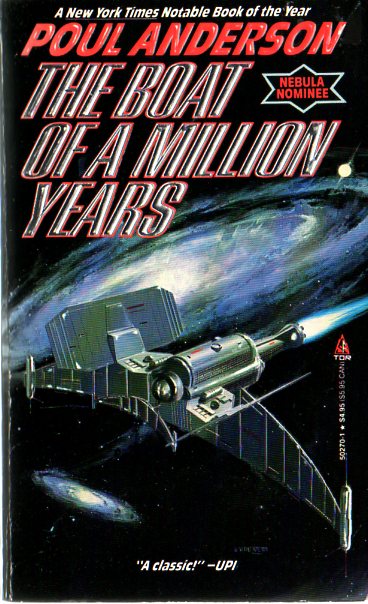
The Boat of a Million Years by Poul Anderson

Prentice Alvin by Orson Scott Card

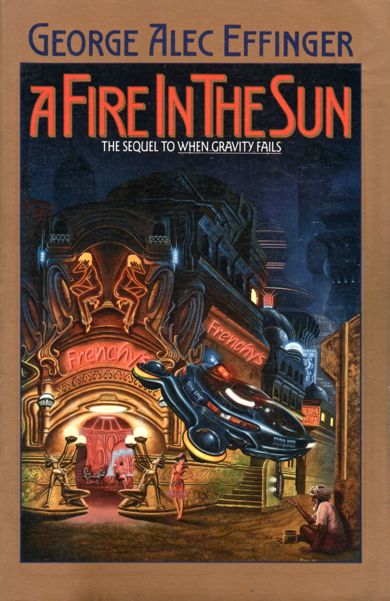
A Fire in the Sun by George Alec Effinger

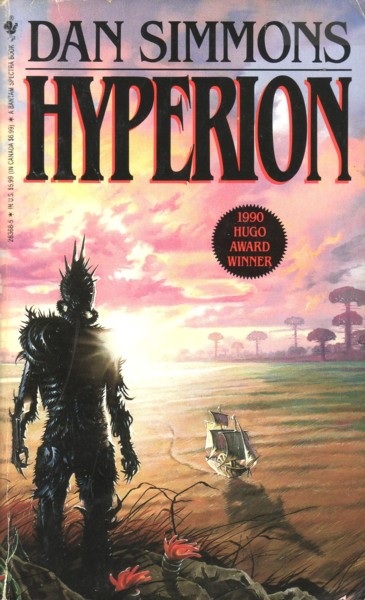
Hyperion by Dan Simmons

Grass by Sheri S. Tepper

The Actual Results

  1. Hyperion by Dan Simmons
  2. A Fire in the Sun by George Alec Effinger
  3. Prentice Alvin by Orson Scott Card
  4. The Boat of a Million Years by Poul Anderson
  5. Grass by Sheri S. Tepper

How I Would Vote Now

  1. Hyperion by Dan Simmons
  2. No Award
  3. Prentice Alvin by Orson Scott Card
  4. The Boat of a Million Years by Poul Anderson

Explanation

Hyperion is, in my opinion, the best novel to ever win a Hugo Award. Absolute top S tier, no question. IMHO, the top three Hugo award-winning novels are Hyperion by Dan Simmons, Ender’s Game by Orson Scott Card, and Dune by Frank Herbert, in that order. Dune is probably the most perfect science fiction novel ever written, but Hyperion and Ender’s Game surpass it because even though they have some minor flaws, there was something about them that I connected with on a deep emotional and intellectual level, more than almost any other book.

For Hyperion, that was the story about the father whose daughter is chosen by the Shrike to age backwards, so that with each new day, she gets younger, losing a day’s worth of memories and becoming progressively dependent on her parents. That part of the book just absolutely wrecked me. After weeping profusely for about an hour, I went onto Amazon and bought all the other books in the series, because I absolutely had to know what happened to this guy. Just incredible. Very few books have made me feel anything so deeply and profoundly as that.

As for the other books on this year’s ballot, I wasn’t too impressed with them. But two of them I’d be willing to vote affirmatively for, though I’d still rank them below No Award. I enjoyed the first two books of Orson Scott Card’s Alvin Maker series, and would probably enjoy the third book, but I refuse to read it until he finishes the damned series. Seriously—I was four years old when the first book was published, and he still hasn’t finished the damned series! What the heck?

Poul Anderson writes the kind of sprawling galactic space opera that is right up my wheelhouse, but for some odd reason, I have never been able to finish anything he’s written. I’m not sure why. Either he spends way too much time exploring or describing some aspect of his world that utterly does not interest me, or he glosses over the parts that are crucial to understand in order to make sense, and for whatever reason I just can’t make sense of them. Also, his characters are all very forgettable. I tried The Boat of a Million Years, and found it to be less bad than his earlier books, but I still couldn’t follow it. So I’ve come to the conclusion that Poul Anderson is just one of those authors I’m going to have to skip.

The last two books I rejected after my AI assistant Orion screened them for me. According to the AI, both of them have lots of explicit content (sex, language, violence) and woke themes.

Here is what Orion said about A Fire in the Sun:

🔞 Explicit Content

  • Violence & Body Horror
    • Graphic and brutal: victims sometimes brutally gutted, including dismembered prostitutes and child victims .
    • Prison-style brutality and organized crime violence permeate the story.
  • Language
    • Widespread use of profanity—especially the F-word—fits the harsh, noirish setting .
  • Sexual Content
    • Includes depictions of prostitution and sexual violence; explicit sexual content is not graphic, but the tone is decidedly adult and uncompromising .
    • Body modifications include gender-swapping and personality modules, adding mature and cyberpunk themes.

Social Themes & “Woke” Elements

  • Identity & Selfhood
    • Use of “moddies” and “daddies” to modify gender, mood, or skills raises themes around engineered identity and societal roles.

Sorry (not sorry), but I am not going to read a book that has explicit violence against children and characters who change gender. Either one of those things is enough to make me DNF, but combined together with all of the other explicit sex and language makes me never want to touch this book, or this author.

And here is what Orion said about Grass:

“Woke” Elements: Tepper’s work often explores feminist themes, and Grass is no exception. The novel critiques patriarchy, religious dogmatism, and humanity’s environmental exploitation. These themes align with progressive ideals and are deeply woven into the narrative. Tepper’s exploration of gender roles and societal hierarchies may be considered overt, depending on the reader’s perspective.

“Patriarchy,” “feminism,” “environmental explotation,” “religious dogmatism,” “gender goles,” “social heirarchies…” hey, I just got a bingo! So yeah, I’m not gonna read that one—or at least, you’re gonna have to make a really solid case in order to change my mind.

How I Would Vote Now: 1992 Hugo Awards (Best Novel)

The Nominees

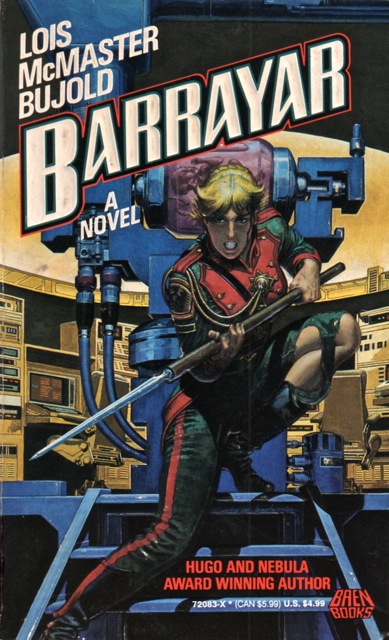
Barrayar by Lois McMaster Bujold

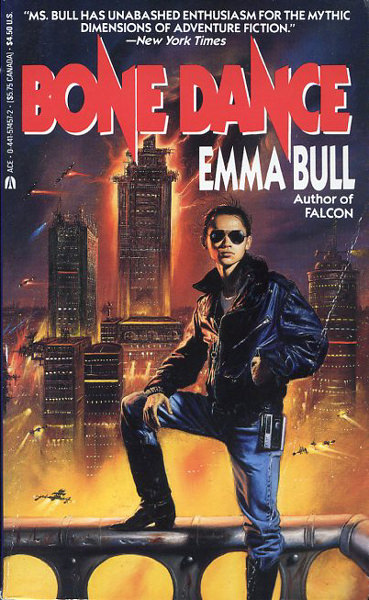
Bone Dance by Emma Bull

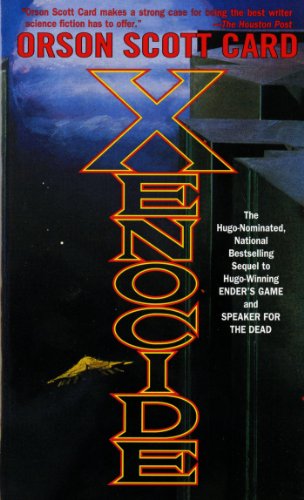
Xenocide by Orson Scott Card

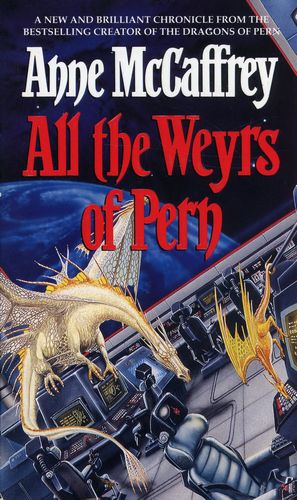
All the Weyrs of Pern by Anne McCaffrey

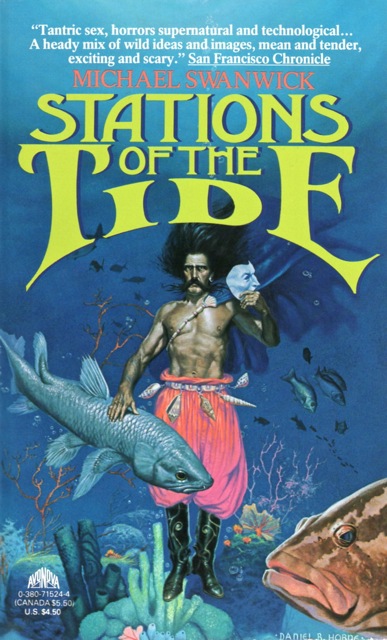
Stations of the Tide by Michael Swanwick

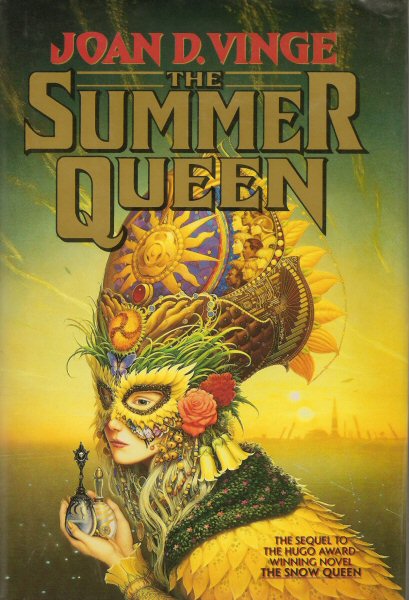
The Summer Queen by Joan D. Vinge

The Actual Results

  1. Barrayar by Lois McMaster Bujold
  2. Bone Dance by Emma Bull
  3. All the Weyrs of Pern by Anne McCaffrey
  4. The Summer Queen by Joan D. Vinge
  5. Xenocide by Orson Scott Card
  6. Stations of the Tide by Michael Swanwick

How I Would Have Voted

  1. Xenocide by Orson Scott Card
  2. Barrayar by Lois McMaster Bujold

Explanation

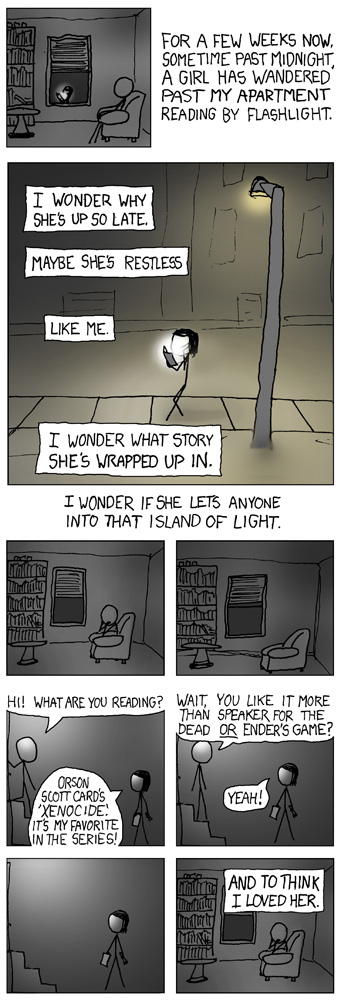
I have a confession to make. That girl from the XKCD comic who loves Xenocide more than the first two books in the Ender’s Game series? …yeah, that’s totally me. Ender’s Game is a science fiction classic, and one of the best books to ever win a Hugo Award (second only to Dan Simmon’s Hyperion, in my opinion), and Speaker for the Dead is a worthy sequel that is superior in many ways to the first book. But Xenocide totally blew me away when I read it back in college. The superintelligent AI Jane, who lives in the ansible connections between planets, is one of my favorite sci fi characters of all time. Also, the concept of the philotic web is one of the most fascinating and exciting sci fi elements I’ve ever wrapped my head around. I also thought it was really fascinating how the post-Earth humans have developed a heirarchy of alienation, and how that influences the ethical decision of whether to make peace or make war with the aliens they encounter.

In short, there was lots of really high concept stuff in Xenocide that blew my mind in just the right way. Also, the story had me hooked from the first page, and the characters are some of the best I’ve ever read. Orson Scott Card has a lot of strengths, but his greatest strength is in writing characters, and he was definitely on his A game with this book. So yeah, go ahead and slam the door in my face—Xenocide is my favorite book in the Ender’s Game series.

Barrayar is classic Bujold, and one of the best books in her Vorkosigan saga. Even though it doesn’t feature Miles directly, Cordelia is such a badass that she more than makes up for his not-quite absence (after all, she is pregnant with Miles while all the action goes down). The political intrigue is everything you’d expect from a good Vorkosigan book, and there’s no shortage of action or things blowing up. But the thing that makes it most satisfying is how everything ties into the later books—in fact, I would go so far as to say that Barrayar is the best place to start with the Vorkosigan Saga, followed by The Warrior’s Apprentice, and then maybe Shards of Honor just to get a little more background before going on with the rest of the series. I definitely wish I’d started with Barrayar. And if you can, listen to the audiobooks, because Grover Gardner’s narration of them is quite excellent.

So those were the books from this year’s ballot that I enjoyed. As for the others, I DNFed them all, though I didn’t even pick up The Summer Queen because I had already DNFed the first book in the series, for reasons that I’ve since forgotten. I’ll try to refresh my memory when I cover The Snow Queen in How I Would Vote Now: 1981 Hugo Awards (Best Novel). Maybe it’s one I should try to pick up again.

I also didn’t pick up All the Weyrs of Pern, because I DNFed that series with the second book. I read the first Dragonriders of Pern book way back in college, and thought it was okay, but it didn’t really hook me enough to read the rest of the series. Last year, I tried to pick up the second book, and was totally blown away by how overpowered the dragons are. Seriously—they can teleport anywhere instantaneously through space and time? How can anything possibly threaten them? Then the book started turning into a soap opera between the dragonriders, and I mentally checked out.

(As a side note, I would say that the Dragonriders of Pern books are the kind of grim-bright books that tend to do well in a second turning, and not a fourth turning. Even though the characters are literally saving the world as part of their job description, they’re so OP that the world is never really in any danger of falling, so the books are a lot more slice-of-life and cozy escapist fantasies. Check out my blog post on the generational cycles of fantasy and science fiction for a more in-depth discussion of this sort of thing.)

Stations of the Tide never really hooked me, and had some weird sexual content that turned me off pretty fast, if I remember correctly. Overall, it felt like the sort of book that was written primarily for the author, and not for any actual reader—kind of like how a movie studio will sometimes let a director make a pet project that no one but the director really likes, just so they can get them to make the blockbusters that everyone goes to see.

As for Bone Dance, it seemed like an interesting post-apocalyptic novel, but the main character was so androgenous that I just had no desire to read past the second chapter. I know this wasn’t typical of books written in the 90s, but these days it’s become so trite to write women who think, act, and look like men that I really have no desire to read that sort of thing. I’d much rather read about manly men and womanly women. Also, I don’t really want to read about lesbians in Minnesota. There’s a reason why Minnesota is now the California of the midwest.

How I Would Vote Now: 1989 Hugo Awards (Best Novel)

The Nominees

Falling Free by Lois McMaster Bujold

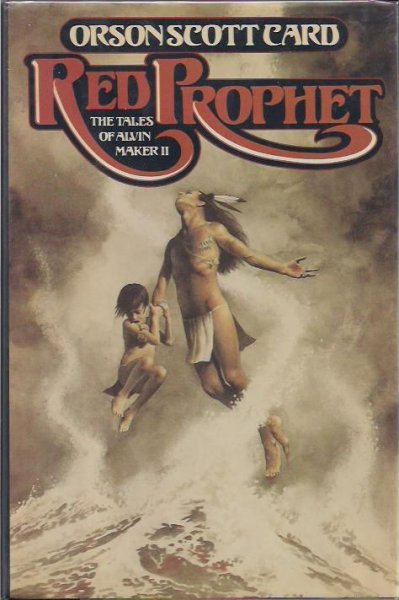
Red Prophet by Orson Scott Card

Cyteen by C.J. Cherryh

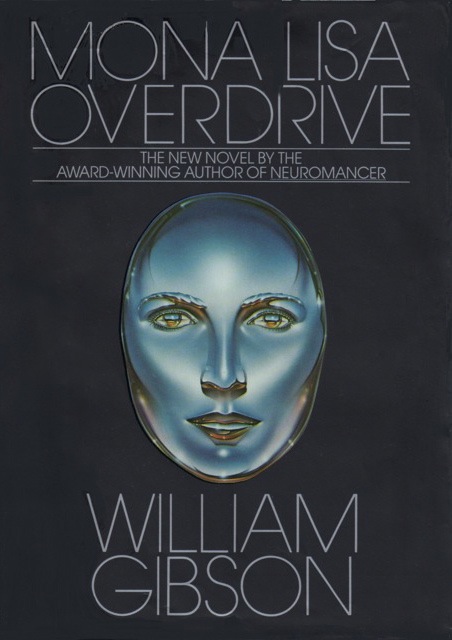
Mona Lisa Overdrive by William Gibson

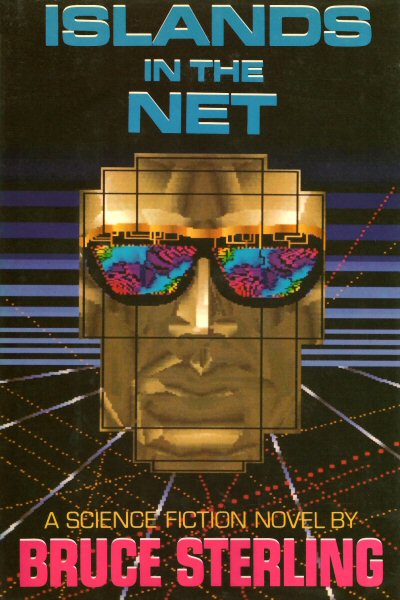
Islands in the Net by Bruce Sterling

The Actual Results

  1. Cyteen by C.J. Cherryh
  2. Red Prophet by Orson Scott Card
  3. Falling Free by Lois McMaster Bujold
  4. Islands in the Net by Bruce Sterling
  5. Mona Lisa Overdrive by William Gibson

How I Would Have Voted

(Abstain)

Explanation

Another year where the books were fine, but not to my personal liking (or else they were, but… we’ll get to that). I found no reason why I should give “no award” a vote over any of these books, but I DNFed most of them, though I could be persuaded to try some of them again. But overall, there was nothing in this year’s ballot that really blew me away (except… we’ll get to that shortly).

First, I didn’t read Mona Lisa Overdrive because it was the third book in a trilogy, and I DNFed the series with the second book. The first book, Neuromancer, I read back in college, and while I enjoyed it at the time, even back then I felt that it was right on the edge of being too explicit. Today, I would certainly find it too explicit—in fact, that’s why I DNFed the second book. These days, I just really don’t want to read a book with lots of sex, drugs, and pointless violence. Just not interested in any of that.

Islands in the Net is another gritty cyberpunk novel, but I actually didn’t find it too explicit at all. Perhaps that’s because the two main characters were married and had a family. In fact, compared to Neuromancer, or even The Matrix, it didn’t feel all that gritty at all to me. But reading it in the 2020s, all of the future predictions just made me laugh, especially the idea that internet piracy would allow the quasi-failed states of South and Latin America to get super, super rich, by hacking into the banking networks and siphoning off everyone’s money. Also, while I can understand (and even, to a degree, agree with) the idea that corporations would exercise more power over people’s lives than their own governments, I don’t think Sterling portrayed it in a realistic way. He should have studied East Asian history and society, particularly the Yakuza, to see what that would really look like.

Ultimately, though, the story just slowed down so much that I decided to skip to the end, and I’m glad I did, because the married couple broke up for the stupidest reason in the world, and the big bad turned out to be a bunch of terrorists stealing a nuclear submarine and threatening to launch their nukes and end the world… which is honestly such a boomer trope that it made me role my eyes. Don’t get me wrong—I’m very sanguine about the threat of nuclear war, especially with what’s going on in Ukraine right now (hopefully things haven’t gone nuclear by the time this post goes live), but it’s a uniquely boomer trope to think that history will end when the first nuke of the war goes off, and that all stories have to have clear good guys and bad guys (or at least clear bad guys) and that the whole story can be reduced to “stop that nuke!”

Anyways, I don’t know if that mini-rant makes any sense, but the point is that Islands in the Net didn’t impress me. It wasn’t terrible, but it didn’t hold my interest or blow me away.

I DNFed Cyteen because I got bored around the second or third chapter, though I probably could be persuaded to try it again. I’ve enjoyed many of Cherryh’s other Alliance-Union books, especially Merchanter’s Luck and Voyager in Night, but it’s been years since I read any of them. Just couldn’t get into this one.

Of all the books from this year, Falling Free is the one that I should probably try again. I forget why I DNFed it, which probably means that I just lost interest, or didn’t connect with any of the characters. Also, this was around the time that I was becoming disillusioned with Lois McMaster Bujold, after my wife DNFed Gentleman Jole and the Red Queen and told me all about that one. I used to really love all of Bujold’s novels, and still do enjoy the early Vorkosigan books. But this one, while technically in the same universe, isn’t really a Vorkosigan novel, which is probably a big reason why I just lost interest. But I could be persuaded to try it again.

Which brings us to Red Prophet by Orson Scott Card…

I thoroughly enjoyed this book. It’s definitely a worthy sequel to Seventh Son, and while it had some minor issues, especially toward the end, it definitely ranks up there with Card’s best.

However… this is book two of a seven book series, where the first book came out in 1987, nearly forty years ago… and the seventh book hasn’t even been written yet! In fact, it’s been twenty-one years since book six came out—in fact, more time has passed since the sixth book came out than between the publication of the first book and the publication of the sixth!

What the heck, Card? It’s bad enough that you probably won’t ever finish your Women of Genesis series—will you never finish your flagship fantasy series either? At this point, you’re worse than George R.R. Martin, since at least Martin has only dropped the ball on one fantasy series, not two.

For that reason, I refuse to read any more Alvin Maker books until the last book has finally come out. Also, if the 1989 Hugo Awards were held today and I got to vote on them, I would not vote for Red Prophet, even though it’s a fantastic book. I just can’t justify voting for an author who lets multiple decades go by without doing the damn work to finish what he’s started.

(And yes, I know I have a couple of unfinished trilogies of my own. I’m working on it. Captive of the Falconstar and Lord of the Falconstar should come out next year, and I will probably start work on The Sword Bearer and Return of the Starborn Son in just a few months. In my defense, though, I haven’t let more than a decade pass since I published the last book in any of those series.)

The state of science fiction is as bad as Australian breakdancing

It seems like most of the internet is talking about the hilariously bad breakdancing performance given by Australia at the Paris Olympics. Apparently, the “athlete” in question is actually a university professor named Rachael Gunn who specializes in breakdancing studies, or some such nonsense, and the main reasons she got the nod to compete are 1) the Australian breakdancing scene is woefully small, 2) she’s (allegedly) an LGBTQ+ woman, with all the right political opinions, and 3) her husband was on the committe that made the decision to qualify her. Taking advantage of those three factors, she’s apparently made a name for herself in Australia, even winning some local competitions—because who would dare criticize such a stunning and brave LGBTQ+ woman? So of course, she went on to compete on the international scene… and made such a mockery of herself and her sport that the judges awarded her straight zeroes, and the Olympics committee pulled breakdancing from the 2028 Los Angelos Olympics. Wah wah.

While this story is rightly hilarious, and proves the eternal truth that wokeness ruins everything, I can’t help but notice the parallels between the state of Australian breakdancing, that someone so inept and untalented could leverage a “studies” degree to dominate it, and the current state of science fiction. Specifically, this is the comment that made me think about this, which is worth reading in full:

The relevant part is this:

Rachael represents so much of what is totally lecherous about cultural studies academics. Pick a subject area that will be under-studied in your context, so you can rise through the ranks quickly (how many break dancing academics will there be in Australia?), and wreak absolute havoc in lives of the people you want to study. There is no limit to the sheer disrespect they will dole out, purely for self-advancement.

Now, I don’t think science fiction was ruined in quite the same way, ie by being dominated and colonized by academia through “studies” degrees. Science fiction was probably too large to be overtaken that way. However, the pattern is still similar, and from what I can tell, it goes something like this:

Step 1: Take over the institutions in the field that are primarily responsible for determining and evaluating excellence.

In Australia, the breakdancing field was small enough that academia was able to dominate and (for lack of a better word) colonize it, becoming the arbiters of excellence within that art. It certainly helped that the professor who had carved out this academic niche for herself was married to one of the judges in the committee that was tasked with determining excellence. This created an incestuous (and ultimately nepotistic) relationship between academia and the judging panels.

In science fiction, something similar happened with SFWA and the Hugo and Nebula awards. I’ve written before about how SFWA ruined science fiction, so I won’t repeat all that here. But the basic gist of it is this: as science fiction became more established, the organizations and publications that talked about science fiction became more authoritative on the subject of the genre than the actual writers themselves. Because of this, achieving recognition for excellence became less about creating works of actual merit, and more about gaining the approval of the people who had built their careers talking about science fiction, rather than actually creating it. And the best way to gain their approval was to join those institutions yourself, rising up in the pecking order until everyone else was beneath you.

This basically describes the career trajectories of John Scalzi and Mary Robinette Kowal, two insanely woke authors who leveraged their tenure as SFWA president for award nominations. Both of them seem to have spent at least as much time and effort talking about science fiction as they have in actually creating it: Scalzi through his blog, which he leveraged to get his first book deal, and MRK through both her blog and the Writing Excuses podcast.

Step 2: Purge those institutions until they are ideologically pure.

This step is critical. So long as the instutitions are focused on merit, the only way to climb the ranks is by creating something of merit. But once the institution has become ideologically possessed, with all of those who reject the dominant ideology being purged from positions of power, then merit no longer matters, and the way to the top becomes clear. Those who are the most ideologically pure, as demonstrated by their virtue signalling, will rise to the top. This has the added benefit of quelling all merit-based criticism, since those beneath you fear having their own ideological purity called into question.

From what I can tell, this is how Rachael Gunn rose to prominence in the Australian breakdancing scene. After all, once academia had colonized the field, who would dare question the merits of such a stunning and brave LGBTQ+ woman? In a similar manner, Scalzi and MRK rose to the top of SFWA by virtue signaling their own ideological purity and intersectional victimhood status, squelching any criticism by labeling their critics racist, sexist, bigots, homophobic, etc.

Step 3: Redefine excellence in your own image.

In the Australian breakdancing scene, this was accomplished through the combination of Rachael Gunn’s academic work and her husband’s position in the committee that qualified the Olympic competitors. And while it probably isn’t quite so blatantly nepotistic in the science fiction world, the pattern still holds true when you look at what the Hugos and Nebulas have become. This was what the Sad Puppies controversy was actually about, and because the Puppies lost, the Hugo and Nebula awards have been insufferably woke ever since:

Step 4: Use the captured institutions to purge the field of potential rivals.

The final step in this projection is to squash all of those people who represent a threat to your domination, because they have merit and you do not. Ignoring her perhaps overly generous assessment of Australian breakdancing, this is what Hannah Berrelli is talking about when she mentions all the “hundreds of Australian athletes who will have dedicated their entire lives to athletic excellence” whose blood, sweat, and tears were overshadowed and rendered irrelevant by Rachael Gunn’s Olympic stunt.

In science fiction, we see this in the fact that David Weber has never been nominated for a Hugo or a Nebula, or that Jim Butcher’s sole Hugo nomination lost to No Award. Both of these men are far better writers than the majority of award-winning authors, especially in our current era. You could make a solid argument that Dan Simmons or Orson Scott Card were superior, but Scalzi? Jemisin? Kingfisher?

And what about all of the new and relatively unknown authors? At least Weber and Butcher already have large followings, which they have rightfully earned through their merit. But when merit is no longer the determining factor in recognizing excellence within the field, what chance do talented up-and-coming authors have if they aren’t willing to play the ideological purity games? Answer: not a hell of a lot.

So while you laugh at how ridiculous Australia’s breakdancing performance was at the Olympics, understand that the same dynamic has been playing out in modern science fiction for years. And honestly, the results are no less ridiculous.

A Crippling Realization

I have come to realize something that is, in some ways, making it very difficult for me to keep writing. Not in the short or the medium term—I’m actually making quite good progress on my current novel WIP, and am optimistic about finishing my three unfinished trilogies in the next couple of years. But when I look on the horizon, this thing that I’ve come to realize is looming like a storm cloud, and I worry that if something doesn’t change, and change soon, that storm is going to wipe me out.

When Orson Scott Card spoke at the BYU Library in 2007, he made a profound statement that had a great influence on my writing, and my decision to write. He said that stories and fiction are how the culture talks to itself. In other words, if you want to understand a particular culture, look at the stories that it produces.

The problem is that unfortunately, I have come to despise almost everything about our current culture.

I hate all the hypocrisy and virtue signalling that we see online. I hate how that virtue signalling has poisoned almost every major franchise, from Star Wars and Marvel to the commercials and advertisements that we consume on a daily basis. I hate how the virtue signalling of our gatekeepers has allowed our cultural vandals to erase our history and destroy our cultural icons.

I hate how our education system has become corrupted. I hate how it has been transformed into an indoctrination system that brainwashes everyone who goes through it, producing nothing but legions of woke fanatical footsoldiers and hordes of incompetent midwits. I hate how it holds our children hostage for the benefit of the unions, and how it utterly exterminates our children’s natural creativity and curiosity in order to turn them into nothing but cogs in society’s grand machine.

Above all else, I hate and hold in utter contempt how our culture has become anti-life, and promotes the unrestricted wholesale slaughter of our unborn children as a moral good. I hate how this rejection of the value of life has trickled down into every facet of our society, poisoning how we see each other and how we treat our fellow men. I sincerely believe that our ongoing genocide of the unborn exceeds the evil of the Nazi holocaust in every moral and ethical dimension. I also hope that future generations have the moral clarity to hold us in greater contempt than the Nazis, and plan to do everything within my power to make that a reality.

I hate the sexual revolution, and how it eviscerated the traditional family while also producing the most prudish and sex-negative society that this nation has ever seen. I hate how our sexually “liberated” culture celebrates our worst perversions and teaches us to define ourselves by our basest urges, instead of urging us to strive for something higher and better. I despise the transgender movement that is butchering our children and annihilating their innocence, all for the carnal gratification of the worst sexual predators among us.

I hate how our culture rejects the things of God. I hate how that even most self-described Christians have never read the Bible cover to cover. I hate how our churches are led by moral cowards who fear to offend their followers more than they fear to offend the Almighty. I hate how many of our priests and pastors have come to serve Mammon more than they serve God.

I hate almost every book and story that has won a major literary award within my lifetime. When I survey the field of science fiction and fantasy, I see hordes of talented writers willfully prostituting themselves to the spirit of the age, and pleasuring the whore of Babylon for the praise and glory of the world. When I read the books that our culture holds up as the greatest contemporary works, I am disgusted by the sexual depravity and nihilistic materialism that pervades them. Aside from Brandon Sanderson and a few obscure authors whose works the culture is actively working to suppress, I find nothing redeemable or even genuinely thought-provoking in any of these contemptible works.

Most of my readers are over the age of 55, probably because of just how much I hold our contemporary culture in such contempt. And yet, I cannot help but despise the Boomers for robbing me of my birthright and leaving me buried in a mountain of debts that neither I, nor my children, nor my grandchildren will ever be able to repay. Every generation before the Baby Boomers aspired to give their children lives that were better than their own, but the Boomers squandered everything that the previous generations gave them, and left their children sicker, poorer, and more unloved. In fact, the Boomers cared so little for their children that they locked down the entire country, deprived them of the crucial years of their education, and forcefully injected them with an experimental jab, all out of fear that the virus would shave off a few of their rapidly waning years. The Boomers are the ones who gave us our totally dysfunctional education system, Roe v. Wade, the sexual revolution, and the genocide of the unborn. They are the ones who pushed God and religion out of public life, and corrupted our churches to the point where they would not recognize the Lord if He came down and preached a sermon to them Himself. If our country falls into a second civil war, it will be because of the Boomers more than any other generation.

And now we hear of wars and rumors of war in the east, and people tell me that we are closer to nuclear annihilation than at any other point in my lifetime. And yet, when I look at how corrupt and utterly depraved our society has become, I cannot help but wonder if that would be such a bad thing. We read that the sword of the wrath of the Almighty is bathed in heaven, and that the angels are pleading with the Lord to let it fall, so that it will purge our iniquity from the face of this Earth. Sometimes, I find myself raising my voice with the same plea.

I recognize that “the culture” is not monolithic, and that there are many people who hold similar opinions and think and feel the same way that I do. And I hope you don’t take the wrong idea from this rant: I’m not about to throw my life away, or do something terrible. I have a loving wife and family, and friends in my life who are genuinely good people. It’s funny how that even as things seem to get worse and worse as far as the country is concerned, the people immediately around me don’t seem nearly as bad, and my own personal life actually seems to be getting better.

But as a writer, it’s my duty and responsibility to be a part of the wider cultural conversation, in order to write stories that resonate properly with my readers. To do that, I need to keep my finger on the pulse of a culture that I have come to hold in utter contempt.

How long can this situation stand? Either the culture needs to change, or I need to change something about what I’m doing, which means that I should probably change myself. Should I change my view of the culture, or should I channel that contempt into my writing somehow?

One of the reasons I started writing the Zedekiah Wight stories under my J.M. Wight pen name is to help maintain my sanity in the face of this dilemma. I just finished writing a short story where Zedekiah basically instigates the nuclear annihilation of the galaxy, because of the reasons I outlined above. I was planning to release that story in April, but I may move it up a couple of months. Zedekiah Wight is the character who fascinates me the most right now, even though almost half of my writing group despises him. Is he a madman, or is he the last sane man in a galaxy that has gone absolutely insane? I honestly do not know.

And what about me? Is my utter contempt of the culture a sign that I’ve gone crazy, or that the world has gone crazy all around me? And what does that mean for my writing?

Reading Resolution Update: Before 2022

My 2022 Reading Resolution: Read or DNF every novel that has won a Hugo or a Nebula award, and acquire all the good ones.

I was going to keep track of my reading resolution this year by mentioning each book and what I liked or didn’t like about it, why I DNFed it if I did, etc… and then I thought about it a little more and realized that that’s a terrible idea. Perhaps if I weren’t an author myself, I could risk bringing down the wrath of the internet by broadcasting everything that I really think about these books, but that’s still a really stupid thing to do—not to mention, a great way to burn a bunch of bridges that, as a writer, I really shouldn’t burn.

Instead, I’m going to post a monthly update where I list all of the books that I read and want to acquire, all the books that I read and probably won’t acquire, and all of the books that I DNFed, without any book-specific commentary. I do think that having some public accountability will help me to keep this resolution, and I do intend to keep it. But because I anticipate DNFing a lot of books that have very, um, merciless fans, this seems like a better way to do it.

So here is how things stood on the morning of January 1st, 2022:

Books that I read and want to / have already acquired:

  • Double Star by Robert A. Heinlein (1956 Hugo)
  • Starship Troopers by Robert A. Heinlein (1960 Hugo)
  • A Canticle for Leibowitz by Walter M. Miller Jr. (1961 Hugo)
  • The Man in the High Castle by Phillip K. Dick (1963 Hugo)
  • Dune by Frank Herbert (1966 Hugo and Nebula)
  • The Left Hand of Darkness by Ursula K. Le Guin (1970 Hugo and Nebula)
  • The Dispossessed by Ursula K. Le Guin (1975 Hugo and Nebula)
  • Downbelow Station by C.J. Cherryh (1982 Hugo)
  • Neuromancer by William Gibson (1985 Hugo and Nebula)
  • Ender’s Game by Orson Scott Card (1986 Hugo and Nebula)
  • Speaker for the Dead by Orson Scott Card (1987 Hugo and Nebula)
  • Barrayar by Lois McMaster Bujold (1992 Hugo)
  • Mirror Dance by Lois McMaster Bujold (1995 Hugo)
  • The Mule (included in Foundation and Empire) by Isaac Asimov (1946 Retro Hugo, awarded in 1996)
  • Harry Potter and the Goblet of Fire by J.K. Rowling (2001 Hugo)
  • Farmer in the Sky by Robert A. Heinlein (1951 Retro Hugo, awarded in 2001)
  • Fahrenheit 451 by Ray Bradbury (1954 Retro Hugo, awarded in 2004)
  • Spin by Robert Charles Wilson (2006 Hugo)
  • The Sword in the Stone by T.H. White (1939 Retro Hugo, awarded in 2014)
  • Network Effect by Martha Wells (2021 Hugo and Nebula)

Books that I read and don’t plan to acquire:

  • The Demolished Man by Alfred Bester (1952 Hugo)
  • The Forever War by Joe Haldeman (1975 Hugo and Nebula)
  • Gateway by Frederik Pohl (1977 Hugo and Nebula)
  • Red Mars by Kim Stanley Robinson (1993 Nebula)
  • American Gods by Neil Gaiman (2001 Hugo)

Books that I did not finish:

  • The Moon is a Harsh Mistress by Robert A. Heinlein (1966 Hugo)
  • Flowers for Algernon by Daniel Keyes (1966 Nebula)
  • Lord of Light by Roger Zelazny (1967 Hugo)
  • Ringworld by Larry Niven (1970 Hugo and Nebula)
  • Rendezvous with Rama by Arthur C. Clarke (1973 Hugo and Nebula)
  • Green Mars by Kim Stanley Robinson (1993 Hugo)
  • Blue Mars by Kim Stanley Robinson (1996 Hugo)
  • Forever Peace by Joe Haldeman (1997 Hugo, 1998 Nebula)
  • The Fifth Season by N.K. Jemisin (2015 Hugo)
  • The Obelisk Gate by N.K. Jemisin (2016 Hugo)
  • The Stone Sky by N.K. Jemisin (2017 Hugo and Nebula)

#GiveThanks Day Three

(30) My wife posted today that she’s grateful for Tillamook Mudslide ice cream. So am I!

(31) I’m grateful for the original Star Wars series for cultivating within me a deep and lifelong love for science fiction.

(32) I’m grateful for Michael Ende and his magnificent book The Neverending Story, which remains my favorite novel of all time, and showed me as a child just how powerful and moving a book can be.

(33) I’m grateful for Madeline L’Engle and A Wrinkle in Time for helping me to realize that one day, I would be a writer.

(34) I’m grateful for Ursula K. Le Guin and her masterful book The Dispossessed for showing me how the written word can make you feel you understand a fictional character from a completely alien culture better than you understand yourself.

(35) I’m grateful for Orson Scott Card and Ender’s Game for keeping me up until 4am and giving me one of the most incredible reading experiences of my life.

(36) I’m grateful for David Gemmell and his Drenai Series for moving me to tears with the inspiring heroism of his characters.

(37) I’m grateful for my childhood teachers who encouraged me to read and instilled in me a love of reading.

(38) I’m grateful for Terry Pratchett and his wonderfully entertaining Discworld books, which definitely helped me to become a funnier person.

(39) I’m grateful for Paperback Swap, which has been a wonderful tool for swapping books and building my personal library.

(40) I’m grateful for all of the wonderful books I have yet to discover.

(41) I’m grateful for Goodreads for helping me to organize and keep track of the books that I read, and to set reading goals.

(42) I’m grateful for the ability that I have to blog about my writing and my reading, something that didn’t really exist until just a couple of decades ago.

(43) I’m grateful for NaNoWriMo and the encouragement that it gives all of us to write things we didn’t think that we could.

(44) I’m grateful for Brandon Sanderson, his wonderful books, the positive influence that he is on the fantasy genre, and for the class he taught at BYU that both I and my wife were privileged to be able to take (though we didn’t know each other at the time).

2020-02-20 Newsletter Author’s Note: Thoughts on the History and Future of Science Fiction (Part 1)

This author’s note originally appeared in the February 20th edition of my newsletter. To sign up for my author newsletter, click here.

One of the projects I hope to get to someday is to make a podcast on the history of science fiction. I’m a huge fan of podcasts, and subscribe to almost 100 of them, and some of my favorites are history podcasts like Hardcore History, History of Rome, Revolutions, The Cold War: What We Saw, etc. At this point in my life, I don’t think it’s the right time to get into podcasting, but at some point in the next few years I’d really like to try my hand at it.

I have thought a lot about what this History of Science Fiction podcast would look like, though, and it’s led to some interesting thoughts about the future direction of the genre. Let me explain.

Modern science fiction began with Mary Shelley’s Frankenstein, which laid the groundwork for just about everything else. Authors like Jules Verne and H.G. Wells picked up the torch, launching “scientific romance” as its own literary genre. Many of the conventions and tropes of science fiction were set during this era, which lasted from the 1820s through the early 1900s.

The next major era of science fiction was the era of the pulps, which experienced its heyday in the 1920s and 30s. The publishing innovations that had made the penny dreadfuls possible only a generation earlier now led to a proliferation of novels and short story magazines, opening up all sorts of opportunities for new writers.

This was the era of bug-eyed aliens and scantily-clothed damsels in distress, as frequently displayed in the cover art. Science fiction, mystery, western, adventure, and true crime stories were all mashed up together. Major names from this era include Edgar Rice Burroughs and Hugo Gernsback, who coined the term “scientifiction” to distinguish the stories that would later be called under the name “science fiction.”

The pulps laid the groundwork for the golden age, which lasted through the 40s and 50s. It was greatly influenced by John Campbell’s tenure as editor of Astounding Science Fiction, and the authors that he mentored. This was when science fiction really came into its own. Major authors from this era include Isaac Asimov, Robert A. Heinlein, Arthur C. Clarke, George Orwell, and Ray Bradbury.

The next major era was the New Wave, when authors like Ursula K. Le Guin, Michael Moorcock, Frank Herbert, and Phillip K. Dick broke out of the conventions established by Campbell and other golden age figures, experimenting with new styles and creating new tropes. This was when we began to distinguish between “hard” science fiction that revolved around the hard sciences like physics and math, and “soft” science fiction that revolved instead around things like political science and social studies. The political radicalism of the 60s and 70s also influenced the science fiction of this era.

At this point, most histories of science fiction point to an era called “cyberpunk” or “the digital age,” which emerged in the 80s and defines the period that we’re currently living through. However, I don’t think this is correct. Instead, I think that literary science fiction went through a dark age from the mid-80s to the late 00s, and only recently began to emerge from it. Let me explain.

In film, TV, and video games, the 80s and 90s were a golden age. For books, however, it was exactly the opposite. The rise of the big box stores like Borders and Barnes & Noble drove independent booksellers out of business, which caused many local distribution companies to collapse. This, in turn, led to a period of mergers and consolidation within the publishing industry, giving rise to the “big six”: Hachette, HarperCollins, Macmillan, Penguin, Random House, and Simon & Schuster.

At the same time, the rise of the internet led to a massive and precipitous decline across newspapers and periodicals, including traditional short story magazines such as Analog and Asimov’s. Most of the science fiction magazines folded, unable to adapt their business models to the changing world. This would later change as podcasting and crowdfunding, but before those innovations would later revolutionize the industry, many considered short stories to be dead.

The effect of all of this was that literary science fiction entered a period of managed (and sometimes catastrophic) decline. As the publishing houses merged and consolidated, their offices all moved to New York City in order to pool talent and resources into one geographic center. However, this also led to problems like groupthink as publishing fell in an echo chamber.

Science fiction began to balkanize. The proliferation of cyberpunk, steampunk, deiselpunk, biopunk, and all the other _____punk subgenres is emblematic of this. Furthermore, as all of the major editors became caught up in the echo chambers of progressive, blue-state politics, they increasingly overlooked red state authors from “flyover country.” Baen, whose offices are in North Carolina, has never suffered from this, but Tor and the other New York publishers really have.

I think Orson Scott Card really bookends this period. In the 80s, he was the first author to win the Hugo and the Nebula in the same year. In the 00s, he was all but excommunicated from the canon for his allegedly homophobic views. Science fiction had transformed from the big tent genre of the 50s, 60s, and 70s to something so balkanized, elitist, and radical that “wrongthink” had unironically become a crime in the very genre that had invented the term.

And then indie publishing happened.

This author’s note is getting long, and there are other things (including writing) that I have to do today, so I’ll have to end on that note. I’ll follow up in my next newsletter with my thoughts on current trends in the science fiction genre, and where we’re heading from here. I think the 20s will see some massive creative destruction, but ultimately I’m hopeful that the best is yet to come. The dark age is over, and there’s never been a better time to be a reader—or a writer!