How I would vote now: 2015 Hugo Award (Best Novel)

The Nominees

The Goblin Emperor by Katherine Addison

The Dark Between the Stars by Kevin J. Anderson

Skin Game by Jim Butcher

Ancillary Sword by Ann Leckie

The Three-Body Problem by Cixin Liu and Ken Liu, trans.

The Actual Results

  1. The Three-Body Problem by Cixin Liu and Ken Liu, trans.
  2. The Goblin Emperor by Katherine Addison
  3. Ancillary Sword by Ann Leckie
  4. No Award
  5. Skin Game by Jim Butcher
  6. The Dark Between the Stars by Kevin J. Anderson

How I Would Have Voted

  1. Skin Game by Jim Butcher
  2. The Three-Body Problem by Cixin Liu and Ken Liu, trans.
  3. No Award
  4. The Dark Between the Stars by Kevin J. Anderson
  5. The Goblin Emperor by Katherine Addison

Explanation

All right, I’ve read enough books now that I’m back to doing these “how I would have voted” posts for the Hugo Awards. And to kick things off, I thought I would start with one of the most infamous years in the history of the Hugos, the year of the Sad Puppies. Of course, I was around back then—in fact, it’s when China Mike Glyer of File 770 discovered me, and has been cross-linking to my blog ever since (I guess whenever the sci-fi news week is slow, or whenever he thinks that my posts would make good chum for his own readers—all twelve of them, not counting the Chinese bots).

The main reason it took me so long to get to 2015 was because I had never read any of the Dresden File books, up to this point. And I still haven’t read books 1-6 yet; in an interview on the Writers of the Future podcast, Jim Butcher said that book 7 is actually the best place to start the series. So I did that a few months ago, and I have to say that it’s been an amazing whirlwind read so far. Really great reading experience. Every one of these books has been either a 4-star or a 5-star, especially Changes, which is probably the best urban fantasy book I’ve ever read.

I haven’t finished Skin Game quite yet, but I’ve already read enough of it to know that I definitely would have put it at the top of my ballot if I had been stupid enough to give the snobby asshats and petty wannabe tyrants who run Worldcon any of my money. Sadly, I wasn’t so smart in 2011, but I have since repented, and I can tell you right now that these blowhards will ever see another cent from me. But more on that later.

The Three-Body Problem was the book that actually won the award, and I have to say that I sincerely enjoyed it. There’s a lot of really amazing science fiction coming out of China these days, which makes it an absolute shame that so many Chinese writers and fans were arbitrarily blocked and denied in 2023 for the high crime and misdemeanor of “slate voting,” whatever the hell that’s supposed to mean. Seriously, the Hugos need to die. But I digress.

The Three-Body Problem was a fascinating book. It was a little heavy on info dumps, but that’s probably because Chinese fiction has slightly different conventions than English fiction. In any case, it was fascinating enough to keep me reading, and the story itself was terrific. Also, as an American reader, I found it particularly refreshing to read a book that was written outside of our woke cultural moment. There were a lot of references to Chinese communism, especially the Cultural Revolution, but none of the insane wokeness that permeates our American culture.

Those were the only two books that I managed to read to the end. All of the other ones I DNFed, though for different reasons.

I wanted to like The Dark Between Stars, not the least because Kevin J. Anderson is a great guy, and a deserving writer—his Star Wars books were some of the first science fiction I ever read, and definitely influenced my decision to become a writer. But after the first chapter, which had an interesting set up with some characters I felt genuinely interested in, I felt like the book started throwing new characters at me, and lots and lots of boring information about the universe, as if the story itself had stopped cold and I was suddenly reading a history book. Way too many info dumps. Maybe I’ll try reading it again at some point, but I just couldn’t get into it.

The Goblin Emperor had a similar problem, though it wasn’t necessarily the info dumps that got to me, so much as sheer boredom, and the fact that the only fantasy element in the book was that the characters were all goblins—though the author could have said they were humans, or elves, or aliens, and it wouldn’t have changed the story hardly at all. Also, the political intrigue was not very intriguing. I’ve played games of Crusader Kings 2 where the political machinations were more interesting. And since the story itself was entirely focused on the political intrigue and machinations, I didn’t finish it.

As for Ancillary Sword, I DNFed that series with the first book, which follows the adventures of a sentient space ship who is obsessed about what its pronouns are. Seriously, that’s about 80% of the book right there, and the reason why Anne Leckie is a favorite of the Hugo crowd. Pronouns. Give me a break. For the 2024 Hugos, another one of her books in the same universe is on the ballot, and it took me all of one paragraph to give it a hard DNF. Pronouns, pronouns, pronouns. What are your pronouns? Did you know that you can make up a word and call it a pronoun? Let’s make up some pronouns together, kids! Just remember to vote as many times as you can in the upcoming election, otherwise Literally Hitler will blow up the world—never mind that our current leader is a nasty old dimentia patient whose face is a public service announcement for the side effects of botox, and his heir apparent is a cocksucking DEI hire who likes to cackle about school buses and Venn diagrams. It’s amazing how far you can get in today’s world with a pretty face and some high-quality knee pads.

It is impossible to mock these people too much. If they had the power to do so, everyone who opposes them would be rounded up in a cattle car and buried in an unmarked grave. The Sad Puppies were basically a prelude to the Trump revolt, just like Gamergate the year before. And what did we learn from it? That the people who control the institutions—in this case, Worldcon and the Hugo Awards—hate us. They knew that all the accusations of “racism” and “white supremacy” were all false. They knew that all those dirty smear tactics were just a means to an end. It’s not about good and evil, it’s about power, just like that line from the Acolyte, which is a perfect example of how they deliberately vandalize everything, especially a beloved franchise like Star Wars. Everything that’s happening in the broader culture right now, with multi-billion dollar entertainment companies like Disney that are going woke and broke, happened in science fiction first. The Puppies tried to push back against the rising tide of woke insanity, but the rot was too deep, and the cancer had already metastasized. All they managed to do was prove was that the Hugos are beyond saving.

2015 was a watershed year for science fiction, not because two of its most prolific and beloved authors lost to No Award, but because Worldcon lost the plot and the Hugos were revealed to be a farce. Jim Butcher is bigger than the Hugos, and so is Kevin J. Anderson. So are most of the Chinese authors who were excluded in 2023 (but guys, it’s the Puppies who are the racists). The reason I’m doing these “how I would have voted” blog posts has less to do with any respect I might have for the Hugo Awards, and more to do with the fascination of watching a massive pileup on a frozen interstate. I want to go back and rewatch it from the moment it all began—which, so far as I can tell, was sometime in the late 60s. But I’ll save that rant for another time.

How I would vote now: 2012 Hugo Award (Best Novel)

The Nominees

Leviathan Wakes by James S.A. Corey

Deadline by Mira Grant

A Dance with Dragons by George R.R. Martin

Embassytown by China Mieville

Among Others by Jo Walton

The Actual Results

  1. Among Others by Jo Walton
  2. Embassytown by China Mieville
  3. Leviathan Wakes by James S.A. Corey
  4. Deadline by Mira Grant
  5. A Dance with Dragons by George R.R. Martin

How I Would Have Voted

  1. Leviathan Wakes by James S.A. Corey
  2. No Award
  3. Among Others by Jo Walton
  4. Embassytown by China Mieville

Explanation

Leviathan Wakes was a fantastic book. Really awesome space opera. I’ve only read the first three Expanse books so far, but they’re all really great, and I do plan to work my way through all of them. My favorite aspect of the series is probably how the Latter-day Saints build the most freaking awesome generation ship ever… because of course, that is totally something we would do. Mormon pioneer trek to the stars!

In all seriousness, though, I’ve actually been quite impressed with how the writing duo behind James S.A. Corey handles religion and philosophy throughout the series. Lots of sci-fi writers tend to take an overtly materialistic or atheist point of view, even if they don’t come out and admit it, and for a religious reader like myself it gets super annoying after a while. But the second (or third?) book really impressed me with its depth, even though the religious authority figure in that book is also a lesbian. As a conservative, believing member of the Church of Jesus Christ of Latter-day Saints, I tend to get really wary when things start to get queer, but it actually worked for her character, and I thought the writers handled it very well—not in a woke or a heavy-handed way at all.

Among Others is a lengthy essay about the history of science fiction and fantasy dressed up as a rather forgettable story of a misfit girl going off to a boarding school, and maybe running into some fairies or something. Like I said, the frame story is forgettable. But Jo Walton’s take on the SF&F classics is very interesting, though personally I preferred reading it straight with her essay collection What Makes This Book So Great, which apparently consists of a bunch of blog posts from her column over at Tor.com. I don’t always agree with her tastes, of course, and the fact that she’s a boomer makes her very short-sighted when it comes to some aspects of the culture, but I do really enjoy getting her perspective on the genre, since she is so incredibly well-read. If not for some other books that I felt deserved to be placed below No Award, I probably just would have left Among Others off of the ballot.

Same with Embassytown, which I didn’t finish. There wasn’t anything particularly terrible about it, other than the fact that I was pretty dang confused from the first page. Mieville tends to be very hit or miss for me, perhaps because I’m just not a fan of literary fiction in general. I prefer a good, pulpy adventure story, which is probably why I’ve never read a Louis L’Amour book or a Robert E. Howard story I didn’t like. I suppose I could be persuaded to give Embassytown another try.

The last two books are the reason why I voted No Award. I’ve written at length about George R.R. Martin, but the short version is that I really don’t like the direction that Game of Thrones and A Song of Ice and Fire has taken the fantasy genre, and the fact that he hasn’t finished the damned series yet has done far more harm to the rising generation of fantasy authors than anything else he’s accomplished with these books. In particular, I find Martin’s obsession with the victimizer/victim dynamic to be both pathological and toxic, and I really don’t care for his particular brand of nihilism either. Perhaps it’s a good thing that no one talks about this series after the shitshow that was season 8.

As for Deadline, I didn’t read that one because I DNFed the series with the first book, Feed. The main thing that turned me off to that one was the sexual innuendo between the brother and sister. Yes, I know they’re technically supposed to be adopted or whatever, but it still felt very icky, and made me wonder if Seanan McGuire doesn’t have a weird porn addiction, because that was the vibe I got from that book. Also, the premise was totally unbelievable. The SHTF has already gone down, but the government is still handing out “blogging licenses,” something that they can’t even regulate right now during the good times? Also, how the heck is all that infrastructure still functioning in the midst of the zombie apocalypse? Those fiber optic cables don’t repair themselves.

…and now I’m going to have to take a break from this series for a while, because I haven’t read enough of the books in the other years to know how I would have voted. I’ve read (or DNFed) all of the winners, and for several years, I’ve read all but one of the books, but it’s still going to take me a while to do another retrospective. I’m currently prioritizing 2024 and the years where I only have one more book to read (1972, 1974, 1989, 1992, 2005, 2011, 2014, 2015, and 2016), though some of them are proving difficult to find. Just because a book was once up for all the big awards doesn’t mean it has any staying power.

How I would vote now: 2017 Hugo Award (Best Novel)

The Nominees

All the Birds in the Sky by Charlie Jane Anders

A Closed and Common Orbit by Becky Chambers

The Obelisk Gate by N.K. Jemisin

Ninefox Gambit by Yoon Ha Lee

Deaths’ End by Cixin Liu

Too Like the Lightning by Ada Palmer

The Actual Results

  1. The Obelisk Gate by N.K. Jemisin
  2. All the Birds in the Sky by Charlie Jane Anders
  3. Ninefox Gambit by Yoon Ha Lee
  4. A Closed and Common Orbit by Becky Chambers
  5. Too Like the Lightning by Ada Palmer
  6. Deaths’ End by Cixin Liu

How I Would Have Voted

  1. No Award
  2. Deaths’ End by Cixin Liu

Explanation

If there’s any book on this list that I’m open to changing my mind on, it’s Death’s End by Cixin Liu. enjoyed The Three Body Problem, though it did have a lot of long sections of exposition, which comes across as amateur writing in English (and probably doesn’t in Chinese). But the characters held my interest, and the ideas in the book were absolutely fascinating. Also, there was absolutely none of the wokery that has come to saturate our Western culture in recent years, which made the novel feel very refreshing. So I enjoyed the first book in the series quite a lot.

However, things got really weird in the second book, and I didn’t connect with the characters nearly as much, so when the long sections of exposition began to feel like they were droning on, I decided to DNF it. I’ll probably try this series again at some point, but since I DNFed the second book, I can’t really say that I’d vote for the third book if the awards were held again. But I do need to give this series a second chance.

The book that won this year was the second book in N.K. Jemisin’s Broken Earth trilogy, which I didn’t read because I hated the first book so much. Since it’s going to be a while before I get to the 2016 Hugos (I’m currently rereading Uprooted by Naomi Novik, which I DNFed before, but the library loan for the audiobook expired so I’m back on the waitlist again—just too many audiobooks I guess), I’ll briefly give my take on The Fifth Season and why that book made me DNF not only the series, but N.K. Jemisin as an author.

I believe that abortion is the defining moral issue of our times, just like slavery was the defining moral issue for 19th century America. Future generations will probably look on us the same way we look on the abolitionists and slaveholders of the antebellum era, and I suspect they will judge us just as harshly for failing to stand up for the rights of the unborn. After all, we hold these truths to be self-evident, that all men are created equal, that they are endowed by their Creator with certain unalienable rights, and that among these are life, liberty, and the pursuit of happiness. For the 19th century, the defining issue was liberty, and the good guys won. For the 20th century, it was life, and the good guys lost, but the 21st century is shaping up to be a rematch (though based on the unbridled narcissism of today’s culture, the pursuit of happiness is giving it a run for its money, but on the abortion issue the two are aligned).

N.K. Jemisin is a very talented author. She wrote large sections of The Fifth Season in second person, and made it work. That’s a little like running a three minute mile in an era when most people thought it was impossible. Of course, she knows that she’s talented, which lends her voice a degree of arrogance, but she’s not the first author to have an oversized ego—in fact, you could argue that Orson Scott Card is much more obnoxious when it comes to that, and Card wrote the second-best book to ever win a Hugo (Ender’s Game. The best Hugo-winning book, IMHO, is Hyperion by Dan Simmons).

[Spoilers ahead]

However, it’s not the prose or the writing of The Fifth Season that I take issue with, but the underlying message. The book starts with an infanticide, where the main character comes home to find out that the father of her child has murdered her child and run away. Of course, this creates a massive amount of sympathy for the main character. The rest of the book alternates between flashbacks to the MC’s past, establishing her backstory, and the present, where she eventually acquires enough power to destroy the world. However, at the very end of the book, we learn that the MC’s backstory culminated in her killing another one of her children to prevent that child from becoming a slave. In other words, the big reveal is that the MC committed infanticide herself, on one of her own children, and the whole novel is carefully crafted to not only make us sympathize with her, but root for her when she does it.
I know that there were slaves in places like Haiti who killed their own children for similar reasons. However, there were also many other slaves who took the exact opposite view on the value of human life, such as Harriet Jacobs in Incidents in the Life of a Slave Girl. N.K. Jemisin has ancestors who were slaves, but she herself is a rich, progressive black woman living in New York City who is as far removed from slavery as I am (after all, there’s a reason why my people are called “slavs”).

But it wasn’t Jemisin’s views on slavery that I took issue with, so much as on using it as a justification for infanticide. It’s the same argument that we hear on the pro-abortion side of the issue, how it’s actually more merciful to slaughter an unborn child in the womb than to let that child be born into a life of poverty—never mind that our modern era is so fantastically wealthy that our poor are more likely to be obese than starving. In other words, the message of The Fifth Season is an antithesis to A Canticle for Leibowitz, which is not only a superior book, but is also on the side of the good guys in the defining moral conflict of our times, while N.K. Jemisin is on the side of the bad guys—or as I prefer to call them, the Death Cult.

So that is why I DNFed The Fifth Season and decided to never read anything that Jemisin ever writes (unless, of course, she comes to the light and changes her position on the right to life). It is also why I will always vote No Award on any ballot that includes Jemisin as one of the authors.

I started All the Birds in the Sky but didn’t finish it. To me, it felt like the author was trying too hard to be cutesy and childlike, but I personally found it off-putting. It’s been a while since I read it, and for some reason I can’t find it in my reading journal, but I seem to remember that there were some content issues, too—which would explain why I found it off-putting, given then childish tone.

I didn’t read A Closed and Common Orbit because I DNFed the series with the first book. Here is the entry for it in my reading journal:

This seems like the kind of book that would be right up my wheelhouse, but on closer inspection it really isn’t. The whole thing is one big cultural diversity parade, and the central question of the story half the time is whether the humans are using the right pronouns for the aliens. Also, you’ve got your obligatory super sex positive aliens and your nymphomatic, porn-addicted mechanic who’s played as the adorable one. So yeah, not at all for me.

I’ve written before about Ninefox Gambit, but I might as well include an excerpt from my reading journal on that one as well:

The story never really hooked me, and the action at the beginning felt disjointed without any conflict or characters for me to care about. Also, there were a lot of info dumps… But the thing that made me decide to DNF was when the main character turned out to be a lesbian. I don’t know that this book will follow the “all true love is LGBTQ love” trope, but I didn’t want to stick around to find out.

I suppose I could be convinced to try this one again, though. At the time, I was reading a lot of other award-winning and nominated books, which was why I had little patience for another woke lesbian love story. Seriously, I DNFed 27 books that month, most of them for similar reasons.

Finally, Too Like the Lightning was another book that I DNFed for obnoxious wokery. If I remember correctly, it takes place in a far future where gender is something that everyone intentionally ignores. It wasn’t quite as bad as Ann Leckie’s books, but it was definitely going for the same kind of woke nonsense. Also, there were some religious proscriptions that the author seemed to think would make for a much better society, but that I personally found super dystopian, and not in a good way.

How I would vote now: 2018 Hugo Award (Best Novel)

The Nominees

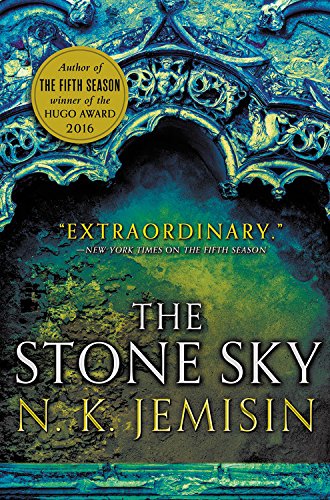
The Stone Sky by N.K. Jemisin

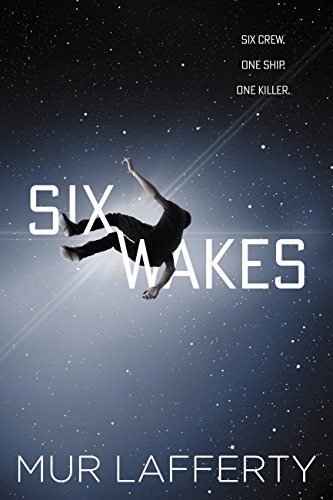
Six Wakes by Mur Lafferty

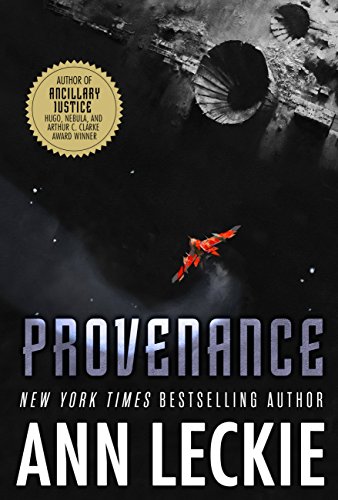
Provenance by Ann Leckie

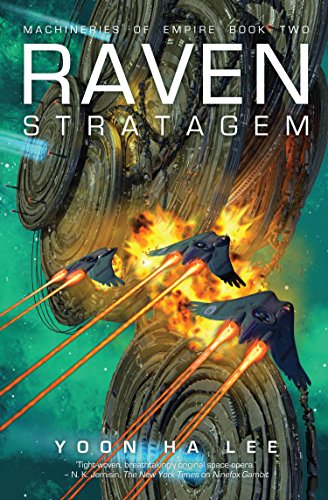
Raven Strategem by Yoon Ha Lee

New York 2140 by Kim Stanley Robinson

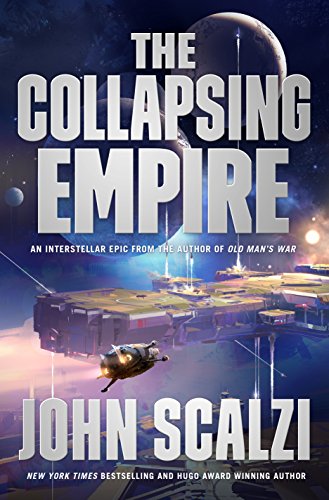
The Collapsing Empire by John Scalzi

The Actual Results

  1. The Stone Sky by N.K. Jemisin
  2. The Collapsing Empire by John Scalzi
  3. Provenance by Ann Leckie
  4. Six Wakes by Mur Lafferty
  5. Raven Strategem by Yoon Ha Lee
  6. New York 2140 by Kim Stanley Robinson

How I Would Have Voted

  1. Six Wakes by Mur Lafferty
  2. No Award

Explanation

I liked Six Wakes. It was a fun murder mystery on a spaceship, with cloning technology that led to some interesting twists (for example, everyone wakes up to discover their dead bodies floating everywhere, and the murderer doesn’t actually remember know who he/she was, because those memories weren’t uploaded to the database in time). It’s not up there with Dune or Hyperion, but it was a good read, with interesting world building and better-than-average attention to detail. There were a couple of passages that a conservative reader might consider woke, but it wasn’t enough to bother me.

Everything else from this year is pretty much terrible, in my opinion. I skipped The Stone Sky, Provenance, and Raven Strategem because those were all series that I had already DNFed. I could probably be persuaded to try Yoon Ha Lee’s Machineries of Empire series again (the first book was just too confusing and absurdly violent), but I have no desire to go back to Jemisin’s Broken Earth Trilogy or Leckie’s Ancillary Justice universe. Short version: Leckie’s entire career at this point seems to be premised on creating fantasy genders and playing to our culture’s current transgender moment, while Jemisin’s trilogy is the most anti-life (anti-pro-life?) thing I think I have ever read. Also, she’s suuuper anti-racist, which makes me think of this:

The Collapsing Empire was where I decided to give up on reading any more Scalzi. It’s basically an inferior clone of Star Trek, with random meaningless sex thrown in, which Scalzi somehow manages to make boring. I haven’t read Starter Villain and I don’t intend to, but many of this BookTuber’s criticisms of Scalzi’s writing apply to The Collapsing Empire too:

As for New York 2140, I DNFed after the first couple of pages when Robinson began to wax political, and not in a good way. I know that Kim Stanley Robinson is supposed to be one of the great SF writers of our time, but the only book of his that I’ve managed to get through was Red Mars (and that was over a decade ago). He’s one of those writers who wears his politics on his sleeve, and preaches more than he entertains. Also, he will occasionally throw in stuff that’s uncomfortably weird, like the Mars colonists having secret sex cult orgies in the farm modules. There was a time when the sex and the politics didn’t bother me as much, but it does now, so I’ve put him on my “skip this author” list, along with Ann Leckie, John Scalzi, and N.K. Jemisin.

How I would vote now: 2009 Hugo Award (Best Novel)

The Nominees

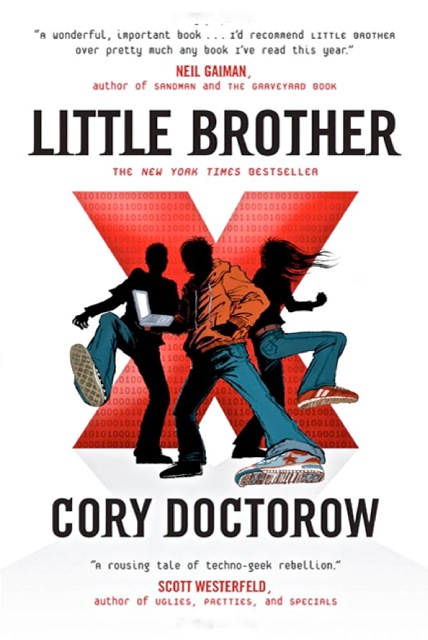
Little Brother by Cory Doctorow

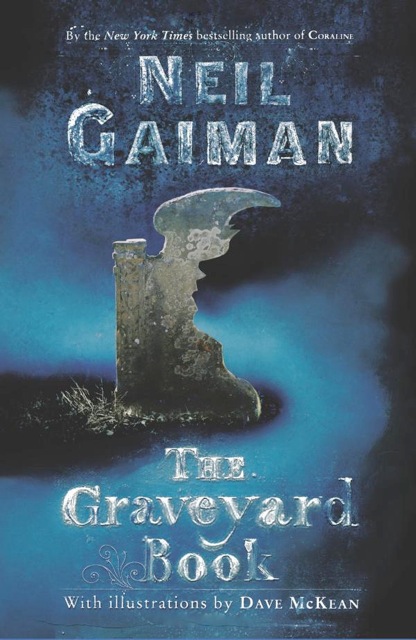
The Graveyard Book by Neil Gaiman

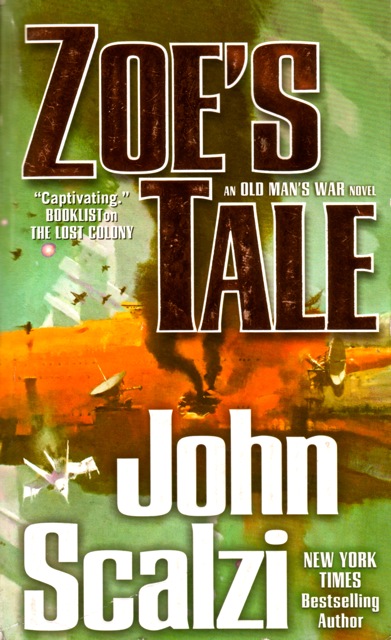
Zoe’s Tale by John Scalzi

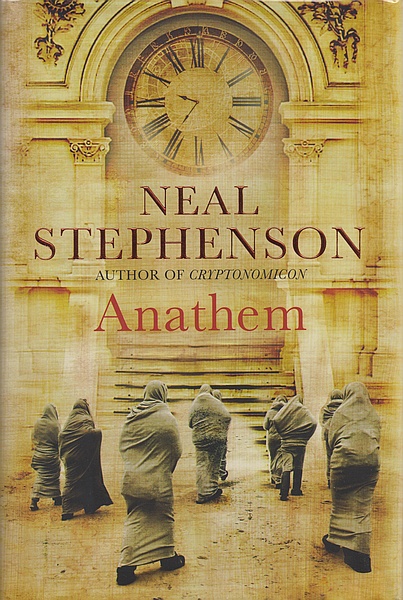
Anathem by Neal Stephenson

Saturn’s Children by Charles Stross

The Actual Results

  1. The Graveyard Book by Neil Gaiman
  2. Little Brother by Cory Doctorow
  3. Anathem by Neal Stephenson
  4. Saturn’s Children by Charles Stross
  5. Zoe’s Tale by John Scalzi

How I Would Have Voted

  1. No Award
  2. The Graveyard Book by Neil Gaiman
  3. Little Brother by Cory Doctorow

Explanation

I’ve found that Hugo Award winning / nominated books tend to fluctuate in decade-long waves, in terms of how much I enjoy them. Some decades are pretty good, others are just downright terrible. Generally speaking, the books from the 50s and early 60s were good if not great (though Dune is certainly a masterpiece), the late 70s had a couple of years with some hits and misses, and most of the books from the late 80s and early 90s were actually pretty good. But from the mid 60s through most of the 70s (and into the early 80s), the Hugos were generally garbage, mostly because of how they were saturated with radical feminism, Malthusian economics, and global cooling global warming climate change hysteria. Also, there were lots of communist “fellow travelers” writing during that era. After the mid 90s, it seems like the Hugos tried to become “dark and gritty,” just like comic books and epic fantasy. A lot of those old political trends from the 60s and 70s came back with a vengeance, and from the late 90s through the early 2010s, the books are really hit and miss for me.

The year 2009 was a complete and total miss, in my opinion. I didn’t like any of the books or authors that were nominated that year, though I will admit that I skipped all but two of them. I’ve written before about how much I cannot stand Scalzi as either an author or a human being, and after trying to read his Interdependency novels, I’ve just completely sworn him off. Zoe’s War is technically a sequel to Old Man’s War, which I enjoyed at the time, but after all of Scalzi’s shenanigans I have no desire to finish that series. As for Neal Stephenson and Charles Stross, everything I’ve read from them is so loaded with gratiutous sex, graphic violence, and sheer unadulterated nihilism that I’ve sworn them off as well. Dark and gritty is almost always overrated.

Moving on to Little Brother… how can I put this? The book is about a teenage hacker and his high school buddies who fight back against an insidious surveillance state, which seeks to control every aspect of its citizens’ lives. Great concept… except that if you went back in a time machine and brought Cory Doctorow from 2009 into a debate with Cory Doctorow today, one of two things would happen: 1) the debate would turn into a vicious cage match, from which only one of them would leave alive, or 2) the older Doctorow would say “but a police surveillance state isn’t bad if the Democrats are in charge,” to which the younger Doctorow would say “you make a very good point, sir,” and the two would leave as best of friends. Which is to say that Cory Doctorow is a massive hypocrite when it comes to the lucrative merger of Big Tech and the state, and I can’t tell if his hypocrisy goes back all the way to the Bush years, or whether the election of 2016 broke him. Either way, I just could not get into Little Brother because of how thoroughly he’s flip-flopped on his views.

(As a side note, I really would like to see someone train two large language models on Doctorow’s writings, one from everything pre-Trump, and the other from everything post-Trump. It would be fascinating to pit those two models against each other in a simulated debate, because of how thoroughly he’s flip-flopped. Also, it would be entertaining to watch the real Cory Doctorow’s reaction to this simulated debate, because he’s written extensively about how much he hates ChatGPT and generative AI.)

With all of that said, however, I didn’t think Little Brother was terrible, even though I couldn’t finish it. As with Scalzi, it had less to do with the book itself and more to do with my opinion of the author, which is why I’ve decided to rank it above the other books below No Award. But I put it below The Graveyard Book, because there wasn’t really anything political or offensive in that one; it just wasn’t for me. I can’t affirmatively vote for The Graveyard Book, because I didn’t enjoy it enough to finish it, but if it had been a different year, I simply would have abstained instead of putting it below No Award.

How I would vote now: 2019 Hugo Award (Best Novel)

The Nominees

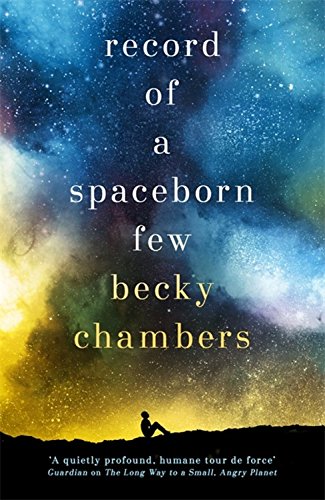
Record of a Spaceborn Few by Becky Chambers

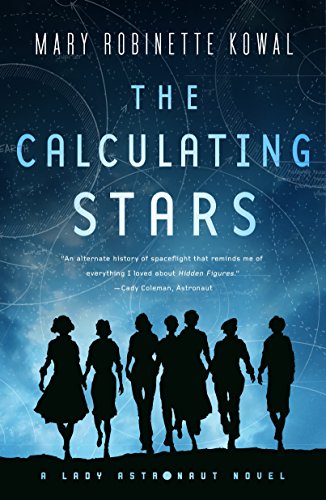
The Calculating Stars by Mary Robinette Kowal

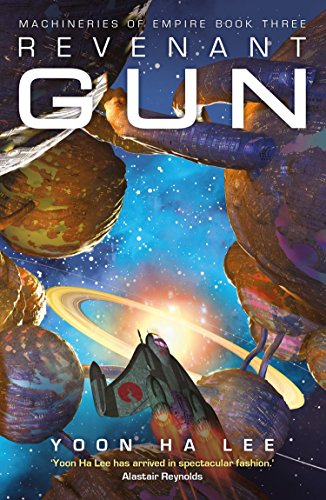
Revenant Gun by Yoon Ha Lee

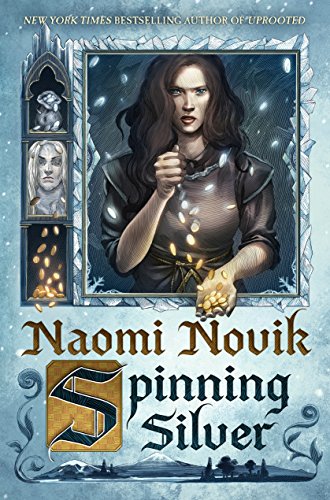
Spinning Silver by Naomi Novik

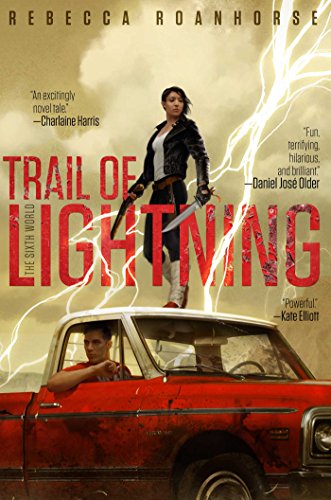
Trail of Lightning by Rebecca Roanhorse

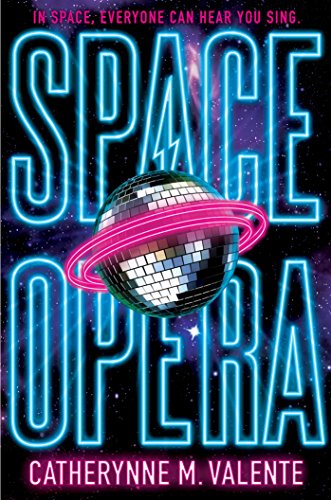
Space Opera by Catherynne M. Valente

The Actual Results

  1. The Calculating Stars by Mary Robinette Kowal
  2. Spinning Silver by Naomi Novik
  3. Record of a Spaceborn Few by Becky Chambers
  4. Trail of Lightning by Rebecca Roanhorse
  5. Revenant Gun by Yoon Ha Lee
  6. Space Opera by Catherynne M. Valente

How I Would Have Voted

  1. Spinning Silver by Naomi Novik
  2. No Award
  3. Space Opera by Catherynne M. Valente

Explanation

The Calculating Stars actually started out pretty good. Mary Robinette Kowal is a very skilled writer, and her main character in this book was both likeable and interesting—something that seems to be increasing rare in Hugo-nominated books. It also didn’t hurt that in the very first chapter, a giant meteor wiped out Washington DC and most of the eastern seaboard. But then it gradually turned into a story about the little woman who roared and her band of misfit minorities who team up to fight Captain Patriarchy, and the super-woke feminism just ruined it for me.

I didn’t read Revenant Gun or Record of a Spaceborn Few because I DNFed both series with the first book. With Yoon Ha Lee’s Machineries of Empire series, I don’t remember much, except that the first book made absolutely no sense to me, with so much meaningless violence that it bordered on the absurd. With Becky Chambers’s Wayfarers series, it started off as an interesting space opera, but the ship quickly turned into a lesbian love boat, with lots of queer and transgender aliens to boot. Wokery ensues.

As for Trail of Lightning, I honestly don’t remember much about that one, other than that it started to give me woke vibes and I didn’t really like any of the characters. I think it also played the Death is Chic and Life is Not Worth Saving trope, which I personally cannot stand. If the main character had struck me as a good and decent person, I probably would have kept reading, but so many books that suffer from wokeness also suffer from having protagonists who are just terrible human beings in general. I don’t think the two are unrelated.

The first chapter of Space Opera was laugh out loud hilarious, and I actually enjoyed it quite a lot. Valente’s gonzo humor is a lot of fun! Then… I don’t know quite how to put this, but the story just started to feel depressing, and I’m not sure why. Also, the gonzo writing style started to grate on me after a while, kind of like Chuck Wendig’s writing does for anything longer than a blog article. It wasn’t a terrible book, but I didn’t end up finishing it.

But I really loved Spinning Silver, much more than I was expecting to. I’m not generally into fairy tell retellings, but this one stirred something primal in my Slavic roots and scratched an itch I didn’t even know that I had. Besides all that, it’s just a damn good story. The villains were genuinely villainous, the peril was genuinely perilous, the good guys all had satisfying growth arcs, and the ending was a crowning moment of awesome that brought everything full circle in the best possible way. Really great book.

How I would vote now: 2006 Hugo Award (Best Novel)

The Nominees

Learning the World by Ken MacLeod

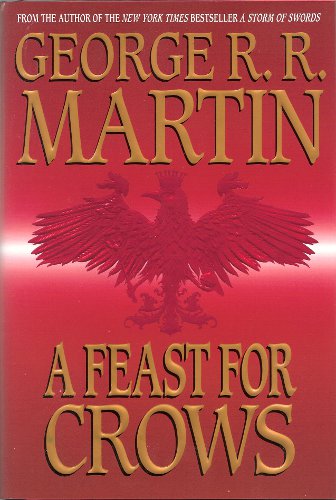
A Feast For Crows by George R.R. Martin

Old Man’s War by John Scalzi

Accelerando by Charles Stross

Spin by Robert Charles Wilson

The Actual Results

  1. Spin by Robert Charles Wilson
  2. Accelerando by Charles Stross
  3. Old Man’s War by John Scalzi
  4. Learning the World by Ken MacLeod
  5. A Feast For Crows by George R.R. Martin

How I Would Have Voted

  1. Spin by Robert Charles Wilson
  2. Old Man’s War by John Scalzi
  3. No Award
  4. Learning the World by Ken MacLeod

Explanation

This is going to be controversial, but I don’t think any of George R.R. Martin’s A Song of Ice and Fire books should have been nominated for the Hugo Award. In the first place, those books are pure fantasy, and while the line between fantasy and science fiction can become blurry at times, with everyone drawing it in a slightly different place (Dragonriders of Pern, for example), I do think it’s important to draw that line somewhere, because each of us as readers draws that line somewhere. Some readers read only fantasy, some read only science fiction, and even among readers who read both, they scratch very different itches.

(As a side note, A Dance With Dragons came out right when I was indie publishing my first few books, and I remember being super annoyed that it was monopolizing all of the top spots on the Amazon bestseller charts for subgenres like science fiction > action & adventure, even though it was very clearly not a science fiction book. That annoyed me as both a writer and a reader.)

More than that, though… how do I say this? I know that a lot of people are (or were) huge fans of Game of Thrones, that it had a huge and lasting cultural impact, and that the writing quality of both the books and the miniseries was quite excellent, at least for the first few books/seasons… but to what end? The HBO series itself is blatantly pornographic, and the books are even worse, glorifying the immorality and horrific violence that characterizes the series. Worse, there is no good or evil in this world: only power. This means that there are no heroes, only victims and victimizers.

I’m not sure how much Game of Thrones is responsible for shaping our current cultural decay, and how much it was simply a reflection of the culture in which it was created, but this obsession with power and the victim-victimizer complex lies at the heart of all of the social pathologies currently driving the West to cultural and spiritual suicide. It’s the force driving our own modern Game of Thrones, between the MAGA disciples of orange Jesus and the machinations of our Big Tech and Deep State overlords, with their hordes of hypnotized NPC zombies protesting in behalf of [current thing], all while remaining carefully masked. It turns out that when you embrace Martin’s paradigm, rejecting good and evil for the pure pursuit of power, and define everyone by their victimhood status, it leads to the death of everything in your culture that is good, true, and beautiful.

And even laying all of that aside, the fact that Martin hasn’t finished the damned series yet has done more to destroy the epic fantasy genre than all the other things that his career has otherwise accomplished. If you’re a new fantasy writer and you have a great idea for an epic fantasy series, you’d better have a good day job or a sugar daddy/momma, because most readers won’t give your series a chance until after you’ve finished the last book. But can we honestly blame the readers for this, when Martin ran off with their money and left them all burned?

Back when Game of Thrones / A Song of Ice and Fire was still ascendant, fans and readers were all mesmerized by how skillfully George R.R. Martin could subvert their expectations and pull off twists that no one had foreseen. It turns out that the biggest expectation that Martin ever subverted was the expectation that he would finish the damned series.

Anyways, that’s enough ranting about George R.R. Martin and the pathological effect that I believe he’s had on the culture. I read A Game of Thrones back in 2010 and decided to skip the rest of the series. The writing was fantastic, but I hated all of the characters and could tell that things were going to get way too dark and way too graphic in the later books. And now, I wish I lived in a world where George R.R. Martin was still a mostly unknown midlist author, with a small cult following but not a lot of influence on the culture overall. It would be a much better world.

I skipped Accelerando, because I’ve read enough Charles Stross to know that his particular brand of grungy cyberpunk nihilism rubs me the wrong way. Learning the World wasn’t terrible, but I DNFed it because I got bored, though I could be persuaded to try it again. It was just too much of an idea book, without enough story to really hook me.

Old Man’s War… my thoughts on that one are complicated. I cannot stand Scalzi as either an author or a human being. He’s basically an obnoxious internet influencer who made it big back in the days of the blogosphere, before “influencer” was a job title. Of course, to be an influencer, you have to either 1) be an extremely attractive woman, or 2) be off your rocker somehow, and that definitely describes Scalzi. He is an obnoxious blowhard who likes to argue with people on the internet for fun and profit, except he’s apparently not as good at social media as he was at blogging, so he’s pivoted to writing science fiction and playing the SFWA mean girls game instead.

But most of that happened after Old Man’s War, so it’s not exactly fair to judge the book on all of that. And I have to admit, I enjoyed it back in 2008 when I read it. It’s basically a retelling of Starship Troopers and The Forever War, but without all of the nihilism and politics—and since the nihilism and the politics are the things that got me hung up on both books (though I actually enjoyed the politics of Starship Troopers; the part that slightly annoyed me was getting a lengthy treatise on human sociology instead of an adventure novel), Old Man’s War was basically a retelling with all of the good parts and less of the bad parts. So I’ll grudgingly give Scalzi his due and admit that his first book is good enough to deserve an affirmative vote.

But Robert Charle’s Wilson’s Spin is easily the best book on the ballot from this year, and possibly the best Hugo-nominated book that I’ve read from this whole decade. It’s fantastic. One of the best science fiction novels I’ve ever read. The rest of the trilogy is just as good, too. In fact, Spin and its sequel Axis were a huge influence on my own Genesis Earth, though it may not be obvious at first glance. I read Spin when I was studying overseas in Amman, Jordan, while I was still working on the first draft of Genesis Earth. The next year, I read a whole bunch of Robert Charles Wilson’s other books, and I have to say that I have yet to read a book he wrote that I didn’t enjoy. His books have had as much influence on me as Ursula K. Le Guin, and largely scratch the same itch.

So that’s how the 2006 Hugos shape up for me: three books that I didn’t like, and two that I did—and one of those books is one of my all-time favorites.

How I would vote now: 2023 Hugo Award (Best Novel)

Alright, let’s tackle the most controversial Hugo awards since Sad Puppies 3—and possibly the most controversial Hugos ever!

The Nominees

Legends & Lattes by Travis Baldree

Nettle & Bone by T. Kingfisher

The Spare Man by Mary Robinette Kowal

The Daughter of Doctor Moreau by Silvia Moreno-Garcia

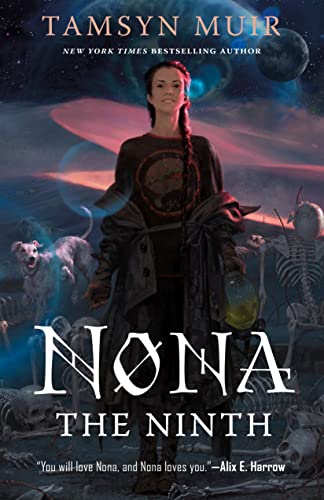
Nona the Ninth by Tamsyn Muir

The Kaiju Preservation Society by John Scalzi

The Actual Results

  1. Nettle & Bone by T. Kingfisher
  2. Legends & Lattes by Travis Baldree
  3. The Kaiju Preservation Society by John Scalzi
  4. The Daughter of Doctor Moreau by Silvia Moreno-Garcia
  5. The Spare Man by Mary Robinette Kowal
  6. Nona the Ninth by Tamsyn Muir

How I Would Have Voted

  1. No Award
  2. The Daughter of Doctor Moreau by Silvia Moreno-Garcia
  3. Legends & Lattes by Travis Baldree

Explanation

The 2023 Hugo Awards were an epic clusterfuck, from which the Hugos might never recover (and honestly, I kind of hope they don’t). Not only did the organizers exclude a bunch of titles like Babel by R.F. Kuang that probably would have placed very high, if not outright won first place—excluded them for no other discernible reason other than that they might have offended the Chinese Communist Party, since China was hosting the awards—but they also disqualified thousands of Chinese ballots for the same reason that they disqualified thousands of Sad Puppy ballots in subsequent years since the big kerfluffle in 2015: namely, that they were Wrongfans having Wrongfun.

Apparently, to get on the Hugo ballot, you have to either 1) pander to or be a member of the SFWA mean girls club (for crying out loud, two of the authors on this year’s ballot were former SFWA presidents), or 2) write a lesbian love story. I suppose you can also get on the ballot if you write a love story that’s gay, transgender, polyamorous, or some other flavor of queer, but lesbians are easier because the male readers are less likely to be grossed out or confused by it.

Anyways, I didn’t enjoy any of these books, though I have to admit that I didn’t even try to read The Kaiju Preservation Society (because I cannot stand Scalzi, either as an author or a human. The Collapsing Empire with its random throwaway sex scene in the second or third chapter was the last straw for me) and The Spare Man (my wife picked it up and was so confused and turned off by the non-gendered pronoun dickery that I knew it was too woke for me). I DNFed Tamsyn Muir’s Locked Tomb series with Gideon the Ninth, for reasons that I detailed in my recap of the 2021 Hugo Awards.

As for Nettle & Bone, I was pleasantly surprised at first, because the love interest was heterosexual—which, for the Hugos, is very unusual these days. But there were other things about the book that turned me off, such as the anachronism of a religious medieval world that’s been gutted of anything religious that might offend a non-religious reader in 2023, and a very anti-natalist bias with some lines that could have come straight from Margaret Sanger. So that’s why I put Nettle & Bone below No Award, and didn’t even bother ranking it anywhere on my ballot.

Legends & Lattes wasn’t terrible, but I got bored after the first couple of chapters, and because of the lesbian love story I’m not too keen to try it again (though I suppose I could be persuaded otherwise). As for The Daughter of Doctor Moreau, I didn’t find anything objectionable with that one, and actually got about halfway through, but… I just didn’t care about any of the characters. Not a terrible book, but it just wasn’t for me.

Of the two, I think I liked The Daughter of Doctor Moreau better, or disliked it less, which is why I put it on the ballot above Legend & Lattes and below No Award. Why include anything on a ballot below No Award? Because the way that ranked choice voting works, you can still influence the outcome that way even if No Award is eliminated during the counting. It’s basically like saying: “I don’t think any of these books deserve an award, but if I had to award one of them, I’d give it to (1) and (2), in that order.”

So that’s my take on the infamous 2023 Hugo Awards. Frankly, I think it would have been much better if the Chinese wrongfans had completely taken it over, and made it so that Worldcon was held in China every other year, with Chinese authors dominating the Hugos from now on. There are certainly enough Chinese sci-fi readers to justify such a move. But alas, it seems that the Trufans are going to keep clutching the Hugos with a deathgrip until 1) they’re all dead (since most of them are boomers anyway), or 2) the Trufans and the Hugos both become culturally irrelevant, if indeed they aren’t already.

(Speaking of China, hi Mike Glyer! Still buying views from Chinese clickfarms to boost your online rankings? It must be a real slow news week if you pick up this blog for your File 770 pixel scroll.)

How I would vote now: 1977 Hugo Award (Best Novel)

The Nominees

Mindbridge by Joe Haldeman

Children of Dune by Frank Herbert

Man Plus by Frederik Pohl

Shadrach in the Furnace by Robert Silverberg

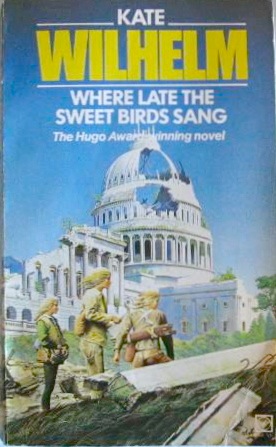
Where Late the Sweet Birds Sing by Kate Wilhelm

The Actual Results

  1. Where Late the Sweet Birds Sing by Kate Wilhelm
  • Children of Dune by Frank Herbert
  • Man Plus by Frederik Pohl
  • Mindbridge by Joe Haldeman
  • Shadrach in the Furnace by Robert Silverberg

How I Would Have Voted

  1. Children of Dune by Frank Herbert
  2. No Award
  3. Man Plus by Frederik Pohl
  4. Shadrach in the Furnace by Robert Silverberg

Explanation

It’s interesting to see which of these books hold up after nearly fifty years, and which of them really don’t. Of the five here, I think Children of Dune is the only one that still has any lasting cultural relevance, and that only because of the first book, Dune.

Children of Dune is also (perhaps not surprisingly) the only book that I would consider worthy of voting for. It’s nowhere near as good as Dune, but of the Dune sequels, it’s the best one I’ve read so far (though the way Leto transformed into a… whatever really seemed to come out of nowhere). Man Plus and Shadrach in the Furnace weren’t terrible, but I didn’t finish them. I can’t speak to Mindbridge, because I didn’t bother reading it: I’ve read enough Haldeman to know that he has a penchant for nihilism that really rubs me the wrong way.

As for Where Late the Sweet Birds Sang, it was really awful. I don’t remember the plot exactly, but the book is full of leftist 70s doom porn regarding climate change and Malthusian resource shortages, combined with a resurgence of The Patriarchy that forces all the female characters into becoming breeders. It’s dark, dystopian, and apocalyptic in all the worst ways, with a very strong political bent to it that holds up about as well as all of the end-of-the-world predictions that the climate cultists have been peddling since the 70s. Basically, Where Late the Sweet Birds Sang is why I’d vote “No Award” after Children of Dune.

Man Plus had some interesting writing, but it didn’t really hold my interest, probably because of all the Malthusian and Freudian undertones. It wasn’t insufferably political, though, which is why I would actually affirmatively vote for it after “No Award.” I would certainly rather that Man Plus had won out over Where Late the Sweet Birds Sang. Same with Shadrach in the Furnace, which isn’t terrible, though it does have some weird communist power fantasies in it. I really love the way Silverberg writes, but the things he chooses to write about just seem totally pointless to me.

The 70s was a very weird time for science fiction… and probably a weird time for the world in general. As you can probably tell, I’m not a huge fan of New Wave science fiction (with a few notable exceptions). Things got a lot better after Reagan’s Morning in America, not just for the country, but for science fiction as well. Then we hit the 90s, which the Zoomers tend to look on as a simple, idyllic time when all was bright and wonderful in the world, which strikes me as hilarious because I remember it as a time of rampant school shootings and MTV-driven cultural decay. But that’s a subject for another post.

How I would vote now: 2020 Hugo Award (Best Novel)

The Nominees

The City in the Middle of the Night by Charlie Jane Anders

The Ten Thousand Doors of January by Alix E. Harrow

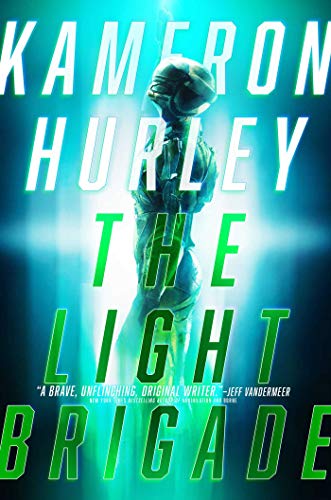
The Light Brigade by Kameron Hurley

A Memory Called Empire by Arkady Martine

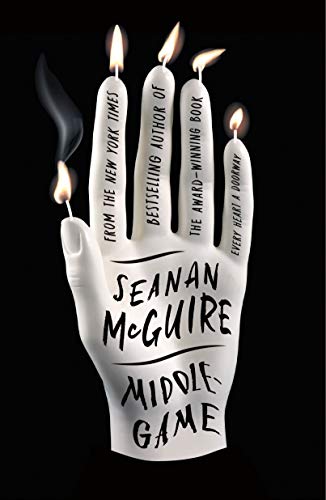
Middlegame by Seanan McGuire

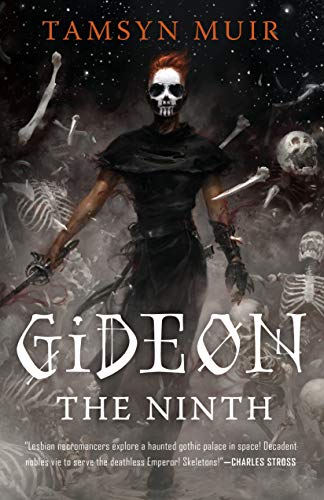
Gideon the Ninth by Tamsyn Muir

The Actual Results

  1. A Memory Called Empire by Arkady Martine
  2. Middlegame by Seanan McGuire
  3. Gideon the Ninth by Tamsyn Muir
  4. The Light Brigade by Kameron Hurley
  5. The City in the Middle of the Night by Charlie Jane Anders
  6. The Ten Thousand Doors of January by Alix E. Harrow

How I Would Have Voted

  1. No Award

Explanation

The wokery was strong this year.

I have a list of tropes that I cannot stand anymore, to the point that I will usually DNF any book that uses them. All of the nominated books this year fell fell into at least one of those tropes, including:

  • All true love is LGBTQ love
  • A profane and vulgar childhood
  • Death is chic
  • Life is not worth saving
  • Badass woman warrior, slay!

One of these days, I’ll write a blog post describing all of these tropes. If they weren’t so common in fiction these days, I would have more tolerance for them, but I’ve seen them all so much that they get an immediate “nope” whenever I see them.

The City in the Middle of the Night was like something written by a mental patient, and not in a good way. If I wrote a parody of a book written by a leftist, it would read no differently than this book.

I forget why I DNFed The Ten Thousand Doors of January, but I think it was because of the trope I call “a profane and vulgar childhood,” where children lose (or are never really allowed to experience) their innocence before they grow up, and the author doesn’t treat this like the tragedy it truly is. There may have also been an anti-racist / anti-colonialist bent that turned me off, if I remember correctly.

I wanted to like The Dark Brigade, because I enjoy reading Kameron Hurley’s op-eds in Locus Magazine, but the book was way too dark and profane. Also, it suffered from “all true love is LGBTQ love” and “badass woman warrior, slay!” which I am just so tired of reading.

A Memory Called Empire is one of those sprawling space operas about a massive galactic empire, but it read too much like something written by an English major with little to no understanding of how geopolitics actually works. Also, the “all true love is LGBTQ love” was strong with this one.

Finally, Middlegame and Gideon the Ninth are both prime examples of “death is chic,” a trope which plays right into the death cult that currently dominates our culture. But even if the macabre obsession with death is just an aesthetic, it’s one that I personally cannot stand. With that said, though, I think it goes beyond the aesthetic for both of these books—but I didn’t stick around long enough to find out.

For all of these books, the characters fell completely flat for me. One of the things I need in order to connect with a character is to get a sense right off the bat that they’re a good person—or, if they’re a bad person, that needs to be lampshaded clearly as a flaw. But in so many books that are published these days, the characters are just downright awful people who care only for themselves, and rarely is this pointed out as a flaw.

Increasingly, it seems that we live in a world where the culture tells us that nothing is true and everything is permitted. Screw that.