How I would vote now: 1977 Hugo Award (Best Novel)

The Nominees

Mindbridge by Joe Haldeman

Children of Dune by Frank Herbert

Man Plus by Frederik Pohl

Shadrach in the Furnace by Robert Silverberg

Where Late the Sweet Birds Sing by Kate Wilhelm

The Actual Results

  1. Where Late the Sweet Birds Sing by Kate Wilhelm
  • Children of Dune by Frank Herbert
  • Man Plus by Frederik Pohl
  • Mindbridge by Joe Haldeman
  • Shadrach in the Furnace by Robert Silverberg

How I Would Have Voted

  1. Children of Dune by Frank Herbert
  2. No Award
  3. Man Plus by Frederik Pohl
  4. Shadrach in the Furnace by Robert Silverberg

Explanation

It’s interesting to see which of these books hold up after nearly fifty years, and which of them really don’t. Of the five here, I think Children of Dune is the only one that still has any lasting cultural relevance, and that only because of the first book, Dune.

Children of Dune is also (perhaps not surprisingly) the only book that I would consider worthy of voting for. It’s nowhere near as good as Dune, but of the Dune sequels, it’s the best one I’ve read so far (though the way Leto transformed into a… whatever really seemed to come out of nowhere). Man Plus and Shadrach in the Furnace weren’t terrible, but I didn’t finish them. I can’t speak to Mindbridge, because I didn’t bother reading it: I’ve read enough Haldeman to know that he has a penchant for nihilism that really rubs me the wrong way.

As for Where Late the Sweet Birds Sang, it was really awful. I don’t remember the plot exactly, but the book is full of leftist 70s doom porn regarding climate change and Malthusian resource shortages, combined with a resurgence of The Patriarchy that forces all the female characters into becoming breeders. It’s dark, dystopian, and apocalyptic in all the worst ways, with a very strong political bent to it that holds up about as well as all of the end-of-the-world predictions that the climate cultists have been peddling since the 70s. Basically, Where Late the Sweet Birds Sang is why I’d vote “No Award” after Children of Dune.

Man Plus had some interesting writing, but it didn’t really hold my interest, probably because of all the Malthusian and Freudian undertones. It wasn’t insufferably political, though, which is why I would actually affirmatively vote for it after “No Award.” I would certainly rather that Man Plus had won out over Where Late the Sweet Birds Sang. Same with Shadrach in the Furnace, which isn’t terrible, though it does have some weird communist power fantasies in it. I really love the way Silverberg writes, but the things he chooses to write about just seem totally pointless to me.

The 70s was a very weird time for science fiction… and probably a weird time for the world in general. As you can probably tell, I’m not a huge fan of New Wave science fiction (with a few notable exceptions). Things got a lot better after Reagan’s Morning in America, not just for the country, but for science fiction as well. Then we hit the 90s, which the Zoomers tend to look on as a simple, idyllic time when all was bright and wonderful in the world, which strikes me as hilarious because I remember it as a time of rampant school shootings and MTV-driven cultural decay. But that’s a subject for another post.

How I would vote now: 2020 Hugo Award (Best Novel)

The Nominees

The City in the Middle of the Night by Charlie Jane Anders

The Ten Thousand Doors of January by Alix E. Harrow

The Light Brigade by Kameron Hurley

A Memory Called Empire by Arkady Martine

Middlegame by Seanan McGuire

Gideon the Ninth by Tamsyn Muir

The Actual Results

  1. A Memory Called Empire by Arkady Martine
  2. Middlegame by Seanan McGuire
  3. Gideon the Ninth by Tamsyn Muir
  4. The Light Brigade by Kameron Hurley
  5. The City in the Middle of the Night by Charlie Jane Anders
  6. The Ten Thousand Doors of January by Alix E. Harrow

How I Would Have Voted

  1. No Award

Explanation

The wokery was strong this year.

I have a list of tropes that I cannot stand anymore, to the point that I will usually DNF any book that uses them. All of the nominated books this year fell fell into at least one of those tropes, including:

  • All true love is LGBTQ love
  • A profane and vulgar childhood
  • Death is chic
  • Life is not worth saving
  • Badass woman warrior, slay!

One of these days, I’ll write a blog post describing all of these tropes. If they weren’t so common in fiction these days, I would have more tolerance for them, but I’ve seen them all so much that they get an immediate “nope” whenever I see them.

The City in the Middle of the Night was like something written by a mental patient, and not in a good way. If I wrote a parody of a book written by a leftist, it would read no differently than this book.

I forget why I DNFed The Ten Thousand Doors of January, but I think it was because of the trope I call “a profane and vulgar childhood,” where children lose (or are never really allowed to experience) their innocence before they grow up, and the author doesn’t treat this like the tragedy it truly is. There may have also been an anti-racist / anti-colonialist bent that turned me off, if I remember correctly.

I wanted to like The Dark Brigade, because I enjoy reading Kameron Hurley’s op-eds in Locus Magazine, but the book was way too dark and profane. Also, it suffered from “all true love is LGBTQ love” and “badass woman warrior, slay!” which I am just so tired of reading.

A Memory Called Empire is one of those sprawling space operas about a massive galactic empire, but it read too much like something written by an English major with little to no understanding of how geopolitics actually works. Also, the “all true love is LGBTQ love” was strong with this one.

Finally, Middlegame and Gideon the Ninth are both prime examples of “death is chic,” a trope which plays right into the death cult that currently dominates our culture. But even if the macabre obsession with death is just an aesthetic, it’s one that I personally cannot stand. With that said, though, I think it goes beyond the aesthetic for both of these books—but I didn’t stick around long enough to find out.

For all of these books, the characters fell completely flat for me. One of the things I need in order to connect with a character is to get a sense right off the bat that they’re a good person—or, if they’re a bad person, that needs to be lampshaded clearly as a flaw. But in so many books that are published these days, the characters are just downright awful people who care only for themselves, and rarely is this pointed out as a flaw.

Increasingly, it seems that we live in a world where the culture tells us that nothing is true and everything is permitted. Screw that.

How I would vote now: 1958 Hugo Award (Best Novel)

The Nominees

The Big Time by Fritz Leiber.

The Actual Results

  1. The Big Time by Fritz Leiber.

How I Would Have Voted

  1. (Abstain)

Explanation

The Big Time has a lot of things in it that I normally would like. It’s a time travel story that bucks the popular convention of the butterfly effect—the idea that small changes in the past lead to big changes in the future. Instead, Leiber’s view of time travel is much closer to Connie Willis’s, in that the continuum itself tends to seek a stable equilibrium, negating the effect of small changes. But unlike Willis’s books, the time travelers aren’t just a bunch of cloistered academics looking to be passive observers of history. Instead, there’s a full-on time war between two monolithic factions, each of which has screwed so much with the timeline that they hardly know who they are anymore.

So what’s so bad about it that I feel it didn’t earn my vote? I’ve tried twice to read this book, and I’ve DNFed it both times because I just can’t get over the fact that it’s about a bunch of comfort women—with everything that term implies—servicing the time warriors of their particular faction. In WWII, “comfort women” was a euphemistic term for civilian sex slaves taken captive by the Japanese Imperial Army. That’s basically what’s happening here, except it’s played straight, with no ick factor, or even really an acknowledgment that an ick factor might exist. And that’s what turns me off—not just the ick factor itself, but the way that the author treats it as something normal and blase—progressive, even. After all, every good time soldier needs a “sex therapist.” </sarc>

Usually when older science fiction turns me off, it has something to do with the sexual content. So many scifi writers in the 50s, 60s, and 70s had these almost utopian visions of a free love future, or at least a very optimistic view of the sexual revolution. They never imagined that we might become even more prudish than the Victorians, or that incels would be a thing, or that we’d be facing a loneliness epidemic, a population collapse, and both a war on men and a war on women because, in large part, of how the Boomers tore down all the boundaries around sex and sexuality—which is to say nothing of how so many people can’t even define what a woman is these days.

These scifi writers were supposed to be our visionaries, but they were so totally blinded by their own carnal lusts that they failed to predict the second- and third-order effects of the kind of free love future they were writing about. That’s not exactly the case with The Big Time, but it falls into that same trap, along with most of Fritz Leiber’s work that I’ve read. However, it wasn’t so bad that I’d vote No Award over this book. Rather, it was more of a background element that rubbed me the wrong way, to the point where I just couldn’t finish the book.

How I would vote now: 2021 Hugo Award (Best Novel)

The Nominees

Piranesi by Susanna Clarke

The City We Became by N.K. Jemisin

The Relentless Moon by Mary Robinette Kowal

Harrow the Ninth by Tamsyn Muir

Black Sun by Rebecca Roanhorse

Network Effect by Martha Wells

The Actual Results

  1. The Network Effect by Martha Wells
  2. The City We Became by N.K. Jemisin
  3. Piranesi by Susanna Clarke
  4. Black Sun by Rebecca Roanhorse
  5. The Relentless Moon by Mary Robinette Kowal
  6. Harrow the Ninth by Tamsyn Muir

How I Would Have Voted

  1. Network Effect by Martha Wells
  2. No Award
  3. Piranesi by Susanna Clarke

Explanation

Network Effect was pretty good. In fact, it’s my favorite Murderbot book. There was a little bit of wokery, mostly in the form of the polyamorous relationships of the humans, but that didn’t bother me as much because part of the point of the Murderbot books is that the humans are (for the most part) aggravatingly dumb and slow, so the polyamory kind of blended into the rest of the nonsense that muderbot constantly has to deal with. But I can see how it would bother some readers.

I DNFed all the other books, but I didn’t want to lump Piranesi in with all the others because it just wasn’t my kind of book. All the other ones had woke themes or tropes or other issues that turned me off immensely. I DNFed the first Lady Astronauts book when it turned into a story about the brave little woman that could and her band of misfit minorities fighting back against Captain Patriarchy. The City We Became dropped half a dozen f-bombs in the first chapter, and I think it had a gay rape scene too. Also, I have no love whatsoever for New York City. As for Black Sun and Harrow the Ninth, they both suffer from the trope that I call “death is chic.” At best, it’s an aesthetic that turns me off, and at worst it’s just a cover for outright nihilism and a pro-death, anti-life worldview that undergirds everything that I hate about our current culture.
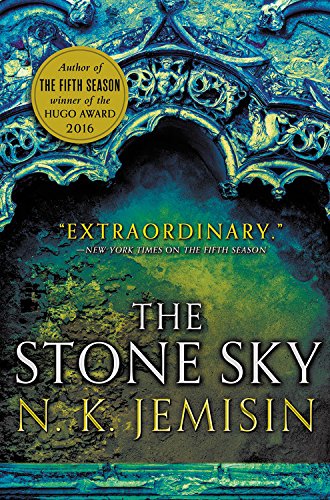
As a side note, I just want to say that when it comes to book blurbs, Neil Gaiman is one of the best contrarian indicators for my own personal tastes that I’ve found. He may have blurbed a book or two that I actually enjoyed, but for every book or author that I can remember, if he gave them praise, I not only didn’t like it, but actively hated it. He may actually be a better indicator for me than the Hugo Award itself, since I actually enjoyed the book that won this year—but I cannot think of a single book that Neil Gaiman blurbed that I didn’t despise.

How I would vote now: 1953 Hugo (Best Novel)

The Nominees

The Demolished Man by Alfred Bester

The Actual Results

  1. The Demolished Man by Alfred Bester

How I Would Have Voted

  1. (Abstain)

Explanation

I didn’t hate this book—I did finish it, after all—but I had some issues with it, especially the ending. It’s basically a futuristic murder mystery / true crime piece, where the protagonist is a telepathic detective who figures out immediately who committed the murder, but has to jump through a bunch of hoops in order to gather the evidence and prosecute the case. The story isn’t a whodunnit so much as a character piece about the motivations behind murder, with a fair amount of action and some intriguing world-building thrown in for good measure.

There’s a lot of good, old-fashioned sci-fi stuff in here, especially with the espers and the telepaths (which were all the rage back in the science fiction of the 50s), but the ending rubbed me the wrong way, because it’s not about putting the murderer behind bars, but in “demolishing” him, brainwashing him so completely that he’s not even really capable of committing such a crime. Just like telepathy and extra-sensory perception were big in golden-age sci-fi, so was the idea that an elite class of benevolent technocrats could use The Science to usher in a futuristic utopia. That was what rubbed me the wrong way about this one.

There were also some hippy/beatnik elements in it that I didn’t like, such as a dinner party with some flagrant and gratuitous nudity. For all that golden age and new wave authors loved to project a post-sexual revolution future, most of them did a really piss-poor job anticipating its second- and third-order effects (Heinlein being one of the chief offenders—but we’ll get there). In spite of all this, I wouldn’t go so far as to vote “no award” over this one. Rather, I’d probably just abstain.

As a side note, 1953 was the first Hugo Award ever issued. As such, the nominating and voting process hadn’t been ironed out yet, so The Demolished Man was the only nominee.

How I would vote now: 2022 Hugo Award (Best Novel)

The Nominees

Light from Uncommon Stars by Ryka Aoki

The Galaxy and the Ground Within by Becky Chambers

A Master of Djinn by P. Djeli Clark

A Desolation Called Peace by Arkady Martine

She Who Became the Sun by Shelley Parker-Chan

Project Hail Mary by Andy Weir

The Actual Results

  1. A Desolation Called Peace by Arkady Martine
  2. Light from Uncommon Stars by Ryka Aoki
  3. A Master of Djinn by P. Djeli Clark
  4. The Galaxy and the Ground Within by Becky Chambers
  5. She Who Became the Sun by Shelley Parker-Chan
  6. Project Hail Mary by Andy Weir

How I Would Have Voted

  1. Project Hail Mary by Andy Weir
  2. No Award

Explanation

Project Hail Mary was a fun read, and a really good hard SF novel. There were a couple of minor things that made me roll my eyes, but the story itself was solid, and the science was fascinating. Also, the ending really stuck with me for several days. I don’t think it was better than Hyperion or Ender’s Game, but it certainly was deserving of a positive vote for best novel.

I DNFed everything else on the ballot. Normally, that alone wouldn’t be a reason for voting No Award, but some of these books were just insanely woke: in particular, Light from Uncommon Stars was full of transgender madness (and judging from the author bio in the back, the author herself is caught up in the madness as well).

I didn’t read A Desolation Called Peace or The Galaxy, and the Ground Within because I’d already DNFed the first book in the series, mostly for the “all true love is LGBTQ love” trope (I should do a blog post dissecting that particular trope), so I can’t speak to the relative wokeness of either of those titles. But it says something that I tried and DNFed the series.

But the most infuriating read for me was She Who Became the Sun, since by all indications it should have been right up my alley, what with all the steppe nomad warriors and all. The writing was pretty good too, and the setup was fantastic. Yes, there was some gender bending stuff, but for the first half of the book I generally didn’t find it any more offensive than Mulan. I forget why I decided to skip to the last chapter, but the ending was so infuriating that it put this author solidly on my blacklist, just like The Fifth Season did for N.K. Jemison (more on that when we get to 2016’s Hugo ballot). I can’t say much without spoiling the book, but it has to do with what many conservative and alternate media commentators rightly call the death cult. Really infuriating.

As for A Master of Djinn, having traveled across Egypt and the Middle East, the worldbuilding was so fundamentally broken that I just couldn’t swallow it. The author basically created a steampunk Middle East that embraces several tenets of modern wokism. The only alternate reality in which the main character wouldn’t be tossed off of a high building for being a lesbian is a reality where the source code of Islam has been rewritten so entirely that it isn’t really Islam anymore. Which I suppose is fine for a pulpy escapist fantasy, but this one just didn’t appeal to me.

How I would vote now: 1955 Hugo Award (Best Novel)

The Nominees

They’d Rather Be Right by Mark Clifton and Frank Riley (also published as The Forever Machine)

The Actual Results

  1. They’d Rather Be Right by Mark Clifton and Frank Riley

How I Would Have Voted

  1. They’d Rather Be Right by Mark Clifton and Frank Riley

Explanation

Things worked a little differently back in 1955. This was only the second time the Hugo Awards were given out (the first was in 1953), though it was the thirteenth Worldcon. As far as I can tell, there was no formal ballot or nominating process, just the organizers of the convention getting together and deciding which winners to award.

They’d Rather Be Right was serialized in four issues of Astounding Science Fiction, before it was published as a novel by Gnome Press in 1957. Among the fans who regularly attend Worldcon, it is largely panned as the worst book to ever win a Hugo Award. For that reason, it is very difficult to find a copy (I was fortunate enough to find a used copy on Amazon that a small-town library in California happened to be selling, but I had to keep an eye out for a couple of months).

But does the book really merit the distinction of being the worst? Personally, I don’t think so. Don’t get me wrong—it’s nowhere near the caliber of Dune, Hyperion, or Ender’s Game, but it does tell a fun story with an interesting sci-fi premise and some entertaining twists. It wasn’t the greatest book I’ve ever read, but I did genuinely enjoy it.

So why does this book get panned so hard? Probably because of its underlying message, which is that 1) Malthus was wrong, 2) Freud was wrong, 3) most self-styled scientists are actually charlatans and quacks, and 4) the best way to safeguard a new technology from evil and conspiring men is to make it open source, even if that technology grants the user with god-like powers.

In short, this book gives a glorious middle finger to would-be authoritarian statists everywhere. For that reason, it will always have a special place in my heart. If the 1955 Hugos were held today, I would happily vote They’d Rather Be Right for best novel.

Thoughts on the 2023 Hugo Awards

This video gives a pretty good recap of the endless fountain of scandals surrounding the 2023 Chengdu Worldcon and Hugo Awards. Larry Correia also gives an interesting take on it on his blog, and in his writing podcast.

My initial thoughts:

  • Schadenfreude is one hell of a drug.
  • Accusation = confession = projection, no exceptions.
  • This scandal vindicates the Sad Puppies 110%. Remember how they called us the racists? How they said we were the ones manipulating the system? …yeah.
  • Wow, schadenfreude is one hell of a drug.

Laying aside all of the knee-jerk internet outrage (and schadenfreude), though, I do find it tragic that there doesn’t seem to be a way to recognize excellence in the SF&F genres that isn’t totally given over to in-group politics and petty fannish controversies. At the end of the day, I think that’s really what the Sad/Rabid Puppies was all about: a small and exclusive group of insiders (aka “true fans”) refusing to give any space to outsiders who also wanted to be part of the awards process. The fact that most of these outsiders happened to be politically conservative was incidental; we might as well have been Chinese, for how the in-group treated us.

With all of that said, though, I don’t necessarily think that the best solution is to burn the Hugos to the ground. For all the scandals, and how terribly woke the Hugos have swung in the last few years, the system itself is still pretty good. I mean, can you imagine how much different things would be if our national elections were decided by ranked-choice voting, with “none of the above” as an available option? As much as I have a problem with the people who organize and run the Hugo Awards—the people who are rightly being slammed for arbitrarily discounting hundreds of Chinese ballots and arbitrarily disqualifying several titles from the final ballot—the system itself is actually a pretty good one.

A couple of years ago, I read every Hugo and Nebula award-winning book. It was an enlightening exercise, to say the least. Since then, I’ve dabbled with doing something similar with other wards, like Goodreads Choice, but I’ve never really made the plunge, since most of these other awards are either too young to really give a comprehensive overview of the genre, or too narrow or cliquish. Many of them are thinly-veiled popularity contests, where the author with the most rabid fanbase wins.
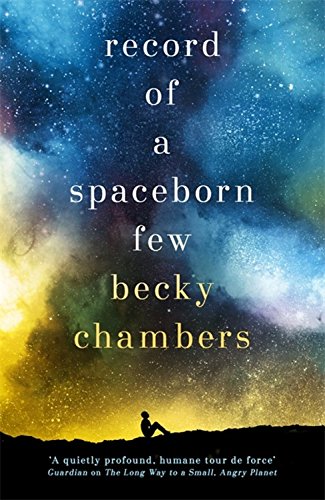
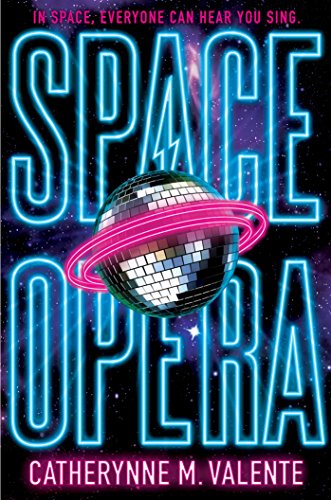
Is it possible to have an award that recognizes true excellence that doesn’t devolve into a thinly-veiled popularity contest on the one hand, or else isn’t taken over by a small and snobbish group of elites on the other? I can see how these sorts of concerns might have driven many of the concerns about “slate voting” during the Sad Puppies controversy in 2015. Unfortunately, they clearly took it to the opposite exteme, turning the Hugos into their own exclusive club, un-personing conservative and Chinese fans alike.

In the end, it probably comes down to who we are as a people more than what systems have been put in place. If fandom really was the kind of place where people could come together over their shared love of science fiction and fantasy, regardless of politics, religion, nationality, or anything else, then perhaps the Hugos actually would be a marker of excellence, and not just identification with a very small (and snobbish) in-group. And I do think there have been times in the past where that has been the case.

So, in a funny way, this whole controversy around the 2023 Hugo Awards actually makes me want to go back and read a bunch of the older Hugo-nominated books from previous years, to see how I would have voted (and how my own vote differs from the votes that were actually cast). I think it could be a useful exercise, not so much in determining how useful or authoritative the Hugos ought to be (I figured that out a couple of years ago), but in determining my own reading tastes, and how they may or may not have fit in with previous generations of Hugo-award voting fans.

One of the most difficult things I’ve recently had to wrestle with is the realization that my own tastes and values run almost completely contrary to the culture in which I live. I don’t think the Hugo Awards have ever represented mainstream culture, but it is still an interesting bellweather of a subculture that I love, plagued as it might be by in-group politics and petty infighting. And I do think there were periods where my own tastes and values aligned pretty well. I’m curious to see which periods those are.

All of this is to say that I’ve been going through all of the old Hugo nominations for Best Novel, reading through them to see how I would have voted for each year. I’m mostly just doing it for myself, but I may post it here if you guys are interested, since it probably would make for some good blogging content.

The false narrative of a transgender “genocide” is a call for violence

Yesterday, a 28 year-old female-to-male transgender attacked a private Christian school in Tennessee, killing three teachers and three nine year-old students before being shot and killed by police. According to the police, this was a targeted attack that was likely motivated by the shooter’s transgenderism. Tennessee recently passed a ban on transgender surgeries for minors, and this shooting happened immediately after trans activists called for a “day of vengeance” against what they falsely call a “genocide.”

What do the trans activists mean when they accuse conservatives of perpetrating a “genocide” against them? Where did they come up with that term? My understanding is that it comes from the idea that when somebody declares themselves as trans, they adopt a new persona that replaces who they were before. Thus, the new persona of Caitlyn Jenner replaced the old persona of Bruce Jenner, or the new persona of Elliot Page replaced the persona of Ellen Page. In the eyes of the pro-trans ideologues, when a trans person adopts their new persona, it is like a new person is born into the world. Thus, anyone who refuses to affirm their transgender identity is guilty of trying to “kill” this new person, and anyone who opposes transgender ideology generally is guilty of “genocide.”

We saw this play out recently in the fiasco over the 2021 Hugo-nominated short story “I Sexually Identify as an Attack Helicopter.” It started when Clarkesworld published the story, which was written by an anonymous male-to-female transgender under the name Isabel Fall. The story was based on a meme ridiculing transgender ideology, and Fall’s intent in writing the story was to own the meme and turn it into a pro-trans statement. However, the readers of Clarkesworld failed to recognize this, and attacked Fall as being secretly anti-trans, going so far as to suggest that Fall’s author bio (born in ’88) was a dog whistle to Nazis.

This is where things get interesting. Isabel Fall (who to my knowledge still remains anonymous) reacted to these attacks by requesting that Neil Carke unpublish the story. Fall then decided that he wasn’t transgender after all, and stopped transitioning. This prompted a bunch of hand-wringing by the woke leftist mob that had attacked Fall as being secretly anti-trans, ultimately culminating in the essay “How Twitter Can Ruin a Life,” which was nominated for a Hugo in 2022. When you read it, you realize that these people literally believe that Isabel Fall was “killed” by the online reaction to “her” story, and thus became a victim of the ongoing “trans genocide.”

Here’s the thing, though: nobody actually died in this fiasco. The person who wrote “I Sexually Identify as an Attack Helicopter” is still, to my knowledge, very much alive. But the three nine year-old kids and their three teachers who were shot to death in Nashville yesterday by a transgender mass shooter are NOT alive. And if it turns out that the shooter was motivated by this false narrative of a “transgender genocide,” then all of the trans activists calling for violence in reaction to this “genocide” have blood on their hands.

It very much reminds me of how woke ideologues conflate speech with violence, and violence with speech. The logic goes like this: hate speech is a form of violence, therefore we are justified in using actual, physical violence to silence and intimidate anyone who is guilty of anything we deem to be hate speech. In much the same way, trans activists believe that the rejection of anyone’s transgender persona is a form of genocide, and therefore people like this shooter are justified in committing actual mass killings of people who oppose transgenderism.

It is not possible to share a country with these people, for the simple reason that it is not possible to agree to disagree with someone who follows this kind of zero-sum logic. We must all either submit to their ideology, or we must, as a society, reject it. Don’t get me wrong: I’m not saying that we should round up and kill anyone who posts a transgender flag to their social media. However, anyone who calls for violence in response to the “trans genocide” should be prosecuted immediately, and punished to the fullest extent of the law. Calls for violence are not protected speech under the first amendment. If we fail to do this—if our legal system fails to hold these transgender ideologues responsible for their crimes, perpetuating the double standard that lets “mostly peaceful” leftist rioters walk free while the J6 “insurrectionists” languish in solitary confinement—then I fear that our country will break apart and fall.

I say this, recognizing that it may very well get me black-listed in the award-winning publications in my own field. Mainstream science fiction has very much embraced the transgender ideology that promotes this false narrative of a “trans genocide,” as evidenced by the fact that “How Twitter Ruined a Life” was nominated for the Hugo. But as a writer, I believe that it is my solemn duty to speak the truth as best I understand it, and when I see tragic events like the ones currently unfolding in Nashville, I cannot in good conscience remain silent about this issue.

Accusation is projection is confession. When transgender activists accuse us of committing genocide, they are confessing that they want us all dead. Plan accordingly.

A Crippling Realization

I have come to realize something that is, in some ways, making it very difficult for me to keep writing. Not in the short or the medium term—I’m actually making quite good progress on my current novel WIP, and am optimistic about finishing my three unfinished trilogies in the next couple of years. But when I look on the horizon, this thing that I’ve come to realize is looming like a storm cloud, and I worry that if something doesn’t change, and change soon, that storm is going to wipe me out.

When Orson Scott Card spoke at the BYU Library in 2007, he made a profound statement that had a great influence on my writing, and my decision to write. He said that stories and fiction are how the culture talks to itself. In other words, if you want to understand a particular culture, look at the stories that it produces.

The problem is that unfortunately, I have come to despise almost everything about our current culture.

I hate all the hypocrisy and virtue signalling that we see online. I hate how that virtue signalling has poisoned almost every major franchise, from Star Wars and Marvel to the commercials and advertisements that we consume on a daily basis. I hate how the virtue signalling of our gatekeepers has allowed our cultural vandals to erase our history and destroy our cultural icons.

I hate how our education system has become corrupted. I hate how it has been transformed into an indoctrination system that brainwashes everyone who goes through it, producing nothing but legions of woke fanatical footsoldiers and hordes of incompetent midwits. I hate how it holds our children hostage for the benefit of the unions, and how it utterly exterminates our children’s natural creativity and curiosity in order to turn them into nothing but cogs in society’s grand machine.

Above all else, I hate and hold in utter contempt how our culture has become anti-life, and promotes the unrestricted wholesale slaughter of our unborn children as a moral good. I hate how this rejection of the value of life has trickled down into every facet of our society, poisoning how we see each other and how we treat our fellow men. I sincerely believe that our ongoing genocide of the unborn exceeds the evil of the Nazi holocaust in every moral and ethical dimension. I also hope that future generations have the moral clarity to hold us in greater contempt than the Nazis, and plan to do everything within my power to make that a reality.

I hate the sexual revolution, and how it eviscerated the traditional family while also producing the most prudish and sex-negative society that this nation has ever seen. I hate how our sexually “liberated” culture celebrates our worst perversions and teaches us to define ourselves by our basest urges, instead of urging us to strive for something higher and better. I despise the transgender movement that is butchering our children and annihilating their innocence, all for the carnal gratification of the worst sexual predators among us.

I hate how our culture rejects the things of God. I hate how that even most self-described Christians have never read the Bible cover to cover. I hate how our churches are led by moral cowards who fear to offend their followers more than they fear to offend the Almighty. I hate how many of our priests and pastors have come to serve Mammon more than they serve God.

I hate almost every book and story that has won a major literary award within my lifetime. When I survey the field of science fiction and fantasy, I see hordes of talented writers willfully prostituting themselves to the spirit of the age, and pleasuring the whore of Babylon for the praise and glory of the world. When I read the books that our culture holds up as the greatest contemporary works, I am disgusted by the sexual depravity and nihilistic materialism that pervades them. Aside from Brandon Sanderson and a few obscure authors whose works the culture is actively working to suppress, I find nothing redeemable or even genuinely thought-provoking in any of these contemptible works.

Most of my readers are over the age of 55, probably because of just how much I hold our contemporary culture in such contempt. And yet, I cannot help but despise the Boomers for robbing me of my birthright and leaving me buried in a mountain of debts that neither I, nor my children, nor my grandchildren will ever be able to repay. Every generation before the Baby Boomers aspired to give their children lives that were better than their own, but the Boomers squandered everything that the previous generations gave them, and left their children sicker, poorer, and more unloved. In fact, the Boomers cared so little for their children that they locked down the entire country, deprived them of the crucial years of their education, and forcefully injected them with an experimental jab, all out of fear that the virus would shave off a few of their rapidly waning years. The Boomers are the ones who gave us our totally dysfunctional education system, Roe v. Wade, the sexual revolution, and the genocide of the unborn. They are the ones who pushed God and religion out of public life, and corrupted our churches to the point where they would not recognize the Lord if He came down and preached a sermon to them Himself. If our country falls into a second civil war, it will be because of the Boomers more than any other generation.

And now we hear of wars and rumors of war in the east, and people tell me that we are closer to nuclear annihilation than at any other point in my lifetime. And yet, when I look at how corrupt and utterly depraved our society has become, I cannot help but wonder if that would be such a bad thing. We read that the sword of the wrath of the Almighty is bathed in heaven, and that the angels are pleading with the Lord to let it fall, so that it will purge our iniquity from the face of this Earth. Sometimes, I find myself raising my voice with the same plea.

I recognize that “the culture” is not monolithic, and that there are many people who hold similar opinions and think and feel the same way that I do. And I hope you don’t take the wrong idea from this rant: I’m not about to throw my life away, or do something terrible. I have a loving wife and family, and friends in my life who are genuinely good people. It’s funny how that even as things seem to get worse and worse as far as the country is concerned, the people immediately around me don’t seem nearly as bad, and my own personal life actually seems to be getting better.

But as a writer, it’s my duty and responsibility to be a part of the wider cultural conversation, in order to write stories that resonate properly with my readers. To do that, I need to keep my finger on the pulse of a culture that I have come to hold in utter contempt.

How long can this situation stand? Either the culture needs to change, or I need to change something about what I’m doing, which means that I should probably change myself. Should I change my view of the culture, or should I channel that contempt into my writing somehow?

One of the reasons I started writing the Zedekiah Wight stories under my J.M. Wight pen name is to help maintain my sanity in the face of this dilemma. I just finished writing a short story where Zedekiah basically instigates the nuclear annihilation of the galaxy, because of the reasons I outlined above. I was planning to release that story in April, but I may move it up a couple of months. Zedekiah Wight is the character who fascinates me the most right now, even though almost half of my writing group despises him. Is he a madman, or is he the last sane man in a galaxy that has gone absolutely insane? I honestly do not know.

And what about me? Is my utter contempt of the culture a sign that I’ve gone crazy, or that the world has gone crazy all around me? And what does that mean for my writing?