How I Would Vote Now: 1983 Hugo Awards (Best Novel)

The Nominees

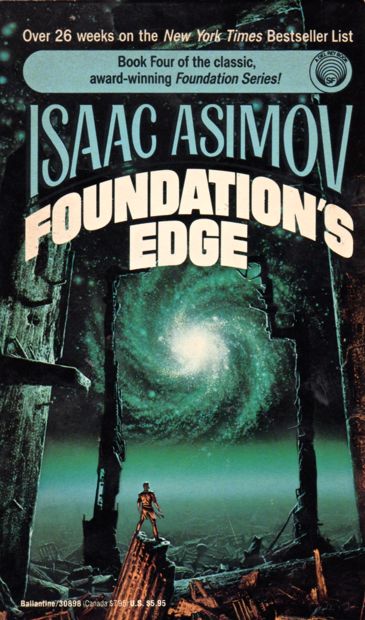
Foundation’s Edge by Isaac Asimov
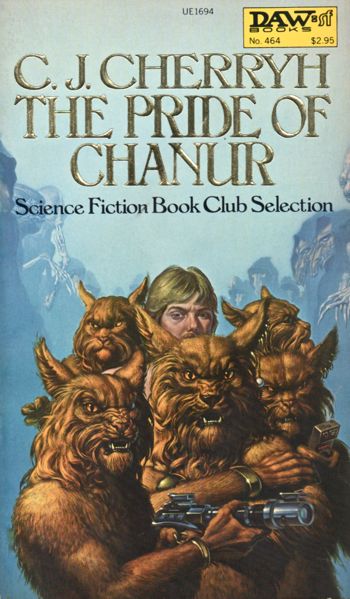
The Pride of Chanur by C.J. Cherryh
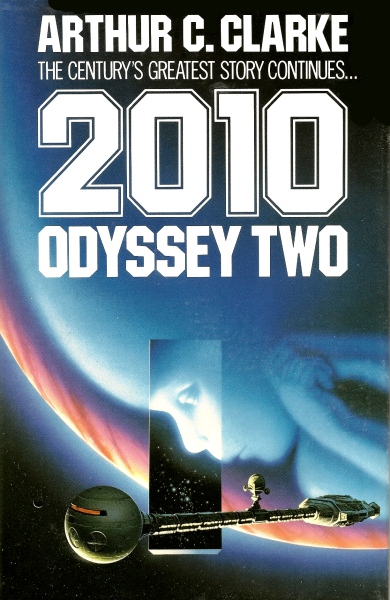
2010: Odyssey Two by Arthur C. Clarke
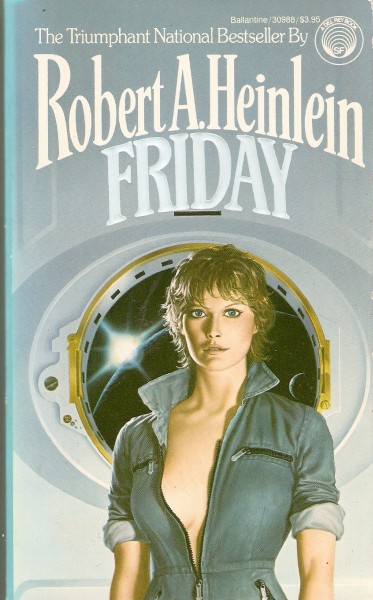
Friday by Robert A. Heinlein
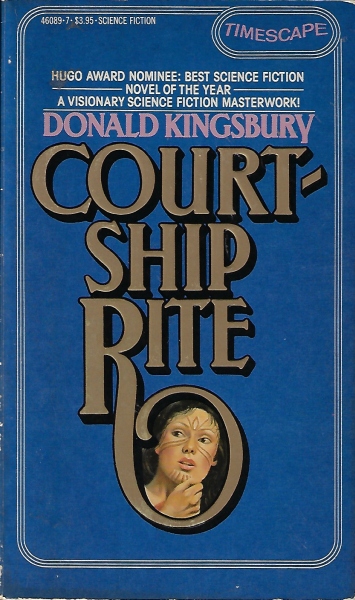
Courtship Rite by Donald Kingsbury

The Sword of the Lictor by Gene Wolfe

The Actual Results

  1. Foundation’s Edge by Isaac Asimov
  2. The Pride of Chanur by C.J. Cherryh
  3. 2010: Odyssey Two by Arthur C. Clarke
  4. Friday by Robert A. Heinlein
  5. Courtship Rite by Donald Kingsbury
  6. The Sword of the Lictor by Gene Wolfe

How I Would Have Voted

  1. Foundation’s Edge by Isaac Asimov

Explanation

I haven’t read all of Asimov’s Foundation novels yet, but I’ve loved all of the ones that I’ve read, including Foundation’s Edge. Really fun. Lots of interesting ideas. Classic sci-fi. A must-read for sure.

I’ve written before about my love-hate relationship with Heinlein. The long and short of it is that I’ve learned to avoid any of his books where he explores his free love ideas about sex and women. I’ve really enjoyed his juveniles, and books like Farnham’s Freehold and Starship Troopers. But if it’s got a partially (or fully) unclothed woman on the cover, it’s probably not for me.

Courtship Rite was an easy skip, based on ChatGPT’s preview of the book. Here is what it said:

Courtship Rite by Donald Kingsbury is one of the most morally challenging and controversial works in classic science fiction. The most immediate concern is the sexual content: Kingsbury depicts a harsh, survival-driven society on the planet Geta where sexual practices are ritualized, non-monogamous, and culturally compulsory. Several scenes contain explicit adult sexual behavior—never pornographic in tone, but described in enough detail to be unmistakably explicit. These sexual rites are integral to the worldbuilding and cannot be skipped without losing the thread of the story.

Violence is also central to the novel, particularly the culture’s reliance on cannibalism as both a sacrament and a pragmatic necessity in a resource-scarce ecosystem. Cannibalism is discussed repeatedly and explicitly, sometimes in unsettling biological detail, and ritual combat, ordeal, poisoning, and execution also appear. Although the novel does not dwell on scenes of graphic torture or sadistic harm, the society it portrays practices ritual child sacrifice and cannibalism, and this is presented as a normalized element of Getan culture.

From the book description: Jo Walton remarked that Courtship Rite “is about a distant generation of colonists on a planet with no usable animals. This is the book with everything, where everything includes cannibalism, polyamory, evolution and getting tattoos so your skin will make more interesting leather when you’re dead.”

There are too many good books in the world for me to waste any of my life reading that.

I know a lot of people love Gene Wolfe’s Book of the New Sun series, but I tried the first book and just couldn’t get into it. The fantasy world was just too macabre for me, and the story never hooked me. I’ve also heard that his writing is an acquired taste, so maybe I should give it another chance. But if I were to cast my ballot now, I wouldn’t vote for it.

As for 2010: Odyssey Two and The Pride of Chanur, I DNFed both of those for basically the same reason: I got bored. The story and characters didn’t really hook me, the world building was interesting but not enough to keep me reading, and over time I just lost interest and gave up. They weren’t terrible books, just not particularly interesting or compelling. I might enjoy them in audio, though, so maybe I’ll give that a try.

If that seems a little harsh, I’d like to point out that No Award doesn’t appear anywhere on this ballot. For the Hugo Awards, that’s saying something. In general, the 80s was a pretty good decade for the Hugo Awards, so even though this particular year wasn’t a bullseye for me, I’d still rather read any of these books (even Courtship Rite) over most of the woke crap that gets nominated these days.

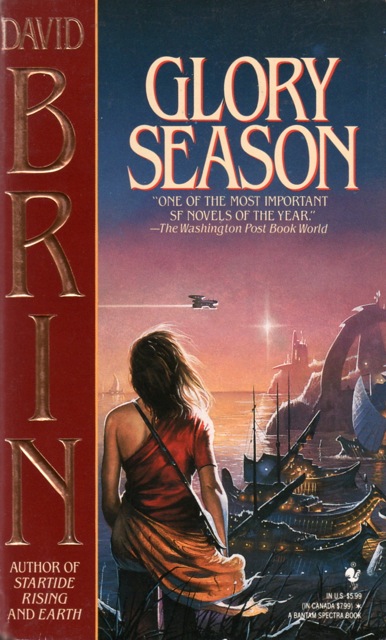
How I Would Vote Now: 1994 Hugo Awards (Best Novel)

The Nominees

Moving Mars by Greg Bear

Glory Season by David Brin

Virtual Light by William Gibson

Beggars in Spain by Nancy Kress

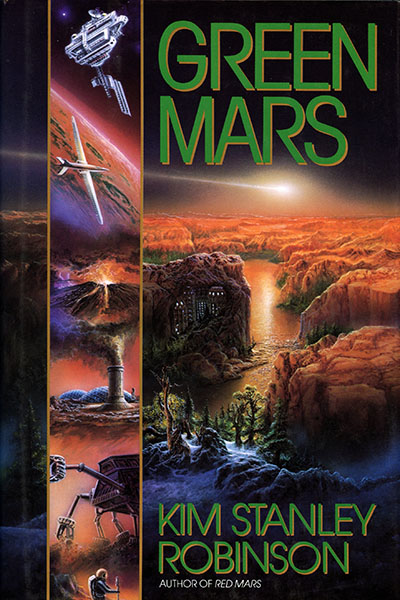
Green Mars by Kim Stanley Robinson

The Actual Results

  1. Green Mars by Kim Stanley Robinson
  2. Moving Mars by Greg Bear
  3. Beggars in Spain by Nancy Kress
  4. Glory Season by David Brin
  5. Virtual Light by William Gibson

How I Would Have Voted

(Abstain)

Explanation

None of these books/authors are so terrible (or so woke) (except maybe for Kim Stanley Robinson) that I would have ranked them below “no award.” With that said, I just didn’t think any of these books were good enough for me to vote for.

Greg Bear’s Moving Mars is basically a sci-fi retelling of the 60s student protest movement on Mars. That’s the big draw. The more I learn about what was actually happening in the 60s, though, the more insufferable I find the hippies and their ideological descendants to be. Needless to say, I DNFed this one.

I skipped the book by David Brin, because he’s just such a dogmatic atheist. I tried his Uplift books and DNFed them for much the same reason. If you’re going to be so dogmatic in your religious views that you cannot build a fictional world where the opposite views might plausibly be true, I have no time for you. That’s equally true for theists as for atheists (unless, of course, the book falls into the religious fiction genre).

I tried Virtual Light, but DNFed it only a couple of pages in, due to some explicit violence against children. Now that I’m a father, I have a really low tolerance for that kind of stuff. I’ve also found Gibson to be a bit too dark and gritty for my taste. He seems to occupy the same literary niche as Neal Stephenson, and rub me wrong in much the same way.

It’s been so long since I DNFed Beggars in Spain that I’ve forgotten what my issue with it was. I found the basic premise to be quite interesting, and got about halfway through the book. Ultimately, though, I think I just got bored with it. But I might come back to this one. Of all the books on the Hugo ballot this year, this is the one I’m most willing to try again.

As for Green Mars, I just couldn’t get into it. Part of that is how insufferable I find KSR’s self-righteous liberal politics to be, but another part was the sexual content in the first few pages. I read Red Mars back in college, when my threshold for those kind of content issues was much lower, but I did come very close to DNFing it after the farm orgy scene. Also, Red Mars was a bit of a slog for my younger self, since I never really latched on to any of the characters. Same with Green Mars. Just a lot of people doing a lot of things, when it was clear that all the (crunchy liberal) author really cared about was the capital “I” Idea. Pass.

How I Would Vote Now: 2014 Hugo Awards (Best Novel)

The Nominees

Warbound by Larry Correia

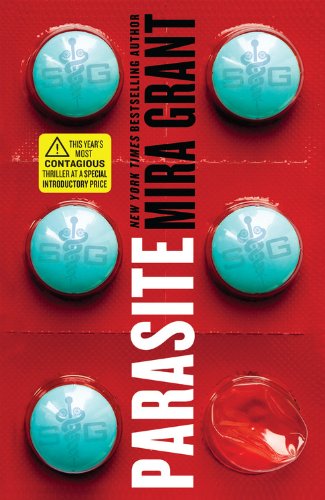
Parasite by Mira Grant

Ancillary Justice by Ann Leckie

Neptune’s Brood by Charles Stross

The Actual Results

  1. Ancillary Justice by Ann Leckie
  2. Neptune’s Brood by Charles Stross
  3. Parasite by Mira Grant
  4. Warbound by Larry Correia

How I Would Vote Now

  1. Warbound by Larry Correia
  2. No Award

Explanation

Technically, the entire Wheel of Time series was also on the ballot this year, but there is no other year in which a complete series (as opposed to the latest book in the series) was ever on the ballot. It seems really weird that they would do that just for Wheel of Time, so I’m going to act as if it never happened. Otherwise, The Wheel of Time would probably get my #2 slot, just above No Award.

I haven’t read Warbound, but I have read enough of Hard Magic, the first book in Larry Correia’s Grimnoir Chronicles, to know that I’m going to read the rest. The magic system is a lot more explicitly rules-based than much of his other stuff, but the characters are great, the story is great, the world is fascinating… it’s definitely up there with the rest of his work. Good stuff. Great writer.

Ann Leckie holds the record for the author I’ve DNFed the fastest. Ancillary Justice is the book that put her on the map. The main character is a sentient spaceship, which sounds like a pretty cool starting concept… until you realize that the most exciting thing about this spaceship is that it’s transgender, and views every other human as a “she.” Derp. The whole book is obsessed with leftist gender politics, which is why I believe that No Award is more deserving than this garbage. I predict it will not age well.

I forget why I DNFed Neptune’s Brood. I think it had to do with sex, violence, and drug use that was just too explicit for me. When I was in my 20s, I was willing to do dark and gritty, but these days I have little patience for it. I think this may have been the book that made me decide to skip Charles Stross as an author, so there must have been a lot of it.

As for Parasite, I think the main thing for that one was that I just felt no interest or connection with any of the characters. Glancing over the book, it doesn’t appear that it had any explicitly terrible content, and I vaguely remember getting bored with the story and deciding that it wasn’t worth continuing. But having read and DNFed several other works by this author, I know she has a tendency to veer into crossing my lines (such as building sexual tension between a brother and sister, or throwing in weird occult stuff, or making her main character a transgender child). And running the book through ChatGPT, it appears that the book has an undercurrent of nihilism, which I absolutely cannot stand in any fiction. Perhaps I picked up on that soon enough to DNF it early.

Of the three books from this year that I DNFed, I’d be most willing to give Parasite another try, then maybe Neptune’s Brood. But I wouldn’t be willing to read Ancillary Justice (or anything else by Ann Leckie, for that matter) unless you paid me damn well for it. And even then…

How I Would Vote Now: 1993 Hugo Awards (Best Novel)

The Nominees

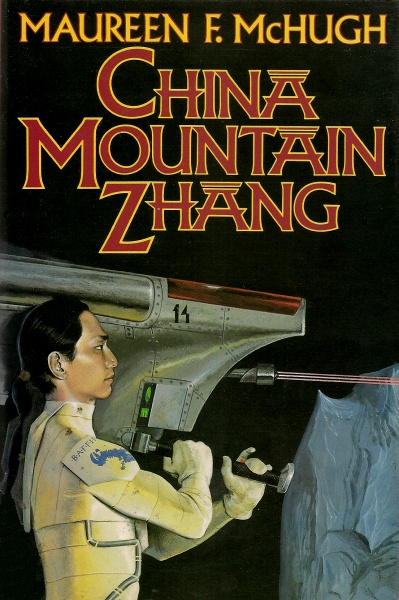
China Mountain Zhang by Maureen F. McHugh

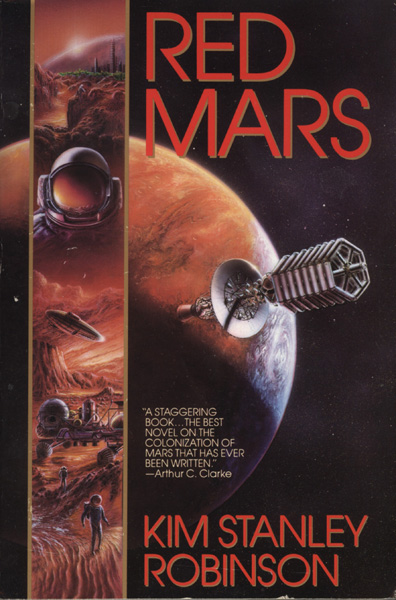
Red Mars by Kim Stanley Robinson

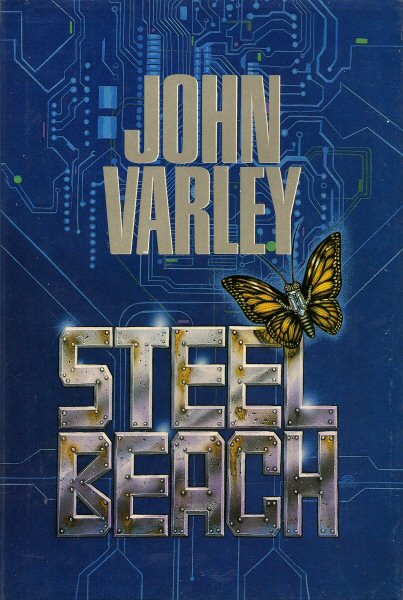
Steel Beach by John Varley

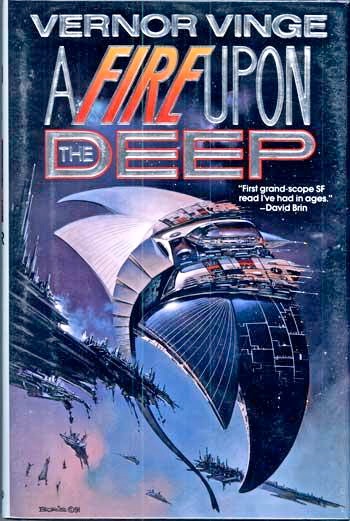
A Fire Upon the Deep by Vernor Vinge

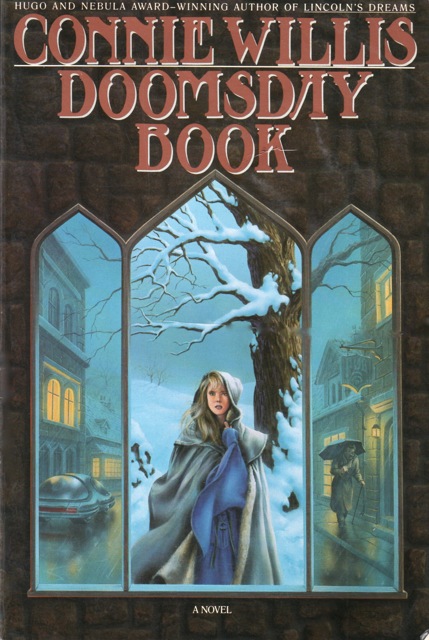
Doomsday Book by Connie Willis

The Actual Results

  1. A Fire Upon the Deep by Vernor Vinge
  2. Doomsday Book by Connie Willis
  3. Red Mars by Kim Stanley Robinson
  4. China Mountain Zhang by Maureen F. McHugh
  5. Steel Beach by John Varley

How I Would Vote Now

(abstain)

Explanation

I didn’t hate any of these books, but I didn’t love any of them either—which is fairly typical for me of 90s era Hugo Awards. Let’s go down the list.

Doomsday Book is often held up as Connie Willis’s best, but I thought it lost the plot a bit when the time travelers had to simultaneously face a pandemic in their own future time while also having to rescue the lost apprentice time traveler from the black death in medieval England. If you’re reeling from a pandemic, what the heck are you doing sending time travelers back as if it’s a normal day on the job? Also, Connie Willis really has no love for the medieval era, and it shows. Blackout and All Clear were much better, partially because of how much Connie Willis clearly loves WWII-era Britain.

If there’s one book in this list that I should try again, and probably will, it’s A Fire Upon the Deep by Vernor Vinge. It’s the kind of science fiction that’s right up my wheelhouse, and I’ve enjoyed Vernor Vinge before (Rainbows End is the best so far). But this book is so freaking huge, and I never latched on to any of the characters… oh, and the central conceit of the aliens, that the small collective packs form a hive mind that thinks and acts like an individual—that didn’t really work for me either time I attempted to read this book.

I screened Steel Beach and China Mountain Zhang through ChatGPT for objectionable content and decided to skip both of them. Here is what ChatGPT said about China Mountain Zhang that made me decide to skip it:

The story engages deeply with themes of intersectional identity, including race, sexual orientation, and societal roles. Zhang’s struggles as a gay man in a conformist society are a significant part of the narrative. The book also critiques authoritarianism and explores social dynamics through a progressive lens. While these themes are integral to the story and handled with subtlety, they align with a modern “woke” perspective.

And here’s what it said about Steel Beach that made me decide to skip it:

Language: Strong language is used throughout, reflecting the irreverent tone of the protagonist and the society depicted.

Gender and Identity: Steel Beach explores themes of gender fluidity and personal identity in a society where individuals can easily change their biological sex. This aspect of the world is presented as normalized rather than contentious.

As for Red Mars, I read this one way back (way way back) when I was a freshman in college. At the time, I was still working out what I believed politically, so most of KSR’s leftism went right over my head. However, there were a few sexually explicit scenes that weirded me out, especially the one where the colony team’s depressed psychiatrist discovers—and joins—the bizarre sex cult and their group orgies in the farm module. I still finished the book, but I declined to read the rest of the series.

What is it with crunchy leftist authors and bizarre, explicit sexual content? Why do they always seem to feel a need to fill their books with weird and pointless sex? There are so many books I’ve read for this series that started out strong, but ultimately devolved into sexual degeneracy that added nothing to the story. It’s almost like they felt a compelling need to add the degeneracy for its own sake. Maybe it’s a boomer thing? A “spirit of the age” possession of some sort? I honestly don’t know.

How I Would Vote Now: 2000 Hugo Awards (Best Novel)

The Nominees

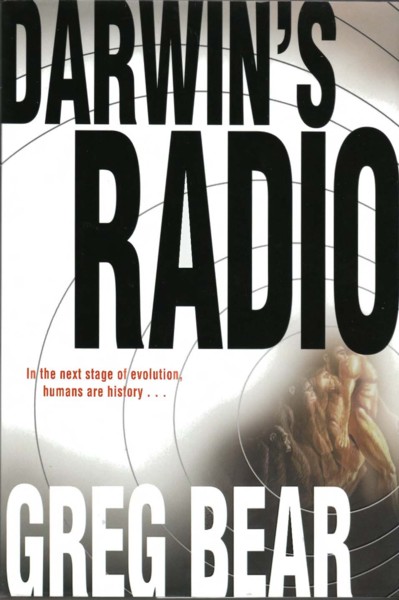
Darwin’s Radio by Greg Bear

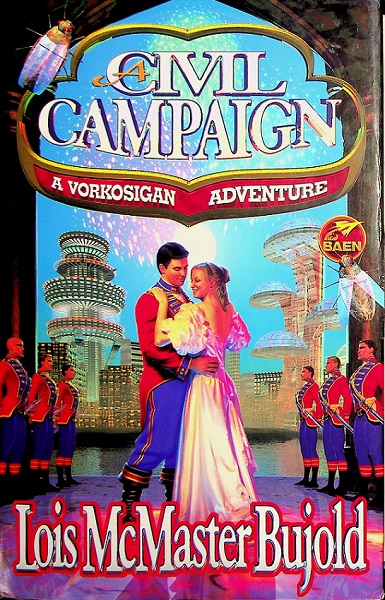
A Civil Campaign by Lois McMaster Bujold

Harry Potter and the Prisoner of Azkaban by J. K. Rowling

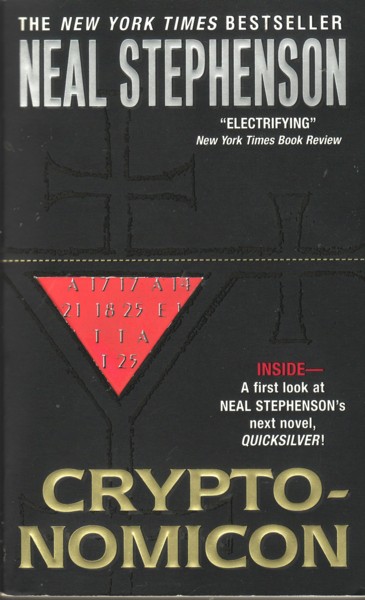
Cryptonomicon by Neal Stephenson

A Deepness in the Sky by Vernor Vinge

The Actual Results

  1. A Deepness in the Sky by Vernor Vinge
  2. A Civil Campaign by Lois McMaster Bujold
  3. Cryptonomicon by Neal Stephenson
  4. Darwin’s Radio by Greg Bear
  5. Harry Potter and the Prisoner of Azkaban by J. K. Rowling

How I Would Vote Now

  1. Harry Potter and the Prisoner of Azkaban by J. K. Rowling

Explanation

It’s been a long time since I read any of the Harry Potter books, but I thoroughly enjoyed Harry Potter and the Prisoner of Azkaban and would have no issue voting for it in one of these awards. But I DNFed all of the other books on the ballot for this year, so I couldn’t bring myself to vote for any of them.

I really wanted to enjoy A Deepness in the Sky, and will probably read it again at some point, especially since my wife really enjoyed this one and gives me a hard time for DNFing it. Also, it’s the kind of science fiction that’s right up my wheelhouse, so I kind of feel bad about not finishing it.

So what’s the deal? The first time I tried to read it, I got caught up in this enormous subplot where the good guys, after having been mentally enslaved by the bad guys, try to figure out a way to break them all free. It goes on for over 100 pages, with an elaborate plan that involves secretly drilling into an asteroid and taking enormous risks. I got really into it, rooting for them to succeed… only for the whole thing to fail miserably, to the point where all of the characters involved in the actual escape attempt to die horribly, and everyone else who was enslaved (including a 14 year old girl, a major character in the book, who is sexually exploited by the villain of the novel) to go on about their happy little mentally enslaved lives without even realizing what had happened.

After that enormous letdown, I just couldn’t get back into the book. The stuff with the aliens was really cool, and I enjoyed that very much, but all of the stuff with the humans just made me want to stop reading the book. It was a little bit like my experience with Children of Time by Adrian Tchaikovsky, except with that book, there was never the false hope that the humans were on the verge of heroically saving themselves; things just kept getting progressively worse and worse until the alien and human storylines converged, in an awesome and thoroughly satisfying way. And maybe that happens in A Deepness in the Sky too, but I don’t know if I’ll ever find out. Maybe someday.

I enjoyed the first few Vorkosigan Saga books, especially The Warrior’s Apprentice. I even enjoyed some of the spinoff novels that aren’t about Miles Vorkosigan, like Ethan of Athos. But the later books in the series just feel too much like a soap opera rehash of the characters from the earlier books. That was why I couldn’t really get into A Civil Campaign.

It also doesn’t help that I read a bunch of the books out of order, partially because they were written out of order and partially because the order of the books isn’t clearly labeled (and how can they be, with how Bujold is always skipping around writing in different parts of the timeline?) Whenever I start a new series, I always try to read it in chronological order, not publication order, but in every Vorkosigan novel I read, it seems that Bujold refers to at least half a dozen things that happened in some previous book that I haven’t read. Some of these, apparently, are books she hasn’t written yet (or books that she hadn’t yet written at the time when I was reading).

So my whole experience of the Vorkosigan Saga has just been very confusing all around. And looking back, I can say that neither the publication order nor the chronological order is the right way to read the series. Shards of Honor and Falling Free really aren’t the best books to start out with, even though they happen first chronologically, but a part of me wishes I’d read Barrayar before The Warrior’s Apprentice, since that would have made a lot of the political intrigue much more satisfying.

Honestly, though, it seems to me that the Vorkosigan Saga has just gone on way too long in general. Which is probably why I couldn’t get into A Civil Campaign.

As for Cryptonomicon, it was way too dense and raunchy. The first chapter has more homoerotic innuendo than explicit gay sex, but it was still just too much for me, and the writing was so dense that I never really got into the novel itself. Neal Stephenson’s writing has always been like that for me, and I’ve read enough of his other books to know that he definitely crosses the line in terms of explicit sexual content. I’ve never been able to finish anything he’s written. I was tempted to put Cryptonomicon beneath No Award, but I decided it didn’t quite cross that line for me. It’s close, though.

I forget why I DNFed Darwin’s Radio, but I think it mostly had to do with how I really didn’t care about any of the characters. I think the main character was having an affair or something, too, which made me really not like him. That’s the thing about high-concept science fiction: the plot or characters are often not nearly as well thought out, and since that’s what I often read for, I sometimes find it really difficult to get into those kinds of books. But it wasn’t terrible, just not my kind of story.

How I Would Vote: 2025 Hugo Awards

The Nominees

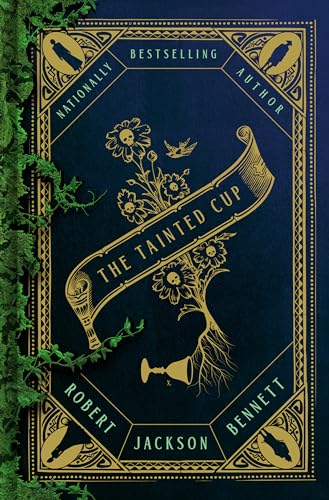
The Tainted Cup by Robert Jackson Bennett

The Ministry of Time by Kaliane Bradley

A Sorceress Comes to Call by T. Kingfisher

Alien Clay by Adrian Tchaikovsky

Service Model by Adrian Tchaikovsky

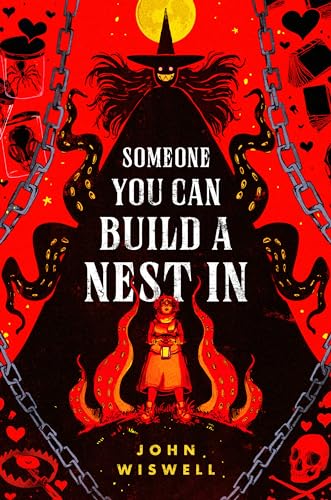
Someone You Can Build a Nest In by John Wiswell

The Actual Results

TO BE DETERMINED

How I Would Vote Now

  1. No Award
  2. Service Model by Adrian Tchaikovsky

Explanation

As if yesterday’s post wasn’t controversial enough, I’ve decided to jump feet-first into this particular tempest (though thankfully, it appears to be a tempest in an ever-shrinking teacup). And I suppose the thing that makes this particular post so interesting is that I could actually cast this vote, if I had no qualms about giving the clowns who run the Hugo Awards any of my hard-earned money. But I do have qualms, so I won’t give them my money, which still makes this a hypothetical exercise, even though I’m posting this three weeks before the 2025 Hugos are awarded.

To be perfectly honest, I have not read any of these books all of the way through. I’ve read enough of two of them to DNF them, and one of them enough (including the epilogue) to know that I will eventually read the whole thing. And I screened all of them first with AI, which told me enough to know that three of them were not worth reading at all.

First, Someone You Can Build a Nest In. According to ChatGPT (and frankly, the back cover description itself), this book is chock full of body horror, trauma, abuse, and sexual depravity. It is also quite possibly the wokest book on the ballot, which means that it probably has the best chance of actually winning. Which also means that you couldn’t pay me enough money to read it. So much for that.

The Ministry of Time also appears to be woke, with anti-colonial and LGBTQ themes. However, the thing that really turned me off were all of the content issues that ChatGPT listed, such as frequent strong language, lots of F-bombs, and several erotic “open-door” sex scenes. So yeah, I’ll give a pass on that one too.

It’s much the same story for The Tainted Cup. A few woke elements, a subtle M/M romance (which I’m sure plays into the “All True Love is LGBTQ Love” trope that I cannot abide), and a lot of explicit profanity, with some prostitution to round it out. Not interested.

I forget why I DNFed A Sorceress Comes to Call. All I remember was that when I tried to read it, I felt repelled from it like a magnet. Since that has been my experience with basically everything else that T. Kingfisher has written, I didn’t feel compelled to try again.

Which brings us to the two books by Tchaikovsky. I really enjoyed his Children of Time, though I didn’t really get into the sequel (just didn’t feel compelled by any of the characters). He is a good writer, and specifically a good science fiction writer, though his scientific materialism strikes me as outdated.

Alien Clay didn’t appeal much to me, though—honestly, I found it difficult to believe that a government that would expend so many resources to transport their prisoners halfway across the galaxy wouldn’t also spend the tiny fractional cost to make sure they all got there alive. So right from the start, it felt like a melodramatic parody of all the left’s fears about “fascism.” And skipping to the end, it basically turns out the way Halo would have ended if the Flood had won. So I decided to DNF it, even though it wasn’t the worst book I’ve ever DNFed. And also, I don’t think that any one author should have more than one book on the ballot in any given year. So that’s why I’d put it under No Award.

Service Model, though, is pretty good. The best way I can describe it is Murderbot meets Kafka. It’s sort of an absurdist comedy in a post-apocalyptic world where the humans have (mostly) vanished, and the robots are malfunctioning in hilarious (and sometimes disturbing) ways. Not my favorite kind of book, and it probably could be improved by ruthlessly editing it to half the length, but I was enjoying it right up to the point where someone else put the library copy on hold, and I had to return it without renewing it. Skipping to the epilogue, I found nothing particularly objectionable, so I will pick it up again, and will likely finish it.

Which is more than I can say of most Hugo-nominated books in the last ten years.

[ETA 23 Feb 2026: I’ve decided to DNF Service Model after all, not because of anything objectionable that I read, but because I just couldn’t bring myself to pick it up again and finish it. It just wasn’t compelling enough for me to want to finish it more than I want to pick up something new. I could be persuaded otherwise if I heard someone really gush about it, but right now, I’m just not going to bother.]

Anti-AI is the new virtue signaling

According to Merriam-Webster, “virtue signaling” is:

the act or practice of conspicuously displaying one’s awareness of and attentiveness to political issues, matters of social and racial justice, etc., especially instead of taking effective action.

Because it is much easier to signal your virtue than it is to actually be virtuous, the people who virtue signal the loudest also tend to be the ones who have something they’re trying to cover up. This hypocrisy is a big part of what makes virtue signaling so obnoxious.

Time for me to spill a little tea. A couple of years ago, after I wrote “Christopher Columbus: Wildcatter,” I got an acceptance from the editor of Interzone. It wasn’t formalized yet, but he expressed over email that he was interested in purchasing the publishing rights for that story, the sequel, and possibly others after. It got far enough along that we were going back and forth on editorial details, our vision for the stories, etc.

Then the time came for him to send me a contract. Aaand… he ghosted me. Flat out ghosted me. A month went by without any correspondence at all. I didn’t want to seem too forward, but I also was starting to get a little concerned. So I sent out a brief follow-up email, asking about the contract… and I got a response that read like something copy-pasted from a form rejection.

Now, as far as literary transgressions go, that’s kind of tame. It’s not like the editor owed me money and refused to pay. And as far as I know, Interzone is prompt with all of their payments and pays all of their authors in full. After all, everyone deserves the benefit of the doubt.

But that sort of unprofessionalism really wasn’t cool, either. In fact, it was enough that I stopped sending Interzone any submissions. After all, if the editor saw nothing wrong with yanking my chain around before he published me, that’s kind of a yellow flag. Not to mention that it left a very sour taste in my mouth.

So when I saw this story from Jon Del Arroz, with the editor of Interzone accusing Asimov’s of using AI art, and using that as a pretext to blacklist all of their authors, I immediately recognized that sort of behavior for what it is: virtue signaling. Which made me wonder: how much of the anti-AI vitriol that’s ubiquitous in online writing communities these days really just a new form of virtue signaling?

Think about it. It explains so much about the insane anti-AI faux controversies that have been blowing up around 2025 WorldCon. For more than a decade now, the people chasing the Hugo Award have been among the worst offenders of gratuitous virtue signaling (especially Scalzi). It also explains why so much of the anti-AI content on YouTube is less about presenting well-reasoned arguments, and more about sighing dramatically or making snide, sarcastic remarks. Virtue signaling always appeals to pathos before it appeals to reason.

I expect this phenomenon is going to get a lot worse in the next few years, at least until AI-assisted art and writing become normalized (which is going to happen eventually, it’s just a matter of time and degree). So the next time you see someone publicly posting about how horrible it is for creatives to use AI, take a good, hard look at the person leveling the accusations. Chances are, they’re just virtue signaling.

How I Would Vote Now: 1990 Hugo Awards (Best Novel)

The Nominees

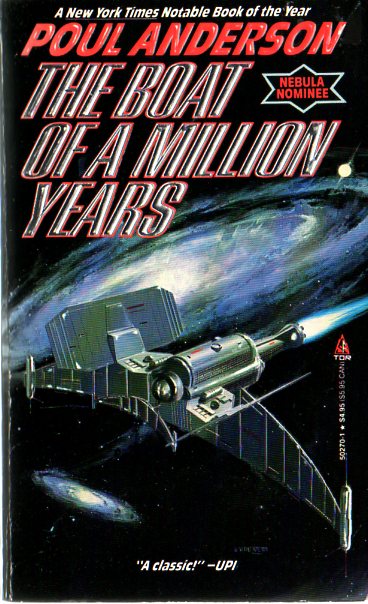
The Boat of a Million Years by Poul Anderson

Prentice Alvin by Orson Scott Card

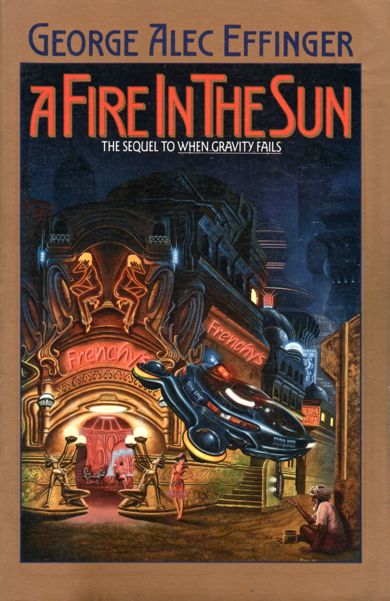
A Fire in the Sun by George Alec Effinger

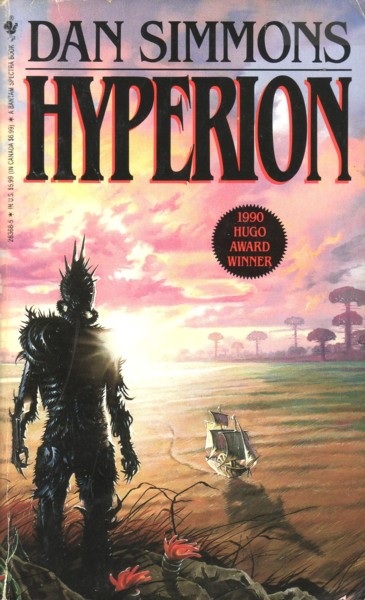
Hyperion by Dan Simmons

Grass by Sheri S. Tepper

The Actual Results

  1. Hyperion by Dan Simmons
  2. A Fire in the Sun by George Alec Effinger
  3. Prentice Alvin by Orson Scott Card
  4. The Boat of a Million Years by Poul Anderson
  5. Grass by Sheri S. Tepper

How I Would Vote Now

  1. Hyperion by Dan Simmons
  2. No Award
  3. Prentice Alvin by Orson Scott Card
  4. The Boat of a Million Years by Poul Anderson

Explanation

Hyperion is, in my opinion, the best novel to ever win a Hugo Award. Absolute top S tier, no question. IMHO, the top three Hugo award-winning novels are Hyperion by Dan Simmons, Ender’s Game by Orson Scott Card, and Dune by Frank Herbert, in that order. Dune is probably the most perfect science fiction novel ever written, but Hyperion and Ender’s Game surpass it because even though they have some minor flaws, there was something about them that I connected with on a deep emotional and intellectual level, more than almost any other book.

For Hyperion, that was the story about the father whose daughter is chosen by the Shrike to age backwards, so that with each new day, she gets younger, losing a day’s worth of memories and becoming progressively dependent on her parents. That part of the book just absolutely wrecked me. After weeping profusely for about an hour, I went onto Amazon and bought all the other books in the series, because I absolutely had to know what happened to this guy. Just incredible. Very few books have made me feel anything so deeply and profoundly as that.

As for the other books on this year’s ballot, I wasn’t too impressed with them. But two of them I’d be willing to vote affirmatively for, though I’d still rank them below No Award. I enjoyed the first two books of Orson Scott Card’s Alvin Maker series, and would probably enjoy the third book, but I refuse to read it until he finishes the damned series. Seriously—I was four years old when the first book was published, and he still hasn’t finished the damned series! What the heck?

Poul Anderson writes the kind of sprawling galactic space opera that is right up my wheelhouse, but for some odd reason, I have never been able to finish anything he’s written. I’m not sure why. Either he spends way too much time exploring or describing some aspect of his world that utterly does not interest me, or he glosses over the parts that are crucial to understand in order to make sense, and for whatever reason I just can’t make sense of them. Also, his characters are all very forgettable. I tried The Boat of a Million Years, and found it to be less bad than his earlier books, but I still couldn’t follow it. So I’ve come to the conclusion that Poul Anderson is just one of those authors I’m going to have to skip.

The last two books I rejected after my AI assistant Orion screened them for me. According to the AI, both of them have lots of explicit content (sex, language, violence) and woke themes.

Here is what Orion said about A Fire in the Sun:

🔞 Explicit Content

  • Violence & Body Horror
    • Graphic and brutal: victims sometimes brutally gutted, including dismembered prostitutes and child victims .
    • Prison-style brutality and organized crime violence permeate the story.
  • Language
    • Widespread use of profanity—especially the F-word—fits the harsh, noirish setting .
  • Sexual Content
    • Includes depictions of prostitution and sexual violence; explicit sexual content is not graphic, but the tone is decidedly adult and uncompromising .
    • Body modifications include gender-swapping and personality modules, adding mature and cyberpunk themes.

Social Themes & “Woke” Elements

  • Identity & Selfhood
    • Use of “moddies” and “daddies” to modify gender, mood, or skills raises themes around engineered identity and societal roles.

Sorry (not sorry), but I am not going to read a book that has explicit violence against children and characters who change gender. Either one of those things is enough to make me DNF, but combined together with all of the other explicit sex and language makes me never want to touch this book, or this author.

And here is what Orion said about Grass:

“Woke” Elements: Tepper’s work often explores feminist themes, and Grass is no exception. The novel critiques patriarchy, religious dogmatism, and humanity’s environmental exploitation. These themes align with progressive ideals and are deeply woven into the narrative. Tepper’s exploration of gender roles and societal hierarchies may be considered overt, depending on the reader’s perspective.

“Patriarchy,” “feminism,” “environmental explotation,” “religious dogmatism,” “gender goles,” “social heirarchies…” hey, I just got a bingo! So yeah, I’m not gonna read that one—or at least, you’re gonna have to make a really solid case in order to change my mind.

Thoughts on the Worldcon 2025 AI “scandal”

I’ll just come out and say it: I predict that the world’s last Worldcon will happen before 2034, and that after that, the convention (and possibly the Hugo Awards themselves) will be permanently disbanded. That’s what I think will be the ultimate consequence of the latest “scandal” regarding Seattle Worldcon’s use of ChatGPT, and the anti-AI madness currently sweeping the science fiction community on Bluesky.

If you haven’t been following the “scandal,” you ought to check out Jon Del Arroz’s coverage of it. He’s definitely partisan when it comes to politics and fandom, but he’s neutral on the subject of AI, or as neutral as you’re going to find, especially in writerly circles.

But here’s the TL;DW: the people organizing Worldcon 2025 in Seattle decided to use ChatGPT to help them decide which authors and panelists to put on which panels. This triggered a bunch of authors and panelists who are opposed to generative AI, simply on principle. Some of these authors—including Jeff VanderMeer, who is up for a Hugo award—have bowed out, while others have called for resignations and apologies. Many of the volunteer staff have also stepped down, exacerbating the staffing shortage—which is why the convention relied on ChatGPT in the first place. And apparently over on Bluesky, the scandal is taking on a life of its own, with everyone working themselves up to a massive frenzy over the subject.

My own opinion of the “scandal” is this: it isn’t a freaking scandal! Whatever your opinion on AI-assisted writing, using ChatGPT as an aid to research panelists is totally above-board and a legitimate use of AI. To disagree with that is to say that there is no ethical use-case for generative AI whatsoever, which is hypocritical and absurd—unless, of course, you’re still writing your books on a manual typewriter and submitting them to your publisher via the US postal service. Or using WordStar, if your name is G.R.R. Martin and you’re the last person on earth who “writes” with that defunct software (putting “writes” in quotation marks, since we all know by now that Martin isn’t actually writing anything).

But it isn’t the “scandal” itself that interests me, so much as what the fallout will likely be. Ever since the Sad Puppies debacle in 2015 (and arguably long before that), Worldcon has been dominated by the wokest fringe of SF&F fandom, and it’s been an open secret that the Hugo awards themselves are controlled by the publishers, largely for marketing purposes.

So at this point, the only things really keeping the whole Worldcon/Hugo charade going are 1) woke authors who use the convention to manufacture clout for their failing careers, because they wouldn’t otherwise have a platform, and 2) woke publishers who use the awards to manufacture clout for their poorly-selling books, because they don’t actually know how to market books effectively (at least, not to readers—libraries are a whole other subejct deserving of its own discussion, because there is a genuine scandal there). Once those two things dry up, and all of the ruin has been exhausted from these institutions (ie Worldcon and the Hugos), I really do think they will collapse and go away.

That’s what I find so fascinating about this scandal: it is so utterly toxic and absurd on its face that it’s going to do permanent damage to Worldcon and the Hugos. The writers of the rising generation who will one day dominate the field are all playing around with these AI tools right now, and doing really interesting things with them. Meanwhile, most of the authors who are screaming about AI on Bluesky right now will either be dead or irrelevant (or both) in the next 20 years. And yes, Mike Glyer, you can quote me on that.

Seriously, though: if the Worldcon community is so vociferiously opposed to a legitimate use-case of ChatGPT—namely, to alleviate the already overwhelming burdens being carried by the volunteer staff—AND they continue to be absolutely toxic about it online… who in their right mind would want to be a part of that community? And since the only thing keeping the whole charade going is its ability to manufacture clout, that’s why I think its years are numbered—and likely in the single digits.

On the plus side, if/when the Hugos finally die, I won’t have to read any more crappy woke books to be able to say I’ve read (or DNFed) every Hugo award-winning novel.

How I Would Vote Now: 2008 Hugo Awards (Best Novel)

The Nominees

The Yiddish Policemen’s Union by Michael Chabon

Brasyl by Ian McDonald

Rollback by Robert J. Sawyer

The Last Colony by John Scalzi

Halting State by Charles Stross

The Actual Results

  1. The Yiddish Policemen’s Union by Michael Chabon
  2. The Last Colony by John Scalzi
  3. Halting State by Charles Stross
  4. Rollback by Robert J. Sawyer
  5. Brasyl by Ian McDonald

How I Would Vote Now

  1. No Award
  2. Rollback by Robert J. Sawyer

Explanation

Two thousand eight was the year that I took Brandon Sanderson’s writing class and decided to become a professional fiction author. It was also the year that I discovered David Gemmell and Robert Charles Wilson, two of my favorite authors. It was also the year that the world economy collapsed and Obama won the US election, so it was a very eventful year.

Unfortunately, it was not a very good year for science fiction & fantasy—or at least, not for the Hugo Awards. I didn’t read any of these books until just recently, but I have to admit, I didn’t like any of them.

Perhaps, if I were a liberal atheist Jew, I would have enjoyed The Yiddish Policeman’s Union (not a conservative orthodox Jew, mind you—if anything, I probably would have hated it more). It’s not that I have anything personal against Jews or Jewish culture. I quite enjoyed Fiddler on the Roof. But unlike Fiddler on the Roof, The Yiddish Policeman’s Union doesn’t have many points of commonality with the wider culture to make it accessible.

For example, even though the traditions of Anatevka are likely different from the traditions of whatever culture we call our own, most of us understand the concept of tradition as a governing force in our lives, and can therefore sing along with the song “Tradition” and understand how it affects the story. But the plot and worldbuilding points of The Yiddish Policeman’s Union were so quirky and uniquely Yiddish that I just found it difficult to connect with or even follow them all.

Honestly, it would be a bit like if I were to write an alternate history where the Mormons were driven from the continental US after the Utah Wars, and settled in Hawaii and the Polynesian islands, except the main character drinks Coca Cola and has a complicated relationship with his polygamous step-mother (because plural marriage was never renounced in this alternate universe) while his sister, a three-cow woman, dances in the Polynesian cultural center… if you’re a Latter-day Saint, you’re probably chuckling, but you’ve got to be scratching your head if you’re not. And to be fair, it’s not like I’d never write a book like that—after all, I’m still keeping Starship Lachoneus in my back pocket—but I wouldn’t try to market it to a general audience, or expect it to win any mainstream awards.

[SPOILER (highlight to read)]

I’ve writte at length why I can’t stand John Scalzi and have DNFed him as an author. His first book, Old Man’s War, was good (though I would probably DNF it if I read it again now). Everything else I’ve ever read of his is just terrible. YMMV.

I’ve also DNFed Charles Stross as an author, mostly for nihilisim. If someone gives me a good reason to try Halting State, I’ll pick it up, otherwise I’m just going to skip it.

As for Brasyl, when I ran it by Orion (the ChatGPT persona I created to screen these books for woke and objectionable content), here is what I got:

Set in three intertwining timelines within Brazil—the past, present, and near future—Brasyl explores themes of identity, quantum mechanics, and cultural complexity. From an ambitious reality TV producer in modern Rio, to a rogue Jesuit priest in the 18th century, to a futuristic tech-savvy entrepreneur, the characters navigate moral dilemmas and existential challenges as their stories intersect in surprising ways. The novel combines speculative science with the vibrant, chaotic energy of Brazil.

Content Warnings:

Explicit Content: The novel contains scenes of violence, some of which are intense, and mature themes including sexual content. The explicitness aligns with the gritty, unflinching tone of the story’s portrayal of both human and cultural dynamics.
“Woke” Elements: McDonald incorporates themes of globalization, colonialism, and social inequality, reflecting a nuanced perspective on Brazil’s history and culture. The narrative celebrates diversity and critiques systemic injustices, which some readers may view as overtly progressive. However, these themes are intricately tied to the world-building and character arcs.
Overall Assessment:
Brasyl is a vivid, ambitious novel that combines speculative science with cultural and historical depth. While its explicit content and progressive themes may not suit all readers, those who enjoy richly layered storytelling with a strong sense of place will find it a rewarding and thought-provoking read.

It’s kind of on the border, but there’s enough in there to convince me that this isn’t the kind of book for me. The world is full of lots of great books out there; why should I spend any time on this one?

Which brings us to Rollback. I wanted to like this book, and indeed got about a hundred pages into it before I decided to DNF it. Partly, it was because I lost interest. Partly, it was because the writing was just too literal and logical—especially the sexy parts, which didn’t offend me (the characters are married) so much as they were just plain awkward. It’s not like I hated the book—indeed, I’d probably finish it if I tried it again as an audiobook—but I couldn’t give it my vote. If it weren’t for the other books on the ballot this year, I would have just abstained, but the others were bad enough for me to rank them under No Award.