Aragorn’s Tax Policy

Another absolutely fantastic video by Sargon of Akkad, this time taking down George R.R. Martin for his snarky critique of Tolkien, proving once again that Tolkien was a far better fantasy writer than Martin, even at his prime.

The central thesis is that the real reason Martin hasn’t finished his Song of Ice and Fire series is that he’s written himself into a corner: he either has to have the worst villain in the series win the game of thrones, or he has to resurrect Jon Snow and giving him a heroic arc, thus repudiating the cynical, nihilistic worldview on which the series is based. But Martin can’t bring himself to do either of those things, because he’s a soft liberal boomer in addition to being a lazy fat ass.

Personally, I think there may be some truth to JDA’s take on Martin: that he finished the last book and sent it to the publisher just as the TV series finale was airing, but the show bombed so badly that he realized he had to rewrite it, and he just hasn’t been able to bring himself to do that. In other words, the final season gave us the true ending that Martin had planned for the series, and since that was an utter failure, Martin has inwardly resigned himself to living out his last few years in luxury, and leaving some other writer (human or AI) to finish his work.

Anyways, it’s a great video, well worth watching. My summary doesn’t do it justice at all.

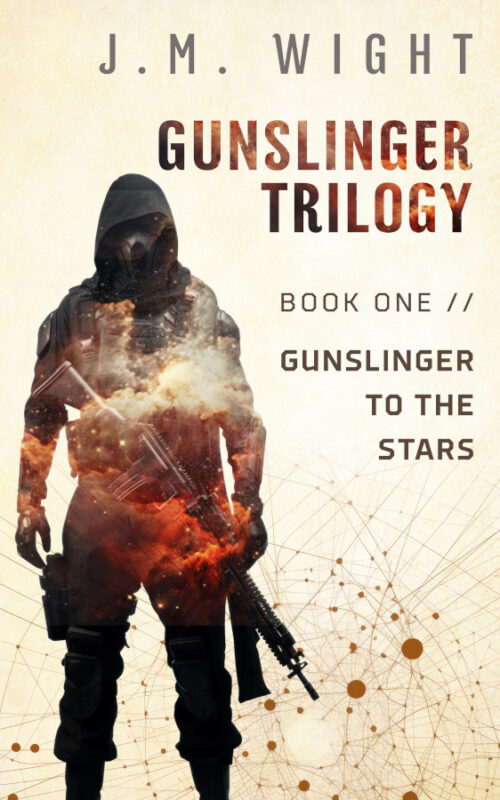
Is Gunslinger to the Galaxy for You?

Gunslinger to the Galaxy is a character-driven space opera about two gunslingers and the interstellar war that forces them to risk everything for Earth. It’s a fast-paced space-opera adventure told through the sharp, heartfelt, often hilarious voice of Jane Kletchka—a xenolinguist newly married to a mercenary gunslinger whose moral stubbornness keeps getting them both into trouble. This is a story about love, loyalty, danger, and the terrifying size of the galaxy when everything collapses at once. Expect a cinematic blend of military sci-fi, first-contact intrigue, and found-family courage.

What Kind of Reader Will Love This Book?

If you like…

  • Jack Campbell’s Lost Fleet
  • Lois McMaster Bujold’s Vorkosigan Saga
  • Character-driven space opera where the heart of the story is a loyal crew that refuses to quit
  • Western-flavored sci-fi heroes who charge headlong into impossible odds (with big guns and bigger convictions)
  • Xenolinguistics, alien politics, and intergalactic mystery woven into a sweeping adventure
  • Married-couple banter, warm emotional stakes, and a hero/heroine partnership forged in fire
  • High-stakes battles, warp-drive exploration, and cosmic consequences

…then Gunslinger to the Galaxy is absolutely your kind of story.

What You’ll Find Inside

You’ll follow Jane Kletchka, a brilliant xenolinguist, as she returns to Earth with her gunslinger husband Sam—only to be swept into a galactic crisis involving shattered jumpgate networks, Immortal civil wars, refugee swarms, and a catastrophic threat to Sol itself.

The tone blends romantic adventure, military sci-fi tension, and classic space-opera wonder, all grounded by Jane’s warm, honest, often funny narrative voice. Expect tight pacing, big emotional beats, and a story that moves from intimate family moments to galaxy-spanning stakes without missing a beat.

What Makes It Different

Fans of The Expanse, Honor Harrington, or Firefly will recognize the blend of frontier grit, military realism, and cross-species politics—but Gunslinger to the Galaxy takes those ideas in a fresh direction by placing a married couple at the emotional center of the story. Where many space-opera series focus on lone-wolf heroes, this book leans into the dynamics of partnership, trust, and being “equally yoked” in the middle of interstellar chaos. It combines xenolinguistic problem-solving, Immortal cosmic lore, and Western-style gunslinger ethos in a way no other space-opera series does.

What You Won’t Find

This isn’t grimdark, dystopian, or nihilistic sci-fi—there’s hardship and tragedy, but the story is ultimately hopeful, heroic, and rooted in family and faith. There is no gratuitous violence, no graphic romance, and no cynical “everyone is corrupt” worldview. If you’re looking for bleak anti-heroes or hard-SF technobabble at the expense of character, this won’t be the right fit.

Why I Think You Might Love It

At its core, this book is about ordinary people thrown into extraordinary crises who choose—over and over—to do what’s right, even when it costs them everything. Jane and Sam aren’t superheroes; they are a married couple trying to build a life together while the galaxy falls apart around them. Their courage, humor, and stubborn devotion give the story its heartbeat. If you’ve ever wanted a space-opera that delivers big adventure without losing its humanity, Gunslinger to the Galaxy was written for you.

In short, if you’re looking for a hopeful, high-adventure space opera filled with alien civilizations, military sci-fi battles, found-family warmth, and a fiercely devoted married couple, Gunslinger to the Galaxy delivers exactly that.

Where to Get the Book

Related Posts and Pages

Explore the series index for the Gunslinger Trilogy.

Return to the book page for Gunslinger to the Galaxy.

Being Equally Yoked in Gunslinger to the Galaxy

See all of my books in series order.

Moral Courage in Gunslinger to the Stars

What does it mean to do the right thing when the galaxy around you is chaotic, corrupt, or outright absurd? Gunslinger to the Stars takes that question and drops it squarely in the lap of Sam Kletchka—a mercenary gunslinger navigating a dangerous galactic frontier who keeps choosing responsibility even when no one is watching, rewarding, or deserving. At its heart, this space-western adventure is about moral courage: the stubborn, unfashionable insistence on doing the right thing in a universe that rarely makes it easy.

Where the Idea Came From

This theme grew out of a mashup of influences—long conversations with writer friends, a subplot from Schlock Mercenary, and the realization that a “rogue Immortal” character needed a counterweight with a strong personal code. Around the same time, I was watching Breaking Bad, fascinated by characters like Mike Ehrmantraut—tough, pragmatic men who do terrible things for complicated reasons. To push back against such a villainous force, I imagined Sam Kletchka: a gunslinger in a messy, morally gray universe who lives by a code and keeps choosing the harder path simply because it’s right, even when the galaxy doesn’t care.

How Moral Courage Shapes the Story

At every major turning point in Gunslinger to the Stars, Sam Kletchka’s choices are defined by moral courage—the instinct to protect others even when it’s dangerous, inconvenient, or unwinnable. He charges after kidnapped empaths when walking away would be safer; he shields Jane’s diplomatic idealism with his hard-won pragmatism; he survives abandonment in the desert through sheer stubborn responsibility; and he repeatedly throws himself into battles around war rigs, jumpgates, and alien war parties because no one else can or will. His personal code drives the story’s conflicts, shapes the character dynamics, and pushes this space-opera adventure toward a climax where courage isn’t about glory but about doing the right thing in a lawless, unpredictable, morally gray galaxy.

What Moral Courage Says About Us

Sam’s story reflects something deeply human: we don’t get to choose the worlds we’re born into, but we do get to choose what kind of people we become. In a galaxy run by Immortals, riddled with slavers, warlords, and manipulative telepaths, Sam’s personal code becomes his anchor—the thing that keeps him from becoming the very wolf he warns Jane about. His courage isn’t flashy heroism; it’s the uncomfortable, everyday kind that demands sacrifice, loyalty, and integrity when it would be easier to look away. In that sense, the book becomes a mirror for readers who love character-driven science fiction that asks what we stand for when the world pushes back.

Why This Theme Matters to Me

I wrote this book at a very different time in my life—years after Genesis Earth, when my own view of the world had shifted. I still believed in cultural understanding and bridging divides, but I’d also seen enough to know that evil doesn’t always yield to good intentions. Like Sam, I firmly believe in the right to defend oneself and others, and I’ve had long debates about the responsibilities that come with that. I wanted to write a character who lives at the intersection of those values—someone who understands violence, hates it, but won’t walk away when others depend on him. That tension, that conviction, is why moral courage felt like the beating heart of Gunslinger to the Stars.

Where to Get the Book

Related Posts and Pages

Explore the series index for the Gunslinger Trilogy.

Return to the book page for Gunslinger to the Stars.

Discover if Gunslinger to the Stars is for you.

See all of my books in series order.

Is Gunslinger to the Stars for You?

Gunslinger to the Stars is a character-driven space opera novel that blends Western adventure, first-contact science fiction, and pulpy action. It’s fast-paced, voice-driven, and built around a loyal, reluctant hero navigating a dangerous galactic frontier. It’s told in the unmistakable voice of Sam Kletchka—half gunslinger, half star-hopping troubleshooter, and 100% fun.

What Kind of Reader Will Love This Book?

If you like…

  • Classic space adventure with modern voice and humor, where the hero solves problems with grit, guts, and an outrageous arsenal of lovingly described guns
  • Found-family dynamics between a rough-around-the-edges gunslinger, a principled xenolinguist, a telepathic outcast, and a trio of shapeshifting empaths
  • Galaxy-spanning mysteries, alien politics, and first-contact stakes that push characters to their limits
  • The feel of a Western gunslinger dropped straight into a richly imagined galactic frontier

…then Gunslinger to the Stars is absolutely your kind of story.

What You’ll Find Inside

Gunslinger to the Stars (Book 1 of the Gunslinger Trilogy) follows Sam Kletchka, a New Texas gunslinger stranded in the Gorinal Cluster just as the local jumpgate—the only way out—mysteriously goes dark. What starts as a simple job escalates into a battle for survival involving hidden alien races, shape-shifting empaths, worldships, and a rising threat the Immortals never wanted anyone to discover. The tone blends wry humor with escalating danger, and the style is fast-paced, voice-driven, and cinematic—equal parts action romp and big-idea sci-fi. The result is a story that feels both classic and fresh: a pulpy, heartfelt adventure that’s as much about loyalty and moral clarity as it is about space battles and exotic technology.

What Makes It Different

Fans of Firefly and Schlock Mercenary will recognize the snappy banter, the found-crew dynamic, and the blend of humor with high-stakes action. But Gunslinger to the Stars pushes those familiar ingredients in new directions: the gunslinger-as-space-ranger angle gives the book a distinctive American-frontier voice, while the empath culture, the Immortals’ centuries-deep manipulations, and the emergence of the Draxxians create a myth-arc that feels simultaneously expansive and personal. Where many space operas lean on military hierarchy or techno-fetishism, this one leans into character, moral philosophy, and the uneasy tensions between peacekeeping and necessary force—all told through Sam’s dry, self-aware perspective.

This story blends classic space western tropes — the reluctant hero, the ragtag crew, and the dangerous frontier — with a deeper mystery about ancient alien powers. If you enjoy space western stories with a strong first-contact throughline, you’re going to enjoy this book.

What You Won’t Find

If you’re looking for grimdark bleakness, heavy technobabble, or a cynical antihero who never grows, this isn’t that. And if you want romance-heavy sci-fi or endless political intrigue, this book doesn’t go down those roads either. But if you want hopeful, character-focused adventure with humor, heart, and a hero who takes responsibility for his choices—sometimes reluctantly—you’ll feel right at home.

Why I Think You Might Love It

I wrote this story at a time when I needed to shake things up creatively, by writing something fun, energetic, and different from what I had been writing at the time. I was also going through a time when my worldview was changing, and I was questioning a lot of my old assumptions. This book grew out of a number of things: from my conversations with close friends, my love of classic pulp sci-fi, and from the idea of a lone wanderer who tries—however imperfectly—to do the right thing. The result, I believe, was a book with a lot of heart that captures that spark of wonder that made me first fall in love with science fiction. If that’s what you’re looking for, I think you’re going to love it!

Where to Get the Book

Related Posts and Pages

Explore the series index for the Gunslinger Trilogy.

Visit the book page for Gunslinger to the Stars for more details.

Read about moral courage in Gunslinger to the Stars.

See all of my books in series order.

Fantasy from A to Z: H is for Heroes

When David Gemmell, my favorite fantasy author, broke into the field in the 1980s, his books were considered to be part of the “heroic fantasy” subgenre. If the two major divisions of fantasy were epic fantasy (sometimes also known as “high fantasy”) and sword & sorcery (sometimes known as “low fantasy”), heroic fantasy was very much in the sword & sorcery vein. Then the stars of George R.R. Martin and Joe Abercrombie began to rise, and heroic fantasy gave way to what we now know as “grimdark.” 

On a superficial level, both grimdark and heroic fantasy appear to have much in common. Both subgenres tend to feature morally gray characters, worlds that are dark and brutal, and a great deal of graphic violence. George R.R. Martin is famous for killing off his characters, and David Gemmell likewise tends to kill off about half of his starting characters in every book. 

But if you spend enough time with both subgenres to get past the superficialities, you’ll see that they are totally different—and in some key ways, diametrically opposed. Not all grimdark descends into total nihilism, but much of it unfortunately does. But heroic fantasy is defined by the fact that it is not utterly nihilistic. Which isn’t to say that all heroes are noble and bright—gray morality is still very much a trope of the subgenre—but the very fact that heroes exist is enough to keep heroic fantasy from delving too deep into nihilism.

This is why I love practically everything that David Gemmell has written, but I couldn’t get past the first book in George R.R. Martin’s Song of Ice and Fire. I acknowledge that Martin is a brilliant and gifted writer. There were parts of A Game of Thrones where I felt more immersed in Martin’s fantasy world than in almost any other book I’d read. But by the end of the book, I hated all of the characters and was rooting for Danaerys to come with her dragons and burn them all to cinders (which was apparently the plan all along, if season 8 of the show followed Martin’s outline).

The thing is, George R.R. Martin is obsessed with the idea of victimhood. All of the characters in A Song of Ice and Fire are either victims or victimizers, or both. That is, apparently, the most interesting aspect that Martin finds about them. Which explains why his series did so well in the 00s and the 10s, when intersectionality was on the rise and critical theory came to dominate so many aspects of our culture. In any other time, Martin’s obsession with victimhood would not have gained such a following—which explains why it took him nearly five decades to hit his big break.

But where Martin is obsessed with victimhood, Gemmell was obsessed with heroism. He had a penchant for taking the most despicable and morally bankrupt characters, putting them in circumstances that demanded something more of them, and showing them rise to the occasion, making a heel-face turn and becoming the hero that the story demanded. It’s so immensely satisfying for me, every single time. Even the villains will sometimes turn into heroes by the end—though when they don’t, you can always expect them to have creative and satisfying deaths. No “creative subversion” of reader expectations there!

For Gemmell, there’s nothing very complicated about being a hero. There’s no list of defining characteristics or attributes. There’s also nothing particularly complex that a character has to do. For Gemmell, a hero is simply a person who does something heroic. Nothing more, and nothing less.

At this point, I’d usually give examples, but since all of them are spoilers, all I can say is go and read David Gemmell’s books! Some of the best heel-face turns are in Winter Warriors and Hero in the Shadows. I also really loved the protagonist’s redemption in The Swords of Night and Day. And of course, if you really want a great example of an unlikely hero, read Morningstar. That’s basically the whole plot of the book.

Like Gemmell, I prefer to write stories with heroes rather than anti-heroes. My Sea Mage Cycle books are generally more light on violence than a typical Gemmell book, but in The Widow’s Child and The Winds of Desolation, I put the main characters into some tough circumstances that forced them to step up and play the part. Same with The Sword Keeper, my first fantasy novel. And of course, with the Soulbond King books that I’m currently writing, where the main character is patterned after King David, there will be lots of opportunities for him to do heroic things, even if he is a more complicated character.

Heroes are so important to me that I honestly cannot read any fantasy book that doesn’t have one. When I look back on all of the big-name fantasy books that I’ve DNFed, that honestly is the major defining factor. Fortunately, the fantasy genre is full of excellent heroes—and with the way trends are shifting, I think we are going to see a lot more of them soon.

Thoughts on American Sniper

Yesterday, I saw American Sniper. In a word, it was fantastic. Super intense—so much that the friend I went to see it with had to walk out in the middle—but well, well worth it.

The movie is about Chris Kyle, a US sniper in Iraq who had an incredible number of kills. He’s credited with being the most lethal sniper in US history. And yet, at the end of the movie, he states quite openly that he can answer a clear conscience for every shot he took—including the one in the trailer, which was his first combat kill.

Pause for a minute to think about that. What must it be like to have your first ever kill be a child? There you are with your finger on the trigger, wondering if you have it in you to take another human life, and instead of an obvious combatant, you’re presented with a grenade-carrying child. On top of that, add on the fact that you’re a family man. Could you do it?

And that was just the first combat encounter of the film. Things got progressively more intense with each combat tour, with some truly evil people and some truly hard decisions.

At the same time, though, the film didn’t try to dehumanize the enemy. Again and again, Chris goes head-to-head with an enemy sniper named Mustafa who is just as good as he is. Just as we see Chris with his wife and child, we see that Mustafa has a family as well. But there are evil people in the movie—truly evil people, such as the Butcher, whose preferred instrument of death is a power drill—and we see them too. Because guess what? Those people were real, and the atrocities they committed were real as well.

I can’t imagine what it must be like to kill one person, let alone more than two hundred. And yet at the end of the film, I sincerely believe Chris Kyle when he says that he can answer a clear conscience for every shot that he took. That is what made the movie so fascinating. The man was a true hero—I don’t see how you can possibly come to any other conclusion than that.

Still, I couldn’t help but think about the wider context of the war in which Chris Kyle was fighting. Men like the Butcher exist in every society, including our own. If a foreign government had set up a brutal dictator over our country, plunged us into a ten year proxy war in which millions of our people were killed, imposed a punishing sanctions regime on us for another ten years, and finished it off by invading us, would the United States be any different? Because that’s exactly what happened in Iraq. Every enemy that we have in the Middle East is an enemy of our own creation, and the harder we try to fight them, the more enemies we create.

I don’t say this to diminish Chris Kyle at all. I admire the man tremendously, and I can only hope that I would rise to the level of his stature if given the same responsibility to protect American lives. And to be fair, American Sniper didn’t try to defend the Iraq War at all. In fact, it wasn’t even about the Iraq War—it was about a soldier who struggled to do the right thing in combat and not be consumed by the war itself. In that aspect, I think that this film was outstanding. It’s probably the most empathetic war movie that I’ve ever seen, and I would gladly watch it again.

I have tremendous respect for the men and women of the US military, and this movie reminded me why. At the same time, I have very little respect for the politicians who sacrifice the lives of these brave men and women for their political ambitions. My personal views on the subject are best reflected in this 2012 campaign ad for Ron Paul which sums up the history quite succinctly. I don’t agree with Ron Paul on every issue, but on this one, I think he’s spot on:

But yeah, American Sniper was an amazing movie—well worth seeing. It’s rated R mostly for language, so even if you don’t usually see R rated movies, don’t let the rating alone scare you away.

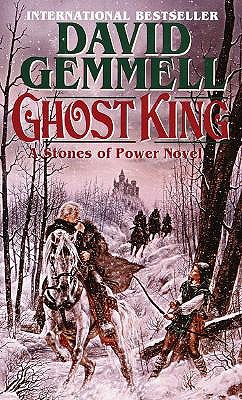
Ghost King by David Gemmell

Ghost KingAnother review of a David Gemmell book?  Yes, because I’m just that much of a fanboy.

With the Drenai series finished, I decided to sink my teeth into the Stones of Power series.  This series confuses me, because I’ve read The Jerusalem Man, which was retroactively put in as book three, but that’s a post-apocalyptic tale of the gunslinger Jon Shannow, but the series actually starts in Arthurian England.  As soon as I got a couple chapters into the first book, though, I began to see the connection.

Ghost King is an alternate history tale of King Arthur (Uther, in the book), and how he rises to become the Blood King of Britannia.  His grandfather, Culain, takes him into the mountains after the Brigantes assassinate his father, and there trains him to become a leader and a warrior.

Culain, of course, is one of the immortal Atlantians, just like his friend Maedhlyn (Merlin).  After the fall of Atlantis, they have wandered the Earth as gods, using the powers of the Sipstrassi stones to accomplish wonders.  Worshipped in turn by the Greeks, the Romans, the Hittites, and the Babylonians, Culain has tired of immortality and now wants to live out a mortal life.  But his jilted lover, the Ghost Queen, wants revenge on him for leaving her.  She was the one who killed Uther’s grandmother and mother, and who now wants to kill him and rule all of Brittania.  But her son Gilgamesh has corrupted her, so that in a parallel universe she must kill twenty pregnant woman every month just to replenish the magic of her Sipstrassi …

Okay, I might as well give up trying to explain the plot, because it only gets crazier.  Somewhere in this parallel dimension, a lost Roman legion has been wandering for hundreds of years, consigned to the void by Culain.  Also, Gain Avur (Guenevere) is in there too, as well as the Lance Lord (Lancelot), though he doesn’t come in until the epilogue.  There are also demons and vampyres, all sorts of battles, and lots of other crazy stuff.  It’s pretty freaking dang awesome.

I really enjoyed Uther’s transformation from the weak, bookish boy to the warrior king, as well as the budding of his relationship with Gain Avur (what can I say, I’m a sucker for romance).  My favorite character, though, was Prasamaccus, a crippled Brigante peasant who becomes one of Uther’s close advisors.  He’s basically a regular guy who gets sucked up into the whole adventure, but he’s level-headed and practical enough that he manages pretty well.  He’s also just a good person, which was quite refreshing in a world full of death and drama.

At one point, after rescuing Uther, he’s a guest in Uther’s chief general’s villa.  The general gives him a servant girl for the night, since in this world most men think nothing of bedding a slave.  Prasamaccus is a peasant, though, and he’s kind of shy.  The girl was actually captured in a raid in Germany, where she was raped, and this is her first time bedding someone since those traumati not the monster she’s afraid that he’ll be–they actually share a really tender moment of intimacy that heals much of her trauma and introduces him to the love of his life.c events.  She’s absolutely terrified, but so is Prasamaccus–he’s a cripple, and assumes that women just don’t want him.  He spends the night with the girl but doesn’t force her to sleep with him, and when she realizes how gentle he is–that she holds the power, and that he’s not the monster she’s afraid that he’ll be–they actually share a really tender moment of intimacy that heals much of her trauma and introduces him to the love of his life.

It’s poignant, story-rich moments like that that make me such a David Gemmell fanboy.  Usually they happen in the midst of war, between battle-hardened friends who are forced by circumstance to do something heroic, but they also happen in the quiet moments between characters who carry other scars.  That whole thing in the previous paragraph only happened in three pages or so, but it was still so incredibly powerful and moving.  Every moment of a David Gemmell book is like that, sometimes from the very first paragraph.  It’s awesome.

As far as David Gemmell books go, I’d put this one in about the middle of the pack.  It’s not quite as powerful as Legend or Wolf in Shadow, but it doesn’t meander as much as White Wolf or have such an anti-climactic ending as Ironhand’s Daughter (which was probably split by the publisher–more on that when I review The Hawk Eternal).  The characters aren’t quite as memorable as Druss, Skilgannon, or Waylander, but they are pretty awesome nonetheless.  I’d rate this book a 3 compared to Gemmell’s other books, but a 4.5 out of fantasy overall.  Definitely worth a read.

Trope Tuesday: Eagle Squadron

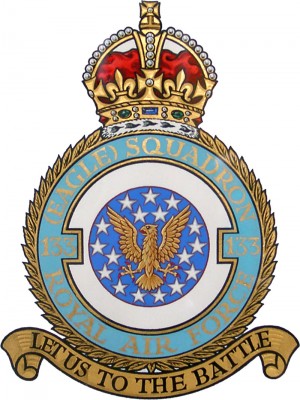
pdrm8846cYou’ve got your standard mercenaries: hired guns who fight for money.  Then you’ve got your fighting for a homeland types: mercenaries (usually) who used to have a cause to fight for, but now all they’ve got is each other, and maybe the hope that someday they’ll find a new homeland to replace the one they’ve lost.  Invert that, and you’ve got an eagle squadron: a ragtag bunch of volunteers who leave their homeland to fight for someone else’s cause, usually a sympathetic rebel faction or band of underdog freedom fighters.

It isn’t really fair to group these guys with mercenaries, since they aren’t fighting for money or fortune.  Far from it.  They believe so totally in the cause they’re fighting for that they’re willing to give up their lives for it, even though they could easily go home and live out their lives peaceably.  At least, that’s how it is on the idealist side of the sliding scale.  On the more cynical side, eagle squadron is really just a Legion of Lost Souls full of thugs and criminals who are hoping to clear their names.  Or, even further down the scale, perhaps they just love killing.

Even on the idealist side, there’s always the possibility that your terrorists are our freedom fighters.  After all, where did Al Qaeda come from?  The Mujahideen, volunteers from all over the Muslim world who joined with the Afghan freedom fighters against the Soviet invasion of the 80s.  When they won, it galvanized their Islamist cause and inspired them to take the fight to their homelands, many of which were ruled by dictators.  Since the United States props up many of these dictatorships, it was only a matter of time before they turned on us as well.

The name from this trope comes from three volunteer squadrons of US fighter pilots in World War II, who joined the RAF in the fight against the Nazis back when the United States was still neutral.  Since the Nazis have pretty much become the standard of all that is evil in the eyes of our modern society, the eagle squadrons are now heroes by default.  War is of course more complicated than that, though there is still room for heroism even in a world of moral ambiguity.

When the eagle squadron makes the ultimate sacrifice, you can count on them being remembered as heroes for all time.  That’s basically what happened with the Alamo: a bunch of frontier Americans sympathetic to the cause of Texan Independence went to join the fight against Santa Anna and made a bloody last stand when the war went out of their favor.  Of course, since history tends to be written by the victors, it’s arguable that this only happens if the survivors go on to win the war.  After all, plenty of expatriates volunteered to fight for the Nazis, but we don’t remember them in quite the same way.

Wow, this post turned out to be way more cynical than I’d intended.  The basic drive behind this trope is the yearning for an ideal, a cause to fight for.  We root for the eagle squadron because we want to believe that all it takes to defeat evil is for good men from across the world to take up arms against it.  If Eagle Squadron is led by the Incorruptible, then that might actually be the case, though it’s difficult to make that kind of a story anything other than black and white, one-dimensional, and utterly inauthentic.

I haven’t played with this trope too much yet, though I’ve been meaning to write a prequel book in the Gaia Nova series that tells the origin story for Danica and her band of Tajji mercenaries.  Her father was an admiral in the Tajji rebellion, and when the star system fell to the Imperials, they killed her entire family.  She escaped, though, and was taken in by an eagle squadron commander that fought alongside her father against the Imperial oppression.  After getting back on her feet, she leaves the Eagle Squadron to start her own military band, intent on getting revenge for the loss of her homeworld.  I’m not sure yet how the eagle squadron will play into that, but I see the commander as trying to dissuade her from this path.

In any case, it’s definitely a trope I want to play with.  I had a lot of fun with fighting for a homeland in Stars of Blood and Glory, so this would be a way to revisit some of the dynamics that made that story interesting.  You can definitely expect to see more of this from me in the future.

Why I don’t like George R.R. Martin

I was thinking today about George R.R. Martin’s A Game of Thrones and the fact that I’ve more or less given up on the series after reading the first book.  A lot of my friends are rabid-at-the-mouth crazy about it, both the books and the TV miniseries, but I’m just not all that into it.

Don’t get me wrong—I can see why other people like it so much.  The story is engaging, the political intrigue is deliciously complex, the world building is wonderful and immersive, and the fantasy tropes are played quite well.  I enjoyed a lot of things about the first book, and intended to read the rest of the series after finishing it.  After all, it’s one of the most important works of epic fantasy to come out in the last few decades, with people calling George R.R. Martin an American Tolkien.

But the truth is, I just wasn’t all that into it.  And the more I think about it now, the more I’ve realized that this isn’t the kind of series I would enjoy at all.

The strange thing is, I’m a HUGE fan of David Gemmell, who writes almost the exact same sort of thing.  Immersive fantasy worlds, dark and gritty characters, shades of gray, lots of fighting, lots of sex, lots of brutality, the realization that anyone can die off at any time … the list goes on and on.  And yet, there’s something about David Gemmell’s books that turns me rabid-at-the-mouth and has me squeeing like an otaku fangirl, whereas with George R.R. Martin, all I can manage is “meh.”

I think the reason for this is that Martin’s characters basically fall into one or both of two camps: victim or victimizer.  There isn’t any middle ground—at least, none that anyone can stand on for long without dying in some horrific and brutal way.  The story requires the characters to all become monsters, and anyone who isn’t willing to do that meets a horrible, tragic end.

There were only two characters in A Game of Thrones that I really cared about: Arya and Ned Stark.  Ned was the only character who really tried to stand for something, and Arya was just a spunky little girl who resisted all the stupid girly stuff in favor of more practical stuff like street smarts.

<spoilers ahoy>

The trouble was that Ned was a complete idiot, trusting in the honor of a guy who explicitly said “do not trust me” and making stupid decisions that ended up getting half of House Stark killed or captured.  It’s almost as if Martin purposefully set him up to be a straw man character—that he wanted this one character to represent all the goody-goodies of the world, and knocked him off in the most brutal way possible.  It’s like Martin killed him off to make a point, and had the story drive the character rather than the character drive his own story.

And Arya … I forget exactly what happened to her, but she basically became a victim in such a horrible, twisted way that I could tell she’d be scarred for the rest of the series.  If she didn’t die off herself, she’d probably become a dirty street rat—the slit-your-throat-for-a-copper kind, not the Disney version.  So yeah, I pretty much gave up on her.

Jon Snow was okay, but he was so far removed from everything else in the story that I just got bored with him.  Tyrion was funny, but he was also a pervert, and all the reasons to sympathize with him basically revolved around “I’m a dwarf, everyone mistreats me”—again, the victim vs. victimizer thing.  Lady Catelyn was pretty cool, but I always saw her as more of a supporting character, and while I found myself rooting for Daenerys at the end, it was only out of frustration with all of the other douchebags in Westeros—I just wanted her to come over the sea and claim the throne so that everyone else would die.

It was a pretty good book, I’ll admit—other than the fact that I didn’t really like any of the characters, everything else was quite enjoyable.  It certainly held my attention long enough to finish the thing.  But I didn’t really feel compelled to read the next one because I frankly didn’t care what happened to any of the characters.  You could give me a list of all of the ones who die off, and I would just shrug and say “oh well.”

In contrast, with every David Gemmell book I’ve read, I fall in love with the characters after reading just a paragraph or two in their viewpoint.  Drenai or Nadir, civilized or barbarian, I not only like the characters, I fall deeply in love with them.  I care about them right from the outset, even the ones with a dark past, like Skilgannon or Waylander.  In fact, Waylander is probably my favorite of them all.

The fact that I know that some of these guys are going to die only makes me more invested, because even though Gemmell kills of most of his characters in any given book, the main characters’ deaths almost always mean something.  Maybe they have some awful secret that they finally are able to give up, or maybe they’ve been running from a fate that they finally gather the courage to face.  Or maybe they just happen to be in a circumstance that requires them to give up their lives, and they rise to meet the occasion.  Not every death is cathartic, but Gemmell never kills off a character merely for the sake of killing off a character, whereas with Martin, I get the sense that that’s sometimes the only reason.

But the biggest difference between the two is that with Gemmell, the victim vs. victimizer paradigm just doesn’t exist.  Gemmell’s books are all about unlikely heroism—characters in situations that require them to be something more, or do something beyond looking out for just themselves.  Anyone can be a hero, because a hero is nothing more than someone who does something heroic.  No matter your past, no matter your fears, no matter your weaknesses, when the chips are down, we’re not all that different.

The counter argument I’ve heard is that all of this heroism stuff is superfluous, and Martin is trying to get beyond it, kind of like the 19th and 20th century philosophers who were trying to get beyond morality.  The thing is, if that’s the case, then Martin has to have the darkest and most depressing view of human nature of almost any fantasy writer alive.  If his point is that there’s nothing intrinsically heroic about anyone, that being a hero is just a matter of rising to a role and becoming a figure in one of the stories that people tell to make sense of the world—if his point is to show that every hero is really just a douchebag, there’s something about the world that he’s really missing.

In Gemmell’s books, there are douchebags who rise to the heroic roles required of them—but in the act of filling that role, something about them changes, and you see that they’re really not as evil as you thought they were.  Because in Gemmell’s view, people are essentially good and everyone is redeemable, even the rapists and murderers.  One of his darkest characters, Skilgannon the Damned, learns at the end of his story that the difference between salvation and damnation is allowing yourself to receive the light—that the only thing damning you is yourself.  Whether or not you agree with that, you have to admit that’s a pretty optimistic way of seeing the world.

In the end, that’s why I love David Gemmell’s books so much—not just because anyone can die, but because anyone can be redeemed too, sometimes at the very same time.  From what I’ve read of George R.R. Martin, it seems that he redeems no one—that to the extent I’m rooting for any one character, it’s only because I can’t wait for them to kill or brutalize all the other horrible monsters in the book.  And frankly, I find that pointless and tiresome.

There are moments in almost every David Gemmell book I’ve read that stand out to me with great clarity, so that sometimes while I’m standing in line at the grocery store, or walking down the street to the library, they pop into my head completely unbidden.  With George R.R. Martin, that has never happened to me, even for the books of his that I’ve enjoyed.

I dunno.  Everyone is different.  Maybe George R.R. Martin really strikes a chord in you, so that you feel for him like I do for David Gemmell.  Maybe you actually like some of the characters whom I’ve dismissed as douchebags.  Or maybe you don’t read fantasy for the same things I do.  This post isn’t to knock you for that, it’s just to point out and analyze why I don’t like George R.R. Martin’s stuff as much as most other fantasy fans seem to.  And if you do feel about this the same way that I do, then my point is to declare that that’s all right.  You can still be a fantasy geek and not like A Sword of Ice and Fire or anything else by George R.R. Martin, no matter how much it’s hyped.  That’s perfectly okay.

I’m writing an epic fantasy right now, and it’s not going to be anything like A Sword of Ice and Fire.  It’s probably not going to be much like any of David Gemmell’s books either, but Gemmell is certainly a bigger influence on me than Martin.  We’ll have to see how it turns out.
The Legend of Deathwalker by David Gemmell

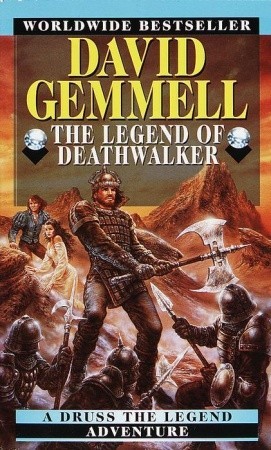
legend_of_deathwalkerI’m not even going to try to write a synopsis of this story.  It’s just like all the other books in the Drenai series, which is why I love it so much.  Basically, this one gives the story behind the rise of Ulric, khan of the Nadir, and the origin of the Nadir people.  Interestingly enough, Druss the Legend plays a major role.

This was the last book in the Drenai Saga that I hadn’t read, so reading it was a very bittersweet experience.  On the one hand, this one is just as good as all the other books in the series, and made me want to revisit Legend and some of the others.  On the other hand, I knew that once I’d finished it, there wouldn’t be any more Drenai books left.  So I took it slow for the first half, but naturally I finished it at a breathless late-night sprint a day or two later.

I’ve been thinking a lot lately about why I love David Gemmell’s books so much.  There are many reasons, but I think the main reason is that his writing is honest.  He strips away all the incidental stuff and gets right at the heart of the stuff that matters.  He doesn’t pussyfoot around, either–if his characters do something despicable, he doesn’t make any excuses for them.  He tells it like it is.  This can make for a very brutal story, but it also makes for a very cathartic one.

The other reason I love his books so much is because he does such a good job depicting raw, unrepressed manhood–not the stupid stuff like driving big cars and eating meat, but manning up and facing your greatest fears.  It’s about friendship, and honor, and fighting with all of your strength for something you believe in.  It’s about all that raw, pent-up energy we all have, that animal urge that drives us to competitive sports and first person shooters, and channeling it for a heroic cause.

The craziest thing is that the fight itself is actually more important than whatever side the characters are fighting on.  In this book, Druss is actually fighting to help bring about the rise of the Nadir khan who later invades his homeland and kills him on the walls of Dros Delnoch.  None of that matters, though, because Druss doesn’t fight with malice.  For him, it’s all about fighting for something, not against something, and the battle itself is just as important as the victory.  I don’t think I can put it better than this:

“Can we win here?” Sieben asked, as the shaman’s image began to fade.

“Winning and losing are entirely dependent on what you are fighting for,” answered Shaoshad. “All men here could die, yet you could still win. Or all men could live and you could lose. Fare you well, poet.”

The best thing about David Gemmell’s books is the fact that none of the characters–not even the bad guys–are defined by their own evil.  The Nadir are supposed to be the evil chaotic race of the Drenai universe, but when you come to understand what they’re fighting for, their hopes and dreams for a better future, you can really see what’s good in them.  Likewise, the more civilized Gothir are kind of like the evil white men who want to put down the savages and keep them in their place, but there are good and honorable men among them too.

And yet, even though the two sides clash, and good men die on both sides, it somehow isn’t tragic.  That’s the crazy part.  It’s almost like you can feel the characters salute each other as they die in a good cause, the way Ulric gave Druss a proper funeral in Legend, even though the two were blood-sworn enemies.  In David Gemmell’s world, honor and courage are more important than life or money.  Everyone dies; dying well is more important than living without honor.

This book is incredible.  As I was reading it, I decided it was the best David Gemmell book I’ve ever read–which is something I do every time I read one of his books.  I feel like I’m a better man for having read them.  If he had written a hundred books in this series, I would happily read them all.  The fact that there are no more new ones deeply saddens me, but I know I’ll revisit these stories again in the future.