The Nominees
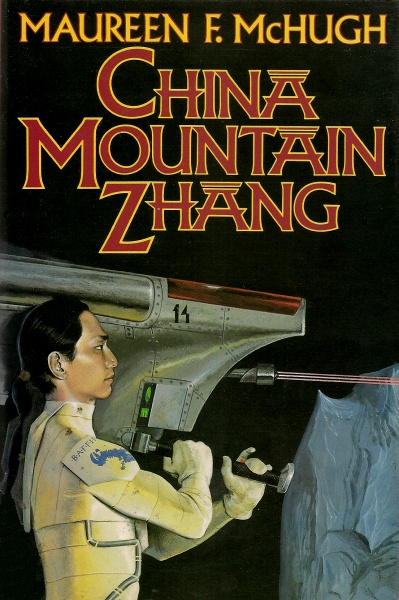
China Mountain Zhang by Maureen F. McHugh
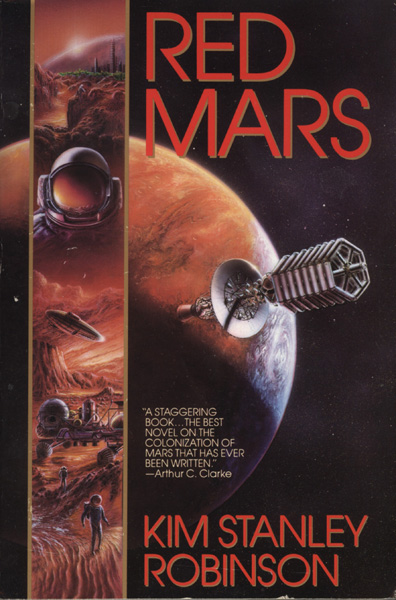
Red Mars by Kim Stanley Robinson
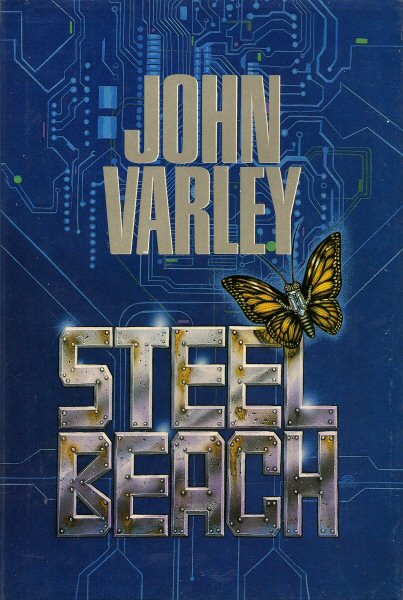
Steel Beach by John Varley
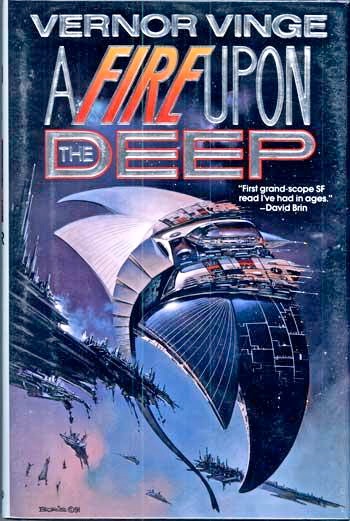
A Fire Upon the Deep by Vernor Vinge
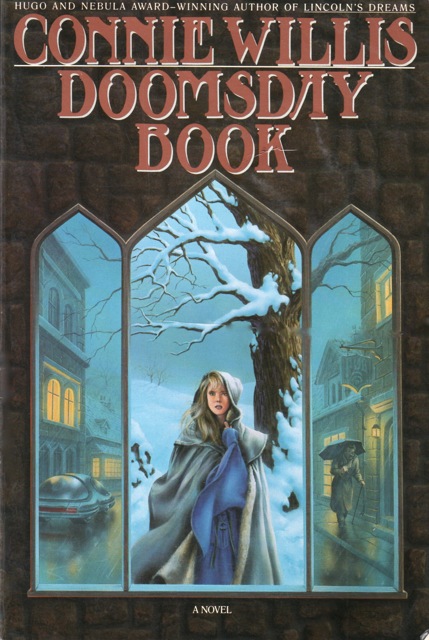
Doomsday Book by Connie Willis
The Actual Results
- A Fire Upon the Deep by Vernor Vinge
- Doomsday Book by Connie Willis
- Red Mars by Kim Stanley Robinson
- China Mountain Zhang by Maureen F. McHugh
- Steel Beach by John Varley
How I Would Vote Now
(abstain)
Explanation
I didn’t hate any of these books, but I didn’t love any of them either—which is fairly typical for me of 90s era Hugo Awards. Let’s go down the list.
Doomsday Book is often held up as Connie Willis’s best, but I thought it lost the plot a bit when the time travelers had to simultaneously face a pandemic in their own future time while also having to rescue the lost apprentice time traveler from the black death in medieval England. If you’re reeling from a pandemic, what the heck are you doing sending time travelers back as if it’s a normal day on the job? Also, Connie Willis really has no love for the medieval era, and it shows. Blackout and All Clear were much better, partially because of how much Connie Willis clearly loves WWII-era Britain.
If there’s one book in this list that I should try again, and probably will, it’s A Fire Upon the Deep by Vernor Vinge. It’s the kind of science fiction that’s right up my wheelhouse, and I’ve enjoyed Vernor Vinge before (Rainbows End is the best so far). But this book is so freaking huge, and I never latched on to any of the characters… oh, and the central conceit of the aliens, that the small collective packs form a hive mind that thinks and acts like an individual—that didn’t really work for me either time I attempted to read this book.
I screened Steel Beach and China Mountain Zhang through ChatGPT for objectionable content and decided to skip both of them. Here is what ChatGPT said about China Mountain Zhang that made me decide to skip it:
The story engages deeply with themes of intersectional identity, including race, sexual orientation, and societal roles. Zhang’s struggles as a gay man in a conformist society are a significant part of the narrative. The book also critiques authoritarianism and explores social dynamics through a progressive lens. While these themes are integral to the story and handled with subtlety, they align with a modern “woke” perspective.
And here’s what it said about Steel Beach that made me decide to skip it:
Language: Strong language is used throughout, reflecting the irreverent tone of the protagonist and the society depicted.
Gender and Identity: Steel Beach explores themes of gender fluidity and personal identity in a society where individuals can easily change their biological sex. This aspect of the world is presented as normalized rather than contentious.
As for Red Mars, I read this one way back (way way back) when I was a freshman in college. At the time, I was still working out what I believed politically, so most of KSR’s leftism went right over my head. However, there were a few sexually explicit scenes that weirded me out, especially the one where the colony team’s depressed psychiatrist discovers—and joins—the bizarre sex cult and their group orgies in the farm module. I still finished the book, but I declined to read the rest of the series.
What is it with crunchy leftist authors and bizarre, explicit sexual content? Why do they always seem to feel a need to fill their books with weird and pointless sex? There are so many books I’ve read for this series that started out strong, but ultimately devolved into sexual degeneracy that added nothing to the story. It’s almost like they felt a compelling need to add the degeneracy for its own sake. Maybe it’s a boomer thing? A “spirit of the age” possession of some sort? I honestly don’t know.


