Goodbye, Grandma

Sorry for the radio silence these past few weeks. My grandmother passed away a couple of weeks ago, and we’ve been down in Texas, dealing with family stuff and the funeral. I wrote the following author’s note for my newsletter, and it seemed like something worth sharing on the blog, so I’m posting it here too. Hopefully I’ll be back to posting on a regular schedule next week.
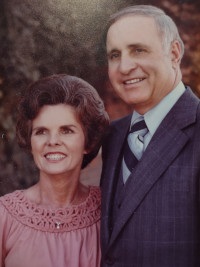

In my last newsletter, I mentioned that my last surviving grandmother had recently passed away. We all went down to Texas for the funeral last week, and it went surprisingly well.

My grandmother lived a very long life, and her passing wasn’t unexpected. She had a stroke about fifteen years ago, and had also been struggling with dimentia. The last time I had a conversation with her where she remembered who I was was probably a decade ago. Thankfully, she was very well taken care of by my uncle’s family in Texas and a team of nurses who helped take care of her. She lived in the old family home right until she went into hospice about two weeks before her passing. The picture above is of her and grandpa, probably from sometime in the late 70s.

My grandmother grew up dirt poor in southern Illinois during the Great Depression. My grandfather grew up in a Texas Czech community, played football for the Los Angeles Rams and the Buffalo Bills (one of my cousins actually tracked down his rookie card, which goes for something like $600 now), and later went into the oil business. One thing I learned during this trip was that grandma was actually the one who gave him the idea of starting his own company when the firm he was working at went under. From what I understand, it was a difficult time to be in the oil business, but they slogged through the hard times and eventually did quite well.

From what I’ve heard, back in those days most networking was done at formal dinner parties that people threw in their own homes. Grandma’s house was apparently one of the premier places to have a dinner party, with a huge living room, a grand piano, wool carpeting, insane amounts of Waterford crystal, and a light with a dimmer back in the 60s when nobody had dimmers for their lights. She also had her own hobby business painting knick knacks, and had a whole bedroom full of them, as well as an insane collection of nativity sets, little glass angels, snow homes, and beanie babies.

So when we weren’t at the wake or the funeral or the interment, we were all basically going through the 60+ years of stuff that grandma acquired over the course of her lifetime, trying to figure out what to do with it all. It wasn’t difficult to imagine her smiling down on us as we went through it all, finding all sorts of unexpected treasures and divying them out.

There was more than enough for everyone to take what they wanted, including the nurses who cared for her the last fifteen years: even after we’d all gone through the crystal glassware and put our names on what we wanted, only about half of it had been claimed. So there wasn’t much fighting over stuff at all; it was all very much “you should take this,” “no, you should take it.”

One of the more interesting things was to go through all of the old letters that we’d sent her. She held on to all of them right up until her stroke. I found a bunch of letters that I’d written her while on my mission (and since forgotten about), and my sister found all of the ones that she’d written while in treatment for her eating disorder. It was good to know that she treasured those.

I also found my dad’s old mechanical typewriter, from back in the 70s! It needs a new ribbon, but otherwise seems to work quite well. At some point, I’d like to try my hand at writing the way Harlan Ellison used to write: sitting in a shop window with his mechanical typewriter, tapping out stories and pasting them onto the glass for passersby to read, one page at a time.

It was also fun to go through all of her spare change, which she’d accumulated over the years. Most of the coins weren’t all that old or interesting, but my wife found a 1905 Indian Head cent, and I found about $4 in junk silver, plus some old commemorative series. So now I keep one of grandma’s 1921 Morgan silver dollars in my pocket, instead of the 1 oz round that I used to carry.

This was my wife’s first time visiting Texas, so we took some time off the last day we were there to get some Texas Bar B Q and check out the Petroleum Museum. Interesting stuff. I remember my grandpa taking me there as a little kid, and seeing the diorama that depicts how the Permian Basin used to look in the Paleozoic period. The museum itself has been renovated since then, but they kept the original diorama, which was cool.

So that was basically our visit. The wake was a lot more formal than we were expecting, and we missed half of it because our baby got hungry and had to be taken back to the house, but the funeral and interment went very well. Standing there at the grave brought back some memories from when we buried grandpa back in 2003, just before my mission. Other than that, it was good to see everyone and spend some time together as an extended family.

It’s an interesting exercise to ponder the trajectory that our full lives take. Growing up in a broken home during the Great Depression, or during the early years of grandpa’s business when everything was so uncertain, I think that if grandma could have seen how things would eventually turn out for her and her future family, she would have been blown away. When I look back on the trajectory of my own life, I wonder if I’ll have similar feelings. We’ve been very blessed these last couple of years, even with all of the craziness that’s been happening in the world, but keeping up with the writing industry is still very much a struggle, and there are still a lot of uncertainties. But I’m confident that no matter how things work out, it will be for the best in the end.

Those are some of my current thoughts, anyways. How about yours? As always, thanks for reading!

Joe
Reading Resolution Update: January

My 2022 reading resolution: Read or DNF every novel that has won a Hugo or a Nebula award, and acquire all the good ones.

I had expected to DNF a lot of these books, but I was a little dismayed at how terrible they are. Or rather, how some of them can be so well-written and yet so idelogically possessed.

For a while, I worried that I was pre-judging some of these books too harshly, based on my opinions of the author. After all, shouldn’t art be treated separately from the artist? But then I decided that it would be better to lean into that bias, and trust my intuition. After all, it’s impossible to approach reading without a personal bias—and even if it were possible, it wouldn’t be advisable.

One of the key things I’m hoping to take away from reading these books is a better understanding of my own personal tastes. Toward that end, it’s much better to DNF early and often, since that tells me something valuable about my own tastes. I’ll get much more out of this exercise if I pay attention to that than whether or not I’m being “fair” to a particular book or author.

As for how my bias against an author might prejudice me against a book, I don’t think that’s too much of a problem so long as I’m aware of those biases. Yes, it makes it more likely that I’ll read a book with a critical eye, and not in the way that I typically read for enjoyment, but that goes both ways, since if I do enjoy a book, that’s going to improve my opinion of the author (or at least make me reconsider my opinion). So long as I’m aware of my biases and make sure that they aren’t set in stone, I think it should be fine

Besides, it’s not like I have anything to prove. Sure, China Mike Glyer might pull out an excerpt from this post to use as content (hi China Mike!), but I couldn’t care less what that particular corner of fandom thinks about my public ruminations. I will know if I’m being too “unfair” to a book or an author, and the only criterion that really matters is whether I have a clear reason for DNFing the book, separate from my biases about the author.

And honestly, what I’ve found so far is that my biases are pretty spot on. Authors who behave insufferably in public or on the internet tend to write some pretty insufferable books, especially if they’re woke.

Fortunately, I have found a few new-to-me books and authors who are really fantastic. And my decision to DNF early and often is helping to keep it from becoming too much of a slog, which is good. It also means that I may complete this resolution a lot sooner than I’d expected, at which point I’ll probably move on to the Dragons or the Prometheus awards.

In any case, here are all the Hugo and Nebula awared-winning novels that I read or DNFed in January 2022:

Books that I read and plan to / have already acquired:

  • Way Station by Clifford D. Simak (1964 Hugo)
  • Foundation’s Edge by Isaac Asimov (1983 Hugo)
  • The Vor Game by Lois McMaster Bujold (1991 Hugo)
  • Annihilation by Jeff VanderMeer (2015 Nebula)

Books that I read and don’t plan to acquire:

  • None

Books that I did not finish:

  • The Big Time by Fritz Leiber (1958 Hugo)
  • A Case of Conscience by James Blish (1959 Hugo)
  • The Wanderer by Fritz Leiber (1965 Hugo)
  • The Einstein Intersection by Samuel R. Delany (1968 Nebula)
  • Stand on Zanzibar by John Brunner (1969 Hugo)
  • Rite of Passage by Alexei Panshin (1969 Nebula)
  • Man Plus by Frederik Pohl (1977 Nebula)
  • Dreamsnake by Vonda N. McIntyre (1979 Hugo and Nebula)
  • A Deepness in the Sky by Vernor Vinge (20000 Hugo) (My wife recommended this one, and I will probably try it again, since I took a break midway through and forgot who all of the characters were. But for now, I’m counting it as a soft DNF.)
  • Camouflage by Joe Haldeman (2006 Nebula)
  • The Windup Girl by Paolo Bacigalupi (2010 Hugo and Nebula)
  • Redshirts by John Scalzi (2013 Hugo)
  • Ancillary Justice by Ann Leckie (2014 Hugo and Nebula)
  • All the Birds in the Sky by Charlie Jane Anders (2017 Nebula)
  • The Calculating Stars by Mary Robinette Kowal (2019 Hugo and Nebula)
  • A Memory Called Empire by Arkady Martine (2020 Hugo)
  • A Song for a New Day by Sarah Pinsker (2021 Nebula)

The Evolution of Science Fiction

  • The 50s: We’re going to SPACE, baby! By the end of the century, space travel will be cheap and we’ll have a permanent base on the Moon, and probably on Mars too.
  • The 60s: We’re going to have a free love future, but relations between the sexes will remain essentially unchanged. Also, communism will win in the long run.
  • The 70s: By the beginning of next century, the Earth will be so polluted and overpopulated that it will practically be unlivable. And then, we’re all gonna die in a big nuclear war.
  • The 80s: Yeah, Earth will probably suck, but that’s okay because we’re gonna build some massive, sprawling space empires! Humanity’s future lies among the stars.
  • The 90s: Oh good, we didn’t all die. Let’s have some fun with time travel and space empires. Better yet, let’s go to Mars, since that’s obviously humanity’s next big step.
  • The 00s: …are we sure we’re not all gonna die? Maybe not in a nuclear holocaust, but climate change will be even worse, and who has time for space empires anyway? So unrealistic.
  • The 10s: If you’re white, or straight/cisgender, or Christian, or your politics are to the right of Stalin, GET OUT! We’re queer, we’re here, and the future belongs to us now!

New Free Short Story: The Promise of King Washington

I’ve got a new short story single out now! This one originally appeared in the anthology Again: Hazardous Imaginings: More Politically Incorrect Science Fiction, and if you read it, I think you’ll see why. It was one of 13 stories (out of more than 200) to receive the highest rating on the review site Tangent Online for their 2020 reading list, and now it’s available to read for free. I’ll be taking it down in a couple of months, though, so be sure to get it now!

Nothing Found

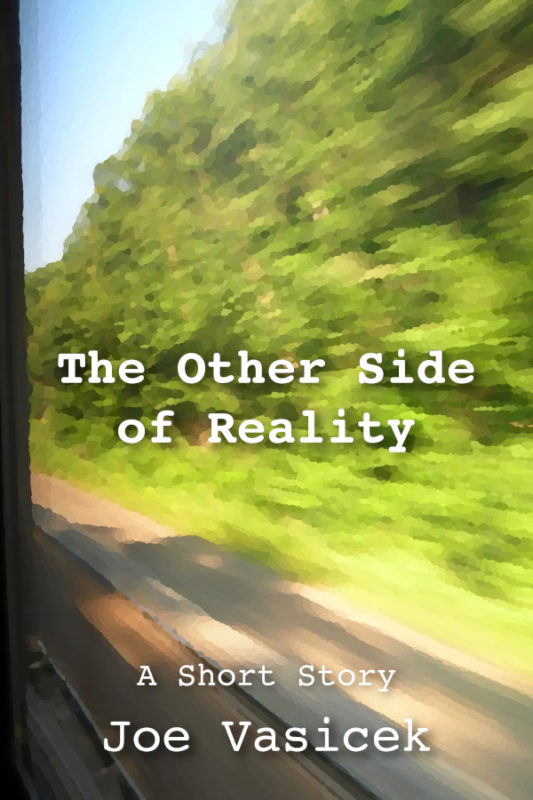
Unpublishing The Other Side of Reality

It’s been a good run, but I think it’s time to take this one down. It was always more of a fun side project, a cute little story written more for myself than for anyone else. It’s gotten to the point where I think I have too many free short story singles out, and I need to take a few of them down to make room for the new ones.

My next short story collection, Beyond World’s End, is scheduled to release in May 2022, and it will include this story. I was originally going to hold a couple of stories in reserve and never release them as short story singles, just to incentivize people to pick up the collection. But now, I think it will be better to reward my faithful followers by releasing all of the stories as free singles first.

With that said, I don’t want to have all of these stories out at the same time, so that the month before the collection comes out, a person can just download all of them for free with one click. So moving forward, I’ll be putting up and taking down these free singles fairly frequently, and never have all of them up at the same time together.

So yeah, if you want to pick up this one as a free short story single, now’s the time to do it. By the end of the week, it will be gone.

Reading Resolution Update: Before 2022

My 2022 Reading Resolution: Read or DNF every novel that has won a Hugo or a Nebula award, and acquire all the good ones.

I was going to keep track of my reading resolution this year by mentioning each book and what I liked or didn’t like about it, why I DNFed it if I did, etc… and then I thought about it a little more and realized that that’s a terrible idea. Perhaps if I weren’t an author myself, I could risk bringing down the wrath of the internet by broadcasting everything that I really think about these books, but that’s still a really stupid thing to do—not to mention, a great way to burn a bunch of bridges that, as a writer, I really shouldn’t burn.

Instead, I’m going to post a monthly update where I list all of the books that I read and want to acquire, all the books that I read and probably won’t acquire, and all of the books that I DNFed, without any book-specific commentary. I do think that having some public accountability will help me to keep this resolution, and I do intend to keep it. But because I anticipate DNFing a lot of books that have very, um, merciless fans, this seems like a better way to do it.

So here is how things stood on the morning of January 1st, 2022:

Books that I read and want to / have already acquired:

  • Double Star by Robert A. Heinlein (1956 Hugo)
  • Starship Troopers by Robert A. Heinlein (1960 Hugo)
  • A Canticle for Leibowitz by Walter M. Miller Jr. (1961 Hugo)
  • The Man in the High Castle by Phillip K. Dick (1963 Hugo)
  • Dune by Frank Herbert (1966 Hugo and Nebula)
  • The Left Hand of Darkness by Ursula K. Le Guin (1970 Hugo and Nebula)
  • The Dispossessed by Ursula K. Le Guin (1975 Hugo and Nebula)
  • Downbelow Station by C.J. Cherryh (1982 Hugo)
  • Neuromancer by William Gibson (1985 Hugo and Nebula)
  • Ender’s Game by Orson Scott Card (1986 Hugo and Nebula)
  • Speaker for the Dead by Orson Scott Card (1987 Hugo and Nebula)
  • Barrayar by Lois McMaster Bujold (1992 Hugo)
  • Mirror Dance by Lois McMaster Bujold (1995 Hugo)
  • The Mule (included in Foundation and Empire) by Isaac Asimov (1946 Retro Hugo, awarded in 1996)
  • Harry Potter and the Goblet of Fire by J.K. Rowling (2001 Hugo)
  • Farmer in the Sky by Robert A. Heinlein (1951 Retro Hugo, awarded in 2001)
  • Fahrenheit 451 by Ray Bradbury (1954 Retro Hugo, awarded in 2004)
  • Spin by Robert Charles Wilson (2006 Hugo)
  • The Sword in the Stone by T.H. White (1939 Retro Hugo, awarded in 2014)
  • Network Effect by Martha Wells (2021 Hugo and Nebula)

Books that I read and don’t plan to acquire:

  • The Demolished Man by Alfred Bester (1952 Hugo)
  • The Forever War by Joe Haldeman (1975 Hugo and Nebula)
  • Gateway by Frederik Pohl (1977 Hugo and Nebula)
  • Red Mars by Kim Stanley Robinson (1993 Nebula)
  • American Gods by Neil Gaiman (2001 Hugo)

Books that I did not finish:

  • The Moon is a Harsh Mistress by Robert A. Heinlein (1966 Hugo)
  • Flowers for Algernon by Daniel Keyes (1966 Nebula)
  • Lord of Light by Roger Zelazny (1967 Hugo)
  • Ringworld by Larry Niven (1970 Hugo and Nebula)
  • Rendezvous with Rama by Arthur C. Clarke (1973 Hugo and Nebula)
  • Green Mars by Kim Stanley Robinson (1993 Hugo)
  • Blue Mars by Kim Stanley Robinson (1996 Hugo)
  • Forever Peace by Joe Haldeman (1997 Hugo, 1998 Nebula)
  • The Fifth Season by N.K. Jemisin (2015 Hugo)
  • The Obelisk Gate by N.K. Jemisin (2016 Hugo)
  • The Stone Sky by N.K. Jemisin (2017 Hugo and Nebula)

“And worst of all, there were even those who never hunted for it.”

There was almost a fairy quality to this place, he thought. The far look and the clear air and the feeling of detachment that touched almost on greatness of the spirit. As if this were a special place, one of those special places that each man must seek out for himself, and count himself as lucky if he ever found it, for there were those who sought and never found it. And worst of all, there were even those who never hunted for it.

Clifford D. Simak, Way Station

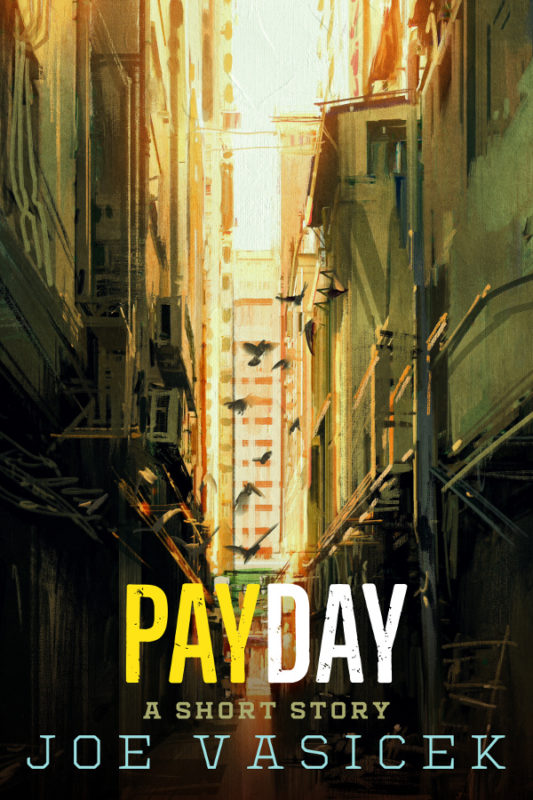
Unpublishing “Payday”

In the next few days, I’m going to unpublish my short story “Payday.” It will still be available in the collection In Times Such As These, but I think it’s about time that its run as a free short story single should come to a close.

(For those of you who may not be familiar with how I do things around here, I typically publish my short stories first as free singles, then bring them down when I have enough to bundle into a collection. I’m actually going to take down a bunch of my short story singles over the next couple of weeks as I get ready to publish the second batch of stories that will appear in my fourth collection, Beyond World’s End, sometime this spring.)

I originally wrote “Payday” back in 2017, in response to an anthology call sponsored by the Economic Security Project, an NGO whose stated goal is to bring about a universal basic income. My story (which obviously did not win the contest) showcases all of the dangers of a UBI, such as inflation, supply chain shortages, and the breakdown of local businesses and communities.

I self-published the story in March of 2020, just as the pandemic was getting started. At the time, I had no idea that my warnings and predictions would soon become so prescient. The stimulus checks and unemployment benefits weren’t exactly a UBI, but they were regarded by many as a stepping stone to enacting that policy, and what did they lead to? Inflation, supply chain shortages, and the breakdown of local businesses and communities.

In January 2021, I unpublished “Payday” so as to include it in the collection In Times Such As These the following month, but then the other shoe of the pandemic began to drop. The threat of rampant inflation, which the authorities claimed would be “transitory,” convinced me that this story was too timely to take down, so I put it back up as a free short story single, where it remains until today.

At this point, however, the story is less of a prescient look at a troubling possible future than an obvious, and perhaps too “on the nose” (I tend to get that criticism a lot) extrapolation of our present situation. For that reason, I don’t think it’s worthwhile to keep it up any longer. It had a very good run, garnering more than 5,000 downloads, which isn’t enough to have a significant impact on the national discussion, but is still greater than the circulation of most science fiction magazines and podcasts (including, most likely, the original anthology call).

“Payday” will still be available in my collection In Times Such As These, and I do still plan to keep it on submission to the traditional magazines as a reprint, but the free short story single will come down in the next couple of days. If you haven’t already picked up a copy, now is the time to do it.