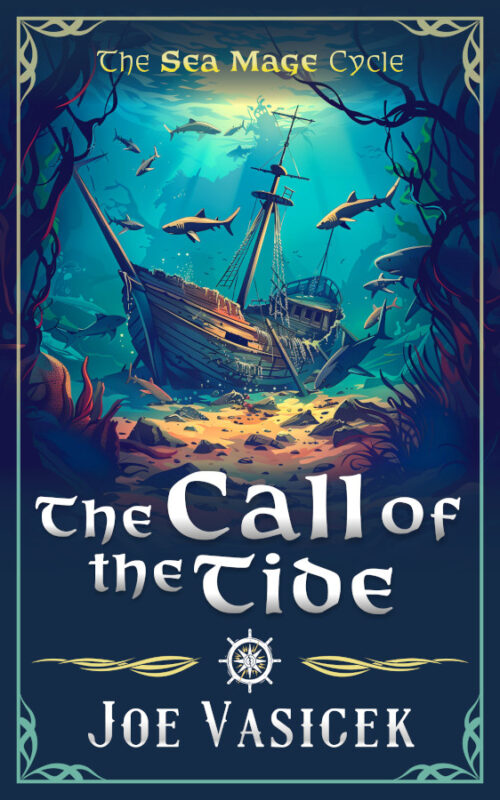
What would you do if the sea itself answered your command? If you could still storms, command ships, and crush your enemies with a single word—would you trust yourself to stop? The Call of the Tide is built around that question: not whether power exists, but whether the human heart can survive holding it.
At its core, this maritime epic fantasy asks a timeless question familiar to readers of artifact-driven fantasy like The Lord of the Rings: Is power something you wield—or something that slowly begins to wield you?
Where the Idea Came From
I’ve always been fascinated by stories where the very thing that makes a hero extraordinary is also what threatens to unmake him. Sea legends, pirate lore, and epic fantasy artifacts all circle the same idea: control over nature feels like freedom, but it can become domination in disguise. I wanted to write a story about a young sea mage offered the ultimate prize—command of wind and wave—and ask a simple “what if”: What if the greatest act of heroism isn’t using power well, but refusing it entirely?
How the Temptation of Power Shapes the Story
From the beginning of The Call of the Tide, power arrives not as brute force but as validation. Samuel has spent his life misunderstood and underestimated. When the Tidecaller’s Amulet offers him mastery over the ocean, it doesn’t just promise strength—it promises identity. It tells him he was meant for more. That subtle appeal is what makes the temptation dangerous.
As the story unfolds across privateer decks, naval commissions, and shadowed cult conspiracies, every major conflict circles back to the same pressure point: Will Samuel use the power available to him to secure victory quickly—or will he accept the slower, harder path of trust, loyalty, and restraint? The amulet can solve problems. It can silence enemies. It can ensure survival. But each time Samuel leans toward it, he risks becoming less himself and more a vessel for something colder and more absolute.
The true battle of the book isn’t fought only on the sea. It’s fought in moments of humiliation, captivity, and fear—when power feels like the only way to regain control. In the climax, Samuel must confront the ultimate realization that victory at any cost is not victory at all. The story becomes not just a tale of sea magic and naval adventure, but a moral test: is it better to rule through force, or to remain human?
What the Temptation of Power Says About Us
Power rarely tempts us with cruelty. It tempts us with relief. It whispers that if we just had more influence, more control, more authority, we could fix what hurts and silence what threatens us. The Call of the Tide explores that universal pull—the desire to stop feeling small, exposed, or powerless—and suggests that the line between protection and domination is thinner than we think. True strength may not lie in mastering the storm, but in mastering ourselves.
For readers who enjoy epic fantasy about moral choices, sea magic, artifact corruption arcs, and character-driven coming-of-age stories, this theme is at the heart of the journey.
Why This Theme Matters to Me
When I wrote The Call of the Tide, I was thinking a lot about what it means to grow into responsibility without losing your soul. Power, whether it’s talent, authority, or influence, always comes with a quiet test attached. I care about stories where ordinary people are offered something extraordinary—and have to decide what kind of person they will become when no one can force their hand. That question still feels real to me, and I hope it feels real to readers too.
If you want swashbuckling nautical fantasy with pirates/privateers, sea magic, and a dangerous magical artifact, The Call of the Tide delivers a brisk, first-person adventure full of shipboard tension, ocean-set set pieces, and clear stakes. It’s the kind of story where the wind itself can be weaponized, loyalty is tested at sea, and the next wave might bring a friend… or a cultist longboat.
What Kind of Reader Will Love The Call of the Tide?
If you love…
Pirate fantasy / nautical adventure with ships, reefs, storms, and high-seas chases
A mage-on-a-ship setup (windcasting, wards, magical concealment, ocean-diving magic)
Cursed artifacts and dark magic—especially a relic being hunted in pieces
Found-family crews and captain/crew loyalty, with a pragmatic “we survive together” vibe
Lightly pulpy, forward-moving fantasy that aims for fun and momentum (rather than grimdark despair)
…then The Call of the Tide is probably your kind of story.
What You’ll Find Inside
The Call of the Tide follows Samuel Cox, a sea mage who signs on with Captain Leona Black aboard the Ebony Eagle, as they chase (and try to end) the threat of the Tidecaller’s Amulet—all while enemies with dark sorcery close in across open water. Expect a tense, adventurous emotional ride—confidence and fear in the same breath, banter under pressure, and “hold fast” camaraderie—told in a first-person voice with action-forward pacing (ambushes, fog runs, magical duels, and desperate escapes).
What Makes The Call of the Tide Different
Fans of classic swashbuckling adventures (the Pirates of the Caribbean flavor of momentum, danger, and spectacle) will recognize the shipboard energy, but The Call of the Tide leans harder into “working magic” at sea—using wind and concealment as practical tools in battle, escape, and navigation. Where many pirate fantasies focus mainly on treasure hunts and rival captains, this one adds a sharper edge of artifact-driven urgency and cult-level menace, including an enemy who can hide behind authority and “respectability.”
What You Won’t Find
You won’t find grimdark nihilism here—the tone aims for adventure and forward motion, even when things get dangerous. And while there’s betrayal and violence (it’s pirates vs. dark sorcery), this isn’t written as a misery-tour; it’s written to keep you turning pages through the next escape, the next duel, the next reveal.
Why I Think You Might Love The Call of the Tide
In the author’s note, I talk candidly about writing the Sea Mage Cycle as a hands-on experiment in AI-assisted creative process, learning what works, rebuilding the workflow, and intentionally prioritizing fun—especially with a fast-moving first-person approach. If you like stories that feel made with enthusiasm—where the author is clearly chasing wonder, momentum, and the joy of adventure—then I think this one will hit the spot.
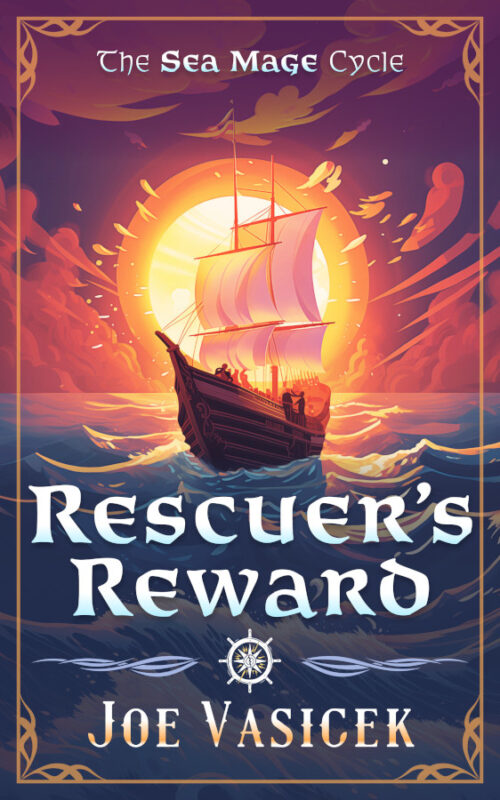
What do you do when the person you’re falling for is also the person you can’t choose—because kingdoms, treaties, and livelihoods are balanced on your decision? Rescuer’s Reward keeps returning to that central tension: when love becomes real, does duty become a prison—or a test of what kind of person you’re willing to be?
Where the Idea Came From
This story grew out of a simple “what if” that I can’t resist: what if a romantic rescue at sea didn’t solve a princess’s problems—but made them sharper? I wanted to take a classic fantasy-adventure setup (a daring captain, a dangerous voyage, a high-born passenger with enemies) and collide it with the unglamorous reality behind royal life: marriages that function like treaties, personal feelings that become political liabilities, and the quiet pressure of knowing your choices don’t only belong to you. That kind of conflict—between what your heart wants and what your role demands—felt like the right engine for a tight, propulsive book.
How Love and Duty Shape the Story
Julietta’s situation is defined by duty from page one: she’s headed toward an arranged marriage meant to secure alliances, trade access, and stability for her people. She isn’t naïve about it, and she’s not looking for a melodramatic escape hatch—she genuinely understands why the marriage matters, and she’s trying to be worthy of the responsibility placed on her.
Then Jason enters the story as the most dangerous kind of complication: not merely charming, not merely helpful, but someone who sees Julietta as a person rather than a symbol. As their bond deepens, the romance stops being a fantasy of “running away” and becomes a moral problem with teeth. Love creates a new possible life—but it also raises the stakes of every choice, because a single impulsive decision could ripple outward into consequences for kingdoms, crews, and innocent people caught in the machinery of power.
What makes the theme work (and keeps it from feeling like a soap opera) is that duty isn’t just a royal burden. Jason has obligations too—to his ship, to his crew, to survival, and to the kind of honor that keeps a man from taking what he wants just because he can. So the story’s tension isn’t “love versus duty” as a slogan; it’s love and duty pulling on both characters, forcing them to decide what integrity looks like when you don’t get a clean option.
What This Theme Says About Us
Most of us will never negotiate a marriage treaty, but we all recognize the feeling behind it: the moment when wanting something doesn’t make it right, and responsibility doesn’t stop being heavy just because you’re tired. Love can be a profound good—yet it can also tempt us to excuse selfishness, to hide the truth, or to treat other people as collateral damage.Rescuer’s Reward asks whether love is strongest when it wins at all costs…or when it’s willing to be honest, costly, and honorable in a world where choices have consequences.
Why This Theme Matters to Me
I love the kind of love story that forces people to tell the truth, keep promises, and weigh the cost of what they want, because that’s where love becomes more than a feeling. And, honestly, writing this book under intense pressure (trying to finish a full novel on a tight deadline) made me think a lot about duty in my own life—how commitment often means pressing on when it would be easier to quit, and how the “reward” for doing the hard thing isn’t applause, but the quiet satisfaction of having been faithful to what matters.
Rescuer’s Reward is a swashbuckling fantasy adventure about a reluctant sea captain chasing a royal bounty—only to discover that love, loyalty, and honor are worth far more than gold. It delivers high-seas action, magical duels, pirate intrigue, and a slow-burn romantic arc set against a backdrop of political tension and looming war. If you enjoy fast-paced maritime fantasy with heart, this story invites you aboard.
What Kind of Reader Will Love Rescuer’s Reward?
If you love…
swashbuckling fantasy with pirates, privateers, and sea battles
character-driven adventure where motives evolve from greed to genuine devotion
romantic tension rooted in honor, class differences, and impossible choices
stories about unlikely alliances and uneasy partnerships
classic quest narratives with magic, intrigue, and high emotional stakes
…then Rescuer’s Reward is probably your kind of story.
What You’ll Find Inside
Rescuer’s Reward follows Captain Jason Callidor, a debt-ridden sea captain who sets out to rescue Princess Julietta for the sake of a royal reward—only to find himself entangled in pirate politics, magical warfare, and feelings he never planned for. As rival captains circle, privateers bargain, and enemy fleets maneuver in the shadows, Jason must decide what kind of man he wants to be. The novel blends naval fantasy action with romantic tension and questions of honor, delivering a brisk, adventurous read that balances sword fights and spellcraft with vulnerability and emotional growth.
What Makes Rescuer’s Reward Different
Fans of classic swashbuckling tales and maritime fantasy will recognize the daring rescues, ship-to-ship battles, and charismatic rogues—but Rescuer’s Reward leans more heavily into character motivation and emotional transformation. Where many pirate fantasies focus primarily on treasure or conquest, this story explores the shift from self-interest to self-sacrifice. The magic system enhances naval combat without overwhelming it, keeping the focus on human choices rather than spectacle. At its heart, this is less about plunder and more about becoming worthy of love.
What You Won’t Find
If you’re looking for grimdark nihilism, explicit content, or relentless brutality, this probably isn’t that. While there are battles and betrayals, the tone ultimately bends toward hope, loyalty, and redemption. The romance is sincere rather than graphic, and the story favors emotional payoff alongside its action.
Why I Think You Might Love Rescuer’s Reward
This book represents a turning point for me creatively. It began as an experiment in pushing myself to write faster and more boldly—but it became proof that adventure stories can still carry heart. At its core, Rescuer’s Reward asks a simple question: what happens when the reward you chase turns out to be less valuable than the person you’re trying to save? I think readers who enjoy courage under pressure, growing affection under impossible circumstances, and heroes who learn who they are in the middle of danger will find something meaningful here.
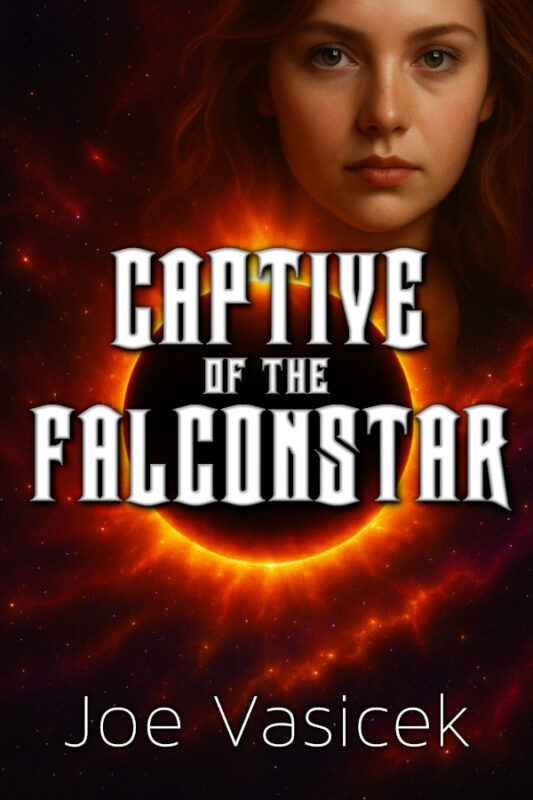
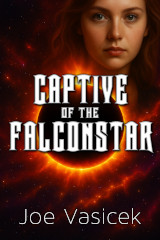
Now that we’re in a good daily routine again, I’ve been making steady progress in Captive of the Falconstar. I’m a little more than halfway done with the AI draft, and around 15% done with the human draft.
So far, there have been no major creative blocks, which is a good sign. The middle is always super messy, but I think I nailed the outline, because the AI draft has no major issues so far—and with a solid AI draft to guide the human writing, I’m consistently hitting 2500 WPH and higher.
In practice, that means that I should have a final polished draft of this book by the end of March. If I had more time to work on it each day, I’d have it done even sooner—perhaps even as soon as this month. But right now, all I can manage is about half an hour (if that) in the early morning, an hour in the evening, and sometimes as much as three or four hours on Saturday.
Not as much as I would like, but better than nothing. And without the way I use AI to generate a first draft, I probably wouldn’t be finished with this book until September or October, and it would be the only full-length novel I’d manage to publish all year. (Though realistically at that point, I’d probably have to go on indefinite hiatus and stop publishing altogether, until the kids grew up and left the house).
After Captive of the Falconstar is done, I plan to work on the human draft of The Soulbond and the Sling and the AI draft of The Soulbond and the Lady, until the first book is finished and ready to publish. But I won’t actually publish it until I have the first three books ready to go, since that way I’ll be able to rapid release the first trilogy.
Depending on how things go, I will probably put Captive of the Falconstar up for pre-order by the end of the month. I don’t usually do assetless pre-orders, but if I’m reasonably certain I can have the writing finished by the end of March, then I don’t see any reason not to give it a launch date and set things up to go. It will probably be available to read sometime in May or June.
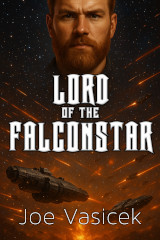
I don’t know when I’ll have the third book of the trilogy finished, but if things go well with The Soulbound King series, there’s a chance it will be finished by the end of the year. I’ll probably finish writing The Unknown Sea before I move on to Lord of the Falconstar, just because I want to write and publish another Sea Mage Cycle book before the end of the year, but depending on how things go with Captive of the Falconstar, I might move the sequel up in the queue. Otherwise, it will probably come out sometime in early 2027.
Last week, Brandon Sanderson posted a video from a conference where he gave a talk titled “The Hidden Cost of AI Art.” In it, he argues that writers who use AI are not true artists, because the act of creating true art is something that changes the artist. This is true even if AI becomes good enough to write books that are technically better than human-written books. Therefore, aspiring authors should not use AI, because it’s not going to turn them into true artists. Journey before destination. You are the art.
Obviously, I disagree very strongly with Brandon on this point. For the past several years, I’ve been reworking my creative process from the ground up, in an effort to figure out how best to use AI to not only write faster, but to write better books. I’ve experimented with a lot of different things, some of which have worked, most of which haven’t. And I’ve published several AI-assisted books, many of which have a higher star rating than most of my human-written books. So I think it’s safe to say that I have some experience on this subject, at least as much as Brandon himself, if not more.
Brandon compares the rise of generative AI with the story of John Henry and the steam-powered rock drill, where John Henry beat the machine but died from overexertion. So he showed that man can still beat the machine, but the machine still went on to change the world.
But I don’t think that’s the right story when it comes to AI. It’s far too simplistic, pitting the AI against the artist. Instead, I think it’s better to look at how AI has changed the world of chess. For a long time, people thought that a computer would never be able to beat a human at chess. Then, in the 80s, an artificial intelligence dubbed “Deep Blue” beat Garry Kasparov at chess, proving that computers can beat even the best humans at the game. So now, all of our chess tournaments are played by AI, and humans don’t play chess at all. Right?
Of course not. Because here’s the thing: even though a strong AI can always beat a human at chess, a human who uses AI can consistently beat even the strongest AI chess engines. In fact, there are tournaments where teams of humans and AIs play against each other. They aren’t as popular as the human-only tournaments, since we prefer to watch humans play other humans, and the best human chess players prefer to play the game traditionally. But when they train, all of the top grandmasters rely on AI to hone their craft and sharpen their skills.
Chess is a great example of a field that has incorporated AI. And even though AI can play chess better than a human, AI chess players have not and never will replace human chess players. Because ultimately, asking whether humans or AI are better at chess is the wrong way of looking at it. AI is better at some things, and humans are better at other things. The best results happen when humans use AI as a tool, either in training or in actual play. And because of how they’ve incorporated AI, the game of chess is more popular now than ever.
Brandon spends a lot of time angsting about whether AI writing can be considered art. Perhaps when I’m also the #1 writer in my genre, and have amassed enough wealth through my book sales that I never have to work another day in my life, I can also spend my days philosophizing about what is and is not art. But right now, I prefer a more practical approach. I’m much less concerned about what art is than I am about what it does. And the best art, in my opinion, should point us to the good, the true, and the beautiful.
Can AI do that? Can it point us to the good, the true, and the beautiful? Yes, it can, just like a photograph or a video game can—both examples of counterpoints that Brandon brings up. But as with the game of chess, a human + AI can create better art than a pure AI left to its own devices. I suspect this will remain true, even if we reach the point where AI art surpasses pure human-made art. Because at the end of the day, AI is just a tool.
But what about Brandon’s point that “we are the art”? Isn’t it “cheating” to write a book with AI? Doesn’t that demean both the artist and the creative act?
It can, if all you do is ask ChatGPT to write you a fantasy story. Just like duct-taping a banana to a wall and calling it “art” is pretty demeaning (though you’ll still get plenty of armchair philosophers debating about whether or not it counts, highlighting again how useless the question is). But if you spend enough time with AI to really dig into what it can do, you’ll find that it’s no less “cheating” than pointing a camera and pushing a button.
One of the first AI-written fantasy stories I generated was a story about a half-orc. I wrote it using ChatGPT while my wife was in labor with our second child. We were both at the hospital, and I had a lot of down time before the action really began, so I used those few hours to write a 15k word novelette. It was fun, but the story itself was pretty generic, which is why I’ve never published it.
Basically, it read like an average D&D fanfic—which is exactly what every AI-generated fantasy story turns into if you don’t give it the proper constraints. If all you do is ask ChatGPT to tell you a story, it will give you a very average-feeling story. Every fantasy turns into a Tolkien clone or a D&D fanfic. Every science fiction turns into Star Trek. It may be fun, but it’s not very good. Just average.
My first AI novel was The Riches of Xulthar, and I wrote it quite differently. Instead of just running with whatever the AI gave me, I picked and chose what I wanted to keep, discarding the stuff that didn’t work very well. But I still didn’t constrain the AI very much, so it went off in some pretty wild directions, which made it a challenge to decide what was good. As a result, it went in some very different directions than I would have taken it, but the end result was something that I could still feel good about putting my name on. And of course, after generating the AI draft, I rewrote the whole book to make sure it was in my own words. That also helped to smooth out the story and make it my own.
Since writing The Riches of Xulthar, I’ve written (or attempted to write) some two dozen AI written novels and novellas. Most of them are unfinished. Some of them are spectacular failures. I’ve published another half-dozen of them, most in the Sea Mage Cycle.
It was while I was working on the latest Sea Mage Cycle book, Bloodfire Legacy, that I finally felt I was getting a handle on how to write something really great with AI. The key is constraints. AI does best when you give it constraints that are clear and specific. The more you constrain it, the more likely you are to get something that rises above the average and approaches something great.
But to do that, you have to have a very clear and specific idea of what you want your story to look like. Which means you have to have a solid outline (or at least some really solid prewriting), and a deep understanding of story structure.
I think the real reason Brandon is so opposed to AI writing is that it negates his competitive advantage—the thing that has made him the #1 fantasy writer. Without AI, the biggest bottleneck for new and established writers is putting words on a page. Brandon made a name for himself with his ability to write a lot of words relatively quickly. Where other fantasy writers like Martin and Rothfuss have utterly failed to finish what they start, Brandon finishes everything that he starts, and he starts more series than most other writers finish. This is why he’s known as Brandon Sanderson, and not just “the guy who finished Wheel of Time.”
But generative AI removes this bottleneck. Suddenly, putting words on the page is quite easy. They might not be good words, but they might be as good as Brandon Sanderson’s words. After all, his prose isn’t exactly the most brilliant of our time. Deep down, I think Brandon feels this, which is why he sees AI as such a threat.
Will writing with AI make you lose some of your writing skills? Probably. I suspect it’s much like how using AI to code will make you weaker at coding, at least on a line-by-line level. But coding with AI will make you a much better programming architect and designer, since it frees you up to focus on the higher-level stuff.
In a similar way, I expect that the new bottleneck for writing will have to do with the higher level stuff: things like story structure and archetypes. The writers who will stand out in an AI-dominated writing field will be the ones with a deep and intuitive understanding of story structure, who can use that understanding to get the AI to produce something truly great. Because if you understand story structure, you can write better constraints for the AI. Pair that with a good sense of taste, and you’ve got an artist who can make some really great stuff with AI.
This is why I think Brandon’s views on AI art are not only misguided, but actually toxic. Love it or hate it, AI is just a tool. Using it doesn’t make you any less of an artist, just like using a camera vs. using a paintbrush doesn’t make you any less of an artist.
I’ve made some major changes to my writing process recently, mostly having to do with the accountability systems that measure my writing productivity. Instead of tracking daily word count, which I’ve done consistently for the better part of the last decade, I now track my average daily words per hour across all writing sessions.
What I found by tracking word count was that my writing and my family life were consistently coming into conflict, which wasn’t good for either. With three small children and a wife who no longer works from home, I’m currently in a season of life where I simply cannot dedicate as much time to writing.
So instead, I’m striving to do just enough writing each day to keep my writing skills sharp, so that when I do get the opportunity to dedicate a whole day or a whole weekend to writing, I can make the most of it. So instead of measuring the quantity of writing I do each day, I’m measuring how efficiently I can use my writing time, and striving to maximize that.
Over the holiday break, I also did quite a bit of thinking over all my current writing projects and how I should prioritize them in the coming year. Basically, for each WIP, I asked myself two questions: “how would I feel if this was the only book I wrote in 2026?” and “how would I feel if I never made any progress on this book for the rest of the year?” Based on that, I put my current novel WIPs in the following order:
Captive of the Falconstar
The Soulbond and the Sling
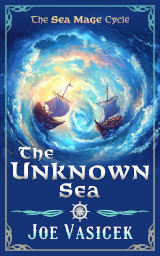
The Unknown Sea
Lord of the Falconstar
More than any other book I really want to finish Captive of the Falconstar this year. It’s science fiction, not fantasy, but it’s part of an unfinished trilogy that I’ve been committed to finishing for quite some time now. Even though I want to pivot to writing fantasy, I don’t want to leave a bunch of unfinished series as I do that. Also, it’s a really good book that I think that readers of the first book, Queen of the Falconstar, will find immensely satisfying. So I really want to finish and publish this book this year.
I don’t know exactly how long it will take me to finish it. Hopefully sometime around the spring, at which point I’ll put it up for a 2-3 month preorder. But I’m pretty overwhelmed with my other obligations right now, especially family, and we haven’t yet gotten into a good routine with my wife’s new job. So it might take a lot longer than that. But I am consistently working on it a little each day, and I expect it will be finished and published by the end of the year.
But even though I want to make progress on this series, I actually don’t want to lay everything aside to finish it. Which is why the next two books, in order of priority, are both fantasy. The Soulbond and the Sling is one that I really want to finish writing this year, even if I don’t end up publishing it in 2026. As I’ve said in previous posts, I don’t want to launch this new epic fantasy series until I have the first three books finished and ready to rapid release.
But I already have a complete human-revised AI draft of this book, so all I have to do now is go through and rewrite it in my own words. That’s going to take some time, simply because it’s such a massive book, but I want to get it done and finished and ready to publish, even if I end up holding off on that for the next couple of years.
Of course, while I continue to work on The Soulbond and the Sling, I will also continue to work on book 2, The Soulbond and the Lady. The rough AI draft of that book is already complete, but the final AI draft is going to take a lot of work, so it will probably take me as long to finish that as it takes to write and revise the final human draft of book 1. So I probably won’t finish The Soulbond and the Lady this year.
If I can finish a third book, I would like it to be The Unknown Sea. This would be the fifth installment in the Sea Mage Cycle, and so far, it’s been one of the funnest books to write. If you’ve enjoyed the other books in the series, I think you’re really going to enjoy this one, and I would really love to get it out there for everyone to read. Like all of the Sea Mage books, this one is relatively short, so finishing it shouldn’t be too difficult. It’s just a matter of making the time.
One thing you may notice is that I haven’t included any of the Christopher Columbus books in this lineup. After giving it some serious thought, I’ve decided to put that series on hold for the forseeable future. I just think it’s more important to pivot to pivot to writing fantasy, which means finishing all of the unfinished science fiction trilogies and writing new fantasy books to release in the coming years.
So that’s my writing plan for 2026. I may also start a new WIP at some point, just because I can’t help myself—in fact, I rather expect it. But if and when I do, I’ll probably take it no farther than the rough AI draft before putting it on the back burner. In fact, it might be a good idea to put several such projects together, outlining and prewriting them just enough that I can pick them up and run with them when I’m ready to commit to such a project. That should scratch my creative itch just enough without taking too much time from the WIPs I’m committed to finishing.
It’s beginning to look a lot like Christmas, the most magical time of the year—and for parents of three small children, it’s the busiest time as well. This week has been packed with all sorts of things, which means the writing has taken a backseat for the moment. Still, I’ve been managing to get a little work done, mostly in the early mornings.
I’m about 40% done with the rough AI draft of The Soulbond and the Lady, book 2 in the Rise of the Soulbond King Trilogy. I’ve also been working on the human draft of The Soulbond and the Sling, though progress has been slow (which is also why I haven’t been able to update the cover, or make a cover mock-up for The Soulbond and the Lady).
It took me only four days to write the prompts and generate the rough AI draft of The Soulbond and the Sling, which came to about 153k words. That was pretty wild. But the draft turned out to be a little too rough, which is part of the reason why it took so long to revise the AI draft and get it to a state where I was ready to move on to the human draft. So for The Soulbond and the Lady, I’m trying to be more careful. If I can fine tune the prompts to generate a much higher quality rough AI draft, it shouldn’t take nearly as much energy to revise it, which means that I can finish the AI draft of book 2 while I write the human draft of book 1.
I was hoping to finish the rough AI draft of The Soulbond and the Lady before Thanksgiving, but that didn’t happen, so now I’m hoping to finish it before Christmas. But I’ve currently put that WIP on hold so that I can finish the novella version of “Christopher Columbus: Treasure Hunter” in time to publish it in February of next year. I’m currently about 15% done with the AI revisions, and if things go well, I’ll have a finished AI draft by the end of the week, or early next week at the latest.
With the Christopher Columbus series, I’m experimenting with different forms of AI-assisted writing, leaning more into the discovery writing aspect of the creative process. So it might take longer as I figure it out. That’s frustrating, because it means slower writing progress, but by the end of it I’ll hopefully have learned a few more things about AI-assisted writing that will help out with future books. And even with how frustratingly slow it is, I am having quite a bit of fun with this WIP.
After Christmas, when I’ve hopefully finished both of these WIPs (at least through the AI draft phase), I plan to pick up The Unknown Sea again and work on that one until it’s DONE. I’m planning on a release date in March of next year, which might be a bit of a challenge given how crazy it is around here, but I’m really looking forward to finishing this one and getting it out into the world!
I feel sorry for my wife. She needs a lot more sleep than I do. If I can get four uninterrupted hours of zzz, I’m doing great. Of course, how long I can keep that going is an open question—and one we put to the test every time we have a new baby. But he’s getting better, and in another month or two, he’ll probably (hopefully) be sleeping through the night.
Things are going pretty well around here. The house is a wreck, but a manageable one. Still need to finish unpacking from the move, but that’s a long-term project at this point. The kids are doing well. Wife and baby seem to be doing well. She’s got her thesis defense in a couple of weeks, at which point the PhD is fully off her plate. Which will be nice for all of us.
For the last couple of weeks, I’ve mostly been bouncing between different projects, making a little progress on each, but not really finishing or making significant progress on any of them. Hopefully, that will soon begin to change.
For the next couple of weeks, I plan to work on Captive of the Falconstar, moving it along as far as I can. Mostly, though, I just want to keep it fresh in my mind, since if four or five months go by without working on it, it’s going to be that much harder to pick it up again.
I’m really excited to get back to work on this one. My subconscious brain has been mulling over this story for the past few years, and I think the time is ripe to put it on the page. I’m also a lot more skilled at writing with AI, which makes a huge difference. The first time I attempted this WIP, I think I bit off more than I could chew. But with the AI draft of The Soulbond and the Sling under my belt, I’m very confident that I can finish this one.
My goal is to publish it this spring/summer, along with the third book in the trilogy, Lord of the Falconstar. That might be a little too ambitious, but with the baby already 1+ months old and our lives slowly settling into a reasonable routine, I think it’s good to start planning these things again. The rough AI draft is already complete, so it shouldn’t be too difficult to pick up from Captive of the Falconstar when the time comes. Really, it’s more like one really long story split in the middle.
In another couple of weeks, I plan to pick up The Soulbond and the Sling again, mostly just to keep it fresh. I’ll also be working on the rough AI draft for book 2, The Soulbond and the Lady, working out the chapter prompts and everything else. Instead of rushing through that one, I plan to take my time and get it right. Hopefully that will make the rest of the AI drafting process go much more smoothly.
That should keep me busy until Thanksgiving. Again, the goal is not to finish any of these projects, but to work on them enough to keep them fresh in my mind. Of course, there is a mental cost to switching between WIPs too frequently, so I’ll still try to make significant progress on each of them while I can.
After Thanksgiving, I plan to work on The Unknown Sea until it’s done and ready to publish. I’ve already been making really good progress on this one, and the only reason I laid this WIP aside was to keep the others fresh. But once I pick it up again, I think it will go quickly, and I may even be able to finish the final polished draft before Christmas.
Of course, there are only three full weeks between Thanksgiving and Christmas this year, and the holiday season is always busy with family stuff. We’re staying home this year—no traveling across the country to spend the holidays with family (we did that over summer). But I’m sure it’s going to be an eventful season, especially with the new baby. So I might end up picking up The Unknown Sea a little before Thanksgiving, just to get a head start.
And now, I can hear the kids waking up in the room above me, so it’s time to schedule this post and get started with another day. With luck, maybe I can get a little writing in before things get too crazy.