update post

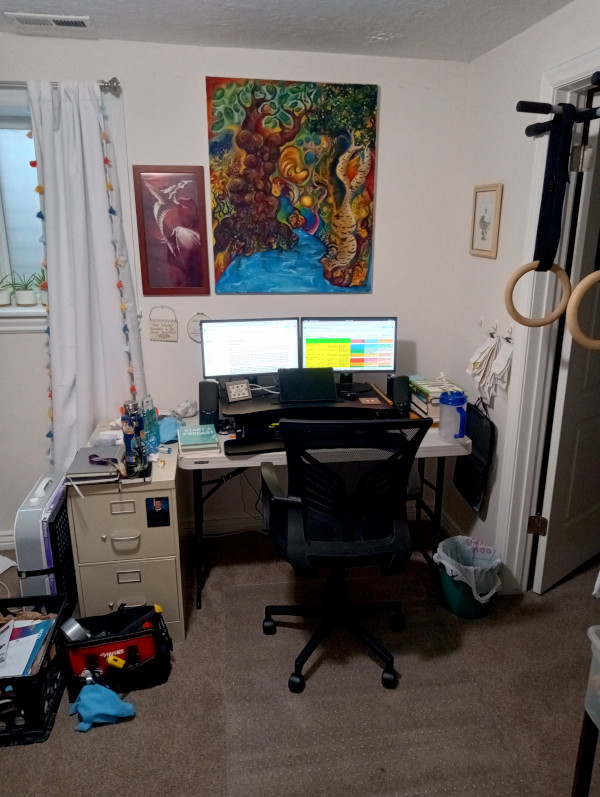
This is my current writing setup. The top of the filing cabinet already needs to be decluttered, but the rest is actually working out pretty well. The nice thing is that the computer can be raised into a standing desk, which works out really great for writing, since I tend to write better when I’m standing or pacing.

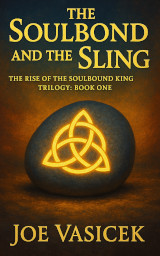
I am almost finished with the AI draft of The Soulbond and the Sling. It looks like it’s going to be about 140k words total, which is on the short end for an epic fantasy novel, but longer than anything else I’ve written (except for the first novel I ever finished, which shall never see the light of day).

The human draft will likely be longer than that, though. I’m going to add more details as I humanize it, which is easier to do just by writing it yourself than it is to get an AI to write it. Though parts of it will likely be shorter, since I’m sure there are places where I let the AI overwrite. Most of the skill in AI-assisted writing consists of knowing what to cut out, since generating words is the easy part.

I have also finished the outline for The Soulbond and the Lady, the second book in the Soulbound King series. It should clock in at about 20 chapters, 100 scenes, and 165k words. The next step is to fill out all the prompts and generate a rough AI draft, but because of how Sudowrite works, I don’t want to do that until the AI draft of The Soulbond and the Sling is complete (since it would require tweaking a bunch of the worldbuilding and character prompts). So that will probably wait until the end of the month.

In general, I have found that I tend to work best when I have two current WIPs: one human and one AI. This is because the two different kinds of writing exercise different parts of my brain, and I can rest the one part while I’m using the other. However, it only really works if both WIPs are in the same series. If I have to mentally switch from one universe to another, that adds friction that makes things difficult.

So the key is to pair up different WIPs together, such that I’ve always got both a human WIP and an AI WIP in the same series. With The Soulbound King, that’s not so difficult, because the AI draft of The Soulbond and the Sling is complete enough for me to start the human draft. And once the AI draft is complete, I can move on to the AI draft of book 2 while I finish up the human draft of book 1. It might become a problem if I finish one of the drafts well before the other, but that won’t be a problem for a while.

With the Falconstar Trilogy, that’s also not a huge problem. I will probably human-write a reader magnet while I work on the AI draft of Captive of the Falconstar, then humanize Captive while I work on the AI draft of Lord of the Falconstar.

With Return of the Starborn Son, the last science fiction novel I plan to write for a while, it’s going to be more tricky because that is the last book in the trilogy, and I still haven’t generated the AI draft. What I’ll probably do is start work on the human draft after I’m about 15% done with the AI draft, and see if I can’t work on both simultaneously. That hasn’t worked as well for me in the past, since I actually prefer to write the human draft out of order, but if it starts to break down I’ll just hold off on the human draft until the AI draft is more complete.

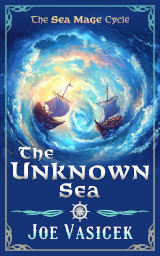
With the Sea Mage Cycle, I’ve currently just got one WIP in that series (The Unknown Sea), and it’s in the AI drafting stage. But it’s short enough that I can probably finish it in just a couple of weeks. At that point, I’ll take my wife out to dinner and have her pick out the next one I’ll write, then work on the AI draft for that one while I’m humanizing The Unknown Sea.

Which brings me to my J.M. Wight pen name. After a lot of thought and some careful deliberation, I’ve decided to put The Road to New Jerusalem on the back burner for now. I was going to try to finish that one in time for the Ark Press contest in October, but I don’t think this is the right time to work on that particular WIP. In the first place, it probably won’t win, and even if it did, that might actually be more of a liability, since it’s a near-future post-apocalyptice novel, and I’m currently trying to establish myself as a writer of epic fantasy.

From now until 2030, I plan to write epic fantasy almost exclusively. The only exceptions for that are the two sci-fi series (The Falconstar Trilogy and the Outworld Trilogy) that I haven’t yet finished. Also, I will probably write some zany space adventure-type stuff under my J.M. Wight pen name, more in the vein of my Gunslinger books (which I have republished under J.M. Wight). But aside from that, I plan to focus on writing fantasy—specifically, epic fantasy.

In my blog series Fantasy from A to Z, I wrote about how epic fantasy has fallen into decline in recent years, due to reader fatigue with big name authors like George R.R. Martin and Patrick Rothfuss failing to finish their series, and how this has put newer authors in a conundrum, because epic fantasy novels are way too big to rapid release, but most readers aren’t willing to start a new series until after it’s already been finished. I hope that my new AI-assisted writing method will help me to crack that particular nut, writing and releasing epic fantasy books fast enough to satisfy readers. Because even though there haven’t been a ton of new epic fantasy authors in recent years, I don’t think the reader demand for epic fantasy has gone down at all. There may still be an opportunity there for writers who can deliver.

That’s what I’m hoping, at least. So I’ll keep plugging away at The Soulbound King, and hopefully release the first all three books of the first trilogy around this time next year.

Fisking 1-star reviews bashing AI

They say that authors should never respond to one-star reviews. That’s generally good advice, and for most of my career, I’ve studiously kept it. However, I’ve recently begun to get a new kind of one-star review that baffles me—reviews that essentially say: “the book was good, but it was written with AI so I hate it.”

Here’s an example:

This book is written with AI. Incredibly disappointing as a reader to give a book/author a chance and then to get to the end of the book only for the “author” to then announce the AI card. If I could give zero stars, I would for this alone. I also didn’t appreciate that this use of AI was not announced until the ending Author’s Note. If “authors” are going to cut corners and put their name to computer-generated mush, they should be willing to put that information on the front cover. The book struggled to find its pace, and some parts read as though they were written for a child’s short story competition while others felt as though the writer was snorting crushed up DVDs of Pirates of the Caribbean as they wrote.

Let’s break it down:

This book is written with AI. Incredibly disappointing as a reader to give a book/author a chance and then to get to the end of the book only for the “author” to then announce the AI card.

Yes… but I can’t help but notice that you got to the end of it. In other words, you finished the book. Also, from the way you tell it, it seems that you didn’t realize the book was written with AI until you got to the very end. So based on your own behavior, it doesn’t seem that quality was the issue.

I also didn’t appreciate that this use of AI was not announced until the ending Author’s Note. If “authors” are going to cut corners and put their name to computer-generated mush, they should be willing to put that information on the front cover.

Okay… but if my book was just “computer-generated mush,” why did you finish it? And why were you surprised when you learned that it was written with AI-assistance?

I can understand the objection to books that were written solely with AI, with little to no human input. But that’s not how I write my AI-assisted books. Instead, I outline them thoroughly beforehand, write and refine a series of meticulously detailed prompts (usually using Sudowrite), and generate multiple drafts, combining the best parts of them to make a passable AI draft. And then I rewrite the whole thing in my own words, using the AI draft as a loose guide with no copy-pasting.

Why would I go through so much trouble? Because of how the AI drafting stage gives me a bird’s eye view of the book, allowing me to identify and fix major story issues before they metastasize and give me writer’s block. Before AI, that’s where 80% of my writer’s block came from, and it often derailed my projects for months, so that it took me well over a year to write a full-length novel. But with AI, I’m no longer so focused on the page that I lose sight of the forest for the trees. So even though generating and revising a solid AI draft adds a couple more steps to the process, it’s worth it for the time and trouble that it saves.

That’s the way I use generative AI in my writing process. But there are many other ways—and I hate to break it to you, but most authors use AI in one way or another. If an author uses Grammarly to fix their spelling and grammar, should they disclose that on the cover? If they use MS Word? What if they used a chatbot to brainstorm story ideas, but went on to write it entirely themselves? Should that also be disclosed?

The book struggled to find its pace, and some parts read as though they were written for a child’s short story competition while others felt as though the writer was snorting crushed up DVDs of Pirates of the Caribbean as they wrote.

Yes… but again, I can’t help but notice that you finished the book. And after you finished it, you were surprised to learn that it was written with AI. So with all due respect, I’m going to call BS on your objections here. I think you only decided you hated the book after you learned it was written with AI, and you came up with these objections after the fact. Whatever.

I think a lot of the people who object to AI are really just scared and angry. They claim to have principled, ethical objections to the technology, but few of them follow through to implement that principled stance into every area of their lives. After all, if you use Grammarly, Google Docs, or MS Word, you are using generative AI just as surely as I am using ChatGPT and Sudowrite. For most people, the ethical objections are just a smokescreen for their general fear of change. They’re fine with embracing the convenience the technology offers them in their own personal lives, but they insist that everyone else—including me—live according to their principles, no matter how inconvenient or difficult it may be.

As an example of that, check out this one-star review:

The arts! Whether visual, performance, or literary—my haloed experience has been the act of creating and sharing a connection to the profound or sublime. Why, then, would any artist—musician, dancer, sculptor, painter, or author—offload (abdicate) the act of creation to AI? Process versus product. Mr. Vasicek included an afterword for this volume, describing his workflow and the efficiency of collaboration with AI: a 6,624-word day! another volume completed! Mr. Vasicek obviously owns the skills to weave rich character development and scenes. Perhaps Mr. Vasicek’s AI collaboration explains why these characters, the plot, the narrative—and subsequently, the entire story— are so flat and undeveloped. Although his lead male shows some undeveloped promise, the mother’s too-oft used “dear” and “my love,” and the daughter’s clutching at her mother’s apron are cringe-inducing. Perhaps Mr. Vasicek might eschew AI-assisted writing, seeking a future of quality over quantity.

Let’s break it down:

The arts! Whether visual, performance, or literary—my haloed experience has been the act of creating and sharing a connection to the profound or sublime. Why, then, would any artist—musician, dancer, sculptor, painter, or author—offload (abdicate) the act of creation to AI?

Because for some of us, writing is more than a “haloed experience”—it’s an actual job. It’s what we do for a living. And if you want to do your best work, you need to use the best tools. We used to build houses with plaster and lath and wrought-iron nails, using hand tools and locally-sourced lumber. But today, you’d be a fool not to use power tools and materials sourced from a building supply store, or your local Home Depot. If that makes your building experience less profound or sublime, so be it.

Process versus product. Mr. Vasicek included an afterword for this volume, describing his workflow and the efficiency of collaboration with AI: a 6,624-word day! another volume completed!

I’m not gonna lie: there is a certain degree of tension between art-as-product and art-for-art’s-sake. But the two are not mutually exclusive. A house can still be a beautiful work of art, without taking as long as a cathedral to build it. Likewise, a book can still be a beautiful work of art, without taking as long as Tolkien’s Lord of the Rings.

Again, you’re trying to pidgeon-hole me into your “haloed” idea of what a “true artist” should be. Which would make it absolutely impossible for me to make a living at this craft. If all of us writers followed that path, there are a lot of wonderful books that would never get written. And I doubt that the overall quality of the books that do get written would rise.

Mr. Vasicek obviously owns the skills to weave rich character development and scenes.

Now we get to the interesting part. I checked this reviewer’s history, and this was the only review they’ve written for any of my books. Therefore, I can only assume that this is the only book of mine that they’ve read. But if that’s the case, how do they know that I have “the skills to weave rich character development and scenes”? If the book I wrote with AI was pure trash, why would they say that I obviously have some skill?

Once again, we’ve got a case of “I enjoyed this book, but it’s written with AI so I hate it.” In other words, it’s not the book itself that you hate, so much as the way I wrote it. You object to the idea of authors using AI, not to what they actually write with AI.

Perhaps Mr. Vasicek’s AI collaboration explains why these characters, the plot, the narrative—and subsequently, the entire story— are so flat and undeveloped. Although his lead male shows some undeveloped promise, the mother’s too-oft used “dear” and “my love,” and the daughter’s clutching at her mother’s apron are cringe-inducing.

Finally, some specific and legitimate criticism. And while I do think there’s a degree of retroactively looking for faults after enjoying the book, I’m totally willing to own that these criticisms are valid. This particular book (The Widow’s Child) was one of my first AI-assisted books, and I was still learning to use these AI tools as I was writing it. I did the best I could at the time, but if I were to write it today, I could probably do a lot better, smoothing out the annoying AI-isms that you’ve pointed out here.

But the book is currently sitting at 4.4 stars on Amazon (4.1 on Goodreads). And the other readers do not share your objections. Here is another review, pulled from the same book:

Since waiting a year or more to read the next book in a sequel is hard on my stress levels, I’m liking this AI. It means talented authors like Joe Vasicek can churn out an outline faster. Then he can bring in his talented ideas, such as the content of this heart-stopping adventure of The Widow’s Child, to fill out the nitty gritty in record time.

Clearly, it’s not the case that all (or even most) readers feel the same way about AI as you do.

Perhaps Mr. Vasicek might eschew AI-assisted writing, seeking a future of quality over quantity.

Why can’t we have both? Why can’t we have quantity with quality? Why can’t AI make us more creative, instead of replacing our human creativity?

This is all giving me flashbacks to the big debate between tradition vs. indie publishing, back in the early 2010s. Back then, the debate was between purists who said that indie publishing would destroy literature by flooding the market with crappy books. Indies argued that removing the industry middlemen would create a more dynamic market that would give readers more choices and allow more writers to make a living. Both were right to some degree, and both were also wrong about some things. In the end, we reached a middle ground where “hybrid publishing” became the norm.

The same kind of debate is happening right now between human-only purists and AI-assisted writers. The biggest difference is dead internet theory. In the early 2010s, the ratio of bots to humans on the internet was still low enough to allow for a lively debate. Today, there’s so much bot-driven outrage on the internet that most of us are just quietly doing our own thing and avoiding the debate.

That same bot- and algorithm-driven outrage is driving a lot of peole to be irrationally angry or afraid of AI. With that said, I can understand why so many people are upset. And I do think there are a lot of valid criticisms about this new technology, including its environmental impact, copyright considerations, how the models were trained, and the societal impact it’s already starting to have. But if we don’t have an honest and good-faith debate about these issues, we can’t solve any of them. And we can’t have a good-faith debate if one side is coming at it from a place of irrational anger or fear.

In any case, I find it super annoying when readers who clearly found some value or enjoyment in my books turn around and give it a one-star review merely because they don’t like how I used AI. And at the risk of going viral and soliciting more one-star anti-AI reviews, I think its worth voicing my views on the subject and opening that debate. So what are your thoughts on the subject? How do you feel about using AI as a tool to help write books? Can we have quantity with quality? Can AI help us to be more creative, not just more productive? What has been your experience?

Going full-tilt on The Soulbound King

I’ve decided to put The Road to New Jerusalem on the back burner and focus instead on my epic fantasy series, The Rise of the Soulbound King Trilogy. If I push, I think I can finish the AI draft of book 1 in the next two weeks. I’ve also nearly finished the outline for book 2, and will probably have a rough AI draft for that one by the end of September.

I would really like to publish this series in 2026, but I don’t want to launch it until I’m ready to rapid release the first three books. And since these books are all epic fantasy, it’s going to take a lot of time and effort to write them. Without AI, it would probably take me something like two or three years for each book. I’m not a very fast writer, and I tend to get stuck in the middle, even when I have a solid outline. With AI, I think I can shorten that to 6-8 months.

These books are probably going to range between 150k and 200k words, so not super long for epic fantasy (for comparison, Mistborn: The Final Empire is about 214k words, and The Way of Kings is about 384k words). That’s much longer than most genre books, though, including most of the books I’ve written until now. And writing difficulty doesn’t scale linearly with book length; it scales logarithmically. So while it may take only 1-2 months to write a Sea Mage Cycle book, those are only about 1/3rd the length of a Soulbound King book.

My long-term goal, though, is to pivot to epic fantasy, to the point where that’s mostly what I write. And if you read my science fiction novels, you’ll find that they’re much more like epic fantasy, with multiple viewpoints, grand galactic empires, wars and political machinations, and a universe that has its own character arc. So while this may superficially seem like a huge pivot, it’s actually not.

There are three science fiction books that I need to write before I can pivot entirely to writing fantasy: Captive of the Falconstar, Lord of the Falconstar, and The Return of the Starborn Son. Those are the only outstanding science fiction series that need finishing (and I will finish them, I promise—I’m not going to pull a GRRM). I also need to finish the Twelfth Sword Trilogy, the epic fantasy series I started in the 2010s while I was still mostly writing science fiction.

Realistically, the only ones of those books that are going to be finished between now and the end of next year are the Falconstar books, since I need to juggle all of these with the Soulbound King epic fantasy books that I’m also writing. But I think I can finish the Falconstar books, and also write and publish a Sea Mage Cycle book or two within the next year. I’ve found that it often helps to take week-long breaks to work on other projects, which allows me to approach a larger and more challenging WIP like The Soulbond and the Sling with new eyes. So I will probably alternate between working on the Soulbound King books and working on Falconstar and Sea Mage Cycle for the forseeable future.

But my goal for the next two weeks is to go full steam ahead on The Soulbond and the Sling, until it is finished. And with luck, I will also have a few excerpts to share with you soon!

Back into writing!

So we are more or less moved into our new (old) house, though there is this overdue kid’s book from the library that somehow got lost during the move, and we haven’t been able to find it… but aside from that, we are more or less settled in. Our five year-old has started kindergarten, my wife is starting her new job, and by the time this post goes live, we will have acquired office chairs from the BYU surplus sale, so I won’t have to be standing all the time like I am as I write this.

I’ve already gotten back into writing my epic fantasy, The Soulbond and the Sling, and am making steady progress on it again. The AI draft is about 66% complete, and it’s good enough that if I were writing it under a secret AI-only pen name, I would feel comfortable publishing it as-is. But my personal standard of quality is higher than that, especially for epic fantasy, so after the AI draft is complete, I will rewrite the whole thing without any AI, to put it in my own voice (and will probably add a whole lot of other stuff to it too—you know, the kind of setting and character details you’d expect in a proper epic fantasy, giving it much more depth).

(Also, as a side note, I do not have a secret AI-only pen name… though I must admit, a part of me kind of wants to start one. With a little bit of market research to figure out the pulpiest genres where I could really excel… but no, with two (soon to be three) small kids and a wife who works full-time, there are only so many projects I can work on at a time.)

I’m also working on The Road to New Jerusalem for my J.M. Wight pen name, though that one has been going much more slow. I really have no idea how much market appeal this one is going to have, and doubt it will do much more than help me to flesh out the world for a potential series in the same universe (a post-apocalyptic Mormon polygamist romance, which also probably has limited market appeal). However, I feel impressed that this is a book I need to see through to the end, so my goal is to finish it before October, at which point I will probably focus on The Soulbound King.

Beyond that, I’m also working on two other novels that I hope to finish before the end of the year (or, more realistically, sometime early next year, since I’m sure the new baby will throw things off for a while. The first is The Unknown Sea, a Sea Mage Cycle book, which is going to be a lot of fun. The rough AI draft is already done, and I had a real blast writing it.

The other one is Captive of the Falconstar, the sequel to Queen of the Falconstar. The rough AI draft is also done for this one, but the revised AI draft is going to take a bit more work. Also, I need to redo the cover and blurb. But I’m really looking forward to getting this one out, and completing the trilogy, which has stood unfinished for nearly a decade now. Yes, I really need to finish these unfinished series, and fully intend to do so—not just with this one, but for all of them.

Over the next year, I hope to transition from being a science fiction writer who occasionally writes fantasy, to a fantasy writer who occasionally writes science fiction. My two big unfinished sci-fi series are the Falconstar Trilogy and the Outworld Trilogy. The plan right now is to finish Falconstar first, knocking out the last two books almost at the same time (the rough AI draft for Lord of the Falconstar is also complete), and then spend a little more time on Return of the Starborn Son to finish that trilogy strong. For a long time, Star Wanderers was my flagship series, so I want to do right by it. But I haven’t even outlined book 3 yet, so it’s going to be a while.

And when Return of the Starborn Son is done, I will probably release another volume of my author’s notes, since hey, why not? But that won’t be for a while—probably not until this time next year, at the absolute soonest. However, Return of the Starborn Son probably will come out before The Soulbond and the Sling, since for marketing reasons I don’t want to release an epic fantasy trilogy until all three books are ready to rapid release. And yes, I fully blame George R.R. Martin for conditioning epic fantasy readers not to try out a new series until it is complete. It is what it is.

So that’s the long-term plan. I will probably start a few new projects as well, including a relaunch of my Christopher Columbus stories, once I figure out what I want to do with that series. But for now, I’m just going to focus on The Road to New Jerusalem and The Soulbond and the Sling, until we are back into a new routine. BYU classes start on September 3rd, so it will probably be a little crazy until then. And the way things are shaping up, I half-expect they will induce my wife at the tail-end of September. So maybe we won’t actually get into a new routine until sometime next year. But either way, I’ll do my best to keep writing.

New book! Out now! Bloodfire Legacy

I published a new Sea Mage novel last week! Check it out!

Bloodfire Legacy

Bloodfire Legacy

A murdered wizard. A desperate thief. A daughter on the brink of damnation.

Corin has never been more than a streetwise nobody and a petty thief. He can also hear the voices of the dead, whether or not he wants to. So when the ghost of the royal court magician begs him to help save his wayward daughter, Corin reluctantly accepts, even though it means he must become something he's never been: a hero.

Order Now!
About the Book
A murdered wizard. A desperate thief. A daughter on the brink of damnation. Corin has never been a hero. A streetwise nobody and petty thief, he’s survived this long by keeping his head down and his fingers quick. He can also hear the voices of the dead—whether or not he wants to. But when the ghost of the royal court magician begins to haunt him, all of that begins to change. His daughter has been dabbling in the dark arts, seeking to avenge his death. In doing so, she has fallen in with the very people who killed him. Corin is the only one who can help him save his daughter. But to do that, Corin must turn from everything he knows and become something he’s never been: a hero.
Details
Author: Joe Vasicek
Series: Sea Mage Cycle
Genres: Action & Adventure, Dark Fantasy, Epic, Fantasy, FICTION, General, Romance
Tag: 2025 Release
Publisher: Joe Vasicek
Publication Year: July 2025
Length: Novel
List Price: $14.99
eBook Price: free!
Audiobook Price: $4.99
Joe Vasicek

Joe Vasicek fell in love with science fiction and fantasy when he read The Neverending Story as a child. He is the author of more than twenty books, including Genesis Earth, Gunslinger to the Stars, The Sword Keeper, and the Sons of the Starfarers series. As a young man, he studied Arabic at Brigham Young University and traveled across the Middle East and the Caucasus Mountains. He lives in Utah with his wife and two apple trees.

Preview
Some of the links in the page above are "affiliate links." This means if you click on the link and purchase the item, I will receive an affiliate commission. You will not receive any additional charge. As an Amazon Associate I earn from qualifying purchases.

New permafree first-in-series: Rescuer’s Reward

I have decided to make Rescuer’s Reward the permafree book for my Sea Mage Cycle fantasy series. If you haven’t yet read any of these books, this is a great place to start. It’s not the first book chronologically, but it is the first book that I published in the series, and since the Sea Mage Cycle is really just a series of interconnected standalones (kind of like most of Louis L’Amour’s westerns), you won’t miss anything by starting here.

Rescuer’s Reward

Rescuer’s Reward

A captain in debt, a princess in peril, and a fate that neither can foresee.

All Jason ever wanted was to sail the Azure Sea as a merchant ship's captain. But money problems have him up to his eyeballs in debt, and if he doesn't return to port with the gold, his dreams will be dashed forever. So when the princess of a far-off kingdom is kidnapped by pirates en route to her wedding, Jason merrily takes up the chase, staking his future on the reward for her safe return.

Yet the competition for the princess proves fierce, and Jason soon learns that there are far more powerful forces behind her kidnapping than any of them realize. And though Princess Julietta has no qualms about marrying for political advantage, the last thing she wants is to be a mere trophy in a different sort of game.

As duty, desire, and destiny clash, only one thing is certain: they both must risk everything to earn the ultimate reward.

Order Now!
About the Book
Details
Author: Joe Vasicek
Series: Sea Mage Cycle
Genres: Action & Adventure, Action & Adventure, Fantasy, Fantasy, FICTION, Romance, Sea Stories
Tag: 2024 Release
Publisher: Joe Vasicek
Publication Year: April 2024
ASIN: B0CTFVNKFL
List Price: $13.99
eBook Price: free!
Audiobook Price: free!
Joe Vasicek

Joe Vasicek fell in love with science fiction and fantasy when he read The Neverending Story as a child. He is the author of more than twenty books, including Genesis Earth, Gunslinger to the Stars, The Sword Keeper, and the Sons of the Starfarers series. As a young man, he studied Arabic at Brigham Young University and traveled across the Middle East and the Caucasus Mountains. He lives in Utah with his wife and two apple trees.

Preview
Some of the links in the page above are "affiliate links." This means if you click on the link and purchase the item, I will receive an affiliate commission. You will not receive any additional charge. As an Amazon Associate I earn from qualifying purchases.

Fantasy from A to Z: L is for Love

What is love? (Baby don’t hurt me…)

Seriously, though, what counts as “love” in fantasy these days? The romantasy subgenre is taking the field by storm, but much of it seems to be outright pornography, at least to me. Back when Twilight was all the rage, I at least understood the romantic angle, even if I didn’t particularly care for it. But now, there’s all this stuff about mate-bonding, consent/non-consent, something called “the omega-verse,” and a weird hierarchy of various forms of bestiality that I frankly cannot follow at all.

I should take a few steps back, and perhaps abandon romantasy altogether. I’m sure there are plenty of non-pornographic books in that subgenre—in fact, I’m fairly certain that one of my old college friends, Charlie Holmberg, was a pioneer in it. Everything of hers that I’ve read is pretty good, and also quite understandable, even to a dopey guy like me. 

Outside of romantasy (and paranormal romance, which it appears that romantasy has more or less cannibalized), the love stories are pretty straightforward. Epic fantasy in particular tends to have at least a couple of romantic subplots in every book—which makes sense, considering how expansive the subgenre is trying to be. After all, if you’re writing a story where the world itself is a major character, you’ve got to have at least a few good love stories in there too.

But as the internet has continued to spawn narrower and narrower niches and subcultures, all existing in their own little subcultures, things on the extremes have gotten… weird. And as the gender divide appears to be widening with each subsequent generation, especially in areas like politics and culture, it’s beginning to seem like we aren’t even speaking the same language, even when it comes to something as basic and essential as love.

Now, male-coded romances are pretty easy to understand (though I could be biased… I am a man, after all). It starts with a boy who really wants a girl. Like, really, really, really wants a girl. He likes her so much, he spends the whole book trying to get her—and by the end, he either wins her, or he realizes that he doesn’t actually want her, he wants this other girl he met along the way. If things get spicy, it’s all very straightforward and everyone generally has a good time. If there are issues with rape or non-consent, those are generally separate from the romantic subplot

And often, male-coded romances don’t even include much spicy content at all. Even Robert E. Howard’s original Conan the Barbarian stories were pretty mild, in terms of spiciness. Yes, there was usually a scantily-clad female love interest, described in such a way as to increase Howard’s chances of getting his story featured on the magazine cover (and thus earning double the pay). But when it came to the actual, you know, kissing and stuff, Howard never went into graphic detail. The most he would do was hide behind euphemisms like “he crushed her in his arms.” All of the ejaculations in his stories were saidisms—as in, “look out!” he ejaculated, waving his hands wildly (and you would be shocked how often he used “ejaculated” as a saidism—seriously, I think there’s at least one in every classic Conan story).

(Side note: just because Robert E. Howard’s Conan stories were pretty mild on the spiciness scale, that does not mean that subsequent authors kept it mild. Lin Carter and L. Sprague de Camp tended to keep it more in the vein of the original, but Robert Jordan’s Conan was… let’s just say, it was too much for me.)

And it used to be that female-coded romances were pretty simple, too. An ordinary, boring girl somehow finds herself the object of attraction between two incredibly powerful (and incredibly sexy) men from the other side of fairy, who are positively obsessed with her. However will she choose between them both? Oh, look—now they’re fighting each other to determine which one gets her. Stop fighting, you sexy fairy men! But seriously, however will she choose?

Somewhere along the line, that morphed into a thing called “reverse-harem,” which (as I understand it) is where the girl throws up her hands and decides that she can’t possibly choose between them, so she chooses them all. Which meant, of course, that the love triangles quickly turned into love dodecahedrons—since if you’re going to have a harem, you might as well fill it up with as many sexy fair men as you can. 

And then somehow, things got really weird—and also, really toxic. According to Malcolm and Simone Collins (who know more about this subject than I do), some of the more toxic behaviors that romantasy normalizes include:

  • Fated or “mate-bond” relationships that override consent,
  • Extreme male possessiveness portrayed as genuine love,
  • Drugging and public humiliation portrayed as romantic tension,
  • Huge age and maturity gaps between partners,
  • Serial betrayal framed as female empowerment and playing hard-to-get,
  • Intentional miscommunication, with heroines refusing to talk through their problems—again, often framed as female empowerment,
  • Violence rebranded as safety, since the love interest will never really hurt the heroine, 
  • Wish-fulfilment with serial partners, often framed as a justification for serial betrayal mentioned above, and
  • Lazy trope stacking (eg “rich-fey-boyfriend,” scent/marking, etc) without confronting the darker implications of coercive and non-consenting relationships.

Sadly, it seems that all of these toxic aspects of romantasy are reflections of the current state of modern dating and relationships. For example, in a world of online dating where ghosting and fading is all-too common, serial betrayal is a bit of a power fantasy, as is wish-fulfillment with serial partners, since if “true love” doesn’t work out, there’s always another one just a swipe away. Similarly, because women who have taken multiple sexual partners find it difficult to pair-bond with any of the later ones, the concept of “mate-bonding” may have arisen as a way to recapture that lost sense of bonding that comes with the “first time.”

Call me old fashioned or out of touch, but I preferred it when things were simpler, and the traditional boundaries around sex and relationships were still very much in force. There’s something charming about the love stories that were written before birth control and the sexual revolution, where men had to woo their women and get them to say “I do” before any of the bedroom gymnastics became a factor. Of course, I’m totally biased, because my wife and I both have a “body count” of exactly one.

I think romantic love is one of the greatest things in the world. I think that sex is also a wonderful and a beautiful thing, especially when it is used to fulfill its primary purpose: to facilitate lifelong pair-bonding between a man and a woman. In my experience, this is an even more important purpose of sex than procreation, though of course that is a very important (and very fulfilling) secondary purpose.

I don’t read or write romantasy, so you won’t find any of those tropes in my books. You will find a lot of romantic love, though, especially in my sea mage cycle books. Rescuer’s Reward is probably the closest thing I’ve written to a straight up romance, at least in the fantasy genre. The Widow’s Child also has a strong romantic subplot, though it goes a little further than fade-to-black. And of course, the Soulbond King books are going to have a lot of romance, since the magic system requires a man and a woman to become bonded in love in order to unlock their unique magical powers. Those books are going to be a lot of fun to write.

Independence Day update

Happy 4th of July, everyone! It’s Independence Day here in America, when we celebrate our nation’s birthday by doing all of the most American things possible: fly our flags, eat lots of meat, and blow things up. God bless America!

It’s been a busy month so far, with family visiting from out of town all last week, and lots of kids all over the place. Great for our kids, who got to play with their cousins, but not the best for writing. Oh well. It looks like things are going to settle down for the rest of the month, which is really good, especially for my wife, who is racing to finish her PhD before she starts her new teaching job. So I will definitely be helping her with that.

On the writing and publishing side of things, I am actually going to take advantage of this time to catch up on all of the non-writing things, like publishing tasks, that I’ve fallen behind on. When August rolls around, things are going to get really crazy, with our move back to Orem as my wife starts her new job, so I want things to be set up really well for that.

I will continue writing, though: just at a slower pace. If I plan to do about an hour a day, and make that a consistent thing, I think I can keep that up through the crazy times that are coming. Not only are we moving and starting a new job, but we also have a new baby due to be born very shortly after all of that. So I fully anticipate that it’s going to be a crazy year.

(still not the final cover)

My plan right now is to keep plugging away at The Soulbond and the Sling, slowly but surely, until the AI draft is complete. At the rate that I plan to go, however, it probably won’t be finished until August or September.

I’ll also be working on the human draft of The Road to New Jerusalem, but since my plan is to submit that to the Ark Press contest in October, I’m not too worried about rushing that one. Besides, it’s a much shorter novel, so it shouldn’t be that hard. A part of me wonders if I’ll finish that one before The Soulbond and the Sling.

In the meantime, I plan to publish Bloodfire Legacy in paperback, ebook, and audiobook as soon as I go through the edits and get it formatted! In fact, that’s the next big thing I plan to work on in the next two weeks. With luck, it should be out very soon.

So those are the big things that I’m working on right now. I’m also going to try and finish all the blog posts for Fantasy from A to Z before the end of the month, though they will probably run through the first half of August or so. And once Fantasy from A to Z is done, I will turn that into an ebook exclusive for my newsletter list, and make my current newsletter exclusive, Science Fiction from A to Z, available as a regular ebook (and maybe audiobook and paperback as well).

All of this is part of my plan to pivot toward being more of a fantasy author. Right now, I’m a science fiction author who occasionally writes fantasy. In the future, I want to be known as a fantasy author who occasionally writes science fiction. Most of my science fiction leans heavily into fantasy tropes anyway, so it shouldn’t be too difficult to make the change. Hopefully most of my readers follow me over as I make the transition.

Toward that end, I’m happy to report that Rescuer’s Reward, the first novel in the Sea Mage Cycle, is now available as a permafree book! If you like fun quick fantasy adventures with a touch of romance, I think this will be right up your alley. All of the Sea Mage Cycle books are pretty short, and they all stand alone, though they often have recurring characters. Check it out and give it a read!

Fantasy from A to Z: J is for Jesters

Fantasy, for all its dragons and destiny, is often a very serious genre. Life and death, good and evil, wars and rumors of wars—these are just a few of the more serious subjects we often find in fantasy. But a good story needs to strike a variety of notes beside the somber ones. The darker the tale, the more important the laughter becomes.

Soldiers have known this for ages. Marines are famous for their gallows humor—twisted, irreverent, often completely inappropriate jokes that somehow manage to be hilarious precisely because of how bleak the surrounding circumstances are. In war, laughter can be a survival mechanism, a pressure valve, and a glue that bonds brothers together. If you can laugh with someone in the trenches, you’re probably going to trust them when the bullets start flying.

Fantasy, like war, often deals with high stakes and harsh realities. Armies march. Cities burn. Heroes fall. The world trembles on the edge of the abyss. But if the characters never laugh—if they can’t crack a smile even once—then something essential has been lost. Without humor, darkness becomes unbearable. With it, we can find the strength to endure.

Terry Pratchett understood this. His Discworld novels are farcical, yes, but they are also deeply wise. He made fun of everything—kings, wizards, police, journalists, Death himself—but always with a nod to the things that make us human. As a result, his stories are full of heart, even when they deal with some surprisingly dark and existential subjects—such as Death himself.

In fantasy, humor can take many forms. Sometimes it’s wordplay or irony. Sometimes it’s a running gag or a sarcastic sidekick. Sometimes, it’s directed primarily at the reader, such as William Goldman’s masterful narration of The Princess Bride. Other times, it flows from the characters in their interactions with each other. With Terry Pratchett, it often was both.

It can be done poorly, of course. In fact, humor is often one of the hardest things to pull off well. Few people take their craft more seriously than comedians (which itself is kind of hilarious, if you stop to think about it). To further complicate matters, the humorous elements in a good fantasy novel are often subtle and invisible, burning off just enough tension to let the story breathe. Anything more than that is liable to pull the reader out of the story, by drawing too much attention to the joke.

It can be a difficult thing to balance. But when it’s done well, it can make for a very entertaining tale. And when balanced with all the other elements of a good story, humor can make the emotional highs higher and the emotional lows lower. Which makes it a very powerful thing.

I don’t know how good I am at writing humor, but I try to sprinkle in enough of it to make my stories entertaining. My humor is often situational: for example, in The Call of the Tide, Samuel is a mage who can only exercise magic by never cutting his hair. That led to some mildly hilarious situations, such as birds trying to nest on his head at the most awkward of times. I also try to let it flow from the characters themselves. In Bloodfire Legacy, Corin often speaks with a sarcastic edge that flows from his experience growing up on the streets. This makes him a good foil for the somber ghost of Lord Arion, who was murdered in the first chapter of the book and now haunts him.

There’s a time to take things seriously, but there’s also a time to laugh and lighten up. And ultimately, if a story doesn’t entertain you, it’s not going to do much else. The best fantasy books have an element of humor, even if it’s subtle. After all, laughter is one of the most essential things that makes us human.

Fantasy from A to Z: I is for Immortality

Immortality is one of those fantasy tropes that shows up everywhere once you start looking for it. Vampires, elves, gods, liches, ancient dragons hoarding gold through the centuries—we’re fascinated by the idea of beings that can’t die. Sometimes they’re terrifying, sometimes noble, sometimes weary and wise. But always, they strike a chord.

Why? Because they brush up against one of our deepest human anxieties: death.

Death is one of those universal aspects of the human experience. Everybody dies. And compared to the lifespan of things like mountains, or forests, or stars, the human lifespan is remarkably short and fleeting. Some of us live a long and a full life, and are ready to go when the time comes, but many of us are not. Tragedy can strike us at any time. No one knows when the reaper will come for them.

This is why, in fantasy fiction, immortality often comes wrapped in awe and mystery. It’s a mark of otherworldliness, a symbol of something beyond the ordinary cycles of birth and death. Sometimes it’s a gift. Sometimes it’s a curse. Often, it’s a little bit of both.

Personally, my favorite fantasy author who captured this complexity is J.R.R. Tolkien. His elves are perhaps the most iconic immortal race in all of fantasy. They don’t age or grow frail. They don’t die of disease. They are not eternal in the divine sense, but their lives are bound to the life of the world. When they are slain, their spirits travel to the Halls of Mandos, where they can eventually be re-embodied. But they are still bound to the world. They don’t pass beyond it. They don’t get to move on.

That’s the heart of their tragedy.

Elves in Tolkien’s legendarium aren’t happy fairytale creatures dancing in the moonlight. They are ancient beings with long memories, deep sorrows, and wounds that don’t always heal. They remember battles and betrayals that happened millennia ago. They carry the weight of history like a cloak that can never be removed. And for all their beauty and wisdom, they are fading. Slowly, subtly, inevitably. Their time is passing, and they know it.

In contrast, humans are mortal and thus are not subject to this curse. As Tolkien writes in The Silmarillion:

“And the Doom of Men, that they should depart, was at first a gift of Ilúvatar. It became a grief to them only because coming under the shadow of Morgoth it seemed to them that they were surrounded by a great darkness, of which they grew afraid.”

That’s a remarkable insight. Mortality, which we so often view as a curse, was originally a gift. The elves envy us not because we die, but because we get to leave. To move beyond the world. To have an end.

And yet, we don’t often treat it like a gift. In fact, we go to absurd lengths to avoid it.

You don’t have to look far to see that our obsession with immortality isn’t limited to fantasy stories. In Silicon Valley and other corners of the tech world, there’s a growing movement of wealthy futurists who are pouring money into the dream of defeating death. Some want to reverse aging at the cellular level. Some are working on brain-uploading technology, convinced they can digitize the human soul. Others are experimenting with biological “enhancements,” anti-aging therapies, or even transfusions from younger people in an effort to extend their lifespans.

This hunger for immortality is as old as the Epic of Gilgamesh, but today it wears a lab coat and calls itself “biohacking.” The names have changed, but the impulse remains the same. We want to stay. To cling to life. To hold onto what we have, no matter the cost.

But is that really such a noble goal?

Fantasy offers us a counterpoint. Again and again, stories show that immortality comes at a price. Vampires lose their humanity. Liches surrender their souls. Gods become detached from the world of mortals. Even the elves, for all their grace, are caught in a long decline.

Immortality often brings with it a kind of existential exhaustion. Without death, there is no closure. Without loss, there is no growth. Without time running out, nothing truly matters.

Mortality, by contrast, sharpens everything. Because we are mortal, our choices matter. Because time is a scarce resource—indeed, perhaps the only resource in our world that is truly scarce—our relationships carry weight. Because we will one day die, every act of love, courage, sacrifice, or faith becomes immeasurably precious.

And that’s something that fantasy, at its best, understands better than any philosophical treatise or TED Talk ever could. Again, Tolkien writes:

“But the sons of Men die indeed, and leave the world; wherefore they are called the Guests, or the Strangers. Death is their fate, the gift of Ilúvatar, which as Time wears even the Powers shall envy.”

The elves call us guests. Strangers. Not because we are lesser, but because we do not belong to the world in the same way they do. We are pilgrims passing through this world—strangers in a strange land. Our road leads elsewhere, and that elsewhere—whatever lies beyond the circles of the world—is part of the hope that makes us human.

In my own fantasy, I like to play with this idea. My characters all live in the Mortal Realm, but there is an Immortal Realm that lies beyond the bounds of their current existence, and the veil that separates the two can sometimes grow quite thin. In The Sword Keeper, there is a Void between the two realms that Tamuna must cross in order to confront the evil that afflicts her world, and to find the lost spirit of her father. In Bloodfire Legacy, when Lord Arion is assassinated in the first chapter, he temporarily gives up the indescribable glory of the Immortal Realm in order to linger as a ghost and help guide his orphaned daughter. 

All of these characters are bound, in time, to pass from this Mortal Realm, but that isn’t a curse—it’s a gift. There is far more to this life than the bounds of our material existence. There are more things in heaven and in earth than we can comprehend with our mortal understanding.

In the end, fantasy doesn’t just explore our fear of death. It teaches us how to find meaning in the brief time we’re given. So the next time you read about some deathless sorcerer or ageless elf queen, remember: you have something they never will. An ending, and a beginning. A home beyond this world. A story that can reach its conclusion.