Announcing the Desert Stars Kickstarter campaign!

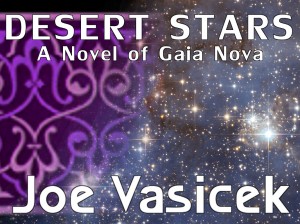
In order to help pay for some of the production costs of my next ebook, Desert Stars, I’m running a kickstarter campaign.  The goal is to raise $600 by December 1st, and to publish the novel by Christmas.

For those who contribute to the campaign, here’s what I’m offering:

  • $10 or more: A copy of the finished ebook in all formats, with your name listed under “special thanks” at the front.
  • $15 or more: The above, plus a high resolution image of the cover art as a desktop background.
  • $25 or more: The above, plus your choice of every ebook I’ve published in 2011 (including the forthcoming Journey to Jordan) OR every ebook I will publish in 2012.
  • $50 or more: The above, plus a character named after you in a future work and a complimentary copy of that work.
  • $100 or more: The above, plus a short story up to 1,500 words that is exclusively yours to share as you see fit.

This is my first time running anything like this, so I’m a little bit nervous, but I’m also excited at the same time!  At the very least, it’ll be an interesting experiment.  The goal is fairly modest, but it’ll cover the editing costs, with a little bit left over to go towards cover art.  I’ll pay for the rest.

This weekend, I’ll put out the first few chapters on Smashwords so that you can read a sample.  If you want to read the prologue, you can find it here.

In the meantime, please help spread the word!  Tweet it, like it, share it, tell a friend about it, blog about it–every little bit helps!  And if you can contribute a little towards the project, that would be awesome as well.

Thanks so much!  I’m really looking forward to publishing this book!

Why I’m not a fan of writing groups

I was listening to a recent episode of I Should Be Writing today, and it got me thinking about writing groups and how my philosophy on them has changed.  Long story short, I used to love them, but now I’m not such a huge fan.

I should probably start out by mentioning that I lead a college writing group for two years, and I don’t regret the experience at all.  The Quark writing group was extremely helpful, both in terms of my own growth as a writer, and the connections it gave me with other writerly people.  I still keep in touch with many of them.

But now…I just don’t think writing groups are all that great.  In fact, I think that they often do more harm than good, not just for experienced writers, but for the beginner who lacks the confidence to strike out on their own.  Here’s why:

The group dynamic gives inexperienced critiquers a false sense of authority.

Most writing groups consist of writers who are at roughly the same level of expertise.  For beginners, this means that the people critiquing your story might not know any better than you whether the story is broken.  However, because of the dynamics of the whole thing (captive audience, desire to impress peers, etc), these people are likely to act as if they have more authority than they really do.

To be fair, I’ve had plenty of critique partners who have managed to be modest and down-to-Earth when offering their critiques.  However, I’ve also seen plenty of others get puffed up and offer some really dumb advice.

Beginning writers often naively look for someone to show them the answers–some mentor or authority figure whose every word is true, who will light the path and show them the way.  Put a bunch of them into a writing group together, and more often than not you’ll end up with the blind leading the blind.

The weekly submission process does not simulate the reading experience.

Logistically, most writing groups have to set a limit on the size and number of submissions.  For the Quark writing group, our limit was three submissions of four thousand words each.  It worked out fine for short stories, but most of us were writing novels, which meant that we had to workshop our books in little four thousand word chunks.

The problem is that nobody reads novels at that rate.  Either they get hooked and finish the thing, or they get bored and stop reading.  Therefore, while the feedback you receive might be good for helping out with craft issues, by the time the next week rolls around either everyone has forgotten what happened already, or they remember it wrong, or they were expecting something different and are ticked off because they have to wait another week.

After I revised Bringing Stella Home a couple of times (after–see below!), I workshopped it through a writing group I’d put together after leaving the Quark writing group.  I can’t tell you how many times I heard “why are we in James’s point of view this week?  I hate James!  I want to get back to Stella!” I got this comment so often, for a while I thought the book was really flawed.  However, when I got the feedback from my first readers, no one had this problem at all.

The reason?  They read the book the way it was actually meant to be read.

Workshopping a work in progress is the surest way to kill a book.

Committees might be good at doing some things, but they’re absolutely horrible at producing anything innovative or original.  Make no mistake: if you’re workshopping something you haven’t already finished and you follow most or all of the feedback you receive, you’re writing your book by committee.

Most writers agree that when you write your first draft, you should not revise anything until it’s done.  This is because the act of revision makes you so critical of your own work that it’s very easy to get discouraged or “fix” something that was actually a good idea.

Workshopping a work in progress does exactly the same thing: it puts you in a critical frame of mind that will literally kill your book.  Even if you manage to finish it, it won’t be nearly as good as it could have been because you’ve probably nipped all your best ideas in the bud, before they had time to grow and develop.

A truly great book does not appeal to everyone.

There’s a word for something that appeals to everyone equally, that runs about middle of the road and doesn’t upset anyone.  That word is “average.”

No truly great work is loved by everyone.  This isn’t just true of controversial stuff–it’s true of everything.  For every one of your favorite books, there’s a one-star review of it on the internet somewhere.  So if everyone tells you your book is good, that might not actually be the case.  In fact, it’s a much better sign when some people hate it and others can’t stop raving about it.

The trouble with writing groups is that the group dynamic can lead to a herd mentality, where everyone goes along with the first opinion that gets expressed.  Ever played Werewolf?  The same thing happens there.  One person throws out an accusation, the vote gets called, everyone starts looking around to see who is raising their hand and before you know it, all the hands are in the air.

So unless one of the seven or eight people in your writing group loves your work enough to stand up and defend it, chances are the feedback will err on the side of being too negative.  This makes it very difficult to tell whether your story actually sucks, or whether it’s just above average.

Writing groups teach you to write to rules, not for readers.

One of the dynamics of writing groups is that they encourage people to find and latch on to certain writing rules, where people can say “this story is broken because of x” or “this writing is flawed because of y.” Over time, this becomes so ingrained that people stop reading to see whether the story actually works and instead read to see whether the story follows the rules.

The truth, however, is that there are no hard and fast rules when it comes to writing.  For example, you’ve heard of “show, don’t tell”?  Yeah, go and read Ender’s Game.  The entire book is one giant tell–and it’s brilliant.  It was the first sf novel to win both the Hugo and the Nebula awards in the same year, and has remained a perennial bestseller ever since.

Nothing hit this home for me more when the cryo scene excerpt from Genesis Earth won first place in the 2009 Mayhew contest at BYU.  Parts of the scene lapse from first person past tense to second person present tense, and the members of my writing group pointed that out as a major no-no.  However, even though it broke the rules, it worked well enough to win an award.

To be fair, there are some things that writing groups are very good for.  They can be a good way to learn the basics of craft (ie “the rules”), and they do give you a sense of community that can be very encouraging when you’re just starting out.  However, the drawbacks are so great that I don’t think I’ll ever go back.

Personally, I’ve moved from writing groups to a core group of first readers whose feedback I value and whose opinions I trust.  I finish my project, send them the entire manuscript with a deadline in which to read it, and thank them graciously for whatever feedback I receive.  Most of them aren’t even writers, in fact–but all of them are readers.  Most of them don’t know who the others are, and none of them ever see any of the feedback from the others.

Criticism is good; if you want to grow as a writer, you should welcome criticism and constantly solicit it.  But I do believe it’s possible to grow out of a writing group–or to succeed without ever being a part of one at all.

Desert Stars 4.0 is finished!

And just in time; I start another job tomorrow.  So anyhow, here are the stats:

words: 99,000
chapters: 22
ms pages: 465
start date: 3 Oct 2011
end date: 25 Oct 2011

And the word splash:

Wordle: Desert Stars 4.0

Can you tell who the main characters are? 🙂

This might sound kind of cheesy, but this book has a very special place in my heart.  I started it immediately after the 2008 BYU Jordan study abroad program, though it took me until the summer of 2010 to finish it.  Even though it’s shorter than Bringing Stella Home, I think it’s much more immersive, with the world itself playing a much larger role as one of the characters.

I’m very satisfied with this draft.  I say this with everything I write, but I honestly believe that this is my best work to date.  It’s surprising to see just how much my writing has changed between drafts.  It seems to be getting better, though, so that’s very encouraging.

I haven’t launched the kickstarter campaign yet, but I hope to do that by the first of next month, so be sure to look out for that.  In the meantime, I thought it might be fun to share the prologue, to give you an idea of what the story is about.  Enjoy!

=============================================

Prologue

The boy felt scared, more scared than he had ever yet been in his young life. It was because of the strange noises in the bulkheads and the way the walls and floor shook, but mostly because everyone around him, even his parents, were scared, and he didn’t know why.

The lights in the hallway flickered as he wandered out of his cabin, and the whine of the engine rose higher and higher. It wasn’t especially loud, but didn’t sound right; the boy knew that much at least. On the other side of the ship, a door hissed as it slid open. The boy turned and saw his uncle and three of his cousins come running out of the bridge, eyes wide with fear.

She’s gonna blow,” shouted his uncle. “Let’s move!”

The boy stood rooted to the spot, his legs frozen in terror. He watched as his cousins ran to the emergency escape chutes–the ones his parents had adamantly told him never to play in–and dove through.

A groaning noise came through the bulkheads–the terrible sound of metal on metal. He closed his eyes and covered his ears with his hands, and the floor itself dropped out from under him. For a frighteningly disorienting moment, gravity vanished, leaving him floating weightless in the corridor. The taste of vomit filled his mouth and he screamed in fright, but without gravity he could only kick his legs uselessly beneath him.

The moment passed, and he fell to the hard tile floor. Tears of terror clouded his vision, and his arms and legs shook so bad he hardly noticed that the floor was shaking. The ship lurched, sending him sprawling on his hands and knees.

Hands grabbed him underneath his arms, lifting him up and carrying him away. He glanced up and recognized the face of his mother, pulling him towards the escape chutes.

Mommy,” he cried, “I’m scared.”

I know, dear,” she told him. “Mommy needs you to be extra brave right now.”

The boy nodded. Though his mother tried to sooth him, he could tell that she was just as frightened as he was. That terrified him more than even the loss of gravity.

Come on!” the boy’s father shouted, further down the corridor. “Any minute now, and–”

The lights flickered again, and an explosion sounded from deep within the bulkheads of the ship. A low hiss sounded behind them, and not from a door opening.

Oh God,” the boy’s mother cried. “Is that–”

As if in answer, a mighty wind howled throughout the ship, filling the boy’s ears with its roar. It whipped at his hair and tugged at his clothes, sucking him away like a monster from the bottom of a giant drain. Somehow, he knew that in only a few moments, they would all be dead.

Hands grabbed him, lifting him up toward the escape chute. He screamed, but the roar of the wind was so loud he could barely hear his own voice. His mother slipped something around his neck, and suddenly he was falling through the chute, into darkness.

He came to a stop in a snug little space, closed in on all sides like a glove for his body. A holoscreen lay in front of his face, with a pair of flight sticks and a miniature control board. The boy gripped the flight sticks with his hands and stared dumbly at the screen, barely able to process anything that was happening.

A distant puffing noise sounded through the ultra-soft walls, and then he was falling again–only this time, he couldn’t move his arms or legs. He was locked into position, cushioned on all sides and only able to use his hands.

Fighting back panic, he watched as the holoscreen flickered and came to life. It showed an image of space, the stars spinning wildly as noiseless flashes of light burst into being before fading into after-image amid the blackness of space. He squeezed the dual flight sticks and moved them like he was playing a computer game, but it was no use–he couldn’t equalize.

Mommy, the boy cried inwardly. Panic swept over him, and his hands and arms began to shake. He screamed, but in the tightly enclosed space, there was no one to hear him.

The glowing orb of a planet came into view, filling the screen with its brilliant light. The boy squinted as the display adjusted, showing a brown and yellow landscape framed by a curved horizon. It danced with the spinning stars, moving so quickly that everything was a blur.

A red light started blinking in the corner of the screen, and words flashed across the display. The boy didn’t know how to read, but he knew it was something bad. He tried again with the flight sticks, but that only sent him spinning in a new direction.

Without warning, the screen switched off, and the entire capsule filled with thick, pink foam. The boy gasped and tried to shield himself with his hands, but before he could cover his face it hardened around his body, freezing him into position.

The foam covered his mouth and face, but was just porous enough to allow him to breath–in short bursts, however, because his stomach was severely pinched. The spinning grew worse, until he wanted to throw up. As if from a great distance, he heard a muffled roar through the bulkheads. Everything around him grew increasingly warm, until he began to sweat. He tried to open his mouth to cry out, but his jaw was locked too tightly in place–he couldn’t move anything, not even a finger.

Mommy! he mentally screamed. Where are you?

As if in answer, something popped behind him. Inertia threw him forward, but the foam held him in place, so that all he felt was a tremor through his body. Gravity returned, so that he felt as if he were dangling upside down from his feet. Blood rushed to his head, and he swooned, redness clouding his vision.

Then, like a punch to his face, the shock of impact hit him, causing his bones to shudder. He spun even faster than before, but the foam still held him. It felt as if someone had turned him inside out, though–as if his stomach had swollen and turned to mush.

As the spinning gradually came to a stop, tears streamed from the boy’s eyes. The roaring had died down, leaving him encased in near-absolute silence. That frightened him almost more than the noise.

A sharp hiss filled his ears as the foam grew sticky and porous all around him. He thrashed against it, pulling his hands and arms free as it turned into a sticky, foul-smelling soup. Behind him, a hatch opened, and he struggled toward it, spitting to get the nasty taste out of his mouth.

He crawled out and rose to his feet, blinking in the harsh light of a foreign sun. The hot wind bit him as it blew in his face, stinging his face with sand. He raised a hand to his eye and looked around him at the alien landscape.

A lonely, rust-red desert extended in all directions, with nothing but sand and rock and distant craggy peaks to meet his eye. The sky shone a hazy yellow, completely unlike the clean white light of his family’s ship. A new fear passed through the boy–the fear of being alone.

As he stared at the land around him, he reached down to see what his mother had slipped around his neck. It was a pendant with a little black case at the end. He felt it between his fingers and knew somehow that he would never see her again.

Tears clouded his eyes, and he screamed and wailed for someone, anyone–but in the harsh desert waste, there was none to hear him.

=============================================

Good stuff. I can hardly wait to get it published!
Random late night thoughts

I’ve been going on a lot of late night walks lately, just wandering restlessly around Provo.  Tonight I had some interesting thoughts about how much I’ve changed in the last year.  Surprisingly, I’ve grown a lot.

Last  year at this time, I was all geared up for World Fantasy Convention.  I had just finished Bringing Stella Home, and I my thoughts went something like this: “if I’m lucky, maybe I’ll find an agent, and they’ll like my pitch enough to see it, and after they read it they’ll want to represent me, and then they’ll sell my book somewhere, so that maybe, just maybe, I can make a living as a writer in ten years.”

Now, I don’t want to get into the whole indie vs. traditional debate, because I think it’s ultimately a false dichotomy.  However, now that I’ve gone ahead and published my own work independently, I feel like I’ve taken charge of my career in a way that I hadn’t before.  I’m no longer waiting on someone else to make my hopes and dreams come true, I’m going out and pursuing them myself.

That’s the big thing that I think has changed in the past year: I’ve gained a lot more confidence.  A year ago today, I was working a temp job in a costume company warehouse, fretting and worrying over how to make ends meet and where to find a stable job.  I had considered freelancing as a translator and teaching English in another country, but hadn’t actively pursued those options because frankly they terrified me.  And as for writing, that was the impossible dream that might come true someday, but not today.

Now, writing is still the impossible dream, but at least I’m on a path that doesn’t involve lottery thinking like the old one.  None of my books have really taken off yet, but at least I have them published and available for readers to discover, so when I do start to get some traction I’ll be in a much better position to succeed.  And either way, I’ve taken charge of my own career.

So yeah, I can say I’ve grown a lot in the past year–which is surprising, considering all I did was stay in my old college town and work odd jobs.  At least I didn’t move back in with my parents–which makes me part of an elite 15%.  But now, I think I’ve just about reached the limit of how much I can grow here in Provo.  If something doesn’t change, I worry that I’m going to start stagnating.

So in a year, where will I be?  Who knows, but if I’ve grown as much as I have since October 2010, I’ll count that as a success.

Decisions suck, writing is awesome

Whew!  I just finished revising through almost 9k words in Desert Stars.  I’ve only got three more chapters and an epilogue to go, and man, I am so excited about this story!  I have no doubt it’s my best work yet.

Of course, I might be biased. 😉

Star Wanderers is also coming along very well.  I’ve only got a few more scenes to write/revise before it’s ready to send off to the next round of first readers.  Part of me wants to send it off to Writers of the Future right now (and according to Dean’s sage advice, that’s probably what I should do), but I want to get some feedback first just to make sure there isn’t something I’ve missed that would make it better.  If all goes well, I’ll probably send it off by the end of the month.

This is the best part of writing process: finishing up a project that you know is good.  This is one reason why I love rewriting so much.  If I could do this all day, every day, and get paid enough for my work to make ends meet, I’d be living the dream.

Until then, however, I’ve got to figure out another way to make ends meet.  One option I’m considering very seriously is selling my contract and driving across the country this Thanksgiving to spend a month or two with my parents before going overseas.  My mom was the one who suggested it, and I have to admit it makes a lot of sense; if I’m going to go abroad to teach English anyways, why not spend some time back home?

If this is something I need to do, I’m going to have to make the decision very soon, possibly before the end of next week–and if you know me, you know that I’m terrible at making decisions.  However, I have been thinking about it enough to make a couple of lists, and this is what I’ve come up with so far:

Reasons to go to abroad:

  • To start a new career.
  • To have adventures.
  • To experience another culture.
  • To gain TEFL experience.
  • To support myself as I write.
  • To have a change.
  • To see the world.
  • To have something to write about.

Reasons to stay in Utah:

  • To get married.
  • To focus on writing.
  • To pursue a graduate degree.
  • To stay in a predominantly Mormon community.

I decided to list only the positive reasons for making either decision, and not to consider any of the creeping doubts or fears (and there are many!).  So let’s break it down:

To start a new career: This seems prudent, especially if it takes a while for my books to really take off.  Specifically, a TEFL career seems like something I could juggle with my writing career, and it would certainly offer a lot more satisfaction than a grunt day job.

To have adventures: Perhaps not the most responsible reason, but hey, you’ve got to remember to have fun.

To experience another culture: One of the perks of traveling, for sure.  It would probably improve my writing considerably as well, though culture shock and distance from family would certainly pose a challenge.

To gain TEFL experience: In other words, to find out if teaching English as a foreign language is something I want to build a career around, or whether I’m just not suited for it.  This is why I’d want to do the TLG program first, before heading off somewhere like Cairo or Amman.  And if it doesn’t work out…well, at least I’d know.  Right now, I don’t.

To support myself as I write: This is huge.  I hear that most TEFL jobs only take up about 20 hours per week, and that if you’re living in a local apartment, it’s not hard to make time to write.  In the past two years, I haven’t had any success balancing writing with full-time work, and working part time probably wouldn’t earn me enough to support myself here in the states.

To have a change: Not quite as tangible a reason, but important nonetheless.  I can’t quite explain it, but if I stay where I am now, in my current life situation…it’s just not going to work out.

To see the world: I could probably lump this under “to have adventures.”

To have something to write about: Also huge.  My experiences in Jordan and the Middle East were a huge inspiration for Desert Stars, and if I’d never gone over there, the novel wouldn’t be nearly as rich.  Who knows what else my imagination would produce if I spent some time traveling the world?

Now, for the other side:

To get married: Honestly, this is more of a negative reason than a positive reason.  I’ve already decided that I’m only going to marry someone who’s a practicing Mormon, and since Utah is predominantly Mormon, I’m worried that if I leave Utah, I won’t be able to find someone.

Trouble is…I’ve been here for almost six years, and still haven’t found anyone.  I could probably put more effort into dating, but the truth is probably that finding a marriage partner is more about your mindset than where you physically live.

Besides, I could always spend a year or two abroad and come back.  I’d be pushing thirty and well beyond “menace to society” status, but at least I wouldn’t be a loser who spent all his twenties in Utah.

To focus on writing: This was why I decided last year not to go teach English in Korea.  The ebook revolution was just getting started, and I felt that I needed to stay in the states to learn how the market was changing and focus on building my indie writing career.

Now, however, I feel like I’m high enough on the learning curve that I can afford to work on other things.  Besides, with the current state of the economy, I don’t think I’m going to find balance if I stay in the states.

To pursue a graduate degree: I’ve largely ruled this one out.  I don’t see how an English degree would help me at this point, and I don’t currently have any career aspirations that would justify pursuing an advanced degree.  The only reason I’d go back to school is to postpone facing the real world, and that’s probably the worst reason I could possibly have.

To stay in a predominantly Mormon community: Kind of the opposite of “see the world” and “experience another culture,” and it gets at the very heart of the matter.  Would it be better to establish myself among people who are more like me and share my values, or should I venture out of the “bubble” and see what else is out there?  I have a much stronger support group here in Utah than I’d probably have as a global nomad, but do I really need it?  Am I independent enough to strike out and bloom wherever I’m planted?

I don’t know.  My thinking is so muddled with doubts and second thoughts that this whole exercise has probably been futile.  If I had to make a decision RIGHT THIS SECOND, however, I’d probably choose to go.

If nothing else, it would give me a good two months of writing time. 🙂

New guest post and blurb for Desert Stars

First of all, my latest guest post for the Bringing Stella Home blog tour is up at The Villain’s Worst Nightmare.  In it, I discuss where I got the idea for the Hameji, and how I world-builded (world-built?) their culture from the ground up.  Good stuff; you can find it here, along with another giveaway of Sholpan.

I just submitted a proposal to Kickstarter for Desert Stars.  I hope to raise at least $500 to help pay for editing and cover art, but the experience running the campaign should be useful too.  I’m a little bit nervous, but we’ll see how it goes.

One of the things they asked for was a description of the project, which is funny, because this week’s Writing Excuses was about pitching.  There’s a lot of good stuff in that episode, in case you haven’t heard it yet.  I don’t have a good blurb worked out for Desert Stars just yet, but this is what I came up with:

The short version

A tale of homecoming, intrigue, and romance on the fringes of an interstellar empire that has forgotten its holiest legend: the story of Earth.

The longer version

Jalil Ibn Sathi Al-Najmi wasn’t born in the desert; he fell from the sky when he was just a little boy. Now that he’s grown, he wants nothing more than to find his true home among the stars. But when the tribe that raised him conspires to shame him into a marriage that would keep him at the camp forever, he has to choose between honor, family, and the girl he loves.

Yeah, they both need work.  The short one isn’t short enough, and the long one has absolutely NOTHING about Mira, even though she’s arguably got the stronger character arc.  For those of you who’ve read the novel, what do you think it needs?  And for those of you who haven’t, does it interest you to read more, or not?

In other news, I revised through almost 15k words yesterday.  Man, it’s so nice having time to write again.  I’ll have to polish up my resume and start looking for work again sometime next week, but I’m glad I took the time off to work on Desert Stars.  I’m on track to finish this draft by the end of next week; after that, it shouldn’t need much more than a quick run-through before sending it off for the copy edits.  Needless to say, I’m excited. 🙂

Coming along nicely

First things first: the latest post for the Bringing Stella Home blog tour is up over at Michael Offut’s blog; you can find it here.  Michael asked me to blog about Brandon Sanderson’s English 318R class, so I recapped some of my experiences, including the best advice Brandon ever gave me.  Go check it out!

The revisions for Desert Stars are coming along nicely.  It’s funny; for the past three months, all I’ve wanted to do is work on this novel, but it turns out that taking a long break from it was probably the best thing I could have done.  The distance has helped me to take a fresh look at my prose and cut out all the extra trimmings that were just bogging things down. For example:

Draft 3.0

Jalil paused before walking down the narrow aisle of the train, rows of lights tracing a pair of parallel lines down the dark blue carpeted floor. The place felt oddly familiar, and not just because of the similarities with the trains in Aliet Dome. In fact, this one was much smaller and narrower, so that he and Mira practically had to walk sideways just to get down the aisle. The seats all faced forward, too, instead of alternating like they had in Aliet Dome. And the way the interior of the cabin was curved like a pipe, so that the ceiling blended into the walls and floor–it brought back a memory of him staring out a window at a glowing blue horizon, with the sky dark and starless overhead.

Draft 4.0

Jalil paused briefly in the door of the train, staring at the parallel rows of lights running down the dark blue carpet. The place felt oddly familiar, like something out of a dream. Perhaps it was the way he and Mira had to step sideways through the narrow aisle, or perhaps it was the way the walls of the cabin curved naturally into the ceiling and floor. It brought back a memory of him staring out a window at a glowing blue horizon, with the sky dark and starless overhead.

Just from simple stuff like this, I’ve cut almost 5k words so far; I wouldn’t be surprised if I get this baby down to 90k-95k by the end.  Even though the story is pretty solid, the distance has helped me to take a fresh look at my prose.  And hopefully, my writing has gotten better in the meantime.

So Desert Stars is coming along nicely.  I plan to have this draft finished by October 21st, and publish it *hopefully* before Christmas.  The main thing holding me back is funds; I’ll probably have to drop around $750 for editing and cover art, with maybe a month to get it put together in ebook form.

So how to come up with $750 before the end of November?  One possibility I’ve been toying with is doing a fundraiser like my friend Anthon did for his Danakil expedition.  $5 would get a copy of the ebook with special mention in the acknowledgments, $10 would get that plus one or two other ebooks, $25 would get that plus all of my releases over the next 18 months, etc.  Or something like that.  If you’ve got any good ideas for the upper donation levels, please let me know.

Once Desert Stars 4.0 is finished, I plan on jumping straight into Star Wanderers 0.3.  Heck, I’ll probably start that project tomorrow!  After that, I’d like to do a companion novella for Desert Stars.  That shouldn’t take longer than a month.  And don’t wory, I haven’t forgotten about Edenfall; it’s kind of gotten pushed onto the back burner, but I fully intend to finish it at some point.  If all goes well, it’ll be up and published before the end of next year. As if that wasn’t enough, the BSH blog tour is making me want to revisit the sequel, Into the Nebulous Deep.  I finished that project back in May, so it’s definitely had enough time to stew.  And then there’s the New Rigel novel–gah!

Okay, first things first: Desert Stars, then Star Wanderers, and while my first readers are working on that, I’ll write the DS companion novella.  Once I’ve gotten back the feedback, I’ll revisit Star Wanderers, submit the first part to Writers of the Future, and then finish the novel.  That should keep me busy until Thanksgiving; anything after that, I’ll figure it out as it comes along.  Oh, and some point in there, I need to find a new job.

So much to write, so little time in which to write it.  Fortunately, things are going very nicely right now; if that holds up, this is going to be a very productive month.

🙂

BSH blog tour and other random updates

Just a few things to get out of the way before returning to other things:

I’ve started the blog tour for Bringing Stella Home, and the first post was on my friend Kindal’s blog; you can find it here.  He asked me to blog about music and writing, so I shared some of my thoughts on that, as well as some of the songs that helped me to write Bringing Stella Home.  Kindal is an aspiring writer like me, and he’s got a lot of good stuff too, so you should definitely check him out!

Also, as part of the blog tour, I’m giving away free copies of my novella Sholpan at every stop along the way.  If you would like to pick one of those up, feel free; the coupon code on Kindal’s blog is good until next Thursday.  And for other updates and periodic giveaways, be sure to sign up for my newsletter in the sidebar.

I plan to keep more of a schedule for this blog tour, with posts going up every Monday and Thursday.  This coming Monday is at Mike’s blog, who is a frequent commenter here, and the blog after that is The Villain’s Worst Nightmare, where I’ll discuss the Hameji.  Good stuff–I’m looking forward to it!

I’m booked for the next couple of weeks or so, but I’m still looking to expand the tour, so if you would like to have me on either for an interview or a guest post, please let me know!  I’d love to come on as a guest blogger, no matter the size of your blog.

Also, for those of you who agreed to be first readers for Star Wanderers part I, I actually have a few changes I’d like to make before sending it out to you, which I’ll probably get done before the end of the month.  I’m almost a third of the way through another major revision for Desert Stars, so that’s taking up most of my energy now, but that shouldn’t take more than a couple weeks, and I want to get Star Wanderers ready to submit before the end of the quarter.

My next release, for those of you who are interested, will be a collection of journal entries and blog posts from the 2008 Jordan study abroad.  I’ll probably do it under a pen name, just to distinguish it from my science fiction stuff; how does J. Michael Waszik sound?  The original Czech spelling of Vasicek is Wasziczek, which is an insanely cool name but impossible for the average person to pronounce.  It’s the Z’s–you can’t get enough Z’s in a name, especially an Eastern European name.

In totally unrelated news, I noticed that this blog just surpassed 1,000 comments…and I was the 1000th commenter.  So yeah, I guess I owe myself a new car or something (but I’ll probably have to settle for a flashing GIF).

Anyhow, that’s it for now.  Thanks for reading, and I’ll see you around!

“Who would have thought…”

I would like to address this post to my fellow Mormon readers.

A couple of days ago, I got a discouraging message from some old mission friends of mine.  It said, more or less: “who would have thought that the missionary that taught us the gospel would write such a lurid book?” They were referring to my latest release, Sholpan.

To be honest, it’s been very difficult for me to publish it, because I knew that this sort of thing would happen.  I worry that my friends and family will think that I’ve done something inappropriate, or violated some moral standard, or made myself unworthy in some way.  It’s very difficult to put your writing out there under normal circumstances, much less with complications like these.

However, I would like you to know that I have prayed about this, and that the answer I’ve received is that this is a story worth telling.

Sholpan is about a girl who lives essentially LDS moral standards and falls into what may be the worst situation any of us could imagine for such a girl: slavery in the harem of a powerful warlord who has the power not only to rape her, but to kill her.  By refusing to compromise her values–and risking death to do so–she makes friends in unexpected places and gains a whole lot more power than she ever would have if she’d taken the easy path and compromised.

In other words, it’s a little bit like the story of Esther.  Yes, there are sexual themes, but they aren’t there to be gratuitous or titillating; they’re there to show that even in the face of such horrible immorality, you don’t have to compromise your values.

I know this kind of story isn’t for everyone, which is why I’ve put up warnings in the book descriptions and made it abundantly clear that this book has adult content.  And if you decide you don’t want to read it, I won’t be offended at all.  But please, don’t assume that I’ve gone off the deep end or betrayed my faith, because that’s not the case at all.

It’s a difficult position to be in; I’m sure that Stephanie Meyer’s and Orson Scott Card’s bishops get a lot of mail from fellow Latter-day Saints who feel that they ought to be excommunicated.  But these are the kinds of stories that I feel driven to write: stories that address difficult moral issues and don’t shy away from portraying evil for what it really is.

I appreciate your concern on my behalf, but my faith and spirituality are still quite strong.  You may or may not believe that after reading my books, but please don’t feel like you have to save me.  The best thing you can do is continue to be a positive influence, and let me be a positive influence for you.

The interior designer’s approach to story

I recently read a fascinating post on John Brown’s blog with an interesting exercise for analyzing the kinds of stories you most like to read.  By finding out what really turns you on in a story, you can have a much better idea what to write, and how to make your own stories better.

He prefaced the exercise with a story about the interior designer who helped them to decorate their house.  The designer spread out a number of home magazines in front of them, and told them to go through and tear out the pictures that most turned them on.  After doing this, they analyzed the pictures to see what they had in common, and thus discovered how to best decorate their house.

The exercise works much the same way.  First, pick out five books you really like that immediately come to mind.  Mine are:

As many of you know, these are some of my favorite books of all time.  I’ve reread three of them, and I intend to reread the other two at some point.

Next, pick out the elements that these books have in common.  Here’s what I came up with:

1) Set in a different time and place.

Not all these books are science fiction, but the all take place in a world far removed from our own.  Only Spin takes place largely on Earth, but the events of the story transform the world as we know it so much that by the end of the novel, it’s completely different. SPOILER (highlight to see) Besides, at the very end, the two main characters leave Earth by going through the giant portal to another planet, so the novel is arguably about escaping the world as we know it.

2) Stakes that are much more personal than global.

This was interesting, and highlights something I realized when I compared Merchanter’s Luck with Downbelow Station.  In all of these stories, the central driving conflicts are extremely intimate and personal.

To be sure, many of these stories also have an epic backdrop; Mistborn certainly does.  However, I was much more interested in Vin’s growth and development than I was in how the Ska would overthrow the Lord Ruler–in fact, Mistborn is my favorite book in the trilogy for that very reason.

3) Encourages deep introspection.

This shouldn’t come as too much of a surprise if you’ve followed this blog for a while, but I love love LOVE stories that make me see the world in a new way.  Thrillers and adventures are all fun and good, but if it doesn’t make me think, I’m usually like “meh” at the end.

4) Female characters who aren’t weak or passive.

This one might be a bit more controversial, but in all of these stories, I’ve noticed that the female characters are pretty strong, even if they aren’t all kick-butt Katniss wannabes (ugh…I hate Katniss).  Even in Legend, which is largely dominated by men, you still have the earl’s daughter, who is one heck of a spirited woman.

5) Life and death conflicts.

This is interesting: in all of these books, the threat of death is immanently real.  Some of them, such as Legend and On My Way to Paradise, are among the most violent books I’ve ever read.  I’m not sure what it is, but there’s something about life and death struggles that really draws me.

6) Romantic in a broad sense.

I’m using Tracy Hickman’s definition here, in which romance is all about teaching us to feel and bringing us in touch with our deepest feelings.  That’s the central theme of On My Way to Paradise: learning how to be a man of passion after witnessing some of the worst atrocities of war.

All of these books not only make me feel, they are about the feelings that they inspire.  In other words, the emotional elements of the story are both a part of and deeply embedded in the story’s central theme.

The exercises isn’t complete after this, though.  For the last part, take another five books and analyze them to see how they compare.  My second list includes:

So how does the list stack up?  Let’s see…

  1. Definitely true.  NONE of these stories take place in the world as we know it–and that’s awesome.
  2. A Canticle for Leibowitz might seem like an exception, since it follows the broad rise and fall of human civilization after the nuclear apocalypse.  But the things that really drew me to the story were the more personal elements: the novice who makes the illuminated manuscript of the electrical diagram, for example, or the abbot at the very end who SPOILER tries desperately to convince the single mother not to take her baby to the mercy killing station after the bomb fatally irradiates them.  In any case, it’s telling that A Canticle for Leibowitz made this list, whereas none of Arthur. C. Clarke’s books even came to my mind.
  3. Definitely true.  Even Citizen of the Galaxy, which is more adventure fiction than high concept sf, features a fascinating society of interstellar traders that really made me sit back and think about the way we structure our society.  Heinlein has a really awesome way of doing that with everything he writes.
  4. The only possible exception here might again be Heinlein, who had some very extremist views of women (putting it lightly).  However, if I recall, Citizen of the Galaxy has a female character at the end who helps pull out the main character from his indigent circumstances and helps him to come into his own.  Again, they might not all be kick-butt tramp-stamp vampire slayers, but they certainly aren’t weak.
  5. Less true of The Neverending Story and The Dispossessed, but while the central conflicts might not be about life and death, the threat of death (or a total loss of identity) certainly comes into play.
  6. Definitely true.  Few books have taught me to feel more deeply than The Neverending Story.  An absolutely magnificent piece of literature.

So there you have it.  According to this exercise, I should write books set in another time and place, where strong female characters face life and death decisions that personally impact the people in their lives and make the readers think and feel.  Interestingly enough, that is a PERFECT description of Bringing Stella Home, as well as Desert Stars and Into the Nebulous Deep.

Cool stuff.  Makes me want to write.  So on that note, I think I will.