Trope Tuesday: Foolish sibling, responsible sibling

Whenever you’ve got two characters who interact with each other a lot, chances are that one is a foil of the other.  There are a lot of reasons for this, but the big reason is that it helps to highlight certain character traits by providing contrast.  Because the contrast is the important thing, the relationship between the characters can take a variety of possible forms.  It may be that one is the hero and the other the sidekick, or (if they’re villains) perhaps one is the Big Bad and the other is the Dragon.  If enemy mine or one of the other frenemy tropes is in play, they might be on opposing sides.

Foolish sibling, responsible sibling is what happens when the character foils are siblings.  It’s a subtrope of sibling yin-yang that contrasts the character traits of responsibility and recklessness, duty and prodigality, and how the two opposites somehow manage (or not) to live together and stand up for each other in spite of their differences.

It may be used to set up an aesop, usually along the lines of “be like the responsible sibling, not the foolish one,” but that’s not always the case.  It might be that the younger sibling is closer to earth and the uptight responsible one needs to learn how to loosen up.  Simon from Firefly kind of fits that mold, though he learns to loosen up not from his sister River so much as from the rest of Mal’s crew.

In a lot of stories, it’s not necessarily meant to send a message so much as set up an interesting dynamic between two equally sympathetic characters.  In the movie Gettysburg, for example, Lawrence Chamberlain is the commanding officer of the regiment, and thus has to lead the men, follow military protocol, etc, while his annoying younger brother Tom calls him by name and forgets to salute him, runs around chatting it up with union soldiers and rebel prisoners alike, and generally seems a lot more loose and carefree.

Usually, the responsible character is the older sibling, for reasons that should be fairly obvious to anyone who grew up with siblings.  As the oldest child in my own family, I can readily sympathize with the dutiful son, since I more or less was one.  That’s not always the case, though.  In sitcoms where the middle child is the main character, usually it falls on them to thanklessly pick up the slack (yeah, being the middle child pretty much sucks).  Bart and Lisa from The Simpsons are a good example of this.

I played with this a little in Desert Stars with some of the minor characters: as the second oldest, Surayya generally tries to do things by the book, whereas Amina tends to be more mischievous and conniving.  Michelle and Lars also fall into this trope, with Lars a carefree academy dropout and Michelle a hardworking (though also fun-loving) mechanic on her father’s ship.  Between Desert Stars and Bringing Stella Home, though, Lars completely turns around, so that by Heart of the Nebula (not yet published) he’s quite possibly one of the most responsible characters in the book (and I still have yet to give him a viewpoint … hmmm).

In Sons of the Starfarers, I’m playing with this character dynamic a lot.  Isaac is the oldest son, who always knew he would leave on his father’s starship to fulfill the Outworld traditions and seek his fortune as a star wanderer.  Aaron, on the other hand, kind of got roped into the whole thing unexpectedly (see Star Wanderers: Benefactor) and hasn’t yet matured.  The events of the story will no doubt give him a growth arc, but in the meantime, the dynamic between the two of them is a lot of fun to write.

There are a lot of other issues in that relationship to play with too, such as promotion to parent and always someone better, but I’ll save those for another Tuesday.
Trope Tuesday: Worthy Opponent

Sometimes, it’s not the Big Bad the heroes are fighting against, so much as an almost friendly opponent who is not so different from them after all. That’s what this trope is all about.

The Worthy Opponent is no mere redshirt or mook–quite often, in fact, he’s the Dragon of the opposing side–but unlike the Big Bad or the Evil Chancellor, he won’t stab his enemies in the back or willfully break the rules of war.  He keeps his word, fights like a gentleman, and may even have a soft spot for the hero.  He’ll duel to the death, but will hand the hero back his sword rather than hit him when he’s down.  If he’s in a position of command, he’ll most likely be a father to his men, and sorely regret the loss of life that he is forced to oversee.  When defeated, it’s not unusual to hear him say that it has been an honor.

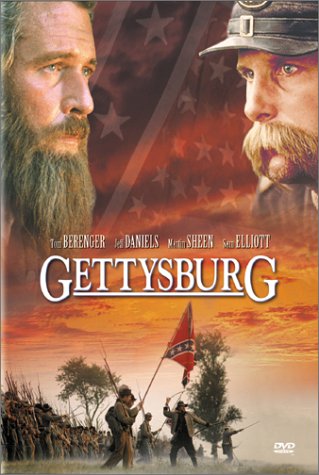
gettysburg-DVDcoverThis trope has been on my mind recently because I’ve been on something of a Civil War trip, watching and rewatching the movie Gettysburg.  It’s a fascinating movie, not the least because there are no clear bad guys.  In the battle of ideologies, I side solidly with the Union, but in the battle of men, I don’t know who to side for.

General Lee is one of my favorite characters, and certainly the commander for whom I have the most respect.  When General Longstreet is forced to order his men on the suicidal charge on the third day, I can’t help but cringe.  And perhaps the most touching moment of the whole movie is when the wounded General Armistead asks to see his old friend, General Hancock, only to learn that he has been shot as well:

BG Armistead: I would like … to see General Hancock. Can you tell me … where General Hancock may be found?

Lt. Chamberlain: I’m sorry, sir. The general’s down, he’s been hit.

BG Armistead: No! Not … both of us! Not … all of us! Please, God!

The main appeal to me of this movie, and in a more general sense of this entire trope, is the roll that honor plays in the characters’ interactions with each other.  Yes, they may be bitter enemies, and they may not hesitate to kill each other, but they aren’t fighting because they hate each other–they’re fighting because honor demands it.  And just like how the Fettered gains great strength through strict obedience to his personal code, so too does the Worthy Opponent gain both strength and respect by being a man of honor.

Obviously, this sort of antagonist makes it almost impossible to tell a story with black and white morality.  But with this trope, that’s kind of the point.  It exists to tell us that the enemy is not so different from us, and that not every bad guy is completely evil.  It doesn’t have to be used to set up an Aesop, though–when done well (as it was in Gettysburg), it’s satisfying enough on its own.

I played a lot with this trope in Stars of Blood and Glory.  In that book, Abaqa, a young Hameji warrior trying to build a name for himself, falls prisoner to Danica and her band of Tajji mercenaries, who he has been taught all his life to hate.  Gradually, though, they come to respect each other, to the point where … well, I won’t spoil it for you.  But it was definitely fun to write. 😀

I haven’t played a lot with this trope yet in other stories, but I definitely hope to in the future.  I’ve got another novel I’d like to write from Danica’s point of view, sort of a prequel novel to explore her and Roman’s origins, as well as the other Tajji mercenaries.  And then there’s Heart of the Nebula, which needs a major rewrite but has some elements of this trope in it.  So yeah, you can definitely expect to see more of this sort of thing from me in the future.

M is for Merchanter

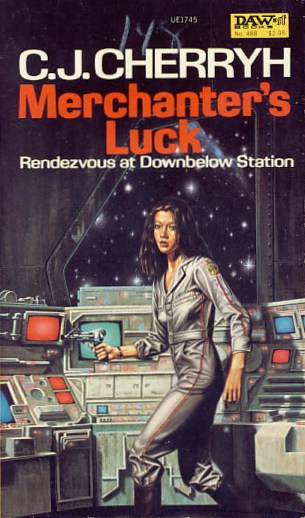
CherryhMerchantersLuckCoverIf space is an ocean and interstellar colonization is happening on a grand scale, then it should come as no surprise that so many starship captains are intrepid merchants, traveling the galaxy in pursuit of a good business deal.  Whether they’re doing it legally as entrepreneurs or illegally as smugglers, you can find these guys in almost any space opera, from Star Wars and Star Trek to Firefly and Foundation.

Ever since Marco Polo and Sindbad the Sailor, intrepid merchants have played a major role throughout history.  The brave adventurers who travels to exotic locales to bring you all the best deals, these are often the guys at the forefront of exploration and expansion.  After all, Columbus sailed the ocean blue to find a better trade route to India–discovering a new world was just a side benefit.  The British Empire had its origins in mercantilism, forming the empire to protect their trade routes (and later, to secure markets and resources for their industrialized economy).

Unlike their real-world counterparts, however, space merchanters have a lot more challenges to contend with than sandstorms and bandits.  Science fictional universes are teeming with all sorts of exotic dangers, from black holes and solar flares to space pirates and strange alien races.  Unless FTL communication is in force, the immensity of space often makes it impossible to know exactly what to expect on your next FTL jump.  And then there’s all the normal space stuff, like busted airlocks and critical failures in the oxygen recyclers.

The best stories, though, are the ones that world build their merchanters to the point where they form their own distinct society.  This may overlap with the proud merchant race, though IMO it works best when it’s more than just a hat that everyone wears.  The merchanters from C.J. Cherryh’s Alliance-Union universe are a great example, where the entire society has restructured itself around the nomadic spacefaring lifestyle.  Another is Heinlein’s Citizen of the Galaxy, where the free traders have developed a strict social hierarchy that defines everyone’s role in running the spaceships.

Since space-centered science fiction largely grew up in the Cold War era, I wonder how much of this trope stems out of the clash between communism and capitalism.  The original Star Trek certainly shows a lot of Cold War influences, with the Klingons originally playing proxy for the Russians.  Is the genre’s fascination with the adventurous space merchant somehow an outgrowth of that world-shaping conflict?  And if so, how do the stories differ on the Soviet side?  It makes me wish I could read Russian, since the Soviets certainly had their own fascination with science fiction and space opera.

In my own work, this trope plays a central role.  Most of the major characters in my stories are merchants of one stripe or another.  James McCoy from Bringing Stella Home is the son of a merchanter, and comes from a mining colony where interplanetary trade drives the local economy (setting up the conflict for Heart of the Nebula after the Hameji take over).

But the trope takes special prominence in my Star Wanderers novellas, which was largely a reaction to C.J. Cherryh and Heinlein.  I wanted to create a spacefaring society on the starbound frontier that revolved not only around trade and colonization, but much more personal struggles like finding love and fighting loneliness.  In that sense, the stories are a lot more like Merchanter’s Luck than Downbelow Station–more about the lives of individual characters than the grand sweep of galactic history.

Either way, I’m a big fan of this trope.  If you’ve got any examples from your favorite books, please share!  Wish-fulfillment is a huge part of any fictional genre, and science fiction is no exception.  If I could leave it all behind to become a merchant to the stars, you can bet I’d do it in an instant!

L is for Lost Colony

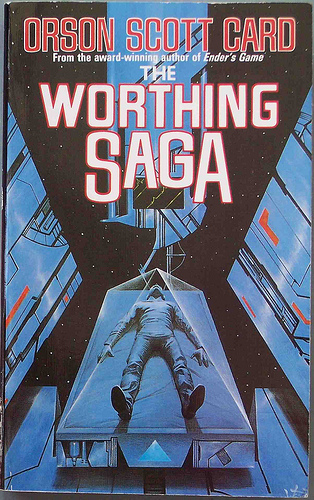
worthingsagaAs we discussed in I is for Interstellar, space colonization is a major theme of science fiction, especially space opera.  Of course, things don’t always go smoothly.  Space is a really, really, really big place, and sometimes, due to war or famine or simple bureaucratic mismanagement, colonies get cut off from the rest of galactic civilization.  They become lost colonies.

Some of my favorite stories are about lost colonies: either how they became cut off, or how they reintegrate after so many thousands of years.  In many of these stories, the technology of these colonies has regressed, sometimes to the point where the descendents may not even know that their ancestors came from the stars.  When contact is finally made, the envoys from the galactic federation may seem like gods or wizards.

Because of this technological disconnect, stories about lost colonies often straddle the line between science fiction and fantasy.  After all, Clarke’s third law states:

Any sufficiently advanced technology is indistinguishable from magic.

Of course, the line between science fiction and fantasy has always been a fuzzy one.  Hundreds of attempts have been made to define it, but they all fall short.  In the end, it often breaks down to certain recurring tropes, like dragons and wizards versus ray guns and rockets, but even that doesn’t always work.

For example, Anne McCaffrey’s Dragonriders of Pern is technically about a lost colony far into the future, but it’s got dragons and castles and other tropes that belong squarely in fantasy.  Then again, the dragonriders have to fight alien worms who invade every few dozen years from a planet with a highly elliptical orbit, so there’s still a strong science fiction basis undergirding the whole thing.

And that’s just Dragonriders of Pern.  What about Marion Zimmer Bradley’s Darkover series, or C.S. Lewis’s Space Trilogy?  Trigun is more western than fantasy, but it’s also full of sci-fi tropes like giant sand-crawling monster ships and a weird post-apocalyptic backstory.  And then there’s all the Japanese RPGs that combine magic with mechas, with Xenogears as one of the best examples.  For a distinct Middle Eastern flavor, look no further than Stargate.

It’s no coincidence that all of these stories feature a lost colony of one kind or another.  When the characters don’t know that they’re living in a science fictional universe, it’s very easy to throw in tropes from other genres.  By no means is it required–Battlestar Galactica and Dune are evidence enough of that–but they certainly present the opportunity to do so.  After all, lost colony stories basically present a hiccup in humanity’s march of progress, breaking the essential science fiction narrative for all sorts of interesting side stories and tangents.

One perennial favorite of science fiction writers is to suggest that Earth itself is a lost colony from some other galactic civilization.  That forms the entire premise behind Battlestar Galactica: the original twelve colonies have been destroyed in the human-cylon wars, and the last few survivors are searching for the legendary thirteenth colony of Earth, hoping to find some sort of refuge.  Apparently, Ursula K. Le Guin’s Hainish cycle also plays with this trope, though she’s never very explicit with her world building.  It can be a bit tricky to twist the lost colony trope in this manner, but if pulled off right it can really make you sit back and go “whoa.”

My personal favorite is probably Orson Scott Card’s The Worthing Saga, about a colony of telepaths that breaks off from a collapsing galactic empire and actually becomes more advanced than the rest of humanity.  When Jason Worthing and Justice re-establish contact, the descendents of the galactics are basically pre-industrial subsistence farmers who view them as gods–which, in a certain sense, they almost are.

It’s a great story that really entranced me, not just for the science fictional elements but also for the distinct fantasy flavor.  Orson Scott Card’s handling of viewpoint in that book is truly masterful, so that I felt as if I were viewing everything through the eyes of his characters.  Since the farmers don’t know anything about their spacefaring ancestors, all the parts from their point of view feel like a completely different story.  It was really great.

My first novel was actually a lost colony story, combined with a first contact.  I trunked it a long time ago, but many of the earliest posts on this blog are all about my experience writing it.  As for my other books, Desert Stars contains elements of this, though the lost colony in question is actually a nomadic desert society that lives on the capital planet of the galactic empire, just outside of the domes where all the more civilized folk live.  Heart of the Nebula is basically about a society that puts itself in exile in order to escape the privations of the Hameji.  And in… no, I’d better not spoil it. 😉

The lost colony isn’t one of the flashier or more prominent tropes of science fiction, but it’s definitely one of my favorites.  It’s a great way to add depth and intrigue, as well as bend genres.  For that reason, I think this trope does a lot to keep science fiction fresh.

H is for Hologram

cortanaIn real life, the term “hologram” means something fairly specific.  But in science fiction, it can mean a number of different things.

For example, in Star Wars it’s basically a three dimensional video recording projected on a flat surface.  In Halo, it’s the visual form that the AI character Cortana takes when she wants to interact with the Master Chief.  And in Star Trek, the holograms actually have a degree of physical substance, so that in some episodes they go rogue and try to take over the ship.

The basic underlying idea, though, is the same: blurring the line between the virtual world and the real world through a virtual projection that we can interact with.  And in that sense, this is actually an area where science fact is fast catching up with science fiction.

Some sub-genres, such as cyberpunk, focus almost solely on the tension between the real and the virtual.  Often set in a near-future world, cyberpunk stories often feature a crapsack future, from which the only meaningful escape is a virtual reality.  But the thing about virtual realities is that they can be reprogrammed in such a way as to give the ones controlling it almost absolute power over the lives of the people inside.  For that reason, the main characters are often hackers, struggling against the corporate evil overlords.

But holograms aren’t restricted to cyberpunk.  They’re quite common in space opera, too, and not just because they’re cool.  For one thing, they can be really useful for training simulations (which often leads to holodeck malfunctions, courtesy of the rule of drama).  They can also be useful as disguises or decoys, especially in the Halo series.

But perhaps the most memorable holograms are the ones who develop a close relationship with their real-world human counterparts.  This may include romance, which, combined with the existential angst that typically surrounds androids, robots, and cyborgs, makes for some very interesting tension.  A good example of this is Cortana from the Halo series, an alien AI who took on a younger form of her human handler, Doctor Halsey, and then developed a very close relationship with her Spartan bodyguard, the Master Chief.  It never actually went anywhere (at least in the main series arc), but it certainly made for an interesting story.

Jane from the Ender’s Game series would probably be my favorite hologram, though she’s more of a shapeshifting AI who can take many different forms, depending on what suits her.  Cortana is definitely up there too.  I haven’t used this trope much in my own fiction yet, but I’m playing with it in Heart of the Nebula, a currently unpublished direct sequel to Bringing Stella Home.  Not sure exactly where I want to take it yet, but it should be interesting.

C is for Cryo

halo_cryochamber

I think every science fiction writer has a cryo (aka “human popsicle“) story sitting around somewhere, even if it’s just in the back of their head.  It’s one of those tropes that keeps coming back, just like the alien invasion, the robot apocalypse, and the Adam and Eve plot.

The basic concept is pretty simple, even if the technology is a bit more complex: a human or animal undergoes rapid freezing in order to put themselves into stasis for an extended period of time.  Months, years, or even centuries later, someone thaws and resuscitates them so that they wake up in a completely different time and place.

There are a lot of good reasons why going into cryo makes sense in a science fiction universe.  One of the more common ones is that the characters are colonists on a mission to an alien star, and their spaceship doesn’t have a faster-than-light drive.  Rather than go through all the trouble of building a generation ship, the designers instead built a series of cryo chambers to put the colonists into stasis for an extended period of time.  It might take centuries or millennia for the ship to reach its destination, but when it does, the colonists wake up as if it’s just been a long, dreamless night.

In The Worthing Saga, Orson Scott Card has a somewhat unusual rationale behind the prevalence of cryo in his universe (though they call it “hot sleep,” and it’s induced by a drug called soma).  Only the rich can afford the technology, and the imperial overlords very carefully regulate the use of it so that there’s a clear hierarchy based on who goes under for the longest amount at a time.  It’s a way for the citizens to achieve a simulated form of immortality, by skipping five or ten years every year or two of their lives.

In the Halo video game series, the UNSC uses cryo as a way to preserve their greatest military assets, the Spartans, for the times when they’re needed.  The first game in the series starts when John-117, aka the Master Chief, is awakened just as the starship Pillar of Autumn crash lands on a mysterious alien structure.  Like something from an old Norse legend, the third game ends when the Master Chief seals himself into the cryo chamber of a derelict starship, telling the AI Cortana “wake me when you need me.” (highlight to view spoilers).

So why are cryo stories so prevalent in science fiction?  For one thing, they’ve been floating around in our cultural subconscious a lot longer than the genre has been in existence–just think of Sleeping Beauty or Rip Van Winkle.  For another thing, the science is not that far-fetched.  Certain animals can be revived after extended periods of frozen stasis, and according to the New York Times, it’s happened at least once with a human being.  Science fiction has a long history of turning fiction into fact (for example, Arthur C. Clarke and communication satellites), so perhaps it’s only a matter of time before human cryotech becomes a reality.

I’m definitely a fan of this trope in my own writing.  Genesis Earth has a chapter with a rather horrific cryothaw scene, which I later spun off into a short piece titled “From the Ice Incarnate.” I haven’t played with it much in my latest books, but in Heart of the Nebula which I hope to publish later this year, the cryotech plays a very important role in the plot.  And if I ever write a prequel to my Gaia Nova series showing how that universe got started, it will feature a cryo colonization story.  The main premise of that series is that a group of human colonists fled 21st century Earth and went into cryo to colonize a distant corner of the galaxy, but when they woke up, they couldn’t find Earth anymore, so it became something of an ancient holy legend (which is a major driver for Desert Stars).

Trope Tuesday: Rebellious Princess

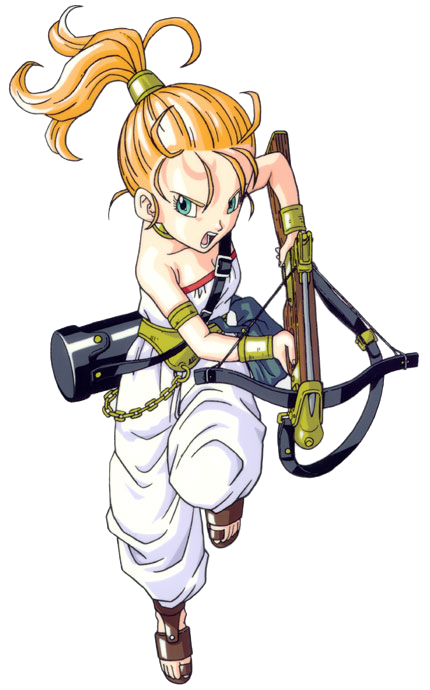
Marle2You know that innocent and beautiful fairy tale princess, with the tricked out dress and the power to summon woodland creatures?  The one with a tendency to get kidnapped, but who always ends up happily ever after with her prince charming?

Yeah, that’s not this princess.

A rebellious princess would just as soon puke if she were any of those things.  She hates being royalty–she’d rather be one of the common folk, or at least be out doing something (which is why she’s often involved in politics).  She hates all those frilly dresses and tends to wear her hair in a tomboyish ponytail.  Rather than wait for her white knight to save her, she’s much more likely to be an action girl in disguise, or at least something of a badass.  When she grows up, she may become a lady of war.  Invariably, she hates whatever marriage has been arranged for her and often scandalizes those of her class to marry for love (if she even marries at all).

As you might have already guessed, this trope is extremely common, not the least because the princess classic has largely been discredited (at least, outside of Disney).  There’s a lot of variation on it too, with some stories featuring the rebellious princess as the love interest, and others showcasing her as the hero.

George R.R. Martin (Song of Ice and Fire) deconstructs the trope with Arya, who eventually becomes something of a sociopath, and Brandon Sanderson (Elantris) subverts it with Sarene, who very much has the personality but uses her royal position to her advantage.  Frank Herbert (Dune) zigzags with Lady Jessica, who is undylingly loyal to the Atreides family but rebels against the Bene Gesserit.  As you might expect, J.R.R. Tolkien plays it straight, not once but twice: Éowyn in Lord of the Rings, and Lúthien in The Silmarillion.

It transcends cultures, too.  In Crouching Tiger, Hidden Dragon, Jen might not technically be royalty, but she is the governor’s daughter and she does reject an arranged marriage to run away and become a wandering warrior.  And in classic RPGs, especially the old Japanese ones from Square, this trope is everywhere.  The princess in the picture above is Marle from Chrono Trigger, who fits this trope to a T.

So why is this trope so prevalent nowadays?  Probably because the modern feminist movement led us to discard most of our old-fashioned feminine ideals, as well as the characters who were held up as shining examples of them.  That, and rule of drama.  Everything ultimately comes down to rule of drama.

In my own work, Hikaru from Stars of Blood and Glory is an example of this trope, though she’s more of a president’s daughter than a hero or a love interest.  She does have her own story arc, though, and I’ve got a sequel in the works with her as the main character.  Scientists aren’t exactly royalty, but they do consider themselves elites in Genesis Earth, which means that Terra has echoes of this trope.  And in Heart of the Nebula (as-yet unpublished), I’ve got a character who isn’t exactly rebellious, but she does qualify as a badass princess (though the society in question is a perfect techno-democracy and not a monarchy).

Projects, projects everywhere …

… and not a clue where to start.

Seriously, I feel like that guy in the Russian proverb who’s chasing two rabbits.  Except, in my case, it’s more like a dozen.  Here’s what I currently have to choose from:

Stars of Blood and Glory — This one is in publishing mode, and should be out in a week or two.  I’ve gone through all the line/copy edits from my editor, finalized the book teaser–all that’s left is the formatting and cover art.  The preliminary sketches look really good, so it shouldn’t be too much longer before it’s ready to go.  Of course, it’s more of a publishing thing than a writing thing, but still important.

Lifewalker — This is a rough draft that’s only about 15% to 20% finished.  It’s in a totally different genre than I’m used to writing (post-apocalyptic / weird western), but so far it seems to be coming along fairly well.  I hit a block a couple of weeks ago and put it on the back burner for a while, but I may be ready to pick it up again.

Star Wanderers: Benefactor — This is another rough draft, about 35% to 40% finished.  It’s a parallel novella to Star Wanderers: Fidelity, except from Jakob’s point of view.  Right now, I’m in the phase where everything sucks and I don’t know where to go with it.  It’ll probably turn out just fine, but I may have to put it on hold for a while.  However, if I could just push through and finish the damn thing, that would be preferable.  It’s only another 15,000 words …

Star Wanderers: Dreamweaver — This is a first draft that I need to revise.  Last night, I looked over it for the first time in eight months.  Opening the file was like pulling out an unopened bottle of wine that’s been sitting for years in the back corner of the wine cellar.  So far, it seems pretty good, but I’m going to wait until I hear back from one of my first readers before doing any serious revisions.  After that, maybe run the first chapter through Kindal’s writing group, and if everything seems good, I’ll probably publish it sometime in April/May.

Star Wanderers: The Jeremiah Chronicles — This is purely a publishing project.  Basically, I want to bundle the first four Star Wanderers stories and release them as an omnibus.  To do this right, though, I’d have to commission some cover art, which takes time and money.  Since it’s not a writing project, and I already have enough publishing projects on my plate, I’ll probably put this one off until Dreamweaver is out.

Mercenary Savior — Long term followers of this blog might recognize this as the old title for the novel that became Bringing Stella Home.  Well, I plan to recycle that title, as well as the original prologue, in a prequel novel that basically tells the origin story of Danica Nova and her band of mercenaries.  So far, I’ve got the prologue and the beginnings of the first chapter.  Haven’t looked at it in a few months, but if I get stuck on these other projects, I just might pick it up again.

Heart of the Nebula — A second or third draft that needs a deep revision.  This is probably going to consume all my writing time for six to eight weeks, and I’d rather do it all at once rather than in chunks.  It’s been on the back burner long enough that I can probably pick it up again, but I want to finish a rough draft first.

The Sword Keeper — I’ve still got this one on the current projects bar, but it’s been a while since I’ve worked on it, so it’s pretty much on the back burner.  I think it’s at about the 40% mark, though honestly I have no idea.  It’s an epic fantasy novel, a bit outside my usual scope, and it’s turning into a beast of a book.  The story is pretty solid, though, so I’ll probably finish it before the end of the year–that is, unless the muse drops an anvil on me (which has definitely happened before).

Empress of the Free Stars — An unwritten novel that’s been kicking around in my head ever since I finished Stars of Blood and Glory.  Basically, it’s a direct sequel from Hikaru’s point of view … except that I can’t really discuss it without giving away spoilers (TO A BOOK THAT ISN’T EVEN OUT YET).  In any case, the prologue has been beating on me to get written, and I finally caved and started it last night.  I’ve got a pretty good idea for what’s supposed to happen in this novel, but there’s still a whole lot of room for the story to surprise me.

Edenfall — Ah, Edenfall … this is probably my most neglected story.  I started it a little over a year ago, but hit a block, and then Star Wanderers happened.  I’ll pick it up eventually, but to really do it justice, I feel like I need to go backpacking in the wilderness for a week or two.  The weather isn’t good for that right now, so it will probably have to wait until spring.  Or maybe I’m just making things too complicated.  We’ll see.

Star Wanderers; Wanderlust — A Star Wanderers story from Samson’s point of view.  This one is going to be tricky, but I’ve actually got the whole thing plotted out already.  However, I don’t want to write it just yet, because there’s still a bunch of other Star Wanderers stories that need to come first.  Or maybe I will write it, and let it sit for a while until I write the others.  Maybe it’s better to finish it first and let it sit for a while, just to be safe …

Those are pretty much all the projects with titles that are floating around in my head right now.  There are a few others, like parts VII and VIII of Star Wanderers (from Mariya and Lucca’s points of view, respectively), but those aren’t quite ready to start.  With all of these, I’ve at least got some words on the page.

So now that I’m in that frustrating space between projects, I think I’m going to take a week or two to just let my creative mind do whatever the heck it wants.  Hopefully, I’ll get excited enough about one of them to see it all the way through.  I’m not going to stress about word counts so much as putting time in at my chair, doing something.

Man, I wish my creative side weren’t so scatterbrained.  Though as long as I’m still finishing stuff, I guess it’s all right.

And now that I’ve procrastinated long enough by writing this blog post, it’s time to go hang out with my friends and procrastinate some more.  Later!

Trope Tuesday: Settling the (Final) Frontier

I love stories about colonization, especially when they’re set in space.  There’s just something about a small group of rugged pioneers striking out into the harsh, unforgiving wilderness to make a new life for themselves.  Maybe it’s just something about my American heritage, or all those 4x games I played as a kid, but I doubt it.  Ever since the dawn of time, we humans have been on the move, looking for new and better places to call home.  Small wonder, then, that so many of our stories, both ancient and modern, are about settling the frontier.

Since space is the final frontier, this trope is very common in science fiction.  Heinlein was a huge fan of it, but he wasn’t the only one to play with it–not by a long shot.  John Scalzi (The Last Colony), Nancy Kress (Crossfire), C.J. Cherryh (40,000 in Gehenna), Anne McCaffrey (Freedom’s Landing), and Kim Stanley Robinson (Red Mars, Green Mars, and Blue Mars) are just a few of the many science fiction writers who have explored this trope in their works.  In recent years, several sci fi miniseries (Battlestar Galactica, Terra Nova) have used it as a major premise as well.  And of course, you have all the classic 4x games like Masters of Orion and Alpha Centauri.

Space Colonies can come in a variety of different flavors:

  • Lost Colony — What happens when the original colonists lose all contact with the outside universe and no one thinks to check up on them for a while.  Can either turn into a story of survival or a clash of cultures, if/when they ever re-establish contact.
  • Cult Colony — Religion is one of the few things that will drive massive numbers of people to leave everything behind and start over in a new world.  Just look at the Pilgrims for a real-world examples.  In space colonies of this type, you can expect to see some extremely radical people, since the isolation of deep space tends to compound their fundamentalist tendencies.  Expect these to be both weird and frightening.
  • Space Amish — Something of a combination of the two, except with much more primitive technology.  Expect to see log cabins, horse- (or giant lizard) drawn carriages, and other tropes closer to the Western genre.  Sometimes, they may be hiding a superweapon.
  • Penal Colony — Australia in space (ahem…IN SPAAACE!!!).  What happens when the empire needs a place to conveniently exile all the troublemakers and rabble rousers.  Not a place for the faint of heart.
  • Wretched Hive — What happens to a penal colony when the prisoners actually run the place.  Like the previous type, except taken up to eleven.  Or not, depending on the history and culture.  Tatooine is the eponymous example.
  • Death World — As the name would suggest, this is not the kind of place you’d want to homestead.  Anyone who does is bound to be a badass.  The Empire and the Federation often recruit most of their soldiers from here.
  • Company World — I couldn’t find this one listed on tvtropes.  Basically, it’s a planet that is owned and governed entirely by a private corporation, which expects to make a tidy profit off of the place.  The colonists are basically indentured servants (since robots simply wouldn’t do) and have almost no property or rights.  Expect the story to be about sticking it to the man.

These are just a few of the many possibilities that you can play with when settling the frontier.  In my opinion, however, the essential elements are as follows:

  • The story is not just about exploring a new world, but establishing some kind of a permanent presence there.
  • By coming to the new world, the colonists must leave everything from their old, familiar lives behind.
  • The colonists must resolve the story conflict through their own self-reliance, not by waiting for an outside force to save them.

I’ve only dabbled with this trope, but it does play a role in many of my stories, most notably in the Star Wanderers series.  Genesis Earth also has elements of it as well, though it’s not the main driver for the plot.  It is a major factor in Heart of the Nebula, though, the (currently) unpublished sequel to Bringing Stella Home.  And in my future books, you can definitely expect to see this trope again.

Have internet, will blog

Hey guys, I’m back in Kutaisi today, so I thought I’d drop in and post an update on this (much neglected as of late) blog.  Life hasn’t been too eventful, but there are a couple of things that I thought you might want to know about.

First of all, I’ll be participating in an ebook promo with some other sci-fi indie authors this cyber monday (the online equivalent of black friday).  My book Star Wanderers: Outworlder is already available for free, but if you’re a fan of science fiction and free / $.99 ebooks, be sure to check it out!  Here’s the link:

Also, if you check out the CURRENT PROJECTS section in the sidebar (over there ———>), you’ll see that I recently dusted off Heart of the Nebula for another revision pass.  This is a direct sequel to Bringing Stella Home, featuring many of the same characters (James, Lars, Stella) plus a few new ones.  I’m about midway through chapter 4 right now, and really getting into the story.

The previous drafts had some issues, but I think I’ve got a better handle on them now.  I have no idea when it will be ready to be published, but I’m shooting for sometime next summer.  With luck, this next revision will be finished in December, at which point I’ll send it out to my first readers and see what they think of it.

Also, I took some time out to work on meta-writing stuff, like goal setting and such.  I’ll save that discussion for new years, though, since that seems like a much better time to discuss goals and resolutions.  Also, it will give me a chance to refine them a bit in the intervening month.  Long story short, I was experiencing a creative block due to some unrealistic personal expectations, but I think I’ve more or less worked it out.

Other than that, life is pretty good.  I got to see my host family from last year a couple of days ago, when I came in late from Tbilisi and missed the last marshrutkka to my village.  Called up the family, and they were kind enough to let me spend the night on their couch.  Today, I said thank you by dropping by with a box of chocolates.

It was great to see them again and spend some time in the neighborhood where I lived last semester.  Also: twix cookies.  The market in Batoni next to ProCredit Bank is one of the few places in Kutaisi that sells them.  If you’ve ever spent any significant time in Georgia, you know exactly what I’m talking about.

So that’s just about it for now.  If all goes well, I should hear back from my first readers on Star Wanderers: Homeworld sometime during the Thanksgiving break.  Depending on their feedback, it’ll come out anywhere between 1-3 weeks later.  This will conclude the main story arc for Star Wanderers (at least, the first arc), but it won’t be the last book in the series.  More on that later, though.

Take care!