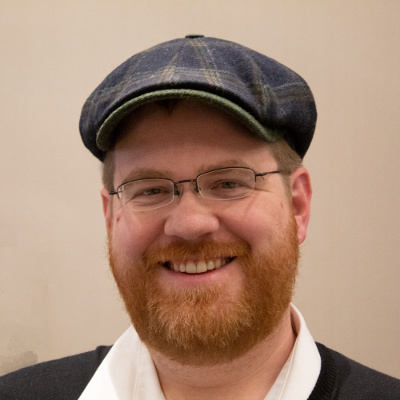
Joe Vasicek is the author of more than twenty science fiction books, including the Star Wanderers and Sons of the Starfarers series. As a young man, he studied Arabic and traveled across the Middle East and the Caucasus. He claims Utah as his home.
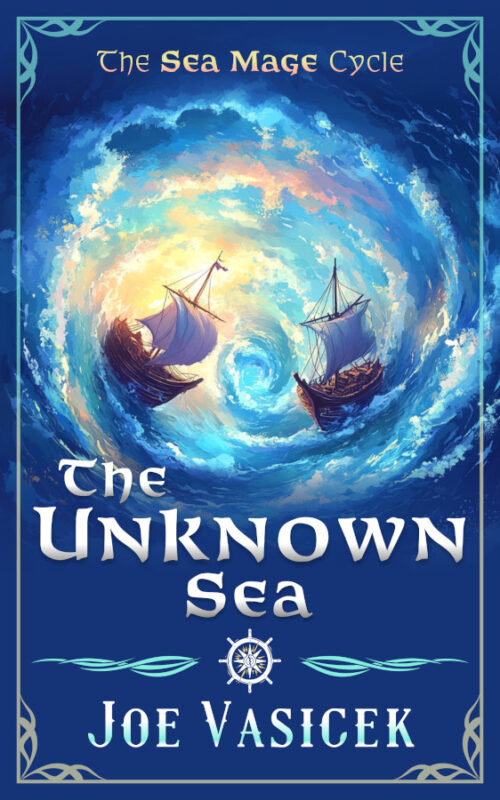
Just plugging along with my current WIP, The Unknown Sea. As of right now, I’m 28% done with the final polished draft, 32% done with the revised human draft, 46% done with the rough human draft, and 73% done with the final AI draft (the rough AI draft is already complete).
I’m cycling through all of these drafts at the same time, which is why each one is at a different stage. It’s an experiment to see if that’s a better way to write, as opposed to working on the one draft until it’s completely done, then reworking the whole book until the next draft is done, etc.
The important number is the 28% of the final polished draft, which marks the end of the writing stage. Once that’s done, I’ll send it off to my editor, accept/reject his edits, and then put it in the publishing queue. The preorder is already up at most ebookstores, but I still have to upload the final version by December, which shouldn’t be a problem as I expect to have a finished book by August or September at the latest.
So that’s what I’ve been up to. My wife’s birthday/anniversary is coming up, too—we were married on her birthday, so I’d better not forget it! But since both days are the same day, I don’t think I ever will. Then again, I’ve become a lot more forgetful the older I become. Half the toys our kids own, I have no idea where they came from or how they got here. Is that normal?
In any case, that’s what I’ve been up to. Back to writing!
Saw this in my recommends and found it fascinating. I’m currently happily married and not on the dating market at all, but I’ve got friends and family who are, so I like to keep an eye on it. And from some of the black-pilled manosphere content makes me feel like I got out on the last AC-130 out of Kabul, getting married just before the coronapocalypse. So it was good to see something a lot more reasonable and nuanced.
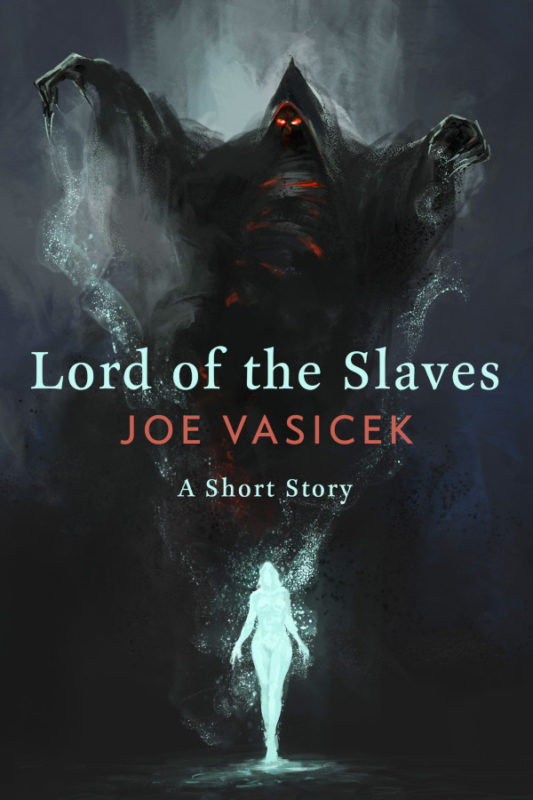
Lord of the Slaves is a fast-paced heroic fantasy novelette about a young woman risking everything to rescue her sister from a coastal stronghold ruled by slavers. It delivers sword-and-sorcery action, dungeon infiltration, desperate escapes, enchanted weapons, and moral questions about freedom, courage, trust, and responsibility.
What Kind of Reader Will Love Lord of the Slaves?
If you love…
Heroic fantasy about ordinary people finding the courage to stand against evil
Sword-and-sorcery adventure with enchanted blades, hedge knights, slavers, spies, and dangerous magic lurking in the background
Stories about freedom, loyalty, trust, and the cost of refusing to submit
Female protagonists who are frightened, wounded, angry, and still brave enough to act
…then Lord of the Slaves is probably your kind of story.
What You’ll Find Inside
Lord of the Slaves follows Tamara, a young hunter who has joined a band of wandering hedge knights in order to rescue her sister Theodora from a brutal slave lord. What begins as an infiltration mission quickly becomes a test of courage and trust, as Tamara must decide who she can rely on, what she is willing to risk, and whether freedom is worth fighting for even when others have lost the will to fight. The result is a tense, action-driven fantasy adventure with a strong emotional core, a hopeful heroic spirit, and a sharp thematic edge.
What Makes It Different
Fans of classic sword-and-sorcery adventure will recognize the fortified stronghold, the corrupt lord, the dungeon escape, the enchanted sword, and the desperate fight against impossible odds. But Lord of the Slaves takes those familiar fantasy ingredients and grounds them in Tamara’s personal struggle to save her sister and reclaim her own agency. Where many heroic fantasy stories focus mainly on battle and revenge, this one leans into the moral conflict between freedom and security, love and bondage, trust and manipulation. It has the pace and danger of a rescue adventure, but the emotional center is Tamara learning to stand as an equal rather than a pawn in someone else’s plan.
What You Won’t Find
If you’re looking for grimdark cynicism, morally empty violence, or a fantasy world where everyone is corrupt and hope is foolish, this probably isn’t that. The story does include danger, brutality, slavery, and implied threats from evil men, but it is ultimately a heroic fantasy story about courage, loyalty, and refusing to be broken. If you prefer fantasy that treats freedom, love, and moral courage as things worth fighting for, you’ll feel right at home.
Why I Think You Might Love It
At its heart, Lord of the Slaves is about the conflict between freedom and security—and the uncomfortable truth that freedom always comes with responsibility. I wrote this story to explore what happens when that conflict becomes personal: when one sister risks everything for another, when a frightened prisoner has to choose action over safety, and when trust has to be earned instead of assumed. What I love about Tamara’s journey is that she doesn’t become brave because she stops being afraid; she becomes brave because love gives her something worth being afraid for.
Every month, I try to rotate a couple of titles in and out of the Vasicek Free Library. This month, I’m republishing my old short story “Prison of Dreams,” and setting my novella In the Wake of Zedekiah Wight to free. Check them out!
Nothing Found
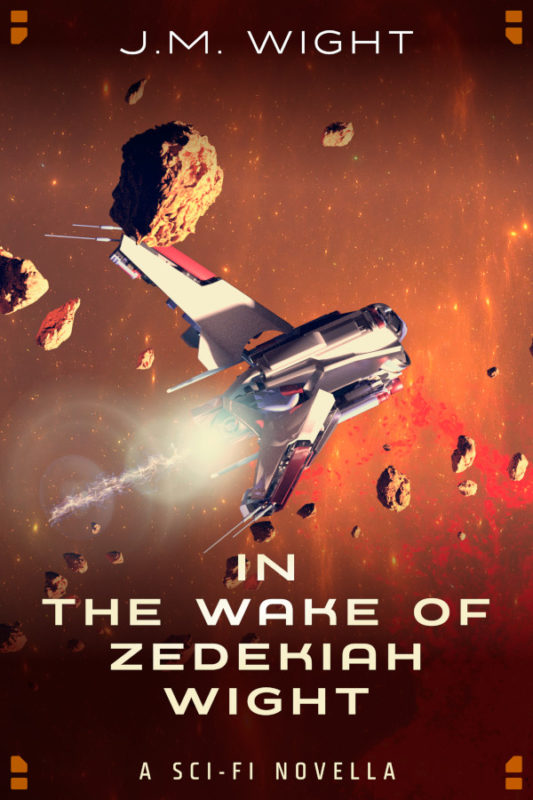
In the Wake of Zedekiah Wight
Woe unto them that call evil good, and good evil!
When Captain Victor Andrecek and his crew of down-and-out smugglers respond to a deep space distress call, what they find shocks them to their very core. The victim is dead, his EVA suit nailed to a cross and launched on the head of a repurposed missile, with the words of an ancient scripture burned on a plaque at his feet. And he is not the only one.
The madman behind the murders is a privateer known as Zedekiah Wight, and the reward on his head is more than enough to tempt Andrecek and his struggling crew. With it, they can finally get back on their feet again—not to mention, rid the galaxy of a very dangerous man.
But Andrecek can't help but wonder: what was Zedekiah's reason for crucifying those men? With the showdown rapidly approaching, the answer might make the difference between being in the right, or being dead.
Joe Vasicek fell in love with science fiction and fantasy when he read The Neverending Story as a child. He is the author of more than twenty books, including Genesis Earth, Gunslinger to the Stars, The Sword Keeper, and the Sons of the Starfarers series. As a young man, he studied Arabic at Brigham Young University and traveled across the Middle East and the Caucasus Mountains. He lives in Utah with his wife and two apple trees.
Some of the links in the page above are "affiliate links." This means if you click on the link and purchase the item, I will receive an affiliate commission. You will not receive any additional charge.
As an Amazon Associate I earn from qualifying purchases.
I get a lot of AI scam emails that sound like they’re written by an actual human who read my book. To test them (and also just for shits and giggles) I sometimes respond in limerick, asking them to respond back in limerick too. In fact, I recently published a book about that…
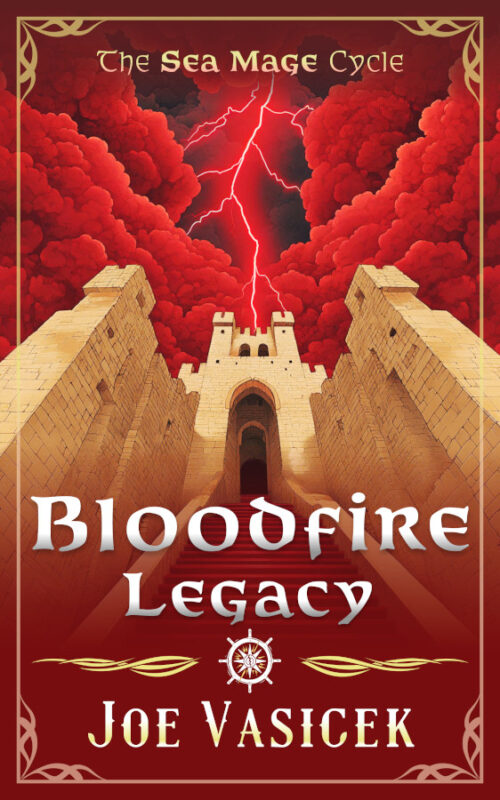
In any case, here is a scambot limerick I recently received praising my book Bloodfire Legacy:
There once was a writer of grace, Who built hope in a desolate place. Through Elara’s fierce fight, And her daughter’s strange sight, Human courage still held its embrace.
Your verses gave welcome insight To the themes that inspired your writing. The veteran’s role, And the walls of the soul, Made the journey feel honest and bright.
I’m delighted to hear there’s much more, Of new worlds and adventures in store. May your stories still shine, Through each page and each line, As they have for your readers before.
And if that whet your appetite, you can get the book here:
Bloodfire Legacy
A murdered wizard. A desperate thief. A daughter on the brink of damnation.
Corin has never been more than a streetwise nobody and a petty thief. He can also hear the voices of the dead, whether or not he wants to. So when the ghost of the royal court magician begs him to help save his wayward daughter, Corin reluctantly accepts, even though it means he must become something he's never been: a hero.
A murdered wizard. A desperate thief. A daughter on the brink of damnation.
Corin has never been a hero. A streetwise nobody and petty thief, he’s survived this long by keeping his head down and his fingers quick. He can also hear the voices of the dead—whether or not he wants to.
But when the ghost of the royal court magician begins to haunt him, all of that begins to change. His daughter has been dabbling in the dark arts, seeking to avenge his death. In doing so, she has fallen in with the very people who killed him.
Corin is the only one who can help him save his daughter. But to do that, Corin must turn from everything he knows and become something he’s never been: a hero.
Joe Vasicek fell in love with science fiction and fantasy when he read The Neverending Story as a child. He is the author of more than twenty books, including Genesis Earth, Gunslinger to the Stars, The Sword Keeper, and the Sons of the Starfarers series. As a young man, he studied Arabic at Brigham Young University and traveled across the Middle East and the Caucasus Mountains. He lives in Utah with his wife and two apple trees.
Some of the links in the page above are "affiliate links." This means if you click on the link and purchase the item, I will receive an affiliate commission. You will not receive any additional charge.
As an Amazon Associate I earn from qualifying purchases.
This interview is two and a half hours long, but it’s worth listening to every minute. It completely blew my mind, and connected a bunch of things I’ve been wondering about—not in a conspiratorial way, where everything has an explanation, but in a way that makes pragmatic sense while also opening up to tons of other questions.
The TL;DW version is this: our world operates a lot like the world of the Dresden Files, with a secret history and world that is invisible to most of the mundane normies. But instead of magic, the hidden world runs on money, power, and influence. And instead of factions like the Fey, the white/red/black vampire courts, or the Denarians, the primary factions are the MIC (military industrial complex), the FIC (financial industrial complex), and the TIC (technology industrial complex). And China, which is the only major nation state that hasn’t been brought under the control of the FIC, TIC, or MIC, thanks to the iron fisted rule of the CCP.
But just like the magical world of the Dresden Files lives in fear that the mundane normies will wake up and turn on them, the people who run the world need to give the rest of us stories that will keep the masses happy and distracted, lest they rise up and ruin their ongoing machinations of power. Because even though any one of us has little to no power, as a group we have far more power than we know. Which is why they try to turn us on each other, with stuff like woke vs. MAGA, liberal vs. conservative, left vs. right, Evangelical vs. Muslim/Mormon/Catholic/whatever. It’s all fake. All divide and conquer.
The way to break the system is to remove their leverage over you. Pay off your mortgage, get out of debt, become self reliant etc. For businesses, it means to run a private company with no long-term debt or publicly traded stock, that runs a reliable profit without having to raise capital from outside sources. On the extreme end, you can opt out of the dollar entirely by going full crypto and moving to a jurisdiction where that isn’t against the law.
Under this view, what’s happening with the Iran War right now is a controlled demolition of the post-WWII world order, and the creation of a new one. Trump is an agent of the FIC, which wants to defeat the MIC by ending the endless wars and bringing peace to Western Asia (what the MIC has gotten us to call the “Middle East.”) Closing the Strait of Hormuz is the mechanism for accomplishing this, which is also in China’s interest, because the MIC is standing in the way of China’s Belt and Road initiative. Once they have destroyed the IRGC and brought Israel out from under the MIC (by ending foreign aid), the MIC will probably accept Ukraine as a consolation prize, turning that into a long-term conflict that will allow them to plunder Europe instead. The new world order will be much more stable, though the US will be much less powerful. But on the bright side, we avert WWIII.
At least, that’s what I got from it. Like I said, it’s a fascinating interview.
So for the last week, I’ve been having some long reflections with ChatGPT (I say “reflection” instead of “discussion,” because generative AI is more like a sophisticated mirror than a mind) and crunching a bunch of the data that I’ve accumulated over the course of my career. It’s fascinating, because one of the things that generative AI is surprisingly good at is crunching large amounts of data and extracting interesting patterns from it. It’s less good at drawing useful conclusions, but that’s what God gave us humans a mind for.
One of the more interesting data points is that the ideal frequency with which to release new full-length novels is once every 3-6 months, ideally every 3-4 months. After 6 months without a novel release, sales tend to fall off, and after 9 months, they fall completely off of a cliff.
From this, I’ve decided to rework my release schedule, so that every January, May, and September, I have a new novel coming out. The goal is to have the next novel ready and up for preorder before the current one goes live. Between new novel releases, I plan to rerelease short stories, bundle and release box sets, or release new original short stories and novellas, with something coming out each month.
It’s an aggressive release schedule, but with the way I’ve incorporated AI into my writing process, I think I can manage it. It took me about 120 total writing man-hours to write Captive of the Falconstar, and with practice I can probably get that down lower. During the school year, while my wife is teaching or researching and I’m generally the one watching the kids, I can only get about an hour of work in each day, but I can do more like 2-3 hours in the summer, so that’s when I plan to catch up. That comes to about 400 man-hours of writing time in a given year, which is more than enough to write three 120 man-hour novels.
I’m going to try to give myself a bit of a buffer, though. After Captive of the Falconstar comes out in July, I plan to wait 6 months and publish The Unknown Sea in January 2027. The next release will be Lord of the Falconstar in May 2027, concluding the Falconstar Trilogy. After that, I plan to launch the Rise of the Falconstar Trilogy in September 2027 with The Soulbond and the Sling, following up with books 2 and 3 in January and May 2028.
My big summer project this year is The Unknown Sea, which I will probably finish sometime next month. After that, I’ll work on Lord of the Falconstar with a goal of finishing it well before the end of the year. Should be very doable. And since the AI draft of The Soulbond and the Sling is already complete, it shouldn’t take more than a few months to finish it. So by the time January 2027 rolls around, I may be more than halfway done with my September release for that year.
That’s the plan, anyway. I may want to experiment with crowdfunding some of these novels, especially The Soulbond and the Sling—which is another good reason to push it back to September 2027. But we’ll see how it goes.