ChatGPT writes a trashy novel that fits all the current market trends

So just for fun, I asked ChatGPT to list the post popular tropes in science fiction and fantasy literature right now, pick the most popular subgenre, and write up a novel synopsis that mashes up all of those tropes.

To no one’s surprise, the subgenre it chose was romantasy, but it also threw in dragons, dark academia, and time magic. Here is the complete synopsis:


Here is a tighter, sharper, more compelling 1000-word synopsis that follows the same outline but sells the story harder—maximizing emotional hooks, character stakes, and the high-heat romantasy appeal. Spoilers intact.


The Hundredth Life of the Dragon-Bonded

Rina Ashvale has always been ordinary—poor, unnoticed, unimportant. But on the morning of the Day of Choosing, she wakes with the unshakable feeling that she’s lived this day before. And died in it. Images flash behind her eyes: burning skies, a dragon’s scream, a prince’s hand dripping with blood. None of it makes sense.

Everything changes when Sereth, the most ancient and aloof of all dragons, chooses her as his rider. The bond hits like a lightning strike: thousands of half-formed memories, shards of forgotten lives, and a sense of wrongness in the fabric of the world. Sereth refuses to explain, and Rina finds herself thrust into the elite dragon war-college—completely unprepared, utterly overwhelmed, and lodged in the same wing as the kingdom’s most dangerous cadet: Prince Kael Vorian, heir to their nation’s long-time enemy.

Their first interaction is a disaster. Kael—brilliant, beautiful, and infuriating—sees Rina as an unworthy upstart bonded to a dragon she doesn’t deserve. Rina sees him as an arrogant elite who’s never had to fight for anything real. But whenever they clash in the skies, sparks fly far beyond anger. Something in the dragon bond won’t let them ignore each other.

As Rina trains, she slowly forms a found family with three other misfit cadets—gentle Jory, fierce Thalia, and quick-tongued Marek. Life at the academy carries surprising warmth: late-night mess hall confessions, shared exhaustion after flight drills, stolen pastries in the city. For the first time in her life, Rina feels like she belongs.

But then the déjà vu returns—harder, sharper. She predicts an ambush drill seconds before it happens, saving Kael’s life in a maneuver she can’t explain. When she confronts Sereth, the dragon finally admits the truth:

The world is trapped in a time loop. Ninety-nine times, humanity has fallen to the Void. Ninety-nine times, reality has reset to the beginning of this academy term. Dragons remember. Humans do not.
Except Rina.

Her growing memories mean one thing: she may be the first human in a hundred loops capable of breaking the cycle.

But the moment Rina begins changing events—saving lives that used to be lost, altering training outcomes—the Void adapts. Darker monsters appear. Missions that were once safe become fatal. Jory loses his arm. Marek nearly dies. And Rina realizes a horrifying truth: every change she makes doesn’t erase suffering—it only shifts it onto someone else.

Through it all, Kael remains her fiercest rival and most dangerous ally. Their tension spikes during a magical mishap that amplifies emotion, throwing them into a breathless near-scene neither can forget. During the annual Festival of the First Flame, in the chaos of a Void creature attack, they end up pressed together in a narrow alley, clinging to each other with equal parts fear and longing. When they finally give in to the desire they’ve been denying—an explosive, passionate moment in the dragon stables—they can no longer pretend what’s between them is merely conflict.

But Rina’s growing memories deliver an unbearable blow: in one of the previous loops, Kael burned her village to the ground to slow the Void’s advance. He admits it. He regrets it. He would do it again if it meant saving the world.

Their fragile connection shatters.

As the loop destabilizes, the world begins to tear. Rina slips into the Twilight Reach, the dream-realm dragons inhabit between deaths. There she meets the Hollow King, a godlike Void entity who has been feeding on the loop for centuries. He offers her a seductive bargain: sever the dragon bonds and the loop will end forever—no more death, no more suffering. But it would also mean the extinction of dragons, the world’s only memory-keepers.

Rina refuses. She will not save the world by erasing its heart.

Meanwhile, Kael uncovers a devastating truth: his father, the emperor, is planning a military strike to seize the academy’s dragons, a move that could break the loop catastrophically and hand victory to the Void. Kael offers to kill his father to prevent it. Rina stops him. Instead, she proposes a desperate ritual to jump the timeline forward—getting ahead of the emperor’s plan.

The ritual fails spectacularly.

Time fractures.

The academy splits into two overlapping timelines—the unchanged past loop and the altered timeline Rina and Kael created. Students flicker in and out of existence. Some have duplicates. Others appear as ghosts of who they were meant to be.

Rina’s squad members are caught between versions of themselves. With Sereth’s help, Rina merges their memories, giving each friend the best parts of both lives—even if it costs Sereth more of his dwindling strength. Every memory he surrenders feeds the growing collapse of the loop.

Rina finally understands: dragons carry the burden of memory, but they cannot change it. That’s why the loop always resets. Only a human mind—someone capable of holding all ninety-nine lives at once—can force time forward for good.

She volunteers to carry the full weight of the loop. Kael refuses to let her do it alone.

Together, in the Twilight Reach, Rina and Kael confront the Hollow King. Sereth sacrifices himself to shatter the loop, unleashing all his stored timelines in one final blaze. The Hollow King retreats—but not before warning that breaking the cycle will unleash consequences no one can predict.

Rina and Kael awaken in a world that has never existed before: one without resets, without second chances, without dragons except for a few younglings who survived the collapse. The academy is in ruins. Their nations have fractured. Rina’s village is gone in every timeline. Kael is disowned. The world is raw and wounded—but real.

With their surviving squadmates, they build a small dragon-rider outpost beside a river. Half refuge, half academy, it becomes the first place Rina has ever chosen for herself. Kael stays with her—not as a prince, not as a rival, but as the man who shared a hundred lifetimes of pain and desire with her.

For the first time, dawn breaks on a future that isn’t written.

Standing together in the new light, Rina and Kael speak the vow that binds them:

“We will be the dragons who remember.”

The loop is broken.
The world is reborn.
And their love—forged across a hundred lives—has finally outrun time itself.


So what do you think? Does it sound like something you’d actually want to read? Like something that might even be better than most of the trashy, trendy novels out there, even if it’s total AI slop?

I have no intention of actually writing this book, so if you feel like writing (or generating) it, knock yourself out. Just send me a link if you actually publish it.
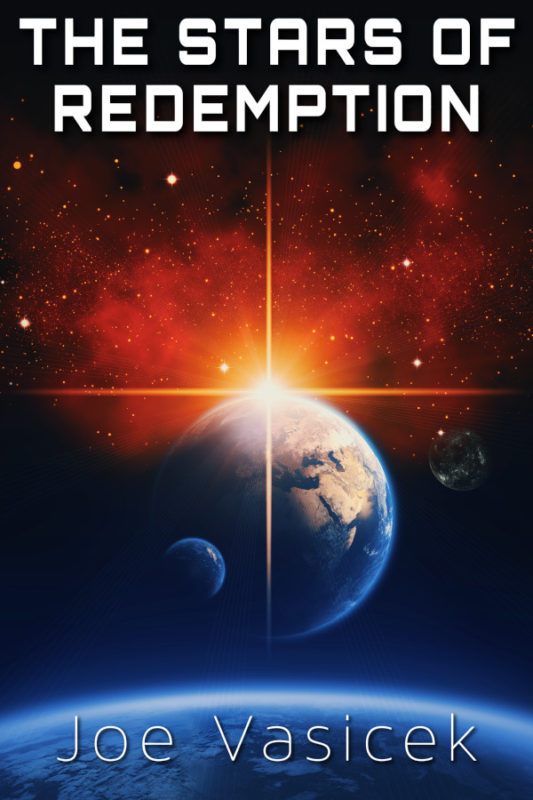

Breaking the Time Paradox in The Stars of Redemption

What if the deadliest threat humanity ever faced wasn’t an alien invasion or a rogue AI… but a mistake we keep repeating that always ends with the destruction of Earth? The Stars of Redemption, the last book in my young adult science fiction trilogy, explores this question.

At its core, The Stars of Redemption is about the struggle to break a closed time loop, stop a rogue superintelligence, and rewrite a future that seems unchangeable. This makes The Stars of Redemption a classic time-loop science fiction story, built around temporal paradoxes, fate-versus-free-will dilemmas, and the struggle to break a repeating extinction cycle. It is a story about escaping destructive cycles, choosing hope, and fighting for a future that isn’t predetermined.

Where the Idea Came From

The idea for this theme grew out of my long, tangled journey to finish the trilogy. As I write in the author’s note, the trilogy stalled until I became a husband and father. Holding my newborn daughter for the first time made me realize that the story needed to be about cycles—time loops, family patterns, repeating trauma—and the hope that they can be broken. Only then did I understand how to write about ending the loop and choosing a new future.

How Breaking the Time Paradox Shapes the Story

The entire plot of this sci-fi book revolves around a temporal paradox created by a wormhole, a derelict starship, and a fragmented AI superintelligence. The ghost ship is both the catalyst and the prison of a machine intelligence born from the loop—a being that believes humanity must be wiped out to prevent another cycle of suffering. Every conflict Estee and Khalil face—from warped corridors to shifting timelines—exists because they are trapped inside this repeating extinction loop.

For Estee, breaking the time loop becomes a confrontation with her family’s past and her people’s future. She must decide whether humanity deserves redemption and whether history can be changed. Khalil must confront his own emotional loop: guilt, self-sacrifice, and the belief that his fate is fixed. Together, they face a question at the heart of all time-loop fiction:

Are we doomed to repeat our worst mistakes, or can we rewrite the future?

What the Time Paradox Says About Us

Time loops are powerful metaphors because we all face cycles—personal, cultural, generational—that feel impossible to escape. The paradox in this story mirrors the real world: destructive systems repeat unless someone chooses differently. By facing a machine intelligence convinced that humanity is irredeemable, the characters confront the fear that our past defines us. The book suggests a hopeful alternative: the future changes when we do.

Why This Theme Matters to Me

I didn’t truly understand this story until I became a father. My daughter made the theme real: breaking cycles isn’t abstract—it’s something we do for the next generation. That moment of holding her and realizing this is her story now, not yours helped me finish the book. The Stars of Redemption is my way of saying that even in the darkest timelines—even in repeating loops—hope is possible, and the future can be rewritten.

Where to Get the Book

Related Posts and Pages

Explore the series index for the Genesis Earth Trilogy.

Visit the book page for Genesis Earth for more details.

Find out if The Stars of Redemption is for you.

See all of my books in series order.

Great story! “A Thousand Echoes in One Voice” by Debora L. Davitt (Podcastle 778)

One of the things I’m going to start doing more of on this blog is recommend books and stories that I’ve enjoyed. I recently decided to start listening to all of the major SF&F short story podcasts again, and while they’re all batshit crazy woke, a good story will occasionally slip through. So I suppose if you’re looking for SF&F short stories that aren’t insufferably woke, these recommendations will be a good source for those.

Last month, Podcastle put out “A Thousand Echoes in One Voice” by Deborah L. Davitt. It’s an intriguing and atmospheric time travel story, where the main character discovers a mysterious and (seemingly) abandoned subway network that can take her to alternate times and dimensions, and the other travelers who came before her have left semi-coherent maps scrawled in graffiti on the walls. It has a really fund mind-screw that reminded me of Heinlein’s “All You Zombies.” Good stuff!

I’ll try to post these short story podcast recommendations as often as I find them, though I may end up skipping a few not because they’re terrible, but just because I have too much to listen to. And of course, if a story is terrible I won’t bother posting about it—not even if it’s spectacularly terrible. There’s enough outrage on the internet already that I really don’t feel a need to contribute to it.

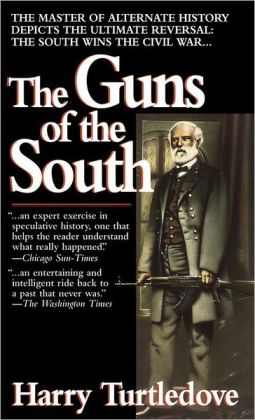
The Guns of the South by Harry Turtledove

As those of you who’ve read my short story “The Gettysburg Paradox” know, I’m a huge fan of both the US Civil War and time travel stories. Harry Turtledove’s The Guns of the South is, quite possibly, the best combination of the two.

The novel starts just a few weeks after Gettysburg. The Army of Northern Virginia is in disarray, and a defeated Robert E. Lee has been forced to face the truth that the Confederacy has no real hope of winning the war. Then a bunch of time travelers in strangely mottled uniforms show up out of nowhere and supply his army with strange new guns called AK-47s.

Immediately, the tides of war change. Lee soundly defeats Grant at the Battle of Wilderness and presses on to Washington DC, which falls overnight. Triumphant, the South immediately sets about the peace negotiations with their northern neighbor, and prepares for a presidential election which Lee is expected to win. But disagreements about the fate of the new American nation soon arise between Lee and his benefactors, sparking a conflict that is truly out of time.

There’s so much to love about this book. Turtledove’s attention to detail is meticulous, not just in the obvious major ones, but in the little ones that have a disproportionate impact. For example, Lee appreciates the killing power of the  AK-47s, but what impresses him even more are the MREs that the time travelers carry. When the gunmakers in Richmond pick apart the AK-47 in an effort to replicate it, it’s really fascinating to get their take on its functions. It really does read like a bunch of 19th century denizens puzzling over technology that they barely understand.

But what really got to me were the characters. Having read The Killer Angels and Jeff Shaara’s prequel and sequel to that great novel, Robert E. Lee felt like exactly the same character, just in a different book. His genteel sense of propriety, his calm but unshakeable sense of honor, his love of his men and respect for his enemy—it really was the same guy. And the decisions he makes after the war is over, while truly radical, are also eminently believable.

It’s not just Lee, either. Lincoln, Soward, Longstreet, Forrest—all of them feel very much like the people they really were, inhabiting an alternate reality. Turtledove’s research into their characters and personalities was meticulous. And it wasn’t just the big names, either, as all of the 19th century characters, including a prostitute who pretended to be a man in order to join the infantry, are based on real people who actually lived.

Fantastic book—a must-read for anyone with an interest in time travel or the US civil war. Whether those interests intersect for you or not, you’ll thoroughly enjoy this book.

Operation SB #2: The Open Source Time Machine

Title: The Open Source Time Machine
Genre: Science Fiction
Word Count: 3,247
Time: About 10 days

I felt really good after finishing this short story. The last line in particular surprised me, which is always a good sign. I think this story is going to go places.

The idea for this one actually came about 4 months ago. I imagined an inventor trying to convince a bunch of investors to fund his time travel development project by calling on his future self to appear to them. He fails–his future self never shows up–but after the meeting has ended in failure, he goes home and finds his future self waiting for him there. Why wouldn’t he go back in time to help himself get the funding to develop his project? That was the core idea that became this story.

I wrote out a couple of pages of that one before getting frustrated and trunking it. Then, about ten days ago, I broke my operating system (Ubuntu) and had to upgrade/reinstall it three times before it would work again. For Linux users, that’s kind of like a rite of passage. It was frustrating, but also kind of awesome because of all the stuff I learned from it. Open source technology is really, really cool.

Around the same time, I read Program or Be Programmed: Ten Commands for a Digital Age by Douglas Rushkoff. Fascinating book, especially if you’ve got a job/lifestyle where you spend +50% of your waking life in front of a screen. Rushkoff is a technology theorist, and this book is about all the subtle ways in which computers, social media, the internet, and other modern technologies can be used to manipulate us if we aren’t careful. His ideas are brilliant and his perspective is fascinating, so his book definitely got me thinking about things.

With both of these things on my mind, I went for a long walk while taking a break from my writing. Short stories were also on the mind, since I was wondering what I should write about for the month of January. The old time travel idea popped up, and everything just sort of melded together until I had the story.

I wrote the first half of it the next day … and then sat on it for a little over a week. I’m not sure why I did that–maybe I was just nervous about screwing it up or something. By far, the hardest part about writing is getting out of your own damned way. Yesterday, I finally buckled down and forced myself to finish the thing, and it actually turned out pretty well. Took the whole day to finish it, but it’s finished and that’s what’s important.

So after touching it up this morning, running a spell check and tweaking a couple of relatively minor things, I put it out on submission. That’s two stories I have on submission now: “The Infiltrator” got rejected from Clarkesworld, but it’s out at Analog now so we’ll see how that goes.

I think my short form is getting better, though there’s still a lot of room for improvement. I’m going to start running these stories through Kindal’s writing group, even though I’ll put them out on submission as soon as they’re finished. The feedback will be useful in writing the next one.

No idea what the next short story is going to be about. Maybe I’ll go through some of my old story idea notebooks and see what comes together. Or maybe a story will just come to me, and I need to position myself so that I’m ready to capture it on paper when it comes.

We’ll see. In the meantime, I’m very pleased with this one.

Story Notebook #5 (part 2)

For those of you who don’t know (or can’t remember, since it’s been so long), I’ve been doing this ongoing thing where I go through my old story notebooks.  Last time, we covered my last semester of classes at BYU; this time, we’ll cover my time in Washington DC, when I was trapped in an internship from hell.

Now, you may be wondering: “why is this guy just giving away his ideas for free?” Well, last week at dinner group, the conversation turned to story ideas, so I pulled out my current story notebook and started going down the list.  This quickly turned into a game of “name that tune,” where we managed to show that EVERY SINGLE IDEA had already been done. 

And you know what?  That’s perfectly okay!  There are no original ideas anymore, just new ways of executing them, and maybe a handful of combinations that haven’t yet been tried.  The purpose of keeping a story notebook with you at all times isn’t to come up with something new, it’s to keep track of the stuff that really turns you on.

Enough with that.  On to the notebook.

In a spacefaring culture, the custom will be for the males to leave the station and depart in search of a wife at another port, either to capture or win over in some way.  The women will tend more to running off with the travelers.  This preserves genetic diversity.

This is actually something I want to talk about in a longer post.  The problem of inbreeding in a space-based society is something that many science fiction authors have wrestled with, from Robert Heinlein to C. J. Cherryh.  Their solutions are quite inventive, but while I was in Washington DC working on To Search the Starry Sea (my escapist retreat from a hellish internship), I managed to come up with a few of my own, and used them in Star Wanderers.  More on that later.

What if one of the founders was a time traveler, sent on a mission to ensure that the US constitution made it through?

Hehe…in other words: James Madison, Time Traveler.  It has a certain ring to it, no?

The human mind is like a congress–so many people at extreme odds, arguing constantly but holding together somehow.

Oh boy.  If that were true, the US congress today would be like a paranoid schizophrenic.

A subway haunted by patrons from the past–maybe you will become one when it goes back in time.

Who hasn’t been creeped out by the subway at some point or another?  Except the New York subway system is way creepier than the Washington DC Metro–I swear, some of those rats are man-killers.

A magic system where the cost is your unborn children.  If you don’t have children within a certain period of time, you die.

Sounds like some of the Arab short stories I’ve read.  Families and children are much more important to them than to us in the West.

When the Developed World develops instantaneous transportation devices, it will essentially merge into one super country, while the developing world will be left out.  The only sense of distance will be in the developing world, and terrorism will be an issue.

Kind of like Larry Niven meets dependency theory.

A government where the Supreme Court is a super-intelligent robot.

Hopefully this would rid the country of activist judges…or would it??

A character who believes, at his core, that there is no such thing as a genuine surprise, simply a lack of information–and that if we had perfect information, there would be no surprises.

Sounds a lot like the platonic 19th century ideal of a scientist.  What with quantum physics and such, there aren’t a whole lot of those left.

There are two kinds of shame: shame from loss of honor, and shame from not following the herd.  Don’t mistake the one for the other.

This one isn’t so much a story idea as an observation.  I learned a lot in my hellish Washington DC internship, most of which had very little to do with my area of study and everything to do with the less-than-honorable ways in which the world works.  And on that note:

____ always felt that the world around him was somehow less than real; an illusion.  While staring out the window of the train, he wondered if the window wasn’t just a video screen, like the car windows of old movies–or when looking out at the view of the mountains beyond his house, with the picturesque clouds and too-blue sky, if it wasn’t just an elaborate painting on a wall at the end of the world.  In moments like these, ____ longed to peel back the video screens–to break down the pretty painted wall at the end of the world–and see what lay on the other side of reality.

If my hellish internship on K street taught me anything, it taught me that I would rather be a writer than have all the connections or political influence in the world.  I got out of Washington DC as fast as I could, and haven’t looked back since.

Story Notebook #4

Alright, it’s been too long since the last time I posted any story ideas here on this blog, so I thought I’d go back to my old notebooks and post a few of them here.  Currently, we’re on notebook #4, which basically covers the second half of 2009.

And so, without further ado…here goes!

A society in which infanticide, up to the first two years, is not considered a crime (since infants are not conscious in the same way as adults and children)

Youch–talk about a dystopia!  Which makes me wonder, what kind of a society would develop this belief?  Probably not one that values human life–or rather, one that somehow considers adults to be more “human” than young children.

As a direct result of this society’s system of values, there’s probably going to be a lot more promiscuity–or perhaps the promiscuity is what causes this belief to be engendered in the first place?  It reminds me of an ancient Carthaginian brothel, where hundreds of baby bones were found stuffed in the narrow alley between the brothel and the next building over.

Blegh–icky stuff!  Which is to say, it’s probably good story material. 🙂

A near-future dystopia in which the extras in movies (made in overpopulated developing countries) literally act out battle scenes, because hollywood studios can afford to pay for the loss of life

I got this idea from a comment by Dave Wolverton at a con, in which he said that in China, the maximum fine for negligent homicide is $10,000.  This is one of the reasons why so many movie studios do business there–if their extras die or get injured, they aren’t held nearly as liable as in the United States.

Of course, if the maximum fine is $10,000, why not put that in a deposit up front and have the workers fill out a form indicating who should get the money if they die?  You can then have gladiatorial movies and TV shows, where people actually die.  It sounds sick, but I’ll bet you could find a significant audience for that kind of thing.

Economically speaking, it’s a win-win-win situation.  The studios save on safety equipment and profit from the relatively cheap labor costs; the workers benefit whether they live or die, because either way, they’re getting paid much more than they would ever make otherwise; and the host country benefits, because the survivors can then be conscripted to form an elite corps of warriors.

The only real downside is the utter moral depravity of it all–but hey, we’ve already crossed that moral line so many times, what’s to keep us from crossing it again?

A time travel device that allows collection of data from the future without affecting causality–how would this change political science?

By “without affecting causality,” I think I meant that the time travel device itself wouldn’t cause any huge problems–that one could use it to observe without interaction, something akin to Orson Scott Card’s Postwatch. And of course, because I was so deeply engrossed in school at the time, the first application that came to mind was political science.

It would certainly lend a degree of credibility to the science, something which it currently does not enjoy.  It would probably also lead to fierce debates about fate vs. free will between the positivists and the interpretivists–something that has already been ongoing for some time.

My second novel (Genesis Earth) was, in some ways, a response to that debate.

A character who always has the latest liberal candidate’s bumper sticker on the same corner of his/her car, so that it builds up over time.

Interesting character quirk–though since it could only really makes sense in our world, I would never write about it.  Stories set in the real world bore me.

An MMORPG for orcs and elves where they play as humans

Check it out!  I’m a level 80 corporate CEO with the ability to cast ‘complete financial collapse’ and totally screw you out of a job!

Zombie insects

Oh noes!  Even worse if humans can become infected.

Sentient planets

Already done; the book is called Solaris.

Golfing on the Moon or Mars

This…would actually make a fairly awesome short story.

Were-squirrels!

Sounds like something Terry Pratchett would write if/when he parodied the urban fantasy genre.

What if all of us are characters in someone’s story?

God help us all!

A psychic agency that allows you to instant message dead relatives

Personally, I’d never stop wondering whether it’s just an elaborate hoax.

And that’s all for notebook #4!  Don’t worry–I swear I’m not as screwed up as these story ideas make me out to be.

Yet another story idea

Ok, here is a cool one that came to me the other day.

One of the time traveling cliches is that of someone going back in time to kill off some infamous world leader in his/her infancy, thus changing the course of history and averting a major disaster (or causing an even bigger one). It’s a common what if scenario: what if someone went back in time and killed Hitler? (Red Alert) What if someone went back in time and supplied the Confederacy with AK-47s? (The Guns of the South)

Well, here’s my take on it: what if time traveling agents have ALWAYS been going back in time, trying to fix up problems like this? What if history is one long story of the screw ups of a bunch of secret agents trying to alter things, trying to get it right, trying to get to some kind of utopia?

Of course, by altering history, they alter their own futures, making it impossible to go back to the future from which they came. Which means that they would have to go forward, see how it worked out, then go back again to make another change, take out another horrible world leader, then go forward again, etc etc.

If that’s the case, perhaps our universe is actually one of the “rough drafts” that this agency has been working on. Perhaps our universe is so screwed up because the agency hasn’t yet made all of the changes they want to make…not in this timeline, anyway.

In order for this to work, the people of this agency would have to all travel together, since leaving someone behind before going back to make alterations would mean leaving that person behind in a timeline that could never be reached again. From this, two things follow: 1) the time travelers would have to have some kind of a really cool ship, on which they all live and travel, and 2) they would be completely autonomous from any kind of government or other institution limited to one particular timeline.

This raises a number of ethical questions. Is it wrong to go back and alter the course of history in this way? Do the people in the original timeline cease to exist, or do they continue to exist in a parallel universe? If you take the latter view, how does that alter the ethics of changing things? You’re not really screwing people over–they still exist, just in an invisible parallel universe. And you’re trying to make the world a better place, too. But, then again…you’re basically playing god with history, and that sounds pretty unethical.

My idea for incorporating this into a story is this: a regular guy from our time bumps into these time travelers and gets sucked into their little plot to build a utopia. He has to struggle with getting taken out of his world, never to return (or never to return to it quite the way it was). There could possibly be a love story of some kind, especially if these are steampunk time travelers (perhaps that would explain why the 20th century was more spectacularly screwed up than any other–the time travelers started in the 1800s and are more concerned about their era than after their era. But then, there are also divisions and disagreements among the time travelers, with some getting fed up and discouraged with the whole thing, others (possibly the leader) with megalomania, and others who are beginning to have doubts about the morality of their undertaking.

Pretty cool, neh? Now, back to doing homework… 😛