Author’s Note for THE JEREMIAH CHRONICLES

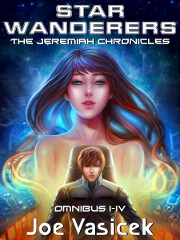
SW-TJC (thumb)Here’s the author’s note at the end of Star Wanderers: The Jeremiah Chronicles.  It’s the only content in the omnibus that isn’t available anywhere else, and I don’t want my readers to feel like they have to buy something they’ve already read in order to get it.  And if you do want to buy it, there’s a link in the sidebar over there. ———–>

I put an author’s note at the end of every ebook I publish.  It adds a little bit to the progress bar, which can be annoying for readers who expect “the end” to come at 100%, but I think it’s good to briefly tell the story behind the story.  It’s certainly something that I would enjoy reading at the end of some of my favorite books (especially the ones by David Gemmell!).  Whether you read them or whether you skip over them, it’s a feature I plan to keep in every ebook I release.

So, here it is!

==================================================

One of the questions writers get asked the most is ‘where do you come up with your ideas?’ Honestly, that’s probably the hardest question to answer. Orson Scott Card said that everyone runs across at least a thousand story ideas each day, and a good writer will see maybe three. To that, I would add that it might take years before you realize that you’ve seen them.

The idea that eventually grew into Star Wanderers probably came to me the first time I saw Serenity. At the beginning of the movie, there’s this long continuous shot that shows the space ship from the hangar bay doors to the cockpit. I don’t even remember what the characters were talking about, I was just mesmerized by that shot. For weeks, I dreamed about having my own starship like the Serenity, where I could escape the stresses of college and lead an adventurous life out among the stars. I still daydream about it to this day. Having my own starship and piloting it to places where I can be free and independent is one of my greatest recurring fantasies.

Another major catalyst for the idea that became this story was the Lombardo translation of Homer’s Odyssey. The Odyssey is perhaps the most famous epic work of all time, but the Lombardo translation struck a particular chord with me because of how down-to-earth and accessible it is. Instead of some stodgy 19th century translation that passes for cruel and unusual punishment in some high schools, this one made the story come alive. I was first introduced to it in a Western Civ class in college, but enjoyed it so immensely that I picked up a copy over the summer of 2009 and read the whole thing.

As I read it, I couldn’t help but notice the potential for a science fiction crossover. What if the sailing ships were starships, and the oceans the vastness of space? The islands would be like planets, with their strange and exotic cultures, and travel from world to world would be as arduous and difficult as it was for Odysseus to return to Ithaca. A new form of paganism would emerge, one that worshiped the stars and planets just as the Greeks worshiped the rivers and trees. The starfaring people would be as hardy and self-reliant as the ancient Greeks, and as antagonistic toward the more civilized Coreward peoples as the Aegeans to the Trojans. Most importantly, though, the starfarers would feel a sense of powerlessness as they faced the unforgiving vastness of space, just like Odysseus as he braved the wine-dark sea.

I actually started writing that novel in 2010, and got about a hundred pages into it before moving on to the revisions for Bringing Stella Home. Later, I trunked it, but the basic world-building stayed with me as I continued to expand the Gaia Nova universe with Desert Stars and Heart of the Nebula.

The final catalyst for Star Wanderers was the love story from one of my favorite Westerns, Jeremiah Johnson. My college roommates introduced me to that movie my sophomore year, and just like Serenity, I spent the next several days daydreaming what it would be like to be a mountain man. I went to college in Utah, so the frontier landscape where the film was shot is very familiar to me (in fact, I’m writing this author’s note from Slide Canyon just outside of Provo). But the love story—that was the best part. An accidental marriage from a cultural misunderstanding that blossoms into something touching and wonderful, in spite of the language barrier—by far, that was my favorite part of the whole movie.

All of these ideas were bouncing around somewhere in the back of my mind for years, but it wasn’t until 2011 that they all came together. I had graduated about a year and a half before, and was working a number of low-skilled temp jobs, trying to make ends meet as I grew my writing career. I was between projects, trying to work on Edenfall (sequel to Genesis Earth), but nothing was coming together and I just felt very frustrated.

One day, as I was lying on my bed daydreaming for the umptieth time about escaping this planet on my own starship, the thought “what would Jeremiah Johnson look like if it were set in space?” came to me. It was like a supernova exploding in my mind, illuminating my imagination with the power of an exploding star. For the next half hour, I worked through all the details in my head—the famine backstory of Megiddo Station, the Oddysey-like far-future space setting, the wandering lifestyle of the mountain man turned starship pilot. And then, once I’d replayed it half a dozen times in my head and worked myself up to a fever pitch, I rolled out of bed and wrote the first chapter of Outworlder almost exactly as it now stands. The rest of that novelette came just as readily, and in a couple of weeks I had a finished draft.

As a young single guy in my early twenties, I tend to think about love and relationships a lot. I think it’s a myth that women are somehow more interested in romance than men—we just express that interest in different ways. At Worldcon 2011 in Reno, Louis McMaster Bujold said that women tend to write about love and life, whereas men tend to write about love and death, and I’ve found that to hold very true, at least in my own writing. Perhaps that’s why it was so easy and natural to come up with the backstory that put Noemi on Jeremiah’s starship. The rest, with the pregnancy, the polygamy issues, and the baby at the end, all came naturally as I wrote things out. I was originally going to have Noemi miscarry about halfway through Fidelity, but realized almost immediately that that wasn’t going to fly. Once I realized that the natural ending of the story arc would be the birth of their son, everything else just came together.

My goal from the beginning was to write something that I could submit to the Writers of the Future contest. For that reason, I kept Outworlder fairly short. However, when I got to the end, I realized that there was still a lot of story left unwritten, so I decided to follow it out. I’m more of a novel writer than a short story writer, so it was natural to structure the overall story arc in that way. At the same time, I really enjoyed the intimacy of that first novelette, and the way that the shorter structure allowed me to focus on one or two characters and their relationships with each other. Those were all considerations that pushed me into following the novella format, as well as the chance to experiment with publishing a series of shorter works.

Fidelity and Sacrifice were a lot more challenging to write, in particular Sacrifice. Part of this was because I was still trying to figure out where the overall story arc was going, and part of it was because some of the subject matter (such as polygamy) seemed pretty unconventional for a science fiction story. But after taking a couple of short breaks to work on other projects, I managed to push through it, eventually getting to Homeworld which came much more easily. I’ve always been better at endings than at middles, and I went into Homeworld knowing that it would conclude Jeremiah’s main story arc.

As I was working on the later parts to the Star Wanderers series, I moved to the Republic of Georgia to teach English for a year. That had a tremendous impact on how I wrote the language barrier between Jeremiah and Noemi, mostly because my experience was quite similar. I didn’t accidentally marry a Georgian girl (though there are one or two who I still miss sometimes), but when I showed up in the airport in Tbilisi, I didn’t speak a word of Georgian and knew almost nothing about the people or the country. Needless to say, it was quite an adventure. The stresses of living in a foreign culture did slow down my writing a bit, but I managed to get it back by the end and finished Homeworld before coming back to the States for the summer.

When I first started publishing the Star Wanderers series, I saw it as a sort of side project that I would do before getting back to other projects. However, this series has proven to be more popular than any of my other books, so I’ve decided quite happily to expand it. The Jeremiah Chronicles contains the full story arc for Jeremiah, but there are a lot of other characters who I want to explore, and the novella format is perfect for that. If you have any in particular that you’d like to revisit, feel free to shot me an email at joseph [dot] vasicek [at] gmail [dot] com and let me know. I love getting fan mail and do my best to respond to it, so any comments would definitely be appreciated.

If you’ve just discovered Star Wanderers and would like to keep up with the newest books in the series, you can get them for free by signing up for my mailing list. Whenever I release a new Star Wanderers story, I put out a two-week coupon code to get it for free on Smashwords and send the coupon code out to my subscribers via my email newsletter. That way, you don’t have to feel like you’re spending too much once I have fifteen or twenty ebooks out. I figure that if you enjoy these stories enough to sign up for the mailing list, you’ll probably tell a friend or post a favorable review, so I’m happy to make my new Star Wanderers releases available for free.

I hope you enjoyed this omnibus! If you did, please consider posting a review or sharing it with a friend. Every little bit helps, and the more people discover and read this series, the more stories I’ll be able to write. My goal from the beginning has been to make a living telling stories that I love, and it looks like Star Wanderers might actually make that possible.

In the meantime, don’t be a stranger—you can find me on Twitter (@onelowerlight), Goodreads, or Facebook (Joe Vasicek), but the best way to keep up is to follow my blog, One Thousand and One Parsecs. I’ve been blogging since 2007 and plan to keep it up for the foreseeable future. You can also find links to all my books there, on all the major sites where they’re published. And of course, if you want to sign up for my mailing list, you can find the sign-up form on the sidebar.

That’s just about it. Thanks for reading! It’s readers, not writers, who really make a story come alive, and at the end of the day the greatest honor is simply to be read. So thanks for taking a chance on this one, and until next time, I hope to see you around!

Up to my elbows in book surgery

That’s probably the best term for what I’m doing with Heart of the Nebula right now.  Basically, I let some of my darlings live, and they grew some extra limbs and started drooling acid without my realizing it.  But now, I’ve put enough distance between myself and the first draft that I have no qualms about grabbing the axe and chopping off heads.

Don’t worry; this is all a normal part of my creative process.  Maybe someday, stories will burst fully formed from my head like Athena from the brow of Zeus, but for now, my ideas are a lot more like baby turtles–if I’m lucky, one or two out of a dozen will actually reach the water and survive.  Protip: don’t follow the lights.

Speaking of ancient mythology, I’m reading the Argonautica right now, and I can’t help but notice that it would make a really, really, REALLY awesome science fiction story.  No, seriously–think about it.  A group of legendary heroes sets out on an epic voyage in search of some applied phlebotinum macguffin, have all sorts of adventures on strange and distant planets, get the girl to fall in love with the captain, and bring her back with them to their homeworld.  It would also work well as a heroic fantasy, but space is so much more awesome.

Incidently, Kutaisi was the capital of ancient Colchis, where Jason and the Argonauts came seeking the golden fleece.  People still speak of Medea as if she were a real person–generally, they think she was a dirty traitor who sold out her own people.  But people still enjoy the love story, and if you keep your eyes open you can see restaurants and hotels named after her.

So yeah.  Ancient Greek mythology + science fiction = win.  You can definitely expect to see some more of that in my own writing in the future.

In other news, I recently did an interview on fellow indie author Ty Johnston’s blog.  In it, I talk a little about my travel writing, what draws me to speculative fiction, my favorite number (hint: it’s 12), and my insights into the ancient Mayan calendar and the 2012 apocalypse.  It was a lot of fun–you should definitely check it out.

If you would like to host me for an interview on your blog, shoot me an email!  I’m always up for stuff like that.  Otherwise, I’d better roll up my sleeves and get back to hacking up operating on my book.

Story Notebook #6

Alright, it’s time to go through another story notebook.  This one covers the spring and summer of 2010, right after I graduated.  It was a weird transitional period in my life, when I didn’t really know what I was doing or where I was going, but I was determined to keep on writing anyway.

I filled three pocket notebooks with story ideas in 2010, and last time I mistakenly thought I’d covered one that went from graduation through the end of the year.  While putting my records in order before going abroad, I found that this one actually came a little earlier.

Lots and lots of story ideas…2010 was definitely a good year for that.  So anyhow, here we go:

A planet settled by people with aircars: there will be no asphalt roads, only packed earth.

An interesting consequence of futuristic technology; too often, stories come up with something flashy without really thinking through all of the implications.  Can you imagine a world without asphalt?  If you can, then please take me there!

A task-oriented woman who thinks men are fickle because they’re always trying to come across as macho, trying to save face, etc.

This makes me think of something I heard somewhere about gender roles and politicians.  If I remember it correctly, most men go into politics for the fame, power, and glory, while most women go into politics because something in their community is broken and they feel it’s their duty to fix it.  Not sure if that’s true or not, but this story idea made me think of that for some reason.

Humanity has been domesticated by a super-intelligent alien race and bred into several different breeds with wildly varying physical characteristics.

In other words, a post-human universe where humans have been bred as pets, like dogs.  Can you imagine a world where the physical differences between humans of different races are as great as this:

Can these two even physically reproduce?

A fantasy where the traveling hero is actually the bad guy.

I think Girl Genius already beat me to that, though Othar is more of an annoyance than a genuine villain.

An interstellar Sir Richard Burton.

Now that would be an interesting series.  Sir Richard Burton was a British adventurer who went to the Middle East before doing that was cool.  He made the first English translation of the 1001 Arabian Nights (as well as the Kama Sutra, apparently), and was one of the first European explorer to sneak into Mecca–certainly the first non-Muslim explorer.  I hear he was quite a character.

A planet on a highly eccentric orbit where habitability is sustained by large glowstones that absorb high amounts of energy and emit heat slowly.

Ooh, I’d forgotten about this one.  I’ll have to use it sometime–maybe in a science fiction / fantasy mashup.  You know, with dragons and stuff.

A werewolf who is tame around just one person.

I’m pretty sure this one has been done, and I’m also pretty sure I’m not interested in reading it.  Sorry, Twilight fans–or maybe you’re welcome?

A landscape more vertical than horizontal, where the architecture reflects this (like the old Knight building).

The Knight building was a multi-split-level administration building at BYU where Leading Edge used to meet.  Lots of stairs, entrances on just about every level–it was a weird building (but not quite as weird as the JKB).  But yeah, a vertical landscape would be cool–though I guess that’s pretty common in cyberpunk, with all those cities.

An alien species that communicates only by touch.

“What the–augh!  Get it off of me!” Thus begins humanity’s first interstellar war.

Purgatory for fictional characters, where all the plot hole stories go.

I’m pretty sure that was a South Park episode.

A religious order that believes that developing math skills is the key to self and enlightenment, becuase math is the only science that is completely a priori.

Heh, I’ll bet my Dad would like that story.  It might be the first one of mine that he actually buys.

A man frames himself to go to prison so that he can go to law school / have time to write.

When you’re unemployed and struggling to make ends meet, some otherwise unsavory options begin to look pretty attractive…

What if humanity had a blight like the American Chestnut, where everyone over the age of 20 dies of a horrible disease?

I actually started writing that one.  Finished the first chapter, kind of in a pseudo-Victorian first person style, like Robinson Crusoe.  I have no idea when I’ll finish it, but the universe is really, really fascinating.

A world where novelists / storytellers convey their tales telepathically without translation into words.

And then SOPA gets passed, and all of us creative types are screwed.

What if the mountains were sentient? What would they think of the human race?

“Dang it!  Not another cavity!”

Land of the sleeping rainbows

I think this is actually a real place in southern Utah; I just thought it would make a cool story prompt.

What if the Amish really are 18th century people, guarding a natural time portal in central Pennsylvania?

That would be a fun one to research. “Hello, I’m writing a time travel novel…can I join your village for a year?”

Marital therapy that involves swapping bodies.

I’m pretty sure Disney did something like that in the 60s.  With the way the country has changed, I’m sure it would be much different if someone did it again today.

And that just about does it for this notebook.  As always, feel free to use any of these ideas in your own work.  It isn’t “stealing” if it hasn’t actually been written yet (unless congress passes a revamped version of SOPA that…hmm, that gives me an idea…).

Thanks guys!  See you around!

Story Notebook #7

All right, it’s been forever since my last story notebook post, so I figure it’s time to do another one.

Last time, I shared the story ideas I from my fifth story notebook, during my time in Washington DC.  This next notebook is pretty tattered, and it covers my time from graduation to winter of last year.  One of the reasons it’s falling apart is probably because I didn’t have a car and had to bike everywhere.  That’s probably why I weighed fifteen pounds less, too.

EDIT: This notebook actually covers the end of summer to the the winter, after I’d gotten a car.  Minor point, but it’s worth noting to clarify.

Anyhow, here we go:

Machu Pichu…IN SPAAACE!!!  Seriously, an exploration mission that finds abandoned ruins on another planet.

Happens fairly often in science fiction, though it isn’t something I’ve tried my hand at yet.  Although I guess there was some of that in Genesis Earth, and I’ve got a couple of ideas for something similar in the Gaia Nova Universe…moving on!

A knight sets out to rescue the damsel from the dragon, but the damsel slays the dragon and becomes the monster that the knight must slay.

Hmm, this one sounds promising.  Of course, “knight,” “dragon,” and “damsel” are all archetypes, not literal characters.  For example, if Raoul is the knight, the Phantom is the dragon, and Christine is the damsel in distress…wow, that would be disturbing.

What if Earth is a wildlife preserve for an interstellar species that is far more advanced than us?

Kind of like “They’re Made of Meat”?  I think Predator might have done something like this, except that Earth was a hunting preserve.

A society where people achieve immortality by uploading their consciousnesses to a normal human fetus through a process called “reconception.” They do this because computer hardware is incompatible with human wetware.

I’m pretty sure I retrofitted this story idea from a play on the word “inception.” Man, that was a good movie.

Planetary colonization scheme: send down a group of genetically modified humans, who are hardy, extremely fertile, have shorter gestation periods, etc, and have them do the dirty work of building the first settlements.  Then send the regular humans after a couple of generations, when they’ll be revered as gods for their superior technology, and have the two cultures intermarry.

I had a long involved dream about this story idea shortly after I had it.  Sounds like a good idea for a series; one of these days, I’ll have to write it.

A character who sees right through all the pretenses and lies of society to know people for what they are–a magnificent judge of character who isn’t swayed by power, position, or pretend honors (eg high paying jobs)

In other words, Captain Moroni–IN SPAAACE!!!

An offworld version of Australia or Siberia, where convicts create their own country.

This idea could single handedly save the US space program.

A society in which everyone must remarry every X number of years.

Wow–I want to use this right now in my current WIP!  Okay, maybe that would be a bad idea.

What if dreams are not only the subconscious working through the events of the past day, but of events that our consciousness perceives as lying in the future?  That the subconscious transfers information non-linearly through time and space?

So shiny…must..resist…

A character who can read minds, knows every dirty thought inside your head, and isn’t disgusted by it.

If I ever met a girl like that, my first question for her would be “will you marry me?”

What if the evolution of our society in the information age is like simple celled organisms evolving into complex ones?  Where the AI overmind will organize into a giant organism as complex as a human being?

Reminds me of an excellent story on Escape Pod titled “Endosymbiont.” You should drop whatever it is that you’re doing and listen to that story right now!

An evil overlord who wants to unite mankind under the overmind instead of under his own rule

Kind of like a mashup between Sauron and Javier.

Perhaps every generation has an impossible battle, and whether they rise to meet it or fail to overcome it defines that generation’s place in history.

If that’s true, I’m pretty sure my generation is failing.

A fantasy that romanticizes the minion.

An AI that falls in love with its creator.

A person who appears schizo but actually jumps between close possible universes.

Better yet, a story that mashes all of those ideas together!

A character who loses the mental ability to translate sounds into words and language–who sees everyone else as animals.

I’m pretty sure this happened in The Silmarillion at some point.

A character who believes that existence itself is an epiphanic prison.

…and appears schizo but actually jumps between close possible universes…

What if war and terror is normal everywhere else in the world, and all of us Americans living our quaint middle class lives are ridiculously sheltered?

Uh, I’m pretty sure that’s not fiction…

A fast food place that uses time travel to delver full course meals.

<facepalm> Oh man, there are so many ways that could go wrong.

And finally:

A future world in which smiles have been turned into a commodity.

WE…ARE..THE NINETY NINE PERCENT!

And that concludes my sixth story notebook.  I sense an encouraging trend; some of these ideas were pretty good!  Or maybe I’m still too close to them…in any case, there’s no telling until someone actually sits down and writes the story.

So if you feel like taking one of these ideas and running with it, feel free!

Managing excitement and an idea for an epic fantasy novel

After getting about 40% through Star Wanderers 1.0, I hit a wall and decided to put the project on the back burner for now.  The beginning part, which I’m hoping to shop around as a novelette, has some issues with it and those are keeping me from making any real progress in the rest of the story.

I wish I could just wave my hand and pretend as if I’ve already fixed those problems, but my creative process just doesn’t work like that.  I guess I’m more of a discovery writer in that way, because I can only build on stuff that I’ve already written.  I have to figure out my characters as I write, otherwise they just fall flat.

It’s discouraging, because I feel like I don’t have enough control or discipline over my creative process.  Other writers seem to be able to pick up a project and finish it, even when that project is commissioned by someone else (editors, franchise owners, etc).  But with me, if I can’t get excited about a project, I can’t finish it.

Fortunately, even if I can’t always control which project I’m excited about, I always seem to be excited about something.  After finishing the last revision for Desert Stars, I felt this unusually strong urge to work on Into the Nebulous Deep (which, after the last post, I’ve tentatively decided to rename Heart of the Nebula).  I totally didn’t see that coming, but I’m glad that it did, because that project is getting due for its first major revision.  It’ll probably be a quick one, just to fix some major known issues before sending it off to first readers.

As for new projects, I’m not quite sure what to pick up next.  I’ve got a feeling I could give Edenfall another shot, though it’s dubious at this point, and I still have a bit of lingering excitement over the untitled Gaia Nova novel that involves Roman, Danica, Rina, and Stella’s son.

At the same time, though, I have a really cool idea for a fantasy novel involving magic swords.  The idea is that the swords are actual characters, with the ability to think, feel, remember, and communicate with those who wield them.  They can only be wielded by those whose minds have been melded to them, however, kind of like the Dragonriders of Pern.

As the swords get passed down from generation to generation, they pass on their skills and memories, so that those who wield them become legendary warriors.  However, all but one of the swords goes insane, turning their wielders to evil.  The one sword that remains has refused to take on a new master, even though war and destruction sweeps the land.  A prophecy states that the one who wields this sword will eventually defeat the evil of the others, but when the good sword finally does take on a new owner, it ends up being a farmgirl / tavern wench (I haven’t really decided).

I don’t have a lot of experience writing fantasy, but this story is starting to really excite me.  If I can combine it with a few other ideas and read some good fantasy novels to get into that mood, I think I can make some good progress on it.

So yeah–I have plenty of projects to work on, so things aren’t that bad.  I just need to find one that I can really get into for the next couple of months; if I keep bouncing around from project to project without finishing any of them, that’ll be bad.

Story Notebook #5 (part 2)

For those of you who don’t know (or can’t remember, since it’s been so long), I’ve been doing this ongoing thing where I go through my old story notebooks.  Last time, we covered my last semester of classes at BYU; this time, we’ll cover my time in Washington DC, when I was trapped in an internship from hell.

Now, you may be wondering: “why is this guy just giving away his ideas for free?” Well, last week at dinner group, the conversation turned to story ideas, so I pulled out my current story notebook and started going down the list.  This quickly turned into a game of “name that tune,” where we managed to show that EVERY SINGLE IDEA had already been done. 

And you know what?  That’s perfectly okay!  There are no original ideas anymore, just new ways of executing them, and maybe a handful of combinations that haven’t yet been tried.  The purpose of keeping a story notebook with you at all times isn’t to come up with something new, it’s to keep track of the stuff that really turns you on.

Enough with that.  On to the notebook.

In a spacefaring culture, the custom will be for the males to leave the station and depart in search of a wife at another port, either to capture or win over in some way.  The women will tend more to running off with the travelers.  This preserves genetic diversity.

This is actually something I want to talk about in a longer post.  The problem of inbreeding in a space-based society is something that many science fiction authors have wrestled with, from Robert Heinlein to C. J. Cherryh.  Their solutions are quite inventive, but while I was in Washington DC working on To Search the Starry Sea (my escapist retreat from a hellish internship), I managed to come up with a few of my own, and used them in Star Wanderers.  More on that later.

What if one of the founders was a time traveler, sent on a mission to ensure that the US constitution made it through?

Hehe…in other words: James Madison, Time Traveler.  It has a certain ring to it, no?

The human mind is like a congress–so many people at extreme odds, arguing constantly but holding together somehow.

Oh boy.  If that were true, the US congress today would be like a paranoid schizophrenic.

A subway haunted by patrons from the past–maybe you will become one when it goes back in time.

Who hasn’t been creeped out by the subway at some point or another?  Except the New York subway system is way creepier than the Washington DC Metro–I swear, some of those rats are man-killers.

A magic system where the cost is your unborn children.  If you don’t have children within a certain period of time, you die.

Sounds like some of the Arab short stories I’ve read.  Families and children are much more important to them than to us in the West.

When the Developed World develops instantaneous transportation devices, it will essentially merge into one super country, while the developing world will be left out.  The only sense of distance will be in the developing world, and terrorism will be an issue.

Kind of like Larry Niven meets dependency theory.

A government where the Supreme Court is a super-intelligent robot.

Hopefully this would rid the country of activist judges…or would it??

A character who believes, at his core, that there is no such thing as a genuine surprise, simply a lack of information–and that if we had perfect information, there would be no surprises.

Sounds a lot like the platonic 19th century ideal of a scientist.  What with quantum physics and such, there aren’t a whole lot of those left.

There are two kinds of shame: shame from loss of honor, and shame from not following the herd.  Don’t mistake the one for the other.

This one isn’t so much a story idea as an observation.  I learned a lot in my hellish Washington DC internship, most of which had very little to do with my area of study and everything to do with the less-than-honorable ways in which the world works.  And on that note:

____ always felt that the world around him was somehow less than real; an illusion.  While staring out the window of the train, he wondered if the window wasn’t just a video screen, like the car windows of old movies–or when looking out at the view of the mountains beyond his house, with the picturesque clouds and too-blue sky, if it wasn’t just an elaborate painting on a wall at the end of the world.  In moments like these, ____ longed to peel back the video screens–to break down the pretty painted wall at the end of the world–and see what lay on the other side of reality.

If my hellish internship on K street taught me anything, it taught me that I would rather be a writer than have all the connections or political influence in the world.  I got out of Washington DC as fast as I could, and haven’t looked back since.

Fighting for a Homeland

For the past few weeks, I’ve been brainstorming ideas for my next big novel project.  One of the ways I’ve been doing this is to by trawling tvtropes and putting together a mashup of the story tropes I’d like to play with.

By far, the one that’s struck me the most is Fighting for a Homeland.  This is basically when a band of displaced warriors is wandering the Earth, trying to find their own promised land.  There are a lot of examples of this on the tropes page, but the coolest one is probably this from real life:

The first Czech legion, after World War one. Their country was then merely a province of Austria-Hungary, who started the war and teamed up with the Germans. The Czechs had very little reason to fight for them, and surrendered to the opposing Russians whenever they could. Through a lot of political scheming, the Russians were convinced to raise a Czech legion of 60,000 men to fight against the Austrians.

Then the Revolution broke out, and with the peace treaty between Russia and Austria, and the vicious warfare and politicking in Russia, they would not get their goal, an independent Czechia, so they turned to the western allies. They could not leave the country through the western side, so the allies chose to rendezvous with them in the port of Vladivostok, on the other side of Russia.

They crossed the country in three years, using the railways that they hijacked, joined with the Russian White Army (anti-communists) and the allies, stole the Tsar’s gold, traded it for free passage to Vladivostok with the advancing reds when they lost, and safely sailed home, to the newly founded country of Czechoslovakia.

Isn’t that friggin awesome?  What’s even cooler is that I might have ancestors who fought in the legion.  My great grandfather emmigrated from Moravia right around that time, perhaps a little before.  Man, if I ever write a historical novel…

But yeah, the trope almost perfectly characterizes Danica and her band of mercenaries, who feature prominently in Bringing Stella Home.  Their homeworld, Tajjur V, was fighting for independence right before the Hameji conquests began, and the New Gaian Empire put down the rebellion rather forcibly.  Later, when the system fell to the Hameji, their homeworld was bombarded and slagged into oblivion, leaving them with nowhere to call their own.

Long story short, the story of the Czech Legions and their epic journey across Siberia has totally inspired me for this next novel.  I’m going to make Roman (Danica’s NCO) a major viewpoint character, bring back the old mercenary team, throw in a few new ones (including a character from Desert Stars)…man, it’s going to be AWESOME!

In other news, “Decision LZ1527” and “From the Ice Incarnate” are both available for free from Diesel Ebooks.  Genesis Earth is also up there too, so if you feel inclined to post a review, I would certainly appreciate it!

Also, if you REALLY want to help, drop by the Amazon pages for “Decision LZ1527” and “From the Ice Incarnate” and fill out the little form where it says “tell us about a lower price.” I’m trying to get Amazon to offer my short stories for free, but the only way to do that is to make it free somewhere else and get Amazon to price match.

Hopefully, by making them free it will get me more exposure and drive more interest in the novels.  Moses Siregar did a guest post on that just this morning.

Also, I think I’ve found a new template that might work well for this blog.  What do you think?  Obviously, I would tweak the background and header (and possibly the color scheme as well). The main thing is that it has multiple sidebars, which will make more room for my books.  But if you have a better suggestion, please let me know.

Deciding on the next project

First, you know how I said I’d raise the price of Genesis Earth as an experiment?  Well, after thinking it through a little more, I figured that it’s more important at this point to build a following, and to do that I should probably have at least one novel at the $2.99 price point.  Since Genesis Earth is the only novel I have out right now, I decided to drop the price, where it will probably stay for a while.  Flakey, I know, but so be it.

More importantly, I’m coming up on the end of the third draft of Desert Stars.  It’s going to be a push, but I hope to finish it by the end of the week.  It’s an awesome book and I’m way excited with it, but it leaves me wondering: what next?

I’m currently torn between two projects.  The first one, Edenfall, is the sequel to Genesis Earth, and the second in the trilogy.  It’s been kicking around in my mind for a long time, and I’ve already got it all outlined and ready to go.

But…the flashier, more exciting project to me right now is the next book in the Gaia Nova series, an indirect sequel to both Desert Stars and Bringing Stella Home, which I hope to epublish later this month.  Even though I have a ton of ideas for it, I have absolutely NO outline whatsoever.  Nothing.  All I know is that it’s basically the Battle of Ain Jalut in space, with Rina from Desert Stars and Danica, Roman, and the other mercenaries from Bringing Stella Home.  Oh, and Stella and Qasar’s son, a Hameji prince who makes an appearance in Into the Nebulous Deep.  That’s it.

And yet…I am sooo excited to work on it.  You have no idea.

So…should I go with the safe, reliable project?  Or the sexy, mysterious one?  There are good reasons to go with either.  Edenfall should be fairly straightforward, taking no more than two months.  With the first in the series already out and selling, I should probably write it sooner rather than later.  However, the Gaia Nova series is much more expansive, and since I’m already immersed in that universe from working on Desert Stars, it would be much easier to jump right into it.

Right now, I’m leaning more toward the second project, but knowing my personal writing process, I’ll probably get stuck somewhere in the middle and switch to Edenfall.  But hey, if it works, it works.  That’s how I’ve written all of my other books so far: start the rough draft with a frenzied burst of creative energy, then let it sit for a while and move on to other projects before coming back and finishing the first.

Either way, I’m not going to pull a Rothfuss or a Martin.  My goal is to finish my next project in 8 weeks or less, which will be tough with my current job, but not impossible.  Which reminds me of yet another reason why I never want to be salaried (unless I’m the one running the business).  Not that I plan on ever being pregnant…

Story Notebook #5 (part 1)

Alright, time to revisit my old story notebooks and run through some of the ideas there.  This one starts in fall of 2009, my last semester at BYU,  and ends shortly after my hasty exodus from a miserable internship in Washington DC.

And now, without further ado, here goes:

A super-celibate society that holds that sex is evil and reproduces entirely by artificial insemination.

In other words, what if the Shakers had had our modern reproductive technology?  Weird, but not beyond the realm of plausibility.

I suppose that in such a society, the nuclear family would not exist, and children would instead be raised by the community as a whole–kind of like Plato’s Republic.  Question is, would this be a happy utopia, or a miserable dystopia?  I know how I’d write it…

Shattered glass sparkling in the roadside desert

Okay, that’s less of an idea and more of an experiment with prose.  I suppose I saw broken glass on some dusty asphalt and wanted to capture it with words.

The next passage is from an assignment for the wilderness writing class at BYU.  We went camping in Moab and hiked up to Delicate Arch, perhaps the most iconic natural landform in all of Utah.  Shortly after taking this picture, here is more or less what I wrote:

They say that the arches in this national park are formed by wind erosion.  The funny thing is, so is the slickrock.  The same wind that carved the gravity defying structure of the arches also wore the rock all around them almost perfectly smooth, so smooth that you feel as if you’re about to slip and fall even as you sit on the edge of a relatively flat ledge.

It makes you wonder: what was here before the wind blew it away?  What did the land look like before the wind took out the loose material, leaving behind only the strongest, most resilient bedrock?  How many other arches lie underneath our feet, waiting only for time and the wind to unearth the landscape that hides them?

Awesome class; if you ever get a chance, take it.  Professor Bennion is great.

A boy born without a name.

Not sure where that came from, but it kind of makes me think of this girl in an abusive household, who grew up to age 14 before learning how to speak.  It seriously crippled her intellectual development, so much that she never became fully independent.

Think about it: how would not having a name stunt a person’s growth?

Below them lay the alluvial plains–miles of silt and dirt vomited from the mountains over the passing of countless centuries.

I think I intended this to be a line in the first chapter of Worlds Away from Home…and unless I’m mistaken, something very similar to this passage made it into the book.

The detritus of life from which we extract the fossil record of our memories

Another passage meant to evoke something in the reader.  I think I wrote it when I was cleaning out my apartment shortly before leaving for DC.  It certainly makes me think of a dirty, junk-filled room.

And that’s enough for now.  This basically takes us up to January 2010, when I left for the BYU Washington Seminar program.  All the other ideas in this notebook have a decidedly civic/political bent to them, so stay tuned!

Story Notebook #4

Alright, it’s been too long since the last time I posted any story ideas here on this blog, so I thought I’d go back to my old notebooks and post a few of them here.  Currently, we’re on notebook #4, which basically covers the second half of 2009.

And so, without further ado…here goes!

A society in which infanticide, up to the first two years, is not considered a crime (since infants are not conscious in the same way as adults and children)

Youch–talk about a dystopia!  Which makes me wonder, what kind of a society would develop this belief?  Probably not one that values human life–or rather, one that somehow considers adults to be more “human” than young children.

As a direct result of this society’s system of values, there’s probably going to be a lot more promiscuity–or perhaps the promiscuity is what causes this belief to be engendered in the first place?  It reminds me of an ancient Carthaginian brothel, where hundreds of baby bones were found stuffed in the narrow alley between the brothel and the next building over.

Blegh–icky stuff!  Which is to say, it’s probably good story material. 🙂

A near-future dystopia in which the extras in movies (made in overpopulated developing countries) literally act out battle scenes, because hollywood studios can afford to pay for the loss of life

I got this idea from a comment by Dave Wolverton at a con, in which he said that in China, the maximum fine for negligent homicide is $10,000.  This is one of the reasons why so many movie studios do business there–if their extras die or get injured, they aren’t held nearly as liable as in the United States.

Of course, if the maximum fine is $10,000, why not put that in a deposit up front and have the workers fill out a form indicating who should get the money if they die?  You can then have gladiatorial movies and TV shows, where people actually die.  It sounds sick, but I’ll bet you could find a significant audience for that kind of thing.

Economically speaking, it’s a win-win-win situation.  The studios save on safety equipment and profit from the relatively cheap labor costs; the workers benefit whether they live or die, because either way, they’re getting paid much more than they would ever make otherwise; and the host country benefits, because the survivors can then be conscripted to form an elite corps of warriors.

The only real downside is the utter moral depravity of it all–but hey, we’ve already crossed that moral line so many times, what’s to keep us from crossing it again?

A time travel device that allows collection of data from the future without affecting causality–how would this change political science?

By “without affecting causality,” I think I meant that the time travel device itself wouldn’t cause any huge problems–that one could use it to observe without interaction, something akin to Orson Scott Card’s Postwatch. And of course, because I was so deeply engrossed in school at the time, the first application that came to mind was political science.

It would certainly lend a degree of credibility to the science, something which it currently does not enjoy.  It would probably also lead to fierce debates about fate vs. free will between the positivists and the interpretivists–something that has already been ongoing for some time.

My second novel (Genesis Earth) was, in some ways, a response to that debate.

A character who always has the latest liberal candidate’s bumper sticker on the same corner of his/her car, so that it builds up over time.

Interesting character quirk–though since it could only really makes sense in our world, I would never write about it.  Stories set in the real world bore me.

An MMORPG for orcs and elves where they play as humans

Check it out!  I’m a level 80 corporate CEO with the ability to cast ‘complete financial collapse’ and totally screw you out of a job!

Zombie insects

Oh noes!  Even worse if humans can become infected.

Sentient planets

Already done; the book is called Solaris.

Golfing on the Moon or Mars

This…would actually make a fairly awesome short story.

Were-squirrels!

Sounds like something Terry Pratchett would write if/when he parodied the urban fantasy genre.

What if all of us are characters in someone’s story?

God help us all!

A psychic agency that allows you to instant message dead relatives

Personally, I’d never stop wondering whether it’s just an elaborate hoax.

And that’s all for notebook #4!  Don’t worry–I swear I’m not as screwed up as these story ideas make me out to be.