Thoughts on Star Wars: Rogue One

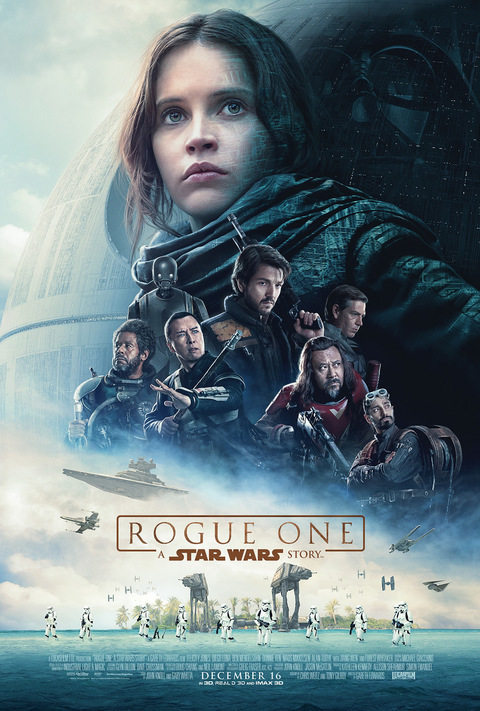
The Star Wars franchise is in good hands.

The Force Awakens was a great movie to bring the kids to. Rogue One is probably one you should watch by yourself. It’s a little bit darker, a lot more violent, and jam packed with nostalgia that would go over their little heads anyway.

Rogue one is to the Star Wars franchise what Halo: Reach is to the Halo franchise. The first Halo games were all about the plucky hero saving the galaxy from destruction, much like Star Wars (we won’t talk about the prequels). Halo: Reach was more about the people behind the scenes who set the stage for the main story, much like Rogue One.

I’m not sure if Rogue One has the same depth as Halo: Reach. I’d have to watch it again to decide. But the stories feel very similar.

One thing that Star Wars tends to screw up is the comedic relief, and here Rogue One happily breaks the trend. Some of the best lines in the movie were from K-2SO, the character equivalent in Rogue One for C-3PO and R2D2. Quite a few laugh out loud moments, and his particular style of dark humor fit the rest of the movie perfectly.

As much as I’m using the word “dark” to describe this movie, it’s actually not that dark. If you’re looking for Game of Thrones in space, you’ll have to look elsewhere. This is definitely still Star Wars, and while it might be a bit darker than Empire Strikes Back, I’m sure there are plenty of fans who would debate me on that.

I really like the way that this movie develops Tarkin, which is to say that I hate him even more at the end of it. In A New Hope, Tarkin was always overshadowed by Darth Vader. Not so in this one.

Darth Vader doesn’t get much screen time in Rogue One, but the time that he gets is put to excellent use. His last scene reminded me a lot of the 2003 animated Clone Wars series (the one that isn’t canon).

All in all, Rogue One was an excellent movie. It didn’t quite rise to the level of the classics, but that wasn’t what it was meant to do. As far as paying homage to the original trilogy goes, this may be the best of the new Star Wars movies yet. I definitely plan to include it in my next Star Wars marathon, and that’s saying a lot.

Yes, the Star Wars franchise is in good hands.

On the way to 10k

A couple of weeks ago, I wrote about how I plan to achieve my writing goal of hitting 10k words of fiction in a single day. The steps I laid out to getting there were:

  1. Write first thing every day.
  2. Write in timed, focused sessions.
  3. Strive to achieve 2k words per hour.
  4. Strive to hit at least 6 writing sessions.
  5. Pre-write each day for the next day.

I’m happy to report that the writing has been coming along very well! Ever since I started timing my sessions and keeping track of how much and how fast I write, it’s been as if someone turned on a switch inside my brain. The words are flowing, the story is coming along very well, and I’m a lot happier and more productive than I was only a month ago.

The main thing that does it is, ironically, forcing myself to stop every half hour or so. When I wake up in the morning and thing of how much I want to write that day, it can be a little daunting. By writing in short bursts, it helps to break the big goal down into parts. When you think too much about all the writing you want to achieve, it’s very easy to get caught up in the procrastination trap. But when you think of it as just a half-hour session of 400-600 words, it seems a lot more doable. And it is!

So things are coming along very well with Gunslinger to the Stars. My goal is to finish the first draft by February 6th and send it out to my first readers shortly thereafter. If things keep going the way they have been, I may actually finish it sooner.

As for reaching 10k words, I’m still a ways off but headed in the right direction. For now, I’m laying the foundation for it: building good habits and hitting a consistent stride. Once I’ve got that laid out, I’ll start to stretch myself, pushing the limits further and further until I’m ready to make the final approach to the summit. No sense in pushing too hard and burning out along the way.

In other news, I’ve sent Captives in Obscurity (Sons of the Starfarers: Book V) off to my editor, and should be getting it back in early February. The cover art should be ready around the same time. If all goes well, the book should be up for pre-order by the end of February, with a release date of May 15th.

I’m not sure when Patriots in Retreat (Book VI) will come out, since I’m still writing it, but as of right now I’m tentatively planning for a release sometime in August. After I’ve finished with Gunslinger to the Stars, I’ll move on to Patriots and see if I can’t knock that out before the end of February. If so, I might actually push the release date up to July.

As for other WIPs I intend to tackle, The Sword Keeper and Edenfall are on the top of the list. The free month for Genesis Earth went a lot better than I had expected, leading me to believe that there’s enough potential to make finishing the trilogy worthwhile. Besides, Edenfall is already plotted out, so if I can keep up the 10k pace it should be a cinch to write. Same with The Sword Keeper.

That just about does it for this post. I intended to write another Self-Sufficient Writer post responding to some of the craziness going on in the world right now, but that will have to hold off until next week. I’ve also got another trope post planned for Monday, so that should be interesting.

In the meantime, I’ll leave you with this video about how many twinkies it would take to power the Death Star. Take care!

Playing with Tropes: Pragmatic Villainy

So as part of my effort to blog more often, I’ve decided to bring back the trope posts. If you’ve been reading this blog for a while, perhaps you remember the Trope Tuesday series that I used to do. Those were mostly just a rehashing of each trope’s tvtropes page, with a bit of commentary at the end. For this new series, though, I’m going to assume you’ve already read the page and are familiar with the trope, and focus on the commentary. I’m calling this series Playing with Tropes, and I’ll do a new post on the first and third Monday of each month.

To start off this new series, I’d like to take a look at Pragmatic Villainy. There’s something especially chilling about a villain who not only possesses power, but knows how to wield it too. In fact, one of the scariest villains is the guy who rises up the ranks through sheer ruthlessness and ambition, starting as an underling and rising to the top. These villains know how to inspire and manipulate their followers, how to use their limited resources efficiently, how to form secret alliances and backstab their enemies, and how to keep a strategic perspective while making brilliant tactical plays. It doesn’t matter whether they command an empire or whether all they’ve got is a cargo-cult following on some far-off backwater. No matter where you put them, these are the guys who are truly dangerous.

It’s worth pointing out that there are a lot of figures from history who fit this trope. A badass colonel when the French Revolution began, he took advantage of the chaos to rise to power, declaring himself emperor and restoring order to his broken country. He then took his armies and conquered nearly the whole of Europe and the Mediterranean, destroying the Holy Roman Empire, invading as far as Egypt and the Nile, and leading his troops through the gates of Moscow before suffering defeat before the Russian Winter. Ever the pragmatist, he developed the modern canning process in order to supply his troops with food. And even after the European powers crushed his armies and exiled him to the island of Elba, he still found a way to escape and very nearly did it all again.

And Napoleon is by no means the most prominent historical example. Hitler was extremely pragmatic, and probably would have won the war if he’d actually listened to his generals and not interfered with their ability to do their jobs. Stalin was also quite pragmatic, identifying and removing his rivals and ruling with an iron fist. Today, Vladimir Putin and Xi Jinping are some of the best examples of this trope.

Sometimes, it’s difficult to tell whether a pragmatic villain is really a villain at all. This is because pragmatic villains often see evil as a means, not an end. You won’t see a lot of gratuitous puppy-kicking with these guys—in fact, you may even see them pet the puppy for the cameras… before quietly taking it out back to skin it.

That’s not to say that pragmatic villains are more redeemable than your average big bad. Far from it, in fact. As Darth Vader put it, “if only you knew the power of the dark side!” In the clash between good and evil, evil often has the upper hand right until the middle of the third act. Even when evil doesn’t have the upper hand, the old poem often applies:

Might and Right are always fighting
In our youth it seems exciting.
Right is always nearly winning.
Might can hardly keep from grinning.

—Clarence Day, “Might and Right”

To really pull off a pragmatic villain, it’s important to make sure that your villain is truly evil. Grand Admiral Thrawn from the old Star Wars Expanded Universe was a great example of this, as was Admiral Ysanne Isard. Even with limited resources, they pulled off some brilliant moves: Thrawn by placing a cloaked warship beneath a planetary shield, to make it appear that he had shield-busting weapons, and Isard by spreading a lethal pandemic that, while curable, was extremely expensive to treat, thus spreading panic and instability as everyone fought over the cure. Yet in spite of their pragmatism, it was clear that neither of them would stop at nothing in their rise to power.

What’s really awesome is when a pragmatic villain manages to pull off a Xanatos Gambit. In fact, pragmatic villains are the only kinds of villains who can pull that kind of gambit, simply because of all the planning and foresight that must necessarily go into it. For the same reason, there tends to be a lot of overlap between this trope and the Chessmaster.

When a villain falls short, it’s often because they were lacking in this trope. A huge example of this for me was The Hunger Games. When the villains in that book backpedaled after Peta and Katniss threatened to kill each other, I pretty much threw the book at the wall. The kind of people who can be manipulated by angsty lovestruck teenagers are not the kind of people who rise to power in a totalitarian dictatorship. And while there’s certainly a place for B movie villains, the Evil Overlord List exists for a reason.


First Impressions of Star Wars: The Force Awakens

This post is going to be spoiler-free, but if you haven’t already seen it and you don’t want it spoiled, you had better go on an internet blackout and get thee to a cinema because there is a lot that can be spoiled!

First impressions: I liked it! I really liked it! It felt very true to the originals, much more so than any of the prequels. It had all the same beats and sci-fi elements, the same focus on the characters (as opposed to spectacle), and a lot of the same magic.

At the same time, it wasn’t just a nostalgic rehashing of episodes IV, V, and VI. There was a lot of new stuff mixed in with the old. I know a lot of the true fans are ticked off that Disney nixed the expanded universe, but the new stuff feels like it fits. The new characters have some very big shoes to fill, and it will take more than one movie for them to grow into those shoes, but in this one at least they did pretty well.

Does it fully live up to the originals? I think that’s the wrong question to ask. For those of us who grew up with the original Star Wars, nothing will live up to that experience. The golden age of science fiction is between ages 7 to 14, and in some ways it just isn’t possible to recapture that magic. But for those of us old-timers, I think this new one pays homage to the originals in a way that the prequels never did.

Was it campy? Yep. Was it rife with scientific inaccuracies? Oh heck, yes! Were parts of it over the top? Yeah, probably. But these were all true of the original Star Wars, too. The stuff that really mattered was all there: good writing, solid plot, believable characters, awesome music, and that grand sense of wonder that drew us all into Science Fiction in the first place.

So yeah, I’m satisfied with this new Star Wars movie. And while I’m sure I’ll be spending the next several months nitpicking it to death with other like-minded fans, my first impressions are very positive. I will definitely watch this movie again, and again.

Larry Correia on creating “offensive” characters

Larry Correia has a fantastic post up on the pitfalls of political correctness when writing fictional characters. He not only nails it on the head, he takes a nail that’s been twisted in three different directions and rams it into the wood with just a couple of well-placed taps. Seriously, if you’re interested in writing at all, you should check the whole post out.

The main gist of it can be summed up by this quote:

Smart writers are going to focus on entertainment. They’re probably going to offend everybody at some point. But at least they won’t be boring while they do it.

I’ve said this before, and I’ll say it again, the unforgivable sin for writers is being boring. As a writer you can get away with damned near anything as long as you are entertaining a big enough audience.

There is a contingent of readers out there who exist only to nitpick and bitch. There aren’t that many of them, but they make up for it by being loud. Many authors are under the mistaken impression that you can make these readers happy. You can’t. At best you can appease them. Temporarily. But you will cross their invisible line sometime and they will get all sorts of outraged.

The latest person to get outraged was Melissa Harris Perry, who denounced Star Wars because Darth Vader was (and yet at the same time wasn’t) black. Seriously. It’s like she saw this clip and didn’t realize it was satire:

But I digress.

The reason it’s impossible to please politically correct SJW-types is because the way that they signal their virtue to other members of their tribe is by finding something to be outraged about. This is a consequence of their belief that the only way to fix society is through social revolution, a point that Dennis Prager deconstructs quite effectively. It’s all about how loud they can scream.

As Larry points out, trying to placate these perpetually outraged people is a game you can’t win—not unless you’re already a member of their tribe. This ironically makes them far more prejudiced than most of the people they’re so outraged at. When was the last time you heard the word “white” used as an insult? Has the word “cisgender” ever not been used as an epithet? “Privileged” is another one—without knowing anything about you as an individual, they have already passed judgment and despise you.

Again, this is why I support the Sad Puppies: because they have the courage to stand against these perpetually outraged types who would tear down everything in SF&F that they can find offense with. The most imaginative genre in fiction is no place for self-appointed thought police.

There is one important area where I disagree with Larry. He rejects the Bechdel test out of hand, where I think it still has value. As a litmus test, I totally agree with him: I’m against any kind of a litmust test for stories. But from a writing perspective, I think it can still be a very useful tool.

The Bechdel test is something that I usually have in the back of my mind when I write: not out of fear of offending the perpetually outraged, but in order to write more complex and interesting characters who can stand as heroes of their own stories. I don’t think we’re at odds on that point, since Larry himself says the same thing in his discussion of how to write a strong antagonist. To that extent, I personally find the test to be useful.

The point is, if you want to be a successful writer, don’t try to please everyone. As soon as you start to experience success, someone will inevitably take offense with you just to bring you down a notch. Don’t let them get to you. In the words of Brigham Young:

He who takes offense when no offense is intended is a fool, and he who takes offense when offense is intended is a greater fool.

Thoughts on the new Star Wars trailer

OMG, guys! The feels, THE FEELS!

The new Star Wars trailer came out last week, and I have watched it at least half a dozen times every day since. It’s awesome. While I’m still ambivalent enough not to rush out and buy tickets right away, there are a number of things that I think look promising:

  • The major characters from the original trilogy are all there, but they seem to be more in a supporting role than the main one. The story has clearly grown bigger than just them.
  • The gritty used-future feel of the original trilogy is back, and it looks like it’s been done very well.
  • The CG doesn’t seem to be overdone, like it was in the prequels. It looks like they actually built a set for the Millennium Falcon and several other places.
  • There’s actually some blood shown—not all the kills are clean and “cauterized.”
  • The attention to detail on stuff like the Star Destroyer wreckage is phenomenal.

Of course, this could still be a case where the trailer is awesome and the movie is awful. That seems to happen a lot these days. But still, I definitely want to see this movie—the only question is whether I’m going to see it in the first couple of months when it comes out, or when it hits the dollar theater.

I can still remember when Episode I: The Phantom Menace came out. There was a lot of hype, and a lot of building excitement, much like there is now for Episode VII: The Force Awakens. All of my enthusiasm crashed when I saw the movie in the theater. Jar-Jar Binks, Midichloriens, way too much CGI, and a pedo-tastic love story—yeah, it was a disappointment. Episodes II and III weren’t quite as bad, but none of the prequels were good enough to be redeemable in my eyes. None of them lived up to the original.

I don’t know yet if Episode VII: The Force Awakens will live up to the originals, but it does seem that this is the Star Wars movie that we’ve been waiting for—the one that we wanted and didn’t get back in 1999. So yeah, I’m excited.

Also, I love John Boyega’s reaction to seeing himself in the trailer:

I reacted the exact same way after I saw the original Star Wars back when I was seven: jumping over couches flying my imaginary X-Wing, bouncing off the walls and freaking out from excitement. So it’s good to see that one of the new actors is also a huge fan.

As a side note, I just want to say that I love the fact that we live in a world where the next Luke Skywalker can be a black kid (or a girl for that matter—it’s hard to tell from the trailers whether Finn or Rey fills Luke’s role). I don’t say that to pander to political correctness or social justice in any way—I just think it’s awesome that the lead character is black, and the other one is a girl.

But speaking of Luke Skywalker, it’s telling that we don’t really see him at all in any of the trailers. So I’m going to call it now:

Luke dies.

That’s a hunch, not a spoiler. I have nothing to base it off of except the three Star Wars trailers and my own understanding of how story structure works. But based on that, I suspect that Luke plays the Obi-Wan mentor to Finn or Rey and dies just like Obi-Wan did.

So that’s my take on it. Definitely looking forward to Christmas this year!

Thoughts on the new Star Wars trailer

I have a lot of thoughts on the new Star Wars trailer. But first, a little background.

Growing up in the 90s, I was a huge Star Wars fan. It’s not an exaggeration to say that Star Wars was my life. I played X-Wing every day, I watched at least one of the original trilogy movies every week, I read every Star Wars book in the library that I could get my hands on, and I daydreamed and made up Star Wars stories all the time. I was living in the golden age of science fiction (about age 9-12), and that meant Star Wars.

Then Episode I came out. Like all the other fans, I was super, super excited about it. Like all of the other fans, it was a huge disappointment. Several things ruined that movie for me, but the biggest were Jar-Jar Binks and midichloriens. The most magical aspect of the Star Wars universe, the Force, was singlehandedly ruined by the whole midichlorien thing, and as for Jar-Jar … I don’t even want to go there.

There were a lot of other little things too: like the pod racing sequence, where the sand people were thrown in for a gag, and that part where Obi Wan and Qui Gon Jinn drove a submarine through the center of the planet. My suspension of disbelief was stretched to the breaking point, and this awesome thing that I loved now felt like a little kid story. But the biggest things that broke the movie for me were Jar-Jar and the midochloriens.

But that was Episode I, and Episode II was bound to be better. After all, how could you screw up the Clone Wars? Unfortunately, I was about to find out.

To be fair, Episode II wasn’t nearly the disaster that Episode I was. Not that that’s saying much, but still, it wasn’t horrible–it was just bad. The romance was cringe-worthy, the pace was glacial, and the action sequences had too much flash and not enough substance.

Jar-Jar was gone (thank the stars!), but C-3PO and R2D2 were little better, and the fact that they were in the story at all caused a major sprain to my suspension of disbelief. The lightsaber duel with Yoda and that other guy felt like it was thrown in for a gag, and Anakin … yeah. By the time the big stadium battle happened at the end, all I could do was yawn. The battle of Hoth had a lot less flash to it, and yet was infinitely more engrossing.

By this point, I’d started to phase Star Wars out of my life. I still occasionally watched the original trilogy movies, and played stuff like X-Wing: Alliance from time to time, but I wasn’t nearly as invested in the franchise as before. I’d moved on to stuff like Tolkien and Lord of the Rings, and spent more time playing stuff like Civilization and Alpha Centauri. Star Wars did not hold the same magic as it had before.
Then came Episode III, the final nail in the coffin for me. I can sum it all up in one word: “NOOOOOOOOOOOO!!!!!

Episode III was marginally better than Episode II, but that was only because of Order 66, where all the Jedi died and the Republic transformed into the Empire. Order 66 was pretty cool. But the rest of the movie? I mean, right from the first battle, I knew that it was going to suck. When a ship in orbit tilts to one side, it does NOT cause everything to fall in that direction! Lucas might as well have shown people falling off of the south pole. From that point on, my suspension of disbelief was shattered beyond any hope of recovery.

But the worst part was Anakin’s transformation. Here’s a guy who is supposed to turn from this whiny, annoying brat into the most iconic sci-fi villain of all time … and I just wasn’t buying it. With each progressive step, he just didn’t seem any different than before. Instead of the character driving the story, it felt like the plot was shoehorning the character into a role, and all he could do was passively accept it. The slaughter of the young Jedi knights at the temple, the oath of fealty to Chancellor Palpatine–none of it felt authentic at all. And even after he put on the mask, he was still the whiny, annoying brat from before. Darth Vader, the linchpin of the entire franchise, was ruined.

At that point, I completely checked out. That’s right–the kid whose whole life was tied up with Star Wars now wanted nothing to do with it. I still went back to some of the old, pre-Episode I stuff from time to time, just for nostalgia’s sake, but I had no desire to keep up with any of the new stuff that was coming out. Books, games, TV shows–I was done.

Then Disney bought Star Wars, and rumors started to fly. My expectations at first were pretty low, but George Lucas had done so much to screw it up already that I figured Disney couldn’t do any worse. Then I realized that Disney does a lot more than princesses and fairy tales these days, and my indifference turned to curiosity. When J.J. Abrams was slated to direct it, curiosity turned to the faintest glimmer of hope.

Which brings us to this:

I have to be honest, I’m actually kind of excited. After all that the prequels did to ruin Star Wars for me, that’s saying quite a lot.

First of all, the black stormtrooper. I’ve heard a lot of griping about the fact that he’s black (or more accurately, that he isn’t one of the clones from Episode II), but come on guys–do you really expect the first generation stormtroopers to stay on active duty for fifty-plus years? Of course the Empire is going to replace the clone warriors with newer soldiers (hopefully, ones that can actually shoot).

Personally, I think it’s kind of awesome that he’s black. More than that, though, I think it’s awesome that he has a face. Imperial stormtroopers have always been quintessential mooks, and that’s always bugged me. Just once, I’d like to see the good guys face off against a bunch of stormtroopers who can actually shoot straight–it would add a whole new level of tension and danger. To feature one as an actual character is promising indeed

One of the things I loved the most about Star Wars was the grungy, dirty, second-hand feel of most of the technology. In the original trilogy, you really get the sense that you’re in a used future, especially on the planet Tatooine. From what I can see in the trailer, it looks like they’re bringing that back. Deserts + derelict spaceship wreckages + super fast hovercars that look like they’re about to break down = OMG YES.

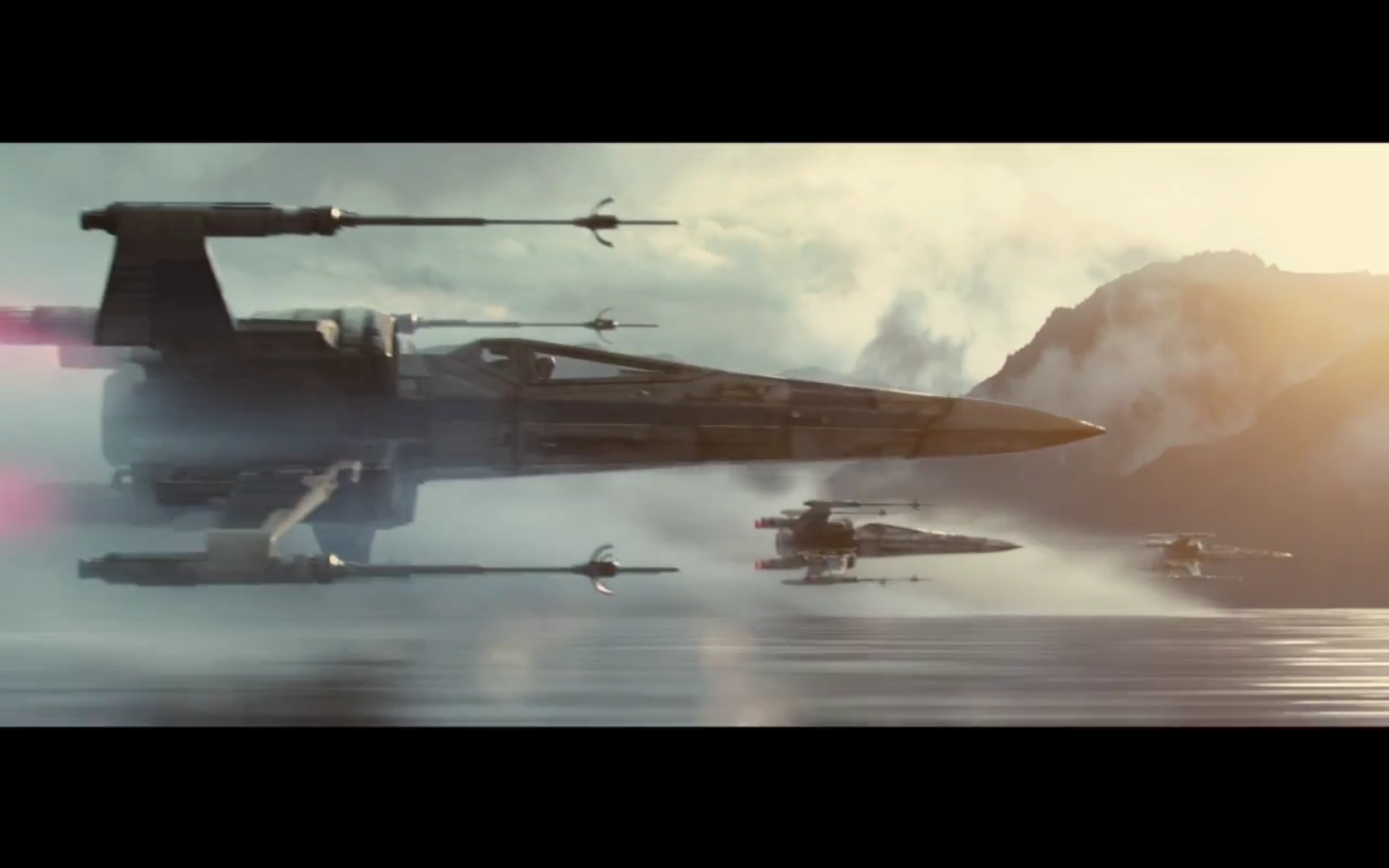
But the part of the trailer that really won me over was this part right here:Screenshot from 2014-12-12 11:12:18Specifically, how realistic the X-Wings look. The way they kick up those clouds of water as they buzz the surface of that lake–you can’t deny, that’s pretty freaking awesome. My biggest running issue with the prequels was how they constantly abused my suspension of disbelief, so the fact that these X-Wings actually look real is perhaps the most promising part of the trailer for me.
Yes, the bad guy’s lightsaber with the dinky little lightsaber spurs looks … well, dinky. No argument there. But the last part, with the Millennium Falcon doing the crazy barrel roll as the music hits you with all of its glory–HOLY CRAP YES!!!!!

There’s not a whole lot of substance in this trailer. It’s only a tease–but wow, what a tease! I’d hate to get my hopes up only to have them dashed as badly as Episode I dashed them, but I’ve got to be honest: I’m actually kind of stoked for this movie now.

Episodes I, II, and III alienated a lot of the older fanbase, but it did appeal to the younger generation that came to the Star Wars universe without any preconceptions or expectations. Before I saw the trailer, I thought that Episode VII would simply continue that trend. Now, I actually think it may turn things around–bring back the old-school fans while showing the younger generation that Star Wars can be so much more.
Thoughts on sequels and the Desolation of Smaug

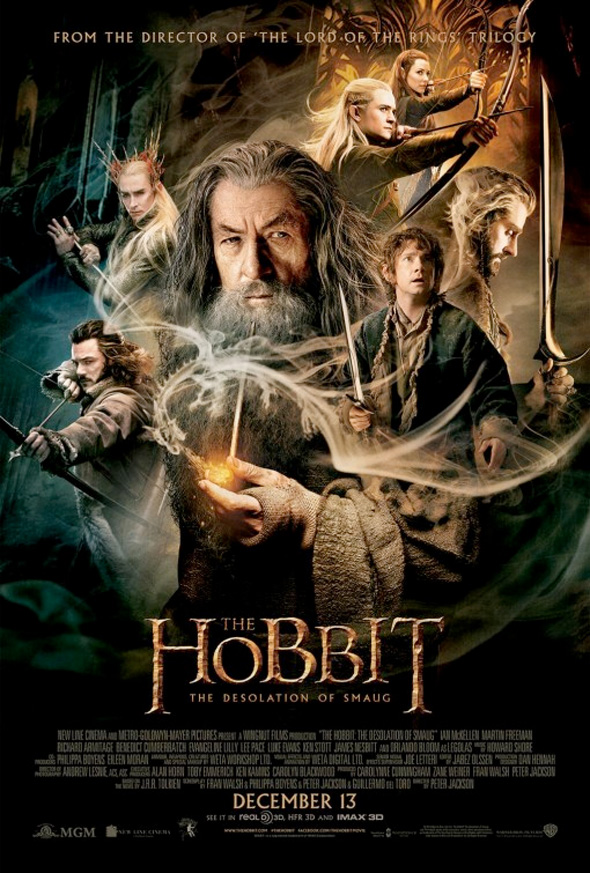
hobbit2-finalposter-fullSo last week I saw the new Hobbit movie, The Desolation of Smaug, and I really, really liked it … right up to the ending.  Why?

BECAUSE IT RESOLVED NOTHING!!!

Okay, sorry for the spoiler (though you probably should have guessed there would be spoilers in a post like this).  There’s going to be more in this post, so if you haven’t seen the movie yet, read on at your own risk.

Overall, I thought the movie was pretty good.  The action was fun, the fantasy elements were very well executed, and Benedict Cumberbatch was excellent as the voice of Smaug.  My only real hangups (beside the ending) are relatively minor, such as the impossible physics of Thorin’s luge run down the river of molten metal, or the fact that all of the gold ever mined in the history of the Earth would not fill a tenth of the stockpile in Erebor (seriously, all of the world’s gold would only fill a cube about 20 meters to a side … so maybe half of that big statue they melted at the end?).  Oh, and I thought the politics of Laketown were simplified to the point of caricature.  That was actually a fairly big issue for me, though I suspect the third movie will either make it or break it.

But all of those are dwarfed (no pun intended … okay, maybe a little) by the movie’s biggest flaw, which is that IT HAS NO RESOLUTION.

Seriously, none of the half-dozen subplots resolve in any meaningful way.  The one that comes closest is that love affair between the elf woman and the dwarf, since I guess she kind of saves him from his orc wound.  But he doesn’t even regain consciousness, which means that they aren’t even really reunited by the end.  And as for the other storylines … well, Smaug is still alive and about to burn Laketown, Gandalf is a prisoner of Sauron, Bard is a prisoner of that fat guy who wasn’t ever in the book and the dwarves still haven’t taken Erebor.

I understand that the middle installment in a series can’t resolve everything, but I still think it should resolve something.  Take The Empire Strikes Back, for example.  It ends on something of a cliffhanger, but there’s still enough of a resolution that it stands very well on its own.  Han Solo is frozen in carbonite, but Leia, Chewie, and the droids have escaped to safety.  Luke hasn’t defeated Vader, but he has learned something that completely changes the relationship between them both.  The Rebel Alliance hasn’t won yet, but they have gotten away from Hoth without being completely decimated by the Empire.

The Empire Strikes Back is not just part I of The Return of the Jedi–it stands on its own as a complete story.  It bridges A New Hope and Jedi by showing the tragic failure of Luke Skywalker to defeat Vader, rescue his friends, and become a Jedi.  By the end of the movie, he’s a very different person than he was at the beginning.  Could the same be said of Thorin, Bilbo, and the Desolation of Smaug?  Not really.

I suppose I have to be a bit cautious here, since there are those who would say that I’m guilty of this myself.  I’ll freely admit that I’ve written a few cliffhanger endings, most recently in some of the Star Wanderers stories.  However, I always try to resolve something, so that each book can stand at least partly on its own.

In Fidelity, for example, Jeremiah and Noemi haven’t found a home yet, but they do have one to work toward.  It starts with their arrival at Oriana Station and it ends with their departure–everything that they need to do there has been done.  In Sacrifice, the language barrier, cultural misunderstandings, and Jeremiah’s own personal shortcomings converge until he’s more or less forced to leave Noemi, at least temporarily.  It’s not a feel-good ending, but it is a resolution of sorts.  And in Reproach, Mariya comes to the horrifying realization that she’s destroyed everything that she was hoping to build.

I guess the key to bridging a series in such a way that the sequels stand on their own is to keep the individual conflicts and subplots distinct, especially the internal and external ones.  For example, I thought that The Unexpected Journey had a much better ending, not because the overall plot was resolved, but because Bilbo had transformed from a homebody to an adventurer.  The internal conflict had a satisfying resolution, and the growth arc had more or less come full swing.  The Desolation of Smaug could have done that with Thorin, and in some ways it seemed to be trying, but by the end it just fell short.

So am I going to see the third movie?  Well, yeah, so from a Hollywood perspective, I suppose the movie was a success.  But I’m not as excited for it as I was for Return of the Jedi.  And the lesson I’m taking from this is that cliffhangers are good, but you’ve got to deliver at least some satisfaction–you’ve got to resolve something.  Otherwise, people are going to feel cheated.

Trope Tuesday: Smart People Play Chess

Why?  Because Anastasia Gavrilova playing chess is HOT.
And if you’re Anastasia Gavrilova, chess gives you +10 charisma as well.

Want a fast and easy way to show that your characters are smart?  Not bookish, necessarily, or nerdy, or even the designated smart guy in the five-man band, but intellectually adept no matter what else their role in the story?  Well, you could indicate that through inordinate loquaciousness, but too much of that tends to make your dialog unreadable (not to mention, it’s way overdone).  You could have them rock a chalkboard, but not every story takes place in high school, and finding a chalkboard outside of academia is a bit of a challenge.  So what else can you do to indicate a high level of intelligence?

Show them playing chess.

It’s true.  Stereotypes aside, one of the most effective ways to indicate that your characters are intelligent is to show them playing chess.  From Star Trek to Discworld, Independence day to Doctor Who, Big Bang Theory to Harry Potter to Command & Conquer, chess is a fast, dirty, and effective way to show intelligence.  And while popular conceptions of chess nerds give the game a bit of baggage, it’s not as bad as you might think.  Sure, Sheldon might fit the stereotype, but Cain and Spock certainly don’t.  Even David Levinson from Independence Day turns out to be something of a badass in the end.

So why is chess such an effective way to show that a character is smart?  Probably because of all the other tropes associated with chess.  As one of the oldest and deepest strategy games of all time, chess is thoroughly embedded into our cultural consciousness.  Chess motifs are common in all sorts of stories, and the chess master is a significant character archetype.  There’s a reason we call the most complicated gambit pileup Xanatos Speed Chess.

Besides all the archetypal reasons for this trope, there are quite a few real-world reasons as well.  Playing chess can potentially do all sorts of interesting things to your brain, like stave off Alzheimer’s and improve your concentration and problem-solving skills.  All over the world, people associate chess skills with intellectual prowess, and after you’ve played a few games, it’s not hard to see why.  According to Carl Sagan, the game requires “strategy, foresight, analytical powers, and the ability to cross-correlate large numbers of variables and learn from experience.” If you’ve got all of those, chances are you’re at least above average.

Of course, this trope can be inverted in some clever and interesting ways.  In Bill and Ted’s Bogus Journey, for example, the ditzy main characters challenge Death to games of Battleship, Clue, Twister … basically, a whole host of non-cerebral games, in lieu of the expected trope.  In Foxtrot, the only character who loves chess is the Dad, who is rather dumb compared to his kids (maybe they all got bored of it?).  The classic example, though, has got to be Star Wars, where Chewbacca’s emotional impulsiveness is lampshaded over a game of <X> chess:

I haven’t used this trope a whole lot in my own work yet, but I just started work again on The Sword Keeper, an epic fantasy novel where chess tropes are going to be a major part of the story.  The mentor figure is something of a chess master, though because he’s a sentient sword he can’t experience or interact with the world except through his telepathic connection with the main character, a simple tavern girl.  She knows the basic rules of chess, however, (“chadrak” in this universe) and so one of the ways the sword trains her is through putting her through chess scenarios.  Later, it becomes apparent that the story itself is kind of like a game of chess, with the major characters loosely correlating with the different pieces, and the main character as the queen.  I’m excited–it’s going to be really cool. 😀

So yeah, this is definitely a trope you’re going to see from me in the future, and not just as a one-scene throwaway either.  Stay tuned for more!

Y is for Yesteryear

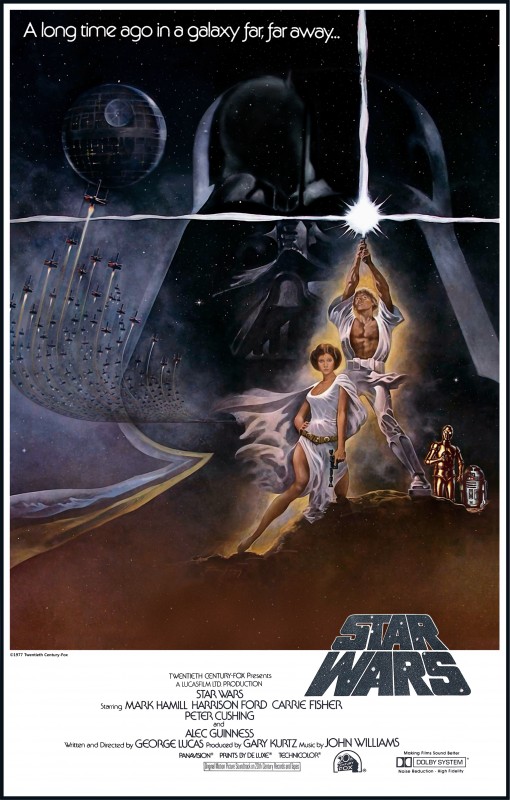
Star_wars_oldThey say that the golden age of science fiction is about twelve years old.  That’s definitely true for me.

My first exposure to the genre was Star Wars: A New Hope.  I saw it when I was seven, right around the height of my dinosaur phase.  Everything about the movie completely blew me away, from the Jawas and Sand People of Tatooine to the stormtrooper gunfights and lightsaber duels.  After watching Luke blow up the Death Star, I spent the next few hours running around the yard pretending to fly my own starfighter.

In a lot of ways, I’ve never really stopped.

My parents made me wait until I was nine to watch The Empire Strikes back, because it was rated PG.  Without any exaggeration, I can say that those were the longest two years of my life.  I was literally counting down days by the end, and to pass the time without going crazy, I read up on all the books about space that I could possibly find.

My father bought the original X-wing flight simulator game somewhere around then, and I soon became totally engrossed in it.  Since the 386 was our only entertainment system (no Super Nintendo–I had to visit a friend’s house for that), X-wing became the defining game of my childhood.  I spent hours and hours on that game, to the point where I knew exactly which simulated missions the characters from the books were flying and how to complete them faster and easier.

I thought The Empire Strikes Back was a little slow the first time I saw it, but it’s since grown on me, to the point where now it’s my favorite film in the whole series.  Thankfully, my parents let me watch Return of the Jedi the next day, and for the next few months my life felt utterly complete.

Around this time I discovered the Star Wars novels and soon immersed myself in them.  The Courtship of Princess Leia by Dave Wolverton soon became one of my favorites, as well as the Heir to the Empire trilogy by Timothy Zahn and the X-wing series by Michael A. Stackpole.

But it was Roger Allen McBride who first introduced me to a different flavor of science fiction with his Corellia trilogy.  As I mentioned in V is for Vast, those books had just enough of a touch of hard science to intrigue me about the other possibilities of the genre.  That was the last Star Wars series that I read before branching out into other works of science fiction.

The Tripod trilogy by John Christopher was my first introduction to the dystopian / post-apocalyptic genre, depicting an enslaved humanity after an alien invasion.  Those books really captured my imagination for a while.  The Giver was also quite interesting and thought provoking, though since it didn’t involve spaceships or aliens it wasn’t nearly as compelling.

I read a lot of fantasy in my early high school years, including Tracy Hickman, Lloyd Alexander, and (of course) J.R.R. Tolkien.  While I enjoyed those books and immersed myself in them for a while, my true love was still science fiction.  For almost a year, I watched Star Trek: Voyager religiously with my dad.  And every now and again, I’d pick out a science fiction book from the local town library and give it a try.  That’s how I discovered Frank Herbert’s Dune.

In eleventh grade, my English teacher had us choose an author and focus our term papers solely on their books for the entire year.  She suggested I choose Orson Scott Card, but I chose Cormac McCarthy instead.  I’m not sure if that was the worst decision of my high school career, or the best decision, since assigned high school reading tends to make any book feel like it sucks.  I discovered Ender’s Game the following summer, and finished it in a delirious rush at 3am the morning after checking it out from the local library.

More than any other book, Ender’s Game cemented my love for the genre, and showed me just how powerful and moving the genre could be.  It opened so many insights into the world and human nature, reading that book made me feel like I’d opened a pair of eyes that I didn’t even know I’d had.  Looking back, that was probably the moment when I knew I would be a science fiction writer.  I’d known I was going to be a writer ever since I read A Wrinkle in Time at age eight, but to be a science fiction writer specifically, that goal was probably cemented by reading Orson Scott Card.

After high school, I served a two year mission for my church, during which I didn’t read any novels or watch any TV or movies.  When I came back, though, Orson Scott Card and Madeline L’Engle helped me to ease through the awkwardness of adjusting back to normal civilian life.  When I left for college, I expanded my horizons even further, starting with Isaac Asimov’s Foundation series and Edgar Rice Burrough’s Princess of Mars.

When I discovered Pioneer Books in downtown Provo, I knew I’d found my favorite bookstore in Utah Valley.  I have so many fond memories sitting cross-legged on the floor in the science fiction section, browsing through the musty used books for hours at a time.  That’s where I discovered C.J. Cherryh, Arthur C. Clarke, Robert A. Heinlein, Ursula K. Le Guin, and numerous other authors who are among my favorites today.

When I discovered Spin, Robert Charles Wilson soon became one of my favorites.  I picked up that novel as a free PDF from Tor, and read it over the summer while studying abroad in Jordan.  Once again, that same hard sf sensibility I’d gotten from Roger Allen McBride touched me in an unforgettable way.  But it was the human element of that book that really moved me–in fact, it’s always been about the human element.  The world building in Downbelow Station was great and all, but the romance of Merchanter’s Luck had a much more lasting impact.  Starship Troopers had some good ideas, but it was Mandella’s personal journey in The Forever War that moved me almost to tears.  The intrigue of the Ender’s Shadow series was quite entertaining, but it was Ender’s Game and Speaker for the Dead that really taught me what it means to be human.

I finished my first novel, Genesis Earth, shortly after returning from that study abroad, and tried to capture the same sensibility from Spin as well as the intimately human element.  Since then, I’ve written several more sci-fi novels, some of them tragic, some triumphant, but in all of them I’ve tried to get as close as I can to the personal lives of the characters.  I don’t know if I’ll ever write a character portrait so intimate as Shevek’s in Ursula K. Le Guin’s The Dispossessed, but I certainly hope to someday.

For me, science fiction started out as a wonderfully exciting entertainment and turned into something much more meaningful.  If there’s anything the genre has taught me, though, it’s that the two aren’t mutually exclusive–that you can have your adventure and learn what it means to be human as well.  Indeed, the more imaginative the adventure, the greater the truths I’ve taken from it.

Because of that, even though I’m almost in my thirties now, I can’t possibly foresee a time when science fiction isn’t a major part of my life.  It’s a love affair that’s grown just as much as I have, and continues to grow with each new author I discover and each new book I write.  When I’m old and grizzled and pushing eighty, I’m sure there will still be a part of that twelve year old boy in me, still running around the yard flying his starship.