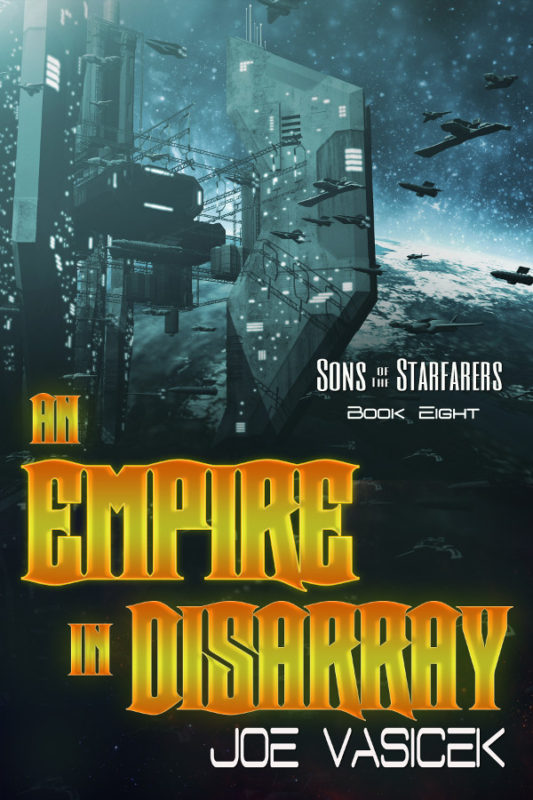
Is An Empire in Disarray for You?

An Empire in Disarray is late-series space opera at full intensity: shifting alliances, desperate diplomacy, covert raids, and the personal cost of holding a fragile coalition together when everything starts to crack. This is book eight in the nine-book Sons of the Starfarers series, which means the story is driving hard toward endgame—without losing sight of the characters who’ve carried you across the war.

If you want a sci-fi series where battles and politics matter because they press people to their moral limits, this is the kind of reading experience you’re in for.

What Kind of Reader Will Love An Empire in Disarray?

If you love …

  • character-driven military science fiction and space opera with long-running arcs and real consequences
  • rebellion-vs-empire stories that evolve into messy “what now?” politics after the turning point
  • tense alliances, betrayals, secret negotiations, and behind-enemy-lines missions
  • found family (and actual family) dynamics under extreme pressure—duty vs. loyalty vs. love
  • big stakes told through a close, emotional lens (you feel the cost, not just the spectacle)

…then An Empire in Disarray is probably your kind of story.

What You’ll Find Inside

An Empire in Disarray follows Mara Soladze and the people bound to her as the Outworld war effort enters its most unstable phase: victories don’t settle anything, power reshuffles, and old enemies become uneasy necessities. The book mixes fleet-and-station scale strategy with intimate, character-level tension, especially as trust becomes both the most valuable currency—and the easiest thing to weaponize. The result is a fast-moving, high-stakes installment that feels like the calm-before-the-storm is finally over.

What Makes An Empire in Disarray Different

Fans of authors like Lois McMaster Bujold (character-first military sci-fi), Elizabeth Moon (duty, leadership, and hard choices), or James S. A. Corey (factional politics in space) will recognize the blend of strategy, relationships, and shifting loyalties—but this series leans especially hard into consequences that accumulate across many books.

Where many space operas keep escalating external threats, Sons of the Starfarers also asks what happens when the “good side” starts fracturing under its own compromises. And in this installment, the story’s distinctive edge is how it forces characters to navigate collective survival while still fighting to remain fully themselves.

What You Won’t Find

You won’t find a cozy, standalone entry point here—this is the eighth book in a nine-book arc, and it’s written to pay off (and complicate) what came before. You also won’t find grimdark nihilism for its own sake: things get intense, but the series is ultimately driven by the question of whether people can become better under pressure, not merely harder.

Why I Think You Might Love An Empire in Disarray

In the author’s note, I half-joke that nobody should write a nine-book series—and then I admit why I did it anyway: because I’ve cared about these characters from the beginning, and I wanted to see where war would take them when it stopped being abstract and became personal. When I was drafting this book, I’d just moved back to Utah after a long stretch in Iowa, driving that lonely road through Wyoming and down past Evanston into the mountains—thinking about pioneers, endurance, and the strange mixture of hardship and beauty that comes with trying to build something that lasts.

That’s the heart of this installment, too. The ending I’d imagined for this series was never going to be neat or permanent—politics rarely is, especially after revolution—and my background in political science (and the places I’ve lived and traveled) shaped that. But the real reason I think you might love this book is simpler: An Empire in Disarray is where you get to see how far Mara has come, and what kind of person she chooses to become when all the easy choices are gone.

Where to Get the Book

Related Posts and Pages

Explore the series index for Sons of the Starfarers.

Return to the book page for An Empire in Disarray.
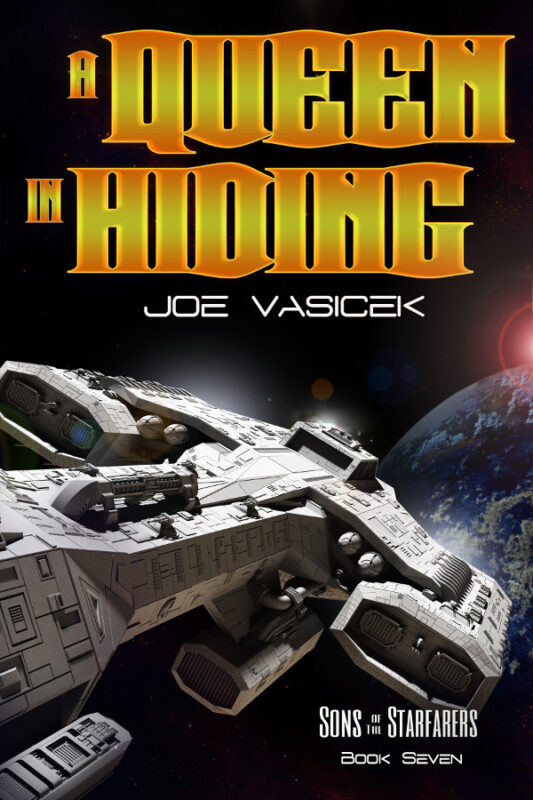
Is A Queen in Hiding for You?

A Queen in Hiding is a character-driven epic space opera about loyalty under pressure, identity under strain, and survival when there is nowhere left to run. Set deep within the long-running Sons of the Starfarers series, it delivers high-stakes interstellar tension blended with intimate moral conflict. This is science fiction that combines fugitives-on-the-run suspense with serious questions about responsibility, leadership, and what it means to remain human in a fractured galaxy.

What Kind of Reader Will Love This Book?

If you love…

  • character-driven space opera in the vein of The Expanse or Firefly
  • epic science fiction series where relationships evolve across multiple books
  • found family in space shaped by loyalty, sacrifice, and hard-earned trust
  • moral, thoughtful sci-fi that explores identity, unity, and individual freedom
  • clean space opera adventure without grimdark nihilism

…then A Queen in Hiding — and the broader Sons of the Starfarers series — is probably your kind of story.

This book is best experienced as part of the full series arc, beginning with Book 1.

What You’ll Find Inside

A Queen in Hiding follows central characters who have already survived war, betrayal, and political upheaval — only to discover that survival brings new and subtler challenges. As they navigate isolation, shifting alliances, and the consequences of earlier choices, the story explores themes of loyalty, identity, conscience, unity versus individuality, and the burden of leadership. The tone is tense yet reflective, blending space opera action with psychological depth and long-arc character development.

What Makes A Queen in Hiding Different

Fans of The Expanse-style pressure-cooker space opera or military SF will recognize the hard choices, the chase, and the tactical survival problem-solving—but A Queen in Hiding takes those familiar tensions in a more intimate, morally invasive direction. Where many space operas keep minds private and conflict external, this book leans hard into the horror (and strange tenderness) of shared consciousness, where love, fear, lust, shame, and loyalty echo through more than one head.

This series stands apart for its sustained focus on family bonds, cultural tension, and moral accountability across generations. The scale is galactic, but the heartbeat of the story is deeply personal. Instead of resetting after each crisis, the consequences carry forward — shaping who these characters become over time.

What You Won’t Find

You won’t find a light, standalone adventure that resets at the end. This is a deep-series installment that builds on long-running character arcs. You also won’t find nihilistic grimdark or shock-for-shock’s-sake storytelling—the stakes are serious, but the series remains grounded in hope and moral seriousness rather than cynicism.

Why I Think You Might Love A Queen in Hiding

This book represents a turning point in the series—where long-standing tensions finally demand honest reckoning. I wrote it because I wanted to explore what leadership, love, and responsibility look like when they’re tested beyond comfort. Every time I revisit it, I’m reminded that growth rarely happens in safety; it happens in exile, in uncertainty, and in the quiet decisions no one applauds.

If you crave space opera that treats character transformation as seriously as interstellar politics, this story was written for you.

Where to Get the Book

Related Posts and Pages

Explore the series index for Sons of the Starfarers.

Return to the book page for A Queen In Hiding.

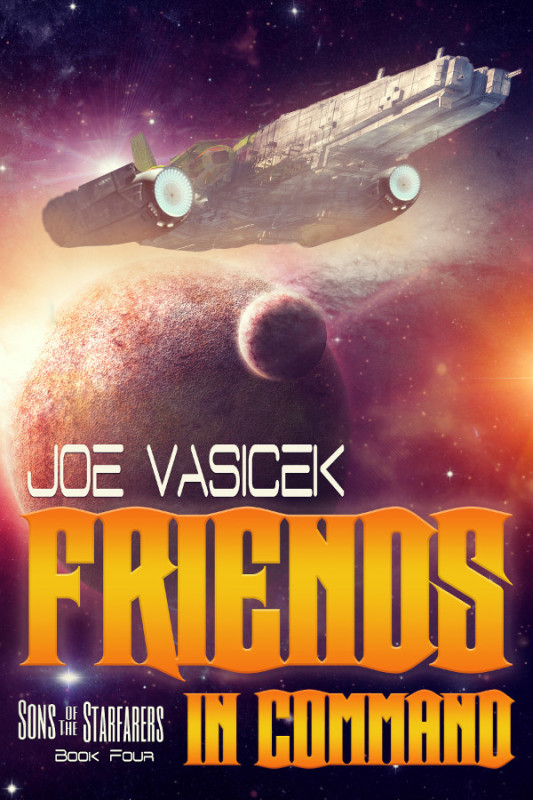
Is Friends in Command for You?

Friends in Command is a character-driven military science fiction novel and space opera series installment about leadership, loyalty, and the quiet terror of being responsible for other people’s lives. Set during an escalating interstellar war, it follows a small starship crew forced to grow up fast—personally, morally, and professionally—when command stops being theoretical and starts being real.

This is the fourth book in the Sons of the Starfarers military science fiction series and builds directly on the events, relationships, and character arcs established in the earlier novels.

What Kind of Reader Will Love Friends in Command?

If you love…

  • military science fiction that focuses on people, leadership, and consequences, not just tactics
  • character-driven space opera about friends becoming leaders under pressure
  • stories where command is a burden, not a reward
  • long-running series with deepening relationships and evolving roles across multiple books
  • emotional arcs about loyalty, responsibility, and hard-earned maturity in wartime

…then Friends in Command is probably your kind of story.

What You’ll Find Inside

The story centers on a young crew—many of them longtime comrades—now thrust into positions of real authority aboard a frontline warship in a character-driven military space opera. As the war grows more complex and dangerous, friendships are tested, mistakes carry higher costs, and leadership becomes a daily moral trial. The tone is thoughtful and tense, balancing moments of action with introspective, character-focused scenes, and the pacing reflects the pressure of command: urgent when it must be, deliberate when it matters most.

What Makes Friends in Command Different

Unlike many military SF novels that focus on ascension and glory, Friends in Command is about the awkward, painful middle stage of leadership—when characters are no longer protected by inexperience but not yet confident masters of their roles. It functions as a bridge book within the series, deepening character arcs and setting the emotional stakes for what comes next. Readers who enjoy ensemble casts and long-form character growth—rather than clean standalone victories—will find this installment especially rewarding.

What You Won’t Find

This is not a standalone novel, and it’s not designed for readers who want a reset with each book. You also won’t find nihilism or shock-for-shock’s-sake violence; while the story is intense and serious, it remains grounded in loyalty, conscience, and earned hope rather than cynicism.

Why I Think You Might Love It

I think Friends in Command resonates because it captures a moment many stories skip over: when people are promoted before they feel ready, and the cost of getting things wrong suddenly includes the people they care about most—a moment many readers recognize from real life as much as from fiction. This book mattered to me because it let the characters stop reacting and start choosing—sometimes badly, sometimes bravely—and those choices ripple forward through the rest of the series.

Where to Get the Book

Related Posts and Pages

Explore the series index for Sons of the Starfarers.

Return to the book page for Friends in Command.

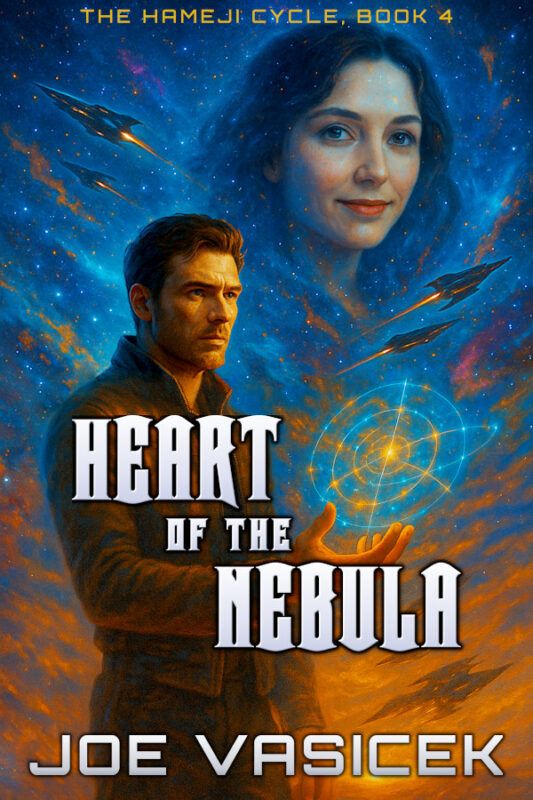
Is Heart of the Nebula for You?

Heart of the Nebula is a character-driven space opera and political military science fiction novel about leadership, sacrifice, and the cost of protecting a people who are barely holding together. Set after a brutal alien occupation and a desperate refugee exodus into deep space, the story follows survivors of the Hameji War as they struggle to remain unified while haunted by past choices. This is a story about moral courage under pressure—when there are no clean victories, only necessary and costly decisions.

Heart of the Nebula is part of The Hameji Cycle, a character-driven science fiction series about occupation, resistance, exile, and the long aftermath of interstellar war. It continues The Hameji Cycle’s exploration of occupation, exile, resistance, and the moral cost of survival after interstellar war. It is the fourth book of the series, but can be read as a standalone book.

What Kind of Reader Will Love Heart of the Nebula?

If you love…

  • character-driven science fiction that treats leadership and responsibility as moral burdens, where decisions affect entire communities
  • space opera focused on refugees, displaced peoples, and survival after catastrophe
  • stories about sacrifice, loyalty, and the tension between individual conscience and communal good
  • thoughtful science fiction that explores politics, ethics, and power without cynicism

…then Heart of the Nebula is probably your kind of story.

What You’ll Find Inside

At the center of Heart of the Nebula is James McCoy, a reluctant leader trying to guide a fractured colony of refugees through the aftermath of war, betrayal, and long-term displacement. The story balances tense action—mutiny, political fracture, and survival in deep space—with quiet emotional reckoning, including moments where every available option carries moral cost, tracing the psychological cost of command and the lingering weight of past choices. The tone is serious and reflective, with moments of intensity and tenderness, and a steady pace that prioritizes character, consequence, and ethical decision-making over spectacle alone.

What Makes Heart of the Nebula Different

Unlike many space operas that celebrate charismatic heroes and clear-cut triumphs, Heart of the Nebula interrogates what happens after a hero becomes a legend—and that legend begins to divide the people it was meant to save. It blends military science fiction with political and ethical science fiction, focusing on how legends distort truth and fracture communities. The story also centers an exodus narrative—less about conquest or discovery, and more about survival, memory, and the fragile act of rebuilding a society in exile.

What You Won’t Find

This is not a lighthearted or quippy adventure, and it doesn’t offer easy moral answers or fast resolutions. You won’t find simplistic good-versus-evil framing, power fantasies, or violence treated as consequence-free. Romance exists, but it remains grounded and secondary, serving the emotional journey rather than driving the plot.

Why I Think You Might Love Heart of the Nebula

I wrote Heart of the Nebula because I couldn’t let go of a question that kept resurfacing: when people willingly sacrifice themselves for the greater good, is it right—or even moral—to intervene and undo that sacrifice as a leader responsible for others? This book is my attempt to wrestle honestly with leadership, responsibility, regret, and the cost of choosing “no one left behind” in a universe that punishes mercy. If you enjoy science fiction that treats ethical dilemmas seriously and allows characters—and societies—to live with the consequences, I think this story will stay with you.

Where to Get the Book

Related Posts and Pages

Explore the series index for The Hameji Cycle.

Return to the book page for Heart of the Nebula.

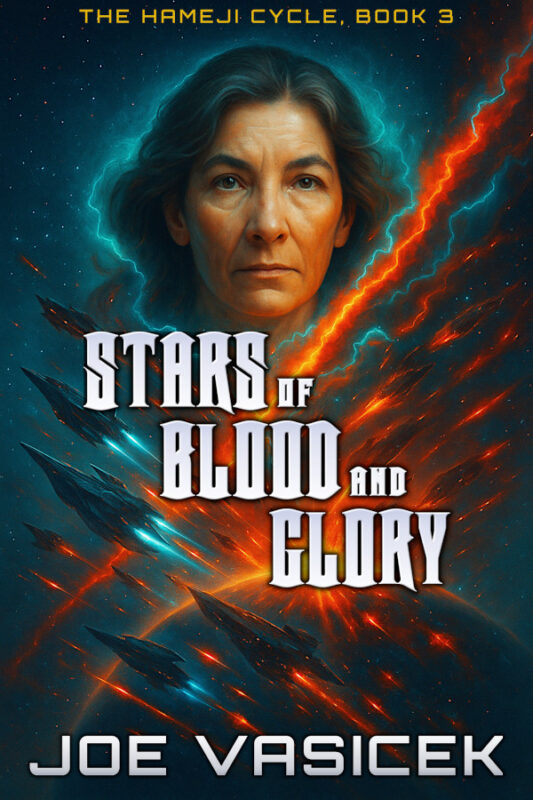
Is Stars of Blood and Glory for You?

Stars of Blood and Glory is a character-driven military science fiction novel about war at its breaking point—when survival, honor, and loyalty are no longer abstract ideals but immediate, costly choices. Set during a decisive turning point in an interstellar war between the Hameji and the Federation, it follows soldiers, mercenaries, exiles, and captives forced to confront what victory actually costs. This is a story about sacrifice, identity, and whether a shattered people can reclaim a future without losing what made them human.

What Kind of Reader Will Love Stars of Blood and Glory?

If you love…

  • military science fiction that treats war as a moral and human problem, not just a tactical one
  • stories about exile, lost homelands, and the longing to return
  • character-driven space opera focused on loyalty, duty, and personal cost across a connected series narrative
  • gritty but meaningful narratives where hope survives through action, not speeches
  • ensembles of soldiers, mercenaries, and civilians bound together by shared loss in an ongoing interstellar war

…then Stars of Blood and Glory is probably your kind of story.

What You’ll Find Inside

The story follows multiple viewpoints—most notably veteran mercenary Roman, the haunted assassin Rina, and a captured Hameji prince—caught in the aftermath of catastrophic defeats and desperate counterstrikes. The emotional journey moves from grief, rage, and moral exhaustion toward hard-won resolve, as each character must decide what they are still willing to fight for—and what they can no longer justify. The pacing balances intense space combat, covert operations, and quiet character moments, with a grounded, serious tone that emphasizes consequence, responsibility, and survival over spectacle.

What Makes Stars of Blood and Glory Different

Unlike many military science fiction novels that focus on how wars are won, Stars of Blood and Glory focuses on what comes after—when victory is uncertain, morale is shattered, and survival alone feels hollow. Drawing inspiration from real historical turning points—such as the Battle of Ain Jalut, where a seemingly unstoppable empire suffered its first decisive defeat—the story blends space opera with themes of exile and cultural survival. Rather than glorifying conquest or domination, it examines how meaning is rebuilt when honor and glory have already failed.

What You Won’t Find

This is not a light or comedic military adventure, and it doesn’t shy away from the emotional and psychological toll of war. You won’t find invincible heroes, easy victories, or a cynical “nothing matters” worldview. The violence is purposeful and character-driven, serving the story’s moral weight rather than existing for shock value or spectacle alone.

Why I Think You Might Love It

Stars of Blood and Glory brings the mercenary characters from Bringing Stella Home to a turning point while telling a complete, emotionally self-contained story. It closes a major chapter in the Hameji conquests, and can be read as a standalone or in series order. At its heart, it’s about choosing dignity, responsibility, and meaning even when the universe refuses to offer clean answers—and trusting that those choices still matter. If you care about characters who endure, adapt, and choose meaning in the aftermath of loss, I think this story will stay with you.

Where to Get Stars of Blood and Glory

Related Posts and Pages

Explore the series index for The Hameji Cycle.

Return to the book page for Stars of Blood and Glory

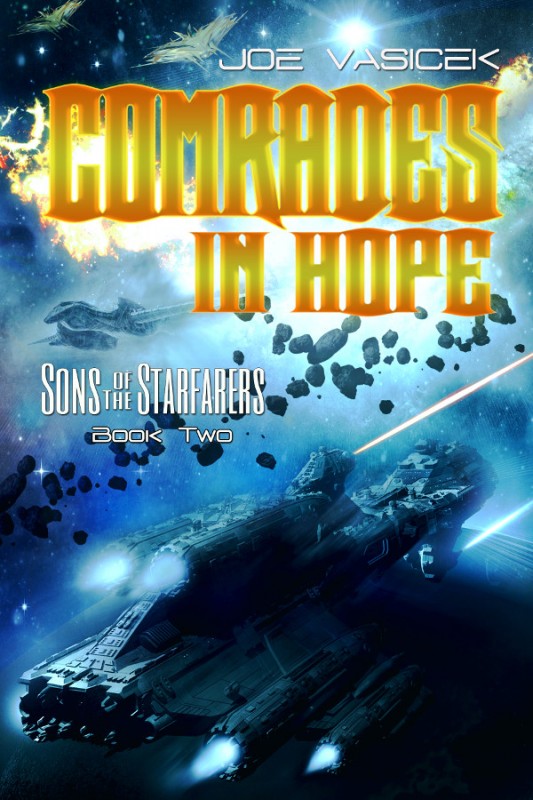
Is Comrades in Hope for you?

Comrades in Hope (Sons of the Starfarers: Book 2) is a classic military science fiction space-war adventure that balances pulse-pounding starship combat with a character-driven choice to keep going when morale—and manpower—are running out. It has military SF boarding actions, starship danger, tight comradeship, and a thread of mystery and longing centered on a captured young woman—known only as the “henna girl”—and what it costs Aaron to keep hoping she can be saved.

What Kind of Reader Will Love Comrades in Hope?

If you love…

  • military science fiction and space opera with starship battles, drop-ship runs, and boarding actions
  • ragtag underdogs vs. an empire, where victory is possible but never easy
  • comrades-in-arms stories about loyalty, survival, and carrying each other through the worst of it
  • a hope-in-the-dark emotional tone (grim circumstances, but not nihilistic)

…then Comrades in Hope is probably your kind of story.

What You’ll Find Inside

The story follows Aaron Deltana, a young pilot thrown into a sprawling interstellar war before he’s fully ready for it. As missions grow more dangerous and losses mount, he must rely on his crew, risky technology, and sheer determination to keep people alive during desperate missions behind enemy lines. The mood is tense and urgent, balancing fast-paced action with quieter moments of fear, resolve, and hard-earned trust. The style is mission-driven and cinematic, with a strong emotional core rooted in comradeship. While this is the second book in the series, the story provides enough context to follow the conflict while deepening the larger arc of the war.

What Makes Comrades in Hope Different

Fans of classic space opera and military science fiction will recognize familiar elements—campaign briefings, shipboard action, and soldiers doing their best under impossible pressure. What sets this story apart is its focus on a protagonist who begins as a cultural and linguistic outsider, forced to learn, adapt, and grow in real time. Layered beneath the war narrative is a haunting personal mystery that gives the conflict a deeply human stake, turning survival into something more than just winning the next battle.

What You Won’t Find

You won’t find grimdark nihilism or cruelty for its own sake. The violence and hardship are real, but the story consistently returns to loyalty, sacrifice, and the choice to protect others. You also won’t find a romance-driven plot—the emotional heart of the story lies in duty, rescue, and standing by your comrades under fire.

Why I Think You Might Love It

I wrote this story as a love letter to classic space adventure—the kind that believes courage and loyalty still matter, even in the middle of chaos. At its core, it’s about choosing hope, courage, and responsibility when giving up would be easier, and about the bonds formed when people rely on each other in the worst conditions imaginable. If you enjoy science fiction that looks hardship in the eye and still insists on meaning, I think this story will resonate with you.

Where to Get the Book

Related Posts and Pages

Explore the series index for Sons of the Starfarers.

Return to the book page for Comrades in Hope.

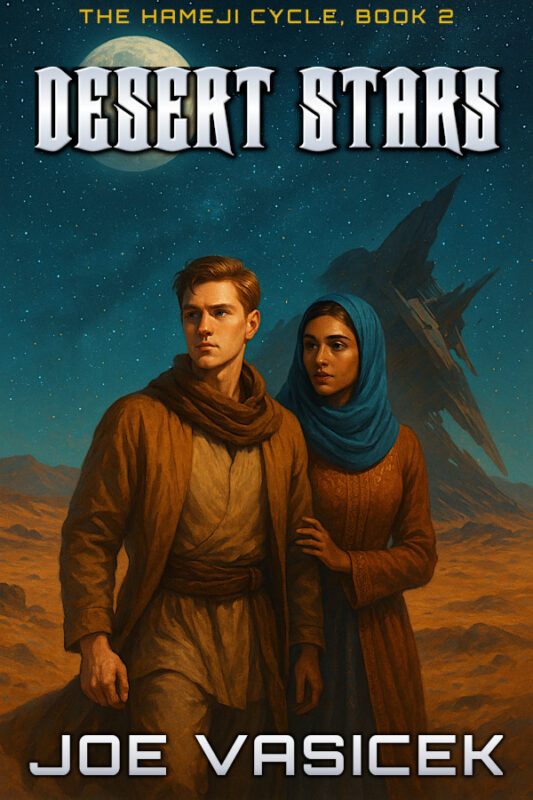
Is Desert Stars for You?

Desert Stars is a character-driven science fiction novel—and the second book in The Hameji Cycle—about displacement, faith, and choosing home in a universe being torn apart by interstellar war. It blends intimate desert-scale storytelling with sweeping galactic stakes, following ordinary people who must decide who they are when their world—and their future—can no longer be taken for granted.

This is a story about pilgrimage and exile, love tested by catastrophe, and the quiet heroism of holding on to what matters when everything else is stripped away.

What Kind of Reader Will Love Desert Stars?

If you love…

  • character-driven science fiction that prioritizes relationships, moral choice, and inner conflict
  • stories of refugees, exile, and found family set against large-scale wars
  • science fiction that treats faith, tradition, and culture seriously rather than cynically
  • slow-burn romance grounded in shared hardship and mutual trust
  • frontier worlds, desert cultures, and “small people in big events” storytelling
  • science fiction that blends space opera scale with intimate, human-scale storytelling

…then Desert Stars is probably your kind of story.

What You’ll Find Inside

At the heart of Desert Stars is Jalil, a desert-raised young man caught between the life he knows and the wider galaxy he barely understands. As war spreads and entire worlds are destroyed, Jalil and Mira are forced into a refugee journey that is part pilgrimage, part flight for survival, and part reckoning with what “home” really means.

The tone is reflective and emotionally grounded, punctuated by moments of intense danger and loss. The pacing alternates between quiet, human-scale scenes—conversations under the stars, hard choices made in private—and sudden, devastating reminders of the larger war closing in. The style leans hopeful without being naïve, and tragic without becoming bleak.

What Makes Desert Stars Different

While Desert Stars shares DNA with classic space opera, it resists the usual power fantasies and chosen-one narratives. The focus isn’t on saving the galaxy, but on saving people—and sometimes not even that is possible. Readers who enjoy the reflective, culture-forward science fiction of authors like Ursula K. Le Guin or character-focused space opera in the vein of Lois McMaster Bujold may find a familiar rhythm here.

Unlike many military or political science fiction novels, this story centers cultural identity, spiritual longing, and the cost of leaving one world behind for another. It also treats faith as a lived, motivating force rather than a background detail or a flaw to be outgrown.

Readers who enjoy the quieter, more contemplative side of science fiction—where worldbuilding emerges naturally through character and culture—will find this book especially resonant.

What You Won’t Find

You won’t find grimdark cynicism, graphic cruelty for shock value, or characters who abandon their moral center for easy wins. This isn’t a nonstop action thriller, nor is it a satire of belief or tradition.

If you’re primarily looking for snarky antiheroes, relentless combat, or stories that dismiss faith as naïve or obsolete, this may not be the right fit.

Why I Think You Might Love It

I wrote Desert Stars at a time when I was wrestling with questions of identity, belief, and what it means to re-enter the world after a period of deep spiritual focus. That tension—between the sacred and the practical, between inherited tradition and an uncertain future—ended up at the heart of this story.

If you’ve ever felt caught between worlds, unsure whether the life you came from can survive the life you’re moving into, I think you’ll recognize something true here. This is a book about choosing to belong—even when belonging comes at a cost.

Where to Get the Book

Related Posts and Pages

Explore the series index for The Hameji Cycle.

Return to the book page for Desert Stars.

Is Bringing Stella Home for You?

Some science fiction dazzles with ideas. Some unsettles with spectacle. Bringing Stella Home is the kind that stays with you because it feels personal. It’s a character-driven science fiction novel about family loyalty, moral courage, and the consequences of refusing to abandon the people you love. It blends character-driven space opera with political science fiction and ethical war fiction, set during a brutal interstellar war fought by clashing human civilizations.

This is an emotionally grounded story where the biggest question isn’t how the war is won—but who the characters choose to be while it’s being fought.

What Kind of Reader Will Love Bringing Stella Home?

If you love…

  • Science fiction that treats war as a human and moral problem, not just a tactical one
  • Character-driven space opera focused on families, civilians, and reluctant heroes
  • Stories about siblings and loved ones who refuse to “move on” when someone is taken
  • Thoughtful, serious SF that explores captivity, occupation, and ethical resistance

…then Bringing Stella Home is probably your kind of story.

What You’ll Find Inside

Bringing Stella Home follows James McCoy after his sister Stella is captured during a catastrophic invasion that leaves entire worlds devastated. While governments negotiate and societies rebuild, others learn to live with loss. James refuses to accept that Stella is simply gone. His search forces him into political gray zones, moral compromises, and dangerous alliances—while Stella, trapped inside captivity, fights a quieter but no less difficult battle to preserve her dignity, identity, and sense of right and wrong.

The story is tense, intimate, and emotionally weighty, balancing suspense and danger with a steady focus on conscience, restraint, and the long-term cost of love.

What Makes Bringing Stella Home Different

Where many science fiction war stories focus on soldiers and commanders, Bringing Stella Home centers on civilians—families caught between invasion and indifference, and on the uncomfortable truth that compassion doesn’t end when the crisis fades from the headlines. Readers familiar with classic space opera will recognize the larger-scale setting, but this story consistently pulls inward, asking what responsibility looks like when walking away would be easier, safer, and socially acceptable.

What You Won’t Find

If you’re looking for grimdark cynicism, casual brutality, or a story where morality is treated as naïve, this isn’t that book. While the story does not shy away from darkness or injustice, it treats suffering seriously and never as entertainment. If you’re drawn to science fiction that wrestles honestly with evil while still affirming human dignity, you’ll feel at home here.

Why I Think You Might Love Bringing Stella Home

I wrote Bringing Stella Home early in my career, when finishing a novel still felt like climbing a cliff with your fingernails. The idea first took shape in a BYU history class, where studying the Mongol conquests made me wonder what a ruthless, sky-mandated expansionist culture would look like in space—and how it would collide with a radically democratic society built on shared civic responsibility. But the real heart of the story came from something more personal: my instincts as an older brother. The scariest thing I can imagine is not being able to save the people I love—and the even darker possibility of being able to save them, only to have them refuse rescue—and choosing to stay where they are.

I also wrote this book with a deliberate ethical aim: to take suffering seriously without exploiting it—to write about captivity, power, fear, and vulnerability in a way that insists the characters remain fully human and morally real. Some scenes were emotionally exhausting to write, but I didn’t want to soften them just to make the story easier. At its core, this novel reflects a belief that integrity matters most when it costs something.

If you’re drawn to science fiction that goes to dark places without becoming cynical—stories that still reach for the good, the true, and the beautiful—I think this one will stay with you.

Where to Get the Book

Related Posts and Pages

Explore the series index for The Hameji Cycle.

Return to the book page for Bringing Stella Home.

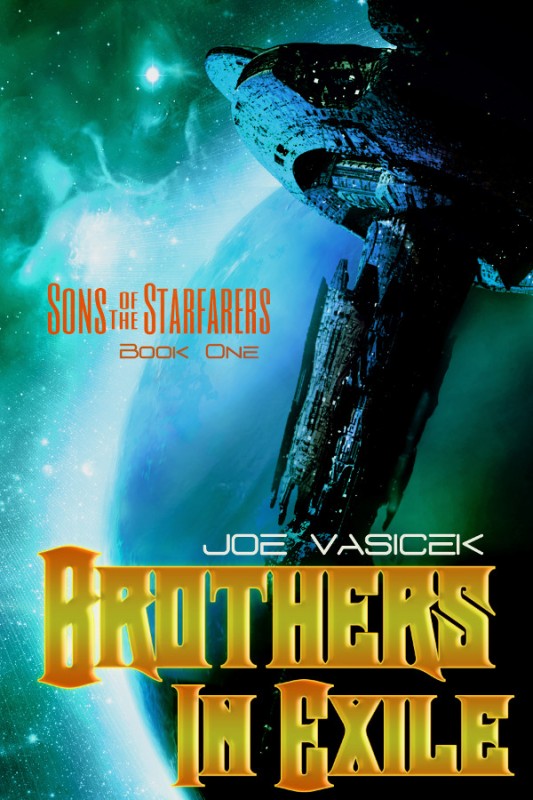
The Cost of Compassion in Brothers in Exile

At its heart, Brothers in Exile is a character-driven space opera and science fiction adventure built around a single, defining moral choice. The story asks a deceptively simple question: what happens when compassion turns freedom into responsibility? From that choice grows a story about brotherhood, moral obligation, and the moment when an independent life gives way to lasting commitment.

Where the Idea Came From

Brothers in Exile grew out of my thoughts on frontier stories about rugged individualism and personal freedom. On the edge of civilization, mobility means safety: you can leave, disengage, and avoid entanglements. I wanted to explore what happens when characters reject that logic—not because they’re naïve, but because compassion demands commitment. What if, in a frontier science fiction setting, compassion isn’t a momentary kindness, but a decision that permanently ties you to others—and to a future you can no longer walk away from?

How the Cost of Compassion Shapes the Story

In Brothers in Exile, Isaac and Aaron begin as independent starfarers with no fixed home, no political allegiance, and no long-term obligations beyond each other. Compassion changes that. When they choose to help a young woman frozen in cryosleep—someone they were never meant to be responsible for—they are no longer merely passing through the Outworlds. They become involved—personally, morally, and historically.

The cost of compassion in this story is not framed as regret or doubt; the brothers never question whether they did the right thing. Instead, the cost appears as entanglement: new enemies, new loyalties, new dangers, and the slow erosion of the freedom they once prized. Isaac feels this as the weight of responsibility—each compassionate choice narrowing his room to maneuver. Aaron experiences it as clarity: once you recognize another person’s humanity, walking away is no longer an option.

This tension—between freedom and obligation, independence and belonging—drives the conflict of the book and sets the trajectory for everything that follows.

What the Cost of Compassion Says About Us

We often want to think about compassion as something offered freely, but real compassion creates bonds—and bonds create responsibility. Brothers in Exile reflects the idea that freedom is comfortable precisely because it avoids commitment. True compassion ends that comfort. It ties us to people, to places, and to futures we did not plan. The story suggests that while this cost is real and often painful, it is also the price of meaning. For readers who enjoy thoughtful, hopeful science fiction where moral choices matter more than spectacle, this tension sits at the heart of the story.

Why This Theme Matters to Me

This theme matters to me because I don’t believe that moral choices exist in isolation. Compassion changes who we are and what we’re responsible for next. In Brothers in Exile, Isaac and Aaron don’t lose their freedom because they make a mistake—they lose it because they choose to care. That choice doesn’t make their lives easier, but it gives them direction, purpose, and a place in a larger story. That, to me, is what makes the cost of compassion worthwhile—and why this story belongs at the beginning of the Sons of the Starfarers series.

Where to Get the Book

Related Posts and Pages

Explore the series index for the Sons of the Starfarers series.

Return to the book page for Brothers in Exile.

Is Brothers in Exile for you?

Brothers in Exile by Joe Vasicek is a character-driven space opera / adventure sci-fi about two brothers trying to survive as independent starfarers on the edge of a growing empire. When their routine run takes them to a silent derelict station—and a discovery they can’t ignore—the story turns into a tense, momentum-driven ride through frontier ports, bad deals, and the early tremors of interstellar conquest.

Brothers in Exile is Book 1 of Sons of the Starfarers, a clean, character-driven space opera series about starfarers caught in the early tremors of imperial expansion.

What Kind of Reader Will Love Brothers in Exile?

If you love…

  • frontier space opera: starships, stations, salvage, dangerous trade routes
  • space opera with heart: loyal crews, sacrifice, and family bonds under pressure
  • clean, hopeful science fiction (minimal profanity, no explicit sex) with faith, family, and conscience in the background
  • high-stakes trouble that escalates fast: one decision → bigger consequences → empire-scale ripple effects
  • mystery + rescue momentum, where “we can’t just walk away” drives the plot

…then Brothers in Exile is probably your kind of story.

What You’ll Find Inside

Isaac Deltana is the careful one—the older brother trying to keep their ship, their finances, and their lives from flying apart. Aaron is the spark—reckless, brave, and stubbornly determined to do the right thing once he believes something matters. The tone is tense but humane: a fast-paced, character-driven space adventure with heart, built around survival, moral choice, and the bond between brothers as the Outworlds begin to feel the shadow of the Gaian Imperials stretching outward.

What Makes Brothers in Exile Different

A lot of space opera is driven by lone wolves or chosen ones; this one is driven by family—two brothers who can’t stop being brothers even when everything is going wrong. It has the frontier trading feel of classic space opera, but puts family and moral choice front and center. It has a “scrappy ship on the fringe” flavor you might associate with Firefly, but the moral center is steadier and the tone is less cynical. And while there’s big-picture geopolitics (expansion, control, annexation), the story stays grounded in human-scale decisions: what you owe a stranger, what freedom costs, and how far you’ll go to keep someone from being used or erased.

What You Won’t Find

You won’t find grimdark nihilism, explicit sexual content, or shock-for-shock’s-sake violence. This is clean, character-driven space opera—fast-moving and emotional—rather than slow, technical hard sci-fi. The science is ‘believable enough,’ but the focus is on choices, consequences, and the bond between brothers.

Why I Think You Might Love Brothers in Exile

I wrote Brothers in Exile because I wanted a space adventure where the relationship mattered as much as the action. In my author’s note, I talk about how the brother dynamic in the film Gettysburg (and the real emotional weight behind it) helped shape the characters Isaac and Aaron—the older brother trying to be the responsible one, and the reckless younger brother who pushes back against the authority figures in his life. If you enjoy stories where family is both the complication and the strength—where two people face the void together and refuse to stop caring—I think you’re going to enjoy this book.

Where to Get Brothers in Exile

Related Posts and Pages

Explore the series index for the Sons of the Starfarers series.

Return to the book page for Brothers in Exile.