More thoughts on indie publishing

Since my last post on indie publishing, I’ve been thinking a lot about this subject.  I haven’t decided to take the plunge into self published ebooks yet, but I have decided to make some changes in my writing and my career strategy, in order to position myself more favorably if/when I choose to do so.

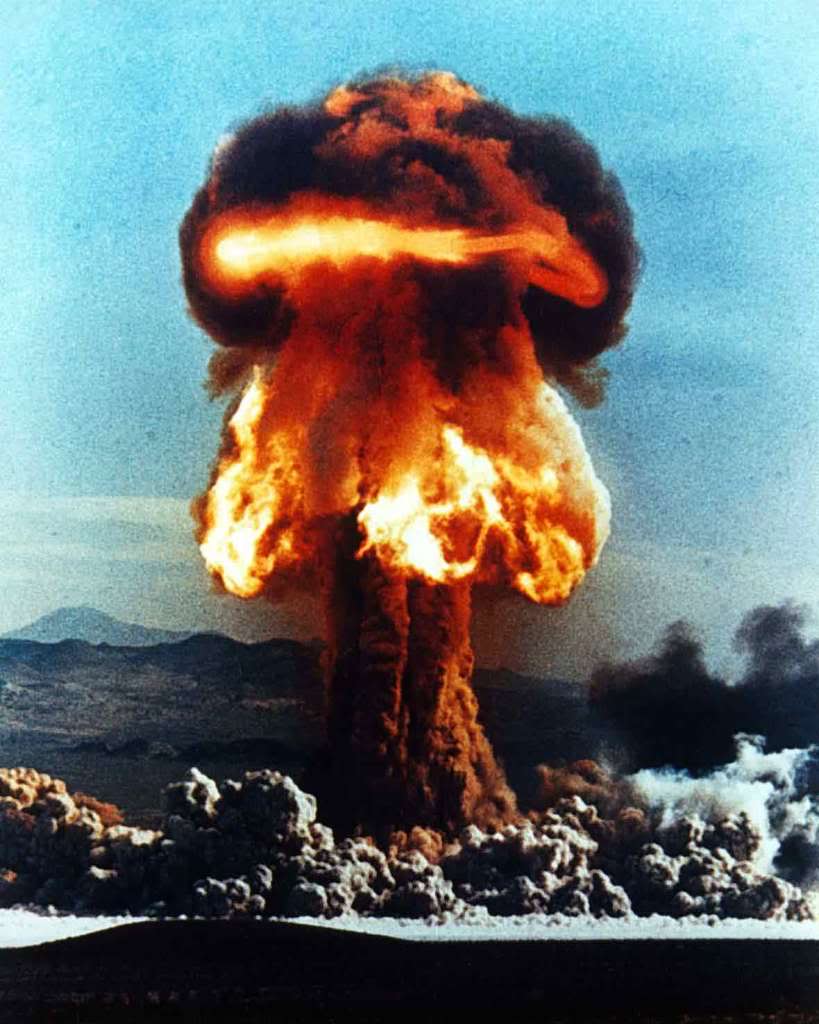
Basically, my new strategy is something like Japan or Saudi Arabia’s approach to nuclear weapons: they don’t have an explicit nuclear program (since that would violate the nuclear non-proliferation treaty), but they have gathered the equipment, resources, and expertise together so that if they decided to go nuclear, they could do it in a year or less.

First, though, I attended Brandon Sanderson’s class lecture this Thursday, in which he had some very interesting things to say about ebooks and the publishing industry.  This was part I of his “how to get published” lecture, and here are some of the more interesting points he made:

  • Almost all the indie writers who are making it big have at least one loss leader ($.99 or less) on their list.
  • No one really knows whether indie publishing will be viable for large numbers of writers, or whether authors like Amanda Hocking and Joe Konrath are outliers.
  • Successful indie published books are typically:
    1) short (70k to 80k words)
    2) written in a pulp genre (thriller, romance, paranormal, sword & sorcery, etc)
    3) promoted very well through social networking
  • We have not yet seen any indie successes in epic fantasy, young adult / middle grade, historical fiction, or non-fiction.
  • The produce model vs. unlimited shelf space argument for going indie doesn’t apply as much to science fiction & fantasy as other genres, because:
    1) sf&f stays on the shelves in bookstores longer than other genres
    2) sf&f series grow better with a big push on the first book
    3) sf&f makes a lot of money on hardcover, unlike other genres

A lot of these points tend to mesh with what I’m hearing from my other sources–and Brandon really represents the last of the successful writers to make it big on the old model, before the ebook revolution began to take off.  He doesn’t make as big a deal on the current 25/75 split on net ebook sales as I would make, but then again, he’s making most of his money through print.

So anyways, here is what I plan to change about what I’m doing in order to better position myself to best take the ebook plunge, if/when I decide to do so:

1) Write at least 2 polished novels per year

Kris Rusch and Dean Wesley Smith make very good arguments about how being able to write well quickly is a huge asset for a writer these days.

There are many good reasons for this:

1) Writing faster gives you more practice with craft, which tends to improve quality.
2) The best way to promote  your books is to constantly write new books.
3) The limited shelf space argument against writing quickly is now moot with ebooks.

In particular, I want to increase my writing speed in order that I can have a larger list to put out if/when I decide to go with indie publishing.  It’s much harder to be successful if you’ve only got one book available for sale; if/when I decide to take the plunge, I want to have at least three.

So far this year, I’ve finished one (Bringing Stella Home), but that’s because it was already sitting in the queue and only needed a quick touch up.  I would like to get Worlds Away from Home polished before the end of the year, and possibly one other project, such as Edenfall.

2) Reduce production time to as close to one year as possible

Right now, it takes me on average about two years to write a polished, salable novel.  That’s not a problem, because I have a lot of projects in the queue, but it’s not as fast as I would like.  I wrote Genesis Earth and Bringing Stella Home while I was still a journeyman writer, figuring out my craft.  I should be able to produce a lot faster.

Towards that end, I’m going to try to get Edenfall finished and polished within a year.  Since it’s already March, that might mean getting it polished by February of next year, but I still want to try.

My biggest weakness is first drafts; I always tend to get stuck midway and drop the project for a while before I feel ready to finish it.  That’s something I would like to change.  Then again, that might just be part of my writing process, and shouldn’t be forced.  However, I certainly could go through my revisions much faster.

3) Write out the direct sequels while the first book is still unpublished

Previously, I thought it was a bad idea to write out all the books in a series or trilogy before the first one is ever picked up.  After all, a rejection from a publisher on the first book is a rejection on all the other books in the series as well.  Using this reasoning, it was much better to write the first book of another trilogy, in order to maximize how much I could submit at any given time.

With indie publishing, however, it’s much better to release the whole trilogy all at once, so that readers who finish the first book can immediately pick up the others.  Again, the paradigm here is that the best way to sell books is with other books; if they loved the one, they’ll buy the others, especially to find out what happens next.

Of course, the best model is probably to have an open series with several indirect sequels with recurring characters in the same world.  With the Gaia Nova books, that’s exactly what I plan to do: Worlds Away from Home is set in the same universe as Bringing Stella Home, but with different characters and different story arcs.

However, Genesis Earth has serious trilogy potential, and with Edenfall I’ve decided to actually write the other books.  If/when I decide to take the plunge, I want to be able to release at least the first two books in that trilogy at the same time.  In fact, Genesis Earth is perhaps the biggest reason why I’m thinking so seriously about going indie, but that’s a subject for a whole other post.

4) Experiment with pulp genres such as space adventure stories

When Brandon said that the pulp genres tend to do better, I wasn’t sure whether that includes what I write.  I write primarily science fiction, but not the kind of stories you’d read only for entertainment and promptly forget once you’re finished.  If anything, I want to write more like Ursula K. Le Guin, whose stories are so meaningful they stick with you long after you’ve finished them.

Then again, there tends to be a lot of overlap in science fiction between the thoughtful, meaningful stuff and the pulps.  Ender’s Game and Starship Troopers immediately come to mind as awesome, entertaining stories that also have a lot of depth.  In his lecture, Brandon made it clear that “pulp” does not necessarily conflict with high art–just that the primary purpose of the story is to entertain.

I can live with that–and I actually have several story ideas that would translate well with the pulp mentality.  I’d like to do a novel (or a series of novels) with Danica from BSH and her mercenary team, perhaps as a sort of origin story for Roman, Anya, Artyom, and the others.  I’d like to revisit the Hameji as well, with a sort of “Ain Jalut in space” involving Sholpan’s son (BSH was basically the Mongol conquest of Baghdad in space).  I’ve already started an “Odyssey in space,” as told from a female Telemachus character–that’s To Search the Starry Sea.  All of these are, at their core, space adventure stories, and might translate well as pulps.

5) Commit to releasing one book every 6 months if/when I take the plunge

This is related to the first strategy on the list, but it’s more of a business plan than a personal writing goal.  Basically, if/when I take the plunge, I want to:

1) have at least 3 finished, polished books to put out at first,
2) know that I can put out one book every six months at least.

This not only means developing a backlist, it means doing some soul searching as a writer to find out how difficult it is to keep up with this pace–and adjusting my writing habits accordingly.  I’m optimistic that I can, but it’s something of a paradigm shift, and I want to make sure I’ve made that shift before I take the leap.

Anyhow, these are my thoughts on how to alter my current writing strategy.  I haven’t yet decided to go indie, but when the time comes, I think that these things will help me to maximize my potential if/when I decide to do so.

Of course, what do any of us really know?

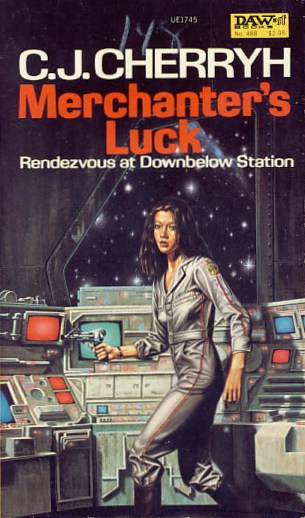
Merchanter’s Luck by C. J. Cherryh

He was a down and out merchanter, the captain, crew, and sole proprietor of a run-down bucket of bolts spacecraft.  She was a daughter of one of the finest starfaring clans, with seven hundred cousins standing between her and the one thing she wanted more than anything else: command of a starship.

They met at Pell during the height of the Company War–the key strategic point on the border between Union and Earth.  Their fateful meeting would affect not only the outcome of the war, but the course of their own lives–for the starship Lucy of Wyatt’s Combine was not at all what she seemed to be.

Before I review this book, I need to issue a disclaimer: you probably aren’t going to enjoy it very much unless you’ve already read Downbelow Station.  Cherryh isn’t the best at easing her readers into her worlds, and without the background on Union, Alliance, and the Company War, you’ll probably be hopelessly lost.

That said, I absolutely loved this book.

The premise is so awesome.  Space adventure hardcore, with a beautiful love story set amidst an epic interstellar war, where alliances are constantly broken and no one can be trusted…oh man, I LOVED this book!

While the premise seems pretty standard, C. J. Cherryh transcends the well-worn tropes and cliches of her genre by intimately developing her characters and working their motivations into the story until they are the ones driving the plot, and not the other way around.

Every character is unique, and though they act in ways that may seem strange to our modern sensibilities, there are always reasons for everything they do, cultural or otherwise.  As windows into their far-future spacefaring culture, they give the reader a wonderful view of Cherryh’s unique and marvelously constructed universe.

The thing that surprised me the most, however, was the sharp contrast between this book and Downbelow Station. While Downbelow Station traces the epic arc of the Company War through the viewpoints of a large cast of characters, much like Tolkien or Dune, Merchanter’s Luck focuses more on the characters themselves, in much the same way as David Gemmell or Ursula K. Le Guin.  In other words, while Downbelow Station is comparable to “high” or epic fantasy, Merchanter’s Luck would fall closer to “low” fantasy or sword & sorcery.

The interesting self-realization I took from the book was that I’m much more interested in the intimately personal stories than the sweeping epic tale of the Rise and Fall of cultures and civilizations.  I suppose that’s why I’m more of a David Gemmell nut than a Tolkien fanatic, and perhaps why I’m more into space opera and military sf than epic fantasy.  In all of my novels, the focus is always on the individual characters and their personal conflicts, and whenever I get sidetracked and focus too much on the overworld story, it always falls apart. 

Merchanter’s Luck definitely doesn’t get sidetracked, and that’s why I loved it so much.  I fell in love with the characters almost from the very first page–from the blurb on the back cover, even.  And most of all, I fell hopelessly in love with the starship Lucy:

You know you’re doing science fiction right when your readers bemoan the fact that they weren’t born in the 26th century, when they could command their own spaceship.  C. J. Cherryh is an amazing writer, and if I had the chance, I would teleport into her Union-Alliance universe in a heartbeat.

If you love well-crafted far-future worlds and stories about the people that live in them, check out Downbelow Station (or really, just the first chapter–that’s all you need for a solid grounding) and read this book!

DAFT PUUUNK!!

So a few days ago I discovered this French techno group called Daft Punk.  They are freaking amazing!  I’ve been listening to them nonstop ever since–and when I say non-stop, I mean it quite literally.  Their music is so awesome, it blows my mind!

Take the stuff they’re doing for the new Tron movie, for example.  When I listened to Derezzed for the first time, I was like “whoa.” I’m not really all that into techno, but that track really grabbed me (I actually prefer this edit, which is even more epic than the original).  The highly compressed quality of the sound, the awesome industrial tone, the intensity and power behind it–immediately, I was like “this is good stuff.”

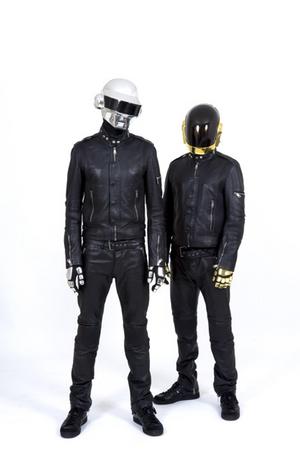
So then I looked a little more into Daft Punk, and I discovered some interesting things.  Probably the most interesting is their image: as you can see from the picture, they wear these crazy robot helmets every time they’re in public.  I guess it started because the two guys are kind of shy, or maybe because they wanted to distance their personal lives from their public persona–either way, you’ve got to admit, the concept is just freaking awesome.  Robot DJs in leather and chrome FTW!

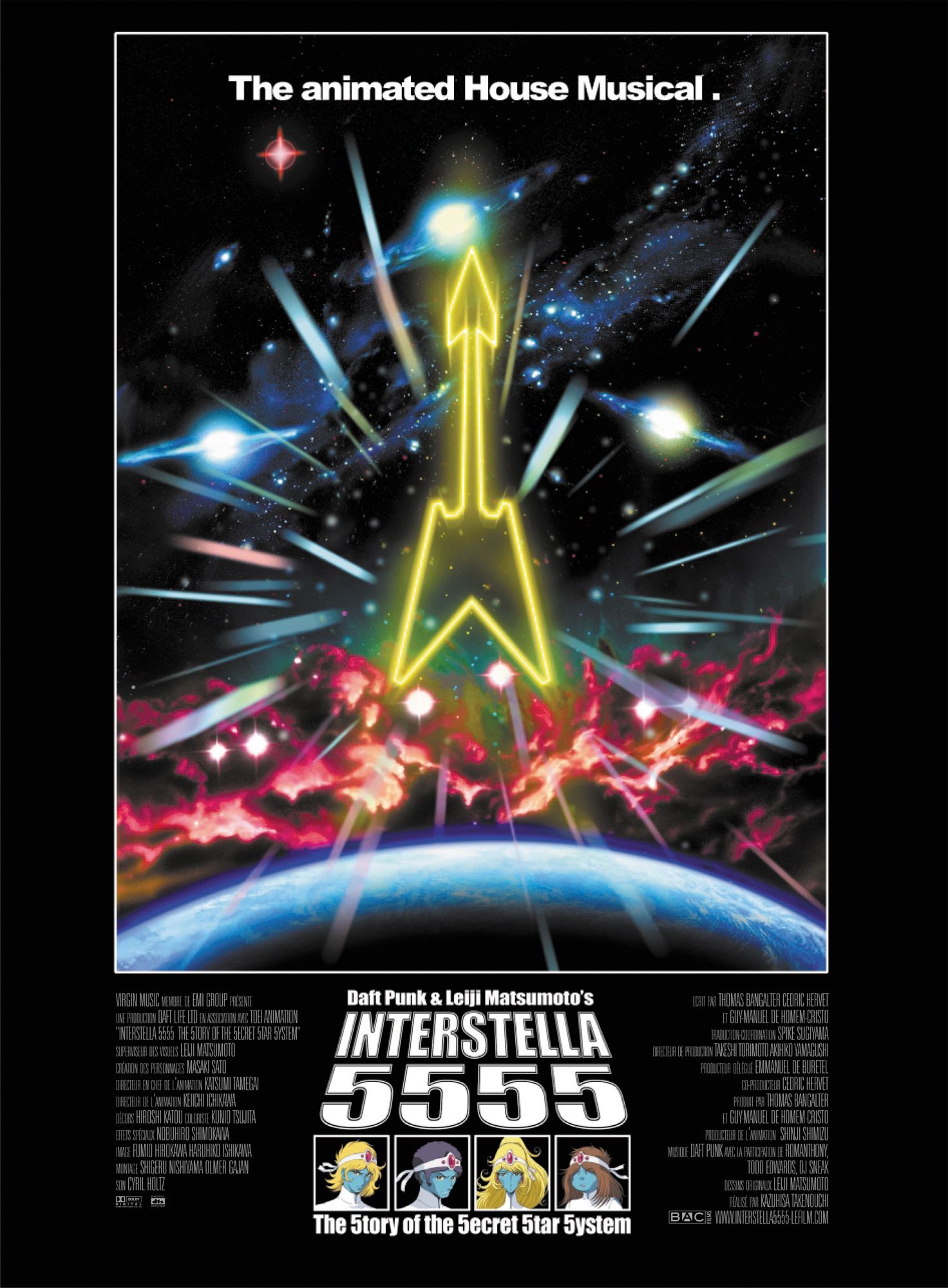
The more I found out about them, the awesomer it got.  For example, did you know that they released a feature length anime to go along with one of their albums?  That’s right–a feature length film, set to nothing but music.  And what’s more, it’s science fiction! 

Interstella 5555 is just about the cheesiest, awesomest sci fi you can get–it’s like it’s taken right out of the 70s, when Star Wars was the big new thing and space was still this magical place that everyone felt we were destined to go some day.

But the music–man, this isn’t the throbbing powerhouse kind of stuff they’re doing for Tron.  This music has depth and emotion; it’s much more innocent, and resonates on a more personal level with me than their hardcore techno stuff–which, don’t get me wrong, I still like.  It’s just that with their Discovery album (which became the basis for Interstella), I feel that I can listen to any song no matter what mood I’m in, and by the end of the track I’ll be smiling.

In short, Daft Punk is AMAZING.  What more can I say?  Squeeee! You should totally give their stuff a try.  Maybe it’s not for you, but who knows–maybe you’ll be surprised.  At least check out Interstella 5555, because it is awesome.

Man, I’ve watched and/or listened to this film maybe half a dozen times in the past four days, and it just doesn’t get old.  Like so many other things, it makes me wish I’d grown up in the 70s and 80s, when science fiction was good. Even though it came out in 2003, Interstella 5555 just seems to channel the spirit of that time.

Anyhow, I’d better wrap this up before I get all fanboy crazy and start slathering at the mouth.  But if you want to be the most amazing person on the planet, please!!! get me Interstella 5555 for Christmas!  Are you reading this, Mom?  And as for the rest of you, don’t worry–I’d be totally happy with any of their other albums, hint hint.

🙂 🙂 🙂

World Fantasy 2010: Day 2

Wow, what a tiring day.  I feel drained, mentally and physically, and I didn’t even spend all that much time at the parties tonight.

I got started a bit early, prowling around the book-swap table, where I was rewarded with some books that look really good.  If you know what you’re doing, you can totally get the price of your admission ticket in free books (and then some).  I packed super light for that exact reason.

The convention started out with an awesome panel titled “Fantasy Gun Control,” where the panelists discussed why fantasy tends to favor swords over guns, even though guns have existed since the 1300s.  Funniest quote from the panel: Walter Jon Williams asked what if Samuel L. Jackson was one of the Defense Against the Dark Arts teachers from Harry Potter, and Charles Gannon quipped “do I have to get magical on your ass?”

The other panel I attended was “The Tension Between Art & Commerce,” an excellent panel which very quickly evolved into a cage fight between Nancy Kress and her publisher, Tom Doherty.  It basically went something like this:

Tom: I don’t think there is any tension; the best art always sells the best.

Nancy: No way!  Just look at Danielle Steele: her writing is CRAP, yet she sells like crazy–and that’s the norm!

Tom: But true art endures beyond its time and sells much better over the long run.  After all, just look at Homer and the Iliad.

Nancy: Homer? Are you serious? He’s been dead, what–2,000 years?

Tom: Yeah…but my point is, if you’re a writer, you need to write what’s in your heart and not chase the market.  If you do try to chase the market, your writing will be crap, AND it won’t sell.

Nancy: True, but what about my apocalyptic novel about a plague that turns domestic dogs feral?  I got four rejections that all said: “this book is great, but it would offend dog lovers so much that we can’t publish it.”

Tom: Well, those were just stupid editors.

Nancy: Uh, Tom…one of those was from your publishing house!

Of course, those aren’t exact quotes, and Nancy was very quick to make it known that she loves Tom and appreciates him for publishing so much of her work, but that was more or less how it went.  It was hilarious.

At the  same time, the panel was quite useful as well.  Everyone mentioned how a writer’s willingness and ability to learn the craft and accept criticism is key–especially after getting an editor.  Without this capacity to learn, aspiring writers will almost never succeed, whereas those who have it have a chance.

The rest of the time I spent hanging out and shmoozing with various people.  I interviewed both Dan Wells and Peter Ahlstrom for the Mormon Artist article on BYU’s “class that wouldn’t die,” and those interviews went very well.  Those two guys are seriously awesome–way down to earth and easy to talk with.

I also pitched to a couple agents, and I think it went very well.  For one of them, I thought I saw her eyes light up as I described the characters in my novel from last year, Genesis Earth.  It might just be wishful thinking, but her response was enough to convince me that I need to give that story a thorough revision and send it out to her before the end of next month.

I worry, though, that there’s not as much demand for the kind of fiction I write.  My writing falls very solidly into science fiction (space opera, to be more specific), but everything I see here at the con is fantasy–epic fantasy, urban fantasy, paranormal, steampunk.  No science fiction, except from a couple small presses.  Just fantasy.

In the art vs. commerce panel, Ginger Buchanan claimed that science fiction was never a popular genre–that the popularity was all due to a handful of specific writers and a handful of specific works.  I’m not sure I agree with that, but it is a bit discouraging.  Speculative fiction is a fairly niche corner of the publishing world to begin it, and to see and hear people within that niche treating science fiction as ANOTHER niche…it doesn’t bode well for someone who wants to make a full time living writing it.

But then again, maybe my stuff is good enough that it’ll find a home anyways–and not just a home in a small press, but with a big enough publisher that I can actually be a full time writer.  I don’t hold any illusions about my books making me fabulously rich and famous or somehow spawning a new sub-genre unto itself, but I do think my writing is good enough that I can shoot big and hope to get somewhere–perhaps even expect it.  I don’t know, but I feel that the hope is justified, at least.

Anyhow, that’s probably more angst than you cared to read.  World Fantasy is going great, and I’m exhausted, so I’m going to hit the sack.  Good night.

Dying of the Light by George R. R. Martin

Worlorn is a planet without a sun, wandering on the fringes of the galaxy where the skies are starless.  Though it came to life briefly as it passed the red giant Fat Satan, those days are over, and the world is slowly dying.
Dirk T’Larien never thought he would find himself on such a forsaken world. But when his onetime lover, Gwen Delvano, sends him a plea for help, he realizes that more than anything, he wants to have her back.

It will not be easy, however.  Gwen is betheyn to two men: Jaantony Vikary, whom she loves, and Garse Janacek, whom she hates.  Both are from Kavalar, a warlike planet where offworlders are considered subhuman.  And even though Worlorn is slowly dying, a colony of extremist Kavalars has taken root, planning to bring back the old ways when offworlders were hunted like beasts.

I picked up this book at Pioneer Books a couple weeks ago; I saw that it was by George R. R. Martin and decided to give it a try.  I was very much impressed.  For the last hundred pages, I couldn’t put it down, and the story haunted me for a couple days after I’d finished it.

The strongest element of the story was definitely the setting.  The story may be set in a grand galactic empire with spaceships and alien worlds, but make no mistake, this beautiful piece of space opera reads more like fantasy than science fiction.  There’s even a thirty page glossary of terms in the back, for ease of reference.

The effect of Martin’s grandiose worldbuilding is a haunting sense of wonder that keeps you, as the reader, hooked.  The more you read, the more you immerse yourself in the world; and the more you immerse yourself, the more you want to read.  After the story ends, you still find yourself thinking about the fantastic worlds, as if you’ve actually been there.  It’s awesome.

Another thing that kept me hooked was the basic premise of the plot.  The main character, Dirk T’Larien, is trying to win back the affection of an ex-girlfriend and get back together.  That’s something with which I can definitely relate–the ex even has the same name (roughly) as a girl I once chased after (quite unrequitedly, may I add).  Because of this, I was drawn into the story right away.

Martin is known for his plot twists, however, and though the story began as a basic love triangle, it very quickly became… something else.  I’m not entirely sure how to describe it without giving major spoilers, but I will say that I found it impossible to predict how this story would end.  I found that a lot more annoying than enjoyable, however–just when I thought things were headed in a certain direction, something happened to nullify everyone’s efforts and turn things completely around.

Despite this, however, the story…worked.  I don’t know quite how to describe it.  The basic markers were all there, even though they were jumbled in unpredictable patterns.  No death was meaningless, no success was insignificant; there was no excess baggage in the story that didn’t somehow belong.

All around, it was a very good book.  Kind of dark, but not nearly as edgy as I was expecting.  This is definitely the kind of science fiction that a fantasy reader would go for–and probably most science fiction readers as well.

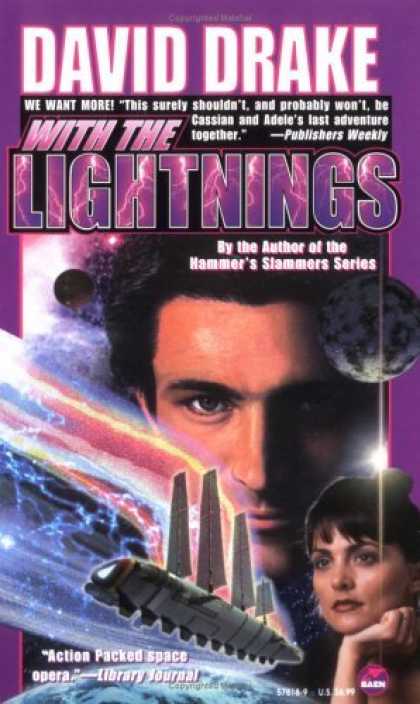
With the Lightnings by David Drake

Daniel Leary, Lieutenant in the Republic of Cinnabar Navy, dreams of commanding a military starship one day.  Unfortunately, as the estranged son of a corrupt senator, and with almost no money to his name, he has virtually no chance of ever seeing it happen.

While serving in an assignment on Kostrama, a neutral trade world between Cinnabar and her mortal enemies, the Alliance, he meets Adele Mundy, chief librarian of the Kostraman capitol.  The title is virtual meaningless, however, as the uncultured Kostramans would give the position to anyone–even a political exile from Cinnibar such as Adele.  Her whole family was assassinated by Leary’s father, and she has sworn to take revenge.

Little do they both know, the Alliance has other plans.

Ever since I met David Drake at World Fantasy 2009 in San Jose, I’ve been meaning to read one of his books.  I must say, I picked a good one.  With the Lightnings is the first book in his RCN Series, which is basically David Drake’s take on Patrick O’Brian’s Aubrey-Maturin novels.  Think Napoleon-era naval battles and political intrigue…in space.

Does it sound good already?  Yeah, I thought so.

I was a little surprised at first, because the first chapter started with a bunch of info dumps.  It took until about the halfway mark for the action to really start, but when it did, it was awesome. A bunch of navy guys marooned on a hostile planet behind enemy lines, trying to survive a planetwide coup and blowing all kinds of stuff up along the way–yeah, it was cool.

The thing I enjoyed most about this book, however, was the insight into the minds of the officers and the way the officers and soldiers interacted.  You can tell that David Drake has experience in the military–lots of experience.

It was evident in the little things the main character noticed–the colors and patterns of soldiers’ uniforms, competency among his own men and incompetency in men not under his command, leadership style and how he dealt with crises–stuff like that.  The language was colorful, but when the soldiers swore, their language had a bite to it that went beyond the actual words.  The people felt gritty, but very real.

At World Fantasy, I mentioned to David Drake that I’d read some of Joe Haldeman’s works, and knew they were both Vietnam vets.  He remarked that Haldeman’s works are very much different than his own: Haldeman’s characters are constantly stabbing each other in the back, whereas in Drake’s works, there is always a sense of teamwork and unity, even when the going gets messy.

I could definitely see that in With the Lightnings–it’s one of the things that made the book so fun to read.  Yes, things get pretty tough and a lot of people die, but there’s always a sense of loyalty within the platoon (or whatever the unit is called).

With the Lightnings is a great space opera action/adventure story.  After reading it, I really want to read more books in the RCN series.  If you want a good, fun military sf adventure story, this is a great one to pick up.

Gah! It sucks

I’m about a third of the way through To Search the Starry Sea, and my greatest fear at this point is that it isn’t as good as the last novel I wrote.  Because if it isn’t as good, that means that I’m getting worse, not better, and if I’m getting worse, that means I’m never going to make it as an author, because I’m not even published yet, and if I’m not going to make it as an author, that means I’m going to have to do what I’m doing NOW for the rest of my life, which means that I’m going to be miserable and life is going to suck…

<pant> <pant> <pant>

Seriously, though, sometimes I wonder if I’ve really made the right choice.  To Search the Starry Sea is much more of a happy adventure story, but sometimes I feel that it lacks depth and meaning.  I’m starting to get feedback from my alpha readers for Bringing Stella Home, and their reactions to it are surprisingly encouraging.  That story moved people–but this one?  I don’t know.

Then again, Bringing Stella Home is dark, gritty, and very tragic.  I remember feeling depressed by the story even as I wrote it.  Is that the kind of story I want to be known for?  If I can write something deep and meaningful and have it be optimistic and adventuresome, that would be a lot better.

I’m discovery writing it hardcore, which means that side characters often come to play a much more central role than I’d thought, and events that I thought I could cover in a chapter, I have to cover in two.  I have an idea where the story is going to end up, though, and it’s going to be awesome. How awesome?  Let me show you:

Yeah, it’s going to be awesome.

I think the key to keeping it meaningful is 1) to keep in mind the main character’s inner conflicts, framing them in a way that the readers can relate to their struggles, and 2) keeping the overall growth arc constantly in mind.  How does what’s happening affect how the character is changing?  That kind of stuff.

I hope I can finish this in two months.  I’m mired in the middle of it right now, and the end is far from sight.

In the meantime, I think I’ll get some sleep.

Snowmageddon! Hooray!

So for the past week, a series of crazy snowstorms has been pelting the Mid-Atlantic.  President Obama has dubbed it “snowmageddon,” and it’s so bad that all federal government offices have been closed since Friday.  With another storm hitting us tonight, it looks like we’re going to have the whole week off! Yay!!!

So, for the past couple of days, I’ve been hanging out around the Barlow Center, watching movies, doing random stuff with my friends here in the program, taking naps in the middle of the day, and writing.  Lots of writing!  It’s awesome–I haven’t had this much free time since Christmas (which wasn’t all that long ago, but still…)!

Today I didn’t write quite as much.  I got in about 1.1k words, a decent amount, but if I’d pushed myself I could have finished the current chapter.  Monday went much better, because I sat down and forced myself to write in the morning.  Once those initial hundred or so words were out, the rest came much easier.

On the first day of snowmageddon, when we were snowed in at Valley Forge, I got in over 1,000 words before noon.  It was rough going, though–nothing was flowing, and everything took a lot of effort.  I hate it when that happens–blegh.

But I think it was necessary, because now, the scenes are flying by pretty easy.  Sometimes, when I’m struggling with momentum, I find it helps if I take a day to focus and push myself through it.  Get rid of all distractions, put my butt in the chair, close all internet browsers, and just write, no matter how difficult.

My next novel, To Search the Starry Sea, is going to be a lot of fun.  It starts out almost exactly like Homer’s Odyssey, with the same basic conflict and setup.  Beyond that, however, I have nothing solid planned–I’m just following where the story takes me.  And boy, is it taking me to some crazy places!

For example, one of the first places Katriona (the Telemachus character) goes is a nearby world, ruled by a friend of her father’s.  To liven things up, I decided to have him live on a giant rotating space station, where the inside is covered by forests and jungles–scenery that Katriona has never seen.

This got me wondering, however: how did the jungle get there?  The answer: thousands of years ago, before superluminal space travel, a group of colonists set out for this world, freezing themselves in cryo.  When they got there, they found that a solar flare-up had rendered the planet uninhabitable, so instead they built this massive station, hoping that it would serve as a second ark for humanity.

Instead, a raiding party of space barbarians took them over, enslaved the colonists, and built their palace in the midst of the carefully maintained artificial biosphere.

This opened up a series of new possibilities for subplots, which shapes my protagonists interactions with the people here, which points her in new directions for the main plot–the next few places that she’s going to go.

This is discovery writing at its best.  Even though I have no clue where she’s going to go next, things are unfolding very nicely, and I’m excited to find out!

New city, new life, new writing project

This is going to be a quick post (very quick), since it’s 1:00 am and I am TIRED.  FYI, it might not be edited all that much.   What the heck–it’s my blog anyway.

So today I left home to move into the Barlow Center for the Washington Seminar!  Took the train (Dad had an accident a block from the station–yikes!  A minor one, but still…); left around 6:30 am and arrived at 1:30 pm.  Took the metro to the Barlow Center, unpacked, walked up to the office for my internship (it’s only a 15 minute walk!), then made new friends and hit up the city!

It’s going to be a good semester.

I’ll probably start a separate blog for all the stuff that I’m doing in Washington DC.  It might be a little while before I get it all set up, but I’ll probably run it roughly the same way as my Jordan 2008 study abroad blog.  Still thinking about that.

But, more importantly (at least as concerns the stuff I write about on this blog), I started a new novel today!  After much deliberation, I settled on the title To Search the Starry Sea. It’s a space opera science fiction novel that rough parallels The Odyssey, at least in the first part.

The main character is a girl named (at least for now) Katrione.  She lives with her mother on the family estate, a medium sized moon orbiting a gas giant planet far from civilized society.  Her father was lord of the estate, but he went off to war a long time ago and hasn’t returned.

The novel starts when a woman starship captain piloting the ship Minerva arrives with some limited news of Katrione’s father’s survival, and gives her the encouragement she needs to be more aggressive and proactive about rescuing her father, even if it means crossing some gender-based boundaries in the starfaring society.

I’m totally discovering this story as I write it.  I got stuck on the second paragraph, wondering what sort of things Katrione would be doing before the Minerva arrives–what she does in her spare time–and when the answer came to me (reading a novel), it opened up about a dozen interesting story possibilities.  Things just flowed…at least until I realized I need to come up with more character names.  Blech.

Also, after working so hard to polish and revise Genesis Earth and Bringing Stella Home, it is very difficult to get over the fact that this draft doesn’t need to be immaculate.  I’m writing down sentences and paragraphs and thinking “this is SO telly,” but I can’t do any better at this point because I don’t know the story.

The important thing at this point is not to perfect the craft but to perfect the story, and that’s a HUGE transition from everything I’ve been doing the last 6 months.  I just need to tell myself that until I believe it.

Anyway, I am definitely excited for this story.  VERY excited!  And excited about Washington DC–it is going to be a very, very interesting semester.  And hopefully fun as well!

Revelation Space by Alastair Reynolds

Hundreds of thousands of years ago, an ancient race of sentient aliens known as the Amarantin went extinct just as their civilization experienced a golden age.  No one knows why, but archeologist Dan Sylveste is determined to find out.  Unlike the other colonists on the remote planet of Resurgam, he believes that the answer may be important.

He has no idea how right he is.

Just as he’s on the verge of a major breakthrough, a team of rebels takes over the administration of the colony.  Sylveste becomes a prisoner of war, and his research comes to a frustrating halt.

Meanwhile, on Yellowstone (the nearest human-inhabited planet to Resurgam), a mysterious entity known as The Mademoiselle hires assassin Ana Khouri for a special mission: kill Dan Sylveste.

The only ship headed in that direction, however, is an ancient warship commanded by a rouge crew of Ultras, genetically modified transhumans.  They seek Sylveste in order to heal their captain, who suffers from a plague that melds human biology with advanced technology.  The de facto leader, Illia Volyova,  hires Khouri to replace the ship’s gunner, who went mad and mysteriously died.

But neither Khouri nor Volyova realize that the thing that drove the gunner mad still resides deep in the ship’s systems.  It is neither human nor AI–and it knows what killed off the Amarantin nine hundred thousand years ago.

Revelation Space is a space opera unlike any other that I’ve read, with the possible exception of Dune. The far-future universe Alastair Reynolds created for this book is incredibly complex and expansive, almost completely unrecognizable from our own, with technology bordering on godlike, posthuman and transhuman races that are all but commonplace, and nothing but a blurry, indistinct line dividing the human and the machine.  On every page, I felt as if I had left the real world behind for something completely (and often disturbingly) alien.

Setting, by far, is the strongest point of this book.  In fact, as an aspiring writer, I found it  somewhat intimidating.  Reynold’s Revelation Space universe was completely alien, but in ways that made perfect sense for the far future in which it was set.  From this, I’ve learned that to make a far future setting believable, you have to make it…well, as alien and complex as Reynolds makes it.  It shouldn’t be an exact copy of Reynold’s mold, of course, but if it’s 500 years in the future and everyday life still feels exactly like our own–well, there had better be a reason for that.

As for character and plot, I did not feel that those were particular strong points of this book.  It’s not that they were done poorly,  it’s just that they weren’t done well enough, in my opinion.

The characters in Revelation Space did not particular engage me at first; I found that I had to force myself to keep reading, rather than read because I had to find out what happened to them.  Later on, as the story progressed, they grew on me, but I never felt that I intimately knew them.

As for plot, I felt that every fifty or one hundred pages, Reynolds would pause the story and throw something in from left field, simply because he had to foreshadow something coming up.  In this way, the book seemed a little choppy–like a debut novel (and, in Reynold’s defense, this is his debut novel).

Even with these issues, however, this was an incredible book, and it’s stuck with me even months after finishing it.  Reynolds pulled off an amazing ending–very satisfying, with a twist that I had not foreseen but that made good sense.  The final scene, and the last two sentences of the final scene in particular, were just awesome.  They made me want to clap my hands and say “bravo.”

If I could describe Revelation Space in terms of other works, I would say that it’s a cross between Neuromancer and Stargate the movie. While it’s solid space opera, it has a dark and gritty feel that borders on Cyberpunk / post-Cyberpunk.  It’s not exactly the kind of stuff I want to write, it comes pretty darn close.