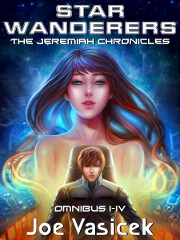
The Healing Power of Love in Star Wanderers

What heals a person when the universe won’t stop moving—when home is gone, language is чужой, and every port feels temporary? Star Wanderers is a character-driven science fiction novel built around a simple, stubborn hope: that the healing power of love isn’t just something you feel, but something you build—and that it can stitch a fractured life back together into belonging.

Where the Idea Came From

The seed of this theme came from two places. First, I wanted to take the love-story core of an old western (Jeremiah Johnson) and translate it into frontier science fiction—into a world where survival is hard, communities are fragile, and intimacy carries real risk.

Second, the story grew alongside my own life. I began writing the original novellas as a single young man during the Great Recession, pouring real loneliness into Jeremiah’s wandering. Years later, I finished the novel married and on the verge of fatherhood. That personal journey reshaped the book’s central idea: that love has the power to heal isolation—not by removing hardship, but by giving hardship meaning.

How the Healing Power of Love Shapes the Story

In Star Wanderers, the central conflict isn’t just pirates, frontier scarcity, or outworld politics—it’s the ache beneath all of that: the fear that drifting will hollow you out. Jeremiah begins the story as a lone starship pilot shaped by motion and isolation, surviving by staying unattached. But when Noemi enters his life, love becomes the force that redefines what “survival” even means. Commitment pulls him out of mere wandering and into responsibility: protecting someone else, learning someone else’s world, and choosing a future that requires roots instead of constant escape.

That healing love ripples outward through the story. Other characters see the difference it makes—because love creates an anchor in chaos. It becomes the standard by which temptation, loyalty, and trust are measured. Again and again, the story asks: what happens when you risk the one thing that’s keeping you whole? That’s why moments of fear, sacrifice, and moral choice matter so much here—not as plot mechanics, but as stress tests that reveal whether love is strong enough to carry a life.

What the Healing Power of Love Says About Us

This theme is hopeful, but it’s not naïve. It suggests that loneliness isn’t only a circumstance—it’s a wound—and that healing usually comes through commitment rather than convenience. Real love costs something: pride, independence, comfort, the illusion that you can keep yourself safe by staying separate. But it also gives back something many of us are quietly starving for: a place to belong, even when the world remains uncertain and unfinished.

Why This Theme Matters to Me

I keep returning to this theme because I’ve seen how easy it is to drift—emotionally, spiritually, socially—especially when life feels hostile or unstable. Star Wanderers is the most personal thing I’ve written in that sense: it begins in loneliness and ends in family. I wanted to capture that truth as honestly as I could—that love doesn’t magically remove hardship, but it can transform hardship into a life worth living, and an adventure you’re grateful to stay for.

Where to Get the Book

Related Posts and Pages

Explore the series index for The Outworld Trilogy.

Return to the book page for Star Wanderers.

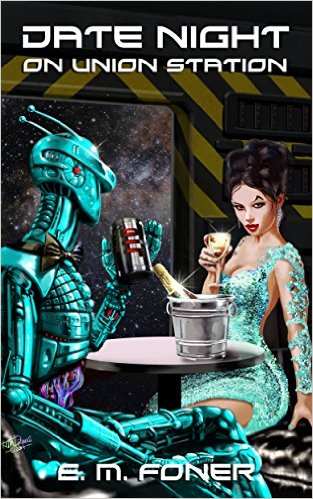
Date Night on Union Station by E.M. Foner

date_night_on_union_stationI saw this book on the Amazon also-boughts for my Star Wanderers books and decided to check it out. It’s a series of short novels: the first one is currently free and the others are $2.99. Like Star Wanderers, it’s a sci-fi romance, though it leans more toward science fiction than toward romance.

I really enjoyed this book! It’s a sort of romantic comedy-of-errors about a guy and a girl who go on a series of really bad dates before finally ending up with each other. She’s a member of the Earth embassy staff on a giant space station run by super-intelligent robots who view humans as a childish junior race that needs to be nurtured into galactic society. He’s a former mercenary who runs the station scrapyard and has a knack for picking up orphaned children (including one of the robots).

Their misadventures are quite hilarious. One of the running gags are the antics of the flower girls, who run their flower-peddling business with more ruthlessness than an Arab shopkeeper. They actually make more money at it than Kelly, the embassy staff employee, who can barely cover her own rent. The super-intelligent robots are the ones who run the dating service, but as each bad date leads to another diplomatic crisis of some sort, Kelly starts to feel like they’re using it more to help her do her job than to set her up. But with each new promotion in the embassy, she ends up making less and less. And those long-distance calls from her nagging mother certainly don’t help…

My favorite part of the book was watching one bad date lead to another, and wondering how these two people would eventually end up. From the way the book is structured, it’s pretty obvious that they’ll end up together (one chapter from her POV, the next from his). But some of those dates were really, really bad… at one point, she even gets kidnapped by her “date”! But when they finally do end up together, it’s quite satisfying.

So yeah, if you’re looking for a good, clean sci-fi romance with a generous helping of comedy thrown in for good measure, you’ll enjoy this book. And even if that’s not what you’re looking for, if you enjoy a good space story, you’ll probably like this one as well. I’d rate it 4/5 stars, and look forward to reading the next in the series.

LTUE 2014

Without a doubt, my favorite sci-fi convention / writing conference / symposium is LTUE. I say this every year, but this year’s symposium was one of the best! Orson Scott Card and Brandon Sanderson were both there, along with a whole bunch of other authors and artists, local and otherwise. It drew a huge crowd, too–around 1,800 people over the course of the weekend–but there was plenty of space at the Provo Marriott, so it never felt too crowded.

If anything, I think that LTUE has gotten better since leaving BYU. There’s much more openness, much less administrative or bureaucratic restriction. Fans can dress up in cosplay and that’s okay, panels can discuss pop culture topics without having to pretend to have academic value, non-LDS panelists are free to share their perspectives without feeling like the religious censors are breathing down their backs, and we have a whole hotel hotel to ourselves, as opposed to a corner of the student center.

At the same time, all of the stuff that makes LTUE great is still there, and there in abundance. Since the vast majority of attendees are LDS, the panels all revolve around the LDS perspective and experience. In his main address, Orson Scott Card talked about how his experiences growing up in the church influenced the writing of Ender’s Game and his views on leadership. At the banquet, Brandon Sanderson referenced Orson F. Whitney’s famous Home Literature speech in discussing Mormons’ place in the current science fiction & fantasy field.

In other words, all the good stuff was still there this year, plus a liberal helping of cosplay and facial hair. And who can say no to that?

In any case, I had a blast. I was on five panels this year, and they were tons of fun. In particular, the Writing Romance panel was really great. Since I’m not familiar with romance as a genre, I was a bit worried that I’d be out of my league. But the discussion was all about how to put romance in your sci-fi, and I know a lot about that. At one point, I argued that men have just as much of a hunger for romance as women. That surprised some of the female panelists, but I definitely believe that that’s true. We got into a lengthy and interesting discussion out in the hallway, which is how the best panels seem to go.

One major shift I’ve noticed from previous years is that self-publishers and self-publishing has all but lost its stigma, with people talking openly about the benefits of that career path. In fact, it was a major undercurrent throughout the entire symposium. In the green room, we got into some really intense discussions about the AE report, which came out just days before the symposium began. It seemed that I was constantly hearing or overhearing people talk about whether and how to self-publish, and on several panels people were openly advising to skip traditional publishing altogether.

Three years ago, people would have treated me like I had leprosy if I openly admitted I was self-published. Now, everyone seems to be embracing it. It’s so awesome that we’re past the stigma, because it means that we can all be open and supportive of each other and focus on the important things, like writing the best possible stories and connecting with our readers.

By far, the best event I attended was John Brown’s presentation on Clear and Vivid Writing. HOLY CRAP GUYS. That presentation completely blew my mind. The powerpoint is up on John Brown’s blog, so you can grab it and see for yourself. All I can say is that the man is a writing genius. The presentation completely changed the way I think about my own writing, and will definitely influence what I write from here on out.

Another great event was Sandra Tayler’s presentation on how to build a fan community around your stuff. She talked about the difference between a following and a community (basically, a community is a following where the fans talk to each other), how to cultivate a safe and inviting place for your fans, and what to expect from when you first start out to when the community starts to get rather large. I still feel as if my writing career is just getting started, but her advice will no doubt be very useful in the coming years.

The What Makes a Hero panel was really great. Peter Orullian, Larry Correia, and Lisa Mangum were all on it, so the discussion was energetic and full of awesome, juicy stuff. The big takeaway I got from that one was that as long as the reader doesn’t throw the book across the room in disgust, you can always bring back a fallen character and redeem them. There is nothing so beyond the pale that makes it impossible for a character to step up and become the hero once again. It takes skill to pull it off, of course, but it can be done–and that is one of the most awesome things about what it means to be a hero.

There was a bunch of other stuff that I took away from LTUE this year, but those are the major things. By the end of it, I just wanted to sit down and write! The climactic final battle for my current WIP, Sons of the Starfarers: Comrades in Hope came to me in all its awesomeness as I attended the various panels, and holy crap am I so excited to get to that part! It’s going to be amazing, and the cliffhanger ending is going to make you scream so horribly, but that’s okay because the next book will pick up right where the previous one left off, then take things in an even more awesome direction.

In any case, that was LTUE this year. SO MUCH FUN. If every convention can be like this one, holy crap, sign me up for them all!

Author’s Note for THE JEREMIAH CHRONICLES

SW-TJC (thumb)Here’s the author’s note at the end of Star Wanderers: The Jeremiah Chronicles.  It’s the only content in the omnibus that isn’t available anywhere else, and I don’t want my readers to feel like they have to buy something they’ve already read in order to get it.  And if you do want to buy it, there’s a link in the sidebar over there. ———–>

I put an author’s note at the end of every ebook I publish.  It adds a little bit to the progress bar, which can be annoying for readers who expect “the end” to come at 100%, but I think it’s good to briefly tell the story behind the story.  It’s certainly something that I would enjoy reading at the end of some of my favorite books (especially the ones by David Gemmell!).  Whether you read them or whether you skip over them, it’s a feature I plan to keep in every ebook I release.

So, here it is!

==================================================

One of the questions writers get asked the most is ‘where do you come up with your ideas?’ Honestly, that’s probably the hardest question to answer. Orson Scott Card said that everyone runs across at least a thousand story ideas each day, and a good writer will see maybe three. To that, I would add that it might take years before you realize that you’ve seen them.

The idea that eventually grew into Star Wanderers probably came to me the first time I saw Serenity. At the beginning of the movie, there’s this long continuous shot that shows the space ship from the hangar bay doors to the cockpit. I don’t even remember what the characters were talking about, I was just mesmerized by that shot. For weeks, I dreamed about having my own starship like the Serenity, where I could escape the stresses of college and lead an adventurous life out among the stars. I still daydream about it to this day. Having my own starship and piloting it to places where I can be free and independent is one of my greatest recurring fantasies.

Another major catalyst for the idea that became this story was the Lombardo translation of Homer’s Odyssey. The Odyssey is perhaps the most famous epic work of all time, but the Lombardo translation struck a particular chord with me because of how down-to-earth and accessible it is. Instead of some stodgy 19th century translation that passes for cruel and unusual punishment in some high schools, this one made the story come alive. I was first introduced to it in a Western Civ class in college, but enjoyed it so immensely that I picked up a copy over the summer of 2009 and read the whole thing.

As I read it, I couldn’t help but notice the potential for a science fiction crossover. What if the sailing ships were starships, and the oceans the vastness of space? The islands would be like planets, with their strange and exotic cultures, and travel from world to world would be as arduous and difficult as it was for Odysseus to return to Ithaca. A new form of paganism would emerge, one that worshiped the stars and planets just as the Greeks worshiped the rivers and trees. The starfaring people would be as hardy and self-reliant as the ancient Greeks, and as antagonistic toward the more civilized Coreward peoples as the Aegeans to the Trojans. Most importantly, though, the starfarers would feel a sense of powerlessness as they faced the unforgiving vastness of space, just like Odysseus as he braved the wine-dark sea.

I actually started writing that novel in 2010, and got about a hundred pages into it before moving on to the revisions for Bringing Stella Home. Later, I trunked it, but the basic world-building stayed with me as I continued to expand the Gaia Nova universe with Desert Stars and Heart of the Nebula.

The final catalyst for Star Wanderers was the love story from one of my favorite Westerns, Jeremiah Johnson. My college roommates introduced me to that movie my sophomore year, and just like Serenity, I spent the next several days daydreaming what it would be like to be a mountain man. I went to college in Utah, so the frontier landscape where the film was shot is very familiar to me (in fact, I’m writing this author’s note from Slide Canyon just outside of Provo). But the love story—that was the best part. An accidental marriage from a cultural misunderstanding that blossoms into something touching and wonderful, in spite of the language barrier—by far, that was my favorite part of the whole movie.

All of these ideas were bouncing around somewhere in the back of my mind for years, but it wasn’t until 2011 that they all came together. I had graduated about a year and a half before, and was working a number of low-skilled temp jobs, trying to make ends meet as I grew my writing career. I was between projects, trying to work on Edenfall (sequel to Genesis Earth), but nothing was coming together and I just felt very frustrated.

One day, as I was lying on my bed daydreaming for the umptieth time about escaping this planet on my own starship, the thought “what would Jeremiah Johnson look like if it were set in space?” came to me. It was like a supernova exploding in my mind, illuminating my imagination with the power of an exploding star. For the next half hour, I worked through all the details in my head—the famine backstory of Megiddo Station, the Oddysey-like far-future space setting, the wandering lifestyle of the mountain man turned starship pilot. And then, once I’d replayed it half a dozen times in my head and worked myself up to a fever pitch, I rolled out of bed and wrote the first chapter of Outworlder almost exactly as it now stands. The rest of that novelette came just as readily, and in a couple of weeks I had a finished draft.

As a young single guy in my early twenties, I tend to think about love and relationships a lot. I think it’s a myth that women are somehow more interested in romance than men—we just express that interest in different ways. At Worldcon 2011 in Reno, Louis McMaster Bujold said that women tend to write about love and life, whereas men tend to write about love and death, and I’ve found that to hold very true, at least in my own writing. Perhaps that’s why it was so easy and natural to come up with the backstory that put Noemi on Jeremiah’s starship. The rest, with the pregnancy, the polygamy issues, and the baby at the end, all came naturally as I wrote things out. I was originally going to have Noemi miscarry about halfway through Fidelity, but realized almost immediately that that wasn’t going to fly. Once I realized that the natural ending of the story arc would be the birth of their son, everything else just came together.

My goal from the beginning was to write something that I could submit to the Writers of the Future contest. For that reason, I kept Outworlder fairly short. However, when I got to the end, I realized that there was still a lot of story left unwritten, so I decided to follow it out. I’m more of a novel writer than a short story writer, so it was natural to structure the overall story arc in that way. At the same time, I really enjoyed the intimacy of that first novelette, and the way that the shorter structure allowed me to focus on one or two characters and their relationships with each other. Those were all considerations that pushed me into following the novella format, as well as the chance to experiment with publishing a series of shorter works.

Fidelity and Sacrifice were a lot more challenging to write, in particular Sacrifice. Part of this was because I was still trying to figure out where the overall story arc was going, and part of it was because some of the subject matter (such as polygamy) seemed pretty unconventional for a science fiction story. But after taking a couple of short breaks to work on other projects, I managed to push through it, eventually getting to Homeworld which came much more easily. I’ve always been better at endings than at middles, and I went into Homeworld knowing that it would conclude Jeremiah’s main story arc.

As I was working on the later parts to the Star Wanderers series, I moved to the Republic of Georgia to teach English for a year. That had a tremendous impact on how I wrote the language barrier between Jeremiah and Noemi, mostly because my experience was quite similar. I didn’t accidentally marry a Georgian girl (though there are one or two who I still miss sometimes), but when I showed up in the airport in Tbilisi, I didn’t speak a word of Georgian and knew almost nothing about the people or the country. Needless to say, it was quite an adventure. The stresses of living in a foreign culture did slow down my writing a bit, but I managed to get it back by the end and finished Homeworld before coming back to the States for the summer.

When I first started publishing the Star Wanderers series, I saw it as a sort of side project that I would do before getting back to other projects. However, this series has proven to be more popular than any of my other books, so I’ve decided quite happily to expand it. The Jeremiah Chronicles contains the full story arc for Jeremiah, but there are a lot of other characters who I want to explore, and the novella format is perfect for that. If you have any in particular that you’d like to revisit, feel free to shot me an email at joseph [dot] vasicek [at] gmail [dot] com and let me know. I love getting fan mail and do my best to respond to it, so any comments would definitely be appreciated.

If you’ve just discovered Star Wanderers and would like to keep up with the newest books in the series, you can get them for free by signing up for my mailing list. Whenever I release a new Star Wanderers story, I put out a two-week coupon code to get it for free on Smashwords and send the coupon code out to my subscribers via my email newsletter. That way, you don’t have to feel like you’re spending too much once I have fifteen or twenty ebooks out. I figure that if you enjoy these stories enough to sign up for the mailing list, you’ll probably tell a friend or post a favorable review, so I’m happy to make my new Star Wanderers releases available for free.

I hope you enjoyed this omnibus! If you did, please consider posting a review or sharing it with a friend. Every little bit helps, and the more people discover and read this series, the more stories I’ll be able to write. My goal from the beginning has been to make a living telling stories that I love, and it looks like Star Wanderers might actually make that possible.

In the meantime, don’t be a stranger—you can find me on Twitter (@onelowerlight), Goodreads, or Facebook (Joe Vasicek), but the best way to keep up is to follow my blog, One Thousand and One Parsecs. I’ve been blogging since 2007 and plan to keep it up for the foreseeable future. You can also find links to all my books there, on all the major sites where they’re published. And of course, if you want to sign up for my mailing list, you can find the sign-up form on the sidebar.

That’s just about it. Thanks for reading! It’s readers, not writers, who really make a story come alive, and at the end of the day the greatest honor is simply to be read. So thanks for taking a chance on this one, and until next time, I hope to see you around!
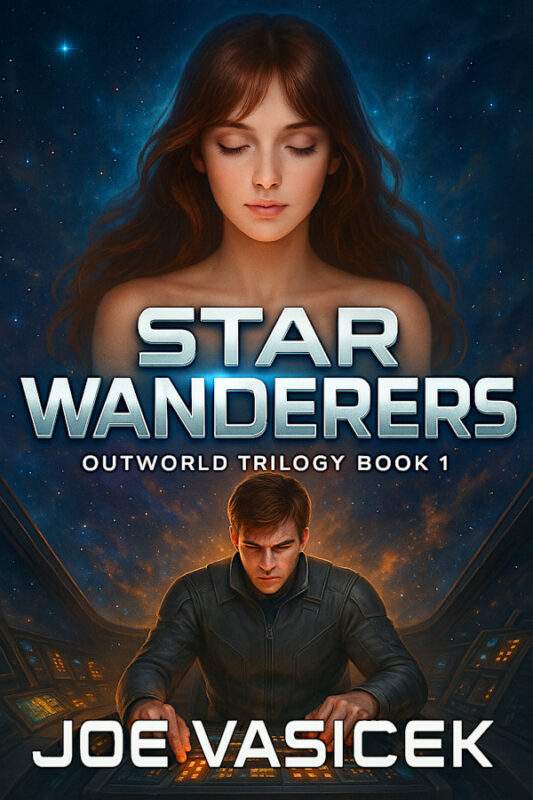

Y is for Yesteryear

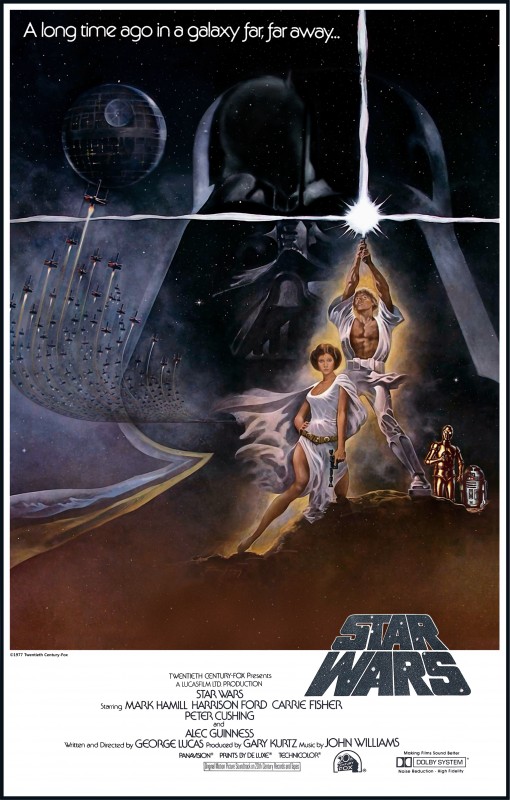
Star_wars_oldThey say that the golden age of science fiction is about twelve years old.  That’s definitely true for me.

My first exposure to the genre was Star Wars: A New Hope.  I saw it when I was seven, right around the height of my dinosaur phase.  Everything about the movie completely blew me away, from the Jawas and Sand People of Tatooine to the stormtrooper gunfights and lightsaber duels.  After watching Luke blow up the Death Star, I spent the next few hours running around the yard pretending to fly my own starfighter.

In a lot of ways, I’ve never really stopped.

My parents made me wait until I was nine to watch The Empire Strikes back, because it was rated PG.  Without any exaggeration, I can say that those were the longest two years of my life.  I was literally counting down days by the end, and to pass the time without going crazy, I read up on all the books about space that I could possibly find.

My father bought the original X-wing flight simulator game somewhere around then, and I soon became totally engrossed in it.  Since the 386 was our only entertainment system (no Super Nintendo–I had to visit a friend’s house for that), X-wing became the defining game of my childhood.  I spent hours and hours on that game, to the point where I knew exactly which simulated missions the characters from the books were flying and how to complete them faster and easier.

I thought The Empire Strikes Back was a little slow the first time I saw it, but it’s since grown on me, to the point where now it’s my favorite film in the whole series.  Thankfully, my parents let me watch Return of the Jedi the next day, and for the next few months my life felt utterly complete.

Around this time I discovered the Star Wars novels and soon immersed myself in them.  The Courtship of Princess Leia by Dave Wolverton soon became one of my favorites, as well as the Heir to the Empire trilogy by Timothy Zahn and the X-wing series by Michael A. Stackpole.

But it was Roger Allen McBride who first introduced me to a different flavor of science fiction with his Corellia trilogy.  As I mentioned in V is for Vast, those books had just enough of a touch of hard science to intrigue me about the other possibilities of the genre.  That was the last Star Wars series that I read before branching out into other works of science fiction.

The Tripod trilogy by John Christopher was my first introduction to the dystopian / post-apocalyptic genre, depicting an enslaved humanity after an alien invasion.  Those books really captured my imagination for a while.  The Giver was also quite interesting and thought provoking, though since it didn’t involve spaceships or aliens it wasn’t nearly as compelling.

I read a lot of fantasy in my early high school years, including Tracy Hickman, Lloyd Alexander, and (of course) J.R.R. Tolkien.  While I enjoyed those books and immersed myself in them for a while, my true love was still science fiction.  For almost a year, I watched Star Trek: Voyager religiously with my dad.  And every now and again, I’d pick out a science fiction book from the local town library and give it a try.  That’s how I discovered Frank Herbert’s Dune.

In eleventh grade, my English teacher had us choose an author and focus our term papers solely on their books for the entire year.  She suggested I choose Orson Scott Card, but I chose Cormac McCarthy instead.  I’m not sure if that was the worst decision of my high school career, or the best decision, since assigned high school reading tends to make any book feel like it sucks.  I discovered Ender’s Game the following summer, and finished it in a delirious rush at 3am the morning after checking it out from the local library.

More than any other book, Ender’s Game cemented my love for the genre, and showed me just how powerful and moving the genre could be.  It opened so many insights into the world and human nature, reading that book made me feel like I’d opened a pair of eyes that I didn’t even know I’d had.  Looking back, that was probably the moment when I knew I would be a science fiction writer.  I’d known I was going to be a writer ever since I read A Wrinkle in Time at age eight, but to be a science fiction writer specifically, that goal was probably cemented by reading Orson Scott Card.

After high school, I served a two year mission for my church, during which I didn’t read any novels or watch any TV or movies.  When I came back, though, Orson Scott Card and Madeline L’Engle helped me to ease through the awkwardness of adjusting back to normal civilian life.  When I left for college, I expanded my horizons even further, starting with Isaac Asimov’s Foundation series and Edgar Rice Burrough’s Princess of Mars.

When I discovered Pioneer Books in downtown Provo, I knew I’d found my favorite bookstore in Utah Valley.  I have so many fond memories sitting cross-legged on the floor in the science fiction section, browsing through the musty used books for hours at a time.  That’s where I discovered C.J. Cherryh, Arthur C. Clarke, Robert A. Heinlein, Ursula K. Le Guin, and numerous other authors who are among my favorites today.

When I discovered Spin, Robert Charles Wilson soon became one of my favorites.  I picked up that novel as a free PDF from Tor, and read it over the summer while studying abroad in Jordan.  Once again, that same hard sf sensibility I’d gotten from Roger Allen McBride touched me in an unforgettable way.  But it was the human element of that book that really moved me–in fact, it’s always been about the human element.  The world building in Downbelow Station was great and all, but the romance of Merchanter’s Luck had a much more lasting impact.  Starship Troopers had some good ideas, but it was Mandella’s personal journey in The Forever War that moved me almost to tears.  The intrigue of the Ender’s Shadow series was quite entertaining, but it was Ender’s Game and Speaker for the Dead that really taught me what it means to be human.

I finished my first novel, Genesis Earth, shortly after returning from that study abroad, and tried to capture the same sensibility from Spin as well as the intimately human element.  Since then, I’ve written several more sci-fi novels, some of them tragic, some triumphant, but in all of them I’ve tried to get as close as I can to the personal lives of the characters.  I don’t know if I’ll ever write a character portrait so intimate as Shevek’s in Ursula K. Le Guin’s The Dispossessed, but I certainly hope to someday.

For me, science fiction started out as a wonderfully exciting entertainment and turned into something much more meaningful.  If there’s anything the genre has taught me, though, it’s that the two aren’t mutually exclusive–that you can have your adventure and learn what it means to be human as well.  Indeed, the more imaginative the adventure, the greater the truths I’ve taken from it.

Because of that, even though I’m almost in my thirties now, I can’t possibly foresee a time when science fiction isn’t a major part of my life.  It’s a love affair that’s grown just as much as I have, and continues to grow with each new author I discover and each new book I write.  When I’m old and grizzled and pushing eighty, I’m sure there will still be a part of that twelve year old boy in me, still running around the yard flying his starship.

SFR Brigade Presents STAR WANDERERS: OUTWORLDER

Star Wanderers I (thumb)To my regular blog readers: I recently joined an online community for readers and writers of science fiction romance called Science Fiction Romance Brigade.  Since a lot of my books fall under this sub-genre, I figured it would be good to connect with that community a little better.  If you’ve enjoyed my Star Wanderers novellas, then check out some of the other authors in the SFR Brigade–they seem to be doing some similar stuff.

To any new visitors: welcome!  I hope you enjoy your time here.  I’m a self-published indie writer with thirteen ebooks out so far, and a lot more on the way.  I’ve been writing ever since I read A Wrinkle In Time back in 2nd grade, and sf romance is definitely one of my favorite sandboxes to play in.

For this week’s SFR Brigade Presents feature, I’m sharing an excerpt from the first chapter of Star Wanderers: Outworlder, the first novelette in my Star Wanderers series.  The setup: Jeremiah is a young single starship pilot who arrives at a space station on the Outworld frontier hoping to make some trades.  The station master ushers Jeremiah into his family’s quarters, where he explains that a famine is ravaging the system and everyone on the station is probably going to die.  He then claps his hands, and his five daughters line up on the other side of the room.

*  *  *  *  *

“Choose!” Master Korha bellowed. Apparently defeated, his wife collapsed to the floor in tears.

Jeremiah tugged at the collar of his jumpsuit, sweat forming at the back of his neck. “What? Choose?”

“Yes yes—choose quickly, you take, you go!”

“But this is crazy; how can I—”

“If not take, will die. Choose!”

Jeremiah turned back nervously to the girls. The three youngest ones stared at him in absolute terror. The two oldest ones weren’t quite so frightened, but avoided meeting his gaze directly. They wore their long hair down with glistening sequined headbands across their foreheads, and the innocent looks on their faces cried out to him.

Should I take them both? If they were going to die otherwise, it seemed like the right thing to do—but he didn’t know if he could afford to take even one extra passenger on his ship. And besides, the whole situation had an eerily awkward feel to it, as if he were trading in people, not goods.

“You like? You like?” Master Korha asked, ambling to his side. He pulled the two girls forward to give Jeremiah a better look.

*  *  *  *  *

If you want to read the rest, you can pick up a free ebook copy on Amazon, Barnes & Noble, Kobo, Smashwords, or any of the other major ebook sites.

And if you’ve already read Outworlder, then I’m happy to say that Star Wanderers: Dreamweaver, the parallel novella from Noemi’s point of view, is currently on schedule to come out in the beginning of April!  As always, newsletter subscribers will get a coupon code to download the book for free when it’s released.  I’m just finishing up with the revisions now, and am really excited to get this story up!

That just about does it for now.  Thanks for stopping by, and I hope to see you again soon!

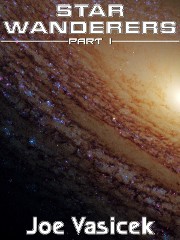
Star Wanderers: Part II is now published!

The next installment of Star Wanderers is now up on Amazon, Smashwords, and Xinxii!  In a couple of weeks, it should be up on Kobo, iTunes, and Barnes & Noble as well.

This continues the story of Jeremiah and Noemi, a boy and a girl from completely different worlds who end up married by accident after a deadly famine drives her away from her home.  Neither of them speak the same language, but they eventually come to an understanding of each other and figure out how to make things work.

In Part II, though, all that is put to the test.

It’s available right now for $2.99, but if you sign up for my email newsletter in the sidebar, I’ll send out a Smashwords coupon code at the end of the week that you can use to download it for free.  Part I is already free on Smashwords, and should be free soon on the other sites as well.

Part III needs a lot of work, but I should be sending the rough version out to my first readers pretty soon.  Once I’ve gotten their feedback, it shouldn’t take more than a few weeks to get it finalized and ready for publishing.  After that, it’s just a matter of finding proofreaders and formatting it, which doesn’t take long at all.

That’s about all for now.  I hope you enjoy it–and if you do, please share!

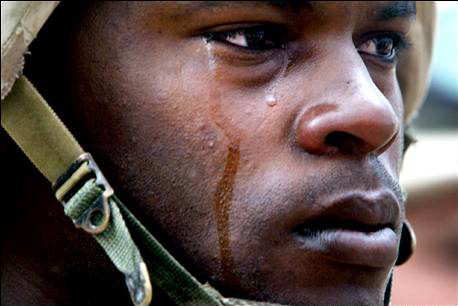
When men cry, or in defense of damaged characters

I recently read an amazing blog post by Shannon Hale titled “Why boys don’t read girls (sometimes).” In it, she makes a number of excellent points about how our society stigmatizes boys who read “girlie books,” and why that’s harmful.

Perhaps the most moving part of the post was at the end, where she described an experience at one of her book signings where she saw a boy hanging back and asked him if he would like her to sign one of his books.  The boy’s mother jumped in and said “yeah, Isaac, would you like her to put your name in a girl book?” The boy’s sisters all laughed at him, shaming him for reading anything that ran against their strictly defined gender roles.

In direct contrast to Shannon Hale, Dave Farland released a “daily kick” newsletter a couple of days ago where he advises writers to never let their characters cry.  In it,  he states:

Whatever problem [the character has]—whether terminal disease or sociopathic neighbor or anything else—the problem must be faced with courage. This means that your character can’t cry about it, no matter what the source of pain…Any time that a character breaks down, we as an audience may cast judgment upon that character.

Now, I have nothing but respect for Dave Farland.  I’ve been following his “daily kick” emails for years, attended dozens of his convention panels, and even interviewed him once for an online magazine.  He’s been a very influential writer to me personally, and his advice has had a huge impact on my writing.

But on this issue, I think he’s dead wrong.

Even if you don’t have any problem with the idea that men should never cry–a disturbing belief that harms men by forcing them to hide their true feelings, and harms women by teaching men that compassion and empathy are signs of weakness–even if you’re comfortable living in a culture that accepts this belief, there are still instances where having a man cry in your story can be both moving and poignant.

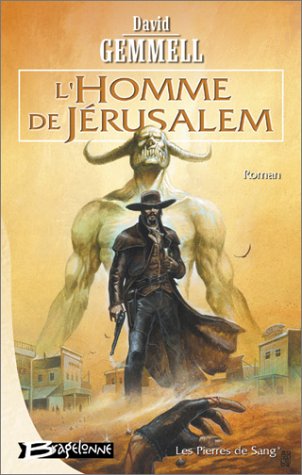
Cross his woman, and he’ll blow your brains out–quoting scripture while he does it.

The best example of this that I can think of comes from David Gemmell’s The Jerusalem Man.  No one–and I mean no one–writes manlier heroes than David Gemmell.  And among his characters, Jon Shannow ranks as one of the manliest.

In The Jerusalem Man, Jon Shannow is a lone gunman roving the post-apocalyptic wastelands of Earth on a spiritual quest for the city of Jerusalem.  Near the beginning of the book, he comes across a frontier woman under attack from bandits.  He stops to defend her homestead, and she shows her gratitude by inviting him into her bed.

Jon Shannow is a middle aged man, but because of the post-apocalyptic setting, this is his first sexual experience, and it moves him to tears.  For me, that was one of the most poignant moments of the book.  It didn’t take away anything from his masculinity throughout the rest of the story–indeed, it added significantly to it when the woman got kidnapped and he determined to rescue her.

I’m sure there are other examples that you can think of.  Certainly in real life, this notion that men should never show their feelings is both harmful and outdated.  To say that in fiction, no characters should ever cry–female characters as well as male characters–that’s just so wrong it’s infuriating.  If crying is so taboo that it’s even forbidden in the pages of a book, then something is wrong with the culture, not the story.

In 2008, I attended a fascinating panel at LTUE in which Tracy Hickman and a number of romance and fantasy writers discussed how to write romance in science fiction and fantasy.  Tracy explained that in all the novels he writes with Margaret Weis, she does the fight scenes and he does the romantic ones.

He then went on to talk about how there’s a whole side of life that our culture has shut men off from–a feminine side which is present in all of us, men as well as women.  The way he explained it, romance is not just the “kissy bits,” but a vital and enriching way to see the world–a paradigm that infuses everything with feeling and passion.

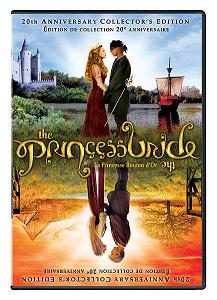
It makes me think of The Princess Bride, where even the action scenes with Inigo Montoya have a certain romantic flair to them.  In the old days, the term “romance” described not only love stories, but action & adventure stories as well.  In modern times, we seem to have forgotten all the old qualities like honor, love, sacrifice, loyalty, heroism, and compassion–even though they still make for the best stories.

Of course, our characters need to have courage.  But courage is not the absence of fear–it’s pressing on in spite of it.  And crying is not always a sign of weakness–it can actually be a sign of great emotional strength.  And if it’s true that the best literature helps us to see our world in a new light, giving us a greater understanding and appreciation for the human condition, how is it “courage” for anyone to hide their true feelings?

So do the characters in my stories cry?  Hell, yeah!  I don’t have them hide their feelings just because some readers might look askance.  Some of them cry more than others, and many of them don’t hardly cry at all, but those who do cry do so because the story demands it.

Even though I write science fiction, I do my best to infuse my stories with romance–not just the “kissy bits,” but that depth of feeling and passion for life that made me fall in love with books and reading in the first place.  Star Wanderers is a great example of that, and so is Desert Stars.

And yes, in case you’re wondering, I’ve read a lot of “girlie books.” They’re some of my all-time favorites.

Trope Tuesday: Accidental Marriage

When it comes to weddings, most of us like to plan things out in advance.  It’s not uncommon for couples to spend years figuring each other out before they finally tie the knot.  So what happens when you wake up one morning and find yourself married by accident to a complete and total stranger?

This trope generally comes in two forms:

  1. Situational: Two people from the same culture end up in a comedic situation where, quite unintentionally, they end up marrying each other.  Often takes place in Las Vegas and/or involves some form of intoxication.  Usually, neither of them has a clue what they’re getting into until it’s too late.
  2. Cross-Cultural: While traveling in a foreign land, the hero unwittingly marries the chieftain’s daughter through a hilarious cultural misunderstanding.  Typically, the guy is the oblivious one, while the girl knows exactly what’s she’s doing, though the gender roles do occasionally get reversed.

The characters are never the kind of people who would just up and leave their spouse, though–that would ruin the story.  For that reason, they’re usually both decent, likable people, at least at first.  But even if they decide to stick together, they usually have to work through a ton of (often hilarious) challenges first.

When part of the main storyline, this trope is often used as the setup for a romantic comedy (since the alternative is, well, kind of a downer).  When done well, it combines the awkwardness of a blind date with all of the angst and anticipation that comes along with wedding and marriage.  There’s a variety of ways that the situation can be resolved, and the longer things drag out, the more reasons the couple finds for sticking things out.

That’s not always the case, of course.  In the “Our Mrs. Reynolds” episode of Firefly, what starts out as an accidental marriage between Mal and Saffron turns into…well, something else.

Within science fiction & fantasy, this is probably the most prominent example of this trope.  The first half of the episode plays it straight, with Mal participating in a ceremony that seems innocent enough, but later turns out to be a marriage.  At first, he tries to get out of it, but one thing leads to another, and…well, go rewatch the episode!

Another good example of this is found in the movie Jeremiah Johnson.  The titular character, a former confederate soldier turned mountain man, finds himself a guest of the Flathead Indians.  The chief asks about a number of horses and scalps he acquired, and Jeremiah, who never wanted them in the first place, gives them to the chief as a gift.  Moments later, he realizes his mistake: the Flatheads have a custom of exchanging gifts of equal or greater value, and if they cannot reciprocate, they consider it an insult worthy of death.  Fortunately for Jeremiah, the chief finds a solution: he gives him his daughter.

Both of these examples involve variations of the cross-cultural type.  A good example of a purely situational version of this trope is the webcome Marry Me.  It starts with a philanthropist pop-star who’s suffering from burnout and on the verge of having a mental breakdown.  While putting on a concert, she sees a guy in the front with a sign that says “marry me” and decides, on a whim, to bring him onstage and do just that.

The thing is, he was only holding the sign for a friend, who was taking a bathroom break at the time.  He’s not even a fan of her music.  As you might expect, hilarity ensues.

Finally, this trope plays a major role in my latest title, Star Wanderers.  It starts off with a young single starfarer, who makes his living running the trade routes between stars.  Without realizing it, he visits a station where the food production systems have just recently broken down, condemning everyone to die.

The station master pulls Jeremiah into his private quarters and makes him choose one of his daughters, presumably to save her.  Jeremiah can’t really say no, so he chooses one, only to find himself holding hands with her while her father says a quick prayer.  Moments later, they’re whisked away to his starship, where they have a long voyage alone together to look forward to.

As you might have guessed, I’m a big fan of this trope.  When things work out, it can really make for a heartwarming story.  But whether or not it does, the romantic tension is just delicious.

PS: Be sure to check out the “playing with” page for this trope–there’s a lot of interesting variations on the main theme!  My favorite is the logical extreme, with the fertility dolls and the pie.  Interesting stuff…maybe I’ll use that in a story of my own someday. 😉

Star Wanderers: Part I is now available!

That’s right–the first part of my novel Star Wanderers is now available on Kindle and Smashwords for $2.99!  Barnes & Noble, iTunes, and Kobo editions should be coming out shortly (though I’m waiting for Kobo to launch their direct publishing platform, which may take a while).

This is the first part of a four part novel, but really it’s more of a series of short novellas since each part has its own distinct story arc with a beginning, middle, and end.  This one is about 15,000 words (or 40-60 pages), and takes place in the Gaia Nova universe about a thousand years before the events of Bringing Stella Home.  It’s about a boy and a girl who don’t speak the same language but find themselves alone on a starship together.  Here’s the description:

HE WANDERS THE STARS IN SEARCH OF A HOME. INSTEAD, HE GOT A GIRL WITHOUT ONE.

When Jeremiah arrived at Megiddo Station, all he wanted was to make some trades and resupply his starship. He never thought he’d come away with a wife.

Before he knows it, he’s back on his ship, alone with his accidental bride. Since neither of them speak the same language, he has no way to tell her that there’s been a terrible mistake. And because of the deadly famine ravaging her home, there’s no going back. She’s entirely at his mercy, and that terrifies him more than anything.

Jeremiah isn’t ready to take responsibility for anyone. He’s a star wanderer, roaming the Outworld frontier in search of his fortune. Someday he’ll settle down, but for now, he just wants to drop the girl off at the next port and move on.

As he soon finds out, though, she has other plans.

Also, I’m happy to report that I finished the full-length version of Star Wanderers over the weekend, making it my seventh written novel!  Here are the stats:

words: 68,367
chapters: 20
ms pages: 317
start date: 1 September 2011
end date: 1 July 2012

And some other stats, just for fun:

kilometers traveled: ~32,000
languages encountered: English, Georgian, Russian, Mingrelian, Hebrew, Arabic, Turkish, Farsi, Polish, Slovakian, German, Armenian, Spanish, French, and Australian
other books started before finishing: 4
other books finished before finishing: 2
other books published before finishing: 2

Part II is pretty close to publication, but Parts III and IV still need a bit of work.  Since the rough draft is finished, though, it shouldn’t take too long to get everything else ready.  If all goes well, I’ll publish Part II in August or September, and the other parts in two month intervals.

This novel was a lot of fun to write, in spite of how difficult it sometimes was.  I always knew it was a story worth telling, and that gave me both the motivation to finish it and the courage to send it out into the world.  I think you guys are really going to like it, especially if you’ve enjoyed my other sci fi romance stuff.  As I said on Twitter back in 2011, girl + starship = WIN!

So yeah, check it out!  And be sure to keep an eye out for Part II, which should be coming out in just a month or two!