I’m unpublishing my short story singles

From 2020 to 2024, I did my best to publish a new short story every month. The idea was to make my short story singles free, and to rotate through so that there were only six of them out at a time. Occasionally, I would republish an old one, for those months where I didn’t have a new one to put out. But I tried to always have at least standalone short stories free at a time.

The main reason I did this was to have something new to share with readers each month. I knew I couldn’t write full-length novels at a rate of one per month, so I figured that short stories were the next best thing. And even if I put them out for free, it would still be a great way to build a following and keep my name fresh in readers’ minds.

As a publishing strategy, it worked decently well. The floor for my book sales rose during this period, suggesting that it was a good way to keep my name fresh. However, as a writing strategy, it wasn’t very good, because it meant that I was dividing my energy too much between short stories and novels. It’s probably the sort of strategy that works out better when you’re a new writer, still working to learn your craft and develop your voice, and hoping to build an audience at the same time.

For the past 18 months or so, I’ve just been cycling through the old short stories, and the effect has not been the same. For the strategy to work, you really do need to be putting out new short stories each month. If you can write them in such a way that they’re easy to bundle or stitch up into novels, that’s fantastic, but if you’re juggling full-length novels at the same time, both sides are going to suffer.

So in the next week or so, I’m going to retire my remaining free short story singles, since they’re all available in the bundles anyway. I’m working on an epic fantasy series right now, and that really needs my full attention and energy. I’ll republish some of the longer ones as $2.99 novelettes, but anything under 7,500 words is going to only be available in the short story collections for the foreseeable future.

Just finished my last short story

So I just finished writing what may be the last short story I ever write, at least for the forseeable future. Years from now, I may scribble out a quick short for a charity anthology or something, but unless someone actually commissions me to write one, I’m done for now. Instead, I’m going to focus all of my attention on writing novels, since that’s where all the money (and readers) are.

This last one was fun: a post-apocalyptic tale in a wintry wilderness, where the scout of a tribe of survivors comes across the “Ark Facility” built by a bunch of wealthy elites to freeze themselves in stasis while their workers maintain the facility, and wake them once civilization has been restored. But of course, the plan goes to hell, and the only person left is the daughter of the last caretaker, all the other workers having abandoned the aging facility rather than trying to maintain it. So the scout convinces the girl to come with him, and to leave the facility in the care of the elites after waking them up. That’s when the drama begins.

I wrote the rough draft of this story with AI, back when I was just starting to climb the learning curve for AI-assisted short stories. Because of that, it was rather frustrating in parts, and I ended up throwing out almost everything that I generated. It still turned into a +8k word novelette, though I may be able to cut it down to 7.5k or lower with a couple of revision passes.

But frankly, I don’t much care whether it ends up as a novelette or a short story, because I’m not going to bother submitting it anywhere. I’ve come to the conclusion that none of the short story markets for science fiction or fantasy are worth submitting to, because they are all commercially non-viable and exist primarily as (typically short-lived) passion projects, stepping stones for people trying to carve out a career in the book world, or as vehicles for clout-seeking authors and editors to get their names on the ballots for the Hugos and the Nebulas.

Also, I’m a straight white male conservative, which automatically makes me anathema to every (and I do mean every) pro-paying science fiction short story market. The 1,000+ rejections that I’ve accumulated over the course of my career give me authority to say that—specifically, 1,062 rejections out of 1,255 submissions, according to my lifetime stats on The Submission Grinder (and most of those 193 non-rejections were submissions that never received a response). Thank God for self-publishing.

Since I’m not yet at the point where I can consistently write and publish a novel each month, I will continue to republish some of my old short story singles on the off-months when I don’t have a novel. I was doing the novel-a-month thing for the first few months of 2024, but needed to take a break after the third Sea Mage Cycle book to recuperate, re-evaluate, and rework my writing process. Starting in 2025, I will probably start publishing a novel every other month, and ramp up the process until I’m doing a novel every month. At that point, I’ll retire the free short story singles for good.

It’s been a good run. I’ve written and published about 60 short stories, some of them with semiprozines and anthologies, but most of them indie. I do think it’s a good way to get started when you don’t have much of a following, and I attribute a sizeable chunk of my own following to my consistency in putting out new content for my readers each month. But the money is all in writing novels, since that’s what readers are actually willing to pay for—and given the current state of short fiction, I can’t say I blame them.

Writing and Publishing Plans moving forward

Over the past few months, I’ve been spending a lot of time experimenting with AI writing and finding ways to incorporate it into my writing process. The goal so far has been twofold:

  1. Develop the ability to write one novel per month.
  2. Get to a level where I can write 10k words per day.

I’ve accomplished both of those things, but I can’t hit them consistently without burning out. Writing with AI has proven key to both of them, but I feel like I need a lot more practice with AI-assisted writing before I’ve achieved any level of mastery. Once I have mastered AI-assisted writing, however, I should not only be able to achieve both goals consistently, producing a much higher quantity of work, but should also be able to maintain or exceed the current quality of my writing as well.

However, I was thinking about it from a reader’s perspective on my morning walk last week, wondering what I would think if, say, David Gemmell was still alive and writing Drenai books, or Roger Zelazny was still alive and writing Amber books. What would I think if either of them announced that they had found a way to incorporate AI into their writing process, so that they could produce a new Drenai/Amber book once every month, instead of once every year? Better yet, what if Andrew Klavan—who is both still alive and still writing Cameron Winter books—announced that he would start publishing new books monthly. As a fan of all these writers, what would I think of that?

Assuming that there was no drop-off in the quality of these new, AI-assisted books, I would find this really exciting, and would probably become a much bigger fan, simply from the fact that I’m reading so much new stuff. However, after a while this might become too costly to me to keep up, leading me to fall away and not be quite so current on what they’re producing. I would still love them as authors, but if they published too quickly, I might have to take a break after a while—and if they continued to publish at that rate, I might never catch up. After all, there are lots and lots of authors that I love, and I can’t dedicate more than a fraction of my reading time to any particular one of them.

So there’s probably a sweet spot, between publishing too much and publishing too little. Most authors are probably on the Patrick Rothfuss / George R.R. Martin side of that line, where fans wish they would write more and write more quickly. But at a certain point, it is possible to overwhelm most readers by writing too much. Of course, there will always be a core group of fans who will read everything much faster than you could ever possibly write, even with AI assistance, but if that’s the only group you’re catering to, then you probably won’t ever have more than a cult following, because you won’t be able to convert casual readers into superfans.

With all of that said, I feel like I’ve gotten to a good place right now, where I’m publishing a free short story every month. I think that’s actually been a really effective way to turn casual readers into fans, and to keep my name fresh in the minds of my readers. And if Gemmell, or Zelazny, or Klavan were producing a free short story every month, I would definitely subscribe to their newsletters and drop everything to read it.

So keeping up the free short story per month is probably a good idea. But for novels, it might be better to release a new one every two or three months instead. Free short stories are much less of a time and money burden on the readers, and thus are effective at turning fans into superfans. But with the novels, which do take more time and money to read, it’s probably better to throttle that back a little bit.

The interesting thing to me is what that means for my creativing process, especially once I’ve reached the point where it takes less than a month for me to produce a novel. If I’m only publishing a novel every 2-3 months, that means that I can—and probably should—take a break between each novel WIP. Which means that the thing I should be shooting for isn’t to maintain a writing speed of one novel per month, month after month after month, but to hit that speed in creative bursts, taking some down-time to replenish the creative well and prepare for the next project.

It’s a very different writing paradigm from the one I’ve been following for the past decade. Until now, I’ve basically always had a novel WIP that I’ve actively been working on, and whenever I feel like I need a break, I usually move on to a different novel WIP. From time to time, I’ll “take a month off” to work on short stories, but the goal there has always been to write X number of stories in no more than a month or two, once again making writing the focus instead of recharging the creative well.

How would things be different if instead, I told myself “I’m taking a break in order to prepare myself to write my next novel,” with a plan for books and other media to consume in order to get things ready for it? And then, instead of taking several months or even years to write the project, to produce it in just a few weeks of white-hot creative heat, afterwards necessitating a break for a while just to cool down? Until now, I’ve never tried anything like that, because I haven’t thought myself capable of producing work that quickly. Indeed, the very thought of taking an extended break from having an active writing WIP has struck me as being lazy. But now that I know I can produce that quickly, perhaps this is a new paradigm that I ought to at least explore.

For my current WIP, Captive of the Falconstar, I’m not stressing out about finishing it in less than a month. But I am following all the benchmarks that I developed, and watching closely to see what takes more time to write than I thought, and what takes less. And it may very well turn out that the best way to improve quality is to get into that white-hot creative heat that comes from producing quickly, so that’s something that I’m watching closely as well.

Short-form vs. long-form fantasy

For the last month, I’ve been doing a lot of research into the fantasy genre, rereading all of the original Conan the Barbarian stories by Robert E. Howard and a bunch of the other ones too, by authors like L. Sprague De Camp, Lin Carter, Bjorn Nyberg, Robert Jordan, etc. I’ve also been reading a lot of epic fantasy, like the Wheel of Time series by Robert Jordan and the Stormlight Archive by Brandon Sanderson. And I’ve also read some essays on the genre, most notably “The Critics, the Monsters, and the Fantasists” by Ursula K. Le Guin, and “The Making of the American Fantasy Genre” by David Hartwell. Oh, and opening a bunch of chats with ChatGPT, though those are of limited usefulness (for some reason, ChatGPT hallucinates like crazy when you ask it to recommend any noblebright fantasy that isn’t more than two or three decades old).

From what I’ve gathered, there are basically two camps or schools within secondary-world fantasy: the heroic / sword & sorcery camp, based off of Howard’s Conan the Barbarian, and the epic fantasy camp, based off of Tolkien’s Lord of the Rings. According to David Hartwell, those are the only two franchises to achieve breakout success: everything else has either achieved only moderate commercial success in its time before petering out, or gained only a niche audience. Apart from Conan, the fantasy genre as a whole didn’t really take off until Terry Brooks immitated Tolkien with his Shannara series, thus launching a wave of Tolkienesque epic fantasy in the 70s and 80s that morphed into Grimdark in the 90s, 00s, and 10s.

So for a while, I was looking into all the various tropes and archetypes that make Conan and LOTR tick, and trying to use those to differentiate the two. But lately, I’ve been wondering if maybe I’ve been overthinking all of this, and the real difference between the two is that Tolkien mastered long-form fantasy, and Howard mastered short-form fantasy. In other words, what if the defining difference between the two camps doesn’t have to do with tropes so much as with the length of the actual story?

I suspect that short-form fantasy is poised to make a resurgence, especially with all of the challenges associated with writing and selling long-form fantasy in the 2020s. Larry Correia is right: Rothfuss and Martin have ruined the epic fantasy field for new authors by failing to finish their series in a reasonable timeframe. Unless you are independently wealthy or already have a large and loyal following of readers, it just doesn’t make commercial sense to write a lengthy series of +200k-word fantasy epics. Better to write shortier, punchier 40k-word novels instead, especially if you can churn them out every other month or so. That seems to be the model that works best for indies, at least in adjacent genres like urban fantasy and paranormal.

Anyway, that’s my current thinking on the subject. What’s your take on it?

A weird thing I’ve noticed

So I’ve been making good progress on Children of the Starry Sea, writing about 2k words or one scene per day. But in the last couple of weeks, I’ve also had a bunch of short stories drop in my lap, two of them from dreams.

My best writing time is between 4am and 6am, so on both occassions I simply wrote the story as I dreamed it, or as I reimagined it right after waking up. This has taken a little bit of time away from working on Children of the Starry Sea, but not too much. For the first story, “We Should Have Named You Corona,” I spent one day knocking it out, then was back to work on my novel WIP the next day.

The other story is “On the Eve of the Flood,” and it’s more like I dreamed the general setup, not the actual story. I spent most of today working on it (I had the dream last night), but I still managed to finish another short scene from Children of the Starry Sea, so I don’t think this one is going to distract much from my novel WIP going forward—unless I decide to just buckle down and finish it in the next couple of days, which I may decide to do.

The third story, “Hell From Beneath,” is actually a J.M. Wight story that I wrote a few months ago, but wasn’t very satisfied with. One day, though, the solution to that story’s problems just sort of opened up to me, and I knew what I had to do to fix it. I wasn’t even thinking about it at all—I was working on Children of the Starry Sea, and making quite good progress on it, not even thinking about this other story.

With that one, it took me another three or four days to get back into the headspace for Children of the Starry Sea, just because the other story is so much darker and heavier. But that was more of a momentum / procrastination thing: getting started is always the hardest part of writing, at least for me, and I delayed starting back on Children of the Starry Sea until I was no longer in that headspace. In retrospect, I probably could have solved the headspace problem just by getting back to work, maybe with a partially written scene that was easy to finish.

In any case, the weird thing I’ve noticed is that the more I work on one project, the more it stimulates my mind to work on other projects. It’s not even that it detracts from the primary project—which is good, since otherwise how would I ever finish anything? But it does mean that if I want to have more story ideas, I should focus on whatever project is on my plate, rather than laying it aside and trying to come up with story ideas. In that way, it’s kind of like stargazing: if you look at a star directly, it tends to disappear, but if you look at it sideways, it becomes much more visible.

Or maybe it’s this new writing technique I’m trying out. Instead of trying to write my whole novel front to back, I’ve broken into scenes, and outlined the scenes well enough that I can write them out of order. So each day I ask myself “which scene(s) do I feel like writing today?” which is actually quite liberating.

I’ll do a deeper blog post on this writing technique after I’ve finished Children of the Starry Sea. If it works out well (and so far I think it is) I’ll have a lot of interesting things to share with you. But for now, I find it interesting that the more I write in my novel, the more ideas I get for other stories—and the easier it is to write them.

Short Story: Christopher Columbus, Treasure Hunter

So I finished this one a couple of days ago, but I forgot to write about it then, so I’m writing about it now. Hard to say much when this is the second in a series and the first one hasn’t come out yet, but I’m actually quite pleased with how this one turned out.

The first draft of “Christopher Columbus, Wildcatter” was honestly a bit of a mess. I think the main problem was that I was trying to cram too much into it, and when you look at all the Mythulu cards that I tried to use, it’s not hard to see how that could be the case.

When I workshopped it through my writing group, they suggested that I break it into two stories, and that’s exactly what I did—except that over the course of rewriting them, both stories took on a life of their own. The first one, “Christopher Columbus, Wildcatter,” more or less followed the original draft up to about the 2/3rds mark, but this story was only loosely based on the second half, and I ended up rewriting most of it from scratch.

I’m really happy with how it turned out, though, and I was even able to keep it under 7k words, which I didn’t think I was going to be able to do. These Christopher Columbus stories definitely follow a formula, though, so I don’t think I’m in danger of finding myself writing a novel when I think I’m writing a short story. Though taken all together, these stories probably will turn into something of a novel, which is fine.

I’d post an excerpt, but this story is out on submission, so I don’t want to void the first publication rights. You’ll just have to bear with me until the first story is out!

NaNoWriMo 2021: Day Four

  • Words Written Today: 2,206
  • Children of the Starry Sea: 0
  • “In the Wake of Zedekiah Wight”: 2,206
  • Science Fiction from A to Z: 0
  • Total Words Written: 8,595
  • Total Words Remaining: 41,405
  • Total Words Ahead: 1,927

Really fun scene today in my short story “In the Wake of Zedekiah Wight,” which is quickly turning into a novelette or possibly a novella. Doesn’t really matter: I still plan to self-publish it in January, and I’ll call it a short story if it falls under 20,000 words. Most readers have no clue what a novelette is anyway.

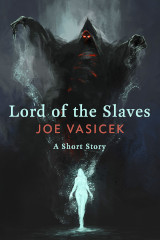
Besides writing 2k words (which is now my standing daily word count goal), I finally published the short story “Lord of the Slaves.” I call it a short story, but technically it’s a 13,200 word novelette—but again, to most readers, it’s still a short story. It’s free everywhere but Amazon, which still requires you to go through a ton of ridiculous hoops to get it price matched, and now to get it in all the proper categories too. So that’s a pain. With luck, they’ll actually price match it in time for my newsletter next week, but either way, you can pick it up on my online store right now.

Four consecutive days of hitting my daily word count. It’s starting to get easier, though that may just have been this particular scene. With luck, though, I’ll be able to keep it up through at least the next week and build up a sizable buffer for when we visit family for the Thanksgiving holiday. We’ll be gone for almost the entire second half of November, so hitting word count is going to be a real challenge.

NaNoWriMo 2020 Day Two

  • Date: Monday, November 1st
  • Words written: 630
  • Total words written: 630
  • Stories written: 0
  • Words behind: 2703

Off to a bit of a rocky start, but it’s not as bad as it appears. Counting the words in my other WIP, I made about 1,600. Just had to tie it up at a good stopping place, but now that that’s done, I should be able to focus on NaNoWriMo.

The first story I’m writing is a fantasy piece pulled from an outline for a longer novel in the same universe as The Sword Keeper. I have very little idea where I’m going with it, and since I don’t want to draw it out longer than a few thousand words, that could be a problem. It has a great opening line, though:

“Everyone secretly wants to be a slave. That is the universal truth that no one wants to admit. Those who deny it simply haven’t met their true masters yet.”

I think I can finish it tomorrow, or at least get halfway. The thing about short stories is that when I get into the zone with one, I can knock off four or five thousand words easily. It turns into a race to the finish line, and since the ending is so much closer with a short story than with a novel, that enthusiasm feeds on itself until it’s done. If I don’t finish this one tomorrow, I’ll almost certainly finish it the next day.

End of July update

Holy crap, is it the end of July already? I guess it is.

A Queen in Hiding
Phase:2.0 Draft
100%

So I’ve been making progress on my current WIP, A Queen in Hiding (Sons of the Starfarers: Book 7). Not quite as much as I would like, but it’s coming along. As usual, of all the stories I could have written, I’ve chosen the hardest one to write, but that’s okay because it’s going to turn out quite well. And if it doesn’t, I’ll put it aside and come back to it later.

I haven’t been writing as many short stories as I would like, but I’ve got a couple in the works that should open up some interesting new universes. Also, my thoughts on short stories are starting to change. There aren’t very many markets for original fiction that are really worth it, once you factor in the wait time and the circulation along with the payout. However, there are a ton of places that pay only token amounts but take reprints and simultaneous submissions.

I still think it’s a bad idea to self-publish first, but I may only submit to three or four markets before publishing my stories myself and moving on to the reprint markets. If I can flood the smaller markets with a bunch of my stories, that might be better than waiting for them to trickle through the submissions pipeline one at a time.

On the publishing side, the next big project is The Sword Keeper. I just got the edits back. Haven’t gone through them yet, but I’ll do that as soon as I’m finished with my WIP. The big holdup is finding a cover artist. This is my first fantasy novel, and I really want it to be awesome. Need to get the ball rolling on that real soon.

Ideally, I would like to get to the point where I’ve got a new short story coming out every two to three weeks, and at least one novel on pre-order all through the year. The idea is to put another novel on pre-order before the latest one is fully released. The short story end shouldn’t be too hard, as long as I can keep writing them. The novel end is a bit tougher, as it requires publishing four novels a year (maximum pre-order length is 90 days).

It’s not impossible, though. I’m scheduling the last four Sons of the Starfarers releases so that the next one is up for pre-order before the latest one comes out. That will hopefully buy some time to line up a few full-length novels in the queue. Just need to keep up a solid writing schedule for the rest of the year.

And on that note, I’m going to get back to writing. Take care!

What I would do if I were starting out now

In a word, short stories.

Write a bunch of short stories. One or two a week if possible. Keep that up for a year or two, tapering off at the end to transition into novels. But keep writing short stories even after novels have become the main focus.

Make a serious effort while writing short stories to master both the craft and the art of storytelling. View it as an apprenticeship period. Experiment. Try out new things. Join a writing group, preferably of experienced professional writers, and have them rip your stories apart. Soak up as much constructive feedback as possible, and apply it to the next story.

At the same time, don’t spend so much time reworking old stories that you aren’t producing new ones. Learn how to keep a rigorous production schedule. If a story is totally broken, toss it out! Get to the point where you can hit 2k words consistently every day, and knock out a story at least every couple of weeks or so.

In a word, learn how to be prolific.

Experiment with standalones, but also build a couple of universes with recurring characters. Write a few series, both sequential and non-sequential. Focus especially on the non-sequential series, though—the ones where any story can be an entry point. Learn how to find the sweet spot between writing a satisfying ending and leaving a hook for the next one. That sweet spot is different for every genre.

Submit every story you write to the traditional short story markets. Start with the highest paying markets and work your way down. Pay close attention to average response times on sites like the Grinder and don’t submit to any market with an average response time of more than 30 days, no matter how high the pay rate. The goal is to get each story through all of the pro- and semi-pro markets in about a year. If a market can’t get back to you in a timely fashion, it’s not worth your time. Ideally, you want to be receiving multiple rejections every day.

Once you’ve got about twenty or so stories that have come off of submission, start self-publishing.

Use the first couple of stories to learn how the process works. Figure out how to format, do cover work, and write up all the metadata on your own, then do all you can to streamline that process until it becomes automatic. You can outsource some of the more difficult stuff, but learn to do as much as you can on your own. Don’t spend more than about $50 per story to publish it, preferably more like $30.

Once you’ve got a process down, set a rigorous release schedule of 2 stories per month. Keep to that schedule religiously. Don’t worry too much how the stories are selling: they probably won’t sell well until you’ve got a couple dozen or so out. Just focus on getting them out.

Keep an email list, with links to subscribe in the front and back of all your books. Build that list as much as you can. Most of your early marketing efforts should go to building that list, and cultivating a relationship with the people on it. Don’t rely on Facebook, because you don’t own that site and can’t control it. Same with any other social media. Do all you can to bring your readers to a place you control.

Start blogging. Build relationships with other bloggers. Strive to post something new every day. Make it the kind of site that your readers will want to come to. Be sure to have pages for all of your books, as well as a series page that lists every story in every series, in chronological and written order (side note: I really need to write up a series page).

Experiment with free pulsing and price pulsing. Experiment with price points. Experiment with bundles. Experiment with everything.

ORGANIZE YOUR DATA. Ohmygosh. You’re going to be drowning in data after just a few months. Keep all of your sales reports, and compile all that into spreadsheets showing how many sales you got of each title each month, how much you earned from each title each month, etc. Data, data, data! Learn how to thrive with data!

Write a formal business plan, and update it constantly as you go. Write down all the strategies that work, as well as the ones that don’t. Write down all the strategies you want to try out. In case it wasn’t obvious, write down your release schedule. Write down your to do list, organized by urgent / not urgent and important / not important quadrants. Write down everything. WRITE IT DOWN.

Eventually, you’ll get to the point where you’re releasing bundles alongside or even in place of your short stories. Don’t unpublish anything. Maybe update the covers, if you decide your early ones are really really bad. But don’t worry about it too much. Just focus on being as prolific as possible.

As long as you keep moving, you’re going to get somewhere. So always keep moving. Even when you have a disappointing sales month, or a spat of bad reviews, or whatever, just keep moving. Even if you’re moving in the wrong direction, that’s better than not moving at all.

At some point, you’re going to start to see some success. You may even have a breakthrough. At that point, you can start moving on to novels. Hopefully you’ve written a couple of them by now. Your first one is probably utter crap, so toss it out and focus on the good ones.

Hopefully, you’ve written it in the same universe as a bunch of your short stories. That will make the marketing easier, but its not strictly necessary so don’t worry about it too much if you haven’t. Also don’t worry too much if the novel isn’t in a series of its own. It’s better if it is, but standalones have their place too.

Try to write in trilogies, or to write standalones that can easily be turned into trilogies. The first book should stand on its own, the second should end on a low note and hook into the third book, and the third book should blow the reader’s mind away. Brandon Sanderson’s Mistborn series is a great example of this.

If your career hasn’t taken off by now, you aren’t experimenting enough. That, or you’re cutting too many corners. One way or another, you’re going to have to put in the work.

That’s pretty much it. Have fun!