Trope Tuesday: The Bechdel Test

The Bechdel Test is a way to measure how prominently women figure in a story.  It mostly comes up in discussions of TV and film, but can also be applied to works of literature.  To pass the test, the story must have

  1. at least two named female characters
  2. who talk to each other
  3. about something other than men.

The surprising thing, as you can see in this discussion of the trope, is that so few stories actually pass this test. Even in literature, works like The Odyssey, Romeo & Juliet, and even War & Peace fail to pass or only barely pass this test.

Closely related to the Bechdel Test is the Smurfette Principle, where only one of the major characters is female–the token chick.  Stories that fail to pass the first part of the test fall into this category.

So why does this happen?  It may be because most writers are male, but that isn’t necessarily true of books and literature.  Novel writing, after all, was originally considered a womanly pursuit, and the English major was created in the so that women could have something to study while they were in college.  Not surprisingly, 19th century works by female writers like the Bronte sisters tend to pass…

…or do they?  It’s been a while since I read Jane Eyre or Pride and Prejudice, but the impression I got was that the women in those books spend only really talk with each other about men.  And when you look to contemporary writers like Dickens and Tolstoy, the trend holds.  After all, how many female characters are there in A Christmas Carol?  Do any of them ever even talk to each other?

This isn’t necessarily a measure of how good or bad a story is, or even of how feminist it is (Aliens, after all, technically passes), but it is a measure of how independent and well rounded the female characters really are.  If the story doesn’t pass, it’s a sign that the women only play a role in relation to the men, or that the male characters are the ones who advance the plot.

I don’t usually like to bring up my own stories in relation to these tropes, but I thought it would be useful to apply this test to my own books and see how they shape up.  As a writer, I think it’s a good idea to do this periodically, to make sure my work isn’t slipping into a rut.  So here we go:

Genesis Earth

Point 1: Yes, there are two named female characters: Terra and Stella.

Points 2 & 3: No, they never talk.  However, when you apply the reverse Bechdel test (two men who talk to each other about something other than women), Genesis Earth only barely passes.  Michael talks with Tom in the first chapter, mostly about Terra, and for the rest of the book he and Terra are alone.

Bringing Stella Home

Point 1: Yes, it passes.  Named female characters include: Stella McCoy, Danica Nova, Anya Sikorsky, Tamu, Lady Borta, Lady Zeline, Sergeant Maria.

Point 2: Yes; in most of Stella’s scenes, she’s talking with Tamu or Borta or one of the other Hameji women.  Also, since Danica is the captain of the Tajji Flame and Anya is the chief pilot, they interact quite a bit.

Point 3: Yes, but just barely.  In most of their scenes together, Stella and Tamu are talking about Qasar or the harem or sex.  There are a couple where they talk about each other and their past, but it all relates back to their captivity under the Hameji.  At one point later in the book, Anya goes AWOL and Danica has to talk her down, which is probably the scene that makes the book pass, but a hardcore feminist might argue that that conversation is indirectly about a man.  Still, I’m counting it.

Desert Stars

Point 1: Yes, there are plenty of women.  In fact, as you can see from this list of non-minor characters, there are almost as many women as there are men:

Female Male
Mira Jalil
Shira Sathi
Zayne Hamza
Tiera Rumiya
Lena Gregor
Surayya Kariym
Amina Ashraf
Rina Ibrahim
Sarah Lars
Michelle Nash
Mark
Will

Point 2: Yes, plenty of these women talk to each other.  Surayya and Amina are practically joined at the hip, Tiera, Shira, and Lena all have private conversations with Mira, and the only time Rina even talks is when she and Mira are alone.

Point 3: While most of the conversations between the female characters revolve around men and marriage, Tiera talks with Mira about honor, and Rina talks with Mira about leaving home.  Without spoiling too much, there are other conversations that have nothing to do with men, though they happen off-stage and only get reported second-hand.  Either way, I’d say this book passes.

None of this is to say that a good story must pass the Bechdel test.  Lawrence of Arabia, for example, doesn’t have a single female actress–not one single actress!–and it’s an amazing film.  As a counterpoint, I’m sure there are plenty of good stories out there (most of them probably anime or manga) that do not pass the reverse Bechdel test.

However, it is a good measure of female presence and how much the story is driven by men.  And as a lens through which to view the wider culture, it offers a surprising and somewhat disturbing perspective on male-domination in fiction.

Trope Tuesday: Walking the Earth

Oh there’s sober men in plenty
And drunkards barely twenty
There are men of over ninety
That have never yet kissed a girl.
But give me a wandering rover
From Orkney down to Dover
We will roam the country over
And together we’ll face the world.

When a character decides to walk the Earth, they leave behind friends, family, and earthly possessions to wander from town to town in search of adventure. In real life, we think of these people as bums, but in fiction these characters are often the protagonists–or if not, then some sort of wise figure or noble adversary.

There are two character archetypes that tend to fill this trope: the drifter (or “the stranger” as Joseph Campbell called him) and the knight errant. For the knight errant, walking the Earth is simply part of the job description: always in search of evil to slay and damsels to rescue, he cannot stay in one place for long. It’s the same with the drifter, though he might not have the same skill set or code of honor.

As you can imagine, this trope tends to be most prevalent in Westerns, with the knight errant transformed into a gunslinger and the drifter wandering the wide frontier. American culture has definitely embraced this trope; what else did you expect from the nation that invented cars, highways, and the road trip? However, it’s also quite prevalent in East Asia as well, with the ronin and other wuxia archetypes.

Of course, this trope is only possible in a society that has a long tradition of sacred hospitality; otherwise, the wandering hero will almost certainly starve. That’s one way to spot stories where this trope is done poorly: if the wanderer has no visible means of support, yet appears clean and well-fed, the author hasn’t connected the dots. Also, characters who walk the earth are almost always male, since women who travel alone are more likely to get raped or assaulted.

One of my favorite examples of this is Van Hoenheim from Full Metal Alchemist. <SPOILER: highlight to read>After he unwittingly helps the first humunculous to sacrifice the population of Xerxes to make two giant philosopher’s stones, Hoenheim sets off to wallk the Earth as an immortal being, his sorrow too great to allow him to settle down. However, while the humunculous uses his stone to acquire even greater power, Hoenheim becomes familiar with every damned soul trapped in his and enlists their help. In the final battle, we learn that Hoenheim has used his centuries of walking the Earth to bury the damned souls in such a way to counter the humunculous’s transmutation circle, thus saving the people of Amnestria.</SPOILER>

There’s a dark side to this trope, however: the flying dutchman, cursed to wander the earth forever. By definition, every adventure must come to an end; when it doesn’t, it becomes instead a sentence of exile. Perhaps this is why characters who walk the Earth in a post-apocalyptic setting (like the wandering Jew in A Canticle for Leibowitz) tend to lean more towards this: after the world ends, there is no going home.

Which makes me wonder: in order for this trope to be positive, is it necessary for the main character to have the option of settling down whenever he wants to? Certainly there are those who choose a life of eternal adventure, but that implies that they have a choice. Even if they would have chosen not to settle, when that option is taken from them does that always make the story darker and less hopeful?

Either way, this trope intrigues me. Expect to see it in my own work soon.

Lyrics from “The Ramblin Rover” by Silly Wizard.

Struggling not to settle

I’m in the middle of my first revision pass through Heart of the Nebula, direct sequel to Bringing Stella Home, and…I don’t know exactly how to put this, but the story seems to be simultaneously smoother and more shallow.  Plot-wise, everything works great; character-wise, there just doesn’t seem to be as much depth as my other work.

I remember finishing the first draft in May, and being surprised at how well structured it was.  Each of the three major plot points happened after exactly five chapters, and each of the chapters was almost perfectly balanced–a far cry from my previous work.  I had a few stops and starts in the first part, but everything after the first hundred pages was smooth as gravy.  What’s more, I’m finding in this revision that not a whole lot needs to change; it works pretty well as-is.

And yet…I can help but feel as if something is missing.  The characters just aren’t coming alive the way they did in my previous works.  The story isn’t quite as engaging, the climaxes quite as gut-wrenching as I would like.  It feels like a good story, but not a great story.

Here’s the thing: my previous stories were all broken in this phase.  Desert Stars was so broken I had to write another novel to figure out how to finish it–and even then, the second half of the book went entirely in the wrong direction and had to be thrown out.  Bringing Stella Home had a solid storyline, but Stella’s character was completely broken and had to be rebuilt from the bottom up.  And Genesis Earth had half a dozen false starts, and at least as many chapters that had to be thrown out because they did nothing to advance the plot.

But Heart of the Nebula isn’t exactly broken, it’s just…not at the level I would like.  And I worry that because it isn’t broken, I won’t feel as compelled to make it better.  I worked hard on the others, and learned a lot of lessons which helped me to write this book, but even if I’ve hit my stride and this is the result, it feels too much like settling.  I can do better.

None of this probably makes any sense if you haven’t read the manuscript, but I hope it doesn’t sound too much like whining.  Even if these are problems, these are good problems and I’m happy to have them.  When I share this with my first readers, they will probably have all sorts of insights that will make me smack my forehead and make everything awesome again.

I guess my point is that I don’t want to settle, even though this draft will probably not be as good as I’d like it to be.  I’ll fix all the known problems, then send it out to my first readers and trust them to help me find the unknown problems.

In the meantime, I should probably start something new.  I have a ton of great ideas for the fantasy novel, and bouncing them off of friends has really helped me to figure out what else the story needs.  After I finish reading American Gods, I’ll stock up on some fantasy to get into the right mindset, starting with David Gemmell (incidently, at dinner group tonight, I literally squeed while talking about David Gemmell.  It was simultaneously embarrassing and really awesome).

Enough of this.  Time for sleep.

Trope Tuesday: Pet the Dog

Awwwww!!

The basic principle behind this trope is that when you want your readers to feel some kind of sympathy toward a character, have them pet a puppy / puppy equivalent.  Often used to show who the good guy is, but can also be used to add depth to a villain.

I first learned about this trope in Brandon Sanderson’s English 318 class, where he taught it as a way to build immediate sympathy when introducing a major character.  A good example from his own work is Mistborn, where Kelsier’s first scene shows him giving the manor lord’s food to the skaa.  From that moment on, there’s never really any doubt that Kelsier is the good guy.

Although often used to introduce a good guy, this trope can also be used quite effectively in the middle of the story, especially in a gray and black world where it seems that everyone’s a bad guy.  A good example of this is Shadow from American Gods, who flips a coin with a hitchhiker to see who pays for dinner.  Even though he’s a thief and an ex-convict, he rigs the coin toss so that he can pay for her.  Through little gestures like this, Gaiman maintains rooting interest in his protagonist, even though everyone else in the novel is basically a jerk.

Another good example from a darker work is Angelo Osic from On My Way to Paradise.  On the very first page, a fugitive shows up at his pharmacy booth, asking him to grow her a new hand.  Even though he knows it’s dangerous, he takes her in and does what he can to help her.  Later on, this same character rips out a man’s testicles and guts him like a fish.  As repulsive as that is, however, I still keep rooting for him because I know that at his heart, he’s a good person.

Of course, when used most effectively, the pet-a-puppy moment has to grow naturally out of a person’s character.  Even though Shadow is an ex-con, he served his time and feels genuinely sorry for what he did.  Angelo Osic is a doctor, so it’s natural for him to try to help others; whenever he commits an act of violence, a part of his humanity dies, which becomes a major driving conflict throughout the book.

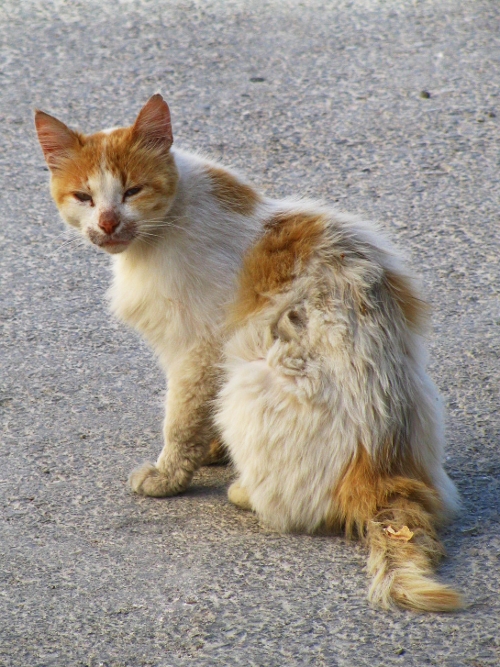
Don't. Touch. Me.

Finally, though this trope is often used to create rooting interest in a protagonist, it can also be used to add depth to a villain.  A prime example for this is Captain Nemo from 20,000 Leagues Under the Sea.  The first moment happens when he rescues the main characters after their ship sinks, but it happens many more times too, such as when Arronax finds him weeping over a picture of his family.  At the end of the book, even though we know that Nemo is the bad guy, we can’t help but feel a little sorry for him after he’s gone.

Puppy image courtesy Wikimedia.  Cat image taken by me.

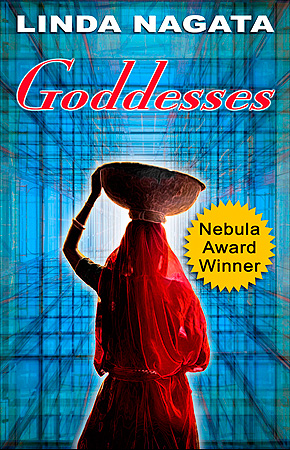
Goddesses by Linda Nagata

From the book description:

Michael Fielding is the newly appointed site director of the Four Villages project in rural India, tasked with guiding the economic development of the region. But a chance encounter with an ailing, homeless, and very young widow plunges him into the maze of an ossified and violent traditional culture, while putting his own career at risk.

On the other side of the world, Cody Graham’s hazardous waste cleanup company, Green Stomp, has earned a reputation for tackling the toughest, dirtiest jobs around. The harder the challenge, the more Cody likes it. But when chance—and the polluted ground water of Four Villages—brings Michael back into Cody’s life, both are forced to question their shared past, their values, and what it means to do good in the world.

This book was a change of pace for me.  It’s science fiction, but takes place on a near-future Earth much like our own.  In fact, the two driving elements of the story (infertility and economic development) are such contemporary issues that at points, I felt I was reading a piece of mainstream literature.

The writing is quite good, both on a technical and an artistic level.  The storytelling is a little slower, but the character development is very well done, especially for Rajban, the native Indian girl whom Michael takes in and rescues.  The parts from her point of view made me think a bit about my friends who did micro-finance after graduation; I think they would like her story a lot.

As a writer, one thing that interested me was how Nagata started off with a whole bunch of flashbacks and actually pulled it off.  They tell you never to do this, but she made it work by grounding those scenes with clear action and a relatable conflict (childbirth, for example), all in the first couple of paragraphs.  There were a couple of parts that confused me, but overall I think she handled it very well.

The ending was a bit ambiguous, which was dissatisfying in some ways but in other ways fit the story much better than a clean wrap-up.  The story raises some very thought provoking questions about tradition and modernity, and a more definitive ending would probably have ruined a lot of that.  But still, I wish I knew what happened to some of the characters after the end.

Overall, I’d give this book four stars.  If you enjoy science fiction but you’d rather read something grounded in the real world, you’ll probably enjoy this book.  If you’re interested in the developing world at all, I’d highly recommend it.

The interior designer’s approach to story

I recently read a fascinating post on John Brown’s blog with an interesting exercise for analyzing the kinds of stories you most like to read.  By finding out what really turns you on in a story, you can have a much better idea what to write, and how to make your own stories better.

He prefaced the exercise with a story about the interior designer who helped them to decorate their house.  The designer spread out a number of home magazines in front of them, and told them to go through and tear out the pictures that most turned them on.  After doing this, they analyzed the pictures to see what they had in common, and thus discovered how to best decorate their house.

The exercise works much the same way.  First, pick out five books you really like that immediately come to mind.  Mine are:

As many of you know, these are some of my favorite books of all time.  I’ve reread three of them, and I intend to reread the other two at some point.

Next, pick out the elements that these books have in common.  Here’s what I came up with:

1) Set in a different time and place.

Not all these books are science fiction, but the all take place in a world far removed from our own.  Only Spin takes place largely on Earth, but the events of the story transform the world as we know it so much that by the end of the novel, it’s completely different. SPOILER (highlight to see) Besides, at the very end, the two main characters leave Earth by going through the giant portal to another planet, so the novel is arguably about escaping the world as we know it.

2) Stakes that are much more personal than global.

This was interesting, and highlights something I realized when I compared Merchanter’s Luck with Downbelow Station.  In all of these stories, the central driving conflicts are extremely intimate and personal.

To be sure, many of these stories also have an epic backdrop; Mistborn certainly does.  However, I was much more interested in Vin’s growth and development than I was in how the Ska would overthrow the Lord Ruler–in fact, Mistborn is my favorite book in the trilogy for that very reason.

3) Encourages deep introspection.

This shouldn’t come as too much of a surprise if you’ve followed this blog for a while, but I love love LOVE stories that make me see the world in a new way.  Thrillers and adventures are all fun and good, but if it doesn’t make me think, I’m usually like “meh” at the end.

4) Female characters who aren’t weak or passive.

This one might be a bit more controversial, but in all of these stories, I’ve noticed that the female characters are pretty strong, even if they aren’t all kick-butt Katniss wannabes (ugh…I hate Katniss).  Even in Legend, which is largely dominated by men, you still have the earl’s daughter, who is one heck of a spirited woman.

5) Life and death conflicts.

This is interesting: in all of these books, the threat of death is immanently real.  Some of them, such as Legend and On My Way to Paradise, are among the most violent books I’ve ever read.  I’m not sure what it is, but there’s something about life and death struggles that really draws me.

6) Romantic in a broad sense.

I’m using Tracy Hickman’s definition here, in which romance is all about teaching us to feel and bringing us in touch with our deepest feelings.  That’s the central theme of On My Way to Paradise: learning how to be a man of passion after witnessing some of the worst atrocities of war.

All of these books not only make me feel, they are about the feelings that they inspire.  In other words, the emotional elements of the story are both a part of and deeply embedded in the story’s central theme.

The exercises isn’t complete after this, though.  For the last part, take another five books and analyze them to see how they compare.  My second list includes:

So how does the list stack up?  Let’s see…

  1. Definitely true.  NONE of these stories take place in the world as we know it–and that’s awesome.
  2. A Canticle for Leibowitz might seem like an exception, since it follows the broad rise and fall of human civilization after the nuclear apocalypse.  But the things that really drew me to the story were the more personal elements: the novice who makes the illuminated manuscript of the electrical diagram, for example, or the abbot at the very end who SPOILER tries desperately to convince the single mother not to take her baby to the mercy killing station after the bomb fatally irradiates them.  In any case, it’s telling that A Canticle for Leibowitz made this list, whereas none of Arthur. C. Clarke’s books even came to my mind.
  3. Definitely true.  Even Citizen of the Galaxy, which is more adventure fiction than high concept sf, features a fascinating society of interstellar traders that really made me sit back and think about the way we structure our society.  Heinlein has a really awesome way of doing that with everything he writes.
  4. The only possible exception here might again be Heinlein, who had some very extremist views of women (putting it lightly).  However, if I recall, Citizen of the Galaxy has a female character at the end who helps pull out the main character from his indigent circumstances and helps him to come into his own.  Again, they might not all be kick-butt tramp-stamp vampire slayers, but they certainly aren’t weak.
  5. Less true of The Neverending Story and The Dispossessed, but while the central conflicts might not be about life and death, the threat of death (or a total loss of identity) certainly comes into play.
  6. Definitely true.  Few books have taught me to feel more deeply than The Neverending Story.  An absolutely magnificent piece of literature.

So there you have it.  According to this exercise, I should write books set in another time and place, where strong female characters face life and death decisions that personally impact the people in their lives and make the readers think and feel.  Interestingly enough, that is a PERFECT description of Bringing Stella Home, as well as Desert Stars and Into the Nebulous Deep.

Cool stuff.  Makes me want to write.  So on that note, I think I will.

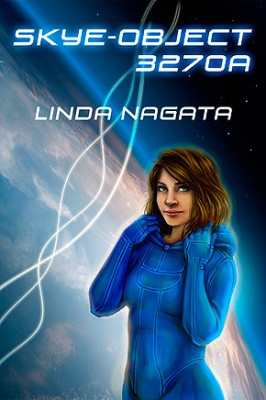
Skye Object 3270a by Linda Nagata

It’s not easy being a teenager in the orbital colony of Silk–especially when all the adults are functionally immortal and anyone under one hundred is considered an adolescent.  To make matters worse, Skye fell to the city in an escape pod when she was just a baby, with no idea who she is, where she’s from, or how long she was drifting in space.

Fortunately, she’s a tough girl with several close friends and a determined spirit.  One way or another, she’ll find out where she’s from–and whether there are any of her people still out there.  

I thoroughly enjoyed this book.  It combined the best of both science fiction and young adult: likeable teenage characters struggling to find their place in a high-tech alien world.  In particular, I found it fascinating how the widespread nanotech shaped both the society and the universe.

But the story isn’t about the technology, it’s about the characters, their adventures, and the friendships that form between them.  This was what really made the story come alive for me.  There’s a small amount of wish fulfillment, which may or may not be your thing, but overall I found the characters to be both believable and likeable.  It was a lot of fun to watch them grow and learn together.

At times, though, it felt as if the characters weren’t challenged enough.  The friendship and relationship issues were well done, but it wasn’t until the end that they started to have any significant try-fail (or try-almost fail) cycles in their adventures.  Also, while the ending was quite satisfying, it was also a little abrupt.

Those didn’t detract much from the rest of the story, though.  Overall, I thought it was a very satisfying read–the sort of book I wish I’d found when I was twelve or thirteen.  If I wasn’t already hooked on science fiction by that age, I have the feeling that this book would have turned me into a lifelong fan.

As a footnote, I’d like to add that this is EXACTLY the kind of book that indie publishing was made for.  It’s a great story, but the science-fictional setting is so unconventional that most publishers wouldn’t take a chance on it.  Even houses like Tor and Baen are focusing more on sub-genres like urban fantasy and military sf, which both have large, proven readerships.  For something that’s a little more niche or experimental, it’s good to see that there’s still a way to get it out to readers who would love it.

So yeah–if you like young adult books and you’re not turned off by space elevators, nanobots, or alien planets, you should totally try out this book.  I think it will surprise you just how much you enjoy it.

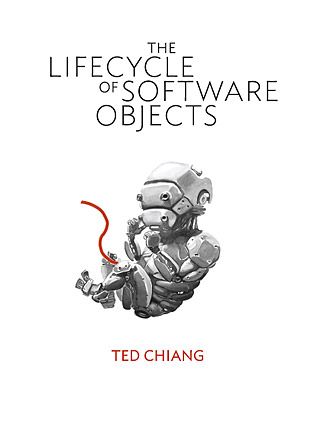
The Lifecycle of Software Objects by Ted Chiang

Ana was a washed-up zoologist turned programmer looking for work; Derek was an avatar designer for the Data Earth virtual reality platform.  The thing that brought them together: Blue Gamma Inc., manufacturer of autonomous self-aware AI pets known as digients.
Like any pet, each digient requires constant attention as they learn and grow.  Soon, Ana and Derek become as attached to their own digients as parents to their children.  But when Blue Gamma goes out of business and the Data Earth platform becomes obsolete, the future for the digients looks grim–until they enter the next phase of their natural evolution.

I really, really liked this story.  It’s got just about everything that makes science fiction so great: futuristic setting, well-rounded characters with believable motivations, one Big Lie with everything else held more or less at the level of our current understanding, and tons of parallels between the fantastic world and our own that makes you step back and really think about things.

The interesting thing about this story was how it played with all the old robot/AI tropes.  Usually, stories of this kind will have the robots rise to transcendence, either becoming the benevolent (or largely absent) rulers of the world, or taking over and enslaving humanity in some fashion. Not so with this story; the scope was much more intimate and personal, driven by characters rather than the Fate of Mankind, and that ultimately made the story much more believable.

If I had any problem with this story at all, it was the ending.  After so much build-up and development, I felt as if it cut off rather abruptly, just as things were getting more and more interesting.  I suppose the author was going for something of a “Flowers for Algernon” feel, but that wasn’t what I took from it.  Or perhaps he ran up against the novella word limit and decided to cut it off; I don’t know.

Regardless, I thoroughly enjoyed this story.  It’s certainly worthy of the Hugo for which it’s been nominated.  Highly recommended.

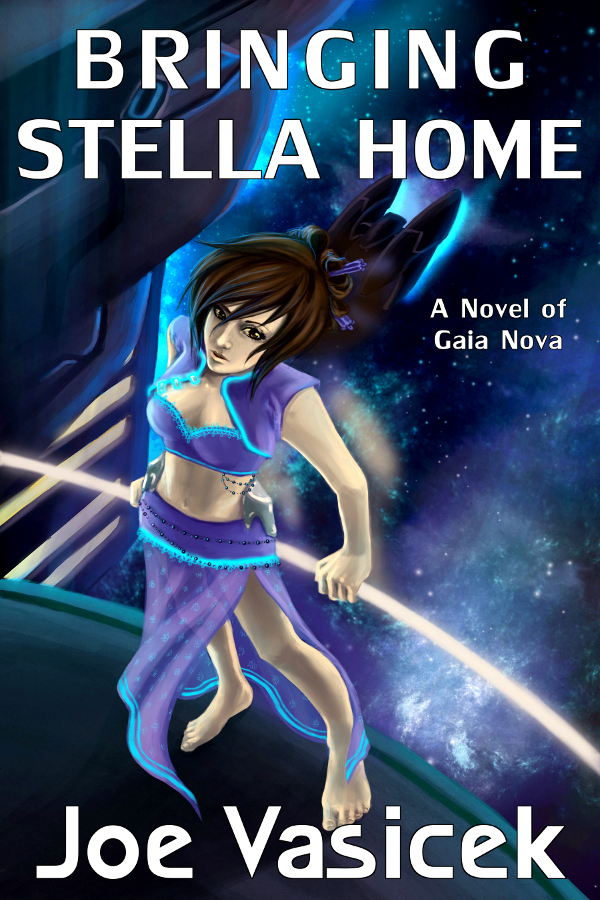
Bringing Stella Home is now up on Amazon!

That’s right–after a whole lot of work, my novel is now up on Amazon for $3.95.  Check it out!
This novel is the first of a much larger series that I have planned.  It’s not a series like Ender’s Game or Song of Ice and Fire, though; all of the novels are supposed to stand alone, though they share the same setting and feature recurring characters.  In that sense, it’s more like Gemmell’s Drenai series.

Even though the series is space opera, I tried to keep the science plausible at least on a high school level.  So while there’s “magic” like FTL and artificial gravity, I’ve tried to bend rather than break the laws of physics.

At its core, the story is more about the characters than the setting or even the plot.  It follows a young boy who is determined, at all costs, to save his brother and sister, even as his world quite literally falls to pieces all around him.  Along the way, he meets up with a mercenary captain who is running from some demons of her own.  The way they help each other overcome their personal challenges is a major driving force throughout the book.

Anyhow, I suppose that’s enough.  I could ramble on forever, but I don’t want to get in the way too much.  Thanks so much, and I hope you enjoy it!

T minus 24 hours and counting…

That’s right!  After much wrangling, I formatted it this morning and published it to Amazon this afternoon.  In less than 24h hours, it should be up for sale!

In many ways, Bringing Stella Home is a lot different from Genesis Earth.  For one, the scope is much larger, with the rise and fall of galactic empires and a war leaving billions dead in its wake.

At the same time, however, the stakes are very personal.  It’s not about turning the tide of human history or saving millions of lives; it’s about one boy who doesn’t want his world to fall apart, and will do anything to save the people he loves.

I put a content warning in the description because there’s a lot of darkness in this book.  It’s not for everyone; I know that some of my friends would find it shocking and offensive.  However, it isn’t my intention to glorify evil or celebrate immorality; rather, by portraying it honestly, I hope to make the struggle against it that much more meaningful.  There is, after all, an opposition in all things.

Writing this book was a watershed moment for me.  Not only is it the first book in a series which I hope to continue across many books, but it marked a shift in my writing.  Before the rise of indie publishing, I thought this would be the one that finally broke through the iron gates of the publishing industry and made my debut.  Perhaps that was why I was so reluctant to send it out; I didn’t want to experience the crushing blow of rejections from agents who didn’t think they could sell it, or editors who think that science fiction is dead.

But now, I don’t have to break through those iron gates; now, I can send this story out into the world and let the readers decide whether it’s any good.  And that’s exactly what I intend to do.

For all those of you who have helped bring this project up to this point, I want to sincerely thank you by giving you a free copy of this ebook.  I’ll be sending it out tomorrow, most likely; if for some reason I miss you, please email me and I’ll correct the mistake.  They say that writing is a solitary art, but this day and age, that’s no longer true.  So once again, thank you.

It’s been an exciting journey thus far, and something tells me that it’s only getting started.  I can hardly wait to see what the future will bring!