The love languages of Star Wanderers

So I’ve been reading this really interesting book recently called The Five Love Languages. Maybe you’ve heard of it. The basic idea is that all expressions of human love and affection fall into five basic categories or languages, and that we’re all better at speaking or understanding one language than we are at the others. There’s actually an online test where you can figure out what your primary language is (mine is physical touch), and learn how to better speak the others.

As I was reading this book, I couldn’t help but think about the characters from my books, especially the Star Wanderers books. Just for fun, I decided to figure out what their primary love languages are. Just as a warning, there will be unmarked spoilers below.

Jeremiah

Jeremiah’s primary love language is definitely physical touch, and that’s probably why I was able to write him so well. For him (and for me), physical intimacy implies an emotional commitment, which is why at first he turns Noemi down (he doesn’t want to make a promise that he can’t keep). When they finally do get together, the language barrier isn’t so much of an issue for him because he gets all the love and affection he needs through physical touch.

Noemi

Noemi’s love language is quality time. For her, physical touch is more just a means to an end, which is why she’s okay with offering herself physically to Jeremiah before she really knows him. But at the various points in the series where it looks like he might leave her for a while, she freaks out a bit, even when she knows it’s only temporary. Because the Ariadne is so small, and she and Jeremiah are basically forced to live on top of each other, she’s able to bond very quickly with him because of all the time they spend together.

Mariya

Without a doubt, Mariya’s love language is acts of service. It’s not until Jeremiah saves her family by getting them a berth on the Hope of Oriana that she really starts to fall for him. She tries to express her love by offering to help translate between Jeremiah and Noemi, which has the added benefit of making them both dependent on her to some degree. When Lucca rescues her from the pirates, she starts to fall for him instead, which culminates after he helps her to save everyone else.

Lucca

I’m not sure what Lucca’s love language is exactly. I want to say it’s acts of service, because he also doesn’t really fall for Mariya until she saves him. At that point, she goes from being the pretty trophy he won in the contest with the pirates into an actual human being that he can love and respect. He also has a bit of quality time going on, since he really comes to love her after the time that they spend together.

Jakob

At first, I thought that Jakob’s love language would also be acts of service, because of how he slaves away to support his family and feels rebuffed when they don’t appreciate it. But then I remembered that his pride makes it hard for him to accept acts of service from others. After thinking about it some more, I think his primary love language is words of affirmation. Salome’s constant nagging really grates on him, and her harsh words nearly drive him to the brink of suicide. He’s too proud to admit that he needs to be told that he’s loved, but he really does.

Salome

Salome’s love language is almost certainly receiving gifts. When Jakob’s work at the Oriana Station dockyards take him away from her, she feels unloved because he isn’t giving her the gift of his presence. More importantly, when he sent both of their sons away on the Medea, she felt as if he had taken two of the most important things in her life away from her—the exact opposite of giving gifts. The fact that they’re so poor certainly doesn’t help things.

Just for fun, let’s do a few characters from Sons of the Starfarers as well!

Isaac

Isaac’s love language is probably physical touch. He feels like he has to be within an arm’s reach of Aaron at all times, which is one of the reasons that Aaron resents him. He’s also hyper-aware of Reva’s no nudity taboo, and is very careful not to touch her when she isn’t wearing any clothes. When she puts a hand on his shoulder, he has a minor breakdown, and when she gives him the henna tattoo, that’s also a big deal mainly because of how it involves physical touch.

Aaron

I’m pretty sure that Aaron’s love language is words of affirmation, though I haven’t fully thought it through yet. He misbehaves and acts irresponsible because of how Isaac constantly nags him, and when he’s surrounded by friends who give him verbal encouragement, he starts to shape up rather quickly.

Reva

I’m not sure what Reva’s love language is. It isn’t physical touch, and it isn’t words of affirmation—her father wasn’t very good with words, but she still knew that he loved her. It isn’t receiving gifts either, since she doesn’t think much of the clothes that Isaac buys for her. So just by process of elimination, her love language is probably either quality time or gifts of service. Of those two, I’m more inclined to say that quality time is the more important one, which should become obvious in Book V: Captives in Obscurity.

Mara

Mara’s love language is almost certainly words of affirmation. In the first chapter of Book IV: Friends in Command, she has a nightmare that should make that abundantly clear. She’s also closed herself off in a lot of ways, to the point where she’s no longer comfortable with giving or receiving any sort of affection. That’s why she can be so harsh when she’s criticizing Aaron—though, to be fair, she always strives to make her criticism constructive.

So there you have it! Six characters from Star Wanderers and four characters from Sons of the Starfarers, with all of their love languages worked out. For the characters I’m not so sure about, I should probably take the online test for them just to see how it ends up. That would be a fun project, but for now, I think my time would be better spent writing the next Sons of the Starfarers book.

Take care, and let me know what you think!
Thoughts on the danger of falling in love with your characters

As a writer, I spend so much time in the heads of my viewpoint characters that I can’t help but like them. So it sometimes comes as a surprise when readers get frustrated and want to slap my characters around.

To be fair, sometimes I do that on purpose. For example, in Stars of Blood and Glory, Princess Hikaru does some incredibly stupid and naive things that end up getting everyone else in a lot of trouble. There’s a reason for it, though: she’s been sheltered in the palace all her life and knows nothing of the outside universe. Over the course of the story, she comes to realize just how naive and sheltered she’s been, and has something of a transformation.

Jeremiah from Star Wanderers is another character that readers sometimes get frustrated with. He’s very passive and lacks a strong backbone, at least at the beginning of the series. I did try to make sure that each story in his viewpoint was driven by his choices, rather than the things that happen to him. But he isn’t your typical alpha male starship pilot—far from it.

With Jeremiah, I tried to lean towards writing an “everyman” rather than a “superman.” In a lot of ways, he was also a case study in human nature for me, since I’m not a passive person and in real life tend to get frustrated with passive people. When I dove into Jeremiah’s head, though, I found it almost impossible not to like him, even with all his flaws.

SW-VII (thumb)Another good example from Star Wanderers is Mariya. Some of my readers absolutely hate her. Given her role in the story, it’s not hard to see why: she basically tries to steal away the love interest from the main female protagonist of the series.

In her head, though, she’s not stealing—she’s sharing. Everything she does makes sense for her perspective, and when she realizes how much she’s hurt everyone, she feels genuine remorse and regret. As a character, she fascinated me so much that that was one of the main reasons I decided to write a book solely from her point of view.

To be fair, one of the other reasons readers get frustrated with her is because she’s an angsty teenager. Her life is either amazingly awesome or on the verge of falling apart (the latter being much more common). I can’t fault readers at all for getting frustrated with that—all I can do is hope that the payoff is greater than the pain.

Looking back on all this, I think that one of the potential traps of being a writer is falling in love with your characters more than your readers ever will. That’s not to say that you shouldn’t love your characters, but that you shouldn’t let that love make you blind to how your readers are going to respond to them.

It’s kind of like the central paradox in Orson Scott Card’s Ender’s Game: in order to know an enemy well enough to defeat them, you have to know them well enough to love them as well. But just when you can’t help but love them, you have to destroy them. It can be the same way with your characters: even when you know them well enough to love them in spite of their flaws and weaknesses, you still have to give the readers their moment of schadenfreude.

Of course, a lot of it ultimately comes down to skill. If you truly excel at bringing readers into the character’s head, then perhaps you can get them to love that character as much as you do. But it also depends on the reader. If the reader isn’t particularly interested in falling in love with a character (or in falling in love with that character), then your writing skill probably isn’t going to change that.

It’s interesting to think about, and something I’ll definitely keep in mind as I continue to write. In the meantime, if you have your own thoughts on the subject, please leave a comment—I’d very much like to hear it!

Squirrel!

So a couple of months ago, I set aside the first draft for Friends in Command (Sons of the Starfarers: Book IV) in order to let the story percolate a little in my mind. I do this from time to time, especially between deep revisions, in order to step back approach the story with a fresh mind. I’ve found that doing so tends to improve the quality of the story immensely.

I was fully intending to get back to Friends in Command this month (and still intend to do so eventually), but just as I was finishing up the 4.0 draft for Heart of the Nebula, I had this crazy awesome story idea pop into my head and I couldn’t not write it. It actually came to me right before I got to the last chapter, which led to this exasperated tweet:

So anyways, the working title for the squirrel! project is Queen of the Falconstar. It’s a sci-fi action & adventure standalone (for now, heh) that takes place in the same universe as Sons of the Starfarers, but a few hundred years into the future. The Outworld frontier has been more or less tamed, and the Hameji are beginning to establish themselves on the outer reaches of human space. It’s a brutal and dangerous universe outside of the major stellar empires—which of course is where this story takes place.

It’s the main character, Zlata, that I’m really excited about. She’s crafty, pragmatic, resourceful, and slightly pessimistic, a little like Mara from Sons of the Starfarers but without all the trauma and daddy issues. She’s ruthless when she needs to be, but can be quite altruistic whenever it’s practical. Above all else, she’s a realist, accepting things as they are and preparing herself to deal with them accordingly.

The story starts when pirates capture her home station and carry her and her best friend off as slaves. It turns out, though, that these aren’t ordinary pirates—they’re Hameji tribesmen from the Outer Reaches. The captain, Lord Khasan Valdamar, is a young Hameji commander trying to establish himself and build a war fleet to his name. He doesn’t have much to work with, though, and in the brutal world of intertribal Hameji politics, a single miscalculation could lead to the annihilation of his small clan.

Through a daring combination of intrigue and romance, Zlata convinces him to take both her and her friend as wives, thus raising their status and securing their future. But this sets off a tribal war, which she soon discovers is far more of an adventure than she ever bargained for.

That’s the basic story idea that I’m working with, at least. Like I said, I’m way excited about it! I don’t have any idea how long it’s going to be or what it’s going to turn into, but this is basically how Star Wanderers got started and that turned out rather well.

So I’ll probably dive into this rabbit hole for the next month or so to see what’s down there. But don’t worry, I fully intend to write Friends in Command as well. At the very latest, that one should be out sometime in the summer, though it will probably be ready much sooner. And when Queen of the Falconstar is finished, I think you’re really going to like this one as well!

Things I want to learn in 2015

I was going to follow up my retrospective 2014 post with another one, but instead I want to look ahead at the things I hope to learn in 2015. Of course, I’m sure that many of the things I’ll learn are things that I couldn’t have foreseen, but it helps to have some direction to start out with. Here goes!

How to consistently sell books outside of Amazon

If I learn nothing else this year, I want it to be this. In 2014, about 90% of my sales were through Amazon, and when they came out with their Kindle Unlimited subscription service, my income took a big hit (Amazon requires all books in KU to be exclusive, so none of my books qualified). If I can grow my non-Amazon sources of income to more than 50% of my total revenue, that would be fantastic.

So far this year, I’m off to a good start. I have a book featured in Apple’s ongoing First in a Series Free promotion, and that’s given my books on iBooks a huge boost. In fact, I wouldn’t be surprised if I sell more books on iBooks this month than I will on Amazon. But the key here is to sell consistently on the other platforms. Right now, I have no idea how to do that—but I definitely want to learn!

How to turn readers into lifelong fans

I’ve been publishing for the last four years now, and I’ve picked up a few fans along the way, but I get the sense that most of the people who read my books are just casual readers who find my books interesting but tend to move on after they’ve read them. Perhaps this is normal, but I would like to take things a step further and build a strong fanbase around my books.

Up until now, I’ve mostly focused on writing books, not in connecting with the people who actually read them. But I want to do a lot more of that next year—not only in order to sell more books, but also to connect with the fan community in general and make a more lasting contribution to the genre.

How to write (harder) better faster (stronger)

If I could write 10,000 words a day—good words, publishable words—that would absolutely fantastic. So far, the most I’ve managed in a single day is about 5,000. Right now, I’m lucky if I hit 2,000. It’s aggravating, because I feel like I’m so ridiculously slow, and the stuff that I do write usually needs some cleaning up before it’s publishable … basically, I just want to be a robot unicorn who farts rainbows and writes a bestselling novel every 72 hours.

Barring that, I’d just like to learn how to overcome some of the things that get in the way of writing.

How to write memorable characters that readers fall in love with

Of all the areas of craft that I’d like to work on, this is the one that probably needs improvement the most. I’ve had lots of readers tell me that a particular story resonated with them, but I’ve never had a reader tell me that they were crazy about a particular character. I think I’m reasonably good at writing characters that are complex and three-dimensional, but that’s a separate thing from writing a character that readers fall in love with.

I think I’ll stop here for now. There are other things that I’m sure will be good to learn, but these are the ones I especially want to learn in 2015.

What readers want

I’ve been thinking a lot recently about what science fiction and fantasy readers want in the books they read. I’m in the middle of writing and publishing a series of novellas and short novels, so it’s definitely on my mind. After publishing twenty books and completing another novella series, I think I have a pretty good idea.

First and foremost, I think that readers want to have an experience. The exact nature of that experience depends on the genre, but for science fiction and fantasy readers, that experience needs to be out of this world. They want to be transported somewhere and feel that they’re immersed in the world of the story.

I think I’ve done a pretty decent job of this so far. I’ve gotten a lot of feedback from readers who say that they really enjoy the worlds that I’ve created. There’s always room for improvement, but so far, I think I’ve done a pretty good job transporting my readers to other worlds.

Second, readers want characters that they can connect with somehow. That usually means characters that they can relate to, though it can also include larger-than-life characters as long as they don’t feel fake. The characters are especially important for science fiction and fantasy, since they make everything else in the book feel real and authentic. Besides, when you’re visiting a new and unfamiliar place, it’s always good to have a friend.

I think that character is one of my strong points. I love getting into my characters’ heads and showing how they uniquely see the world around them. I also love showing how characters change and grow as they struggle to overcome their weaknesses. I’ve gotten a lot of positive feedback from readers on my characters, even in some of the more critical reviews, so that tells me I’m doing something right that so many readers can connect with them.

Third, readers (especially sf&f readers), want an adventure. They don’t just want an internal struggle as a character wrestles with difficult moral issues, or a transformative growth experience as a character faces a difficult challenge. Both of those can make a good story into a great story, and turn a reader into a fan, but more than that they want stuff to actually happen. They want the plot to move at an exciting pace–to get sucked into a story as they wonder what’s going to happen next.

With the series I’m writing now (Sons of the Starfarers), I’m trying to do just that. Star Wanderers (my other novella series) did pretty well, but I think the conflict was more personal and internal, or had more to do with the relationships between the characters than any sort of adventure that they were having together. There’s a place for that, but I think a lot of readers got bored midway through the series, or didn’t feel a compelling need to finish it. With Sons of the Starfarers, I’ve been careful to keep the action moving at a good clip with every book, and so far almost everyone who reads the second book goes on to the third book.

So those, I think, are the top three things that the majority of readers are looking for. But there’s something else that I don’t think I’ve been as good at, and it has to do with everything above.

I think that most readers, especially sf&f readers, are looking for longer books. They want everything above, but they want it in much bigger doses. The enjoyment they get out of a book doesn’t increase linearly with the page count, it increases exponentially. The longer the book, the deeper the immersion. The characters feel that much more real the longer they get to spend with them, and the adventure feels that much more thrilling.

As I’ve said before, I really enjoy writing novellas. But if my readers want something meatier, I’ll do what I can to satisfy them. I may love writing novellas, but I also love writing novels too. Since they generally take longer to write, with a lot more time between new releases, it’s more of a challenge to market them, but I have enough books out now that I can switch gears.

There are a couple of half-finished novel projects that I’ve had on the back burner for a while. I’ll keep working on Sons of the Starfarers until that series is complete, probably sometime next year, but I’ll also work on the novels in the meantime. Sons of the Starfarers will have nine books (three omnibus editions), and then it will be complete. After that, time to move on to longer books.

Why I couldn’t finish Gone with the Wind

For the past month or so, I’ve been on a Civil War kick. I watched the movie Gettysburg to celebrate July 4th, read Gods and Generals, wrote a short story about a time traveler at Gettysburg, and have been listening to a lot of Civil War music as I write. One of the books I decided to give a shot was Gone With the Wind, that classic American novel that’s tied so closely with the Civil War.

It’s definitely a good book. There were parts of it that I really enjoyed, such as the perspective of the people of Atlanta as Sherman’s troops got steadily closer. The poverty of the plantation owners after Sherman’s march to the sea provided a stark contrast to the pompous gaiety of society before the war. You definitely get a sense of what it means to be Southern while reading the book–it’s surprising how similar some things are to the way they were. And just in general, the sheer sense of immersion that the novel gives you is just incredible. It’s rare that I’m sucked into a world as thoroughly as I was sucked into the quiet charm of the antebellum South and the frenzied optimism of Confederate Georgia.

The real shock to me was that I could enjoy the book even as I hated the main characters. Scarlett is a bitchy, stuck-up brat–an entitled rich white girl who cannot comprehend that the world does not revolve around her. Rhett Butler isn’t nearly as stuck-up as she is, but he is an arrogant jerk who sneers at other people, profits from their misfortune, and hides his cowardice with his biting cynicism.

The fact that I enjoyed reading about them even though I disliked them so much is a testament to the fact that not every character needs to be likable. Even thought Scarlett really peeved me off, I still found her fascinating because I felt like I really understood her. Margaret Mitchell does an excellent job of getting you into her characters’ heads and showing where they come from. In some ways, I felt that I understood Scarlett better than she understood herself.

But I have to be honest–from page one, I was only interested in Scarlett for the schadenfreude. I already knew how the story ends, with those classic lines “frankly my dear, I don’t give a damn,” and “tomorrow is another day.” If I’d been waiting instead for Scarlett to experience a growth arc (and she really does start in an excellent place for one), I probably would have thrown the book across the room much sooner.

The part that made me stop reading–and yes, this will spoil the book–was the part where Scarlett steals Frank Kennedy, her sister’s fiance, in order to get the money to save Tara. She’s so singly focused on saving the plantation (Tara) that she’s willing to backstab her own family, who ought to matter a lot more to her than a house and a spot of land. Yes, I understand that it was entirely in her character to do that, but when she actually betrayed her sister like that, I just couldn’t stand it anymore. I skipped to the last chapter, had my juicy moment of schadenfreude, and returned the book to the library.

I had a lot more sympathy for everyone who locked horns with Scarlett (except for Rhett) than I ever did for Scarlett herself. The O’Hara overseer who gets fired in the first or second chapter for making the poor Slattery girl pregnant–I didn’t think it was noble for him to try and steal Tara through his postwar connections, but I could see why he’d do it. He probably didn’t feel like he could marry the Slattery girl because the O’Hara’s weren’t paying him enough. Even if they were, the fact that he married her showed that at least he was trying to set things right. And though I didn’t admire the way he went about trying to get his revenge, a part of me wanted him to succeed.

My favorite character was probably Melanie. As soon as she showed up on the page, I liked her, and as the story progressed, I came to actively admire her. Ashley, too, was a very interesting character to me–his thoughts on the war and on the passing of the old way of life were fascinating. But I could never really respect him, because it was always so easy for Scarlett to manipulate him.

And even though Rhett wasn’t so prone to Scarlett’s machinations, I still couldn’t respect him because he was always such an ass to everyone. It’s not that he wasn’t a gentleman–there were plenty of gentlemen in the book who were jerks, and plenty of men who weren’t gentlemen who were still good people. The thing was, Rhett was just never a good person to anyone except Melanie, and throughout the book, that never changed.

I guess the takeaway here is that it’s almost impossible to have any sympathy for a character who treats their friends and family like garbage. For me, at least, if a character constantly betrays the people who are closest to them, I really want nothing to do with them. But I guess that’s just me–judging from the success of Gone With the Wind, I guess I can’t generalize that at all.

I don’t know. What do you guys think?

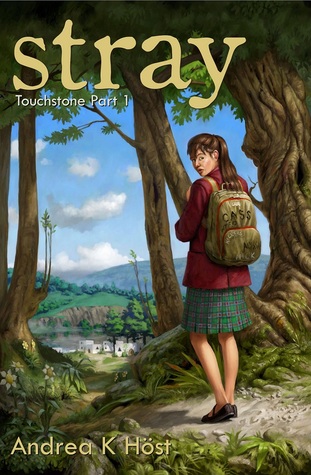
Stray by Andrea K. Höst

Stray (Adrea K Host)So I picked up this book on the Kindle Store shortly before boarding the California Zephyr for a cross-country train trip. For those of you not familiar with Amtrak, the California Zephyr runs from Emeryville to Chicago and is one of the most picturesque train routes in the United States, with some of the best views of the Colorado Rockies that you will ever see.

Well, I wasn’t paying much attention to the scenery this time, since I was way too engrossed in this book! I was more than halfway through by the time we got to Chicago, and finished it somewhere in the northeast corridor. It was an awesome, amazing read, one that I could hardly tear myself away from!

It starts out kind of like Hatchet, with a teenage Australian schoolgirl named Cassandra who suddenly and inexplicably finds herself in an uninhabited wilderness. It’s written in first person as a personal diary, so the first few chapters are all about the things she does to survive, such as finding food, water, and shelter, dealing with the wildlife, and trying to figure out just where she is exactly and how she can get herself rescued.

Eventually, she figures out that she’s on an alien planet. After a long trek in search of civilization, she finds a bunch of white stone ruins inhabited by cats. Then some weird things happen, which she doesn’t really understand (or oddly enough, doesn’t seem to be too bothered about), and shortly after that, she gets rescued–though not by people from our world.

It turns out that there are people living on another planet who have access to these naturally occurring inter-dimensional portals or gates, and use them to travel between real-space and near-space. This enables them to jump between worlds. Their civilization is about a hundred years more advanced than ours, with computers integrated directly into the human brain and other cool stuff like nanotech suits. They also have psychic abilities, like levitation, telekinesis, elemental manipulation of fire, water, lightning, etc, and supernatural sight.

Here’s the thing, though: they’re fighting a war against an infestation of trans-dimensional creatures called Ionoth, which originate in near-space and are creeping more and more into real-space. Some of them are relatively harmless, others are dangerous but unintelligent, and still others–the Cruzatch–are intelligent, highly dangerous, and very, very hostile. A special forces group called the Setari has been organized to fight them off, but the infestation is getting worse, and new gates are opening faster than anyone can close them. If nothing changes, humanity will be overrun in just a few short years.

It doesn’t take long for Cassandra to learn that she has psychic abilities of her own. The strange thing is that her abilities aren’t like any of the others. The people who rescued her soon enlist her into the Setari, where she may prove to be the key to turning the tide of the Ionoth war. But if the people of this dimension need her, how will she ever get back to Earth? Or will she even want to?

What starts off as a simple survival story soon turns into a complicated tale full of lost civilizations, trans-dimensional beings, psychic magic, high-tech, and political intrigue. At the center of it, though, is a very well-developed character who feels both real and authentic. Cassandra isn’t your typical YA heroine or “strong female character”–she doesn’t kick ass, she isn’t particularly attractive or popular, and she doesn’t get involved in any sort of sappy love triangle. But she is intelligent and resourceful, holds together under pressure, and is open and emotionally honest with her friends. She’s a great example of a female character who doesn’t have to be masculine or violent to be strong.

The world of this book is awesome. I was already sold on the ancient ruins and the alien planet wilderness, but the trans-dimensional stuff just takes it to a whole other level. The Taren civilization with their mind computers and neural network is pretty cool, and Andrea Höst very deftly works out the social and cultural implications of that technology. I’m not sure I’d want the government to have access to everything I can see, but this is definitely a world I’d like to explore. Fortunately, Stray is the first book in a trilogy, so it looks like I’ll be able to do just that!

The book ends almost exactly like you’d expect an old stock-bound composition notebook to end–on the last page, with a short entry that reads “sorry, ran out of room, will continue in the next volume.” The first book doesn’t have a clear ending that ties everything together, which is okay, because it fits very well with the overall tone and voice–it’s supposed to be a personal journal, after all. I wasn’t really bothered by it.

In fact, I can’t say that there was anything about this book that really bugged me. It’s a solid, awesome story. It does get a bit complicated by the end, but it’s not hard to follow, and the complications make it all the more engrossing. Reading this review, you probably think I’ve given away the plot of the whole book. Well, let me tell you, this quick synopsis barely scratches the surface! But I’m not a fan of spoilers, so I’ll end it here.

If you’re a fan of speculative fiction in any form–fantasy, science fiction, whatever–you’re probably going to love this book. You’ll especially love it if you’re sick and tired of the stereotypes that usually revolve around YA heroines and “strong female characters.” And if you just want to get lost in an alien world, this is one you won’t find your way out of easily!

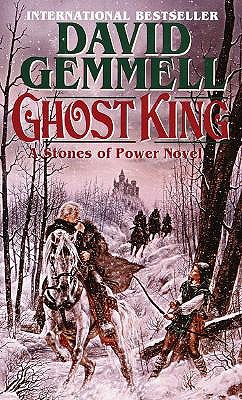
Ghost King by David Gemmell

Ghost KingAnother review of a David Gemmell book?  Yes, because I’m just that much of a fanboy.

With the Drenai series finished, I decided to sink my teeth into the Stones of Power series.  This series confuses me, because I’ve read The Jerusalem Man, which was retroactively put in as book three, but that’s a post-apocalyptic tale of the gunslinger Jon Shannow, but the series actually starts in Arthurian England.  As soon as I got a couple chapters into the first book, though, I began to see the connection.

Ghost King is an alternate history tale of King Arthur (Uther, in the book), and how he rises to become the Blood King of Britannia.  His grandfather, Culain, takes him into the mountains after the Brigantes assassinate his father, and there trains him to become a leader and a warrior.

Culain, of course, is one of the immortal Atlantians, just like his friend Maedhlyn (Merlin).  After the fall of Atlantis, they have wandered the Earth as gods, using the powers of the Sipstrassi stones to accomplish wonders.  Worshipped in turn by the Greeks, the Romans, the Hittites, and the Babylonians, Culain has tired of immortality and now wants to live out a mortal life.  But his jilted lover, the Ghost Queen, wants revenge on him for leaving her.  She was the one who killed Uther’s grandmother and mother, and who now wants to kill him and rule all of Brittania.  But her son Gilgamesh has corrupted her, so that in a parallel universe she must kill twenty pregnant woman every month just to replenish the magic of her Sipstrassi …

Okay, I might as well give up trying to explain the plot, because it only gets crazier.  Somewhere in this parallel dimension, a lost Roman legion has been wandering for hundreds of years, consigned to the void by Culain.  Also, Gain Avur (Guenevere) is in there too, as well as the Lance Lord (Lancelot), though he doesn’t come in until the epilogue.  There are also demons and vampyres, all sorts of battles, and lots of other crazy stuff.  It’s pretty freaking dang awesome.

I really enjoyed Uther’s transformation from the weak, bookish boy to the warrior king, as well as the budding of his relationship with Gain Avur (what can I say, I’m a sucker for romance).  My favorite character, though, was Prasamaccus, a crippled Brigante peasant who becomes one of Uther’s close advisors.  He’s basically a regular guy who gets sucked up into the whole adventure, but he’s level-headed and practical enough that he manages pretty well.  He’s also just a good person, which was quite refreshing in a world full of death and drama.

At one point, after rescuing Uther, he’s a guest in Uther’s chief general’s villa.  The general gives him a servant girl for the night, since in this world most men think nothing of bedding a slave.  Prasamaccus is a peasant, though, and he’s kind of shy.  The girl was actually captured in a raid in Germany, where she was raped, and this is her first time bedding someone since those traumati not the monster she’s afraid that he’ll be–they actually share a really tender moment of intimacy that heals much of her trauma and introduces him to the love of his life.c events.  She’s absolutely terrified, but so is Prasamaccus–he’s a cripple, and assumes that women just don’t want him.  He spends the night with the girl but doesn’t force her to sleep with him, and when she realizes how gentle he is–that she holds the power, and that he’s not the monster she’s afraid that he’ll be–they actually share a really tender moment of intimacy that heals much of her trauma and introduces him to the love of his life.

It’s poignant, story-rich moments like that that make me such a David Gemmell fanboy.  Usually they happen in the midst of war, between battle-hardened friends who are forced by circumstance to do something heroic, but they also happen in the quiet moments between characters who carry other scars.  That whole thing in the previous paragraph only happened in three pages or so, but it was still so incredibly powerful and moving.  Every moment of a David Gemmell book is like that, sometimes from the very first paragraph.  It’s awesome.

As far as David Gemmell books go, I’d put this one in about the middle of the pack.  It’s not quite as powerful as Legend or Wolf in Shadow, but it doesn’t meander as much as White Wolf or have such an anti-climactic ending as Ironhand’s Daughter (which was probably split by the publisher–more on that when I review The Hawk Eternal).  The characters aren’t quite as memorable as Druss, Skilgannon, or Waylander, but they are pretty awesome nonetheless.  I’d rate this book a 3 compared to Gemmell’s other books, but a 4.5 out of fantasy overall.  Definitely worth a read.

Trope Tuesday: Foolish sibling, responsible sibling

Whenever you’ve got two characters who interact with each other a lot, chances are that one is a foil of the other.  There are a lot of reasons for this, but the big reason is that it helps to highlight certain character traits by providing contrast.  Because the contrast is the important thing, the relationship between the characters can take a variety of possible forms.  It may be that one is the hero and the other the sidekick, or (if they’re villains) perhaps one is the Big Bad and the other is the Dragon.  If enemy mine or one of the other frenemy tropes is in play, they might be on opposing sides.

Foolish sibling, responsible sibling is what happens when the character foils are siblings.  It’s a subtrope of sibling yin-yang that contrasts the character traits of responsibility and recklessness, duty and prodigality, and how the two opposites somehow manage (or not) to live together and stand up for each other in spite of their differences.

It may be used to set up an aesop, usually along the lines of “be like the responsible sibling, not the foolish one,” but that’s not always the case.  It might be that the younger sibling is closer to earth and the uptight responsible one needs to learn how to loosen up.  Simon from Firefly kind of fits that mold, though he learns to loosen up not from his sister River so much as from the rest of Mal’s crew.

In a lot of stories, it’s not necessarily meant to send a message so much as set up an interesting dynamic between two equally sympathetic characters.  In the movie Gettysburg, for example, Lawrence Chamberlain is the commanding officer of the regiment, and thus has to lead the men, follow military protocol, etc, while his annoying younger brother Tom calls him by name and forgets to salute him, runs around chatting it up with union soldiers and rebel prisoners alike, and generally seems a lot more loose and carefree.

Usually, the responsible character is the older sibling, for reasons that should be fairly obvious to anyone who grew up with siblings.  As the oldest child in my own family, I can readily sympathize with the dutiful son, since I more or less was one.  That’s not always the case, though.  In sitcoms where the middle child is the main character, usually it falls on them to thanklessly pick up the slack (yeah, being the middle child pretty much sucks).  Bart and Lisa from The Simpsons are a good example of this.

I played with this a little in Desert Stars with some of the minor characters: as the second oldest, Surayya generally tries to do things by the book, whereas Amina tends to be more mischievous and conniving.  Michelle and Lars also fall into this trope, with Lars a carefree academy dropout and Michelle a hardworking (though also fun-loving) mechanic on her father’s ship.  Between Desert Stars and Bringing Stella Home, though, Lars completely turns around, so that by Heart of the Nebula (not yet published) he’s quite possibly one of the most responsible characters in the book (and I still have yet to give him a viewpoint … hmmm).

In Sons of the Starfarers, I’m playing with this character dynamic a lot.  Isaac is the oldest son, who always knew he would leave on his father’s starship to fulfill the Outworld traditions and seek his fortune as a star wanderer.  Aaron, on the other hand, kind of got roped into the whole thing unexpectedly (see Star Wanderers: Benefactor) and hasn’t yet matured.  The events of the story will no doubt give him a growth arc, but in the meantime, the dynamic between the two of them is a lot of fun to write.

There are a lot of other issues in that relationship to play with too, such as promotion to parent and always someone better, but I’ll save those for another Tuesday.

Why I don’t like George R.R. Martin

I was thinking today about George R.R. Martin’s A Game of Thrones and the fact that I’ve more or less given up on the series after reading the first book.  A lot of my friends are rabid-at-the-mouth crazy about it, both the books and the TV miniseries, but I’m just not all that into it.

Don’t get me wrong—I can see why other people like it so much.  The story is engaging, the political intrigue is deliciously complex, the world building is wonderful and immersive, and the fantasy tropes are played quite well.  I enjoyed a lot of things about the first book, and intended to read the rest of the series after finishing it.  After all, it’s one of the most important works of epic fantasy to come out in the last few decades, with people calling George R.R. Martin an American Tolkien.

But the truth is, I just wasn’t all that into it.  And the more I think about it now, the more I’ve realized that this isn’t the kind of series I would enjoy at all.

The strange thing is, I’m a HUGE fan of David Gemmell, who writes almost the exact same sort of thing.  Immersive fantasy worlds, dark and gritty characters, shades of gray, lots of fighting, lots of sex, lots of brutality, the realization that anyone can die off at any time … the list goes on and on.  And yet, there’s something about David Gemmell’s books that turns me rabid-at-the-mouth and has me squeeing like an otaku fangirl, whereas with George R.R. Martin, all I can manage is “meh.”

I think the reason for this is that Martin’s characters basically fall into one or both of two camps: victim or victimizer.  There isn’t any middle ground—at least, none that anyone can stand on for long without dying in some horrific and brutal way.  The story requires the characters to all become monsters, and anyone who isn’t willing to do that meets a horrible, tragic end.

There were only two characters in A Game of Thrones that I really cared about: Arya and Ned Stark.  Ned was the only character who really tried to stand for something, and Arya was just a spunky little girl who resisted all the stupid girly stuff in favor of more practical stuff like street smarts.

<spoilers ahoy>

The trouble was that Ned was a complete idiot, trusting in the honor of a guy who explicitly said “do not trust me” and making stupid decisions that ended up getting half of House Stark killed or captured.  It’s almost as if Martin purposefully set him up to be a straw man character—that he wanted this one character to represent all the goody-goodies of the world, and knocked him off in the most brutal way possible.  It’s like Martin killed him off to make a point, and had the story drive the character rather than the character drive his own story.

And Arya … I forget exactly what happened to her, but she basically became a victim in such a horrible, twisted way that I could tell she’d be scarred for the rest of the series.  If she didn’t die off herself, she’d probably become a dirty street rat—the slit-your-throat-for-a-copper kind, not the Disney version.  So yeah, I pretty much gave up on her.

Jon Snow was okay, but he was so far removed from everything else in the story that I just got bored with him.  Tyrion was funny, but he was also a pervert, and all the reasons to sympathize with him basically revolved around “I’m a dwarf, everyone mistreats me”—again, the victim vs. victimizer thing.  Lady Catelyn was pretty cool, but I always saw her as more of a supporting character, and while I found myself rooting for Daenerys at the end, it was only out of frustration with all of the other douchebags in Westeros—I just wanted her to come over the sea and claim the throne so that everyone else would die.

It was a pretty good book, I’ll admit—other than the fact that I didn’t really like any of the characters, everything else was quite enjoyable.  It certainly held my attention long enough to finish the thing.  But I didn’t really feel compelled to read the next one because I frankly didn’t care what happened to any of the characters.  You could give me a list of all of the ones who die off, and I would just shrug and say “oh well.”

In contrast, with every David Gemmell book I’ve read, I fall in love with the characters after reading just a paragraph or two in their viewpoint.  Drenai or Nadir, civilized or barbarian, I not only like the characters, I fall deeply in love with them.  I care about them right from the outset, even the ones with a dark past, like Skilgannon or Waylander.  In fact, Waylander is probably my favorite of them all.

The fact that I know that some of these guys are going to die only makes me more invested, because even though Gemmell kills of most of his characters in any given book, the main characters’ deaths almost always mean something.  Maybe they have some awful secret that they finally are able to give up, or maybe they’ve been running from a fate that they finally gather the courage to face.  Or maybe they just happen to be in a circumstance that requires them to give up their lives, and they rise to meet the occasion.  Not every death is cathartic, but Gemmell never kills off a character merely for the sake of killing off a character, whereas with Martin, I get the sense that that’s sometimes the only reason.

But the biggest difference between the two is that with Gemmell, the victim vs. victimizer paradigm just doesn’t exist.  Gemmell’s books are all about unlikely heroism—characters in situations that require them to be something more, or do something beyond looking out for just themselves.  Anyone can be a hero, because a hero is nothing more than someone who does something heroic.  No matter your past, no matter your fears, no matter your weaknesses, when the chips are down, we’re not all that different.

The counter argument I’ve heard is that all of this heroism stuff is superfluous, and Martin is trying to get beyond it, kind of like the 19th and 20th century philosophers who were trying to get beyond morality.  The thing is, if that’s the case, then Martin has to have the darkest and most depressing view of human nature of almost any fantasy writer alive.  If his point is that there’s nothing intrinsically heroic about anyone, that being a hero is just a matter of rising to a role and becoming a figure in one of the stories that people tell to make sense of the world—if his point is to show that every hero is really just a douchebag, there’s something about the world that he’s really missing.

In Gemmell’s books, there are douchebags who rise to the heroic roles required of them—but in the act of filling that role, something about them changes, and you see that they’re really not as evil as you thought they were.  Because in Gemmell’s view, people are essentially good and everyone is redeemable, even the rapists and murderers.  One of his darkest characters, Skilgannon the Damned, learns at the end of his story that the difference between salvation and damnation is allowing yourself to receive the light—that the only thing damning you is yourself.  Whether or not you agree with that, you have to admit that’s a pretty optimistic way of seeing the world.

In the end, that’s why I love David Gemmell’s books so much—not just because anyone can die, but because anyone can be redeemed too, sometimes at the very same time.  From what I’ve read of George R.R. Martin, it seems that he redeems no one—that to the extent I’m rooting for any one character, it’s only because I can’t wait for them to kill or brutalize all the other horrible monsters in the book.  And frankly, I find that pointless and tiresome.

There are moments in almost every David Gemmell book I’ve read that stand out to me with great clarity, so that sometimes while I’m standing in line at the grocery store, or walking down the street to the library, they pop into my head completely unbidden.  With George R.R. Martin, that has never happened to me, even for the books of his that I’ve enjoyed.

I dunno.  Everyone is different.  Maybe George R.R. Martin really strikes a chord in you, so that you feel for him like I do for David Gemmell.  Maybe you actually like some of the characters whom I’ve dismissed as douchebags.  Or maybe you don’t read fantasy for the same things I do.  This post isn’t to knock you for that, it’s just to point out and analyze why I don’t like George R.R. Martin’s stuff as much as most other fantasy fans seem to.  And if you do feel about this the same way that I do, then my point is to declare that that’s all right.  You can still be a fantasy geek and not like A Sword of Ice and Fire or anything else by George R.R. Martin, no matter how much it’s hyped.  That’s perfectly okay.

I’m writing an epic fantasy right now, and it’s not going to be anything like A Sword of Ice and Fire.  It’s probably not going to be much like any of David Gemmell’s books either, but Gemmell is certainly a bigger influence on me than Martin.  We’ll have to see how it turns out.