So it’s the middle of June, and I really should have finished Patriots in Retreat by now, but it’s been difficult to stick to any kind of writing routine, and the story is at that place where everything seems broken and writing through it is like slogging through a swamp.

Call me crazy, but I’m starting to think that’s not healthy. In Brandon Sanderson’s English 318R class at BYU, he always said the most important thing was to power through and just finish the damn thing–that you can always go back and “fix it in post”–but while that’s good advice for a new writer who hasn’t ever finished anything, I don’t think it works very well for my own writing process.

I think that what I need to do is take every weekend to cycle through the entire story from the beginning, not necessarily to rewrite it all, but to bring it into line with the stuff that unfolds later. Invariably, when I get to the three quarters mark of my WIP, it feels like the whole thing is barely holding together and that I’m writing myself into a train wreck.

For the last several years, I’ve tried to just write through that, only for one of two things to happen: either something else catches my interest and I decide to put the WIP on the back burner for a while, or it actually does turn into a train wreck and I have to set it on the back burner for a while in order to approach it with a new set of eyes.

Needless to say, neither of those outcomes is very productive.

Now, I don’t think Patriots in Retreat is broken. I think there’s actually a really good story in there, but it needs a little more excavation in certain parts before I can pull the whole thing out in one piece. This was my first time in years experimenting with the cycling process, and I don’t think I did it enough. Next WIP will be another experiment.

Long story short, I will probably have to push this one back another two weeks, which is going to push the release schedule for Sons of the Starfarers back another month. I’ve got another short story I can use to fill in the gap, but it is a bit of a personal disappointment.

Why is it so difficult to keep my own self-imposed deadlines? Am I really that flaky and unreliable? Not in other aspects of my life. Maybe my writing process really does need a complete and fundamental overhaul. Should make for some interesting future posts.

In any case, that’s what I’ve been up to. I really really really want to write a couple of short stories in a universe that may turn into a recurring one, but those will have to wait until Patriots is finished (hopefully early next week). On the publishing side of things, I’ve got a new short story and short story bundle out—more on that tomorrow! Lots of other stuff too, but it’s mostly behind the scenes, so not worth talking much about atm.

Patriots in Retreat will be finished soon, it’s just in the “this sucks and I’m a horrible writer!” phase. Which, hopefully, I’ll find a way to remove from my writing process altogether, because it isn’t healthy. When I figure out how to do that, I’ll let you know.

Guest Lecture to Brandon Sanderson’s English 318R class

A couple of weeks ago, I gave a guest lecture to Brandon Sanderson’s English 318R class at Brigham Young University. I was one of Brandon’s students back in 2008, and he wanted me to talk about my experiences as a self-published indie writer. The lecture wasn’t recorded this year, but here is a rough outline from my notes. Enjoy!


How many of you know for sure that you want to write fiction professionally? (about half) How many of you know enjoy writing as a hobby, but know that you don’t want to do it professionally? (a handful) How many of you aren’t yet sure? (the vast majority)

Eight years ago, I was where you are today: sitting in Brandon Sanderson’s class, wondering if I should turn pursue this writing thing as a career. Back then, self-publishing was the kiss of death. If you self-published any of your books, you would never be taken seriously by anyone in the publishing world again. They would treat you like the kid who ate the paste in kindergarten.

You see, back then there was a very strict and well-defined path to get published. First, you wrote query letters to agents. You did not write them to editors, because none of them accepted unsolicited submissions, and submitting to them directly was bad form. You had to personalize your query letter for the agent you were submitting it to. You had to spend almost as much time revising and reworking your query letter as you did on your manuscript.

If you were lucky enough to get picked up by an agent, they would (hopefully) get you a publisher. If you were lucky enough to get a publisher, they would (hopefully) get you into bookstores. And if your books got into bookstores, you would (hopefully) get readers. Get enough readers, and you’d be swimming in caviar, having dinner parties with Castle as a bestselling author. That was the dream.

After taking Brandon’s class, I decided to pursue writing as a full-time career. I graduated in 2010 and immediately faced a dilemma. The Great Recession made it virtually impossible to find a day job, so I had to figure out how to make the writing thing work. Writing was my plan A, and there was no plan B.

Brandon Sanderson had taught us to attend the major conventions, where we could rub shoulders with the bigwigs in publishing and maybe score a book deal through networking connections. But when I attended World Fantasy in 2010, I noticed a couple of things that were disconcerting. First, there were a lot of other aspiring authors trying to rub shoulders, many of whom were more aggressive about it than I was. Second, none of the major publishers seemed to want the stuff that I was writing (far future space opera and military SF).

Brandon’s advice, I realized, basically amounted to “if you want to get struck by lightning, wave a metal pole from the rooftop while standing in a bucket and shouting at the wind.” Which is good advice if there’s a thunderstorm. But it’s not so good on a clear and sunny day, and since none of the major publishers seemed to want the kind of science fiction I was writing, I realized I would have to find another way.

I kept trudging along, writing more books and querying agents (most of whom never responded). Then I submitted my novel Genesis Earth to the Amazon Breakthrough Novel Award contest. To my surprise, it passed the first two rounds of voting and became a quarter-finalist. It looked like this could be my lucky ticket into the world of publishing.

Around this same time, Amanda Hocking became one of the first self-published writers to sell more than a million books on Amazon. When she did that, it made me sit up and take notice. Here was a twenty-something aspiring writer just like me, who had decided to eat the paste and do the thing that you were never supposed to do. Instead of failing at it, though, she made it big. What was going on here?

I began to re-examine the traditional path to publishing that before had seemed so sure. I started following Dean Wesley Smith and Kristine Katherine Rusch, Joe Konrath, David Gaughran, The Passive Voice, and a bunch of others who were breaking out of the mold. I questioned the established wisdom, and started to find all sorts of inconsistencies in what I had always believed.

For example, why has the slushpile been outsourced to agents if they aren’t getting paid for it? Is an agent really going to go up to bat for you if you only represent an income stream of a couple hundred dollars for them? Why should publishers take 75% of net for the lifetime of the book for something that you can do on your PC in a couple of hours with open-source software?

In the Writer > Agent > Publisher > Bookstore > Reader value chain, there are really only two people that matter: writers and readers. Everyone else is a middleman. In the traditional publishing model, however, the bookstore takes half, the publisher takes most of the rest, and the agent takes a 15% cut of whatever you make. Most books never earn out their advance, and most book advances for SF&F are $5,000 or less!

As I was sorting through all of this, I heard back from the Amazon Breakthrough Novel Award contest. Genesis Earth had not made it past the quarterfinal stage. The review from Publisher’s Weekly read like someone had handed the manuscript off to an unpaid intern and said “here’s one of the books that didn’t make it past the quarterfinals, write a half-assed review that makes us look good so we can fulfill our contractual obligations to the contest.” It was clear from the review that the person at PW didn’t even read science fiction.

It was at that point that I realized I didn’t want to win the publishing lottery or be struck by publisher lightning. I wanted to build a career.

Now that I’m self-published, am I swimming in caviar or having dinner parties with Castle? Hardly—or at least, not yet. There’s nothing about self-publishing that makes it easier or less work than the traditional publishing path. But it does give you a lot more control, and a lot more ownership over your successes and failures.

My first year of self-publishing, I put a lot of money into my first couple of novels and published them to a resounding chorus of crickets. In my second and third year I wised up a bit, wrote a series of short novellas, published them on a shoestring budget, and made the first one permanently free. Sales began to rise, and I went from making pizza money to learning just how much it sucks to pay self-employment taxes.

Ever since then, I have been running a profitable business. Of course, it’s had its ups and downs, but even in the bad months, it’s made more money than it’s cost.

In fact, my second and third years were successful enough that in 2014, I made enough to support myself on my writing income alone. It was then that I learned one of my most important lessons: that you always need to have an impossible dream to strive for. Up until that point, my impossible dream was to make a living telling stories that I love. When I found I had achieved that, I lost direction and went into a writing slump that lasted the better part of a year.

One of the other important lessons I learned was not to underestimate the importance of marketing. When Amazon rolled out their Kindle Unlimited program, my sales took a major hit because Amazon’s algorithms started prioritizing KU books over non-KU books. Until that point, I’d been relying almost totally on Amazon to market my books for me, which was a major mistake.

My biggest mistake, though, was to underprice my books, which I did for the better part of 2015. In order to push sales of my other series, I dropped the prices of all my Star Wanderers novellas to $.99. It backfired spectacularly. I did glean a lot of data from it, however, and learned that the best price points for my own books was between $2.99 and $3.99. The $.99 price point did not see enough of an increase in sales to offset the lower royalty, or lead to any noticeable increase in my other books. However, the $3.99 price point did see increased sales and revenue compared to $4.99 and $5.99.

As you can probably tell, self-publishing is the sort of thing you learn how to do as you’re doing it. There is no clear path, no one true way to success. But I’ve learned a lot over the past few years, and I’ve seen my sales and readership grow from it. I’m no longer as worried about my future as I was back in 2010, because I know that I can make it work. And if you’re willing to put in the effort and learn from your experiences, you can too.

I sincerely believe that this is the best time in history to be a writer and a reader. There are so many publishing opportunities available to us now that would have been unthinkable just a generation ago, and this has led to an explosion of fantastic new books that would have never gotten published under the old system.

So is it possible to make a living as a self-published writer? Yes! It’s not easy to make your own path, but it’s definitely possible to do it and find success. So set your sights on an impossible dream, and when you’ve achieved it, find another one. When you have nothing to lose and everything to gain, don’t let your fears hold you back.


J is for the Joys of Self-Publishing

Brandon Sanderson teaches an English class at Brigham Young University, and I was one of his students back in 2008 and 2009. At LTUE this year, he asked me to come in and speak to his class about what it’s like to be an indie writer, so I prepared a short ten minute presentation on the things that I love the most about self-publishing. They are:

1. I have complete creative freedom.

As an indie, I don’t have to worry about agents, editors, marketing departments, interns, or anyone else who could kill my project before it has a chance to get out into the world. If I can write it, I can publish it. If I want to write something crazy like a story about Amish vampires in space, or steampunk Mormon airships, or orcs falling in love on the battlefield, I can do it without having to worry whether it will ever find a home outside my hard drive.

Of course, if I write stuff that’s more niche, chances are that it’s only going to find a niche audience. But that’s okay, because:

2. I don’t have to be a bestseller to find success.

With the way that the royalty numbers for indies work out, I don’t have to be a mega blockbuster bestseller to have a viable career. In fact, all I really need is to sell a thousand or so books per month–which seems like a lot until you realize that there are 1.4 billion English speakers in the world (over 300 million of whom are native). Plus, if I have thirty or forty books out, I can make a comfortable living selling no more than double digits on each one.

It’s the thousand true fans principle at work, and for indie writers, it really does work. I only started self-publishing three years ago, and I’m already making enough to keep my head above water. And to everyone except my small handful of fans (who don’t even come close to a thousand), I’m just another nobody.

3. I have the flexibility to reinvent myself and try new things.

As an indie, I’m not locked down by any contracts that I can’t get out of. That gives me a great deal of flexibility in how I can run my career. If I wanted to unpublish everything and start over under a different name, I could do that. If I wanted to try out a new genre, or dabble in something experimental like serials, I could do that. At any time, I can completely remake myself however I want.

That flexibility is crucial because of how quickly the market is changing. Publishers are consolidating and going bankrupt, bookstore chains are struggling, and new technologies and business models are opening the doors to all sorts of new opportunities. As an indie, I’m in a great position to take advantage of them.

4. I can connect directly with my readers and fans.

Not just in the sense of connecting through social media, but connecting through my books as well. If my fans are clamoring for a sequel, I can write it and get it out to them while it’s still fresh in their minds. If they have trouble finding my books somewhere, I can clear the problem up myself without getting tied up in the bureaucracy of a large publisher.

The two most important people in the book world are writers and readers. As an indie, I can make sure that no one comes between my readers and me.

5. I’ve learned to treat my career like a small business.

A lot of writers view this as a downside, or at least a hassle they’d rather not deal with. They decide not to self-publish because all they really want to do is write. After all, isn’t it better to get someone else–an agent, for example–to handle the business side of things? Isn’t it better not to have to worry about all that stuff?

For me personally, the answer is a clear and resounding NO. The business stuff isn’t a hassle–it’s actually kind of fun! Plus, the fact that I know exactly where all the money is, how much I’m getting paid, and how much I owe gives me much more peace of mind than trusting all that stuff to an agent ever would. Far from taking away from my writing time, it’s actually given me more time since the only real person I have to deal with is myself.

Besides, freelancing is just AWESOME. I love being self-employed! True, my boss is a jerk and all of my coworkers are boring, but that’s okay because

6. I have no one to blame for my failures, but my successes are all my own.

This, more than anything else, is what I love the most about self-publishing. If my books flop, it’s on me. If they hit the top 100 lists for their subcategories and garner dozens of positive reviews, that’s on me too. I’ve had books that have done both–in fact, I’ve got a book right now that’s currently #263 Free in the Kindle Store.

Yes, there are a lot of ways that I can screw up as a self-published writer. But there are a lot of ways that I can succeed, too. Like everyone, I have to deal with the fear of failure, but I don’t have to worry about not getting the credit–or the reward–for my success. As an indie, it’s all on me, and that’s exactly the way I want it to be.

LTUE 2014

Without a doubt, my favorite sci-fi convention / writing conference / symposium is LTUE. I say this every year, but this year’s symposium was one of the best! Orson Scott Card and Brandon Sanderson were both there, along with a whole bunch of other authors and artists, local and otherwise. It drew a huge crowd, too–around 1,800 people over the course of the weekend–but there was plenty of space at the Provo Marriott, so it never felt too crowded.

If anything, I think that LTUE has gotten better since leaving BYU. There’s much more openness, much less administrative or bureaucratic restriction. Fans can dress up in cosplay and that’s okay, panels can discuss pop culture topics without having to pretend to have academic value, non-LDS panelists are free to share their perspectives without feeling like the religious censors are breathing down their backs, and we have a whole hotel hotel to ourselves, as opposed to a corner of the student center.

At the same time, all of the stuff that makes LTUE great is still there, and there in abundance. Since the vast majority of attendees are LDS, the panels all revolve around the LDS perspective and experience. In his main address, Orson Scott Card talked about how his experiences growing up in the church influenced the writing of Ender’s Game and his views on leadership. At the banquet, Brandon Sanderson referenced Orson F. Whitney’s famous Home Literature speech in discussing Mormons’ place in the current science fiction & fantasy field.

In other words, all the good stuff was still there this year, plus a liberal helping of cosplay and facial hair. And who can say no to that?

In any case, I had a blast. I was on five panels this year, and they were tons of fun. In particular, the Writing Romance panel was really great. Since I’m not familiar with romance as a genre, I was a bit worried that I’d be out of my league. But the discussion was all about how to put romance in your sci-fi, and I know a lot about that. At one point, I argued that men have just as much of a hunger for romance as women. That surprised some of the female panelists, but I definitely believe that that’s true. We got into a lengthy and interesting discussion out in the hallway, which is how the best panels seem to go.

One major shift I’ve noticed from previous years is that self-publishers and self-publishing has all but lost its stigma, with people talking openly about the benefits of that career path. In fact, it was a major undercurrent throughout the entire symposium. In the green room, we got into some really intense discussions about the AE report, which came out just days before the symposium began. It seemed that I was constantly hearing or overhearing people talk about whether and how to self-publish, and on several panels people were openly advising to skip traditional publishing altogether.

Three years ago, people would have treated me like I had leprosy if I openly admitted I was self-published. Now, everyone seems to be embracing it. It’s so awesome that we’re past the stigma, because it means that we can all be open and supportive of each other and focus on the important things, like writing the best possible stories and connecting with our readers.

By far, the best event I attended was John Brown’s presentation on Clear and Vivid Writing. HOLY CRAP GUYS. That presentation completely blew my mind. The powerpoint is up on John Brown’s blog, so you can grab it and see for yourself. All I can say is that the man is a writing genius. The presentation completely changed the way I think about my own writing, and will definitely influence what I write from here on out.

Another great event was Sandra Tayler’s presentation on how to build a fan community around your stuff. She talked about the difference between a following and a community (basically, a community is a following where the fans talk to each other), how to cultivate a safe and inviting place for your fans, and what to expect from when you first start out to when the community starts to get rather large. I still feel as if my writing career is just getting started, but her advice will no doubt be very useful in the coming years.

The What Makes a Hero panel was really great. Peter Orullian, Larry Correia, and Lisa Mangum were all on it, so the discussion was energetic and full of awesome, juicy stuff. The big takeaway I got from that one was that as long as the reader doesn’t throw the book across the room in disgust, you can always bring back a fallen character and redeem them. There is nothing so beyond the pale that makes it impossible for a character to step up and become the hero once again. It takes skill to pull it off, of course, but it can be done–and that is one of the most awesome things about what it means to be a hero.

There was a bunch of other stuff that I took away from LTUE this year, but those are the major things. By the end of it, I just wanted to sit down and write! The climactic final battle for my current WIP, Sons of the Starfarers: Comrades in Hope came to me in all its awesomeness as I attended the various panels, and holy crap am I so excited to get to that part! It’s going to be amazing, and the cliffhanger ending is going to make you scream so horribly, but that’s okay because the next book will pick up right where the previous one left off, then take things in an even more awesome direction.

In any case, that was LTUE this year. SO MUCH FUN. If every convention can be like this one, holy crap, sign me up for them all!

Midichlorians vs. the Philotic Web, or a new dimension to Brandon Sanderson’s first rule of magic

I got into an interesting discussion today with my brother-in-law about science fiction & fantasy, specifically about whether explaining something too much takes away from the sense of wonder that is so critical to those genres.  It started out with a discussion of Star Wars I: The Phantom Menace, which (surprisingly) he actually kind of likes, and eventually got on to Brandon Sanderson’s first law of magic.

I was trying to explain why The Phantom Menace was so broken, and after hemming and hawing over various things came to the midichlorians.  That, more than anything else, threw me out of the story.  By explaining the Force in such a banal, insipid way, it undid all the magic of the previous trilogy and completely sterilized it.  There was no sense of wonder after that point–explaining the Force completely killed it, just like over-explaining any magic system always kills that sense of wonder.

… or does it?  Because there are quite a few wonder-inducing magic systems that get explained in great detail.  Take the Philotic Web, for example.  In Xenocide, Orson Scott Card explains, in great detail, how the physics behind the ansible system works.  And yet, by doing so, he increases that sense of wonder to the point where Xenocide is one of my favorite of his books.  Why?  Because it introduces a bunch of implications that lead to even more questions, more mysteries.

With The Phantom Menace, of course, that isn’t the case–the midichlorian thing is basically a clumsy ass pull that fails in the magic department just as hard as Jar-Jar Binks does at comic relief.  But it doesn’t fail because it over-explains things, it fails because it explains the magic in a way that doesn’t allow room to explore the implications.  As much as I hate to admit it, Lucas could have pulled off the midichlorian thing if the implications had been relevant to more things in the story than just a simple plot point.

This is where Sanderson’s first law comes in.  Basically, Sanderson’s first law states that there’s an inverse relationship to how well the magic can induce wonder versus how well the magic can advance the plot.  In order to advance the plot through magic, you have to explain how the magic works to some degree, and that’s going to take away from the sense of wonder.

But as we’ve just shown, that isn’t always the case.  Sometimes the sense of wonder gets even stronger the more the magic gets explained.  This is especially true in science fiction that follows the one big lie approach, where one thing (wormholes, reactionless drives, time travel) is truly fantastic and everything else more or less follows the laws of physics as we understand them; in order to maintain the suspension of disbelief, the story is basically forced to explore all the implications of the magic, often to great detail.

In other words, explaining the magic isn’t always like building a wall–sometimes, it’s like building a door.  Yes, it lays down a boundary that closes off the imaginative spaciousness that a story really needs to convey that sense of wonder, but if the explanation leads to new questions–new mysteries–then that sense of wonder can be maintained.  Instead of walling the reader in, it throws the reader into a maze with countless secret chambers to explore.

The relationship between plot-based magic and wonder-based magic is not linear, as Brandon Sanderson’s first law implies.  Rather, there’s a second dimension that has very little to do with his law, and learning how to traverse that dimension is key to maintaining the sense of wonder in any story.

I haven’t figured out a pithy way to explain all this yet, but I’m going to, hopefully within the next few days.  If you guys have any thoughts on the subject, please feel free to share.  I’m definitely interested in hearing your perspectives on it.

Trope Tuesday: Our Dwarves Are All the Same

Yes, you saw that right: Trope Tuesday is back, at least for the next few weeks.  I dropped out for a number of reasons, most of them having to do with my own interminable disorganization.  I really love writing these posts, though, and you guys seem to love reading them, so I’ll do my best to keep the series alive.  Here goes!

Say the word “troll,” and you could mean one (or more) of a thousand different fantasy creatures.  The things same goes with gods, demons, vampires, fairies, goblins, and to some extent, elves.  But say the word “dwarf” and we all instantly know what you’re talking about.  As tvtropes puts it:

You know them. Gruff, gold-loving, industrious, blunt-speaking, Scottish-accented, practical, Viking-helmed, booze-swilling, Elf-hating, ax-swinging, stout, long-bearded, stolid and unimaginative, boastful of their battle prowess and their vast echoing underground halls and mainly just the fact that they are Dwarves … An entire race of miners and blacksmiths, with names like Dwarfaxe Dwarfbeard and Grimli Stonesack, who are overly sensitive about any perceived slight, always spoiling for a fight, unable to speak two sentences in a row without calling someone “lad” or “lass,” and possessed of a love of gold and jewels that drives them to live in Underground Cities where they dig deep and greedily, (often with catastrophic results).

The defining characteristics of this fantasy race basically include:

  • Short.  Should be self-evident from the name of the race.
  • Expert in smithing, forging, metalworking, and crafting priceless artifacts.
  • Prefer to live underground, mining for ore and precious metals.
  • Bearded to the extreme.  Even their women often have facial hair.
  • Fond of alcohol, and often rowdy or violent when drunk.
  • Weapon of choice is a battle axe (or perhaps a war hammer).

In other words, Tolkien set the standard and everyone since has followed it with little, if any, variation.  Tolkien himself got it from Norse mythology, which had a few key differences (for example, Norse dwarves would turn to stone if they were exposed to sunlight), but once Lord of the Rings hit the bookshelves, all dwarves would ever after be the same.

Why is this?  Well, as fantasy races go, dwarves tend to be more like supporting characters than members of the main cast.  Sure, there are plenty of series that focus on dwarves and dwarven culture, but the cultures that shape world history the most are usually human or elvish.  Dwarves are often content to stay in their dwarven halls and do their own thing, far beneath the surface of the earth.

Brandon Sanderson has an interesting take on this question, which he explains in his famous essay “How Tolkien Ruined Fantasy” (which has since been renamed).  Basically, he argues that the fantasy before Tolkien was all “low” fantasy, or fantasy that loosely uses our own world as a template.  This sort of fantasy may have wizards, or magic, or monsters, but the setting itself looks a lot like something out of the pages of a history book.  Tolkien was the first to really write “high” fantasy, where everything about the world is built from the ground up, and he did such a good job of it that we’ve all been copying him since.  Rather than writing high fantasy in an original vein, most authors have switched out the real world for Tolkien’s and have been writing low fantasy in a Tolkienesque world (at least until the last decade or so).

It’s an interesting argument, but I’m not quite so sure how valid it is.  The process that Sanderson describes basically happens in every genre: someone writes an extremely popular book, and for the next several decades (centuries, in the case of Treasure Island) everyone tries to go back to it in some way.  And yet, how many different kinds of vampires are there?  How many different kinds of cops, or detectives, or spies?

Perhaps Lord of the Rings had a much more overshadowing impact than Dracula or Frankenstein ever did, but consider some of the other fantasy races he basically invented.  Ents never really took off anywhere outside of Tolkien, and trolls never universally became the big, dumb, evil, brutish creatures that they are in The Hobbit.  Elves, which really were popularized in a huge way by Tolkien, have taken on a life of their own, differing fairly significantly from the immortal angel-analogues in Lord of the Rings and The Silmarillion.  Orcs, too, are becoming more like “green klingons” in games like World of Warcraft, with an extensive honor system and intelligence on par with humans and elves.

Is there something about the Tolkienesque dwarf that fulfills a deeper storytelling need, transforming the stereotype into an archetype? Or am I wrong, and dwarves just haven’t had the same makeover as elves and orcs?  I don’t know.  But I like dwarves, and I’m a political nerd, so I’ll leave you with a fascinating Marxist analysis of Dwarf Fortress, and an interesting picture of a female dwarf.


Tarin Portrait by =RachelleFryatt on deviantART

Post A to Z update

So, the A to Z challenge is over, and it’s back to things as usual.  I hope you guys enjoyed it–I’ll probably compile the posts at some point, update them to add some more examples and references, and put it out as a $2.99 ebook.  When I get around to it, that is.  If that’s something that interests any of you, let me know and I’ll get it up sooner.

As far as writing goes, I just went back to work on Lifewalker yesterday, and the story is coming along swimmingly.  This is the post-apocalyptic story about a guy wandering down the ruins of I-15 with a copy of Brandon Sanderson’s Mistborn.  I checked with Peter and Brandon about that, and they said it’s okay.  In fact, they think it’s hilarious.  And it is, I suppose, though the book takes itself fairly seriously.

Just to give you an idea what I’m talking about, here’s an excerpt:

The first night, I stayed in a small village known as Sannakin. The people there were surprisingly friendly, though they assured me that they would have been more cautious if I had come from the south.

“What’s south of here?” I asked the village patriarch over dinner.

He shrugged. “Don’t know—never been that way. Get a lot of tinkers, though, and a merchant ever now and again. There’s people out there, that’s for sure—but it’s a wild and a dangerous country.”

I paid them for their hospitality by reading from Mistborn: The Final Empire. The story confused many of them, especially those who had never seen the ruins of a city. I explained to them that the forefathers used to live in great communes of thousands, or even tens of thousands of people. This sparked a vigorous discussion over how such a large community could possibly provide enough food for itself, and how it would handle the waste. Some people asked me if in the days before the Blight, ash covered the sky as it did in my book. I answered that it probably had, though doubtless the author had exaggerated it somewhat for the purposes of the story. This led to an even more vigorous discussion about the merits of fantasy stories in general, with most of the villagers forming a decidedly negative opinion of the genre. I strongly disagreed, of course, but held my tongue so as not to offend my hosts.

Today, I wrote a passage where the main character had to mediate an argument between two scholars over who was the primary god in the forefather’s pantheon: Batman or Superman.  In a few chapters, he’ll rescue a girl from a band of bloodthirsty cannibal slavers infesting in the ruins of Las Vegas.

As you can tell, this book is a lot of fun. 🙂

As for the publishing side of things, I’m working with an illustrator to get the cover ready for the first Star Wanderers omnibus.  It’s going to be for Parts I through IV, but don’t worry–if you’ve already bought the parts individually, there won’t be any new content except the author’s note.  I’ll either publish that here or send my newspaper subscribers a link for where they can read it.

I’m not sure if anyone really reads the author’s notes at the ends of my books, but I enjoy telling the story behind the story, so I’ll keep doing them.  Besides, I figure some of you have read them, since you’re signing up for my email newsletter and sending me an occasional fan emails.  I really enjoy those, by the way, so thanks for sending them!

That’s just about it for things over here.  In unrelated news, I recently discovered an excellent sci-fi webcomic.  It’s called Freefall, and the archives stretch waaaaay back to 1998 (!!!).  So yeah, I’m going to be busy for a while.

But don’t worry, I’ll still find make time for writing.  I’m doing about 2k words per day right now, so at that rate, the first draft of Lifewalker should be finished before the end of May.

Aaand my roommate wants to sleep, so I’d better get off the computer now.  Later!

Trope Tuesday: Rebellious Princess

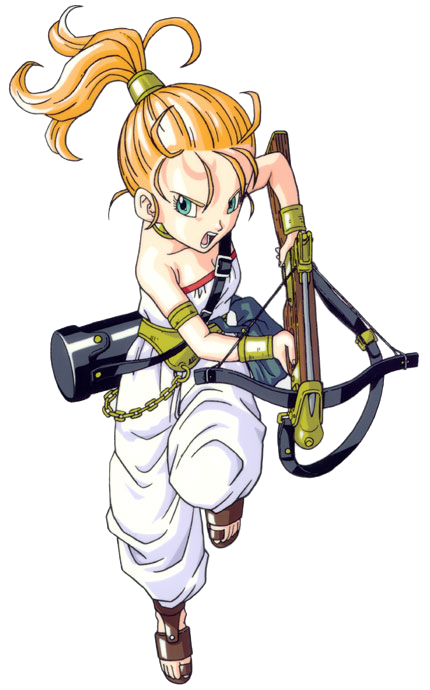
Marle2You know that innocent and beautiful fairy tale princess, with the tricked out dress and the power to summon woodland creatures?  The one with a tendency to get kidnapped, but who always ends up happily ever after with her prince charming?

Yeah, that’s not this princess.

A rebellious princess would just as soon puke if she were any of those things.  She hates being royalty–she’d rather be one of the common folk, or at least be out doing something (which is why she’s often involved in politics).  She hates all those frilly dresses and tends to wear her hair in a tomboyish ponytail.  Rather than wait for her white knight to save her, she’s much more likely to be an action girl in disguise, or at least something of a badass.  When she grows up, she may become a lady of war.  Invariably, she hates whatever marriage has been arranged for her and often scandalizes those of her class to marry for love (if she even marries at all).

As you might have already guessed, this trope is extremely common, not the least because the princess classic has largely been discredited (at least, outside of Disney).  There’s a lot of variation on it too, with some stories featuring the rebellious princess as the love interest, and others showcasing her as the hero.

George R.R. Martin (Song of Ice and Fire) deconstructs the trope with Arya, who eventually becomes something of a sociopath, and Brandon Sanderson (Elantris) subverts it with Sarene, who very much has the personality but uses her royal position to her advantage.  Frank Herbert (Dune) zigzags with Lady Jessica, who is undylingly loyal to the Atreides family but rebels against the Bene Gesserit.  As you might expect, J.R.R. Tolkien plays it straight, not once but twice: Éowyn in Lord of the Rings, and Lúthien in The Silmarillion.

It transcends cultures, too.  In Crouching Tiger, Hidden Dragon, Jen might not technically be royalty, but she is the governor’s daughter and she does reject an arranged marriage to run away and become a wandering warrior.  And in classic RPGs, especially the old Japanese ones from Square, this trope is everywhere.  The princess in the picture above is Marle from Chrono Trigger, who fits this trope to a T.

So why is this trope so prevalent nowadays?  Probably because the modern feminist movement led us to discard most of our old-fashioned feminine ideals, as well as the characters who were held up as shining examples of them.  That, and rule of drama.  Everything ultimately comes down to rule of drama.

In my own work, Hikaru from Stars of Blood and Glory is an example of this trope, though she’s more of a president’s daughter than a hero or a love interest.  She does have her own story arc, though, and I’ve got a sequel in the works with her as the main character.  Scientists aren’t exactly royalty, but they do consider themselves elites in Genesis Earth, which means that Terra has echoes of this trope.  And in Heart of the Nebula (as-yet unpublished), I’ve got a character who isn’t exactly rebellious, but she does qualify as a badass princess (though the society in question is a perfect techno-democracy and not a monarchy).

If you’re thinking of self publishing, read this. All of it.

I just read a fascinating Q&A on Reddit with Hugh Howey, author of the self-published phenomenon Wool.  After six trancelike hours reading through all the comments, all I can say is “wow.”

Okay, I guess I can say a little more.  Yesterday, I listened to Brandon Sanderson’s lecture on self-publishing from his English 318 class this year.  While I agree with much of what he says, a lot of it is already out of date.  Probably the biggest thing is whether it’s still advantageous for indies to go with a traditional publisher after making a name for themselves.  In 2011, Amanda Hocking had some good reasons for going traditional.  In 2012, Hugh Howey has some very good reasons not to.

The other big thing, though, is this idea of author platform–that to be a successful indie, you have to find some way to drive large numbers of people to your books.  Well, not necessarily.  Hugh Howey was a nobody for three years, and the title that finally pushed him over the tipping point was the one he promoted the least.  To me, that shows:

  1. current sales are not a predictor of future sales, and
  2. a great book will grow into its audience independent of its author.

Granted, there may be a threshold that needs to be crossed before word-of-mouth really starts to kick in, but if a nobody with passable cover art and no author platform can cross it, that threshold isn’t very high–and that’s good news for all of us.

The way I see it, there are three big myths that writers struggle with in making the shift from traditional to indie publishing:

1) The flood of crap books will keep you from getting noticed

This grows out of the paradigm of limited shelf space–that the best way to get noticed is to have your book occupy more space relative to all the other books on the shelf.  This might be true in the brick and mortar world, but the rules are much different in the digital realm.

Think about it: how many new blogs are launched every single day?  Thousands, if not hundreds of thousands.  And yet people still find the good content amid the sea of crap.  On Youtube, an average of one hour of video content is uploaded every single second.  And yet there are still entertainers making a lot of money through their Youtube channels.

The rules in the digital realm are completely different from everything in the physical world.  Figuring that out requires a huge paradigm shift, one that even indie writers struggle with.

2) Publishing a book is an event that must be promoted

This grows out of the paradigm of velocity, or as Kris Rusch puts it, the “produce model” of publishing:

Every month publishing comes out with brand new product. Shelf space is limited in every single brick-and-mortar bookstore.  Big Publishing makes the bulk of its money during the first few months of a book’s existence.  So if a book sits on a bookstore’s shelf until the book sells and that sale takes six months to a  year, the bookstore and the publisher lose money.

Better to dump the old inventory on a monthly basis—for full credit for unsold items—than it is to have the inventory sit on the shelves and grow “stale.”

Of course, the flaw in this logic is that digital shelf space is unlimited, therefore books do not “spoil.” No matter how much time passes, an ebook can still be found in the same place.

Therefore, does it really make sense to make a big deal over an indie book release?  Maybe to jump start some word-of-mouth, but it’s not like your career is going to be harmed if you do nothing.  In fact, it might be better to hold off until you have a few more titles up, so that when you give the first one that push, readers will have something else to read once they’ve finished it.

3) To succeed you need to find a way to “break in”

This grows out of the gatekeeper paradigm, where the system is closed and the few entry points are guarded by a select group of taste makers whose job is to bestow legitimacy on those who meet the qualifications to get in.  It’s the concept of patronage, where success comes from being chosen by a wealthy benefactor, and it’s connected with the idea that you haven’t truly “arrived” until <fill in the blank>.

The flaw with this paradigm, of course, is that publishing is no longer a closed system.  The gates haven’t just been flung open, the walls themselves have been torn down.  The job of the taste makers is no longer to protect readers from the dross, but to lead them to the gems–which is honestly much closer to what it should have been in the first place.

So what does this mean for creators?  It means that there’s no longer a system to break into.  You don’t need to write better than everyone else, you just need to find (and keep) your 1,000 true fans.  Success isn’t bestowed upon you by some higher authority, it’s something that you discover on your own as you hone your craft and build your business.

Honestly, this is one that I still have a lot of trouble with.  When I left to teach English in Georgia, in the back of my mind I had this vague notion that I was going into a self-imposed exile, and wouldn’t come back or settle down until I’d “broken in.” Of course, this made me quite discouraged, because it felt like things were out of my control–or worse, that I’d somehow failed.

But listening to Brandon’s lecture and reading Howey’s Q&A session helped me to remember that it’s all still in my control.  I don’t need a benefactor, I just need a good plan, if that makes any sense.  So right now, I’m thinking things through and making the necessary revisions to that plan.  There probably won’t be any big ones–I still think I’m more or less on the right track–but it will be good to update my paradigm.

By the way, the title of this post applies to the Q&A with Hugh Howey, not to the post itself.  Though if you are thinking of self publishing, I hope it’s helped out in some way.

Also, I just finished part I of Wool, and it deserves every bit of praise that it’s got.  Expect to see a review of the omnibus shortly.

Trope Tuesday: The Cavalry

Things look bleak: the Big Bad is on the verge of conquering the world, and the heroes have gathered for one last stand.  Just when it looks like all hope is lost, a horn sounds in the distance, and the cavalry arrive to save the day.  Whether a ragtag bunch of minor characters, an army of unlikely heroes, or the ultra-heroic Eagle Squadron, the timely reinforcements use their overwhelming force to crush the villains and save the day.

When done right, this trope can be one of the defining moments of greatness of the entire work.  When done wrong, however, it becomes little more than a Deus Ex Machina of the most unsatisfying kind.  How, then, can this moment be done right?

As with any Deus Ex, one of the keys is to adequately foreshadow the end.  This often takes the form of Gondor Calls For Aid, when the heroes petition the cavalry for assistance before going into battle. To make things interesting, the relationship between the two parties is often complicated and ambiguous, making it doubtable that the cavalry will actually show up.

However, I think it goes deeper than this.  In order for the arrival of the cavalry to be satisfying, it needs to not invalidate everything that the heroes have already gone through.  If the cavalry shows up after the heroes have defeated the Big Bad, and essentially rescue them from a heroic sacrifice, that’s satisfying.  If the heroes are still fighting the Big Bad and the cavalry comes out of nowhere to hand them an unearned victory, that’s cheap.

In English 318R, Brandon Sanderson often used the film versions of the Lord of the Rings Trilogy to illustrate this.  The Battle of Helm’s Deep was satisfying, because the entire premise was to hold out until the third day.  When Eomer arrived with the Rohirrim on the morning of the third day and swept away the Uruk-Hai, that didn’t invalidate King Theoden’s efforts because all he was trying to do was survive.

In the Battle of Minas Tirith, however, Aragorn’s arrival with the unbeatable army of the dead was kind of cheap, because the premise was to defeat the orcs, not to hold out for reinforcements.  Gondor could have just stood down and let the orc army capture the city, and they still would have won in the end.

The two genres where you’re most likely to see this trope are westerns (trope namer) and heroic fantasy. Just about every David Gemmell novel involves a cavalry moment of some kind, and I looove it.  It’s also quite common in military science fiction, too–basically, any story where war is a major part of the narrative.

The variations on this trope are also quite fascinating.  For example: