Planets are not the only setting for science fiction stories–space stations are common as well. From the Death Star (“that’s no moon…”) to Downbelow Station, the Venus Equilateral to ISPV 7 to the Battle School in Ender’s Game, space stations are a major staple of any space-centered science fiction.
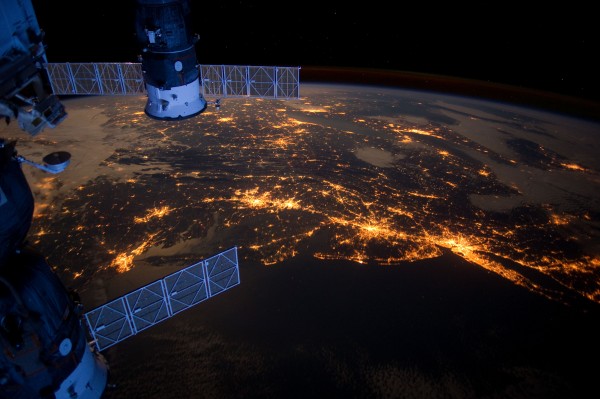
The reasons for this should be fairly obvious. Before we can go to the planets and the stars, we need to have a permanent presence outside of this massive gravity well we call Earth. The easiest and most logical place to expand first is to orbit, where supplies can be ferried up without too much difficulty and astronauts can escape in case of an emergency. Indeed, with the International Space Station, that’s exactly what we’re doing right now.
In science fiction, of course, space stations go much further than they do in real life. They’re often giant orbital cities, with thousands of people living and working there permanently. Often, they feature some sort of rotating toroidal structure in order to simulate gravity. If there are settlements on the planet below, the station often serves as a major hub for commerce, serving as a waypoint for interstellar merchants and wholesalers who ferry their wares up to orbit. And if the planet is still being colonized, then the space station often serves as an important umbilical to the outside universe.
They can also have strategic value in the event of a war. Battleships need to be serviced too, after all, and a station’s position in orbit can provide an excellent platform from which to bombard or lay siege to the planet. Alternately, outposts at more distant locations like the Lagrange points can serve as a staging ground for future attacks–a sort of astronomical “high ground,” if you will. If nothing else, abandoned stations may contain supply caches that can aid a fleeing starship, or provide shelter behind enemy lines, as was the case with the first Halo game.
Stations can come in all sorts of different flavors, from the puny to the magnificent. The most eye-popping station of all is probably the Ringworld from Larry Niven’s series of the same name. As the name would imply, the station is a giant ring–so huge, its circumference is the orbit of a habitable planet, with the sun at its center! Gravity is provided by rotation, and night and day by giant orbiting panels that block out the sun at regular intervals.
My favorite stations, though, are the more realistic ones–the ones that I can imagine myself living on someday. That was one of the things I enjoyed about Downbelow Station by C.J. Cherryh–her depiction of human expansion into space is eminently believable, and her stations are a natural extension of that. I also really enjoyed her focus on the social dynamics of living on a giant station, and what it would be like to live in such a society.
The Battle School from Ender’s Game is another huge favorite of mine. One of the advantages of building a structure in space is that gravity becomes malleable, so that some parts of the structure can simulate Earth-surface gravity while others leave people completely weightless. The Battle School uses that to its advantage, with the main training room a zero-g laser tag battle arena, where the students have to learn how to stop thinking in terms of the planar dimensions, where “up” and “down” have any meaning. It’s really quite fascinating.
It should come as no surprise that space stations pepper my own works. They’re especially common in the Star Wanderers series, where few worlds have been terraformed and orbital platforms make up the majority of human living space (at least in the Outworlds). In Sholpan and Bringing Stella Home, James, Ben, and Stella are all from a space station–a distinction that is especially useful for Stella, since her Hameji captors despise the “planetborn.” Genesis Earth takes that a step further, as spaceborn Michael and Terra have never been to the surface of a planet before until midway through the novel. Just as going into space is paradigm shifting for us, the experience of walking on a planet proves just as transformative for them.
Just as sprawling interstellar empires are a staple of space opera, so are the plucky rebels that fight against them. From Star Wars to Battlestar Galactica, Firefly to FTL, there’s no shortage of characters in science fiction trying to stick it to the man.
I’m not sure how it is in other cultures, but in America, it seems like science fiction upholds a host of values closely related to rebel tropes, such as self-reliance, individualism, freedom and independence, frontier justice, enterprising self-made men, etc. A lot of this probably grew out of the genre’s early ties with pulp-era adventure fiction, which often featured former Confederate soldiers leaving the civilized world for the realms of adventure following the US Civil War. That’s certainly the case with John Carter in A Princess of Mars, and echoed to some extent with the Browncoats from Firefly.
It may go even further, though, to the revolutionary origins of the United States itself. The frontier has always loomed large in our culture, shaping our values in the early days of settlement and, now that the age of the frontier is largely over, standing for an idealized nostalgic past. Americans have always favored the self-made individual who stands up to injustice and corruption in high places, and we’ve always had an aversion to the centralization of power and authority.
Back in the days of the Cold War space race, when writers like Heinlein and shows like Star Trek really started to popularize the genre, there seems to have been a real push to promote American identity and values. The science fiction of that day certainly got caught up in all that, which is weird because as pro-Americanism became the establishment, a genuinely rebellious counterculture began to push back. To its credit, though, there was plenty of science fiction that embraced the counterculture, especially in the New Wave movement that followed the Golden Age.
So why are we so enamored with rebels? Probably for the same reason that we all love a good rogue. Since space is the final frontier, it’s naturally the kind of place that would attract a more rugged, individualistic type. At the same time, rogues and rebels are much more likely to have exciting adventures than the more mild-mannered folk who are apt to stay at home and conform. Let’s not forget that most people who read science fiction are adolescent boys (of all ages), hungry for adventure and often a little rebellious themselves.
Though the rebels are often the good guys, that’s not always the case. It all depends on who they’re fighting against, and how black and white the story is trying to be. If they’re fighting against the Empire, then they’re almost always courageous freedom fighters standing up for truth and justice and all that, but if they’re fighting against the Federation, things can be a lot more gray. In FTL, for example, the rebels are the outright antagonists, and you have to save the galaxy by defeating them.
The rebels don’t always win, either. In stories like Star Wars that skew towards idealism, then in the end they usually do, but in darker, grittier tales (such as most cyberpunk), they may or may not. And even in some happy-go-lucky adventure stories, the rebels are apt to be martyrs for a lost cause–again, think of the Browncoats from Firefly.
The wide variety in the role of rebels in science fiction is a good indication of a healthy, vibrant back-and-forth in the genre that’s been going on for some time. It also means that there’s plenty of room for a new writer to take these old, worn tropes and shake them up in a new and exciting way. As much as we love Luke Skywalker, we love Han Solo just as much, and if you combine him with John Carter to get Mal, then you’ve got a rebellious character that a whole new generation can come to know and love.
I love playing around with these tropes, and do so quite often in my own fiction. In Bringing Stella Home, James McCoy is very much a rebel, though it’s not the Hameji that he’s fighting against so much as everything standing between him and his brother and sister. In that sense, he’s kind of a martyr without a cause, a determinator who shakes his fist at the universe even when the more sensible thing is to learn how to cope. Similarly, Danica and her band of Tajji mercenaries all fought in a failed revolution and have been wandering the stars ever since. Their backstory features much more prominently in Stars of Blood and Glory, in which things come around full circle. And then, of course, there’s Terra from Genesis Earth, who isn’t about standing up to the man so much as giving him the finger and running off somewhere where none of that even matters–the frontier ethic taken to its furthest extreme.
So yeah, I’m a fan of this trope, and have been ever since I saw Star Wars and fell in love with the genre. You can definitely expect to find lots of rebellious characters throughout my books in the future.
If it takes a village to raise a child, does it take a group of like-minded creative souls to raise a writer? I don’t know, but in my case, having a writing community around me really helped. That community was Quark, BYU’s Science Fiction & Fantasy club.
I joined Quark my second semester of college. I’d heard about the writing group, and on a whim I decided to check it out. This was when Ben Hardin was the writing group leader, back before the current iteration of the club was really well-organized. Aneeka Richins had basically built the writing group from scratch only a year or two before, and Kindal Debenham and Annaliese Lemmon had each spent a year as president shortly after that. They were all still around, workshopping their stories and adding to the community.
We met on the second floor of the Harold B. Lee library, in one of the study rooms way in the back near what is now the classical music area (2520 was the room number, I think). Looking back, it seemed like a weird place to meet, since we were always so LOUD. However, back in those early days Quark didn’t get a lot of respect from the BYU student administration (BYUSA, known more familiarly as BYUSSR), so we kind of organized under the radar.
The spring semester of 2007 was a lot of fun! I fit in very well with the group, and made a lot of friends. It wasn’t until they made me the writing group president that I started attending regularly, though. In retrospect, accepting that post was probably the best extracurricular decision I could have made. I lead the writing group for two years, from fall of 2007 to spring of 2009, and that’s when I really became a writer.
When I first started back in 2007, I had a couple of hobby projects kicking around here and there, but the main thing I wanted to write was a Final Fantasy VI fanfic. At the same time, I had a great idea for an original novel, but I’d never written a complete novel before, so I wasn’t sure what to do. Aneeka convinced me to go with my own project, and that became The Lost Colony, also known as Ashes of the Starry Sea.
Around that time, I also started this blog, mostly so my writing friends could keep me honest. I finished the first draft in 2008–a whopping 168k word manuscript that barely held together. After coming back to the US from a study abroad program in the Middle East, I started revising it, but soon decided to trunk it in order to work on other projects. Shortly thereafter, I finished the first draft of Genesis Earth, and the rest is history.
I later wrote up a detailed post on the origins of Quark, one that was published in a short-lived magazine called Mormon Artist. You can find that article here. Orson Scott Card himself commented on it, which really made my inner fanboy squee. 😀 For me, though, Quark was all about surrounding myself with like-minded friends who could foster my natural sense of creativity. I probably would have become a writer anyway even without them, but it would have happened a lot later, and the road would have been much more rocky.
And now that we’ve all graduated and moved on, I’m happy to say we still keep in touch! Kindal is a self-published indie writer much like me, with some excellent books out there. He’s organized an online writing group that is mostly made up of us old-time Quarkies. Aneeka’s got her webcomic, which seems to be fairly successful, and the others who chose to go a more traditional path are having success there as well. But mostly, it’s just great to keep in touch.
After my time as president, Quark really exploded in popularity and became officially sanctioned by the BYUSA. It’s really thriving right now, with a book club, a board/video gaming group, a film forum, and a bunch of other stuff. Most of that was there when I was in the writing group, but it was floundering, and the writing group was much more autonomous. But the guys who have carried on the torch seem to have done a great job making things even better, and that’s encouraging.
One of the best things about a good science fiction story is that it can take you to another world–literally! Well, not in the sense of actually physically taking you there, but if you want to experience the thrills of an alien world from the safety of your favorite chair, the best way to do it is to immerse yourself in a good space adventure story.
Planets are to science fiction what islands and continents are to fantasy. It’s possible to tell a story where no one ever sets foot on one, but then you’ve basically got a sea story (since space is an ocean, at least in most space opera). Even then, your characters are probably going to put into port from time to time, if for nothing else than a change of scenery to make things interesting. And if there’s anything science fiction interesting, it’s the wide variety of possible planet types.
For example, what would a planet be like if it were covered completely by water? If the world-ocean was so deep that there was no visible land? Assuming that the planet orbits within its sun’s habitable zone, where the temperature ranges allow water to exist as a liquid, then you would have a pretty interesting place. What would the hurricanes be like? A lot more intense than the ones here on Earth, that’s for sure.
Then again, suppose that the planet was a bit closer to its sun, and most of that water existed in the atmosphere as a gas. You’d have some pretty intense atmospheric pressures on the surface, but the density of the atmosphere would make it much easier to keep airships and flying castles aloft. In fact, that might be the most practical way to settle that kind of a world.
In our own solar system, there is an incredible amount of variety. On Mars, for example, glaciers of dry ice cover the southern pole, while the sun sets blue in a normally dirty brown sky. The tallest mountain actually summits above the atmosphere, and every few years, dust storms cover the whole world. And believe it or not, Mars is a lot more similar to Earth than anything else in our solar system.
On Titan, rivers of liquid methane flow down mountains of water ice, while black carbon dunes drift across a desert shrouded in orange haze. While the sun rises and sets with predictable regularity, the planet Saturn is suspended at the same point on the horizon and dominates a large portion of the sky. Don’t expect to see any rings, though–Titan orbits along Saturn’s ring plane, so the rings are mostly invisible.
Europa, one of the four Galilean moons of Jupiter, is also dominated by its host planet. Water ice covers the surface, but deep, deep below, there’s a massive liquid ocean that has never seen the light of the sun. What sort of monsters lurk in those depths–an ocean buried beneath a world?
Jupiter itself is pretty intense. A gas giant world with swirling bands of planet-sized clouds, it hosts a monstrous hurricane large enough to swallow at least two Earths. This vortex has been churning across the planet for over 150 years, and possibly as much as 350. I still remember the chills I got when I read 2001: A Space Odyssey, and the scientists’ probe dropped through the haze to a cloud deck as massive as one of our continents here on Earth.
Gas giant planets can be really interesting. They aren’t human habitable, since the gravity and pressure are so intense that anything man-made would be crushed before it could hit the surface, but those same forces can lead to some other interesting things. For example, at the lower levels, you may find storms that rain diamonds. Go further still, and you find an intense magnetic core that’s just on the verge of being able to sustain nuclear fusion. Detonate enough nuclear material down there, like they did in a short story from the Halo universe, and you can turn the planet into a star.
And that’s just our solar system. What about the hundreds of exoplanets that astronomers are now discovering? The first one to be confirmed, believe it or not, was orbiting of all things a pulsar! Imagine that–instead of the life-giving rays of a sun, the planet is bathed in highly lethal X-rays and gamma rays.
Of course, there are plenty of planets orbiting stars like our sun, but most of the ones discovered so far are hot Jupiters–gas giant worlds that orbit so close to their sun that the years are measured in hours. Some of these planets are so close that the sun is actually blasting the atmosphere away. We haven’t discovered the rocky core of a gas giant world that’s been destroyed in this manner, but theoretically it could exist.
Or what about the planets with highly elliptical orbits that traverse the habitable zone of their stars? Imagine: a world where the winters are so cold that the oceans freeze solid. After several of our Earth years, the spring brings a massive thaw. For a few short months the weather is actually quite balmy. Then, as spring turns to summer, the heat grows more and more intense, until the oceans begin to boil! When the summer reaches its zenith, the planet is nothing but a scorched desert wasteland. Soon, though, the autumn cool brings back the rains, with storms so intense that they refill the oceans in just a matter of months! Then, the deep freeze of winter begins, and the world returns to its long icy tomb.
One of my favorites, though, is the ribbon world that Asimov predicted in some of his stories. Worlds like this occur most commonly at class M red dwarf stars, which are so cool compared to our sun that planets within the habitable zone are tidally locked. This means that the sun neither rises nor sets, but remains stationary in the sky. The day side is burning hot, with either a barren desert wasteland or a giant hurricane large enough to cover most of the hemisphere. The night side, on the other hand, is so cold that all the water is completely frozen. The only habitable parts of the planet exist in a ribbon-like swath where the sun is just on the other side of the horizon, casting the land in perpetual twilight.
Believe it or not, we’ve actually discovered a planet like this in the Gliese system. Gliese 581g, or “Zarmina’s World” as the lead astronomer dubbed it, was discovered back in 2010. I was so excited by the discovery that I dedicated a blog post to it. Since then, the findings have not yet been confirmed, so it isn’t safe to call it a planet for sure, but if/when it ever is confirmed, it may be one of the first truly Earth-like planets to be discovered (at least, as Earth-like as a ribbon world can be).
In much of science fiction, there’s a tendency to make planets single biome only. Thus, you have your desert planets (Arrakis, Tatooine, Gunsmoke), your ice planets (Hoth, Gethen), your ocean planets (Calamari, Aqua), your jungle/forest planets (Dagobah, Lusitania, Kashyyyk), and even planets that are nothing but giant cities (Trantor, Coruscant). Some of the more recent series like Halo try to avert this, but even today it’s still fairly common.
If there’s anything that modern astronomy is showing us, though, it’s that the variety of planets and worlds out there is beyond anything we could possibly imagine. This is why I get a bit irked when an otherwise excellent series like Firefly makes out every planet to be like Wyoming. What about Gliese 581g? Kepler 22b? GJ 1214b? Kepler 16b?
As more exoplanets are discovered, I can’t help but believe that science fiction is going to experience a paradigm shift. What was once purely the realm of imagination is now being confirmed as reality. Alien worlds exist–alien Earths, even. And just as our conception of Mars changed from the Sword & Planet tales of Edgar Rice Burroughs’ Princess of Mars to the hard sf epics of Kim Stanley Robinson’s Red Mars, Green Mars, Blue Mars, so will our conception of other alien worlds.
I’ve got a lot of different planets in my own books, some borrowing a lot from the recent exoplanet discoveries, others leaning closer to the single biome worlds of classic space opera. In Desert Stars, Gaia Nova is kind of a cross between Arrakis and Trantor, with giant domed arcologies covering half the planet’s surface while the rest is mostly desert and wasteland. In Bringing Stella Home, Kardunash IV is (or rather, was) an Earth-like world, with forests, mountains, and oceans. In Stars of Blood and Glory, New Rigel is a straight up ocean world, while Ebitha from Star Wanderers is an ocean world tidally locked to its dwarf M class sun. I haven’t yet played with the elliptical planet, but I probably will someday.
One of the things I love most about a good science fiction story is that it takes me out of this world. With all the incredible new discoveries that astronomers are making, that aspect of the genre is only bound to get better. They’ve certainly enriched my own work, and will doubtless continue to do so in the future.
One of the key things that makes space different from Earth is that nothing is ever stationary. Anything close to our planet that isn’t moving at a good clip (measured in miles/kilometers per second) is liable to plummet like a brick. Gravity is still in effect, even though you’re in free fall and thus don’t really feel it.
The way to get around the falling problem is to orbit whatever celestial body you’re plummeting towards. When your tangential velocity gets high enough, gravity becomes your centripetal acceleration, and the system becomes rotational rather than discrete. In other words, you’re still falling, but you’re moving fast enough to cross the edge of the horizon before you hit.
Just to give you a scale of how fast you have to go to make this work, the International Space Station (ISS) is orbiting at about 230 miles (370 kilometers) above sea level, and it makes a complete rotation around the earth every 90 minutes. That means that the good folks who live and work up there see about 16 sunrises and sunsets per day.
If you’ve spent your whole life living planetside, orbital mechanics can be a bit difficult to grasp. Here are just a few of the basics:
Since orbit is basically free fall, you don’t need to fire your engines to stay aloft. In fact, once you’re parked in a stable orbit, you can stay there almost indefinitely. This is how satellites work: we use a rocket to put them in position, but once they’re there all they need is a minor adjustment from time to time. The moon is basically a giant natural satellite, and it doesn’t need any sort of thrust to stay aloft.
As objects fall closer to the body they’re orbiting, they orbit faster. Just think about how figure skaters speed up when they pull their arms in closer to their bodies. The main reason for this is that the object has a much shorter distance to travel to make a complete revolution. To understand how this works, take a CD and measure the inside edge versus the outside edge.
However, since your tangential velocity is proportional to your centripetal acceleration (ie gravity), the way to jump to a higher orbit is to speed up. Conversely, the way to fall to a lower orbit is to slow down. An object’s angular momentum (mass X tangential velocity) is proportional to the distance of the object from the rotational system’s center of mass, so changing the object’s velocity will also change its distance from the center.
So if you’re in a spaceship and you’re about to collide with an object on a parallel orbit, the way to avoid it is not to nose your ship up like an airplane. Instead, fire your engines and try to go faster (or slower, as the case may be). It’s a bit counter-intuitive, but your altitude will change accordingly. The anime/manga series Planetes really got this right.
However, even though you’re moving faster at a higher orbit, you have a lot more distance to travel, so it actually takes longer to make a complete orbit. If you go high enough, you can eventually get to the point where the orbital period equals the rotational period of the celestial body you’re orbiting. We call this a geosynchronous orbit. If you’re orbiting around the celestial body’s equator, then to a person on the surface, it appears as if you’re stationary. You’re not, of course–nothing in space really is–but both you and the person on the planet’s surface are moving in tandem, so that’s how it appears.
Ever wonder why satellite dishes all point in the same direction? This is why. The signal comes from a satellite in geostationary orbit, where it doesn’t move relative to the people on the surface. Thus, if you know where to point your dish, you will always get a signal since the satellite doesn’t appear to move.
An orbit doesn’t have to be circular, but the barycenter (ie the center of mass for the whole system, where the mass of both objects cancels each other out) has to be at one of the focal points of an ellipse. This is how comets work. An object in an elliptical orbit will speed up when it gets closer to the object it’s orbiting, and slow down when it gets further away.
It’s possible–indeed, quite common–to orbit two celestial bodies simultaneously. For example, since the Earth orbits the sun, anything orbiting the Earth must also orbit the sun at the same time. If you’re close enough to the Earth, this doesn’t really matter since the Earth exerts a much more immediate force. But when you get further away, interesting things start to happen.
A Lagrangian point is a point of gravitational balance between two orbiting celestial bodies of unequal mass. Basically, they’re points of equilibrium where objects appear to remain stationary, so long as they continue to orbit in tandem with the other two celestial bodies.
In science fiction, these are great places to put space stations and other orbital settlements, since they appear as fixed points relative to the planet or moon that they’re moving around. In real life, asteroids tend to clump around these points in a planet’s orbit, especially the L5 and L4 points. Jupiter has so many of them that we call them the Trojans and the Greeks.
Since orbital mechanics can be a bit difficult to grasp, a lot of science fiction gets it wrong, especially space opera. For a recent example, just look at the Halo series–unless those Covenant ships have some sort of magical drive, there’s no way they could hover above the surfaces of planets the way they do. Orbiting does NOT equal hovering. And in Halo: Reach, where Jorge knocks out the main ship for the Covenant advance force … yeah, if a ship that large actually fell from orbit into the surface of a planet, it would be moving fast enough to make a crater the size of a small continent, kicking up enough dust and debris to cause a mass extinction event like the one that killed the Dinosaurs.
At the same time, when a science fiction story goes the length to get the orbital mechanics right, it can add a surprising amount of realism. A good example of this is Passage at Arms by Glen Cook. I loved how he depicted the orbital siege of the main colony world, with the way the orbital space battles looked like from the planet’s surface. The human forces were able to keep a toehold on space due to a low orbiting asteroid that the aliens couldn’t get to without exposing their forces to attack, and that served as the staging ground for the main characters to fight back.
For hard sci-fi, orbital mechanics is absolutely essential–you’ll be tarred and feathered if you get any of it wrong. For soft sci-fi like space opera, it’s not essential, but it adds a lot to the story if you can get it right. In any magic system, the limitations are what make it interesting. If you’re writing science fiction, then physics is your magic system, so knowing how it works can really add a lot to your story.
For example, in the recent Schlock Mercenary storyline, the characters board a spaceship with an artificial gravity generator centered around a large cylindrical pylon that runs the length of the ship. One of the implications of having Earth-strength gravity around such a small object is that you can actually throw a baseball into orbit. And that’s just the beginning! Needless to say, I’m really interested to see where Howard Tayler takes this story in the weeks and months to come.
Even though I write more space opera / science fantasy type stuff, I do the best I can to get my orbital dynamics right. You can see this in the space battles in Stars of Blood and Glory and Bringing Stella Home, as well as the setting elements in Desert Stars. When the desert tribesmen look up at the night sky, they gaze at the stars and satellites–hundreds of satellites, many of them starships bound for distant spaceports on the more civilized side of the world. One of the reviewers said that the world felt so real it was almost like he could reach out and touch it, so I guess I did something right. I’ll definitely keep it up in the future.
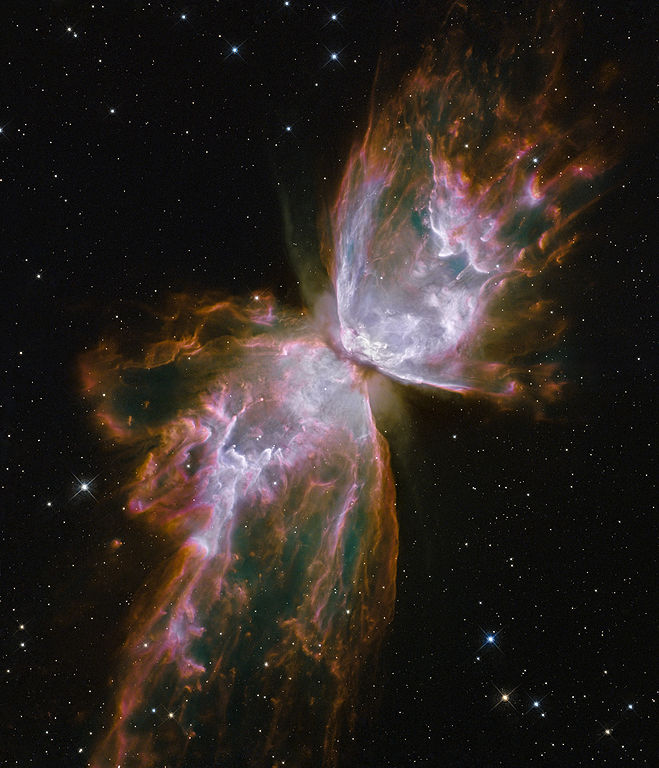
Of all the objects in space, nebulae are some of the most beautiful and awe-inspiring. These giant clouds of gas and dust span light-years, and often contain stellar nurseries where new stars (and with them, new planets) are born. Few things can fill me with a greater sense of wonder than a detailed, high-res image of a nebula.
Many of the classic nebulae images come from the Hubble Space Telescope, which has probably done more to bring that sense of wonder to the general public than any other telescope. These images, all of which are released by NASA into the public domain (with very few restrictions), have been shaping the pop culture dialogue about space and astronomy for more than a generation. They’ve certainly had a tremendous impact on me.
There are many different kinds of nebulae. The largest and most stunning ones are mostly diffuse, meaning that they have no clear boundaries where they begin and end. These come in two basic flavors: emission nebulae, which glow on their own due to ionized hydrogen gas, and reflection nebulae, which consist mostly of dust and don’t glow on their own, but reflect the light of nearby stars.
The Witch Head Nebula is a classic reflection nebula. Doesn’t it look eerie? It’s probably because of the way it reflects blue and purple. Many reflection nebulae share those same colors.
The Orion Nebula, one of my personal favorites, is a massive region of star formation visible just below the three iconic stars of Orion’s Belt. It contains large regions of both reflection and emission. In the center of the thickest clouds are dozens of young stars with protoplanetary disks–new solar systems in the process of being born. How many of these will go on to form planets capable of hosting life? Just a few billion years ago, our own sun may have been born in a cloud of gas and dust like this one.
The Helix Nebula, also known as the Eye of God, is apt to make you do a double-take the first time you see it! It looks almost like an eye, watching you from the midst of the heavens. Just as clouds here on Earth tend to form shapes and patterns that look like other things, so do nebulae.
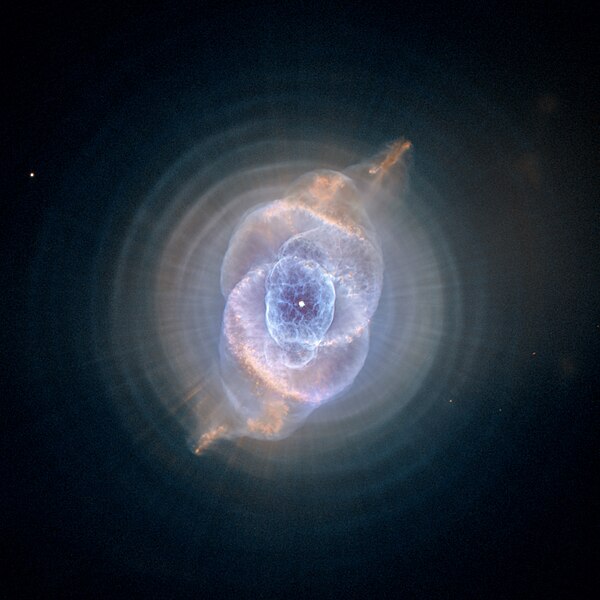
The Cat’s Eye Nebula is another one of those gorgeous space objects that’s apt to give you a double take. Both the Cat’s Eye and the Helix are Planetary Nebulae, which form after a star burns off its outer layer and collapses into a white dwarf. The name is kind of misleading, because they don’t really have anything to do with planets at all–they just look a bit like them, when all you’ve got is a low powered telescope to view them with.
One of the most famous Hubble images is the Pillars of Creation, a close-up image of a stellar nursery within the Eagle Nebula. Stars form when clouds of gas and dust become so dense that they collapse on themselves, creating a gravity well that sucks up more of the surrounding dust and gas. As enough matter accumulates, the pressure and heat at the center grow until the whole thing goes nuclear. When nuclear fusion begins, the newborn star sends out a strong stellar wind that pushes away any remaining dust and gas from the rest of the nebula. After several million years, the whole cloud is blown away, leaving us with a star cluster like the Pleiades.
In the Pillars of Creation, the long, finger-like clouds of the nebula are so dense that they appear dark and opaque, blocking out any light from the other side. These kinds of structures are called molecular clouds, after their ability to form molecules due to their increased density. In this image, though, we can see a group of newborn stars just starting to blow away the cloud’s outer shell. Once the cloud is completely blown away (in just a few thousand years or so), these stars will shine clearly enough for us to see–but for now, they’re hidden inside those pillars where they were born.
The Crab Nebula is particularly fascinating, not only for the stunningly complex structures visible in this image, but because less than a millennium ago, it used to be a star. In 1054, medieval astronomers in Europe, Asia, and the Americas reported the appearance of a new star, bright enough to be seen even in daylight. What they actually saw was a supernova, the spectacular death of a massive star. When a star goes supernova, it explodes with as much energy in just a few days or months as it put out during its entire lifetime.
The outer layers were blasted out to form this nebula, while the inner core collapsed and formed a neutron star–an object so dense that it contains as much as three times the mass of the sun in a sphere roughly the size of New York City. If the supernova is really big, the star might even collapse into a black hole.
Because of how fascinating and gorgeous nebulae can be, it should come as no surprise that they often show up in science fiction. When you have a starship and can travel at ease across the stars, nebulae become a part of the geography of space, just like forests and mountain ranges in a fantasy setting. I haven’t played any of the Mass Effect games yet, but apparently they do this quite a lot. In the re-imagined Battlestar Galactica series, the colonists are able to set a course for Earth after using the Lagoon Nebula to orient themselves relative to the stars of the zodiac. And of course, who can forget the classic battle between Kirk and Khan at the end of Star Trek II: The Wrath of Khan?
In real life, though, it’s much more likely that nebulae like the ones above wouldn’t even be visible if you got up close to them. Even though they’re much denser than other regions of space, they’re still for the most part much less dense than our planet’s own atmosphere. From a distance, they appear bright because we can see the entire structure in one field of view, but up close, it’s possible that you wouldn’t even know you were in one.
That being said, it sure makes for more exciting fiction when the nebulae are these giant mysterious clouds capable of hiding an entire space fleet. And really, who knows what these things are actually like up close? For now, all we can do is watch them from afar. But someday, if science fiction becomes reality, we may be able to be firsthand witnesses to the births and deaths of stars.
If space is an ocean and interstellar colonization is happening on a grand scale, then it should come as no surprise that so many starship captains are intrepid merchants, traveling the galaxy in pursuit of a good business deal. Whether they’re doing it legally as entrepreneurs or illegally as smugglers, you can find these guys in almost any space opera, from Star Wars and Star Trek to Firefly and Foundation.
Ever since Marco Polo and Sindbad the Sailor, intrepid merchants have played a major role throughout history. The brave adventurers who travels to exotic locales to bring you all the best deals, these are often the guys at the forefront of exploration and expansion. After all, Columbus sailed the ocean blue to find a better trade route to India–discovering a new world was just a side benefit. The British Empire had its origins in mercantilism, forming the empire to protect their trade routes (and later, to secure markets and resources for their industrialized economy).
Unlike their real-world counterparts, however, space merchanters have a lot more challenges to contend with than sandstorms and bandits. Science fictional universes are teeming with all sorts of exotic dangers, from black holes and solar flares to space pirates and strange alien races. Unless FTL communication is in force, the immensity of space often makes it impossible to know exactly what to expect on your next FTL jump. And then there’s all the normal space stuff, like busted airlocks and critical failures in the oxygen recyclers.
The best stories, though, are the ones that world build their merchanters to the point where they form their own distinct society. This may overlap with the proud merchant race, though IMO it works best when it’s more than just a hat that everyone wears. The merchanters from C.J. Cherryh’s Alliance-Union universe are a great example, where the entire society has restructured itself around the nomadic spacefaring lifestyle. Another is Heinlein’s Citizen of the Galaxy, where the free traders have developed a strict social hierarchy that defines everyone’s role in running the spaceships.
Since space-centered science fiction largely grew up in the Cold War era, I wonder how much of this trope stems out of the clash between communism and capitalism. The original Star Trek certainly shows a lot of Cold War influences, with the Klingons originally playing proxy for the Russians. Is the genre’s fascination with the adventurous space merchant somehow an outgrowth of that world-shaping conflict? And if so, how do the stories differ on the Soviet side? It makes me wish I could read Russian, since the Soviets certainly had their own fascination with science fiction and space opera.
In my own work, this trope plays a central role. Most of the major characters in my stories are merchants of one stripe or another. James McCoy from Bringing Stella Home is the son of a merchanter, and comes from a mining colony where interplanetary trade drives the local economy (setting up the conflict for Heart of the Nebula after the Hameji take over).
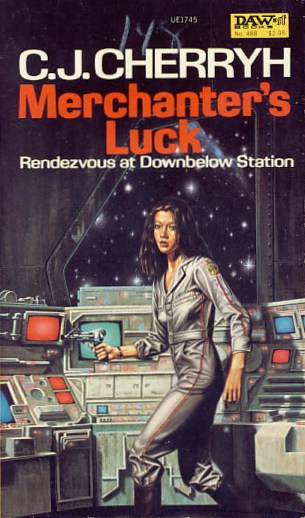
But the trope takes special prominence in my Star Wanderers novellas, which was largely a reaction to C.J. Cherryh and Heinlein. I wanted to create a spacefaring society on the starbound frontier that revolved not only around trade and colonization, but much more personal struggles like finding love and fighting loneliness. In that sense, the stories are a lot more like Merchanter’s Luck than Downbelow Station–more about the lives of individual characters than the grand sweep of galactic history.
Either way, I’m a big fan of this trope. If you’ve got any examples from your favorite books, please share! Wish-fulfillment is a huge part of any fictional genre, and science fiction is no exception. If I could leave it all behind to become a merchant to the stars, you can bet I’d do it in an instant!
As we discussed in I is for Interstellar, space colonization is a major theme of science fiction, especially space opera. Of course, things don’t always go smoothly. Space is a really, really, really big place, and sometimes, due to war or famine or simple bureaucratic mismanagement, colonies get cut off from the rest of galactic civilization. They become lost colonies.
Some of my favorite stories are about lost colonies: either how they became cut off, or how they reintegrate after so many thousands of years. In many of these stories, the technology of these colonies has regressed, sometimes to the point where the descendents may not even know that their ancestors came from the stars. When contact is finally made, the envoys from the galactic federation may seem like gods or wizards.
Because of this technological disconnect, stories about lost colonies often straddle the line between science fiction and fantasy. After all, Clarke’s third law states:
Any sufficiently advanced technology is indistinguishable from magic.
Of course, the line between science fiction and fantasy has always been a fuzzy one. Hundreds of attempts have been made to define it, but they all fall short. In the end, it often breaks down to certain recurring tropes, like dragons and wizards versus ray guns and rockets, but even that doesn’t always work.
For example, Anne McCaffrey’s Dragonriders of Pern is technically about a lost colony far into the future, but it’s got dragons and castles and other tropes that belong squarely in fantasy. Then again, the dragonriders have to fight alien worms who invade every few dozen years from a planet with a highly elliptical orbit, so there’s still a strong science fiction basis undergirding the whole thing.
And that’s just Dragonriders of Pern. What about Marion Zimmer Bradley’s Darkover series, or C.S. Lewis’s Space Trilogy?Trigun is more western than fantasy, but it’s also full of sci-fi tropes like giant sand-crawling monster ships and a weird post-apocalyptic backstory. And then there’s all the Japanese RPGs that combine magic with mechas, with Xenogears as one of the best examples. For a distinct Middle Eastern flavor, look no further than Stargate.
It’s no coincidence that all of these stories feature a lost colony of one kind or another. When the characters don’t know that they’re living in a science fictional universe, it’s very easy to throw in tropes from other genres. By no means is it required–Battlestar Galactica and Dune are evidence enough of that–but they certainly present the opportunity to do so. After all, lost colony stories basically present a hiccup in humanity’s march of progress, breaking the essential science fiction narrative for all sorts of interesting side stories and tangents.
One perennial favorite of science fiction writers is to suggest that Earth itself is a lost colony from some other galactic civilization. That forms the entire premise behind Battlestar Galactica: the original twelve colonies have been destroyed in the human-cylon wars, and the last few survivors are searching for the legendary thirteenth colony of Earth, hoping to find some sort of refuge. Apparently, Ursula K. Le Guin’s Hainish cycle also plays with this trope, though she’s never very explicit with her world building. It can be a bit tricky to twist the lost colony trope in this manner, but if pulled off right it can really make you sit back and go “whoa.”
My personal favorite is probably Orson Scott Card’s The Worthing Saga, about a colony of telepaths that breaks off from a collapsing galactic empire and actually becomes more advanced than the rest of humanity. When Jason Worthing and Justice re-establish contact, the descendents of the galactics are basically pre-industrial subsistence farmers who view them as gods–which, in a certain sense, they almost are.
It’s a great story that really entranced me, not just for the science fictional elements but also for the distinct fantasy flavor. Orson Scott Card’s handling of viewpoint in that book is truly masterful, so that I felt as if I were viewing everything through the eyes of his characters. Since the farmers don’t know anything about their spacefaring ancestors, all the parts from their point of view feel like a completely different story. It was really great.
My first novel was actually a lost colony story, combined with a first contact. I trunked it a long time ago, but many of the earliest posts on this blog are all about my experience writing it. As for my other books, Desert Stars contains elements of this, though the lost colony in question is actually a nomadic desert society that lives on the capital planet of the galactic empire, just outside of the domes where all the more civilized folk live. Heart of the Nebula is basically about a society that puts itself in exile in order to escape the privations of the Hameji. Andin… no, I’d better not spoil it. 😉
The lost colony isn’t one of the flashier or more prominent tropes of science fiction, but it’s definitely one of my favorites. It’s a great way to add depth and intrigue, as well as bend genres. For that reason, I think this trope does a lot to keep science fiction fresh.
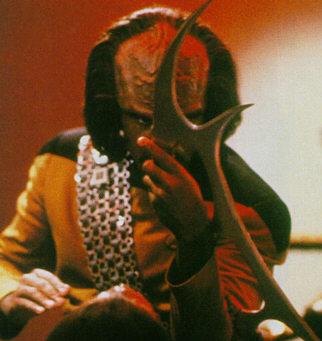
Ah, the proud warrior race. Where would science fiction be without it? From Klingons to Ur-Quans, Wookies to Sangheilis, Mri to Green Martians to Vor Lords, warrior races have been a staple of space opera and space-centered science fiction pretty much since the genre was invented.
The concept behind this trope is the same as the one behind blood knight: honor is more valuable than life, and the best way to win or defend honor is through combat. It’s not necessarily death that these guys live for, so much as glory and a chance to prove their prowess. Unlike the always chaotic evil races, these guys usually follow a strict code of honor, sometimes to the point of absurdity.
When taken too far, of course, you get a planet of hats, where everyone has exactly the same values without any kind of depth or diversity. Fridge logic leads to Klingon Scientists Get No Respect. After all, how did the Klingons build starships and discover space travel if they’re all constantly fighting each other?
Fortunately, we have plenty of real-world examples for how this sort of thing works. Lots of human cultures have placed a high value on warrior qualities, including the Spartans, the Samurai, the Vikings, and the Mongols, just to name a few. Of course, relying on stereotypes may lead to some unfortunate implications, so it’s not a good idea not to have too narrow or ethnocentric a reading of history. Still, there’s a lot from history that we can glean.
In fact, you could make a valid argument that humans are the quintessential warrior race. After all, we developed the technology to annihilate our own species before we put a man in space. Even today, the amount of resources we spend on war and security far outstrips the amount of resources we dedicate to just about any other pursuit. From the earliest ages, we engage in competitive physical sporting activities that mimic warfare and video games that outright simulate actual combat. Our everyday language is full of violent terms like “on target,” “wiped out,” and “having a blast,” to the point where most of them are invisible. Indeed, if we ever make contact with an alien race, we may very well find that we are the Klingons.
In that respect, this trope is just another way that science fiction acts as a mirror through which we can better see ourselves. The proud warrior race fascinates us because we have so much in common with them. Klingons are not just faceless orcs for the good guys to slay by the dozen–in many sci-fi universes, they (or individual members) actually become good guys. Just think of Worf from Star Trek, or The Arbiter from Halo, or Aral Vorkosigan from Louis McMaster Bujold’s Vorkosigan Saga. While on the surface, these guys seem absolutely crazy, when you start to explore them you frequently find a lot of depth.
I am fascinated by the concept of a warrior race. I’ve played with it quite a bit in my own work, especially with the Hameji in Bringing Stella Home, Sholpan, and Stars of Blood and Glory. The Hameji are an entirely spacefaring society that lives on the outer fringes of space, beyond any terraformed planets. Because they live entirely on spaceships, they must capture and repurpose new spaceships just to have enough living space to expand their families. Since their battleships also house their families, they make no distinction between military and civilian, and live by an extremely rigid social hierarchy with the patriarchal captain at the top and everyone else under his command. Life is a privilege, not a right, and disobedience is strictly punished since it has the potential to put everyone’s life at risk.
As a result of all this, the Hameji are extremely vicious and warlike, living by a moral/ethical code that runs completely counter to our modern sensibilities but makes perfect sense to them. They think nothing of slagging entire worlds and killing billions of people because to them, a world is a giant starship, and all those billions of people are so many enemy warriors. They look down at the planetborn as weak because of their lack of discipline and obedience, and think nothing of enslaving them due to their strict social hierarchy. In fact, because resources are limited and life is a privilege granted by the ship’s captain, the Hameji prefer to space their prisoners rather than keep them alive.
Man, those books were fun to write. 😀 Brutal, but fun. Because the weird thing is, as much as you abhor a culture whose values contradict your own, when you really understand them, you can’t help but feel something of a connection. You might not love them, but you respect them, and in a strange sort of way sympathize with them. I’m not sure if that’s the experience with the Hameji that my readers have had, but that’s definitely been my experience in writing them.
So yeah, I’m definitely a big fan of the proud warrior race. Expect to see me play with it many more times in the future.
As much as science fiction looks to the future, it also of necessity looks to the past. And as much confidence as it places in the scientific method, it often turns to religion, simply because of the scope of the great cosmic questions that such stories inevitably pose.
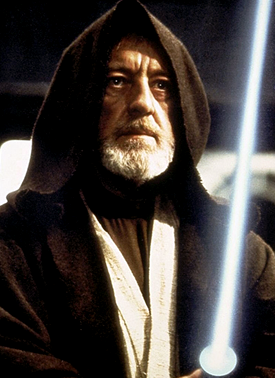
For these reasons, it should come as no surprise that the best science fiction stories often include knights and shamans, priests and warrior monks. Far from degrading our view of the future, they greatly enrich and humanize it, bringing a sense of meaning and destiny to an otherwise cold and lonely universe.
The best example of this is probably the Jedi from the original Star Wars trilogy. I still get shivers when I hear Yoda explain the force:
Size matters not. Look at me. Judge me by my size, do you? Hmm? Hmm. And well you should not. For my ally is the Force, and a powerful ally it is. Life creates it, makes it grow. Its energy surrounds us and binds us. Luminous beings are we, not this crude matter. You must feel the Force around you; here, between you, me, the tree, the rock, everywhere, yes. Even between the land and the ship.
There are plenty of other examples too, of course–harsh ones like the creeds the Cylons follow in the re-imagined Battlestar Galactica, which they use to justify their genocidal war against the humans. And then there are the quaint and simplistic ones that happen when a primitive race makes first contact with humanity … as well as the ones from a race so advanced that they make us look like barely evolved monkeys.
So why is religion so prominent in science fiction? Probably because the best science fiction stories act as a mirror that allows us to see ourselves better. Throughout history, religion has been one of the most important parts of any human civilization. Even the modern secular cultures still grasp at the same cosmic questions, striving to find meaning beyond the animal drives of food, sleep, and sex.
At its core, every religion is about telling a cosmic story. There’s a reason why the Bible starts with the words “in the beginning,” and why the first sura of the Qur’an names Allah “The Merciful and The Compassionate.” Since the best science fiction also tells a cosmic story, is it any surprise that there should be overlap between the two?
The best science fictional religions are the ones that make you want to believe. The Force in Star Wars was definitely like that to me (the original trilogy, of course–before all that midi-chlorian nonsense). Orson Scott Card’s philotic web also turned me into a believer, at least for the duration of those books. Even Eywa from the movie Avatar had some deep undertones that made me wish I was a part of that world.
Religion plays a huge role in my own books, not just the stuff that I believe in real life (though I’m sure that influences my writing), but the stuff that I think the characters would believe.
In Star Wanderers, for example, most of the outworlders are pagans who pray to the stars. In that universe, astrogation is an act of worship. The Deltans subscribe to a fusion of pagan and Christian beliefs, which in turn affects how much they value families and children. I won’t spoil it, since it comes as something of a reveal in Homeworld, but it definitely drives the series. And of course there’s Jeremiah’s New Earther background, with its guilt complex that leaves him emotionally scarred.
My favorite religion to write so far was the faith of the desert tribesmen in Desert Stars. I wrote that book just after spending a summer in the Middle East, and my experience of the Muslim culture definitely was a huge influence. The tribesmen pray to the Temple of a Thousand Stars, the temple erected to the memory of Earth soon after the first colonists made planetfall. The first half of the book follows Jalil’s pilgrimage to the ancient temple, through the domes filled with strange and decadent people.
When I started the Gaia Nova series, I wanted to create a science fictional universe where any of our real-world religions could still plausibly be true. The way I got around all the conflicting prophecies of the end times was to have a human colony mission leave Earth soon after our time. When the colonists woke up, they’d lost the location of Earth, so naturally all the religions developed around the idea that Earth had received its prophesied glorification and become a heavenly paradise.
That’s the short explanation, anyways. But the books themselves aren’t so much about that as they are about the characters. If religion is important to them, then that becomes an important part of their story. And since religion is so important to us here on Earth, I can’t help but believe that it will follow us to the stars.
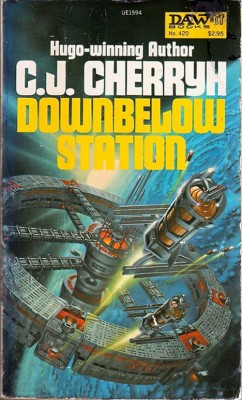 Planets are not the only setting for science fiction stories–space stations are common as well. From the Death Star (“that’s no moon…”) to Downbelow Station, the Venus Equilateral to ISPV 7 to the Battle School in Ender’s Game, space stations are a major staple of any space-centered science fiction.
 Just as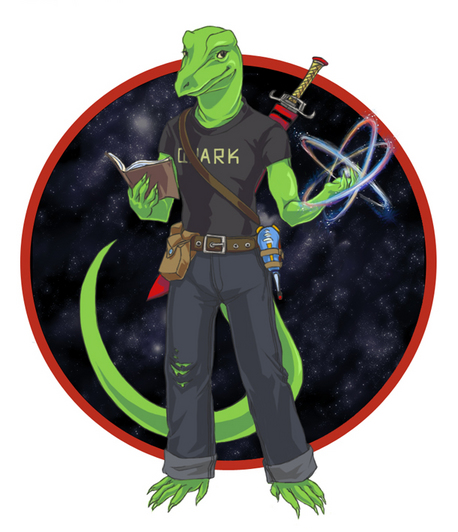





 If
If 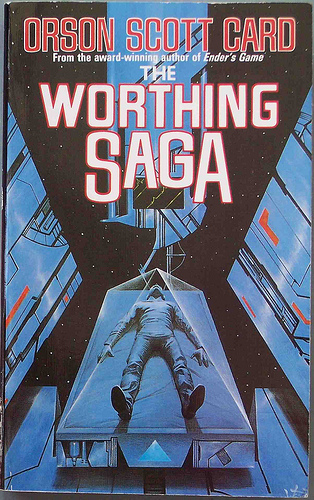 As we discussed in