On the verge of another story

So with Star Wanderers coming to a close, at least as far as the actual writing is concerned, I’ve recently found myself back in that weird writerly place where I don’t have any pressing projects to work on.  Whenever this happens, I find that it’s generally a good idea to start something new.

Until just a couple of days ago, though, I wasn’t sure which project to start.  At first, I thought I should do the sequel to Stars of Blood and Glory, since I’m currently getting that one ready to send off to my editor, but beyond a tentative title (Empress of the Free Stars) and a really awesome opening scene, nothing has really sparked for that one.  With time, I’m sure my ideas will come together, but for now it’s just not ready to come out of the incubator.

So then I went back to The Swordkeeper, going back over the ideas that had sparked that one.  I started the opening scene back in March, but it’s currently lackluster, and none of my attempts at worldbuilding have gotten me anywhere.  For the past six months, I haven’t really touched it.

But when I took the time to just think about the story, something amazing happened.  All my ideas came together, and the ending just came to me–not just for the first book, but for the entire series.  Seriously, I must have spent hours staring out across the Georgian countryside from my farmhouse balcony, totally in awe of the story in my head.

A similar thing happened to me last summer with Stars of Blood and Glory.  It took me a few months to finally get around to writing it, but when I did, the first draft flew out in just a matter of weeks.  I’ve since made a few relatively minor fixes to the beginning and added some scenes that were missing, but otherwise haven’t made any substantial changes, and the comments from my first readers so far confirm that that’s the right decision.

So if all goes well, I’ll finish up with Stars of Blood and Glory by the end of this next week, and restart The Swordkeeper soon after that.  Things are looking good, and I can’t wait to get immersed in this next story.  It’s a fantasy, so that’s going to be a major shift, but I think it will help to keep things fresh.

Anyhow, that’s all for now.  More later.

Trope Tuesday: The Call to Adventure

One of the first (and most important) stages of the hero’s journey is the call to adventure.  It happens when the hero first confronts something outside the experience of his ordinary world that beacons him to leave it.  It overlaps closely with the inciting incident, and marks the point at which the hero’s journey begins.

However, it is not typically where the story begins.  In order for the hero to leave the ordinary world, he must first start out there, so we know what’s at stake and what he’s leaving behind.  This is why Luke Skywalker starts out on his uncle’s homestead, and why Neo starts out as a bored and lonely employee of Metacortex.  Events outside the hero’s experience may have already put him on a trajectory to leave on the adventure, but he won’t know it until the call comes.

The hero may start out in a quiet, peaceful village, far removed from any sort of conflict–or he may start out in the middle of a crapsack world, as is the case with dystopian fiction.  The important thing is that it’s the world he’s always known–that he hasn’t ever really made an effort to leave or change it.

How he feels about his world largely determines how he chooses to respond to the call.  In older literature, the hero typically refuses it.  The advantage of this is that it gives the reader a sense of scope–that this adventure is not a small or a trivial thing.  It also sets up an immediate minor conflict that gives some motion to the opening chapters.

In modern stories, though, it’s more common for the hero (or his friends) to jump at the call.  There are also many advantages to this.  In Lord of the Rings, it gives Frodo an immediate band of sidekicks.  In Harry Potter, it plays up the sense of wonder at the magical world.  In the Chronicles of Prydain, it highlights the impulsiveness and naivete of Terran, as he realizes later on in the story just how stupid of him it was.

The call itself can take many forms.  It can come as a fateful visitation from a supernatural messenger, a mysterious request from a dying stranger, or a sacred trust from a dying friend.  It can also be more internal, such as an important moment of decision, or a desire to find some greater purpose in life.  Whatever the case, the one thing the hero cannot do is ignore it–at least, not forever.  One way or another, the hero sets out, and the adventure begins.

plot vs. PLOT and an interesting serial publishing idea

Back in English 318 at BYU, Brandon Sanderson used to tell us that there was a big difference between “little-p plot” and “big-p Plot.” The first applies mostly to chapters and scenes, which he said he could teach us.  The second refers to the overall story structure, which he couldn’t teach in a classroom setting and said we’d have to discover on our own.

I’ve been thinking a lot about this recently, because it seems that my books are starting to fall into a recognizable pattern–and that pattern has some interesting potential for serials and other alternate forms of publication.  Each book is divided into 3-4 parts, each part is divided into 3-6 chapters (typically 5), and each chapter is divided into 3-5 scenes.  Here’s how it works:

Chapter 1: Setup for the basic story arc.  Introduction of the characters and setting, the prominent theme or premise, and a little foreshadowing of the coming conflict.
Chapter 2: The inciting incident, a discovery or event that starts the plot rolling and puts the characters in motion and conflict.
Chapter 3: Complications arise, the problem gets worse, the first attempt at a solution fails, generally leaving the characters at a loss.
Chapter 4: Setup for the resolution.  The characters discover or build something that will help them to settle the conflict.  They stop reacting and start to be more assertive.
Chapter 5: The resolution.  The characters either succeed or fail, but the arc comes to a close either way.  The story question is answered, the thematic elements come full circle, and the story either closes or moves on to the next part.

Basically, it’s the 3-act format divided into five chapters.  When I wrote Heart of the Nebula, all four parts fell into this pattern, and now that I’m writing Star Wanderers, I’m finding myself  falling into the exact same pattern again.  Stars of Blood and Glory is a little bit different; there are three parts instead of four, and each part is divided into six chapters instead of five.  But still, it’s all very structured.

In short, Brandon was right.  It took me a few books to really learn “big-p Plot,” but now that I’ve found a story structure that works for me, it’s starting to come quite naturally.

The cool thing about this particular structure is that it’s very conducive to serialization.  Each chapter is between maybe 3,000 to 5,000 words, so each complete sub-arc is between about 15,000 to 25,000.  That’s the length of a short novella, and it takes me only a month or two to write (sometimes three, depending on how much revision it needs).

The only reason I haven’t done more with serialization up to this point is because I’ve found that sharing my work while it’s still unfinished tends to throw a wrench in my creative process.  The idea of publishing a work in progress on a chapter-by-chapter basis scares me, because if one of the story arcs has a flawed beginning, I wouldn’t be able to fix it.

However, by following a five-chapter arc format (with bits and pieces here and there to hint at a larger overarching structure), I can see myself publishing a novel or epic in a serial format.  It would be something like the Perry Rhodan series, which follows an arc structure of 25 to 100 issues (each a small novella) per cycle.

So here’s how I’m thinking of doing it:

  1. Publish the first installment and price it at free while writing the second one.
  2. Publish the second installment and price it at free, raise the price of the first installment to $.99 and write the third one.
  3. Publish the third installment and price it at free, raise the price of the second installment to $.99 and write the fourth one.
  4. Publish the fourth installment for $.99, drop the price of the first installment to free and publish the completed novel for $2.99.

So what do you think?  Does it seem like a good way to publish a book?  It gives the reader a reason to keep coming back, and rewards those who got in early by charging them less for the completed work.  By selling the novel in shorter chunks, I would be able to put more work out and hopefully gain more visibility, especially by making a portion of it free at any given time.

I’m seriously thinking about publishing Star Wanderers this way, once I hear back from Writers of the Future.  I’ve already finished the rough draft for the second part; it probably needs a good revision or two before it’s ready, but since it’s shorter, it shouldn’t take more than a few weeks to get feedback from some first readers and finish the next draft.  And if the third part is already finished by then…

So many awesome possibilities! 🙂 What do you think?
Trope Tuesday: New Year Has Come

Just like a story, every year has a beginning and an end.  For this reason, New Years has become a time to celebrate change, renewal, and the setting of impossible goals which we will all probably break by March.  Over time, this tradition has become so ingrained in our culture that it’s only natural for it to pop up in our fiction.

Most stories that feature a New Year subplot are episodic, such as cartoons, comics, anime/manga, and television shows.  They usually reflect real-world holiday traditions, such as the practice of setting New Year’s resolutions.  Because all stories need conflict (but also because fiction sometimes reflects reality), the characters in these stories are often just setting themselves up for failure in some hilarious way.

At first glance, this might seem depressing.  After all, if most of us will never reach our goals, why do we even bother setting them?  Why torture ourselves with guilt when, in all likelihood, we’re just setting ourselves up for failure?

In some ways, I think it comes down to this quote from David Gemmell:

May all your dreams come true save one; for what is life without a dream?

One of the things that makes us human is that we all need to have some impossible dream to strive for, some sense of hope for the future.  Through our New Year’s resolutions, we tap into that sense that anything is possible, and that we can change who we are and become better people.

For some of us, those resolutions are an effective tool to turn their lives around.  For those of us who lack that kind of will or self-discipline, the act of setting resolutions still helps us reflect on our lives and change in ways that perhaps we don’t immediately perceive.  After all, the truest measure of success isn’t whether you’ve accomplished all your goals, but how much you’ve changed through striving to meet them.

That’s my take on it, anyway.  In any case, a New Year’s story is a great way to give your characters some time for reflection, since it’s probably the most introspective holiday in our Western culture.  It’s a time for beginnings, endings, and chasing impossible dreams.

Happy New Year!

Going camping and novella update

Just a quick update on things:

I’m going camping this weekend up Huntington Reservoir with some friends, so I won’t be around for a couple of days.  It should be fun; last trip was a good chance to step back and recharge, and I definitely could use that right now.

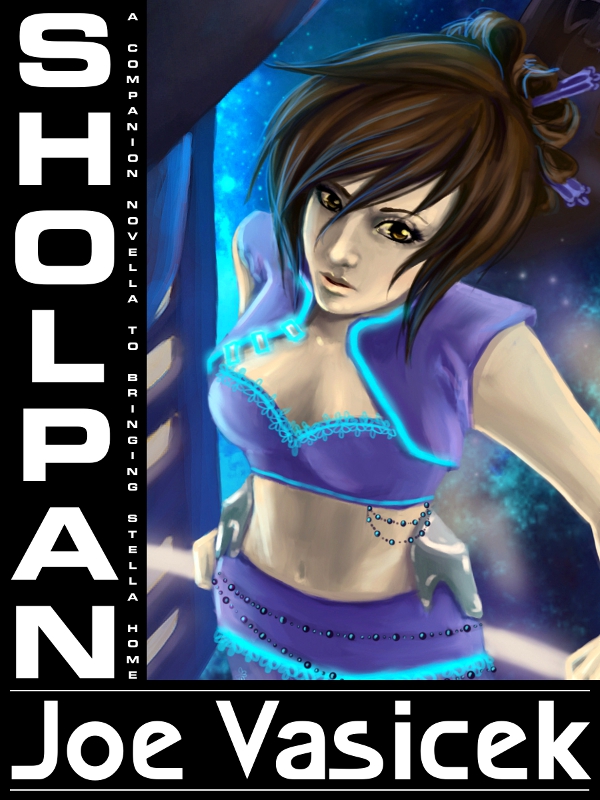
At the same time, I’m working on Sholpan, and it’s turning out to be a lot harder than I’d initially thought.  I’m writing it as a companion novella to Bringing Stella Home, where the story covers Stella’s point of view through about the first half of the novel, with a few extras for the people who read the novel first, and enough loose ends to entice people who read the novella first to pick up the full-length novel.

It’s turning out to be a difficult balancing act, however.  The first draft was basically just all of Stella’s scenes up to the last three/four chapters of the novel, and that ended up being too much.  For those who read the novel first, it didn’t have anything new, and for those who hadn’t read it, it revealed far too much.

So for the next draft, I decided to trim it right up to the point where Stella’s story has its first major twist.  Even though that includes a minor spoiler for the novel, it gives the novella a great story arc with a good reversal.

But that leaves the question: what does the story need in order to be satisfying to those who read the novel first?

I’m not a huge fan of flashbacks, but after wrestling over the last few days with the beginning, I think it’s better to start in media res, which makes flashbacks unavoidable.  I’ll try not to botch them.  Also, I think I’ll give some more background information about her and Lars, as well as develop her relationship with Narju.  But the last thing I want to do is pad the novella with useless filler.

I dunno; what do you think?  If you read and enjoyed a novel, what sort of shorter work based on that story would you want to see?  And if you started with the novella first, how much would be too much, and how much would be too little?

Oh, and in case you’re interested, I took your feedback and redesigned the cover:

Thanks!  I’ll see you when I get back in a couple of days.

Looking for alpha readers and planning the next project

Worlds Away from Home 2.1 is going along well.  I had a hard time switching from Bringing Stella Home back to this other project, but I’ve got some good momentum going and assuming no major interruptions, should be able to do about 3k words a day for the rest of the week.

Then again, if I get interrupted by work, that might be a good thing…

The second draft is going to be pretty rough, but good enough to start sending out to alpha readers.  Anyone want to volunteer?  It’s basically a far future love story on a planet with desert-dwelling tribal nomads who drive micronuclear powered dune buggies and centuries-old arcologies under giant continent-sized domes.  Earth is an ancient, mythical legend, and roving bands of starfaring nomads stand poised to crush the galactic empire.

I hope to be finished with the second draft by March 1st, and I’d want to get feedback no later than the end of April.  If you’ve been one of my alpha readers before, or if we’re friends IRL, let me know if you’re interested.

So earlier today, I was thinking about the project I want to do after WAFH–a sequel to Genesis Earth.  I’ve been toying with the idea of releasing GE as an ebook, but I don’t want to do that until I have a sequel in the works.  Anyhow, I was thinking of ideas for the title, and out of the blue, it struck me:

EDENFALL.

Kind of plays on the subtle Adam and Eve theme of the first one (and no, Genesis Earth isn’t technically a sci-fi Adam and Eve story…but it kind of evokes one).  I like it because it fits well with my ideas for the story, which basically center around shattering the Edenic paradise that Michael and Terra reach at the end of GE.

I’ve got a lot of ideas for this book, and I think they’re reaching a critical mass.  Just last month, I came up with a great name for the main female protagonist: Estee.  She’s the eldest daughter of Terra and Michael, and kind of takes after her mother’s personality.  The male protagonist will be a young soldier from the military force sent out by panicky Earth officials to neutralize any threat on Icaria–which gives the commanders of the expedition a broad mandate to do whatever the hell they want. As you can imagine, conflict ensues.

I know how this story begins, and I know how it’s supposed to end (and thereby set things up for an awesome third book in the trilogy), but I have no idea how to build things up to the crazy twist ending.  It’s going to require some serious worldbuilding, and that’s going to take some time.  Daydreaming is such hard work, after all.

Anyhow, I should be ready by the time I finish WAFH 2.1.  As an experiment, I’m going to write the rough draft entirely in longhand.  Am I crazy?  Perhaps.  But I also want to spend some time in the Utah wilderness for inspiration while I’m writing it, so pen and paper is probably the best medium for that.

So those are my plans.  To close, let me link to this awesome cover of “Something About Us” by Daft Punk.  Now that’s some sweet theremin action…enjoy!

Juggling projects isn’t a good antidote to procrastination

Yeah, the title basically says it all.  I’m working on Genesis Earth 5.0 and Into the Nebulous Deep 1.0, and while I’m doing really well in the one, I’m not keeping up so much in the other.

First, Genesis Earth. Since I finished the previous draft more than a year ago, I thought I’d find a lot of problems, especially with my prose.  Instead, while a lot of the sentence/paragraph level stuff needs tightening, I’m finding to my surprise that the writing isn’t all that bad.

Today, I breezed through over 8k words, and that between running, donating plasma, FHE, and a bunch of other distractions.  If I put even a moderate amount of effort into this, I can have it finished before next week.  That’s good, because I had an agent at World Fantasy request to see it; if I can put it on her desk before Thanksgiving, that can only be a good thing.

But as for my other project, ITND 1.0…yeah, it’s not coming along as well as I’d hoped.  The reasons are stupid, too–mostly just lost momentum and writer’s avoidance.

Right now, I’m stuck in a scene where I’m trying to build romantic tension between two characters.  I feel like I have a decent handle on who they are…but for some reason, it feels a little too shallow.  Maybe that’s because I’m still discovering who these characters are, maybe it’s because I tend to go deeper than most–or maybe it’s just because it’s the kind of scene that’s hard to get into, but once you’re in, it really flows.  I just haven’t forced myself to write it–maybe once I do, these problems will go away.

I do feel like I’m doing a pretty good job setting up the story.  Last week, I ran the first chapter through my online writing group, and while it definitely had issues, everyone said that they would keep reading if this was a book they’d picked up off the shelf.  That tells me that at least I’m starting in the right place.

The characters, though, and the conflict…I worry that it’s not as deep or as hard-hitting as the first book, Mercenary Savior. I skimmed over that book just a couple days ago before sending it out to a friend from World Fantasy, and…wow.  I don’t want to brag, but I think I did a good job with that one.  A damn good job.

So can I pull off that kind of depth and impact in the second book?  That’s the fear, that it won’t live up to the first one.  And certainly, the rough draft won’t be as good–not by a long shot.  But the subsequent drafts?  I don’t know.

Maybe I should just write and worry about it later, though.  When I was in the middle of Worlds Away from Home, I constantly thought to myself how crappy the draft was.  When I got to the end, though, and looked back on how far the story had come, I realized that it had potential to be at least as powerful as Mercenary Savior–perhaps even more.  And to be honest, that came as quite a surprise.

I don’t know.  I hope I’m not just deceiving myself–it can be hard, when you’re toiling in obscurity, to separate the truth from your own self-deception.  But for now, things are going well–I’m making good progress in Genesis Earth, and while Into the Nebulous Deep has lost a lot of momentum, all it really needs is a good solid block of undistracted writing to get it going again.  Life is good.

New projects and other stuff

So I started the sequel to Mercenary Savior today; I figure I can take a couple months off to finish the rough draft, then leave it in the trunk until the first one sells.

The working title of this one is Into the Nebulous Deep, which captures the main premise quite nicely (though let me know if it doesn’t jive with you).  It takes place five years after the events of Mercenary Savior. James is a lieutenant in the Colony’s civil defense forces, and has made a name for himself as an ace gunboat commander.

The basic premise is that the Colony is falling into economic ruin and must therefore make a mass exodus in order to survive.  Their only real option is to flee into the Good Hope Nebula, where FTL drives don’t work and the Hameji can’t follow them.
Deep in the nebula are newly born stars with planets and proto-planets, and they hope to re-establish themselves there.  Of course, nothing happens quite that smoothly, and James is going to find himself putting out fires most of the time.

While all that is going on, however, I hope to put him in the middle of a love triangle.  I have the ending of it planned out, and it can ONLY happen this way in a science fiction novel.  Oh man, the twist is going to be way interesting–and incredibly hard to pull off well.  I’m up for a challenge, though, and I can already tell this one is going to be fun.

For some reason, things worked out so that I started this novel on November 1st.  Because of that, I suppose I’m doing it for a nanowrimo–since hey, the rough draft is probably going to be between 120k to 140k words long, and I want to finish it before January.  Sounds tough, but I’ve got the money saved up to take off a few weeks and work on my writing, so that’s what I plan to do.

In loosely related news, I hope to start running soon.  My brother in law ran a marathon this year, and he’s going to help me get set up.  Basically, I need to get in shape for the wilderness job I hope to train for in January, and also because hey, I need to take better care of my body.  Besides, I’ve found that exercising boosts my writing tremendously, which is something I definitely need.  Exercise = win/win/win.

The most pressing thing on my mind now, however, is the article I need to write about the history of “the class that wouldn’t die.” I’m working on a very tight deadline, and absolutely must produce.  I wish I hadn’t been so flaky with the previous deadlines, but it is a volunteer magazine and I have had other pressing things taking up my time.  Not any more–I’ll get it done right away.

In the meantime, I’m tired and must get some sleep.  I wish I could function like one of Stephanie Myer’s vampires, but reality is a harsh and unforgiving mistress.  One of these days, though, I’ll be free of her–just you wait!

Beginnings and title woes

Today, I came off my writing break and started my next novel.  The makings of the first scene have been kicking around in my head for the past couple of days, but today I actually sat down and started it.  I’m not sure how strong of a beginning it is, but at least it’s a start.

I would have started yesterday, but I had a horrible time trying to format the file.  No matter how many times and ways I tried to fix the pagination in openoffice, whenever I reopened the file, it came out wrong.  Finally, I switched the file from .doc to .odt, and that did the trick.

Turns out, that may be for the best.  Because of the proliferation of Microsoft Word, everyone seems to use .doc or .docx, but there are several good reasons why ODF (Open Document Format) is better.  In fact, several international governments have made it a matter of public policy to make the switch.  After all the headaches .doc files have given me in openoffice, I certainly have.  We’ll see how that goes.

As for the novel, it really, really needs a new title.  The old one, Hero in Exile, just doesn’t work for me.  It’s too…cliche, in a generic, meaningless way.  Blegh.

And thus begins another search for a good title.  Do you have any ideas?  The story is about a boy raised by desert nomads in search of his true origins, whose world completely falls apart when he falls in love with a girl who wants him to stay.  I suppose it’s kind of a cross between The Jungle Book and Great Expectations…in spaaace!

Mainly, though, it’s about an upright, noble-hearted boy trying to come to terms with the moral corruption and decay of the world around him.  When he finds that corruption inside himself, it almost destroys him, but before the end…no, better not give it away.

I don’t know–I just know it needs a better title.  Any ideas?

Oh, and before I go to bed, you might find this interesting.  It’s an original arrangement of one of the most memorable songs from the Xenogears soundtrack.  It even has lyrics, written in the language of one of the races of the game.

Wow–talk about a super fan!  I wonder if any of my stories will ever inspire something as amazingly creative as this?  If so, it would be pretty cool–pretty dang cool.

Anyways, night.

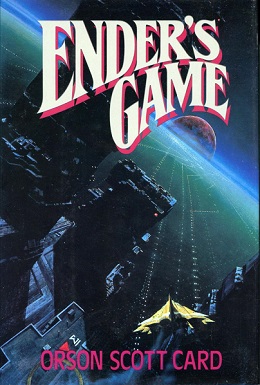
Ender’s Game by Orson Scott Card

“I’ve watched through his eyes, I’ve listened through his ears, and I tell you he’s the one.  Or at least as close as we’re goign to get.

“That’s what you said about the brother.”

“The brother tested out impossible.  For other reasons.  Nothing to do with his ability.”

“Same with the sister.  And there are doubts about him.  He’s too malleable.  Too willing to submerge himself in someone else’s will.”

“Not if the other person is his enemy.”

“So what do we do?  Surround him with enemies all the time?”

“If we have to.”

“I thought you said you liked this kid.”

“If the buggers get him, they’ll make me look like his favorite uncle.”

“All right.  We’re saving the world, after all.  Take him.”

Thus begins one of the greatest SF classics of all time, Ender’s Game. With such a spectacular beginning, it only keeps getting better.

I decided to reread Ender’s Game because a friend of mine in Washington was reading it.  I read this book back in high school in only two sittings–the first twenty pages in the library, and the rest back home, where I finished it wide-eyed at three in the morning.  I didn’t regret a single moment of it, then or now.

One of the most fascinating things to me about this book is the way that Orson Scott Card breaks almost all of the rules of writing.  On every page, he “tells” much more than he “shows”–some of the battles he glosses over in only a couple of paragraphs.  He gives only minimal setting details, and very few of these are visceral or concrete–it’s very hard to “get into” the world of Ender’s Game the way you would with a fantasy novel.  Most of the characterization consists of “navel gazing”–Ender thinking to himself about how bad things are, rather than taking action.

Breaking these rules, however, is exactly the thing that makes this a good book.  The story isn’t in the setting, or in the nitty gritty of the battles–it’s in Ender’s mind, how he reacts to the forces around him, and how those forces change him. “Telling” rather than “showing” allows him to keep the pace at a breakneck, thrilling speed while cutting out unnecessary details, and the “navel gazing” allows us to get an intimate picture of Ender’s mind.

It goes to show that good writing isn’t just about knowing the rules, but knowing how to break them.  And when it comes to plot, character, pacing, foreshadowing, thematic elements, and the hero cycle, Orson Scott Card proves his masterful brilliance in this work beyond a doubt.

One of the most fascinating things about this book is that it hits all eight points of the Campbellian monomyth.  This excellent article (originally published in Leading Edge) explains how.  The most incredible thing to me is that the year after Ender’s Game came out, Orson Scott Card did it all again–wrote a blockbuster book hitting all eight points of the monomyth–with Speaker for the Dead, which I think is a superior book.

Ender’s Game is a true classic of the science fiction genre.  Not only is it a highly entertaining story, it is deeply meaningful and insightful as well.  It’s one of those books you can reread multiple times, and it only keeps getting better.  Whether or not you’re a fan of science fiction, this is a book you will deeply benefit from reading.