Getting ready for the baby

Things are fairly quiet around here, though that’s going to change soon. The baby is nearly full term, and the doctors want to induce labor in just a few days, so that’s the plan. We’re just trying to get things ready for that.
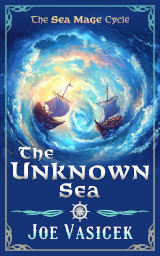
Writing-wise, things are going very well. I recently finished the AI draft of The Soulbond and the Sling, and started work on The Unknown Sea again. My goal is to have the final draft ready to send to my editor by Thanksgiving, so that I can publish it in January. That’s going to be a tall order with the baby, though, so I may have to push the publication date back by a month or two.

Moving forward, I really want to publish a new novel at least every quarter. Some of those are going to be short, like the Sea Mage Cycle books, but eventually I hope to get up to epic fantasy length. And of course, I plan to finish my three unfinished trilogies in the next year or two. I’ve been taking the last couple of years to really figure out my AI-assisted writing process, and I think I’ve got that mostly down now, so it’s time to apply those lessons to these books and get them done.

One thing I’ve done recently was pull out all of my books from InAudio, formerly Findaway Voices. I was crunching the numbers from the last year, and I only made something like $12 during that twelve-month period, averaging something like $.04 per sale. Those numbers are skewed by all of the free audiobooks that get downloaded, but when I drilled into the reports, I found a bunch of places that were literally paying me only $.01 per sale. Literally just a penny. For an audiobook that a reader paid money for. Someone got paid in that transaction, and it sure as hell wasn’t me. Since InAudio doesn’t let you pick and choose which distributors you can send to—it’s literally all or nothing—I made the choice to just drop them. There’s no way I can sustain a career if I’m only getting pennies (if that much!) per sale.

I know that Audible has been in the news a lot recently, and for good reason—they really have been playing dirty, simply because they can get away with it. And while I don’t like the way they’re screwing authors over, I don’t think they’ve been screwing me nearly as bad as some of the places where InAudio distributes their books. For one thing, all of my audiobooks are AI narrated, so it’s not like I have a lot of production costs to make back. It’s literally just a value-add on top of the ebooks. For another thing, the least amount of royalties they’ve paid me is $.80 per book, which is more than what I get from just about every library service for audiobooks.

So for the time being, I’m going to keep my AI-narrated audiobooks up on Audible, even though I wish they would treat their authors better. But I’m not going to shell out the money for a human narrator at this time. It just doesn’t make sense, especially with the way that Audible squeezes us. With AI-narrated audiobooks, there really is no reason not to put them out, so long as they don’t drop the royalties any further. But it would take a hell of a long time to earn back an investment of several thousand dollars if all they’re paying me is $.80 per listen.

If you want to listen to my books on audio, the best way to do it is to click on the link at the top of the page and visit my online store. You also have the added bonus of owning the files, not just licensing them. And Bookfunnel is really good at delivering the audiobook to whatever app or device you prefer—or even opening it up in your browser, if you don’t have an audiobook app.
Here’s my new pricing strategy

A few weeks ago, I had an impression that I needed to revisit my overall pricing strategy, not just for ebooks but for audiobooks too. So I sent out a few feelers, trying to see how other indie authors are pricing their books, and also ran a reader survey (thank you to everyone who participated in that, by the way!)

After all of that, I’ve put together a new pricing strategy that I will probably keep over the next few years, inflation notwithstanding. It’s not that much different from what I was doing before, but it is worth sharing with you, especially if you’re on a tight budget and you want to know the best way to pick up my books. So let’s go through each format, and I’ll share my plans.

Paperbacks

Until now, I’ve basically just been pricing all my paperbacks at a flat $14.99 USD, with equivalent price points in each of the major currencies. For shorter books, this meant that I took a hefty profit. For longer books, a hefty loss.

Moving forward, as I move to distribute all of my titles through Ingram via Draft2Digital, I am going to price my paperback titles such that I take at least a $2 profit through wide distribution. For most titles, this means they will fall somewhere in the $12.99 to $15.99 range. Some of the larger books may go as high as $18.99. This does not include shipping costs.

As always, if you purchase a paperback on my store, I will sign and personalize them for free if that is what you want me to do. Not all of them are up yet, but I hope to get them all up there over the next few weeks.

Audiobooks

Until now, I’ve been pricing my audiobooks on the lower end of the price range that human-narrated audiobooks can command, which means that most of them were either $8.99 or $16.99. That was just the list price, though, and I frequently ran month-long sales where they were all discounted to $2.99. And of course, if the ebook was already free, I also made the audiobook free.

But this was before AI-narrated audiobooks began to come out on the major platforms in large numbers. Now, it looks like one of the biggest trends in the book world is the explosion of AI-narrated audiobooks. I forget which podcast I heard it on, but some industry experts are predicting that within 10 months, most of the audiobook market will consist of AI-narrated audiobooks.

Obviously, it costs much less to produce an AI-narrated audiobook vs. a human narrated audiobook. In fact, without AI, none of my titles would be available in audiobook format, since they are all AI-narrated. And after asking around some of the author communities I follow, it appears that most authors are pricing their AI-narrated audiobooks closer to their ebooks, rather than their human-narrated audiobooks.

What was more surprising to me was to learn that of the readers who took my reader survey, those who listen to audiobooks felt fairly strongly that an AI-narrated audiobook shouldn’t cost more than the ebook. So it’s not just the authors who are driving this trend, but the readers as well.

With that in mind, and the data I gathered on ebook pricing points, I have decided to make the list price of all of my digital books, whether ebooks or AI-narrated audiobooks, priced at $4.99 moving forward. That’s just the list price, though: occasionally, I will run a $2.99 sale, where either all my audiobooks or all of my ebooks are discounted to the $2.99 price. And for certain titles, like my Sons of the Starfarers books, I plan to keep them on a $2.99 sale permanently, since it’s a nine book series and that’s what they were priced at before. Also, if the ebook is free, so is the audiobook.

And as always, if you buy an audiobook from my online store, you automatically get the ebook free as well.

Ebooks

Before, I used to price my ebooks at either $2.99, $3.99, or $4.99, depending on the book. In general, first-in-series books were permanently at $2.99, while the later books were all at $4.99.

Moving forward, however, I plan to keep all of my ebooks (except for the Sons of the Starfarers books) priced at $4.99, regardless of where they fall in the series, though I will occasionally run $2.99 sales across the board.

(The exception to all of this is box sets, which I plan to keep at $9.99. At this time, I only do box sets for the ebooks, and I don’t want to price those so low that they undercut my regular titles. I may discount them during a $2.99 sale, but I haven’t yet decided on how much.)

My goal with this is to make it so that price isn’t a factor in deciding which book to buy next. If they’re all the same price, then it shouldn’t make much of a difference—and if $4.99 is too much for your budget, then you can just wait until I run the next $2.99 sale, which should happen approximately every third month or so.

As always, you can get $1 off of the ebook with the coupon code “buy direct” when you purchase it from my store. This only applies to $4.99 books, however—if the book is currently on sale for $2.99, the coupon does not apply.

$2.99 sale November-December 2024

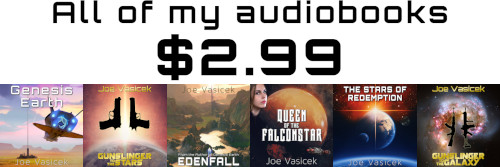
With all of that said, I am currently running a $2.99 sale on all of my ebooks and audiobooks, from now to the end of 2024. If you’ve wanted to read my books in ebook or audiobook format, but have ever balked at the price, now is a great time to pick them up! I have somewhere north of 20 novels out right now, and in the coming months, I plan to publish a lot more (which is another reason to run $2.99 sales, so that my readers don’t have to spend upwards of $100 to read all of my books).

Late October Update

It’s been a really mild autumn this year. We got our first hard frost only about a week ago, and it’s currently about 66 degrees outside. Feels positively balmy!

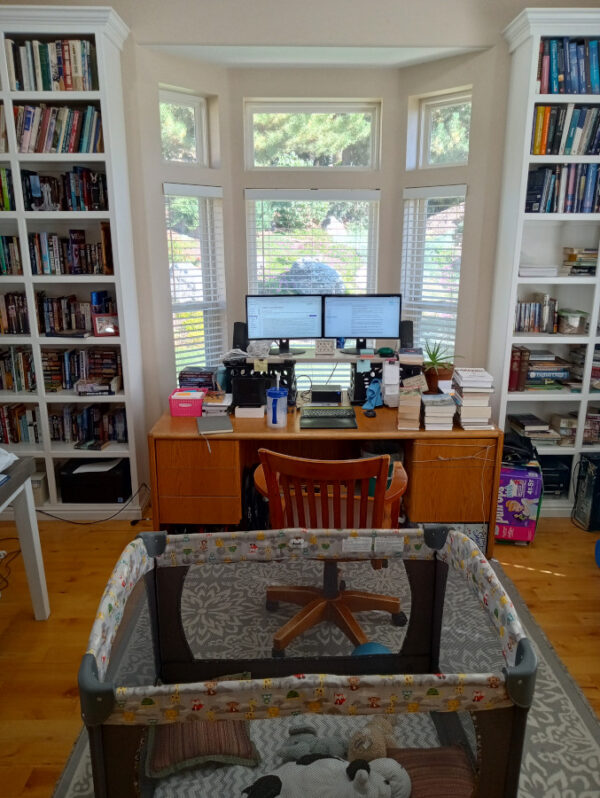
The image above is my current computer setup. The playpen is for the kids to watch a show while I’m working on the other monitor, such as what I’m doing right now. We’re still living with my in-laws, so this room is their library add-on. It’s really nice! I especially like how much light the windows let in, as well as the fact that it’s set away from the rest of the house, so I don’t have to worry as much about waking sleeping kids.

For the last few months, I’ve been alternating between each week between different WIPs, trying to use some of the principles I learned from hacking my ADHD in order to write more. I should really write a blog post about that soon. Basically, I switch out a new project every week, shepherding about half a dozen WIPs toward completion instead of completing them one at a time.

Since I only just started a few months ago, it’s going to be a few more months before the first of the projects is finished, but once I fill out the queue to that point I should be able to publish a new novel every other month for the forseeable future. Once I can do that consistently, without sacrificing the quality of the stuff I write, the plan is to move it up to once every six weeks, then once every month. With the way I’ve been incorporating AI into my writing process, it’ll be a challenge but still very doable.

I’m also working to get all of my audiobooks up on Findaway Voices, which distributes to Spotify, among other places. Since I’m not quite sure how to price them, I’m running a $2.99 sale for the rest of the year. The plan is to run a book pricing survey with my email list and use that data to guide future pricing for my ebooks and AI-narrated audiobooks. I’ve also been invited into the beta for Amazon’s AI-narrated audiobooks, so those should be going up on Audible before too long.

In family news, my wife is applying for a position in the BYU Linguistics Department, and they just set up a bunch of interviews (including the one with a General Authority, which is supposed to be with both of us). She’s also finishing up her PhD, which should be done next year. Between that and watching the kids, I don’t have a lot of uninterrupted writing time—thank goodness for AI!

And now the kids’ shows are over, so I’d better get back to doing other things. Take care!

Print vs. Ebook vs. Audiobook: When To Own

In last week’s post, I tried to make a comprehensive list of all the pros and cons associated with the various book formats. The purpose of that exercise was to figure out when to acquire a book in print, in audio, in ebook form, or some combination of all three. It’s long been my goal to build a magnificent personal library, and with the upsides (and downsides) of each format in mind, I think I’ve developed some personal guidance toward that end.

For the purpose of this exercise, I think it’s best to consider first what the platonic ideal would be, if money or availability were no object. So assuming that every book is available in every format, at a price that I can afford, this is what I would do.

If a book is worth owning, it’s worth owning in print.

For all the advantages of digital format, print is still better in enough ways that if I’m going to own a book, I want to own it in print. This really comes down to the rule of thumb that if you don’t hold it, you don’t own it. Also, the fact that print books are immutable, more private, and so much easier to share.

However, my calculation would be different if I hadn’t married and settled down. Back when I was a global nomad, ebooks were so much better than print, and even when I was a student my print books were more of a liability than anything. I moved so much in my college years that for most of the time, my books just sat in cardboard boxes under my bed. When I left on my internship, I ended up giving most of them away.

But now that I’ve settled down, print books are definitely the way to go. As for hardbacks vs. trade paperbacks vs. mass-market paperbacks, or used vs. new, I still have to figure that out. Personally, I prefer MMP to the other print formats, but that’s mainly because it’s what I grew up with and because I don’t really care if it gets banged up. For the purpose of building a personal library, the calculus is probably quite different.

If a book is worth rereading, it’s best to have a digital copy too.

There are a lot of reasons to own a book even if you’re probably not going to reread it—for example, if you want to share it with your friends, or display it prominently on your shelf. But if money were no object, I would want to own at least one digital format of every book I plan to reread. That way, if something happens to the print copy, I have another one to fall back on.

More than that, though, I think it would be interesting to change up the reading experience by rereading it in another format. Does a book hold up in audio as much as it does in print? How about ebook? Maybe it would be fun to see which passages other people have highlighted and shared the most.

Also, if I’m planning to reread a book at the same time as my wife or my friends are reading it, it would be great to have a digital copy so that they can borrow the print one. Or maybe they get the digital copy, and I keep the print one.

For all these reasons, multiple formats seems like the way to go, provided that money is no object. But then, the question becomes whether to get the ebook, the audiobook or both? To figure that out, here are the questions I need to ask:

Do I want to find and share my favorite passages?

One of the biggest advantages of ebooks that make that format unique is that the text of an ebook is searchable. That is no small thing for the kind of books that I want to go back through and pick out certain passages. Print books are better for flipping through, but they aren’t text-searchable in the way that ebooks are.

Another unique advantage of ebooks is that you can share passages that stick out to you, or see what passages other people have highlighted and shared. So if it’s the kind of book that I want to go back and think about, or reread certain passages in greater depth, the best digital format for that is probably ebook.

Do I want to read it quickly, without too much depth?

The biggest advantage of audiobooks is that your eyeballs can be elsewhere while you read. So with audiobooks, you can fit more reading time into the interstitial parts of your day, like commuting or doing chores, but it comes at a tradeoff because you’re not going to be concentrating all that much.

However, that probably won’t be as much of a problem on a reread, since you’re already familiar with the story. But it will be a different reading experience, one where your attention is not as concentrated. For that reason, I lean more toward owning a book in audiobook if it’s the kind of think I want to reread for enjoyment, not for depth.

But I can’t buy it all!

Okay, so all of this is great if money is no object, but few if any of us live in that world. I certainly don’t, and some of these formats—especially the audiobooks—can get to be quite expensive. So, what’s the best thing to do?

Since I tend to be more of a spreadsheet guy, my solution is to make a list of all the books I want to own, in each format. Some of these books will end up on various wishlists, and will probably come my way as gifts. For others, I just need to keep an eye out for good deals—it’s surprising how many excellent books come through the local thrift stores, some of them in rare or signed copies.

But the key here is patience. If you’re time-rich and money-poor, learn how to wait and keep an eye out for good deals. Books tend to come and go, just like so many other things in life.

So that’s how I plan to acquire books going forward. What about you? What’s your personal guidance on when to own a book?

Print vs. Ebook vs. Audiobook: Pros and Cons

Print

Pros:

  • A printed book is a hard, physical copy that cannot be altered, edited, deleted, revoked, remotely accessed, or otherwise tampered with by a third party who does not have physical access to the book.
  • The reading experience is totally private. Governments, corporations, and other third parties cannot easily know about what you read or how you read it.
  • Marginalia is easier with a print copy. All you need is a pencil and maybe some tabs or sticky notes.
  • It is easier to flip through a print book than any other book format. Much better for reference.
  • Print books are fantastic for sharing and borrowing. You don’t need any devices, permissions, or anything. Just take it off the shelf and put it into the borrower’s hands.
  • Does not require any sort of power source or electricity to read. Works perfectly fine when the power is down.
  • Print books can be quite collectible, and some are worth quite a lot, depending on first editions, cover art, etc.
  • You can get your copy signed by the author(s), which is always fun. It also makes the book more collectible.
  • When you finish reading the book, you have a totem or artifact to commemorate the reading experience.
  • The books that you choose to put on a public shelf can be a way of expressing yourself: your tastes, opinions, and any fandoms or communities to which you belong.
  • Used copies are typically very cheap, even for bestsellers and signed copies, and with enough patience and resourcefulness they are not too difficult to find.

Cons:

  • Because they exist in the physical world, print books take up space, and can be quite heavy and bulky.
  • Print books are prone to damage from things like water, mold, food, drink, fire, blood, parasites, etc.
  • Even though you don’t need electricity to read a printed book, you do need some kind of light source.
  • Print books are easy to lose, especially if you loan them out. A portion of the people who borrow your books will invariably lose them or forget to return them.
  • Because of their bulkiness, it is difficult to transport books, especially in large quantities. Even a single book has limited portability, especially if it is a hardback.
  • If you want to borror a printed book from the library, you have to go to the library to get it.
  • Print books are not text-searchable.
  • Print book$ can be quite expen$ive to buy new, e$pecially the hardback edition$.

Ebook

Pros:

  • Ebooks are the most portable format, by far.
  • The file size is tiny, typically just a few megabytes.
  • You can read an ebook on almost any digital device.
  • You can read ebooks in the dark, especially with an ereader that has a backlight. This makes it possible to read in bed when your spouse/partner is asleep.
  • Fonts are adjustable, so if you need large print to read, you can do that with any ebook.
  • It is very easy to borrow an ebook from the library. All you need is a library account and an internet connection.
  • Footnotes can be hyperlinked, so they don’t take up space on the bottom of the page (or worse, interrupt the narration).
  • You can easily save comments, highlights, notes, etc, and share them all with your friends.
  • Marginalia is not permanent with ebooks, nor does it mar or deface the book.
  • It’s easy to look up unfamiliar words using the ereader device’s (or app’s) dictionary.
  • If you’re reading something potentially embarassing, people in your immediate vicinity can’t tell.
  • Ebooks are length agnostic, meaning that the reading experience is the same for a short story as it is for a novel. No having to lug around a bulky chihuahua-killing doorstop of a tome. You can read a massive million-plus word box set just as easily as a pamphlet.
  • Indie books are typically very cheap, and you can fill up your ereader with free books quite easily.
  • With enough patience and a keen eye for good deals, you can even buy traditionally published ebooks at a good price.
  • Ebooks are text-searchable.

Cons:

  • Ebooks require a power source. While most ereader batteries hold a charge for quite a while, you do eventually need to recharge them.
  • While you don’t need an internet connection to read an ebook, you do require internet to download it to your device.
  • Legally speaking, when you purchase an ebook, you’re actually just licensing it and don’t technically own it.
  • Ebooks can be changed remotely by third parties, or even deleted and removed from your device.
  • Privacy is a potential issue with ebooks, as third parties can see what you’re reading, and corporate entities can—and often do—gather data on your reading behavior.
  • PDFs and images are clunky and difficult to read, at least on some devices.
  • Bad formatting is much more of an issue ebooks, and can actually make the book unreadable.
  • It is a lot more difficult to flip through an ebook.
  • Traditionally publi$hed ebook$ are ridiculou$ly expen$ive.
  • Sifting through all of the crappy self-published ebooks to find the few good ones can be quite a challenge.

Audiobook

Pros:

  • Unlike print books and ebooks, which require your eyeballs to read, you can listen to an audiobook while your attention is focused elsewhere.
  • Because listening is a more passive activity than reading, you don’t need to concentrate as much to listen to an audiobook as you do to read a print book or ebook.
  • It’s easier to get through (most) longer or more difficult books in audio than it is in print or ebook format.
  • Borrowing audiobooks from the library is easy: all you need is an account and reliable internet.
  • Audiobooks are as portable as your smartphone, tablet, or other device that you use to listen to them.
  • Audiobooks can fit reading into the interstitial spaces of your day, such as when you are commuting or doing chores. Time that would otherwise be spent in mindless activity can now be used to fit in your reading time, making it possible to read a lot more books.

Cons:

  • Audiobook file sizes are enormous. It’s difficult to fit a sizeable library of audiobooks on a single device.
  • It is almost impossible to browse or “flip through” an audiobook, so they aren’t great for reference and good luck if you ever lose your place.
  • Marginalia is difficult with audiobooks. Most apps allow you to take little audio clips, but it’s still quite clunky.
  • Just like ebooks, audiobooks can be altered or deleted by remote third parties.
  • Just like ebooks, privacy is a potential issue, with third parties gathering and selling data on your reading behavior.
  • Just like ebooks, you don’t technically own your audiobook. What you’ve purchased is the license, not the copy itself.
  • Audiobooks are much more temporally constrained. You can listen on 2x speed and higher, but that isn’t the same as skimming or speed-reading.
  • Because the reading experience is more passive, audiobooks tend to be more forgetable than print/ebooks.
  • A bad narrator or performance can kill an audiobook, much more than a bad presentation kills a print/ebook.
  • Because it requires less mental concentration, the reading experience is not as deep with an audiobook as with an ebook, and you may have difficulty recalling details.
  • Mo$$t audiobook$$ are ridiculou$$ly expen$$ive, even more $$o than traditionally publi$$hed ebook$$.

Did I miss any?

Pros and Cons: Print Books vs. Ebooks vs. Audiobooks

One of the long-term things I want to do is build a home library. Last weekend, I started cataloging my books and putting together plans for how to do that. I’m sure I’ll be posting more about that in the future, but the big question at the start of it was this:

What are the advantages and disadvantages of each book format?

So I spent some time thinking about it, as well as browsing the internet to get other people’s thoughts and perspectives. There are three major formats for books now: print, ebook, and audio. Here, as best as I can tell, are the major pros and cons with each:

Print Books

Pros:

  • Ownership. If it’s physically in your possession, then you are the undisputed owner of that book.
  • No screens, batteries, or power requirements. Does not require a device to use.
  • Easy to share with others (though there is a risk that they won’t return it! See ownership above).
  • High visibility. Because of this, print books can be symbols of status or social reputation. They also are much harder to ignore once you put them in a TBR pile.

Cons:

  • Space intensive. You have to find a place for them.
  • Heavy, especially when boxed in large numbers.
  • Prone to damage, such as water damage, parasites, etc.
  • Requires shelving to properly store and display.

Ebooks

Pros:

  • Portability. Fits onto your everyday carry (EDC) device, such as a phone or tablet, as well as a dedicated ereader.
  • Requires very little storage space, both physically (on a device) and digitally (small file sizes).
  • Cheap, at least for indie published books.
  • Can read more easily at night, depending on the device.
  • Privacy. It’s easier to hide an ebook from people than it is to hide a print book, or even an audiobook.

Cons:

  • Ownership is ambiguous at best. Do you own your ebook files outright, or do you own a license to use the files? Can Amazon (or whatever site you bought the ebooks from) remove the books from your device at their discretion? It’s been done before!
  • Requires a screen or device to use.
  • Difficult (though not impossible) to share. There is a kindle lending library, but I’ve never used it, and in the handful of instances where I’ve tried, I eventually gave up trying to figure it out. Copying and sideloading is possible, but tricky. Much easier to pull a print book off the shelf and hand it to somebody.

Audiobooks

Pros:

  • Can listen while doing other things, especially driving or mindless chores.
  • Can also fit into the little gaps in your schedule, turning time that would otherwise be wasted into reading time.
  • Listening is a more passive exercise than reading. This can be a con as well as a pro.
  • Fits easily onto a phone or other EDC device, giving it many of the same portability advantages of ebooks.

Cons:

  • Takes longer to read. You can speed up the narration, but it’s not as easy or efficient as skimming a book.
  • More expensive than the other formats. An exception might be for rare or out-of-print books that aren’t available in digital.
  • Larger files, which take up more storage space. You can easily keep a large library of ebooks on one device, but you’d need a server or a dedicated hard drive to do the same with a large library of audiobooks.
  • Ownership is ambiguous. See above.

What are your thoughts? Let me know!

Beginning of September Update

It’s September, my favorite month of the year! Maybe I’ll revisit that post in a blast from the past or something. So many reasons why September is awesome.

Things are going well on the writing front. I’ve switched up my daily routine to make more writing time, and it’s working well so far. My alarm goes off at 5:45 am (just after oh-dark-thirty) and I write for about an hour before heading off to my part time job. I’ve found that I tend to write a lot more when I start first thing in the day, so the earlier I can start, the better.

I won’t bore you with the rest of my routine, unless you want me to write a post about it. There’s a bunch of interesting lifestyle tweaks I’ve been trying out, like reading a couple chapters from one of the books I’m reading as soon as I get back from work in the afternoon, in order to refill the creative well and not get caught in a Youtube / general internet trap. Stuff like that.

My current WIP is A Queen in Hiding (Sons of the Starfarers, Book 7) which is proving to be a surprisingly difficult book. It’s definitely one of the weirdest things I’ve ever written, and that’s saying a lot. In Captives in Obscurity, Reva and Isaac get assimilated into a hive mind, and things only get crazier from there.

Sometimes, stories come really easy, almost like they spring fully formed from the mind. Other times, I’ve found I have to throw out almost the entire first draft before I discover the story.

The weird thing is that it has nothing to do with actual book length. Stars of Blood and Glory and Outworlder are totally different lengths, but they both came out almost perfect in the first draft. However, almost all of the Star Wanderers novellas took multiple drafts filled with stuff that had to be cut. Heart of the Nebula took years to finish, and I had to throw out multiple characters and subplots. I struggled for a long time with Genesis Earth, until I decided to throw the whole thing out and start with a blank page. The book was finished less than four weeks later.

The holy grail, of course, is to write a perfect book in four to six weeks (or less!) every time I set off to start a new one. But as awesome as it would be to barf rainbows and poop gold, all of those things sadly remain out of reach.

My goal at this point is to publish the last four Sons of the Starfarers books in 2018, two months apart from each other. Ideally, I’d like to have the next one up for preorder in time for the previous one’s release. It’s going to take some coordination, but I already have all the covers, which leaves just the writing and editing (metadata and formatting doesn’t take more than a day).

Unfortunately, that isn’t going to happen unless I can get A Queen in Hiding ready to go by December. So that’s what I’m trying to do.

Gunslinger to the Galaxy is on hold for now, though so far it’s coming along very nicely. I should be able to pick it up and finish without too much trouble. Edenfall is also on hold, for how much longer I really don’t know. Before the end of 2018, I’d like to publish either the one or the other, but publishing them both is probably a bit of a stretch.

Also, I haven’t even started The Sword Bearer yet (second book in the Twelfth Sword Trilogy), though I have lots of great ideas for it. Since The Sword Keeper is coming out in just a couple weeks, I should probably get on that.

On the publishing side, I dropped the ball a bit in August. It took so much energy to get The Sword Keeper ready for publication that I totally spaced publishing anything. I do have a bunch of shorts that are nearing the end of the submissions gauntlet, and some bundles that can go up too.

I don’t sell many print books, but I want to get print versions of all of my books up, including short stories. That’s going to be an ongoing project for a while. I also want to put up audiobook versions eventually, but it’s going to take some time to get that ball rolling. However, it has moved up the priority list.

That’s pretty much it. So much stuff I want to do, so little time to do it. Time, money, or youth: you can only pick two (and one of them isn’t your choice).

Take care, and thanks for reading!