How I Would Vote Now: 1992 Hugo Awards (Best Novel)

The Nominees

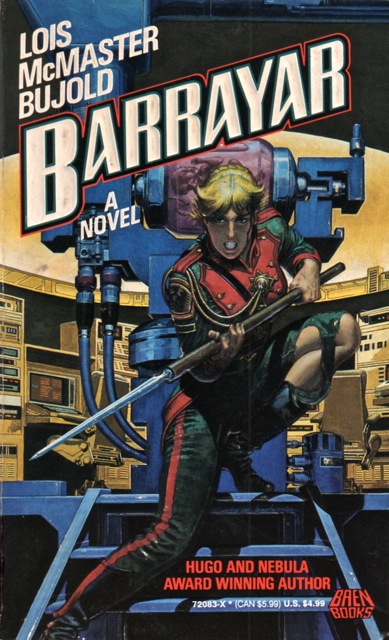
Barrayar by Lois McMaster Bujold
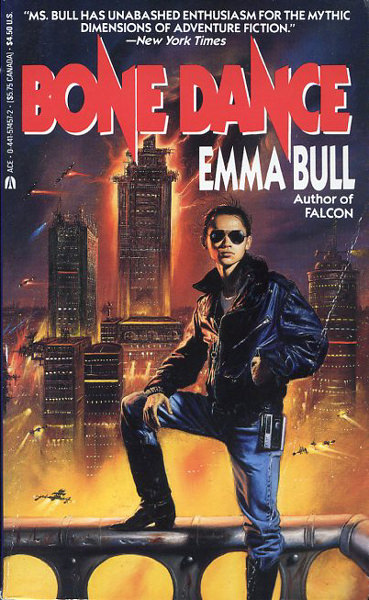
Bone Dance by Emma Bull
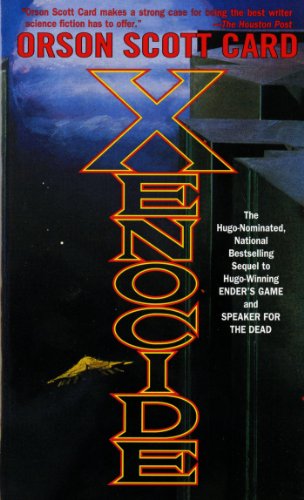
Xenocide by Orson Scott Card
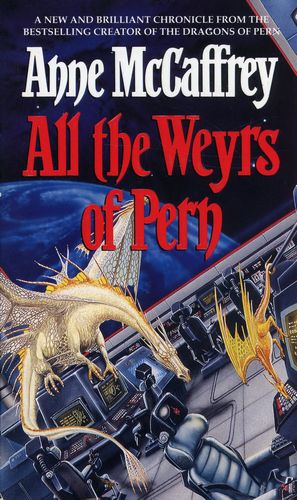
All the Weyrs of Pern by Anne McCaffrey
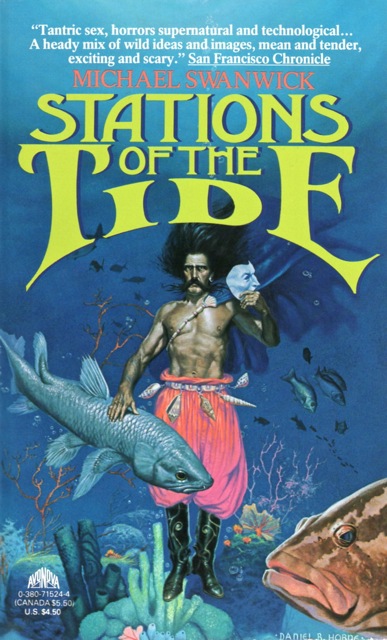
Stations of the Tide by Michael Swanwick
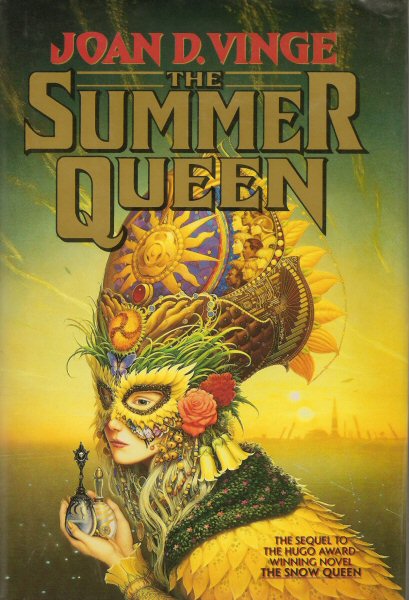
The Summer Queen by Joan D. Vinge

The Actual Results

  1. Barrayar by Lois McMaster Bujold
  2. Bone Dance by Emma Bull
  3. All the Weyrs of Pern by Anne McCaffrey
  4. The Summer Queen by Joan D. Vinge
  5. Xenocide by Orson Scott Card
  6. Stations of the Tide by Michael Swanwick

How I Would Have Voted

  1. Xenocide by Orson Scott Card
  2. Barrayar by Lois McMaster Bujold

Explanation
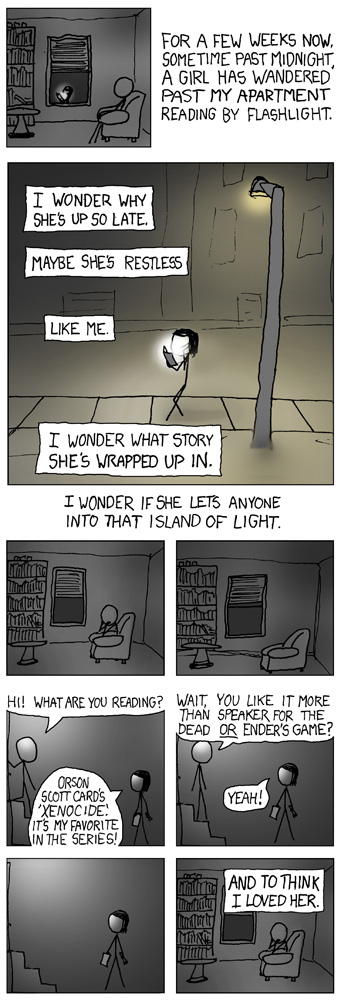
I have a confession to make. That girl from the XKCD comic who loves Xenocide more than the first two books in the Ender’s Game series? …yeah, that’s totally me. Ender’s Game is a science fiction classic, and one of the best books to ever win a Hugo Award (second only to Dan Simmon’s Hyperion, in my opinion), and Speaker for the Dead is a worthy sequel that is superior in many ways to the first book. But Xenocide totally blew me away when I read it back in college. The superintelligent AI Jane, who lives in the ansible connections between planets, is one of my favorite sci fi characters of all time. Also, the concept of the philotic web is one of the most fascinating and exciting sci fi elements I’ve ever wrapped my head around. I also thought it was really fascinating how the post-Earth humans have developed a heirarchy of alienation, and how that influences the ethical decision of whether to make peace or make war with the aliens they encounter.

In short, there was lots of really high concept stuff in Xenocide that blew my mind in just the right way. Also, the story had me hooked from the first page, and the characters are some of the best I’ve ever read. Orson Scott Card has a lot of strengths, but his greatest strength is in writing characters, and he was definitely on his A game with this book. So yeah, go ahead and slam the door in my face—Xenocide is my favorite book in the Ender’s Game series.

Barrayar is classic Bujold, and one of the best books in her Vorkosigan saga. Even though it doesn’t feature Miles directly, Cordelia is such a badass that she more than makes up for his not-quite absence (after all, she is pregnant with Miles while all the action goes down). The political intrigue is everything you’d expect from a good Vorkosigan book, and there’s no shortage of action or things blowing up. But the thing that makes it most satisfying is how everything ties into the later books—in fact, I would go so far as to say that Barrayar is the best place to start with the Vorkosigan Saga, followed by The Warrior’s Apprentice, and then maybe Shards of Honor just to get a little more background before going on with the rest of the series. I definitely wish I’d started with Barrayar. And if you can, listen to the audiobooks, because Grover Gardner’s narration of them is quite excellent.

So those were the books from this year’s ballot that I enjoyed. As for the others, I DNFed them all, though I didn’t even pick up The Summer Queen because I had already DNFed the first book in the series, for reasons that I’ve since forgotten. I’ll try to refresh my memory when I cover The Snow Queen in How I Would Vote Now: 1981 Hugo Awards (Best Novel). Maybe it’s one I should try to pick up again.

I also didn’t pick up All the Weyrs of Pern, because I DNFed that series with the second book. I read the first Dragonriders of Pern book way back in college, and thought it was okay, but it didn’t really hook me enough to read the rest of the series. Last year, I tried to pick up the second book, and was totally blown away by how overpowered the dragons are. Seriously—they can teleport anywhere instantaneously through space and time? How can anything possibly threaten them? Then the book started turning into a soap opera between the dragonriders, and I mentally checked out.

(As a side note, I would say that the Dragonriders of Pern books are the kind of grim-bright books that tend to do well in a second turning, and not a fourth turning. Even though the characters are literally saving the world as part of their job description, they’re so OP that the world is never really in any danger of falling, so the books are a lot more slice-of-life and cozy escapist fantasies. Check out my blog post on the generational cycles of fantasy and science fiction for a more in-depth discussion of this sort of thing.)

Stations of the Tide never really hooked me, and had some weird sexual content that turned me off pretty fast, if I remember correctly. Overall, it felt like the sort of book that was written primarily for the author, and not for any actual reader—kind of like how a movie studio will sometimes let a director make a pet project that no one but the director really likes, just so they can get them to make the blockbusters that everyone goes to see.

As for Bone Dance, it seemed like an interesting post-apocalyptic novel, but the main character was so androgenous that I just had no desire to read past the second chapter. I know this wasn’t typical of books written in the 90s, but these days it’s become so trite to write women who think, act, and look like men that I really have no desire to read that sort of thing. I’d much rather read about manly men and womanly women. Also, I don’t really want to read about lesbians in Minnesota. There’s a reason why Minnesota is now the California of the midwest.

How I would vote now: 1972 Hugo Award (Best Novel)

The Nominees

To Your Scattered Bodies Go by Philip Jose Farmer

The Lathe of Heaven by Ursula K. Le Guin

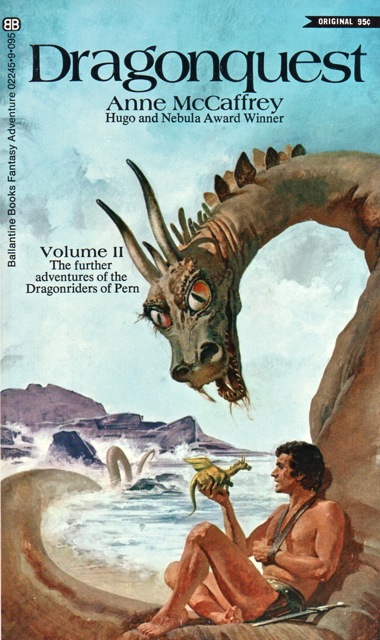
Dragonquest by Anne McCaffrey

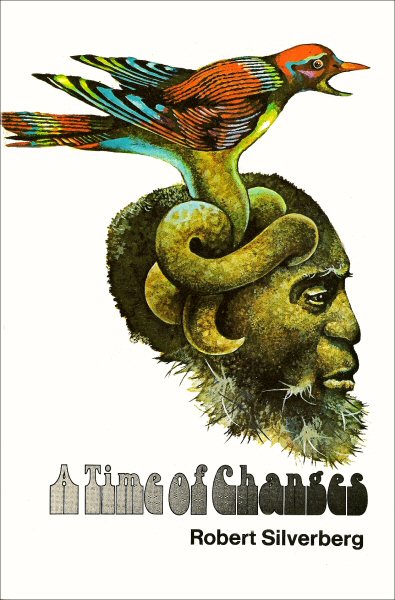
A Time of Changes by Robert Silverberg

Jack of Shadows by Roger Zelazny

The Actual Results

  1. To Your Scattered Bodies Go by Philip Jose Farmer
  2. The Lathe of Heaven by Ursula K. Le Guin
  3. Dragonquest by Anne McCaffrey
  4. Jack of Shadows by Roger Zelazny
  5. A Time of Changes by Robert Silverberg

How I Would Have Voted

  1. The Lathe of Heaven by Ursula K. Le Guin

Explanation

Cover art was so terrible in the 70s. Those are all the original edition covers for each book. They’ve all been reworked in later years, and most of them got a significant upgrade.

The Lathe of Heaven isn’t Ursula K. Le Guin’s greatest work, but I did find it to be decently good. The ending was a little too pat, but the set up was good, and the story itself was quite intriguing. In some ways, I feel that it would have worked better as a movie, maybe an animated feature by Studio Ghibli. It definitely had that kind of a dreamlike feel.

The rest of these books are not that great, to be honest. To Your Scattered Bodies Go and A Time of Changes were too pervy for me, with Farmer indulging in some really weird and disturbing treatment of children, and Silverberg indulging in pages and pages of navel gazing, all written very beautifully and signifying almost nothing, which is typical of Silverberg.

Jack of Shadows was confusing: I got about two thirds of the way in before I realized that I had no idea what was happening, and I didn’t really like any of the characters. I wonder if the real reason this book got nominated was because so many people enjoyed Nine Princes in Amber, the first Chronicles of Amber book, which came out in 1970 and was actually quite excellent. But he was writing and publishing the Chronicles of Amber all through this time period, and none of them ever got nominated for a Hugo, which seems really strange to me. With Zelazny, the only books I’ve found that I enjoyed are his Chronicles of Amber, and everything else is a huge miss for me. It’s weird.

As for Dragonquest, I know that the Dragonriders of Pern books have lots of fans, and I don’t find anything too objectionable with them (aside from the naively libertine Boomer attitudes toward sex, which is par for the course for this era and for Anne McCaffrey in general), but I just couldn’t get into this book. I read the first Dragonriders of Pern book in college, when I wasn’t nearly so cynical, and I thought it was okay, but it wasn’t compelling enough to go out and read the rest of the series immediately, and over the years I literally forgot everything that happened in that first book. So I read a synopsis before picking up book 2, and I just have to say that the dragons are way, way, way too OP. Seriously, they can teleport instantly through space AND time? That’s just too much. So I went into Dragonflight without feeling any real sense of peril, and right away, the novel turned into a giant soap opera about the various dragons and dragonriders: who had feelings for who, who was sleeping with who, etc etc. So after a couple of chapters, I just got bored and checked out.

So the only one of these books that I can positively vote for is The Lathe of Heaven, even though I think it pales next to Le Guin’s other work. But I wouldn’t actually put any of these books beneath No Award, since most of it is probably just a matter of my own personal taste. The perviness of To Your Scattered Bodies Go almost makes me want to put it below No Award: there’s a lot of graphic nudity, a lot of innuendo, and some innuendo / torture porn directed toward children, which was why I DNFed it. But it doesn’t cross over into outright pornography, and it’s not ideologically possessed in the way that most of the stuff coming out today tends to be. Also, the premise is pretty interesting: it’s in the execution where it all falls apart.

The 70s was a really weird time for science fiction. I wonder how many of the Worldcon attendees in 1972 were high on drugs—or whether some of these artists weren’t off their gourds when they wrote some of this stuff. I’ve heard stories about some of the orgies that Asimov used to hold in his con suite. It was a very different time.

L is for Lost Colony

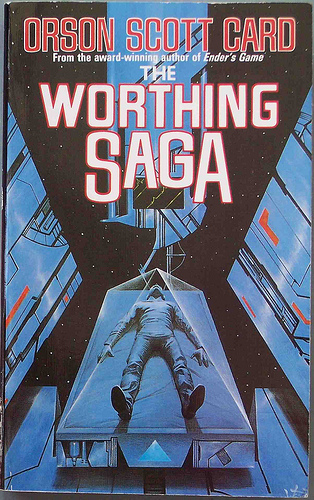
worthingsagaAs we discussed in I is for Interstellar, space colonization is a major theme of science fiction, especially space opera.  Of course, things don’t always go smoothly.  Space is a really, really, really big place, and sometimes, due to war or famine or simple bureaucratic mismanagement, colonies get cut off from the rest of galactic civilization.  They become lost colonies.

Some of my favorite stories are about lost colonies: either how they became cut off, or how they reintegrate after so many thousands of years.  In many of these stories, the technology of these colonies has regressed, sometimes to the point where the descendents may not even know that their ancestors came from the stars.  When contact is finally made, the envoys from the galactic federation may seem like gods or wizards.

Because of this technological disconnect, stories about lost colonies often straddle the line between science fiction and fantasy.  After all, Clarke’s third law states:

Any sufficiently advanced technology is indistinguishable from magic.

Of course, the line between science fiction and fantasy has always been a fuzzy one.  Hundreds of attempts have been made to define it, but they all fall short.  In the end, it often breaks down to certain recurring tropes, like dragons and wizards versus ray guns and rockets, but even that doesn’t always work.

For example, Anne McCaffrey’s Dragonriders of Pern is technically about a lost colony far into the future, but it’s got dragons and castles and other tropes that belong squarely in fantasy.  Then again, the dragonriders have to fight alien worms who invade every few dozen years from a planet with a highly elliptical orbit, so there’s still a strong science fiction basis undergirding the whole thing.

And that’s just Dragonriders of Pern.  What about Marion Zimmer Bradley’s Darkover series, or C.S. Lewis’s Space Trilogy?  Trigun is more western than fantasy, but it’s also full of sci-fi tropes like giant sand-crawling monster ships and a weird post-apocalyptic backstory.  And then there’s all the Japanese RPGs that combine magic with mechas, with Xenogears as one of the best examples.  For a distinct Middle Eastern flavor, look no further than Stargate.

It’s no coincidence that all of these stories feature a lost colony of one kind or another.  When the characters don’t know that they’re living in a science fictional universe, it’s very easy to throw in tropes from other genres.  By no means is it required–Battlestar Galactica and Dune are evidence enough of that–but they certainly present the opportunity to do so.  After all, lost colony stories basically present a hiccup in humanity’s march of progress, breaking the essential science fiction narrative for all sorts of interesting side stories and tangents.

One perennial favorite of science fiction writers is to suggest that Earth itself is a lost colony from some other galactic civilization.  That forms the entire premise behind Battlestar Galactica: the original twelve colonies have been destroyed in the human-cylon wars, and the last few survivors are searching for the legendary thirteenth colony of Earth, hoping to find some sort of refuge.  Apparently, Ursula K. Le Guin’s Hainish cycle also plays with this trope, though she’s never very explicit with her world building.  It can be a bit tricky to twist the lost colony trope in this manner, but if pulled off right it can really make you sit back and go “whoa.”

My personal favorite is probably Orson Scott Card’s The Worthing Saga, about a colony of telepaths that breaks off from a collapsing galactic empire and actually becomes more advanced than the rest of humanity.  When Jason Worthing and Justice re-establish contact, the descendents of the galactics are basically pre-industrial subsistence farmers who view them as gods–which, in a certain sense, they almost are.

It’s a great story that really entranced me, not just for the science fictional elements but also for the distinct fantasy flavor.  Orson Scott Card’s handling of viewpoint in that book is truly masterful, so that I felt as if I were viewing everything through the eyes of his characters.  Since the farmers don’t know anything about their spacefaring ancestors, all the parts from their point of view feel like a completely different story.  It was really great.

My first novel was actually a lost colony story, combined with a first contact.  I trunked it a long time ago, but many of the earliest posts on this blog are all about my experience writing it.  As for my other books, Desert Stars contains elements of this, though the lost colony in question is actually a nomadic desert society that lives on the capital planet of the galactic empire, just outside of the domes where all the more civilized folk live.  Heart of the Nebula is basically about a society that puts itself in exile in order to escape the privations of the Hameji.  And in… no, I’d better not spoil it. 😉

The lost colony isn’t one of the flashier or more prominent tropes of science fiction, but it’s definitely one of my favorites.  It’s a great way to add depth and intrigue, as well as bend genres.  For that reason, I think this trope does a lot to keep science fiction fresh.

Trope Tuesday: Settling the (Final) Frontier

I love stories about colonization, especially when they’re set in space.  There’s just something about a small group of rugged pioneers striking out into the harsh, unforgiving wilderness to make a new life for themselves.  Maybe it’s just something about my American heritage, or all those 4x games I played as a kid, but I doubt it.  Ever since the dawn of time, we humans have been on the move, looking for new and better places to call home.  Small wonder, then, that so many of our stories, both ancient and modern, are about settling the frontier.

Since space is the final frontier, this trope is very common in science fiction.  Heinlein was a huge fan of it, but he wasn’t the only one to play with it–not by a long shot.  John Scalzi (The Last Colony), Nancy Kress (Crossfire), C.J. Cherryh (40,000 in Gehenna), Anne McCaffrey (Freedom’s Landing), and Kim Stanley Robinson (Red Mars, Green Mars, and Blue Mars) are just a few of the many science fiction writers who have explored this trope in their works.  In recent years, several sci fi miniseries (Battlestar Galactica, Terra Nova) have used it as a major premise as well.  And of course, you have all the classic 4x games like Masters of Orion and Alpha Centauri.

Space Colonies can come in a variety of different flavors:

  • Lost Colony — What happens when the original colonists lose all contact with the outside universe and no one thinks to check up on them for a while.  Can either turn into a story of survival or a clash of cultures, if/when they ever re-establish contact.
  • Cult Colony — Religion is one of the few things that will drive massive numbers of people to leave everything behind and start over in a new world.  Just look at the Pilgrims for a real-world examples.  In space colonies of this type, you can expect to see some extremely radical people, since the isolation of deep space tends to compound their fundamentalist tendencies.  Expect these to be both weird and frightening.
  • Space Amish — Something of a combination of the two, except with much more primitive technology.  Expect to see log cabins, horse- (or giant lizard) drawn carriages, and other tropes closer to the Western genre.  Sometimes, they may be hiding a superweapon.
  • Penal Colony — Australia in space (ahem…IN SPAAACE!!!).  What happens when the empire needs a place to conveniently exile all the troublemakers and rabble rousers.  Not a place for the faint of heart.
  • Wretched Hive — What happens to a penal colony when the prisoners actually run the place.  Like the previous type, except taken up to eleven.  Or not, depending on the history and culture.  Tatooine is the eponymous example.
  • Death World — As the name would suggest, this is not the kind of place you’d want to homestead.  Anyone who does is bound to be a badass.  The Empire and the Federation often recruit most of their soldiers from here.
  • Company World — I couldn’t find this one listed on tvtropes.  Basically, it’s a planet that is owned and governed entirely by a private corporation, which expects to make a tidy profit off of the place.  The colonists are basically indentured servants (since robots simply wouldn’t do) and have almost no property or rights.  Expect the story to be about sticking it to the man.

These are just a few of the many possibilities that you can play with when settling the frontier.  In my opinion, however, the essential elements are as follows:

  • The story is not just about exploring a new world, but establishing some kind of a permanent presence there.
  • By coming to the new world, the colonists must leave everything from their old, familiar lives behind.
  • The colonists must resolve the story conflict through their own self-reliance, not by waiting for an outside force to save them.

I’ve only dabbled with this trope, but it does play a role in many of my stories, most notably in the Star Wanderers series.  Genesis Earth also has elements of it as well, though it’s not the main driver for the plot.  It is a major factor in Heart of the Nebula, though, the (currently) unpublished sequel to Bringing Stella Home.  And in my future books, you can definitely expect to see this trope again.