The sin that was so bad, the Bible barely mentioned it

I don’t usually post long-form podcasts on Sunday, but this one seemed appropriate (though I wouldn’t recommend listening to it if little children are around).

Ward Radio has been doing a lot of deep dives into the apocrypha & pseudopigrapha, and this one was particularly interesting, since the Bible barely touches on the sin of the antediluvians that was so terrible that God decided to send the flood. “But as the days of Noe were, so shall also the coming of the Son of man be.”

(As a companion episode, it’s also worth listening to this one where they talked about the true meaning of “nephilim” in Genesis, which is usually translated as “giants.” It’s probably not what you think!)

Fantasy from A to Z: W is for Worldbuilding

What is the biggest thing that sets fantasy apart from all other genres? Without a doubt, it has to be worldbuilding. In every other genre (even science fiction, to some extent), the writer can get away with a loose or surface-level understanding of the world. But in order to do fantasy right, you have to build the world from the ground up, and include such an immersive and visceral level of detail that the reader feels like it’s a real world that they can lose themselves in. That is the feeling that readers want when they pick up a fantasy book.

At the same time, I think that most writers put too much emphasis on worldbuilding. It’s become trendy in writerly circles to talk about worldbuilding, almost as if it’s something you do for its own sake. In the best books, though—even in the best fantasy books—the worldbuilding is always in service to the story, and not the other way around.

For many of us writers, the act of dreaming up a world is the thing that immerses us the most in it. Daydreaming about our fantasy worlds and working out all of the details about it—that’s often the fun part, and the thing that got us into writing fantasy in the first place. But it doesn’t translate very well to the page. The things that seemed so cool to us when we were dreaming them up often come across as dry and boring when we write them out in a huge info dump.

In order for a reader to feel immersed in the world, they need to have a character that they can follow through it. The character’s experience of the world becomes the reader’s experience. But the character needs to be in motion—they need to have some sort of goal or objective that they’re working toward, even if they don’t consciously realize it yet. And it needs to be a struggle for them, at least on some level. Even in cozy fantasy, where the stakes are typically pretty low, the characters still have to put some effort into getting the things they want.

That’s because characters show us who they really are through the trials and struggles that they face. Just like in real life, hard times make us see what people are made of. Without that, readers have a difficult time connecting with the characters through whose eyes we want to show them our fantasy worlds. It’s through a character’s struggle that we find that we can relate to them.

Another thing I’ve noticed, particularly in some recent big-name traditionally published fantasy, is that the viewpoint characters are often just terrible people. If I met them in real life, I often think that I would find them petty, narcissistic, and repulsive. At best, they are amoral, and at worst, they are little better than the villains who oppose them—and yet, from the way they’re written, it’s clear that we’re supposed to latch onto them simply because they are the main character.

As a reader, that doesn’t work for me. If I’m going to connect with a character deeply enough to get that immersive fantasy experience, I want them to either be the kind of person I can admire, or the kind of person I feel like I can hang out with. Preferably both. And if the character is going to do something morally repulsive early on in the book, I need to see them wrestle with the ethics of it first, and perhaps feel some remorse afterward. Otherwise, it’s going to throw me out of the book.

Anything that throws the reader out of the book is also going to kill that immersive experience, rendering all that worldbuilding utterly ineffectual. In some ways, the reader first has to feel immersed in the characters before they can feel immersed in the world.

This is why the characters in the best fantasy books often have more depth and nuance to them than the characters in any other genre. When the book is set in our own familiar world, the characters themselves are often larger than life. The heroes are billionaires or ex-Navy SEALs, the love interests are supermodels or billionaires, and the villains are criminal masterminds or rival billionaires. But in fantasy, the larger-than-life element is the world itself, so the characters (or at least the viewpoint characters) often feel much more like real people, so as to ground us in the story.

I’ve often heard people say that worldbuilding is a bit like an iceberg, in that only 10% or so should be visible. But I think it’s more precise to say that worldbuilding should be grounded in the character (or characters) through whose eyes we get to see it. Of course, those characters are grounded in the conflict or plot of the story, since that’s what shows us who they really are. And the plot itself is grounded in time and space, which brings us back full circle to setting and worldbuilding. So ultimately, it’s all a virtuous cycle.

I don’t think I’ve ever found an author who does character better than Ursula K. Le Guin. I haven’t read much of her fantasy, but I did read Powers, and I felt so totally immersed in that world because I felt like I knew the main character even better than I know myself. It was an incredible reading experience, just like the best of her science fiction, which I adore.

Brandon Sanderson also tends to buck the current trend of morally ambiguous main characters who never really earn our sympathy or admiration. In almost all of his books, his protagonists strike me as good people—the kind that I can admire and hang out with. That fact, combined with how his books tend to be much cleaner than most contemporary fantasy, go a long way toward explaining his tremendous success (though of course, Sanderson’s greatest strength is his ability to write killer endings).

Bottom line, the best worldbuilding in fantasy is only as good as the characters through whom we experience it. Worldbuilding should always serve the story, and not the other way around.

Back into writing!

So we are more or less moved into our new (old) house, though there is this overdue kid’s book from the library that somehow got lost during the move, and we haven’t been able to find it… but aside from that, we are more or less settled in. Our five year-old has started kindergarten, my wife is starting her new job, and by the time this post goes live, we will have acquired office chairs from the BYU surplus sale, so I won’t have to be standing all the time like I am as I write this.

I’ve already gotten back into writing my epic fantasy, The Soulbond and the Sling, and am making steady progress on it again. The AI draft is about 66% complete, and it’s good enough that if I were writing it under a secret AI-only pen name, I would feel comfortable publishing it as-is. But my personal standard of quality is higher than that, especially for epic fantasy, so after the AI draft is complete, I will rewrite the whole thing without any AI, to put it in my own voice (and will probably add a whole lot of other stuff to it too—you know, the kind of setting and character details you’d expect in a proper epic fantasy, giving it much more depth).

(Also, as a side note, I do not have a secret AI-only pen name… though I must admit, a part of me kind of wants to start one. With a little bit of market research to figure out the pulpiest genres where I could really excel… but no, with two (soon to be three) small kids and a wife who works full-time, there are only so many projects I can work on at a time.)

I’m also working on The Road to New Jerusalem for my J.M. Wight pen name, though that one has been going much more slow. I really have no idea how much market appeal this one is going to have, and doubt it will do much more than help me to flesh out the world for a potential series in the same universe (a post-apocalyptic Mormon polygamist romance, which also probably has limited market appeal). However, I feel impressed that this is a book I need to see through to the end, so my goal is to finish it before October, at which point I will probably focus on The Soulbound King.

Beyond that, I’m also working on two other novels that I hope to finish before the end of the year (or, more realistically, sometime early next year, since I’m sure the new baby will throw things off for a while. The first is The Unknown Sea, a Sea Mage Cycle book, which is going to be a lot of fun. The rough AI draft is already done, and I had a real blast writing it.

The other one is Captive of the Falconstar, the sequel to Queen of the Falconstar. The rough AI draft is also done for this one, but the revised AI draft is going to take a bit more work. Also, I need to redo the cover and blurb. But I’m really looking forward to getting this one out, and completing the trilogy, which has stood unfinished for nearly a decade now. Yes, I really need to finish these unfinished series, and fully intend to do so—not just with this one, but for all of them.

Over the next year, I hope to transition from being a science fiction writer who occasionally writes fantasy, to a fantasy writer who occasionally writes science fiction. My two big unfinished sci-fi series are the Falconstar Trilogy and the Outworld Trilogy. The plan right now is to finish Falconstar first, knocking out the last two books almost at the same time (the rough AI draft for Lord of the Falconstar is also complete), and then spend a little more time on Return of the Starborn Son to finish that trilogy strong. For a long time, Star Wanderers was my flagship series, so I want to do right by it. But I haven’t even outlined book 3 yet, so it’s going to be a while.

And when Return of the Starborn Son is done, I will probably release another volume of my author’s notes, since hey, why not? But that won’t be for a while—probably not until this time next year, at the absolute soonest. However, Return of the Starborn Son probably will come out before The Soulbond and the Sling, since for marketing reasons I don’t want to release an epic fantasy trilogy until all three books are ready to rapid release. And yes, I fully blame George R.R. Martin for conditioning epic fantasy readers not to try out a new series until it is complete. It is what it is.

So that’s the long-term plan. I will probably start a few new projects as well, including a relaunch of my Christopher Columbus stories, once I figure out what I want to do with that series. But for now, I’m just going to focus on The Road to New Jerusalem and The Soulbond and the Sling, until we are back into a new routine. BYU classes start on September 3rd, so it will probably be a little crazy until then. And the way things are shaping up, I half-expect they will induce my wife at the tail-end of September. So maybe we won’t actually get into a new routine until sometime next year. But either way, I’ll do my best to keep writing.

Fantasy from A to Z: V is for Villains

Back in the early days of the internet, when it was still a fun and carefree place, there was this thing called the evil overlord list (which is still up, if you want to read it). The list is organized like a top 100 list of resolutions that the smart evil overlord has made, in order to avoid the fate of all the not-so-smart evil overlords who have come before him. It’s got some really hilarious zingers, including the last one:

Finally, to keep my subjects permanently locked in a mindless trance, I will provide each of them with free unlimited Internet access.

Yikes. Explains a lot about the world today, doesn’t it?

But all joking aside, villains are a staple of fantasy literature—including the super campy villains that we love to mock with things like the evil overlord list. And there’s a very good reason for that. Every great hero needs an intractable problem to overcome. And while man vs. nature and man vs. self provide a certain degree of conflict, nothing provides a hero with more opportunities to prove himself than man vs. man.

When I was learning how to write fiction, the popular advice when writing villains was to remember that every character is the hero in their own story. Thus, every villain you write shouldn’t think of himself as the bad guy. Instead, he should think of himself as the good guy, who only does morally questionable things because that’s what needs to be done.

I do still think that there is validity to this advice. I still remember the moment when, as a young boy who was starry-eyed for all things Star Wars, I first saw the opening cinematic for the computer game Tie Fighter. It blew my nine year old mind to think that my beloved Rebel Alliance might actually be a band of terrorists, opposing the forces seeking to restore law and order to the galaxy. Suddenly, the one-dimensional conflict at the heart of my favorite franchise had a whole other dimension to it. I was hooked.

But in the last few years, I think people have become hungry for villains who are truly evil to the core. The transition probably began a while ago, around the time when Breaking Bad was still new. Walter White is an extremely complex and nuanced character, with a rich and well-developed character arc, exactly in line with the old writing advice. And yet, by the end of the show, he is genuinely evil. He gets a bit of a redemption arc in the last episode, but he is not a good guy by any stretch—and he admits it. In fact, the scene where he finally admits as much to his wife is, in many ways, the capstone of his character arc. He has no illusions about the fact that he never was a hero—not even in his own story.

These things tend to be cyclical and generational. From the mid-1960s to about the 2010s, I think most readers preferred villains who were nuanced. Even in Lord of the Rings, which really took off in the 1970s, Sauron is more of a force of nature than an actual human person. Besides, the true villain of Lord of the Rings is the ring itself, and everyone who interacts with it has a slightly different reaction, with some of them passing the test, and others failing (and, in the case of Boromir, redeeming themselves afterward). Besides, Tolkien wrote Lord of the Rings at the tail end of the last cycle, where from the 1910s through the 1950s the villains were unambiguously evil. Robert E. Howard’s Conan stories are a great example—there is no redemption arc for the Stygian priests or the remnant of Xuchotl.

The older I get, the more I have come to appreciate stories with unambiguous heroes and villains. That doesn’t mean that everything has to be black and white—just look at Lord of the Rings for that. But there’s a lot more room for nuance and complexity between two extremes than there is between different shades of grey. Again, Lord of the Rings is a good example of this. You can make a solid case that the true “hero” of that story is Gollum, who succumbed entirely to the ring and had absolutely no desire to save the world at all. And yet, the ring is unambiguously evil, and Gandalf, Aragorn, Elrond, etc. are all unambiguously good.

What would a revised version of the evil overlord list look like? Most of the tropes in the original list are based on recycled old franchises that have mostly faded from cultural relevance now. Would the new list include things like “I won’t waste time fretting about the corruption of my soul” or “I’ll harbor no illusions about being the good guy”? I don’t know, but I suspect that a good number of items will remain relevant for a long time. After all, whether or not the villain sees himself as the hero of the story, a good villain is always very competent at what they do.

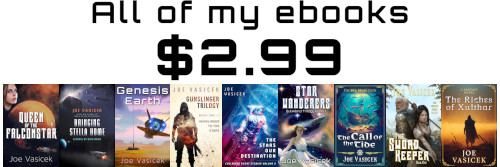
All my ebooks $2.99 until August 3st!

For about the last year, I’ve been running periodic $2.99 sales on all my ebooks every two months or so. No special announcements or promotions, just a price drop from $4.99 for the novel-length books, down to $2.99 (this does not include my book bundles, which are all $9.99).

Interestingly, even with very little promotion, and the lower royalties due to the price decrease, I have found that my sales and revenue actually increase every time I run one of these sales. But the boost only lasts for about two weeks before falling back again, and I have to wait about two months before I can get a similar boost.

However, since I could do a better job promoting these things, I figured it’s worth promoting on my blog. From now until the end of August, all of my $4.99 ebooks are now $2.99 across all ebook retailers. You can pick them up wherever you get your ebooks, but if you get them from my online store, the files are yours to keep (none of this licensing vs. digital ownership nonsense). Check it out!

Where do you keep your books?

Now that we’ve moved back into our old house, unpacking all of our stuff and finding places for it, I just have to wonder… where in the heck do bookish normal people keep all of their books?

My in-laws have a dedicated library in their house, and while we were house-sitting for them, they were gracious enough to clear out several shelves for us so that we could put all of our books (more or less) within easy reach. But our house is a fairly small single family home, with a main floor and a basement. It’s about 2,300 square feet, with four bedrooms and three bathrooms—which is plenty of room for our small family—but there isn’t much space for bookshelves.

This is our main family room (please excuse the mess—small children and all). It has a little bit of shelf space by the stairs, which we could use for maybe a few dozen books, but we have a lot more than that. Boxes and boxes more. Behind the camera is the kitchen/dining area, so there isn’t much space for books there. And everything else on this floor is already taken, with bedrooms for the kids and a master suite for my wife and me—and my wife doesn’t want to cram all our books in our bedroom. With another small child on the way, I can’t blame her.

This is the downstairs main room. Again, please excuse the mess—we’re currently using this area as the kids’ play room. The bookshelves either have games or kids’ books, so those are taken. Behind the camera is a kitchenette area that we’re currently using to hold our food storage (and we have a lot of it, so that’s probably not going to change). Besides the main room here, there are two bedrooms, one of which is currently for storage, and the other is an office for my wife and me. Again, there’s not much space for shelves in either of those… and besides, we’d rather have our books out where people can see them (or at least where our kids can easily browse them).

What I suppose we could do is get rid of the massive TV (my wife won it from her work during a holiday raffle, and we don’t use it much, so it wouldn’t be a big deal to downsize) and move the dresser into another room, so that we could use that whole wall for shelves. That might fit all of our books, if the shelves stretched from floor to ceiling. It would be a big project, since we would have to use all of that space—and would probably also have to move the light switch—but it could be done.

Another idea I’ve had is to install shelves in the family room up above the main window. We could probably wrap it around most of the room, even into the dining room area if we had to. Have any of you done something like that? I’m a little bit worried it would make the room feel cramped, but it is a place where we could put a shelf.

Other than that, I’m kind of at a loss. I could try to get rid of most of my books, but I have no idea how successful that would be, since I tend to acquire new ones as quickly as I lose the old ones. It’s a blessing… and a curse. I’m sure that most of you can relate.

In any case, what do you do with all of your books? Where do you keep them? What would you do if you lived in our house?

Interesting take on romantasy

TL:DW; It’s all just porn, and this is why we can’t have nice things.

This YouTuber has some very strong opinions. I don’t agree with all of her videos, but her arguments are always solid, so it’s always interesting to hear what she has to say.

On this issue, though, I agree with her almost completely. Almost all romantasy is porn, and its meteoric rise is a plague on fantasy books and literature.

Fantasy from A to Z: U is for Unicorns

If you were expecting a post on unicorns or other mythical beasts, I hate to disappoint you again, but that’s not what this is going to be. Instead, I want to write a bit about that most mythical of all human creatures: the full-time fiction writer.

Okay, perhaps we’re not that mythical. After all, Brandon Sanderson estimates that of all his students over the years, perhaps as many as 10% of the ones who set out to become full-time writers actually make that dream into a reality. I sometimes wonder: would Brandon count me as one of those 10%? Should he? The answer to that is… complicated. 

One of the first questions I get whenever I tell people that I’m a writer is “oh, wow—how is that working out for you?” Which is really a roundabout way of asking how much money I make, and whether I’ve been able to turn it into a full-time career. I am not (yet) a major bestselling author, and the closest thing I’ve had to a breakout thus far has been my (now unpublished) Star Wanderers novella series, which managed (mostly by accident) to hit the algorithms correctly back when a permafree first-in-series with lots of direct sequels was the best path to success. Then the publishing landscape changed, the algorithms shifted to favor pay-to-play advertising, and my books got left behind.

I will admit that if it weren’t for my wife’s income, I wouldn’t be able to pursue writing full-time. As a family, we’re following a path very similar to my Scandinavian ancestors, where the wife tends the farm while the husband goes off a-viking. In other words, my wife has the stable, traditional career that provides our family with some degree of security, while I have the more risky career that has the potential to catapult us into transformative levels of wealth and prosperity. We’re doing just fine, but it does sometimes feel like my Viking ship has yet to land ashore.

Because here’s the thing: something like 90% of the money in book publishing (after the booksellers and publishers and other middlemen take their often-exorbitant cuts) goes to less than 1% of the writers who actually make any money (and something like 30% of kindle books never sell a single copy). 

For every Brandon Sanderson, there are thousands—perhaps hundreds of thousands—of published authors who write on nights and weekends while holding down a day job to pay the bills. My writing contributes enough to the family budget to justify pursuing it, but if I were still single, I would need at least a part-time job.

Indie publishing has created a lot of opportunity for authors to make a career out of their writing, and there are many successful indies who are making a decent living at it. At the same time, indie publishing has also massively exploded the number of books that are published, so the proportion of full-time to still-aspiring authors is probably about the same (and may have actually tilted the other way). 

In recent years, it has very much turned into a zero-sum pay-to-play game, especially with advertising. From what I can tell, most authors lose money on advertising, and most of those who are making money are spending upwards of $10,000 each month to make $11,000. The elite few who learn how to successfully game the algorithms to blow up their books often put their writing on the backburner to launch their own companies or provide publishing services, leveraging their expertise to make a lot more than they otherwise would.

The algorithms are changing books in some very strange ways. If J.R.R. Tolkien or Roger Zelazny or Robert E. Howard were writing today, would they be able to make it in today’s publishing environment? 

Howard’s Conan stories would either have to be a lot sexier, or else would have to include the sort of tables and character stats you find in LitRPG. His covers would also be a lot more anime, and show a ridiculous amount of cleavage (which he actually might not have had a problem with, judging from some of the old Weird Tales covers). 

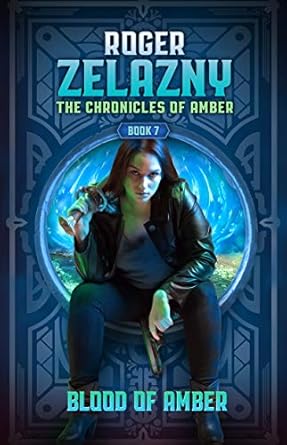
Zelazny’s Chronicles of Amber would all be far too short to make it in Kindle Unlimited—to make it in that game, you have to have super long books that max out on page reads, in order to maximize advertising ROI so that you can outbid your competitors. And if you aren’t winning the pay-to-play advertising game, your KU books will sink like rocks. Also, Zelazny took way too much time between books. Gotta work on that rapid release strategy, Roger.

As for Tolkien… hoo boy, there’s an author who did everything wrong. Decades and decades spent polishing his magnum opus, with a short prequel novel that falls squarely in the children’s category (totally different genre) as the only other fantasy book published in his lifetime. I suppose he could have serialized Lord of the Rings, except nothing really happened in episode 1: A Long-Expected Party. Certainly not anything that would adequately foreshadow all the dark and epic battles to come. Perhaps if he followed a first-in-series permafree strategy, and just gave away Fellowship of the Ring for free… and then made The Hobbit his reader magnet for signing up for his email list… maybe that could have worked? After all, there’s always BookBub…

I jest, of course. Each of these authors’ books became classics, not because of their marketing strategy, but because they hit the cultural zeitgeist in exactly the right way. But is it possible for an author to do that today without also getting a boost from the algorithms? Or do the algorithms have more power to shape our culture than anything else? Those are disturbing questions, and I honestly do not know the answer.

And then there’s the question of AI, which is massively disrupting all of the creative fields. In the interest of full disclosure, I am actually quite sanguine about generative AI, and have already been working to incorporate it into my creative process. I’m not a fan of AI slop, but I don’t feel particularly threatened by it. I decided a long time ago that if AI ever became good enough to write an entertaining book, it still would never be able to write a Joe Vasicek book. That’s insulated me from most of the doom porn out there.

Right now, there is a HUGE fight happening between authors like me who are embracing AI, and authors who treat it all as anathema, and have vowed to never use any sort of AI in any of their books (except Grammarly, of course, because… reasons. And Microsoft Word. And…) Frankly, it reminds me of the big debate between indie and traditionally published authors, back before self-publishing had lost its stigma. The biggest difference is that the level of online outrage has been ramped up to 11, mostly as a result of the social media algorithms (which weren’t as robust or as powerful back in the early 2010s). I suspect that we will ultimately settle on a “hybrid” approach, much like we did with publishing, but the sheer level of vitriol has made me wonder about that. 

On the reader end of things, though, it seems like most readers don’t really care if a book was written with or without AI assistance, so long as it’s actually a good book. Which means that there is a real opportunity for authors who 1) know how to tell great stories, 2) have already found and honed their voice, and 3) know how to strike the right balance between the AI and the human elements. 

Which describes my own position almost perfectly. Over the last fifteen years, I’ve read, written, and published enough books that I have a pretty good handle on what makes a great story. I’ve also honed my voice well enough that I can write in it quite comfortably. And as for the balance between AI and human writing, I’ve been working hard on that since ChatGPT burst onto the scene in 2022. Half a dozen books and about a million words later, I’ve learned quite a lot about how to best strike that balance.

Will AI replace authors entirely, making this particular unicorn extinct? I don’t think so. But AI may radically change our concept of what “books,” or “writers,” or “writing” really are. A long time ago, I realized that even if AI became good enough to write a decent book, it would never be able to write a Joe Vasicek book. Only I can do that. Whether or not that’s worth something is up to the readers to decide.