Get ready for the anti-AI witch trials…

Really interesting news story about an artist at Dragoncon who was forcibly removed from the convention, with the cops getting called and everything, for allegedly selling AI-generated art. So even though the artist bought the table and everything, the convention threw them out. It’s unclear whether the table was refunded, but I’m guessing it probably wasn’t.

Of course, as JDA rightly points out, if you do AI well then it’s impossible for anyone to tell whether it’s AI or human, so what this really does is set the precedent that merely accusing someone of using AI in their art is sufficient to cause serious damage to someone’s business. A lot of these artists make most of their money at conventions like this, and Dragoncon is one of the top-tier sci-fi media conventions, right up there with San Diego Comic-con and FanX Salt Lake.

How long is it going to take before an artist is falsely accused of using AI and ruined because of it? Has that already happened? How many more artists are going to be thrown out of conventions like this? How many artists are going to decide that it just isn’t worth it to attend these sorts of conventions, whether or not they use AI? How long before we find that some of the artists leading these witch hunts are themselves using AI to create their art?

In the end, when AI has been normalized and no one (not even in fannish circles) blinks an eye at AI-assisted art, we’re going to look back at this time with much the same dismay that we look back at the Salem witch trials. But that may not be for another ten or twenty years. Do we really need to go through all this madness first? This is why we can’t have nice things.

August reading recap

Not a ton of reading this month, since we were moving for most of it, but I still managed to finish (and DNF) a few books here and there.

Books that I finished

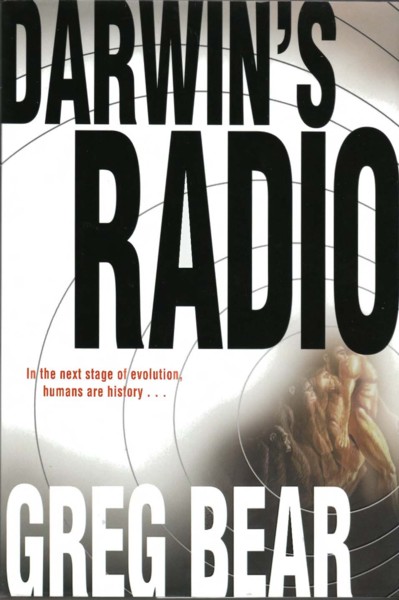
The Edible Ecosystem Solution by Zach Locks

Life 3.0 by Max Tegmark

The Rustlers of West Fork by Louis L’Amour

The Optimist by Keach Hagey

Passin’ Through by Louis L’Amour

The Revolt of the Elites by Christopher Lasch

Books that I DNFed

  • The AI Mirror by Shannon Vallor
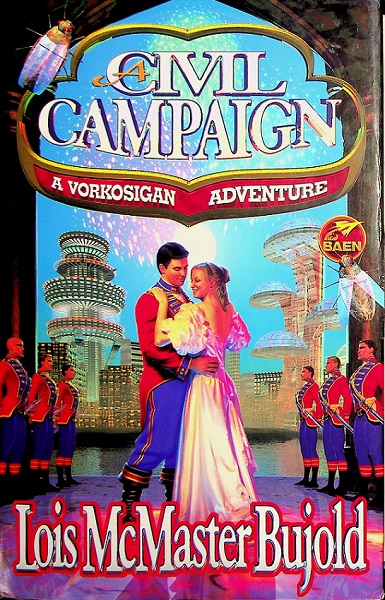
  • Captain Vorpatril’s Alliance by Lois McMaster Bujold
  • Science Fictions by Ritchie Stuart
  • In Covid’s Wake by Stephen Macedo & Frances Lee
  • Girl on Girl by Sophie Gilbert

Why should a man be scorned?

Why should a man be scorned if, finding himself in prison, he tries to get out and go home? Or if, when he cannot do so, he thinks and talks about other topics than jailers and prison-walls?

J.R.R. Tolkien, “On Fairy Stories.”

Fisking 1-star reviews bashing AI

They say that authors should never respond to one-star reviews. That’s generally good advice, and for most of my career, I’ve studiously kept it. However, I’ve recently begun to get a new kind of one-star review that baffles me—reviews that essentially say: “the book was good, but it was written with AI so I hate it.”

Here’s an example:

This book is written with AI. Incredibly disappointing as a reader to give a book/author a chance and then to get to the end of the book only for the “author” to then announce the AI card. If I could give zero stars, I would for this alone. I also didn’t appreciate that this use of AI was not announced until the ending Author’s Note. If “authors” are going to cut corners and put their name to computer-generated mush, they should be willing to put that information on the front cover. The book struggled to find its pace, and some parts read as though they were written for a child’s short story competition while others felt as though the writer was snorting crushed up DVDs of Pirates of the Caribbean as they wrote.

Let’s break it down:

This book is written with AI. Incredibly disappointing as a reader to give a book/author a chance and then to get to the end of the book only for the “author” to then announce the AI card.

Yes… but I can’t help but notice that you got to the end of it. In other words, you finished the book. Also, from the way you tell it, it seems that you didn’t realize the book was written with AI until you got to the very end. So based on your own behavior, it doesn’t seem that quality was the issue.

I also didn’t appreciate that this use of AI was not announced until the ending Author’s Note. If “authors” are going to cut corners and put their name to computer-generated mush, they should be willing to put that information on the front cover.

Okay… but if my book was just “computer-generated mush,” why did you finish it? And why were you surprised when you learned that it was written with AI-assistance?

I can understand the objection to books that were written solely with AI, with little to no human input. But that’s not how I write my AI-assisted books. Instead, I outline them thoroughly beforehand, write and refine a series of meticulously detailed prompts (usually using Sudowrite), and generate multiple drafts, combining the best parts of them to make a passable AI draft. And then I rewrite the whole thing in my own words, using the AI draft as a loose guide with no copy-pasting.

Why would I go through so much trouble? Because of how the AI drafting stage gives me a bird’s eye view of the book, allowing me to identify and fix major story issues before they metastasize and give me writer’s block. Before AI, that’s where 80% of my writer’s block came from, and it often derailed my projects for months, so that it took me well over a year to write a full-length novel. But with AI, I’m no longer so focused on the page that I lose sight of the forest for the trees. So even though generating and revising a solid AI draft adds a couple more steps to the process, it’s worth it for the time and trouble that it saves.

That’s the way I use generative AI in my writing process. But there are many other ways—and I hate to break it to you, but most authors use AI in one way or another. If an author uses Grammarly to fix their spelling and grammar, should they disclose that on the cover? If they use MS Word? What if they used a chatbot to brainstorm story ideas, but went on to write it entirely themselves? Should that also be disclosed?

The book struggled to find its pace, and some parts read as though they were written for a child’s short story competition while others felt as though the writer was snorting crushed up DVDs of Pirates of the Caribbean as they wrote.

Yes… but again, I can’t help but notice that you finished the book. And after you finished it, you were surprised to learn that it was written with AI. So with all due respect, I’m going to call BS on your objections here. I think you only decided you hated the book after you learned it was written with AI, and you came up with these objections after the fact. Whatever.

I think a lot of the people who object to AI are really just scared and angry. They claim to have principled, ethical objections to the technology, but few of them follow through to implement that principled stance into every area of their lives. After all, if you use Grammarly, Google Docs, or MS Word, you are using generative AI just as surely as I am using ChatGPT and Sudowrite. For most people, the ethical objections are just a smokescreen for their general fear of change. They’re fine with embracing the convenience the technology offers them in their own personal lives, but they insist that everyone else—including me—live according to their principles, no matter how inconvenient or difficult it may be.

As an example of that, check out this one-star review:

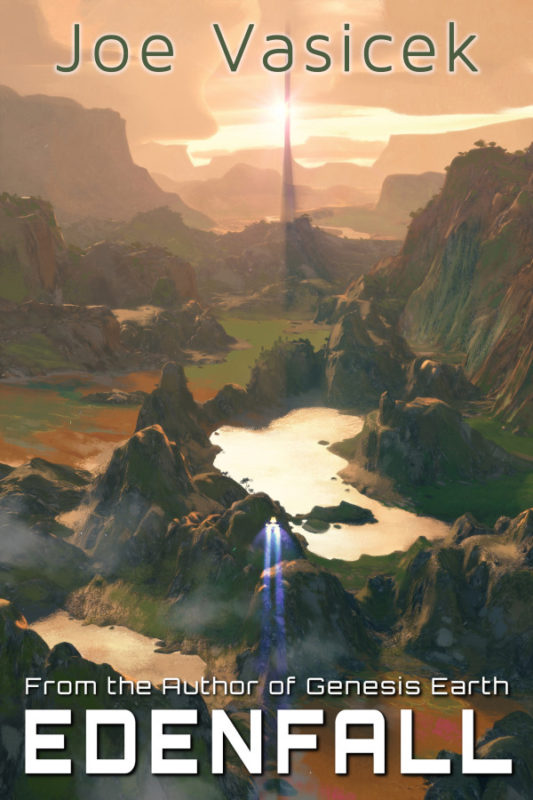
The arts! Whether visual, performance, or literary—my haloed experience has been the act of creating and sharing a connection to the profound or sublime. Why, then, would any artist—musician, dancer, sculptor, painter, or author—offload (abdicate) the act of creation to AI? Process versus product. Mr. Vasicek included an afterword for this volume, describing his workflow and the efficiency of collaboration with AI: a 6,624-word day! another volume completed! Mr. Vasicek obviously owns the skills to weave rich character development and scenes. Perhaps Mr. Vasicek’s AI collaboration explains why these characters, the plot, the narrative—and subsequently, the entire story— are so flat and undeveloped. Although his lead male shows some undeveloped promise, the mother’s too-oft used “dear” and “my love,” and the daughter’s clutching at her mother’s apron are cringe-inducing. Perhaps Mr. Vasicek might eschew AI-assisted writing, seeking a future of quality over quantity.

Let’s break it down:

The arts! Whether visual, performance, or literary—my haloed experience has been the act of creating and sharing a connection to the profound or sublime. Why, then, would any artist—musician, dancer, sculptor, painter, or author—offload (abdicate) the act of creation to AI?

Because for some of us, writing is more than a “haloed experience”—it’s an actual job. It’s what we do for a living. And if you want to do your best work, you need to use the best tools. We used to build houses with plaster and lath and wrought-iron nails, using hand tools and locally-sourced lumber. But today, you’d be a fool not to use power tools and materials sourced from a building supply store, or your local Home Depot. If that makes your building experience less profound or sublime, so be it.

Process versus product. Mr. Vasicek included an afterword for this volume, describing his workflow and the efficiency of collaboration with AI: a 6,624-word day! another volume completed!

I’m not gonna lie: there is a certain degree of tension between art-as-product and art-for-art’s-sake. But the two are not mutually exclusive. A house can still be a beautiful work of art, without taking as long as a cathedral to build it. Likewise, a book can still be a beautiful work of art, without taking as long as Tolkien’s Lord of the Rings.

Again, you’re trying to pidgeon-hole me into your “haloed” idea of what a “true artist” should be. Which would make it absolutely impossible for me to make a living at this craft. If all of us writers followed that path, there are a lot of wonderful books that would never get written. And I doubt that the overall quality of the books that do get written would rise.

Mr. Vasicek obviously owns the skills to weave rich character development and scenes.

Now we get to the interesting part. I checked this reviewer’s history, and this was the only review they’ve written for any of my books. Therefore, I can only assume that this is the only book of mine that they’ve read. But if that’s the case, how do they know that I have “the skills to weave rich character development and scenes”? If the book I wrote with AI was pure trash, why would they say that I obviously have some skill?

Once again, we’ve got a case of “I enjoyed this book, but it’s written with AI so I hate it.” In other words, it’s not the book itself that you hate, so much as the way I wrote it. You object to the idea of authors using AI, not to what they actually write with AI.

Perhaps Mr. Vasicek’s AI collaboration explains why these characters, the plot, the narrative—and subsequently, the entire story— are so flat and undeveloped. Although his lead male shows some undeveloped promise, the mother’s too-oft used “dear” and “my love,” and the daughter’s clutching at her mother’s apron are cringe-inducing.

Finally, some specific and legitimate criticism. And while I do think there’s a degree of retroactively looking for faults after enjoying the book, I’m totally willing to own that these criticisms are valid. This particular book (The Widow’s Child) was one of my first AI-assisted books, and I was still learning to use these AI tools as I was writing it. I did the best I could at the time, but if I were to write it today, I could probably do a lot better, smoothing out the annoying AI-isms that you’ve pointed out here.

But the book is currently sitting at 4.4 stars on Amazon (4.1 on Goodreads). And the other readers do not share your objections. Here is another review, pulled from the same book:

Since waiting a year or more to read the next book in a sequel is hard on my stress levels, I’m liking this AI. It means talented authors like Joe Vasicek can churn out an outline faster. Then he can bring in his talented ideas, such as the content of this heart-stopping adventure of The Widow’s Child, to fill out the nitty gritty in record time.

Clearly, it’s not the case that all (or even most) readers feel the same way about AI as you do.

Perhaps Mr. Vasicek might eschew AI-assisted writing, seeking a future of quality over quantity.

Why can’t we have both? Why can’t we have quantity with quality? Why can’t AI make us more creative, instead of replacing our human creativity?

This is all giving me flashbacks to the big debate between tradition vs. indie publishing, back in the early 2010s. Back then, the debate was between purists who said that indie publishing would destroy literature by flooding the market with crappy books. Indies argued that removing the industry middlemen would create a more dynamic market that would give readers more choices and allow more writers to make a living. Both were right to some degree, and both were also wrong about some things. In the end, we reached a middle ground where “hybrid publishing” became the norm.

The same kind of debate is happening right now between human-only purists and AI-assisted writers. The biggest difference is dead internet theory. In the early 2010s, the ratio of bots to humans on the internet was still low enough to allow for a lively debate. Today, there’s so much bot-driven outrage on the internet that most of us are just quietly doing our own thing and avoiding the debate.

That same bot- and algorithm-driven outrage is driving a lot of peole to be irrationally angry or afraid of AI. With that said, I can understand why so many people are upset. And I do think there are a lot of valid criticisms about this new technology, including its environmental impact, copyright considerations, how the models were trained, and the societal impact it’s already starting to have. But if we don’t have an honest and good-faith debate about these issues, we can’t solve any of them. And we can’t have a good-faith debate if one side is coming at it from a place of irrational anger or fear.

In any case, I find it super annoying when readers who clearly found some value or enjoyment in my books turn around and give it a one-star review merely because they don’t like how I used AI. And at the risk of going viral and soliciting more one-star anti-AI reviews, I think its worth voicing my views on the subject and opening that debate. So what are your thoughts on the subject? How do you feel about using AI as a tool to help write books? Can we have quantity with quality? Can AI help us to be more creative, not just more productive? What has been your experience?

Going full-tilt on The Soulbound King

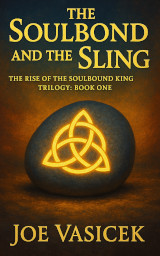
I’ve decided to put The Road to New Jerusalem on the back burner and focus instead on my epic fantasy series, The Rise of the Soulbound King Trilogy. If I push, I think I can finish the AI draft of book 1 in the next two weeks. I’ve also nearly finished the outline for book 2, and will probably have a rough AI draft for that one by the end of September.

I would really like to publish this series in 2026, but I don’t want to launch it until I’m ready to rapid release the first three books. And since these books are all epic fantasy, it’s going to take a lot of time and effort to write them. Without AI, it would probably take me something like two or three years for each book. I’m not a very fast writer, and I tend to get stuck in the middle, even when I have a solid outline. With AI, I think I can shorten that to 6-8 months.

These books are probably going to range between 150k and 200k words, so not super long for epic fantasy (for comparison, Mistborn: The Final Empire is about 214k words, and The Way of Kings is about 384k words). That’s much longer than most genre books, though, including most of the books I’ve written until now. And writing difficulty doesn’t scale linearly with book length; it scales logarithmically. So while it may take only 1-2 months to write a Sea Mage Cycle book, those are only about 1/3rd the length of a Soulbound King book.

My long-term goal, though, is to pivot to epic fantasy, to the point where that’s mostly what I write. And if you read my science fiction novels, you’ll find that they’re much more like epic fantasy, with multiple viewpoints, grand galactic empires, wars and political machinations, and a universe that has its own character arc. So while this may superficially seem like a huge pivot, it’s actually not.

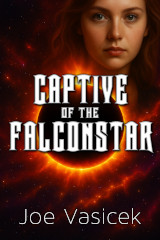
There are three science fiction books that I need to write before I can pivot entirely to writing fantasy: Captive of the Falconstar, Lord of the Falconstar, and The Return of the Starborn Son. Those are the only outstanding science fiction series that need finishing (and I will finish them, I promise—I’m not going to pull a GRRM). I also need to finish the Twelfth Sword Trilogy, the epic fantasy series I started in the 2010s while I was still mostly writing science fiction.

Realistically, the only ones of those books that are going to be finished between now and the end of next year are the Falconstar books, since I need to juggle all of these with the Soulbound King epic fantasy books that I’m also writing. But I think I can finish the Falconstar books, and also write and publish a Sea Mage Cycle book or two within the next year. I’ve found that it often helps to take week-long breaks to work on other projects, which allows me to approach a larger and more challenging WIP like The Soulbond and the Sling with new eyes. So I will probably alternate between working on the Soulbound King books and working on Falconstar and Sea Mage Cycle for the forseeable future.

But my goal for the next two weeks is to go full steam ahead on The Soulbond and the Sling, until it is finished. And with luck, I will also have a few excerpts to share with you soon!

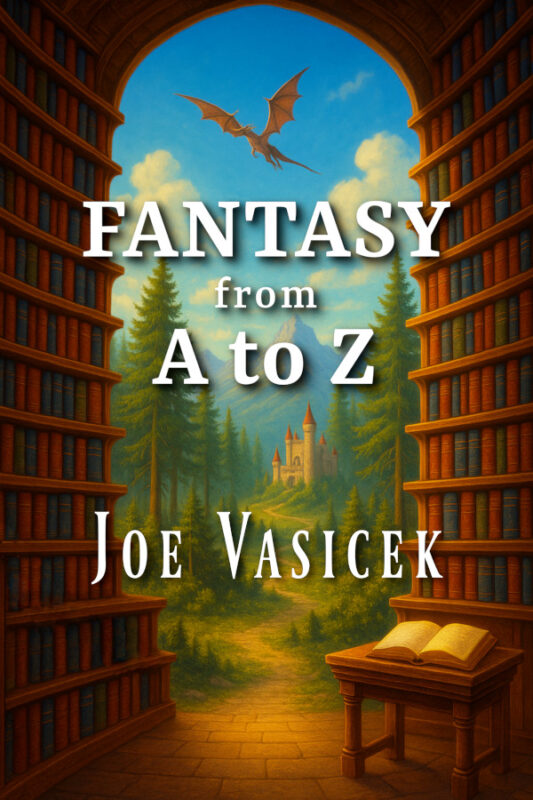
Fantasy from A to Z: X is for eXpectations

What sort of books are fantasy readers looking for today? What are the expectations that readers have for the genre?

Overall, the fantasy genre is growing. Sales are up, both in traditional and indie publishing, and the big names in the field (like Brandon Sanderson) are doing quite well. It’s clear that the fantasy genre as a whole is robust and healthy.

When you break it down by publishers and subgenres, however, things start to look a little different. Romantasy is dominating the traditional publishing world, but most of it is little more than pornography for women, dressed up with fantasy trappings. And because of how traditional publishing now relies on a few big blockbusters to make most of their earnings, romantasy is sucking all of the oxygen out of the room, making it much more difficult for debut and midlist authors in the other fantasy subgenres.

In the world of indie publishing, litRPG has begun to demonstrate some staying power. It was the new hot thing back in the early 2020s, but it’s attracted enough attention and developed enough of a following that it has become a major subgenre that is likely to endure for some time. I could be wrong about that, but from what I see, that’s where most of the innovative authors and whale readers (ie >1 book per week) are focusing their attention these days.

But because of the way that the algorithms tend to govern the indie publishing cycle (and the way that indie publishing has unfortunately turned into a zero-sum, pay-to-play game with online advertising), the rise of litRPG in the indie publishing world may very well be sucking all of the oxygen out of the room in the same way that romantasy is sucking it out of the traditional publishing world. 

Both subgenres are also very gender-biased, with women gravitating toward romantasy and men gravitating toward litRPG. This reflects the broader social and political trend of men and women going separate ways, across a whole host of different metrics. So as the gender divide continues to widen in society generally, that will probably reinforce the divide between romantasy and litRPG, creating a positive feedback loop (or death spiral, depending on how you look at it).

Sword and sorcery continues to do okay, and has probably been given a boost by the recent release of Conan the Barbarian into the public domain. But most of sword and sorcery got siphoned off into grimdark back in the 00s—in fact, you could say that sword and sorcery reinvented itself as grimdark. And while grimdark has resisted the feminization of literature, standing as one of the few remaining bastions where male readers continue to feel at home, I think grimdark has already passed its peak. In a post-pandemic, post-Trump world, I think most readers are hungry for books that are less nihilistic and more uplifting.

Which brings us to epic fantasy. While Brandon Sanderson continues to dominate this subgenre, with his massive kickstarters and huge book releases, it’s debatable whether his readers are hungry for more epic fantasy, or just for more Brandon Sanderson. He’s kind of a subgenre all to himself. Recent streaming adaptations like Wheel of Time and Rings of Power have failed miserably, and Game of Thrones has fallen almost totally out of cultural significance, with George R.R. Martin’s failure to finish the last book (and Patrick Rothfuss’s failure to finish his own series) becoming something of a meme.

In fact, the failure of these two big-name authors to finish writing their books may have struck epic fantasy a mortal wound. Because of how they have been burned, a large number of epic fantasy readers are now unwilling to commit to a series until after it is complete. But very few authors can afford to write a truly epic series and release the whole thing at once. It takes several years to write a series like that—and what are authors supposed to do if the first one flops? 

In other words, debut epic fantasy authors are damned if they do, and damned if they don’t. If they release the first book by itself, it will probably sink into obscurity before they can write and release the next book. And if by some measure of hard work and tenacity they manage to write a whole series and hold back from publishing until they’re ready to release it all at once, if the first book still fails to sell, they’re SOL and all that hard work was for nothing. 

This is also why traditional publishers are so unwilling to publish a new epic fantasy series from a debut or a midlist author. A bestseller like Larry Correia might be able to dip his feet in that pond (and do quite well—I highly recommend his Sons of the Black Sword series), they won’t do that for anyone else. Which is fine, except that indie publishing epic fantasy is just as hard—arguably more so.

For these reasons, I don’t think it’s an exaggeration to say that Patrick Rothfuss and George R.R. Martin have done more to kill epic fantasy than they have to grow it.

But this may actually have created an opportunity for those authors who are willing to drive into the smoke. After all, there’s much less competition if you can manage to break in and build a decent following. But how much hunger is there for epic fantasy, compared to other fantasy subgenres? And how can a newer/midlist author reach them, without a big push from a publisher or the algorithms?

Epic Fantasy vs. LitRPG: 20 more principles that set them apart from other genres

So building on yesterday’s blog post, after asking ChatGPT to contrast litRPG against epic fantasy, I asked the AI to come up with twenty more principles that show how litRPG and epic fantasy are more similar to each other, by contrasting them against other genres. In other words, I asked for another twenty principles that either 1) hold true for both litRPG and epic fantasy, but not other genres, or 2) do not hold true for litRPG or epic fantasy, but do hold true for other genres. This was what the AI came up with.

What do you think? Do you agree with the list, or do you think the AI doesn’t know what it’s talking about? I mean, of course the AI doesn’t know what it’s talking about—it’s a pattern-matching stochastic parrot incapable of actual thought—but does the list itself hold true, or not? I’m interested to hear what you think!


✅ Ten Principles That Work in Both Epic Fantasy and LitRPG (but not as well elsewhere)

1. The Long Form Is an Asset

  • Epic Fantasy: Readers expect doorstoppers; sprawling stories add gravitas.
  • LitRPG: Readers binge long series to follow progression.
  • Other genres: Overly long novels (romance, thrillers) often feel padded or indulgent.

2. Worldbuilding as a Core Pleasure

  • Epic Fantasy: Intricate maps, languages, and histories enrich immersion.
  • LitRPG: Detailed mechanics, systems, and economies are part of the appeal.
  • Other genres: Too much worldbuilding bogs down the story (e.g., in mystery or romance).

3. Reader Dedication Is Assumed

  • Epic Fantasy: Readers accept investment to reap the mythic payoff.
  • LitRPG: Readers accept grindy arcs to enjoy progression.
  • Other genres: Casual readers often want quick satisfaction.

4. Hero’s Journey as Central Skeleton

  • Epic Fantasy: Growth from obscurity to legend is the core arc.
  • LitRPG: Growth from level 1 to overpowered is the core arc.
  • Other genres: Often resist the monomyth (slice-of-life, literary realism, etc.).

5. Community/Ensemble Casts

  • Epic Fantasy: Multiple POVs enrich the tapestry.
  • LitRPG: Party dynamics (tank, healer, mage) reflect RPG roots.
  • Other genres: Large casts risk confusing readers who want intimacy.

6. Spectacle as Payoff

  • Epic Fantasy: Climactic battles or magical revelations awe readers.
  • LitRPG: Dungeon raids and boss fights provide thrill.
  • Other genres: Spectacle without intimacy or brevity (like in romance) falls flat.

7. Maps and Charts Enhance the Experience

  • Epic Fantasy: Maps show kingdoms, trade routes, and lost ruins.
  • LitRPG: Stat sheets, skill trees, and quest logs scratch the gamer itch.
  • Other genres: Appendices and diagrams often feel extraneous.

8. Bingeability

  • Epic Fantasy: Readers want to sink in for weeks.
  • LitRPG: Readers tear through serialized arcs like binge-gaming sessions.
  • Other genres: Shorter, self-contained experiences dominate (rom-coms, thrillers).

9. Immersion Requires Internal Consistency

  • Epic Fantasy: Magic systems, politics, and cultures must feel internally real.
  • LitRPG: Mechanics and progression must follow consistent rules.
  • Other genres: Small cheats or contrivances are forgiven more easily.

10. The Fantasy of Escape Into Another Life

  • Epic Fantasy: Readers escape into a mythic, larger-than-life destiny.
  • LitRPG: Readers escape into a game avatar, empowered and free.
  • Other genres: Escapism is more muted—characters often mirror real-world constraints.

❌ Ten Principles That Work in Other Genres But Not in Epic Fantasy or LitRPG

11. Economy of Length

  • Epic Fantasy: Truncated stories feel shallow.
  • LitRPG: Short books cut off progression.
  • Other genres: Brevity (novellas, short novels) often thrives in romance, literary fiction, thrillers.

12. Standalone Closure

  • Epic Fantasy: Readers expect series and arcs across volumes.
  • LitRPG: Readers expect sequels and continuous leveling.
  • Other genres: Standalone novels dominate many markets (romance, crime).

13. Minimal World Detail

  • Epic Fantasy: Sparse settings break immersion.
  • LitRPG: Thin systems or game mechanics disappoint.
  • Other genres: Often better to focus tightly on character or conflict.

14. Immediate, High-Speed Pacing

  • Epic Fantasy: Readers accept gradual build-up.
  • LitRPG: Readers accept grind loops before climax.
  • Other genres: Quick, relentless pacing (thrillers) is a selling point.

15. Subtlety Over Spectacle

  • Epic Fantasy: Readers want grandeur, not quiet minimalism.
  • LitRPG: Readers want flashy abilities, loot drops, boss fights.
  • Other genres: Subtle slice-of-life or understated literary fiction works well.

16. Ambiguous Endings

  • Epic Fantasy: Readers want resolution—wars won, empires reshaped.
  • LitRPG: Readers want progression arcs to complete.
  • Other genres: Literary realism thrives on ambiguity.

17. Everyday Banality

  • Epic Fantasy: Mundane routine (work, school, dishes) feels like filler.
  • LitRPG: Grinding without purpose or progress feels like padding.
  • Other genres: Slice-of-life, contemporary drama thrive on the ordinary.

18. Romance as the Core Engine

  • Epic Fantasy: Love enriches but rarely drives the whole tapestry.
  • LitRPG: Love plots are secondary to leveling and quests.
  • Other genres: Romance is often the primary driver.

19. Prose Minimalism

  • Epic Fantasy: Readers want at least some richness, tone, and weight.
  • LitRPG: Readers want clarity and detail in mechanics, not Hemingway sparsity.
  • Other genres: Minimalist prose shines in lit fic or thrillers.

20. Compressed Timelines

  • Epic Fantasy: Readers want generations, years, or at least a long journey.
  • LitRPG: Readers want long campaigns and layered arcs.
  • Other genres: Stories that span a weekend or a single evening work beautifully in mystery, romance, lit fic.

⚖️ Big Takeaway

  • Shared Strengths (1–10): Both genres embrace immersion, scope, detail, and reader investment. They reward readers who want to live in another world for a long time.
  • Shared Weaknesses (11–20): Neither does well with brevity, minimalism, ambiguity, or everyday mundanity. Those principles thrive in other fiction but undermine the immersive, long-game experience of epic fantasy and LitRPG.

Epic Fantasy vs. LitRPG: 20 principles that work in one but not the other

So I was doing some genre research using ChatGPT, comparing epic fantasy (which I write) to litRPG (which I do not write—at least, not yet). After going back and forth for a while, I had ChatGPT list a bunch of principles that set each subgenre apart from each other. In other words, each of these principles holds true only for the one subgenre and not for the other.

It’s an interesting list. But being AI-generated, I’m not sure how much I can trust it, so I’d be interested to get your feedback. How true do you think these principles holds? Is it a pretty solid list, or are any areas where the AI got it wrong?


✅ Works in Epic Fantasy but Not LitRPG

1. Slow, Majestic Pacing

  • Epic Fantasy: Readers savor patience, waiting hundreds of pages for payoffs.
  • LitRPG: Readers expect regular “level-ups” or stat reveals—slow burns feel like stalling.

2. World as a Living, Breathing Character

  • Epic Fantasy: Setting is alive, with cultures, histories, and myth shaping events.
  • LitRPG: Worlds are often coded, constructed systems; too much “world-agency” risks breaking the conceit of “game mechanics.”

3. Archetypal Myth and Destiny

  • Epic Fantasy: Readers love prophecy, ancient bloodlines, and cosmic fate.
  • LitRPG: Players expect agency and control; prophecy undercuts the appeal of player choice.

4. Elevated, Poetic Language

  • Epic Fantasy: Slightly archaic or grand prose enhances the mythic atmosphere.
  • LitRPG: Readers expect clear, modern, accessible prose—too much ornament feels like “lag.”

5. Moral and Philosophical Depth

  • Epic Fantasy: Readers enjoy wrestling with justice, faith, and power.
  • LitRPG: Too much moral philosophizing slows down what should feel like gameplay and strategy.

6. Earned Heroism Through Suffering

  • Epic Fantasy: Heroes rise through sacrifice, scars, and loss.
  • LitRPG: Heroes rise by optimizing builds and winning battles. Too much suffering without progression feels like poor game balance.

7. History as Weight

  • Epic Fantasy: Ancient wars, dynasties, ruins, and forgotten myths enrich immersion.
  • LitRPG: History matters less than mechanics; world “backstory” is often secondary to the system’s function.

8. Layered Political Intrigue

  • Epic Fantasy: Kingdoms, councils, conspiracies—slow, strategic plotting excites readers.
  • LitRPG: Readers may skip political detail to get back to quests, loot, or progression.

9. Villains as Ideologies

  • Epic Fantasy: Antagonists often embody philosophies or cosmic balances.
  • LitRPG: Readers want enemies to be challenges, bosses, or rival players—not treatises on ideology.

10. The Reader Must Feel Small

  • Epic Fantasy: The awe of mountains, empires, or gods dwarfs the individual.
  • LitRPG: Readers want to feel powerful, not humbled—progression fantasy is about growth and mastery.

✅ Works in LitRPG but Not Epic Fantasy

11. Constant Tangible Progress

  • LitRPG: Frequent “dings,” new skills, and stat boosts scratch the gamer itch.
  • Epic Fantasy: Constant visible gains feel artificial—growth should be slow, hard-won, and often invisible.

12. Game-Like Structure

  • LitRPG: Clear quests, dungeons, XP, and loot tables create satisfying loops.
  • Epic Fantasy: Too much structure breaks the illusion of a living world—life doesn’t hand out quests so neatly.

13. Crunchy Mechanics

  • LitRPG: Readers relish stat blocks, skill trees, and optimization discussions.
  • Epic Fantasy: Overly mechanical explanations kill immersion—magic should feel mysterious, not like a spreadsheet.

14. Frequent Combat Encounters

  • LitRPG: Battles are core gameplay; readers expect frequent fights.
  • Epic Fantasy: Endless combat risks exhausting readers who want battles to feel rare, costly, and decisive.

15. Player Agency Above All

  • LitRPG: The protagonist must feel like a player making choices.
  • Epic Fantasy: Fate, prophecy, or the “burden of destiny” often guide characters beyond their control.

16. Meta Awareness

  • LitRPG: Characters can reference game mechanics, genre tropes, or player logic.
  • Epic Fantasy: Meta jokes break immersion—characters can’t wink at the audience about being in a story.

17. Loot and Rewards as Story Fuel

  • LitRPG: New gear and loot drops are story progression.
  • Epic Fantasy: Magical swords and treasures matter, but they’re rare, symbolic, and usually secondary to inner growth.

18. Episodic, “Grindable” Arcs

  • LitRPG: Dungeon runs, quests, and side missions can be modular and satisfying.
  • Epic Fantasy: Too episodic undermines the long-arc gravitas; the story must feel like a single tapestry.

19. Power Fantasy at the Forefront

  • LitRPG: Readers want to imagine themselves growing invincible.
  • Epic Fantasy: Too much power fantasy feels hollow—readers want awe and cost, not invincibility.

20. Immersion Through Familiar Systems

  • LitRPG: RPG tropes are comforting—readers enjoy seeing familiar mechanics at play.
  • Epic Fantasy: Familiar mechanics feel derivative—immersion comes from originality, history, and myth.

⚖️ The Big Picture

  • Epic Fantasy: Offers immersion in a mythic, awe-inspiring legend, with patience, gravitas, and weight. It humbles and uplifts.
  • LitRPG: Offers immersion in a game you can read, with momentum, mechanics, and constant progression. It empowers and energizes.

They share world immersion as a value—but diverge in what kind of immersion the audience craves: awe vs. agency, myth vs. mechanics, destiny vs. progress.