update post

This is my current writing setup. The top of the filing cabinet already needs to be decluttered, but the rest is actually working out pretty well. The nice thing is that the computer can be raised into a standing desk, which works out really great for writing, since I tend to write better when I’m standing or pacing.

I am almost finished with the AI draft of The Soulbond and the Sling. It looks like it’s going to be about 140k words total, which is on the short end for an epic fantasy novel, but longer than anything else I’ve written (except for the first novel I ever finished, which shall never see the light of day).

The human draft will likely be longer than that, though. I’m going to add more details as I humanize it, which is easier to do just by writing it yourself than it is to get an AI to write it. Though parts of it will likely be shorter, since I’m sure there are places where I let the AI overwrite. Most of the skill in AI-assisted writing consists of knowing what to cut out, since generating words is the easy part.

I have also finished the outline for The Soulbond and the Lady, the second book in the Soulbound King series. It should clock in at about 20 chapters, 100 scenes, and 165k words. The next step is to fill out all the prompts and generate a rough AI draft, but because of how Sudowrite works, I don’t want to do that until the AI draft of The Soulbond and the Sling is complete (since it would require tweaking a bunch of the worldbuilding and character prompts). So that will probably wait until the end of the month.

In general, I have found that I tend to work best when I have two current WIPs: one human and one AI. This is because the two different kinds of writing exercise different parts of my brain, and I can rest the one part while I’m using the other. However, it only really works if both WIPs are in the same series. If I have to mentally switch from one universe to another, that adds friction that makes things difficult.

So the key is to pair up different WIPs together, such that I’ve always got both a human WIP and an AI WIP in the same series. With The Soulbound King, that’s not so difficult, because the AI draft of The Soulbond and the Sling is complete enough for me to start the human draft. And once the AI draft is complete, I can move on to the AI draft of book 2 while I finish up the human draft of book 1. It might become a problem if I finish one of the drafts well before the other, but that won’t be a problem for a while.

With the Falconstar Trilogy, that’s also not a huge problem. I will probably human-write a reader magnet while I work on the AI draft of Captive of the Falconstar, then humanize Captive while I work on the AI draft of Lord of the Falconstar.

With Return of the Starborn Son, the last science fiction novel I plan to write for a while, it’s going to be more tricky because that is the last book in the trilogy, and I still haven’t generated the AI draft. What I’ll probably do is start work on the human draft after I’m about 15% done with the AI draft, and see if I can’t work on both simultaneously. That hasn’t worked as well for me in the past, since I actually prefer to write the human draft out of order, but if it starts to break down I’ll just hold off on the human draft until the AI draft is more complete.

With the Sea Mage Cycle, I’ve currently just got one WIP in that series (The Unknown Sea), and it’s in the AI drafting stage. But it’s short enough that I can probably finish it in just a couple of weeks. At that point, I’ll take my wife out to dinner and have her pick out the next one I’ll write, then work on the AI draft for that one while I’m humanizing The Unknown Sea.

Which brings me to my J.M. Wight pen name. After a lot of thought and some careful deliberation, I’ve decided to put The Road to New Jerusalem on the back burner for now. I was going to try to finish that one in time for the Ark Press contest in October, but I don’t think this is the right time to work on that particular WIP. In the first place, it probably won’t win, and even if it did, that might actually be more of a liability, since it’s a near-future post-apocalyptice novel, and I’m currently trying to establish myself as a writer of epic fantasy.

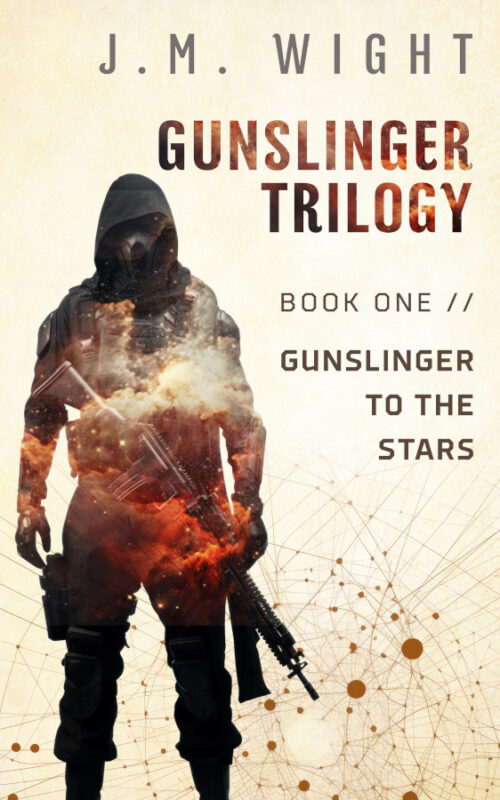
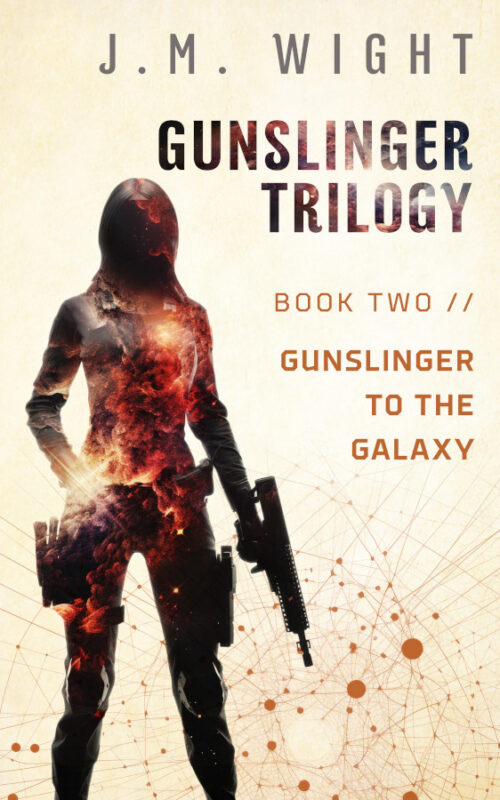
From now until 2030, I plan to write epic fantasy almost exclusively. The only exceptions for that are the two sci-fi series (The Falconstar Trilogy and the Outworld Trilogy) that I haven’t yet finished. Also, I will probably write some zany space adventure-type stuff under my J.M. Wight pen name, more in the vein of my Gunslinger books (which I have republished under J.M. Wight). But aside from that, I plan to focus on writing fantasy—specifically, epic fantasy.

In my blog series Fantasy from A to Z, I wrote about how epic fantasy has fallen into decline in recent years, due to reader fatigue with big name authors like George R.R. Martin and Patrick Rothfuss failing to finish their series, and how this has put newer authors in a conundrum, because epic fantasy novels are way too big to rapid release, but most readers aren’t willing to start a new series until after it’s already been finished. I hope that my new AI-assisted writing method will help me to crack that particular nut, writing and releasing epic fantasy books fast enough to satisfy readers. Because even though there haven’t been a ton of new epic fantasy authors in recent years, I don’t think the reader demand for epic fantasy has gone down at all. There may still be an opportunity there for writers who can deliver.

That’s what I’m hoping, at least. So I’ll keep plugging away at The Soulbound King, and hopefully release the first all three books of the first trilogy around this time next year.

Thoughts on the Charlie Kirk assassination

I heard the news shortly after dropping off my daughter at BYU kindergarten. The shooting apparently happened while we were on the road. Utah Valley University is only a couple of miles from our house, and the hospital where he died is only a mile from us.

I saw the videos of the assassination, including the now-censored one that showed it up close. I also saw the videos of the alleged shooter being hauled off in police custody, though now it appears that the University is saying that he wasn’t the shooter. This is such a fast-moving story that we probably won’t know exactly what happened until at least 24 hours from now, and there may be some things that we never know. And since I wasn’t there when it happened, I can’t comment on the shooting itself.

I just have to say, this is not who we are here in Utah. The shooter may turn out to be a Utah man, but that is not who we are—the rest of us. And I don’t just mean right vs. left, conservative vs. liberal. Most of us here in Utah swing MAGA (in fact, I’ve got a couple of neighbors who are still proudly flying their Trump flags), but we’ve also got some neighbors with rainbow flags and decals, and I’m sure that the vast majority of them are just as horrified that this assassination happened in our community. In fact, they’re probably afraid of how the rest of us will react.

My thoughts and prayers go out to Charlie Kirk’s family. I can’t imagine how horrible that must be, not just to lose your husband and father, but to have the footage of his violent death plastered all over the internet. I hope that more good than evil ultimately comes of this national tragedy, and that Charlie Kirk’s work will live on for many years to come.

The Soulbond and the Sling: Prologue

This is the prologue of my epic fantasy novel, The Soulbond and the Sling. It’s a fantasy retelling of the story of David and Goliath, in a world where magical powers can only be unlocked through marriage. I used AI to write the rough draft, but everything here has been rewritten in my own words. I will probably revise it a couple more times before the book is published, but this is close enough that I think it’s worth posting. Enjoy!


Madoc leaned against the rough-hewn timber of the palisade, his breath forming ghost-like wisps in the cold night air. Another uneventful night on the eastern borderlands—though of course, almost anything could be lurking in the darkness below. He took a deep breath, fighting sleep, and began to pace, the wooden floorboards creaking beneath his weight.

For nearly six years, he’d been stationed at this frontier outpost that guarded the high road between the kingdoms of Zyonna and Edumar. In that time, he’d seen a distinct drop in the number of merchants who frequented the roads by day. And by night, the road was so empty, they could have been stationed in the wilderness. Beyond the palisade walls, the chill wind swept down from the rugged heights of Zyonna’s northern plateau, carrying the crisp, earthy scent of highland heather with its promise of the coming spring.

He paused his pacing to peer into the darkness. Tonight, the stars seemed to blaze more brilliantly than usual, though the gently rolling contours of the land were barely visible against the moonless sky. The trees had been cleared for several hundred yards, but the lands beyond were thickly forested. At this time of year, rain and sleet were all too common, so the star-strewn sky was a welcome relief, though it only seemed to multiply the shadows below.

He slowly made his way toward a cluster of soldiers huddled around a small brazier, their cloaks wrapped tightly against the chill late-winter breeze. Their words carried easily to his ears.

“My cousin trades with the rivermen from Edumar,” said Ferris, a stocky young bowman with a thick red beard. “He says half of the villages he used to frequent are empty now. It’s like that throughout the whole kingdom.”

“The Fellspawn, no doubt,” grunted Pete, a wiry veteran with a patch over one eye. “It’s been getting worse on the other side of the border for years. Nothing for us to worry about, though. Our king isn’t a wicked soulbond mage like Gardomir.”

“Nothing to worry about?” Ferris retorted, his eyebrows knitting in disbelief. “The Fellspawn knows no borders. They may spawn out there in Edumar, but they’ll come out here right as—”

“They’ll do no such thing, so long as our mages keep the corruption at bay. It’s all just a part of the natural cycle. We might get an occasional direwolf or two, but you don’t need magic to deal with those.” He spat over the edge of the stockade for emphasis.

Ferris shook his head. “My cousin says there’s nothing natural about the Fellspawn out there in Edumar. The abominations he’s heard about don’t just pop up on their own. They’re being summoned by something—or someone.” He glanced around the circle, looking for support.

“Your cousin says a lot of things,” the one-eyed veteran grunted.

Madoc paused, curious to see how his men would react. Few of them were greenhorns like Ferris, though tensions had been gradually rising in the fort these last few months. But whether that was due to mere cabin fever or the rumors from the other side of the border was difficult to gauge. He turned to the side, facing the wall, and let the men’s voices carry.

“I don’t know, Pete,” said Tom, another old-timer who’d been stationed here longer than Madoc. “They call King Gardomire the Many-Bonded now. They say he’s taken five soulbound concubines. If anything can stir up the Fellspawn, it’s that.”

“Trader’s tales,” Pete scoffed. “Next they’ll be saying King Gardomire breathes fire and has horns.”

“No, it’s true,” Tom insisted. “He really has bonded five slave women to his will, raping them for all the magic that they can give him. It’s made him more powerful than any of our soulbound mages. But that isn’t all. They say he’s taken up with dark unnatural dark magics too—wielding the Fellspawn himself, even.”

“Like hell it has,” spat Pete. “Kings forge alliances with other kings, not with the forces of nature. You can’t trust everything that you hear.”

“But what if there’s some truth to the rumors?” Ferris chimed in, his voice tinged with concern. “They can’t all be wrong.”

“Aye,” said Tom. “The lad has a point. King Gardomir’s always been a power-mad tyrant, but lately, the stories out of Edumar have been getting downright grim.”

Madoc had heard enough. He pushed off from the rough-hewn timbers, stepping with deliberate heaviness as he walked toward his men. The quiet murmur of conversation ceased as the floorboards creaked beneath his thick leather boots.

“Enough with the ghost stories, lads. Speculating without facts is as pointless as trying to shoe a fish. Are we soldiers, or idle gossips at market day?”

Pet grunted in appreciation, though Ferris and Tom straightened uncomfortably. 

“Sorry, sir,” Tom muttered. “Just trying to pass the night.”

Madoc smiled and clapped him on the shoulder. “Just another boring night on the border, eh? That’s how it always is. We tell ourselves stories like wide-eyed children just to pass the time, and the next you know, the stories spread and gain a life of their own.”

“But what if there really is something more out there, sir?” said Ferris, the flickering light of the brazier reflected in his eyes, “More than the usual border reivers, I mean.”

Madoc turned and looked the young man squarely in the eye, though he kept his posture relaxed. “Have any of us seen a creature of the Fellspawn that was more than a match for our spears?”

The men shook their heads. Madoc pointed to the shrouded treeline below.

“Have any of you seen King Gardomir in those shadows, sporting horns and breathing fire?”

Old Pete snorted.

“Whatever’s happening in Edumar,” Madoc continued, “it doesn’t change our duty here. We keep watch, we stay alert, and we don’t let imagined horrors distract us from the real ones. Besides,” he added, gesturing behind them, “we’ve got the orb.”

The men all glanced down to the courtyard of the fort, where a crystalline sphere sat atop a sturdy stone pedestal. Its smooth, dull surface reflected the starry sky, without any hint of the enchantment that lay upon it. If anyone—or any thing, for that matter—approached the outpost with violent intent, the orb would glow a fierce orange, warning the men as surely as a roaring fire. Enchanted orbs like this one had been placed strategically along the length of the eastern frontier, aiding the men of the guard in their watch.

Madoc clapped Ferris’s shoulder. “See, lad? Whatever may lurk in Edumar is no threat to us tonight. Now, keep your eyes open and try not to freeze your arses off.”

The older men chuckled appreciatively, bringing a hint of pink to their cheeks. Even Ferris smiled. At the sight, Madoc felt the knot in his chest ease a little. It wasn’t that he discounted the rumors entirely, but spreading them would serve no one. They all knew their duty. Twenty men on the edge of the kingdom, serving as Zyonna’s first line of defense. The last thing they needed was to start jumping at shadows.

Madoc left them and walked to his preferred spot in the northwest corner of the stockade, where he could watch both the eastern approach from Edumar and the high road back to Caer Zyonna. From here, the distant hills looked a little like sleeping giants, their silhouettes barely visible against the starry sky. He settled in for another quiet night, where the occasional wandering deer would be the only break in the boredom, beside the nightly changing of the watch. His mind began to wander, planning out patrol routes and mess hall duties for the coming week.

In truth, the lack of border activity troubled him more than any rumor about King Gardomir or the Fellspawn. When he had first been posted here, the high road had seen a steady flow of merchant traffic between the two kingdoms, stretching almost from dawn to dusk. Now, even in broad daylight, it was rare to see anyone on the road. The thought made Madoc frown. Smugglers and reivers, he could deal with, but the relative silence was unnatural for these parts. After all, the crown hadn’t posted him on the wilderness. So why did it feel increasingly like they had?

The hour passed slowly. At the end of it, a new group of sentries came up to replace the men who had clustered around the brazier. They made the rounds slowly, checking to make sure all was quiet beyond the rough-hewn palisade. Madoc grunted a little and rose to check in with them, grateful for the distraction from his thoughts.

“How’s it look, Lodan?” he asked as he approached the two men on the southern wall.

“Calm as a spring meadow,” Lodan answered with his northern accent.

“Aye,” said Adam, his companion. “If it weren’t for that persistent northerly wind, it might even be pleasant out here.”

Madoc narrowed his eyes, peering eastward where the shadow outline of Edumar’s rolling hills brooded against the sky. “Aye,” he agreed. “Make sure to stay warm, lads. We need your arms and legs as much as we need your eyes.”

“Wait,” said Lodan, frowning as he lowered his voice. “Listen—what was that?”

The sound was so low that Madoc initially took it for the wind. It was a low, rhythmic thumping, coming from the east. Like footfalls, but spaced too far apart to belong to any man or horse.

“Thunder?” Adam asked.

“Too low for thunder,” Lodan answered, though his voice was tight and uncertain.

Madoc stiffened as he strained to listen. There it was again—a low, reverberating thud that he felt in his chest as much as he heard with his ears. He quickly scanned the horizon, but no rainclouds marred the sky in any direction. The stars shone undisturbed.

He glanced down into the courtyard below and felt his stomach clench. The orb had picked up a faint orange glow, like the last embers of a dying fire. The sight sent a chill snaking down his spine. Sinister shadows danced across the grass, cast by the glowing orb.

“Sound a quiet alert,” Madoc ordered. “All men to their positions. No horns, no shouting.”

Lodan and Adam nodded and moved quickly, hurrying down the ladder with silent feet. They entered the barracks and quickly began to wake the sleeping men, who soon began to emerge. There were only twenty of them, but they woke quickly, scrambling up the wall with their armor half-fastened and their weapons in hand. Within a few minutes, the once-sleepy outpost was transformed, every man in position along the eastern wall.

All the while, Madoc peered into the darkness where the highland meadows gave way to scattered copses of pine and birch. He had an unsettling feeling that something dangerous lurked unseen in those woods, just beyond their sight. Should he send out a scouting party? No—best to keep his men concentrated and wait. The night was too dark to risk sending them out by twos and threes.

Besides, he sensed that whatever was out there was coming straight for them.

“Form up,” he called softly to the archers gathered along the wall. “Nock arrows but hold until my command.”

The men silently obeyed, holding their bows and nocking their arrows in near total silence. There were no torches or light to see by—they had been careful not to show any sign that the fort had been awakened. All of the countless drills had prepared them well for this moment, though Madoc didn’t miss the nervous glances that some of them exchanged. Down in the courtyard behind them, the warning orb began to brighten.

“Do you see anything, sir?” Tom asked, squinting into the night.

Madoc was about to answer when a massive figure suddenly detached itself from the trees. It stood nearly twice the height of a man, with a great, hulking body twisted monstrously by thick, corded muscle. Two curved horns jutted unnaturally from its skull, gleaming like obsidian blades. And its eyes—God, its eyes—glowed with a faint amber light that seemed to pierce Madoc’s very soul.

“Sweet mercy,” whispered one of the archers. “What is that thing?”

The warning orb now blazed like a captured sunset, bathing the entire courtyard in a deep orange light. Madoc’s throat felt suddenly tight.

“Draw!” he heard himself issue the order. “Loose!”

Arrows whistled through the chill night air, shattering the silence. The volley was tight and well-aimed, every arrow flying true. Madoc held his breath.

The volley struck the beast with enough power to drop a line of charging war-horses. But to Madoc’s dismay, most of the shafts bounced harmlessly off of the creature’s hide. Those few that did stick seemed to have no effect, for the beast began to advance toward the fort, its relentless strides devouring the earth beneath it with alarming speed.

“Again!” Madoc yelled. “Draw and loose!”

The archers quickly nocked new arrows and loosed them at the approaching beast. The second volley was a little most scattered than the first, but still flew true—to much the same result. Almost all of their shafts glanced off of the beast’s hide. Those few that stuck seemed merely to anger the colossal intruder.

It surged toward the fort with ferocious speed, lowering its massive horns. “Brace for impact!” Madoc barely managed to yell before the creature slammed into the wooden palisade.

As a young man decades ago, Madoc had fought in the war with Edumar. During one of the sieges in the course of the campaign, he had seen an iron-tipped battering ram reduce the wooden gates of a walled town to kindling. But even that was not enough to prepare him for what he now saw.

The beast’s impact shattered the wall almost totally. Logs as thick as a man’s waist burst inward, splintering into fragments. The adjoining watchtower crumpled in on itself like parchment crushed in a fist. Men screamed, some of them thrown clear by the impact, others caught in the collapsing structure.

Madoc struck the hard-packed earth of the courtyard, driving the air from his lungs. Pain lanced through his shoulder, but his training took over and he quickly rolled, somewhat softening the blow. As soon as he came to a stop, he staggered to his feet.

All around him was chaos. Men ran in every direction, some trying to form a defensive line, others fleeing toward the stables. The monstrous intruder stood amid the wreckage of what had once been the palisade. The bright orange light of the warning orb lit it in terrible detail, like a nightmare given flesh. As it gazed upon the chaos it had spread, its amber eyes held no animal confusion—only calculated, intelligent malice.

“Hold your ground!” Madoc yelled, just as the creature let out a thunderous roar. Men cried out and staggered, and Madoc felt his own ears ring.

The beast stepped fully into the courtyard, its massive head swiveling as it surveyed the panicked humans scattering before its approach. Then its eyes fixed on the glowing orb, which now pulsed with such intensity that it cast the whole outpost in a hellish orange light.

“Rally to me!” Madoc shouted, drawing his sword. The blade felt pitifully inadequate against such a monstrosity, but he raised it nonetheless.

A handful of his most battle-hardened veterans quickly formed a desperate line beside him. Madoc yelled, and they charged at the Fellspawn monster with their swords and spears. Two brave spearmen managed to penetrate the beast’s hide, eliciting a roar of rage. A massive clawed hand swept out, raking the first spearman across the chest and all but disemboweling him. The second man barely had time for a massive step before those gnarled fingers closed around his torso, crushing armor, flesh, and bone with sickening ease.

Madoc swung and slashed at the beast’s leg in an effort to hamstring it. His sword bit into that gray, leathery flesh, to little effect, barely penetrating more than an inch. The creature didn’t even look down.

Instead, it stepped up to the warning orb and wrapped its massive hand around the glowing crystal. The orange light intensified, bleeding through its fingers like rays of dying sunlight. Then it squeezed, and the orb shattered with a sound like glass grinding against stone.

Madoc gasped in shock and horror. The outpost was thrown into sudden darkness, the monster reduced to a looming, shadowy mass. His men fell back in confusion, stumbling over their fallen comrades. From the stables, Madoc heard the panicked whinnying of the horses in their pens.

The beast heard them too. It turned with surprising swiftness, its amber eyes fixating on the door to the stables, where the outpost’s horses stamped and kicked in terror.

“No,” Madoc breathed.

With casual ease, the creature tore off the thatch roof and reached inside. A horrible human scream filled the night as the stable hand met his hand. Then the beast reached a little farther, and pulled out a chestnut gelding in its massive hands. Still alive, the panicked horse thrashed frantically as the creature wrung it like a rag. The animal split in two, splattering the courtyard with blood and steaming entrails.

The last of the men who still held their ground now broke down and ran. Even Madoc fell back, barely keeping a grip on his sword. He felt his gorge rise but quickly forced it down.

“To me!” he bellowed in desperation. “For Zyonna!”

But no one rallied to his call. Their spirits shattered, their courage spent, men scrambled for the rear gate or sought to hide in the barracks and the blacksmith’s shop. And far too many of them now lay motionless on the blood-soaked earth. 

The creature tore methodically through the dead horse, quickly consuming the remains of the once magnificent beast. A few brave souls took potshots at it with their bows, to little effect. It devoured most of the horse’s front half before dropping the remaining carcass and straightening to its full height. Blood dripped from its jaws as it turned to face Madoc with those terrible amber eyes.

Madoc’s gut fell, and for a brief, heart-stopping moment, he thought it would come for him. But then, a sound emerged from deep within its throat—a rhythmic, guttural cry of satisfaction.

“Gol-guh. Gol-guh.”

With casual indifference toward the survivors of the attack, the creature pivoted on its heel and ambled back through the collapsed eastern wall. Its steps were unhurried, making clear that it was leaving on its own terms, and no one else’s. Once outside, it veered away from the dense forest from which it had emerged, heading westward instead. 

Toward the high road. Toward Zyonna.

An awful silence fell over the ruined outpost, broken only by the moans of the wounded and dying, and the crackle of flames where a brazier had spilled and caught on splintered wood. Madoc stood frozen for several heartbeats, struggling to process all that he had just witnessed. The attack had barely lasted longer than a few minutes, but it felt as if half a lifetime had passed.

Then his training quickly asserted itself. He blinked and turned to his men.

“Check for survivors!” he ordered. “Get the wounded out where we can treat them. And someone put out that fire before it spreads!”

Gradually, men staggered back into the courtyard, some emerging from the places they’d hid, others dragging themselves up from where they’d been thrown. Those who were whole moved quickly to carry out their commander’s orders. Soon, they were laying out the wounded on the hard-packed earth.

Madoc made a quick assessment of their losses. Five men dead, including the stable hand. Eight wounded, two critically. Half their horses slain or fled out into the night. The eastern wall was destroyed beyond repair, meaning they’d likely have to abandon the outpost. And the warning orb—their most valuable asset by far—reduced to little more than glittering shards.

He turned and stared in the direction the creature had vanished. Not toward Edumar, he realized with a chill. It was heading west, deeper into Zyonnan lands.

“Ferris!” he called, spotting the stocky highlander. “Can you ride?”

“Yes, sir,” the young man answered. “What would you have me do?”

“Take the fastest horse you can find and ride for Caer Zyonna. That… thing… is headed straight toward our country’s heartland. Every settlement between here and the Western Marches is in danger.”

“Sir,” said Ferris, his face paling in the dim starlight. “What was that thing?”

“I don’t know. But the kingdom must be warned. Tell them…” Madoc struggled to articulate the horror they’d just witnessed. The creature was obviously Fellspawn, though it hadn’t behaved like one. Instead of making a frenzied and indiscriminate attack like any other wild beast, it had shown purpose. Intelligence. As if it had not been merely spawned, but sent.

“Sir?”

He narrowed his eyes, suddenly remembering the beast’s final call. “Tell them the Golga has come.”

Ferris nodded grimly, mounted the nearest horse, and galloped westward down the road toward the kingdom’s distant capital.

So this is why so much of fantasy sucks right now…

…because it’s impossible to write a villain who’s truly evil if your moral compass reflects our current-year’s understanding (or lack therof) of good and evil.

Seriously, it explains so much, especially the concept of “emotional ethics,” where characters are deemed to be good or evil based on how likeable or relatable they are. This happens ALL THE TIME in modern fantasy, and I HATE it. I don’t care if your character has friends or pets a cat or has a thorough and well-written backstory. If they do something I find to be wrong or immoral, I will judge them accordingly.

Great video. Worth watching.

… whether a thing is true or not?

What on earth have a man’s name, degree, academic position, and, of all things, opinions, to do with whether a thing is true or not?

Hugh Nibley, “New Look at the Pearl of Great Price” (January 1968)

Fantasy from A to Z: Z is for Zeitgeist

What is the future of fantasy literature? Where is the genre headed, based on current cultural trends?

For a long time, epic fantasy was basically Tolkien-light. There were exceptions, of course, but most readers wanted something that felt a lot like Lord of the Rings, and the most successful writers were the ones who gave it to them. There was a little bit of innovation, probably culminating in Robert Jordan’s Wheel of Time series, but if you picked up a random epic fantasy off the shelf, you could have a pretty good idea of what you were getting into.

Then, in the 90s and 00s, fantasy started to get dark and gritty, with writers like Joe Abercrombie and George R.R. Martin setting the tone. This new subgenre or flavor of fantasy, called grimdark, really came to dominate during this time, to the point where some were calling Martin an “American Tolkien” (though all that talk more or less died with the terrible finale of the show). Grimdark is still quite dominant, though an increasing number of readers are turning to “cozy” fantasy or slice-of-life in subgenres like litRPG. And of course, romantasy is taking off like crazy, though as we’ve already discussed, most romantasy is basically just porn.

So where are we going from here?

Our culture tends to pass through a cycle of seasonal turnings, where each season is the length of a generation, and the cycle itself is the length of a long human life. Reduced to its simplest form, the cycle follows a pattern like this:

Strong men create good times (first turning).

Good times create weak men (second turning).

Weak men create hard times (third turning).

Hard times create strong men (fourth turning).

We are currently living in a fourth turning, which is the period when all of the major wars and catastrophes tend to happen. In other words, the fourth turning is basically a grimdark world—or rather, when the full consequences of a grimdark world become manifest. But the grimdark subgenre really took off in the third turning, when dark and grim fantasy worlds resonated with the “hard times” that we all were starting to live through. This is also why dystopian YA became so popular in the 90s and 00s.

(As a side note, I have to say that I find it both perplexing and hilarious how so many zoomers think of the 90s as a simple and wholesome time, to the point where they think they experience nostalgia for it. Those of us who lived through the 90s remember it very differently, as an era of school shootings, political scandals, collapsing churches, teenage pregnancies, and ever-escalating culture wars. There’s a reason why Smells Like Teen Spirit was the decade’s anthem. Though in all fairness, I suppose that if someone from the middle ages were to visit our own time, they would find the nostalgic yearning on which the whole fantasy genre is based to be just as perplexing and hilarious.)

I believe we are on the cusp of a major cultural wave that is going to change everything, to the point of making our world almost unrecognizable to those who lived through the 90s and 00s. And just as the grimdark authors like Martin and Abercrombie rose to prominence by riding the wave in their part of the generational cycle, there are a lot of noblebright authors who stand to benefit from riding this next wave, which is only now beginning to break.

After all, there is another way to formulate the generational cycles. It looks something like this:

Complacent men create a spiritually dead culture (first turning).

A spiritually dead culture creates awakened men (second turning).

Awakened men create a spiritually vibrant culture (third turning).

A spiritually vibrant culture creates complacent men (fourth turning).

In the summer of 2024, I think we passed through a critical fork in the current timeline. If the generational cycle had followed its usual course, then our current crisis period would have ended with a period of unification under a new order, based upon the spiritual foundations that were laid during the 60s and 70s. In other words, the woke left would have won, and we’d be living under the sort of regime that would enforce woke values. Dissent would not be tolerated, because dissent is never tolerated in a first-turning world.

The second most likely outcome would have been a complete shattering of the generational cycles. In other words, we would have fallen into some sort of national divorce or hot civil war, with the United States splitting apart and the Western world completing its cultural suicide, which has been ongoing for several decades now. There has never been a time when such a major cultural rift has been accomplished by peaceful means. It is always accompanied by a terrible, bloody war.

But when President Trump survived the assassin’s bullet at the rally in Butler, Pennsylvania, that’s the point where I think our timeline diverged—and it followed the least likely path, which has only ever happened once in the history of modern generational cycles. We skipped from a fourth-turning straight into a second-turning, skipping straight from crisis to revival.

The last time this happened was with the US civil war. Usually, after a culture survives an existential crisis, you get a period of national unity, which often results in a brief golden age (or at least, an age that is remembered as such, often by those who did not live through it). But after the civil war, there was no national unity. Instead, we skipped right to the second turning, which is typically characterized by a major spiritual awakening.

Whatever your opinions of President Trump, the fact that he survived the assassination attempt in Pennsylvania and went on to win the 2024 election in a landslide means that we have (for the moment) avoided the first two scenarios. At this point, it’s difficult to imagine the woke left taking back the culture and leading us into a first-turning world in their own image. And though the US may yet fall into a hot civil war, from where I’m standing in flyover country that no longer seems quite so imminent.

Don’t get me wrong, though. We are not about to enter a period of national unity anytime soon. Certainly not a period of national unity whose foundations were laid by the previous spiritual awakening, which is what the generational cycle requires. At the same time, because President Trump survived the Butler assassination attempt (thank God), I think we avoided a hot civil war.

Because of all this, I think that we are about to experience a major cultural upheaval, the likes of which have never been seen in living memory. We will not get a period of unification. We will not experience a golden age period of material prosperity (though there may be a few years of plenty before the years of famine begin in earnest). But we will experience a cultural and spiritual revival that will burn through our culture until it has utterly demolished the woke worldview and values laid down during the 60s and 70s, and built something entirely new in its place.

What will that look like? And how will it affect the trajectory of fantasy literature?

Culturally, it will be a period of incredible dynamism. We will see an explosion of creative expression in every field, including in literature. Books and movies and games that are cultural mainstays now will be totally forgotten within a couple of decades, and everything that is popular now will feel dated and out of touch in the space of just a few years.

The authors and artists who will do the most to shape this new culture are today almost completely unknown, but they will become household names in surprisingly short order. Others will take decades to become known, but they will write their most important works in just the next few years.

The country will hold together. There will be no civil war, though there may be a global one. And there will almost certainly be an economic collapse, like the Great Depression, except much deeper and much longer. But all of this will only serve to fuel the spiritual revival, and the revival in turn will fuel the cultural dynamism, until the country and ultimately the world have been entirely transformed.

In more practical terms, I think we are going to see a lot of publishing houses fold, and a lot of popular authors fall out of favor. Many of them will keep their core group of fans, but they won’t be nearly as culturally relevant moving forward. New authors will rise from unexpected places to replace them, especially as the old institutions (publishers, conventions, magazines, review sites) collapse.

Romantasy will ultimately be recognized as the pornography that it is, though not until after it’s done great damage to the fantasy genre as a whole. The damage will be healed by a return to the genre’s spiritual roots. Grimdark will fade, and noblebright will rise, though it will ultimately take a different name and be recognized for other characteristics. It all depends on which of the thousand blooming flowers get picked.

LitRPG will mature into a long-term stable subgenre, and capture most of the innovation in the field. It may spin off into multiple long-term stable subgenres. Meanwhile, epic fantasy will return to its roots and grow as the spiritual revival takes hold. But instead of getting Tolkien clones, we’re going to see a lot of original and innovative work.

That’s the zeitgeist as I see it. The next few years are going to be a wild ride. Are you up for it? I hope that I am.

We’re going to see a lot more of this kind of thing in the coming years

This is what you get when you get a religious revival in a collapsing postmodern culture that has lost its ability to create good art. As the revival takes root, the artists embrace it and give it voice in ways that we haven’t seen before.

As the Great American Revival continues to spread, we’re going to see a new wave of creative dynamism in the arts, driven by this new influx of religious conservatism. It’s going to produce some really wild and interesting stuff. This is just the beginning.

What do you think of these covers?

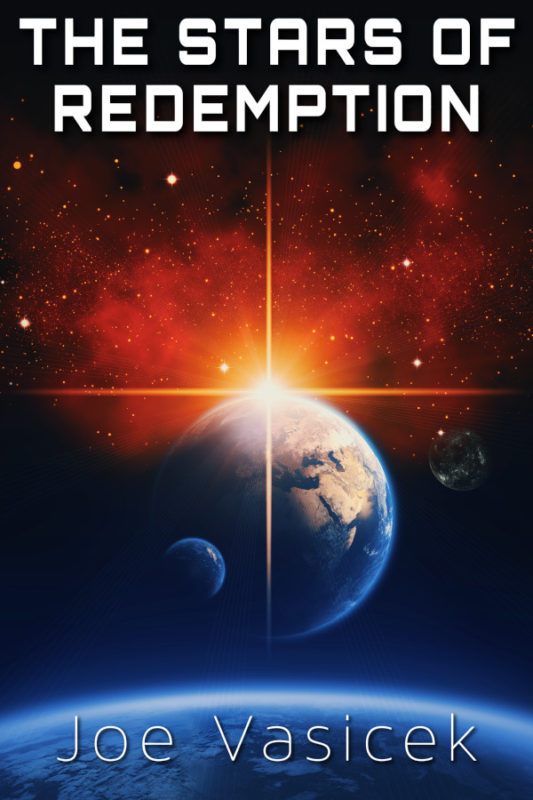
I’ve been playing around some more with ChatGPT, working on cover art for the Falconstar Trilogy. The best way to do it, I’ve found, is to make the art with AI, but to do the typography myself.

Anyhow, here are the test covers. What do you think?

The one that I feel most ambivalent about is Queen of the Falconstar. I really like how Zlata turned out, and the Falconstar looks pretty cool too, but the background… let’s see if I can fix that:

Anyhow, what do you think?

Fantasy from A to Z: Y is for Yearning

What kind of fantasy books do you hope to see more of in the next few years? What direction do you hope the genre goes next?

Personally, I would like to see the genre return to its roots. But that probably isn’t a surprise, if you’ve read the other blog posts in this series. I’ve invoked Robert E. Howard and J.R.R. Tolkien in almost all of them. Those two men are the grandfathers of modern fantasy: Howard from the sword & sorcery side, and Tolkien from the epic fantasy side. Until just the last few years, most fantasy authors stood on the shoulders of those great authors.

I’m not opposed to rules-based magic on principle. I do think that it can be done quite well, such as with Brandon Sanderson’s earlier work. But I would like to see a revival of more traditional fantasy magic systems, which aren’t really “systems” at all, but mysterious forces of nature rooted in folklore and mythology. With its overemphasis on game-like dynamics and quirky rules-based magic systems, much of modern fantasy seems to have lost sight of the ancient archetypes that gave the works of Tolkien and Howard their staying power.

As the modern world drifts further from its roots, forgetting all the stories that were handed down to us from countless generations past, so too has our fantasy lost sight of its roots, thinning out to the point where it’s little more than an aesthetic—a bundle of tropes and caricatures that evoke a nostalgia not of our pre-modern past, but of other popular fantasy stories. Thus, with each new work in this vein, the genre is diluted just a little bit more, becoming a pale shadow of what it once was.

That is why I would like to see fantasy return to its roots. I would like to see more fantasy that draws deeply from the well of history and mythology, not just to create an aesthetic, but to embed those themes and archetypes deeply into the story itself. I don’t care whether that mythology is European or not (though as a pan-European mutt, that is the culture that resonates most with me), but I do want to read books that do more than file the serial numbers off of another culture and wear it like a skin suit. 

It’s not so much that I’m worried about “cultural appropriation”—hell, as the son of medieval vikings, cultural appropriation is my culture—but if that’s what you’re going to do, you should damn right do it well. There’s a reason why we all got sick and tired of all the Tolkien clones. If we’re going to take fantasy back to its roots, we’ve got to do more than copy all the greats who came before us. We’ve got to understand, in a deep and visceral way, just what exactly they were trying to build, and then build upon it with something new.

Fantasy and science fiction are all about evoking that sense of wonder. Science fiction evokes that wonder by looking to the future; fantasy evokes that wonder by looking to the past. Our modern world has forgotten far too much of its cultural heritage. I want to see more fantasy that brings it back.