მოტაცება, or how to bag a wife–literally

მოტაცება (pronounced mot’atseba) is the Georgian word for bride kidnapping, as opposed to regular kidnapping, which takes a different word.  It’s an ancient practice in the Caucasus region that doesn’t happen as much as it used to, but still happens, especially in the rural areas.  Today, most Georgians condemn it, but there’s still a whole slew of lingering cultural subtexts that can be very difficult for a Westerner (like me) to understand and navigate.

The video clip at the top is from a Georgian comedy program (named,  aptly enough, “Comedy შაუ”), and does a pretty good job illustrating how mot’atseba works.  Of course, the genders have been reversed–50% of Georgian humor is cross-dressing, and the other 50% is cross-dressing with slapstick–but everything else is pretty accurate.  Like I said in a previous post, it’s like a weird game of capture-the-flag involving sex and arranged marriage, where the flag is the girl.

This is how it works: boy meets girl.  Boy decides to marry girl.  Boy gets his friends together and kidnaps the girl (with or without her consent), holding her captive overnight.  The next morning, boy contacts girl’s parents to ask for girl’s hand in marriage.

Since the girl has been held overnight, the implication is that she’s been raped (which may or may not be true).  Therefore, to avoid a scandal which could tarnish the family’s reputation, the parents will usually marry their daughter off as quickly as possible.  However, if the girl can escape, or the girl’s brothers can rescue her before nightfall, the crisis can be averted.

I first heard about mot’atseba from this post on Georgia On My Mind, back when I was looking into TLG about a year ago.  It disturbed me a little, but not enough to dissuade me from coming to Georgia.  A couple of weeks ago, however, I learned that that was how my host parents got married.

Here’s the thing, though: they both seem to remember it kind of fondly.  In fact, when my host mom saw the clip from Comedy შაუ, she couldn’t stop laughing.  Her mom lives with them now, and from time to time they go out to visit his family in the village, so it looks like everyone’s on pretty good terms.

So what the heck happened?

Here’s the story, as best as I can piece it together.  They were introduced by his sister, who was her coworker at the hospital.  After a month, he got together with some friends and took her without violence to his family’s house out in the village.  She was surprised and upset at first, of course, but her parents gave their consent, and so they were married the next day by a magistrate.  Now, they’ve got four kids–a huge family, by Georgian standards–and seem to be pretty happy together.

As a Westerner, it blows my mind that a strong, healthy family can come out of something as violent as an act of kidnapping.  Indeed, I have yet to be convinced that that’s a normal outcome. However, after asking around and doing some research, I’ve come to realize that mot’atseba isn’t a black and white issue: there are all sorts of cultural subtexts that make the issue much more complicated.

The key to understanding how all this works is the following proverb, which underscores the entire Georgian concept of gender roles and the differences between men and women:

If a woman says no, she means maybe.  If she says maybe, she means yes.  If she says yes, she is not a woman.

From this, two things follow:

1: Women are fickle, therefore men should be assertive.

As a man, I see this all the time.  All three of my co-teachers are women, and all of them constantly defer to me, even though they have far more professional experience than I do.  When I had some pretty serious differences over teaching methodologies with one of them, she suggested that I take over the next lesson and teach it without her interference, so that she could get a better idea that way.  This isn’t the case with the female volunteers–many of them complain about how hard it is to get anyone to take their suggestions seriously.

2: A woman can never say no.

If “no” is constantly interpreted as “maybe,” then it follows that no one (or at least, no man) is going to believe that a woman is even capable of saying “no.” This turns the whole concept of rape into a nebulous gray area, unlike the United States, where women have a lot more power at least in terms of the law.

This is not to say that in Georgian culture, women are doormats or property (even though that’s what some TLGers claim).  Women have a number of support networks, such as family, friends, and other women, and can use these networks to ward off unwanted attention.  When I asked my host sister if she’s worried that a mot’atseba would ever happen to her, she said no, because if it did, her three brothers would kick some serious ass.

On top of all this, Georgians have no real concept of casual dating.  If a girl and a guy are seeing each other, they’re either married or about to be married.  This shows up in the way they use Facebook and other social networks: instead of listing themselves as “in a relationship,” the girl will give her password to the guy she’s dating.  And they don’t just do it because the guy demands it–when my host sister was seeing someone, he asked her if she wanted to give her password to him, as if that was the natural next-step in their relationship.  From the way she told me, she seemed to be worried that she’d made a mistake by telling him no.  Of course, I told her she’d made the right decision!

Combine all of these together, and you should start to get a clearer picture of some of the subtext surrounding mot’atseba.

When I asked my first co-teacher about it, she said it was only an ancient practice and absolutely didn’t happen anymore.  When I brought up rape and asked if that was also a part of it, she was horrified and didn’t want to talk about it.  However, when I asked if it’s possible for a happy marriage to come of it, she kind of smiled a little and said that if the woman likes it, then why not?

My second co-teacher was much more straight with me.  Yes, it happens occasionally, though it was a lot more “fashionable” about twenty or thirty years ago.  No, it’s not romantic.  Yes, a lot of the marriages aren’t very happy, which is why so many of them end in divorce.  She told me that one of her friends from college was married through mot’atseba, and that she knows of at least one case in our school where an 8th grader was kidnapped and married.  However, under President Sakashvili, mot’atseba is now a serious crime, so it’s not as common as it used to be.

My third co-teacher’s answer was a lot sketchier.  The first time I asked about it was in passing, as she walked in on the conversation I was having with my first co-teacher.  When I asked her about rape, she laughed and said “well yes, of course it happens!” as if that wasn’t a big deal.  Later, however, she sat me down and said quite seriously that mot’atseba is a horrible thing, that it’s a criminal act, that it doesn’t happen anymore, etc etc.

However–and this was perhaps the most illuminating thing–she said that sometimes, when a guy and a girl are in love, but she’s being wishy-washy and non-committal, he’ll sweep her off her feet and carry her off.  In fact, that was what happened with her: her boyfriend wanted to marry her, but she kept putting it off, so one day he tricked her into getting in the car and told her “all right, enough is enough–we’re getting married this weekend.” And they did.

When I asked her if that was mot’atseba, she said no, but I think the subtext was similar.  A real man knows how to assert himself and take what he wants.  Since a real woman will never say yes, sometimes you just have to man up and tell her how it’s going to be.  And don’t worry if she says no at first–she only says that because she doesn’t really know what she wants yet.  She’ll come around eventually.

It sounds pretty horrible, but that seems to be how it works.  And really, there are gradations of it. Most Georgians will agree that it’s wrong for a guy to kidnap a girl he doesn’t know so that he can rape her and force her to marry him.  But if the guy and the girl know each other, and are already pretty serious (ie seeing each other at all), and he wants to speed things up–or, alternately, if she knows her parents would never say yes otherwise–that’s when everyone speaks of it with a wink and a nod.

And really, can we say that our culture’s problems are any less abhorrent?  What about teenage pregnancy?  Secret abortions?  Date rape?  At least with mot’atseba, the guy is trying to marry the girl, not just sleep with her and walk away.  If it’s just sex that the guy is after, there are a lot more easier ways to get it than risking a prison sentence.

So is it “wrong”?  I don’t know if it’s possible to say yes or no, except on a case by case basis.  My host sister knows a girl who was kidnapped at age 12 and had a baby the year after.  I’m pretty sure that’s wrong.  But when I told her what would happen to that guy in the states–that he would go on the registered sex offender list and spend the rest of his life ostracized and unable to find work–she thought that that was wrong too.  And as for my host parents, well, it seemed to work out well for them.

I don’t know.  But either way, it’s definitely an interesting anthropological experience.

Trope Tuesday: Language of Love

Oh look!  While traveling in distant lands, the hero met a girl–probably the chief’s daughter–and fell (or rather, stumbled) in love.  The catch?  Neither of them speak the same language.

That’s okay, though: through the power of love, the two of them will somehow find a way to understand each other.  Whether through touch, music, math, or a montage filled with magical sparkles, they come to discover that love itself is a language, one which they know fluently.

To be honest, I was a little disappointed in the page for this trope.  It’s pretty dang sparse, though it does make a couple of good points.  The main one is that this type of story almost always has the male character speak the language of  the audience, with the female character being the foreign or exotic one.  That might be because the seductress is such a powerful character archetype…but then again, it might just be because everything sounds sexier in French.

My favorite example of this trope is in the film Jeremiah Johnson, where the hero unwittingly stumbles into a marriage with–you guessed it–the chief’s daughter.  What starts out as an awkward pairing, to say the least, turns into a wonderfully endearing love story, as Jeremiah builds a cabin for the two of them (and the mute boy he picked up earlier…long story) and together they become a family.

Because this is a major driving element in Star Wanderers, the novel I’m currently writing, I’m especially conscious of this trope right now.  However, I can’t think of many good examples where this trope came into play.  Do you have any ideas that you can share?  Favorite stories where love overcame a major language barrier?  If so, I would love to hear about it.  Because in spite of my tongue-in-cheek comment about the sparkles, I think this trope has some really awesome potential.

Image by Kevin Jackson.  Taken from here.

Q1 2012, or what writer’s angst looks like

Actually, this last quarter wasn’t quite so bad as the title might make it seem.  For the first part, I was on roll, writing almost 25k new words a week.  But then I finished that project, started a new career, moved to the other side of the world…yeah, my writing took a hit.  Or at least, that’s how it feels.

In January, I was working on Stars of Blood and Glory, and was really on a roll.  The application process for TLG was still pending, but I pretty much knew I was getting in, and since I was staying with my parents until it went through, I didn’t have to worry much about money issues.  With lots of writing time, I finished SBG in about 6 weeks and published Journey to Jordan.  Life was good.

After Stars of Blood and Glory, I went back to Star Wanderers, finishing up Part II and starting Part III.  However, something felt wrong, and I didn’t really know what it was.  With my TLG departure date imminent, it was really hard to focus, and I wasn’t in much of a position to move on to anything else.  That’s when the angst began.

I flew out to Georgia on February 15th, did a week of training in Tbilisi, and then was whisked about 220 kilometers away to Kutaisi.  As a consequence, I didn’t get any real writing done for almost a month.  However, I didn’t have any major challenges navigating the new culture, and was soon settled pretty comfortably.

The trouble was, nothing was working.  Star Wanderers was broken, and I was too close to the project to fix it.  But after putting it on the back burner, I didn’t know what to do.  For most of March, I switched from one project to another.  Nothing seemed to stick, though, and by the end, I was getting pretty antsy.

What if I’d made a mistake to come to Georgia?  What if that was the reason nothing was working?  It sounds silly now, but that was what was going through my mind.  I still worry about it a little, but I think it has to do more with my creative process than anything here in Georgia.

I have a very non-linear way of writing first drafts.  After starting the revision for Heart of the Nebula and making some good progress on that, I got an idea for Star Wanderers and moved back to that.  At this point, I think the only way to get productive again is to finish that project, even if it sucks.  I’ve got a lot of great ideas for other stories, but until I can close the book on this one, I don’t think I’ll be able to make much progress.

So that’s where things stand right now.  All in all, it wasn’t a bad quarter, but I’ll be happy when I’ve actually finished something for a change.  Hopefully, that’ll only be a couple of weeks.  In the meantime, I’ll keep writing.

One Confirmed Kill by Peter Johnston

The best description of this book that I think I could give is the disclaimer at the front:

The following is not fiction. The characters and events described are closely based on real life, and any resemblance to real persons, organizations and events is purely intentional, and should be construed in the most negative light the text will support. Some names have been changed to protect the author from violent reprisals from the real people thus depicted, in the unlikely event that any of them have learned to read.

Thus begins a darkly cynical account of one soldier’s experience (or lack thereof) in Al-Anbar Province during the Iraq War.  At times hilarious, at times surprisingly moving, this book made me laugh out loud and kept me engrossed all the way to the end.

Full disclosure: the author is a friend of mine from the Leading Edge slushpile, and I was one of the beta readers for this book.  That said, I really enjoyed this novel, both the earlier draft that I read and the finished version that I bought as soon as it came out.  It’s a lot like Catch 22, except I actually liked this one (whereas I could hardly get through the first chapter of Catch 22).  The writing is witty and sarcastic, and the story, while far from honeycoated, ends on a note that makes the read worthwhile.

If you’re happily employed by the military, this book will probably make you livid with rage…or it’ll send you roaring on the floor laughing your ass off.  I can see my military friends taking it either way.  But one thing is for sure: you won’t find it boring.

One Confirmed Kill is an indie published ebook, and you can currently pick it up in all formats for $.99 on Smashwords.  Disclosure: as a Smashwords affiliate, I get about $.10 from the sale.  However, even if I didn’t get anything for it, I’d still recommend it, because it’s a great read.

Trope Tuesday: Abduction is Love

In real life, abduction is an awful, violent thing that we hope would never happen to us or anyone we know.  But in fiction, the Rule of Romantic can make abduction the basis of a wonderful, heartwarming love storyat least for some of us.

This is actually a more common trope than you might think.  It’s the underlying premise for Beauty and the Beast, though Disney rewrote that part out of it.  It’s a major plot element in Watership Down, as well as The Courtship of Princess Leia.  More recently, Twilight featured a few variations on this trope, though considering the source, that probably isn’t surprising.

In G and PG rated versions, this often leads to And Now You Must Marry Me.  In PG-13 and R rated versions, leads to Rape Is Love, with many unfortunate implications.  Due to the violent nature of the story, it often involves a lot of Slap-Slap-Kiss.  Stockholm Syndrome, the psychological phenomenon whereby victims of abduction develop an emotional connection with their captors, is the overarching theme, making any abduction love story a match made in Stockholm.

In the West, this trope tends to be a lot less prominent than it used to be.  However, if you look at the trappings of our marriage customs, you start to notice some disturbing trends that point to a time when abduction-as-romance was much more common.  For example, what was the original function of the best man at a wedding?  Quite possibly, it was to keep the bride from escaping (or being rescued).  And why does the groom whisk the bride away to a remote, isolated place to consummate the marriage?  To evade the bride’s angry family, of course.

Here in Georgia, this trope is alive and well, not just in fiction but in real life–seriously.  It’s called motatseba, and is often discussed with a wink and a nod.  In the family that’s hosting me, the mother married her husband after he abducted her, then bore him four children.  Now, they both seem to remember it rather fondly.

This is such a bizarre tradition that I’m going to dedicate an entire post to it…after I figure out just what the hell is going on.  Seriously, I can barely make sense of the practice–it’s like a twisted game of tag involving sex and arranged marriage.  How it can possibly lead to love…that’s what I’m trying to figure out.

However, I’m sure it involves some interesting variation of this trope.

Staying in Georgia

So I’ve decided to stay here in Georgia for another semester.  Things are working out really well, I enjoy teaching English, and for the full experience I think it will be better to stay for a full year.

I’m not sure if I’ll stay in Kutaisi yet, though.  It’s a convenient place to live, but I have upwards of 30 kids in my classes, which can be a real challenge.  I’d kind of like to spend the next semester in a village or small town, where I can know all the kids by name.  Then again, I really like it here in Kutaisi, and I’m doing so much where I am that I’d kind of like to stay, just to see how things turn out.

Currently, I’m teaching grades 1-6, 9-10, and 12.  It sounds like a lot, but I’ve got great co-teachers who help out a ton.  I teach 18 class periods per week, which is enough to keep me busy but not so much that I feel overwhelmed.  My favorite grade to teach is probably 4th or 5th, where the kids know enough to surprise you but don’t have all the issues that come with teenagers.  There are different things I enjoy about each grade, though, so it’s good to have a mix.

The second semester doesn’t start until September, so that’ll give me a few months off to do whatever I like.  My current plan is to come home and work on getting print editions of my books out.  TLG will pay for my flight out and back, and my parents will let me stay at their place over the summer, so I think things will work out quite well.

As for what to do in December once this tour is finished–that’s an entirely different question.  I could probably leverage my experience here in Georgia to get a much higher paying job in Asia or the Persian Gulf, but all I’m really looking for is a job situation to tide me over until my writing career takes off.  That, and an awesome cultural experience.

What I’d REALLY like to do is find some remote desert village in the Middle East, where the locals will pay for room and board, my book royalties will pay the rest, the cultural experience will give me a chance to practice my Arabic, and my teaching skills will make a real difference in the local community.

Towards that end, I found this site called Workaway.  A friend of mine used it to get a short-term job in a Bedouin camp in Wadi Rum, and there are TONS of other opportunities listed just like it.  I freaked out a little when I saw it, because it looks AWESOME.  When I was in Jordan, I used to fantasize about spending some time in the desert with the Bedouin, so getting the chance to actually do that would be amazing!

TLG will pay for my flight home at the end of the second semester, but I can opt to go anywhere else, so long as the ticket price isn’t any more than Tbilisi to JFK.  Since this is the year my sister’s get together with their in-laws for Christmas, it might be better to go straight from Georgia to my next job at the end of December.

I was thinking about it as I walked around my neighborhood earlier today, and it made me wonder: why did I wait so long?  There are so many awesome opportunities overseas–if you don’t have any debt or anyone you need to support, you could spend years hopping from one random adventure to the next.  I could spend years doing that.  And with epublishing, all I really need is my netbook and periodic internet access to put up new books as I write them–everything else more or less takes care of itself.  It’s fantastic.

In any case, that’s the plan for now.  I’m taking the night train to Tbilisi tonight, so I’d better go get ready for that.  See you around!

Trope Tuesday: Chess Motifs

Chess is quite possibly the oldest, deepest, most well known and widely played board game in the world.  It should come as no surprise, then, that it’s often used as a motif in works of fiction.

The interesting thing is how well the pieces fit some of the classic character archetypes:

  • The King is like the Hero: the most indispensable character around whom the story revolves.
  • The Queen is like the Chick (or perhaps the Heart): less appreciated than the Hero but a powerful character who holds the team together (and whose loss often makes the team fall apart).
  • The Rook is like the Big Guy: the stoic, straightforward heavy-lifter who might not be quick (rooks are often the last pieces to be developed) but pulls a lot of weight, especially in the endgame.
  • The Bishop is like the Smart Guy: quick and versatile, mystical and unpredictable, striking from a long distance and often performing two or three jobs at once, but lacking the power by himself to achieve victory.
  • The Knight is like the Lancer: likely to go over the others’ heads and the one most likely to sacrifice himself for the cause (knights before bishops, after all).
  • The Pawns are like the Red Shirts: expendable minor characters who may, if they push forward bravely and stay faithful to the end, eventually become queens.

And that’s not all.  The major chess strategies also correlate loosely to major story tropes.  For example, at the beginning of the game, it’s important to move the king to safety, while in the endgame, the king becomes a much more important offensive piece.  Likewise, the hero often spends the first half of the story running away from the bad guys, while in the second half, he starts to take real action.

And the list goes on.  The more I learn about chess, the more parallels I see.  It’s gotten to the point where I want to try diagramming a novel, or perhaps a series, according to a chess game, with that fact being part of the big reveal.  Or perhaps to have one of the major characters have a long-standing chess rivalry with another character who ends up being a major bad guy.

Or something.  I’m just starting a new novel, so everything looks fresh and exciting.  The story will probably change and evolve considerably over the course of writing it, but since it’s a fantasy novel, I think that some chess motifs may be especially appropriate.  Fantasy, after all, is about taking the reader back to a golden age of magic lost in the pages of history, and chess is perhaps the oldest popular game in the world.

In the meantime, is anyone up for a game of chess?

Image (cc) from wikimedia commons.

Sholpan is now available for free from Amazon!

My novella Sholpan just went free on the Amazon site!  Currently it’s at the #26 spot on the science fiction –> adventure bestseller list, and ranked #1,783 free in the kindle store overall.

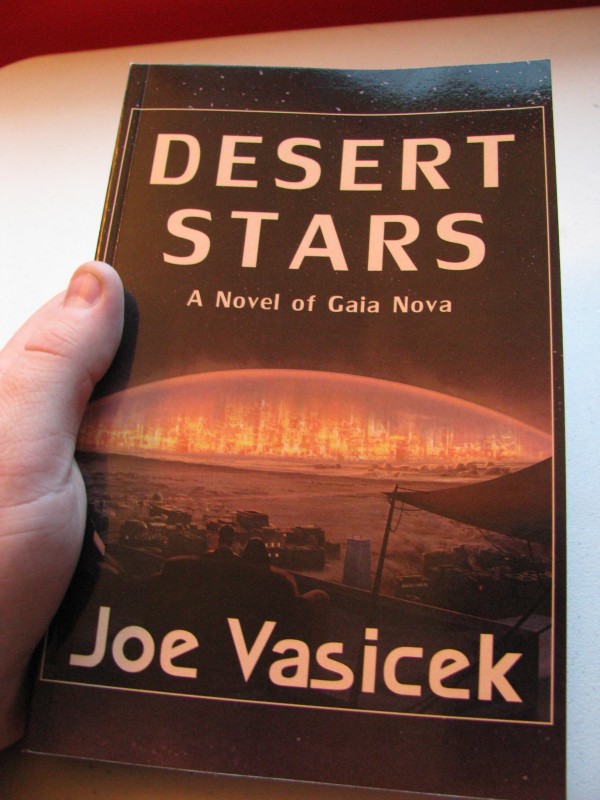
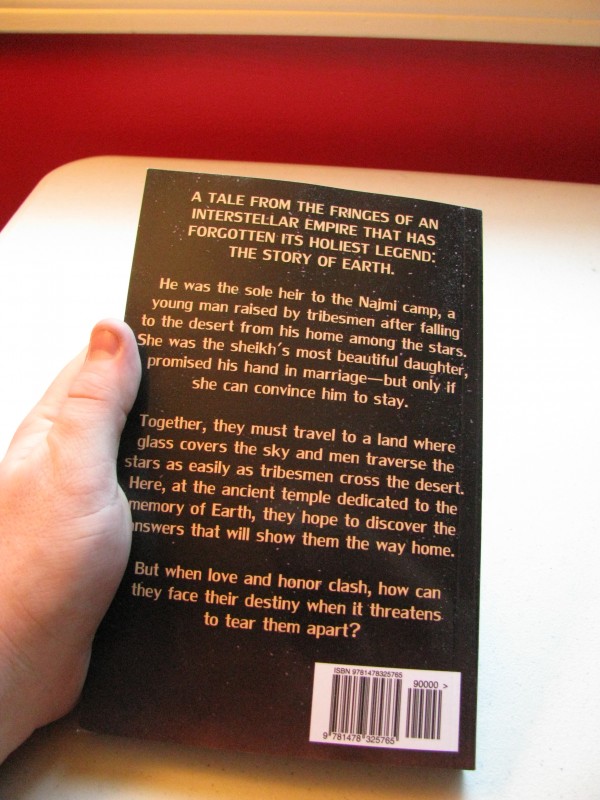
If you’d like to check out some of my writing but haven’t gotten around to it yet, Sholpan is a good place to start.  It takes place in the same fictional universe as my novels Desert Stars and Bringing Stella Home, with several others in various stages of planning and completion.  It’s a companion novella for Bringing Stella Home, which means that it follows the first half of Stella’s storyline from the novel, with some extra scenes and backstory to flesh things out.

Of course, if you don’t like shopping at Amazon, you don’t have to be left out: Sholpan is also available as a free download from Barnes & Noble, Smashwords, Diesel, and Kobo.  All of my other ebooks are also available from those sites, so you can check them out there as well.

If you’ve already read Sholpan and enjoyed it, I would appreciate it immensely if you would take the time to rate it or post a review.  It only takes a moment, but it helps me out a ton.  And of course, I’m only looking for honest reviews, so I won’t be offended if you don’t give it five stars if you don’t feel it deserves it.

It isn’t free yet on Amazon’s other stores (UK, Germany, France etc), but I’ve contacted Amazon so hopefully that will soon change.  In the meantime, I hope you enjoy!

Trope Tuesday: True Neutral

The True Neutral is something of an enigma.  They generally take no side, either because they have moved beyond good and evil, or because they simply don’t see good and evil the way we do.  Or because this isn’t their war and they just want to be left alone.  Or…well, let’s get to it.

From the easydamus character alignment page:

A neutral character does what seems to be a good idea. She doesn’t feel strongly one way or the other when it comes to good vs. evil or law vs. chaos. Most neutral characters exhibit a lack of conviction or bias rather than a commitment to neutrality.

Some neutral characters, on the other hand, commit themselves philosophically to neutrality. They see good, evil, law, and chaos as prejudices and dangerous extremes. They advocate the middle way of neutrality as the best, most balanced road in the long run.

As you might expect, this alignment doesn’t describe just one type of character.  In fact, there are many different archetypes that fall under True Neutral.  They include:

That’s quite a spread, isn’t it?  The main thing to keep in mind is that these are the characters who refuse to take sides–not just in whatever overworld conflict is driving the story, but in the ethical questions that the story raises (unless neutrality itself is their answer).

My favorite example of this trope is the Childlike Empress from The Neverending Story.  As the very embodiment of Fantasia, she transcends good and evil so completely that her power, the Auryn, cannot be used to forbid a monster from acting on its own evil nature.  Truth from Fullmetal Alchemist is another good example of a transcendent True Neutral.

With everyday, down-to-earth characters, though, this alignment tends to tick me off.  The Ents, for example, very much fall under this trope (as does Tom Bombadil…unless you subscribe to this theory).  Most others examples either come across as weak, selfish, or cowardly to me, so I don’t really care much for this alignment–unless it’s the starting point of a well-constructed character arc.

For that reason, in my own work, most True Neutrals are either straight-up antagonists or gradually shift in alignment as the story progresses.  In Genesis Earth, Michael Anderson starts out as one of the weaker True Neutral types, but changes as events in the story make him grow.  In Desert Stars, Sathi probably falls into this type, though I’m not so sure; either way, he’s very easily manipulated by his Neutral Evil wife.  In Bringing Stella Home, Ilya falls under this alignment due to his moral cowardice, and Anya might as well, though more as a Selfish Good than anything else.  Roman probably does too, but more because he’s old and wants to give up the fight; that’s something I’m currently working on in Stars of Blood and Glory.

I haven’t done a transcendent True Neutral yet, but if I ever write a heroic fantasy tale with gods and demons, I probably will.  After all, if Michael Ende did it in my favorite novel of all time, how can I resist?

Winter in Kutaisi

From what I hear from my friends, it’s been a pretty mild winter back in the States.  Here in Georgia, though, it’s been a much different story.

I think we’ve had only three sunny days since I arrived here in Kutaisi almost four weeks ago.  The natives tell me that this is highly unusual.  The temperature hovers right around 0 degrees Celsius, which means the snow is wet and melts extremely fast.  It’s pretty for a day or two, then it turns to rain again, and that means mud…lots and lots of mud.

During a break in the snow, I ventured outside to take a few pictures of my neighborhood.  In a couple of weeks, the weather will hopefully be warmer and things will look a lot different, but still, I thought it would be good to give you guys an idea of what this place looks like.

My host family's apartment. We live on the second floor, which is good since there isn't an elevator.

I live in the Avtokarkhana settlement, near the old Soviet auto factory.  The apartments are about 50 years old, and haven’t been renovated much since then.  It’s a poor neighborhood, but it’s comfortable enough, with all of the basic amenities like water and heating.

An abandoned bus along the road to my school. My host father has some choice words to describe his Russian-made vehicle.
In Soviet Russia, puddle splash YOU!

The roads are pretty nasty; they haven’t been repaved in decades, and the potholes are so deep you practically need a raft to get across the street.  Most of the locals wear rubber boots during the rainy season, but I recently treated my boots with beeswax and that seems to be doing fairly well.  Besides, after a while, you figure out where the stepping stones are, and then it’s not so bad.

One of the local free-range chickens. There's a cow, too, but she was staying out of the snow.
Where the chickens go to keep warm. My host family laughed when I showed them this picture.

Even though Kutaisi is a fairly large city, I get the feeling that there’s still a few lingering elements of the village mentality.  How else would you explain all the free-range chickens that people still keep?  The school is within walking distance, as are the stores where we buy our bread, and even though the pharmacy is a short drive away, I could probably walk there in fifteen or twenty minutes.

The local church. It seems pretty small, but Georgians don't really have weekly worship meetings like we do in the States.

Because of the snow, I haven’t gotten out much in the past few weeks.  I haven’t been stranded, though; there are about a dozen other TLG volunteers in the city, and we’ve had a few parties and get-togethers.  Kutaisi is a small city, as far as cities go, but there are plenty of interesting places if you know where to look, and even in the dead of winter, it’s still quite pretty.

The road I walk back from school every day.

So yeah, that’s what my neighborhood is like.  When the weather gets better, I’ll bring my camera to school and take some pictures of my school.  I should also take some pictures of my host family’s apartment, come to think of it.  What else do you guys want to see?