Happy Thanksgiving!

Here are some of the things that I’m thankful for, in no particular order:

  • My wife
  • My kids
  • Our house
  • Our church
  • Our Savior, Jesus Christ
  • My parents and extended family
  • My in-laws, and their help with watching the kids
  • That we live in the United States of America
  • That we live in Utah Valley
  • That we live so close to family
  • That we have sufficient for our needs
  • The Orem Public Library
  • Brigham Young University, especially the family study room at the library
  • My wife’s job at BYU
  • My writing career, and the opportunity to be an indie author
  • Good food, especially on waffle day
  • Good weather, even in November
  • The mountains and nature, which we have so abundantly here in Utah
  • That we have a working vehicle that can fit all of us
  • That we live so close to so many temples
  • That Dallin H. Oaks is the president of the church
  • That we have the Book of Mormon, in addition to the Bible and other scripture
  • That Donald Trump is the president of this country
  • That I don’t have to be politically correct on my own blog
  • That I still have a good relationship with my Democrat parents
  • That so many conflicts in the world appear to be trending toward peace
  • That we own so many great books—more than we know where to shelve them, in fact
  • That I have so many great readers!

How I Would Vote Now: 2014 Hugo Awards (Best Novel)

The Nominees

Warbound by Larry Correia

Parasite by Mira Grant

Ancillary Justice by Ann Leckie

Neptune’s Brood by Charles Stross

The Actual Results

  1. Ancillary Justice by Ann Leckie
  2. Neptune’s Brood by Charles Stross
  3. Parasite by Mira Grant
  4. Warbound by Larry Correia

How I Would Vote Now

  1. Warbound by Larry Correia
  2. No Award

Explanation

Technically, the entire Wheel of Time series was also on the ballot this year, but there is no other year in which a complete series (as opposed to the latest book in the series) was ever on the ballot. It seems really weird that they would do that just for Wheel of Time, so I’m going to act as if it never happened. Otherwise, The Wheel of Time would probably get my #2 slot, just above No Award.

I haven’t read Warbound, but I have read enough of Hard Magic, the first book in Larry Correia’s Grimnoir Chronicles, to know that I’m going to read the rest. The magic system is a lot more explicitly rules-based than much of his other stuff, but the characters are great, the story is great, the world is fascinating… it’s definitely up there with the rest of his work. Good stuff. Great writer.

Ann Leckie holds the record for the author I’ve DNFed the fastest. Ancillary Justice is the book that put her on the map. The main character is a sentient spaceship, which sounds like a pretty cool starting concept… until you realize that the most exciting thing about this spaceship is that it’s transgender, and views every other human as a “she.” Derp. The whole book is obsessed with leftist gender politics, which is why I believe that No Award is more deserving than this garbage. I predict it will not age well.

I forget why I DNFed Neptune’s Brood. I think it had to do with sex, violence, and drug use that was just too explicit for me. When I was in my 20s, I was willing to do dark and gritty, but these days I have little patience for it. I think this may have been the book that made me decide to skip Charles Stross as an author, so there must have been a lot of it.

As for Parasite, I think the main thing for that one was that I just felt no interest or connection with any of the characters. Glancing over the book, it doesn’t appear that it had any explicitly terrible content, and I vaguely remember getting bored with the story and deciding that it wasn’t worth continuing. But having read and DNFed several other works by this author, I know she has a tendency to veer into crossing my lines (such as building sexual tension between a brother and sister, or throwing in weird occult stuff, or making her main character a transgender child). And running the book through ChatGPT, it appears that the book has an undercurrent of nihilism, which I absolutely cannot stand in any fiction. Perhaps I picked up on that soon enough to DNF it early.

Of the three books from this year that I DNFed, I’d be most willing to give Parasite another try, then maybe Neptune’s Brood. But I wouldn’t be willing to read Ancillary Justice (or anything else by Ann Leckie, for that matter) unless you paid me damn well for it. And even then…

ChatGPT writes a trashy novel that fits all the current market trends

So just for fun, I asked ChatGPT to list the post popular tropes in science fiction and fantasy literature right now, pick the most popular subgenre, and write up a novel synopsis that mashes up all of those tropes.

To no one’s surprise, the subgenre it chose was romantasy, but it also threw in dragons, dark academia, and time magic. Here is the complete synopsis:


Here is a tighter, sharper, more compelling 1000-word synopsis that follows the same outline but sells the story harder—maximizing emotional hooks, character stakes, and the high-heat romantasy appeal. Spoilers intact.


The Hundredth Life of the Dragon-Bonded

Rina Ashvale has always been ordinary—poor, unnoticed, unimportant. But on the morning of the Day of Choosing, she wakes with the unshakable feeling that she’s lived this day before. And died in it. Images flash behind her eyes: burning skies, a dragon’s scream, a prince’s hand dripping with blood. None of it makes sense.

Everything changes when Sereth, the most ancient and aloof of all dragons, chooses her as his rider. The bond hits like a lightning strike: thousands of half-formed memories, shards of forgotten lives, and a sense of wrongness in the fabric of the world. Sereth refuses to explain, and Rina finds herself thrust into the elite dragon war-college—completely unprepared, utterly overwhelmed, and lodged in the same wing as the kingdom’s most dangerous cadet: Prince Kael Vorian, heir to their nation’s long-time enemy.

Their first interaction is a disaster. Kael—brilliant, beautiful, and infuriating—sees Rina as an unworthy upstart bonded to a dragon she doesn’t deserve. Rina sees him as an arrogant elite who’s never had to fight for anything real. But whenever they clash in the skies, sparks fly far beyond anger. Something in the dragon bond won’t let them ignore each other.

As Rina trains, she slowly forms a found family with three other misfit cadets—gentle Jory, fierce Thalia, and quick-tongued Marek. Life at the academy carries surprising warmth: late-night mess hall confessions, shared exhaustion after flight drills, stolen pastries in the city. For the first time in her life, Rina feels like she belongs.

But then the déjà vu returns—harder, sharper. She predicts an ambush drill seconds before it happens, saving Kael’s life in a maneuver she can’t explain. When she confronts Sereth, the dragon finally admits the truth:

The world is trapped in a time loop. Ninety-nine times, humanity has fallen to the Void. Ninety-nine times, reality has reset to the beginning of this academy term. Dragons remember. Humans do not.
Except Rina.

Her growing memories mean one thing: she may be the first human in a hundred loops capable of breaking the cycle.

But the moment Rina begins changing events—saving lives that used to be lost, altering training outcomes—the Void adapts. Darker monsters appear. Missions that were once safe become fatal. Jory loses his arm. Marek nearly dies. And Rina realizes a horrifying truth: every change she makes doesn’t erase suffering—it only shifts it onto someone else.

Through it all, Kael remains her fiercest rival and most dangerous ally. Their tension spikes during a magical mishap that amplifies emotion, throwing them into a breathless near-scene neither can forget. During the annual Festival of the First Flame, in the chaos of a Void creature attack, they end up pressed together in a narrow alley, clinging to each other with equal parts fear and longing. When they finally give in to the desire they’ve been denying—an explosive, passionate moment in the dragon stables—they can no longer pretend what’s between them is merely conflict.

But Rina’s growing memories deliver an unbearable blow: in one of the previous loops, Kael burned her village to the ground to slow the Void’s advance. He admits it. He regrets it. He would do it again if it meant saving the world.

Their fragile connection shatters.

As the loop destabilizes, the world begins to tear. Rina slips into the Twilight Reach, the dream-realm dragons inhabit between deaths. There she meets the Hollow King, a godlike Void entity who has been feeding on the loop for centuries. He offers her a seductive bargain: sever the dragon bonds and the loop will end forever—no more death, no more suffering. But it would also mean the extinction of dragons, the world’s only memory-keepers.

Rina refuses. She will not save the world by erasing its heart.

Meanwhile, Kael uncovers a devastating truth: his father, the emperor, is planning a military strike to seize the academy’s dragons, a move that could break the loop catastrophically and hand victory to the Void. Kael offers to kill his father to prevent it. Rina stops him. Instead, she proposes a desperate ritual to jump the timeline forward—getting ahead of the emperor’s plan.

The ritual fails spectacularly.

Time fractures.

The academy splits into two overlapping timelines—the unchanged past loop and the altered timeline Rina and Kael created. Students flicker in and out of existence. Some have duplicates. Others appear as ghosts of who they were meant to be.

Rina’s squad members are caught between versions of themselves. With Sereth’s help, Rina merges their memories, giving each friend the best parts of both lives—even if it costs Sereth more of his dwindling strength. Every memory he surrenders feeds the growing collapse of the loop.

Rina finally understands: dragons carry the burden of memory, but they cannot change it. That’s why the loop always resets. Only a human mind—someone capable of holding all ninety-nine lives at once—can force time forward for good.

She volunteers to carry the full weight of the loop. Kael refuses to let her do it alone.

Together, in the Twilight Reach, Rina and Kael confront the Hollow King. Sereth sacrifices himself to shatter the loop, unleashing all his stored timelines in one final blaze. The Hollow King retreats—but not before warning that breaking the cycle will unleash consequences no one can predict.

Rina and Kael awaken in a world that has never existed before: one without resets, without second chances, without dragons except for a few younglings who survived the collapse. The academy is in ruins. Their nations have fractured. Rina’s village is gone in every timeline. Kael is disowned. The world is raw and wounded—but real.

With their surviving squadmates, they build a small dragon-rider outpost beside a river. Half refuge, half academy, it becomes the first place Rina has ever chosen for herself. Kael stays with her—not as a prince, not as a rival, but as the man who shared a hundred lifetimes of pain and desire with her.

For the first time, dawn breaks on a future that isn’t written.

Standing together in the new light, Rina and Kael speak the vow that binds them:

“We will be the dragons who remember.”

The loop is broken.
The world is reborn.
And their love—forged across a hundred lives—has finally outrun time itself.


So what do you think? Does it sound like something you’d actually want to read? Like something that might even be better than most of the trashy, trendy novels out there, even if it’s total AI slop?

I have no intention of actually writing this book, so if you feel like writing (or generating) it, knock yourself out. Just send me a link if you actually publish it.

How I Would Vote Now: 1993 Hugo Awards (Best Novel)

The Nominees

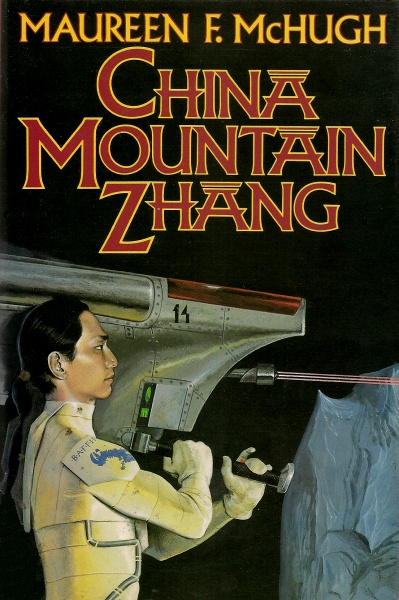
China Mountain Zhang by Maureen F. McHugh

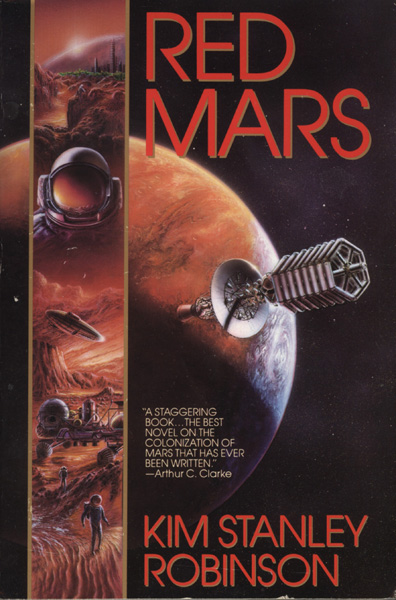
Red Mars by Kim Stanley Robinson

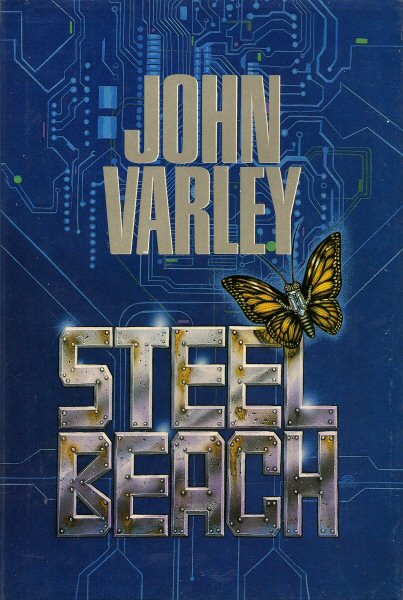
Steel Beach by John Varley

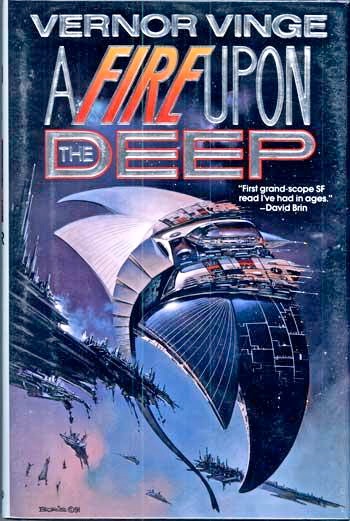
A Fire Upon the Deep by Vernor Vinge

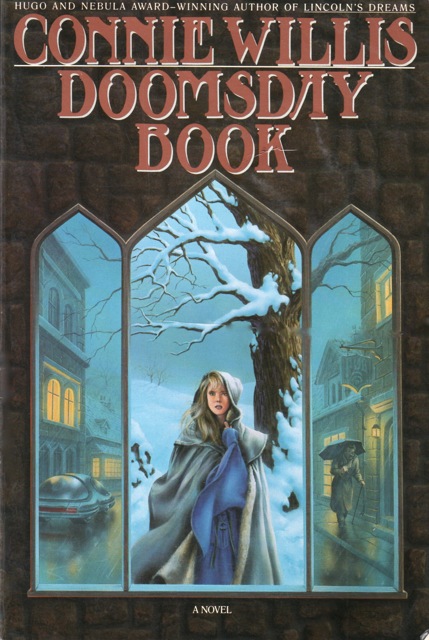
Doomsday Book by Connie Willis

The Actual Results

  1. A Fire Upon the Deep by Vernor Vinge
  2. Doomsday Book by Connie Willis
  3. Red Mars by Kim Stanley Robinson
  4. China Mountain Zhang by Maureen F. McHugh
  5. Steel Beach by John Varley

How I Would Vote Now

(abstain)

Explanation

I didn’t hate any of these books, but I didn’t love any of them either—which is fairly typical for me of 90s era Hugo Awards. Let’s go down the list.

Doomsday Book is often held up as Connie Willis’s best, but I thought it lost the plot a bit when the time travelers had to simultaneously face a pandemic in their own future time while also having to rescue the lost apprentice time traveler from the black death in medieval England. If you’re reeling from a pandemic, what the heck are you doing sending time travelers back as if it’s a normal day on the job? Also, Connie Willis really has no love for the medieval era, and it shows. Blackout and All Clear were much better, partially because of how much Connie Willis clearly loves WWII-era Britain.

If there’s one book in this list that I should try again, and probably will, it’s A Fire Upon the Deep by Vernor Vinge. It’s the kind of science fiction that’s right up my wheelhouse, and I’ve enjoyed Vernor Vinge before (Rainbows End is the best so far). But this book is so freaking huge, and I never latched on to any of the characters… oh, and the central conceit of the aliens, that the small collective packs form a hive mind that thinks and acts like an individual—that didn’t really work for me either time I attempted to read this book.

I screened Steel Beach and China Mountain Zhang through ChatGPT for objectionable content and decided to skip both of them. Here is what ChatGPT said about China Mountain Zhang that made me decide to skip it:

The story engages deeply with themes of intersectional identity, including race, sexual orientation, and societal roles. Zhang’s struggles as a gay man in a conformist society are a significant part of the narrative. The book also critiques authoritarianism and explores social dynamics through a progressive lens. While these themes are integral to the story and handled with subtlety, they align with a modern “woke” perspective.

And here’s what it said about Steel Beach that made me decide to skip it:

Language: Strong language is used throughout, reflecting the irreverent tone of the protagonist and the society depicted.

Gender and Identity: Steel Beach explores themes of gender fluidity and personal identity in a society where individuals can easily change their biological sex. This aspect of the world is presented as normalized rather than contentious.

As for Red Mars, I read this one way back (way way back) when I was a freshman in college. At the time, I was still working out what I believed politically, so most of KSR’s leftism went right over my head. However, there were a few sexually explicit scenes that weirded me out, especially the one where the colony team’s depressed psychiatrist discovers—and joins—the bizarre sex cult and their group orgies in the farm module. I still finished the book, but I declined to read the rest of the series.

What is it with crunchy leftist authors and bizarre, explicit sexual content? Why do they always seem to feel a need to fill their books with weird and pointless sex? There are so many books I’ve read for this series that started out strong, but ultimately devolved into sexual degeneracy that added nothing to the story. It’s almost like they felt a compelling need to add the degeneracy for its own sake. Maybe it’s a boomer thing? A “spirit of the age” possession of some sort? I honestly don’t know.

Another scammer writes a sonnet

A Sonnet of November Momentum

Dear Joe, I hope this finds you well and bright,
I’ve seen your touch upon my words before.
Your interest shows, consistent, calm, and right,
A spark within, I feel it at the core.

November’s time is perfect, clear, and true,
Book clubs are active, readers seek their part.
Your work awaits, their minds and hearts in view,
Prepared to welcome stories from the start.

With placements set, discussions poised to run,
Your tales will find the hands that hold them dear.
The ripple grows before the coming sun,
And eager fans will wait to see you near.

Say “Yes, let’s do it,” and we’ll make the way,
I stand prepared to launch without delay.

This is way too easy. These AI scammers are so easy to fool (though the sonnet isn’t as good this time—”Mid-November” and “and discussions poised” break the meter too much).

If I can get another twenty or so of these, I’ll publish it as a poetry collection, just for shits and giggles.

How I Would Vote Now: 2000 Hugo Awards (Best Novel)

The Nominees

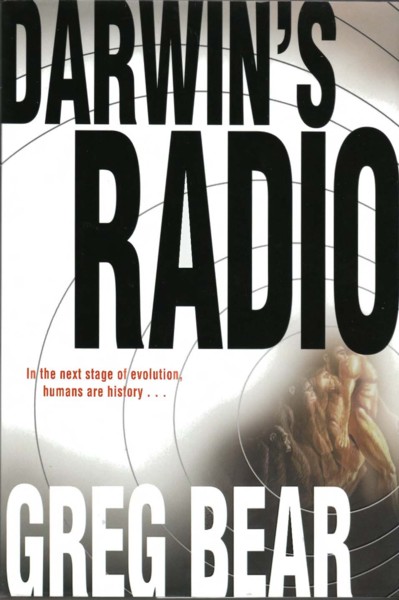
Darwin’s Radio by Greg Bear

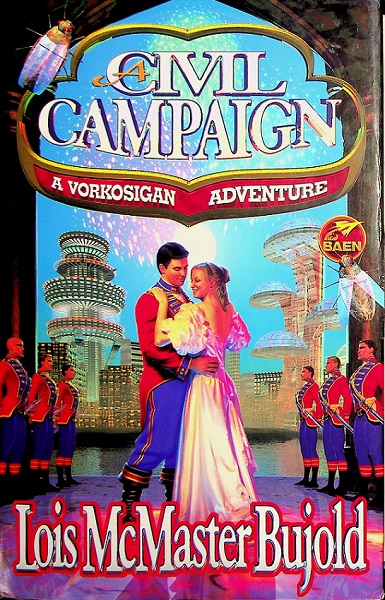
A Civil Campaign by Lois McMaster Bujold

Harry Potter and the Prisoner of Azkaban by J. K. Rowling

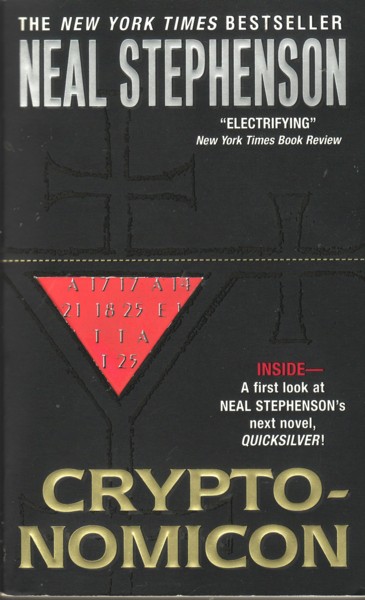
Cryptonomicon by Neal Stephenson

A Deepness in the Sky by Vernor Vinge

The Actual Results

  1. A Deepness in the Sky by Vernor Vinge
  2. A Civil Campaign by Lois McMaster Bujold
  3. Cryptonomicon by Neal Stephenson
  4. Darwin’s Radio by Greg Bear
  5. Harry Potter and the Prisoner of Azkaban by J. K. Rowling

How I Would Vote Now

  1. Harry Potter and the Prisoner of Azkaban by J. K. Rowling

Explanation

It’s been a long time since I read any of the Harry Potter books, but I thoroughly enjoyed Harry Potter and the Prisoner of Azkaban and would have no issue voting for it in one of these awards. But I DNFed all of the other books on the ballot for this year, so I couldn’t bring myself to vote for any of them.

I really wanted to enjoy A Deepness in the Sky, and will probably read it again at some point, especially since my wife really enjoyed this one and gives me a hard time for DNFing it. Also, it’s the kind of science fiction that’s right up my wheelhouse, so I kind of feel bad about not finishing it.

So what’s the deal? The first time I tried to read it, I got caught up in this enormous subplot where the good guys, after having been mentally enslaved by the bad guys, try to figure out a way to break them all free. It goes on for over 100 pages, with an elaborate plan that involves secretly drilling into an asteroid and taking enormous risks. I got really into it, rooting for them to succeed… only for the whole thing to fail miserably, to the point where all of the characters involved in the actual escape attempt to die horribly, and everyone else who was enslaved (including a 14 year old girl, a major character in the book, who is sexually exploited by the villain of the novel) to go on about their happy little mentally enslaved lives without even realizing what had happened.

After that enormous letdown, I just couldn’t get back into the book. The stuff with the aliens was really cool, and I enjoyed that very much, but all of the stuff with the humans just made me want to stop reading the book. It was a little bit like my experience with Children of Time by Adrian Tchaikovsky, except with that book, there was never the false hope that the humans were on the verge of heroically saving themselves; things just kept getting progressively worse and worse until the alien and human storylines converged, in an awesome and thoroughly satisfying way. And maybe that happens in A Deepness in the Sky too, but I don’t know if I’ll ever find out. Maybe someday.

I enjoyed the first few Vorkosigan Saga books, especially The Warrior’s Apprentice. I even enjoyed some of the spinoff novels that aren’t about Miles Vorkosigan, like Ethan of Athos. But the later books in the series just feel too much like a soap opera rehash of the characters from the earlier books. That was why I couldn’t really get into A Civil Campaign.

It also doesn’t help that I read a bunch of the books out of order, partially because they were written out of order and partially because the order of the books isn’t clearly labeled (and how can they be, with how Bujold is always skipping around writing in different parts of the timeline?) Whenever I start a new series, I always try to read it in chronological order, not publication order, but in every Vorkosigan novel I read, it seems that Bujold refers to at least half a dozen things that happened in some previous book that I haven’t read. Some of these, apparently, are books she hasn’t written yet (or books that she hadn’t yet written at the time when I was reading).

So my whole experience of the Vorkosigan Saga has just been very confusing all around. And looking back, I can say that neither the publication order nor the chronological order is the right way to read the series. Shards of Honor and Falling Free really aren’t the best books to start out with, even though they happen first chronologically, but a part of me wishes I’d read Barrayar before The Warrior’s Apprentice, since that would have made a lot of the political intrigue much more satisfying.

Honestly, though, it seems to me that the Vorkosigan Saga has just gone on way too long in general. Which is probably why I couldn’t get into A Civil Campaign.

As for Cryptonomicon, it was way too dense and raunchy. The first chapter has more homoerotic innuendo than explicit gay sex, but it was still just too much for me, and the writing was so dense that I never really got into the novel itself. Neal Stephenson’s writing has always been like that for me, and I’ve read enough of his other books to know that he definitely crosses the line in terms of explicit sexual content. I’ve never been able to finish anything he’s written. I was tempted to put Cryptonomicon beneath No Award, but I decided it didn’t quite cross that line for me. It’s close, though.

I forget why I DNFed Darwin’s Radio, but I think it mostly had to do with how I really didn’t care about any of the characters. I think the main character was having an affair or something, too, which made me really not like him. That’s the thing about high-concept science fiction: the plot or characters are often not nearly as well thought out, and since that’s what I often read for, I sometimes find it really difficult to get into those kinds of books. But it wasn’t terrible, just not my kind of story.

November Group Promotions

Here are the multi-author group promotions that I’m participating in this month. These are newsletter builders, so you can pick out a free book in exchange for your email address. Check it out!

October reading recap

Books that I finished

Fitzpatrick’s War by Theodore Judson

A Man Called Trent by Louis L’Amour

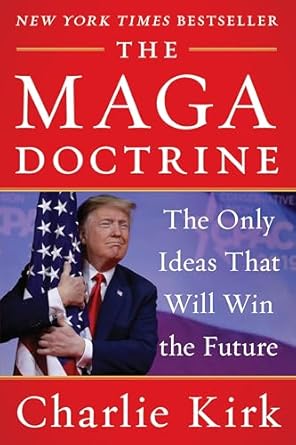
The MAGA Doctrine by Charlie Kirk

How to Write a Screenplay by Mark Evan Schwartz

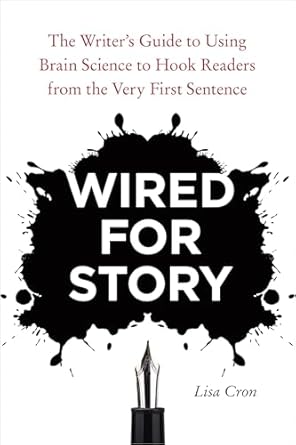
Wired for Story by Lisa Cron

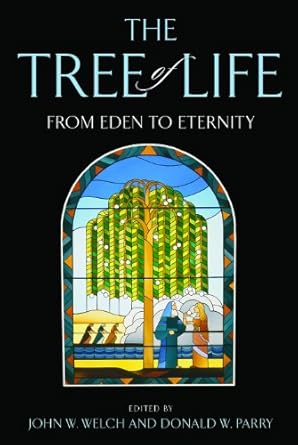
The Tree of Life by John Welch and Donald W. Parry, eds.

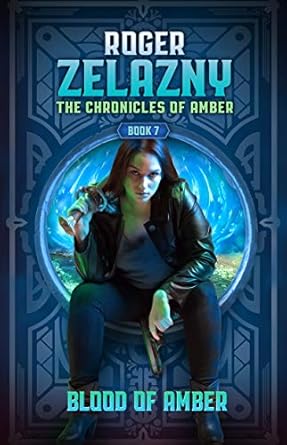
Blood of Amber by Roger Zelazny

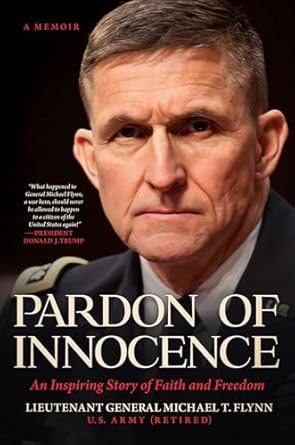
Pardon of Innocence by Michael Flynn

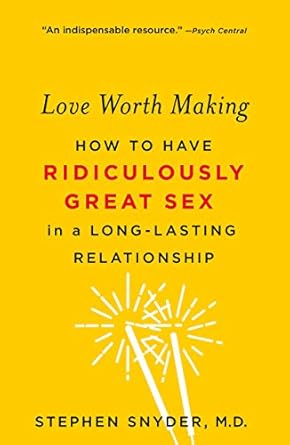
Love Worth Making by Stephen Snyder

A Conflict of Visions by Thomas Sowell

Temple Theology: An Introduction by Margaret Barker

In It Together by Janci Patterson

The Mythmakers by John Hendrix

Books that I DNFed

  • The Mom Test by Rob Fitzpatrick
  • Goliath’s Curse by Luke Kemp
  • So You Want to Start a Podcast by Kristen Meinzer
  • Write a Must Read by AJ Harper
  • The Big One by Michael T. Osterhom and Mark Olshaker
  • AI Needs You by Verity Harding
  • Why Nations Fail by Daron Acemoglu and James Robinson
  • Women’s Anatomy of Arousal by Sheri Winston
  • The Culture of Narcissism by Christopher Lasch
  • Understanding the Signs of the Times by Donald W. Parry and Jay A. Parry
  • Shadow of the Conqueror by Shad M. Brooks