

Can violence ever be righteous? That is the central question behind In the Wake of Zedekiah Wight, a religious science fiction story about vigilante justice, human trafficking, corrupt empires, and the terrible cost of refusing to compromise with evil.
Zedekiah Wight is not a safe hero, and he is not meant to be. He is a prophetic privateer in a fallen galaxy, a man whose enemies call him a pirate, a terrorist, and a madman—but whose violence is aimed at the powerful men and institutions that have made themselves untouchable.
The idea for Zedekiah Wight came partly from my love of Robert E. Howard’s Solomon Kane stories, and partly from my frustration with the lies, hypocrisy, and gaslighting of the modern world. I wanted to take the idea of the grim, scripture-haunted avenger and put him in a far-future space opera setting: a galaxy of corrupt governments, predatory banks, human traffickers, decadent elites, and ordinary people who have learned to look away. Zedekiah became my answer to that world—a man who refuses to call evil good, even when everyone else does.
In In the Wake of Zedekiah Wight, righteous violence is not clean, polite, or comfortable. The story begins with Captain Victor Andrecek and his crew discovering crucified bodies drifting through space in EVA suits, each one fixed to a repurposed missile and marked with scriptural warnings from Isaiah. At first, Zedekiah appears monstrous: a religious madman leaving medieval punishments in the middle of a high-tech galaxy.
But as the story unfolds, Andrecek begins to see that Zedekiah’s violence is not random cruelty. Zedekiah does not kill ordinary crewmen for convenience. He does not murder indiscriminately for loot. His targets are the people responsible for trafficking, corruption, slavery, and institutional evil—the crime lords, financiers, and powerful collaborators who profit from human suffering while hiding behind layers of respectability.
That distinction matters. The story is not asking readers to enjoy violence for its own sake. It is asking what justice looks like when every official channel has been compromised. When Andrecek discovers that the sealed cargo he nearly smuggled was actually a shipment of cryofrozen slave girls, the moral center of the story snaps into focus. Zedekiah’s crusade is brutal because the evil he fights is brutal. His violence is terrifying because the system he opposes has made peaceful accountability impossible.
And yet, the story also draws a hard line between justice and revenge. When Andrecek finally has Saif Al-Da’ib in his hands, he wants to kill him out of rage, guilt, and hatred. Zedekiah stops him. “Revenge is not justice” becomes the key to the whole theme. Righteous violence is not anger baptized by a good cause. It must be restrained by moral purpose, aimed at the guilty, and guarded against the soul-destroying pleasure of bloodshed.
The theme of righteous violence resonates because most of us know, deep down, that evil is not always defeated by polite systems and respectable institutions. Sometimes the people who write the laws are the ones breaking them. Sometimes the people who claim to protect the innocent are the ones selling them. In the Wake of Zedekiah Wight gives voice to the anger we feel when justice is delayed, denied, or inverted—but it also warns that anger alone is not enough. If justice becomes revenge, the avenger risks becoming another monster in a galaxy already full of them.
This theme matters to me because I believe there comes a time when the lies, hypocrisy, and gaslighting become too much to bear. At some point, a person has to take a stand. Zedekiah Wight is that stand for me. He is politically incorrect, scripture-soaked, uncompromising, and dangerous—but he is also a man who sees evil clearly and refuses to make peace with it. In a world where so many people are pressured to stay quiet, look away, or call darkness light, I wanted to write a character who does not flinch.








Explore my other standalone books here.
Return to the book page for In the Wake of Zedekiah Wight.
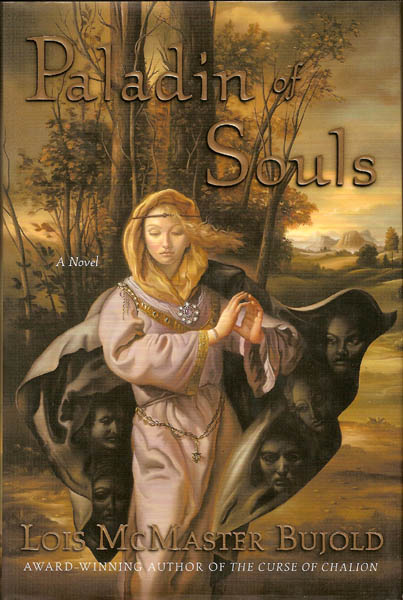
Paladin of Souls by Lois McMaster Bujold
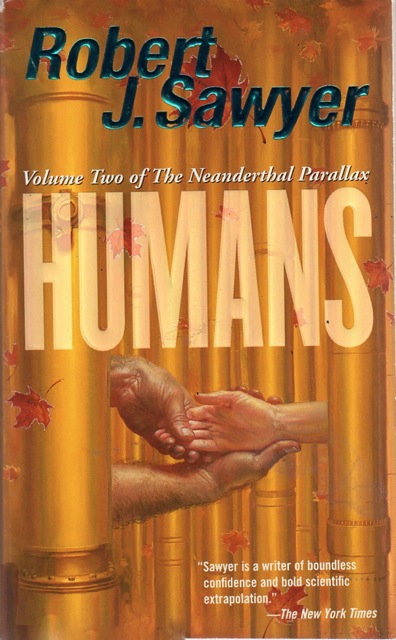
Humans by Robert J. Sawyer

Ilium by Dan Simmons
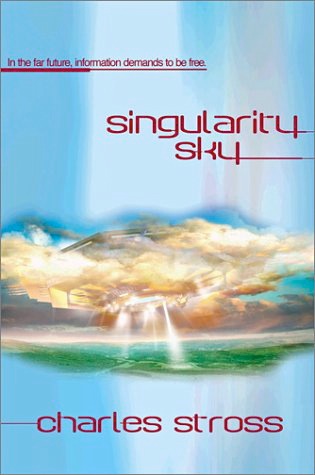
Singularity Sky by Charles Stross
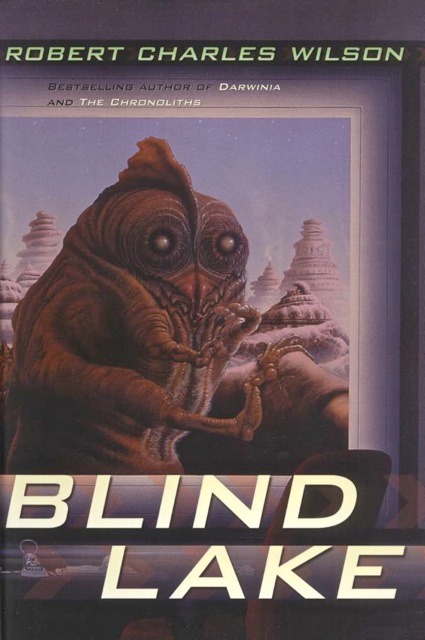
Blind Lake by Robert Charles Wilson
This was a decent year for science fiction (though I have to say, Fitzpatrick’s War came out in 2004, and it never got nominated for a Hugo at all, even though it’s far superior to any of the books that were nominated in 2004 or 2005). With that said, there’s really only one book on this ballot that I can positively vote for, and even that one isn’t Robert Charles Wilson’s best work.
I found it difficult to get into Paladin of Souls as a standalone, so I decided to start with the first book of the series. And I was enjoying it a lot, until midway through when the main character casually talks about how he was sexually initiated by a pederast, as the boy in a man-boy-love relationship. And while yes, I know that the ancient Greeks engaged in that sort of pederasty and though it was totally normal… but I don’t. So even though it was more of a passing worldbuilding detail, I decided to take a page out of that old 80s cockroach Mormonad and DNF the book:

That’s the thing about Louis McMaster Bujold: she’s a really great writer, and knows how to tell a really great story, but she also has a penchant for weird sexual stuff, which she indulges in by worldbuilding a culture that finds it totally normal. In her World of the Five Gods, it’s the pederasty, and in her Vorkosigan Saga, it’s the Betans with their free love attitude toward all things sexual. When I was younger, that didn’t bother me so much, but it bothers me now, and it’s enough to make me think twice before picking up one of her books—even one of her older books.
I didn’t read Humans because I DNFed the first book, not because it was bad, but because it never really hooked me. After finding myself about 50 pages in, without really caring about any of the characters, I just didn’t bother reading any further. But the premise seems interesting, so I suppose I could be convinced to give it another go. After all, I’ve read other books by Robert J. Sawyer that I enjoyed (in fact, I’m reading one right now).
I really wanted to like Ilium, because Dan Simmons’s Hyperion Cantos was so amazingly good. However, I found myself vacillating between being totally confused about the basic premise of the book (it’s like Homer’s Iliad… on another planet? But with real Greeks and Trojans? In a simulation, I guess?) and disgusted with the main character, who introduces himself in chapter 1 by talking about how he did the jailbait wait for this underage girl he really had the hots for, and describing her pubic hair in vivid detail the first time he saw her naked.
As for Singularity Sky, I didn’t bother reading it, because I’ve read enough Charles Stross to know that can’t stand his particular brand of edgy cyberpunk nihilism.
Which brings me to Blind Lake. It was a good book, and I enjoyed it quite a lot, though it fell a little too far on the “huh?” side of weird. I really like Robert Charles Wilson’s writing, and I’m slowly working through his entire body of work. His Spin trilogy is some of the best science fiction I’ve ever read, though I think The Chronoliths is my favorite book of his so far. Blind Lake is good, but I think I liked Mysterium better, though that also was a bit of a “huh?” novel at parts. Mostly, I think the Big Lie in Blind Lake was a little too big to swallow, and not quite as flashy or as interesting as some of his other ones, like Spin and The Chronoliths. But the story that followed from it was on par with his other books.
Two thousand four was one of the last years where I can honestly say that I wouldn’t vote No Award over any of the books on the ballot. The only other year since then that I can say that of is 2013—every other year has been a contest between the stuff that’s actually good, and the stuff that’s downright terrible. At this point, it seems like the increasingly small and irrelevant clique that votes in the Hugo Awards has gone completely off the deep end, which is why I’ve already posted my “How I Would Vote Now” post for 2026, even though the awards haven’t happened yet.
Apparently, there’s a lot of noise being made online right now by writers (and some readers) who are furious that anyone might us an AI tool in their writing process. I wouldn’t know, because I’m not on social media anymore, and I just haven’t had the time to follow that sort of ragebait nonsense. But this guy has a very well-reasoned take on the whole AI controversy, at least how it applies to books and writers. Worth hearing him out, especially if you’re a writer.

The Flag & The Cross by Philip S. Gorski and Samuel L. Perry

The First Fast Draw by Louis L’Amour

Ethnic America by Thomas Sowell

Wired for Intimacy by William M. Struthers

The Key-Lock Man by Louis L’Amour


Mystic Warrior by Tracy & Laura Hickman


Procrastination Proof by Jon Acuff


The Violent Take It By Force by Matthew D. Taylor

The Invisible Gorilla by Christopher Chabris and Daniel Simon

Exvangelical and Beyond by Blake Chastain

Blind Lake by Robert Charles Wilson
The biggest reason why most of my fellow members of the Church of Jesus Christ of Latter-day Saints lose their faith and leave the church has to do with issues of church history. So I thought it would be interesting to tackle some of those issues, explaining how I’ve personally wrestled with them and why I still believe.
One of the biggest issues of church history is the priesthood ban, where blacks were not allowed to be ordained to the priesthood, or receive temple ordinances, until the ban was lifted with Official Declaration 2 in 1978. Is God racist? If not, why was His church racist for so long? How can this possibly be God’s true, restored church if it had such a blatanly racist policy for so long?
For a long time, this question sat on my shelf of religious questions that I could not answer. In LDS parlance, it’s common to use the term “shelf” to refer to how we set aside the things that might cause us to doubt or lose our faith, choosing instead to focus on our testimony or spiritual witness. Often, when people leave the church, they say their shelf just got too heavy and broke.
I’ve still got a handful of things on my shelf. I suppose that’s common for all people of faith, not just Latter-day Saints, since who can possibly have an answer for everything? But for me, this particular issue—blacks and the priesthood—is no longer one of them, because I’ve found an answer that fully satisfies me. Whether or not it satisfies you, I don’t know, but if you’ve wrestled with this issue, I think it’s worth considering. And even if you’re not LDS, I think you’ll find it interesting, because it’s made me rethink a lot of things about racism, religion, and American history.
I’ve been reading a lot about Christian Nationalism recently. If you’re conservative, you’re probably bristling a little at that last statement, since “Christian Nationalist” seems mostly to be a polemic term invented by the left to slander their opponents, just like how they call everything “racist” (or “white supremacist,” since the word “racist” has lost its power through overuse). That’s certainly what I used to believe. And while I do think there’s some truth to that criticism—certainly the left will say anything to slander Christian conservatives of any stripe—at the same time, there really is a movement on the right to blend politics with religion. And this Christian Nationalist movement (which also overlaps with the :Seven Mountains Mandate” and the “New Apostolic Reformation”) is supremely anti-Mormon, as we saw in the far-right evangelical response to the Grand Blanc mass shooting of the LDS chapel there. So while yes, we have a common enemy with conservative Christian Nationalists on the woke left, the next big front in the culture wars is going to be all the other Christians vs. the Latter-day Saints. Which is why I’ve been reading up so much on Christian Nationalism, since I want to be prepared.
I will admit, it can be hard to separate the signal from the noise, since most of the recent books on Christian Nationalism are attacking the movement from the woke left. But while I do find it hard to take accusations of racism seriously in today’s environment (case in point, all the drama surrounding the recent Karmelo Anthony murder trial), I do think there is a genuine racial element underlying the modern American Christian right. So please hear me out, my fellow conservatives. I’m not coming at this from a woke, white-hating, “everything is racist” approach.
From what I can tell, it all goes back to the colonial era, in the century following the English civil war. The Puritans who settled New England came from Cromwell’s faction, the “roundheads,” and the English settlers who built up Virginia and the southern colonies were mostly unlanded sons of the British gentry, who sided with the “cavaliers.” Because of this, the south was much more aristocratic, with a strong honor culture and class distinctions. Over time, as black chattel slavery replaced indentured servitude, class and race came to be synonymous: if you were black or mulatto, you occupied a much lower place in society than if you were pure white.
The United States was founded with a supreme contradiction, where our Constitution allowed for slavery while our Declaration of Independence declared that “liberty” was a God-given right. From what I can tell, the way the antebellum south rationalized this supreme contradiction was by inventing a theory of race that made blacks essentially subhuman. Yes, all men are created equal, and endowed with a right to liberty, but the darkies aren’t men like us. They’re really more like children, who need a strong, white, Anglo-Saxon pater familias to take care of them.
How does all of this tie in with Christian Nationalism? Because as the early United States experienced a series of Christian revivals (including the Second Great Awakening, which saw the beginning of the Latter Day Saint movement), the racism of the Antebellum South had a profound influence on the development of American Christianity. We can see this in the way that the major denominations split in the mid-1800s into black churches and white churches. This continued through the Civil War and Reconstruction, with the black churches and the white churches developing their own distinct cultures—and in some cases, their own distinct doctrines and practices too.
This distinction between black Christian churches and white Christian churches continues today, with measurable differences that show up in political polls and studies of both groups. Which completely blows my mind, since within the Church of Jesus Christ of Latter-day Saints, there really isn’t a distinct white subculture separate from the black subculture. Indeed, the biggest cultural differences for us are between the “Utah Mormon” subculture and the wider church, or perhaps between American LDS and non-American LDS.
Why don’t we have this same undercurrent of racial tensions and divisions that exists within mainstream American Christianity? From what I can tell, it’s largely because of the priesthood ban.
A little history, for those of you who may be unfamiliar. Within the Church of Jesus Christ of Latter-day Saints, all devout men who are in good standing with the church are ordained to the priesthood. It’s entirely a volunteer organization, at least on the local level; bishops (equivalent to pastors/priests) and stake presidents (equivalent to senior/regional pastor and/or bishop) are unpaid, and serve from the local congregation usually for about 3-5 years before being released and returning to the pews. In the 1830s, Joseph Smith ordained several black male converts to the priesthood, but in the 1840s and 1850s, Brigham Young established a policy of denying the priesthood based on the member’s race. This policy, known as the priesthood ban, continued until 1978, when Spencer W. Kimball received the revelation that was canonized in the Doctrine and Covenants as Official Declaration 2, which extended the priesthood to all male members of the church in good standing, regardless of race.
Why did Brigham Young enact the priesthood ban? Was he racist? Did he make a terrible mistake? Before we judge him too harshly, let’s consider a counterfactual where the priesthood ban never happened, and Brigham Young continued to ordain black converts just like Joseph Smith did.
With racial attitudes being what they were in the United States in the 1840s and 50s, most white members of the church would not have accepted a black bishop to minister over them. Therefore, as more black converts joined the church, they would probably start to form black wards and stakes—just like how all the other Christian churches were splitting into black churches and white churches. Over the course of the next century, these black wards and stakes would form their own distinct subculture, and the racist attitudes of the white wards and stakes would become institutionalized.
Would the Civil Rights movement of the 20th century led to an integration within the church? Perhaps, but the black and white subcultures probably would have endured. And with the race relations have become so heated in the last fifteen years, with the George Floyd riots and the rise of Black Lives Matter that very well could have led to an internal schism within the church—at precisely the time when missionary work in Africa is experiencing such phenomenal growth.
Imagine an alternate universe where the black half of the Church of Jesus Christ of Latter-day Saints is splitting off from the white half, because the black members are demanding to have a black prophet and a quorum of black apostles. Or conversely, imagine an alternate universe where the church never fully integrated, and the white membership is splitting off from the main body of the church because of all these black African general authorities that have recently been ordained. It would be an absolute nightmare—and it’s not hard to imagine, because that’s basically the state of mainstream American Christianity today.
Put simply, as unfortunate and as racist as the priesthood ban was, I believe it was a necessary policy, given the racist attitudes common to members of the church at that time. It was unfortunate, but we simply were not ready to embrace our black brothers in that way—even though the Book of Mormon explicitly states that God “inviteth them all to come unto Him… black and white, bond and free, male and female…” (2 Nephi 26:33) But God had the foresight to know what would happen to His church, so He inspired Brigham Young to enact the priesthood ban, even though in an ideal world it would not have been necessary. Thankfully, we’ve repented since then, and are now fully integrated as a church in a way that would not have been possible had we split into a black church and a white church, like so many other denominations.
That’s my own personal take on it, at least. Which isn’t necessarily a comfortable answer, given how it gives rise to other questions like “how could God allow generations of black saints not to receive their temple blessings because of the racism of their brothers and sisters in the church?” and “how was it right that the church accomodated the racism of its members for so long?” Clearly, it’s not as simple as “the church is true, the book is blue, and God’s Mormon.” But neither is it as simple as “Brigham Young was a racist, therefore he wasn’t a true prophet and the church isn’t true.” Which is why I can say with confidence that this is no longer an issue on my personal “shelf.” The answers might not be comfortable, but the truth often isn’t comfortable either. If we had a pat answer to this difficult question, that would be a red flag too.
Of course, all of this leads to some other interesting questions, such as whether the main reason we don’t ordain women or practice gay marriage in the temple is because we’re just not ready for that as a church. But I’ll have to leave my musings on those subjects for some other time.
The Church recently put out this really fascinating video, discussing the rise and impact of artificial intelligence from a religious perspective, and detailing some practical guidelines for how and how not to use the new technology. Elder Gong is a member of the Quorum of the Twelve Apostles, the second highest governing body in the Church beneath the First Presidency. If you’re interested in AI, it’s worth watching, even if you’re not a member of the LDS church.
The biggest practical takeaway I took from this is that AI should not be the first thing you do, or the last thing you do. He was specifically talking about preparing church talks and Sunday school lessons, but I think it applies just as well to writing. If you start your story by having AI come up with the outline, it will never truly be your project, because it lacks your vision in its bones. Similarly, if you run the final draft through some AI tools and blindly accept all changes, it’s going to smother out your voice.
Interesting stuff. Worth giving a listen.