Category: Uncategorized
August group promotions
July 2026 reading recap
Books I Finished

The Future is Peace by Aziz Abu Sarah & Maoz Inon


How to Disagree Better by Julie Minson

The Trail to Seven Pines by Louis L’Amour

America’s Expiration Date by Cal Thomas

Jews vs. Rome by Barry Strauss

Knight of Shadows by Roger Zelazny

Jesus & John Wayne by Kristin Kobes Du Mez

High Lonesome by Louis L’Amour

How to Write Bestselling Fiction by James Scott Bell (Great Courses)


The Changing World Order by Ray Dalio

The Invisible Coup by Peter Schweizer

The Technology Trap by Carl Benedikt Frey
Books I DNFed
- The Forge of God by Greg Bear
- You Can’t Take it With You by Messie Condo
- Mystic Quest by Laura & Tracy Hickman
- Terror, Love, & Brainwashing by Alexandra Stein
- How to Write Romantasy by Jenna Marci
- The Avatar by Jonathan Cahn
- Crafting Novels and Short Stories by Readers Digest
- The Psychology of Christian Nationalism by Pamela Cooper-White
- The Hidden Tradition of the Kingdom of God by Margaret Barker
- Remake by Connie Willis
- How to Defend Yourself Against Alien Abduction by Ann Druffel
- Calculating God by Robert J. Sawyer
- Crazy Like Us by Ethan Watters
How I Would Vote Now: 2002 Hugo Awards (Best Novel)
The Nominees
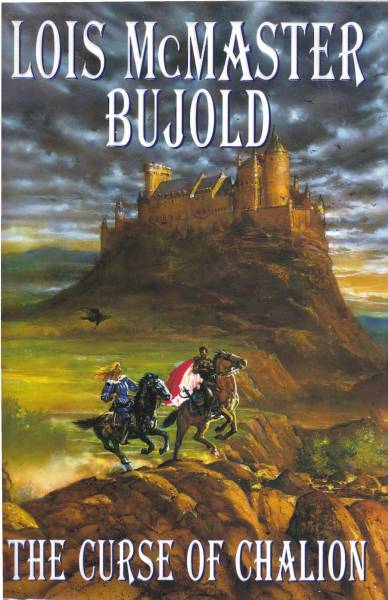
The Curse of Chalion by Lois McMaster Bujold
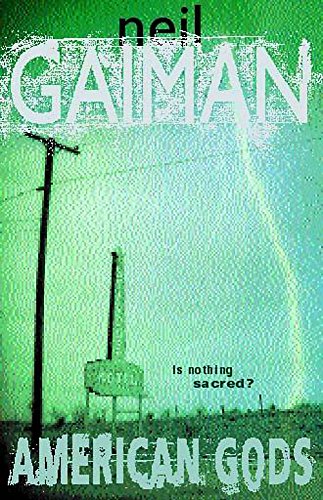
American Gods by Neil Gaiman
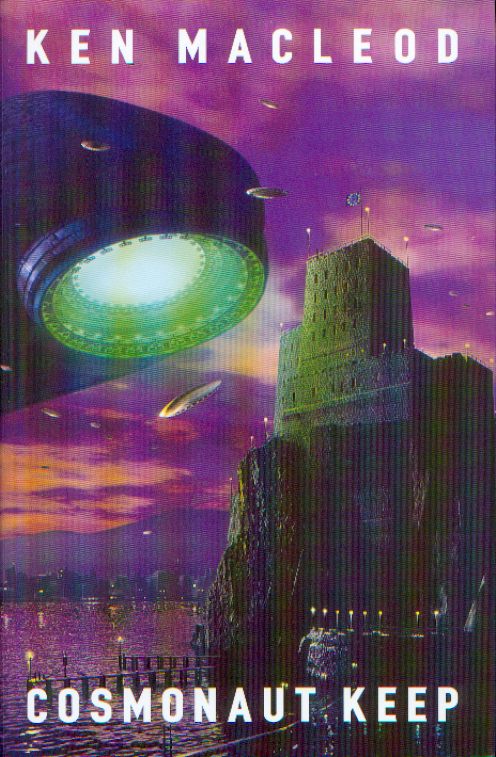
Cosmonaut Keep by Ken MacLeod
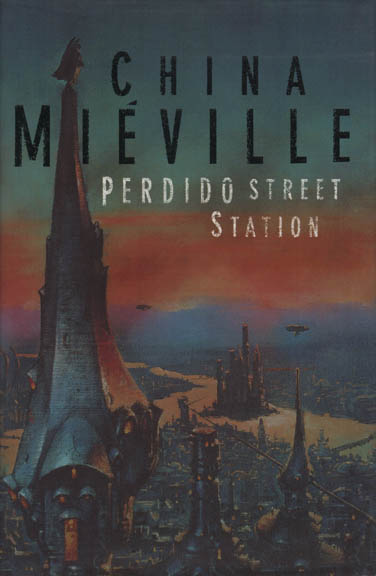
Perdido Street Station by China Mieville
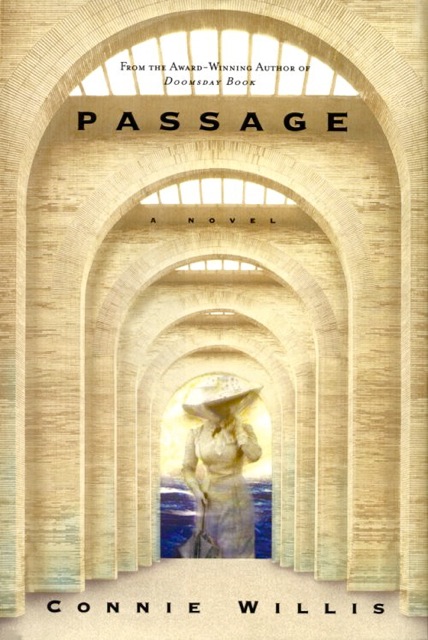
Passage by Connie Willis
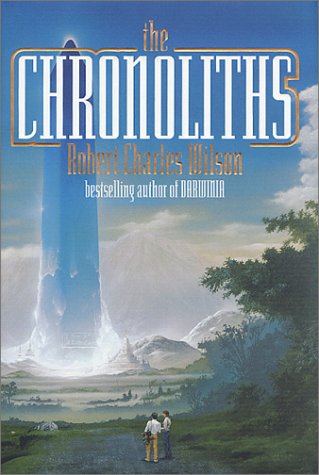
The Chronoliths by Robert Charles Wilson
The Actual Results
- American Gods by Neil Gaiman
- The Curse of Chalion by Lois McMaster Bujold
- Passage by Connie Willis
- Perdido Street Station by China Mieville
- The Chronoliths by Robert Charles Wilson
- Cosmonaut Keep by Ken MacLeod
How I Would Have Voted
- The Chronoliths by Robert Charles Wilson
Explanation
I read American Gods and enjoyed it at the time, but that was before Gaiman’s numerous sex scandals came to light. The man is a creep, and probably a rapist—and knowing that now, so many of the darker, creepier things in American Gods make more sense. Like the scene where a god disguised as a prostitute consumes a John completely through her vagina. Or where an Arab cab driver and his (Arab?) passenger go from driving in the cab in one scene, and then mutually fellating each other in the next. Weird sex stuff that seems to come out of nowhere.
So that’s why I can’t affirmatively vote for this book—and honestly, it’s borderline under No Award as well, just for the extreme content. But I did enjoy it at the time I read it, when I was less sensitive to this sort of thing. So I’ll let it pass above No Award.
I’ve talked about Bujold’s Chalion series elsewhere. In a lot of ways, it’s a really excellent fantasy series—the sort of thing that would normally be right up my wheelhouse. But midway through the first book, the main character casually drops that when he was coming of age, he was in a man-boy sexual relationship with a pedarast, and that in this world, that sort of thing is normal.
Yes, I know that this is historically accurate to things like ancient Greek and Macedonian culture, but still, it was enough to throw me out and make me DNF the book. After all, even if I have a plate of the world’s most delicious brownies right in front of me, I’m not going to partake if there’s also some dog shit mingled with the pile.
More weird sex stuff in Perdido Street Station was what made me DNF that one. The first scene is basically an explicit sex scene which, though fairly tame and vanilla as far as sex scenes go, was still way too early and way too explicit for me. Also, midway through, we learned that the girl was actually an animal of some kind, if I remember correctly. Or maybe a shapeshifter? It’s been so long that I can’t remember.
I started Cosmonaut Keep, but DNFed it because the first chapter didn’t really hook me or hold my interest, and I could tell early on that it was going to turn into political message fiction. Skip.
Passage also failed to hold my interest, though it did tip me off to Connie Willis’s formula. First, she chooses an area of history to study, preferably with a little bit (but not too much) of controversy. Then, she studies the heck out of it, until she comes to her own conclusions as to which side (or which historian) is right, and which is wrong. Then, she slaps a plot and some characters together, where the good guys represent the views she agrees with, and the bad guys represent the views she disagrees with. She writes it very beautifully, but also does her best to throw in every. Single. Thing. she researched over the course of the project, which is why her books are so massively huge. After all, it’s hardly ever the story. And the reason she wins so many awards (besides how genuinely charming and affable she is in person) is because her views align almost perfectly with the post-WWII neoliberal consensus. And since the people who vote for the Hugos are all so thoroughly blue-pilled, she’s practically one of their prophets.
Which brings me to The Chronoliths by Robert Charles Wilson. I am 99% sure that I would disagree with almost all of his politics, but I frankly don’t care, because he knows how to write a damn good story without any of the crappy message fiction we get so often from leftist writers. I am slowly reading through all of Wilson’s books, and so far, I think The Chronoliths is his best. The premise hooked me from the first page, and kept me on the edge of my seat right up to the very end. It also kept me guessing until the end, when it all came together in an enormously satisfying way. An amazing book, and probably in my top 5 of all Hugo nominated books—right up there with Dune, Ender’s Game, and Hyperion.
“…or was it God who fed me?”
I’m not even Muslim, but I love this video so much. The poor imam!
Interesting breakdown of current fantasy subgenres
The YouTube algorithm recommended this to me, and I found it interesting. Made me want to try my hand at some portal fantasy, or perhaps some progression fantasy. (But I don’t think I could write straight-up litRPG. I’m just not enough of a gamer.)
How I Would Vote Now: 1988 Hugo Awards (Best Novel)
The Nominees
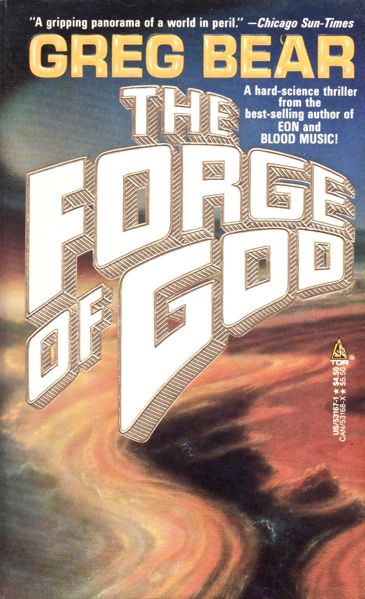
The Forge of God by Greg Bear
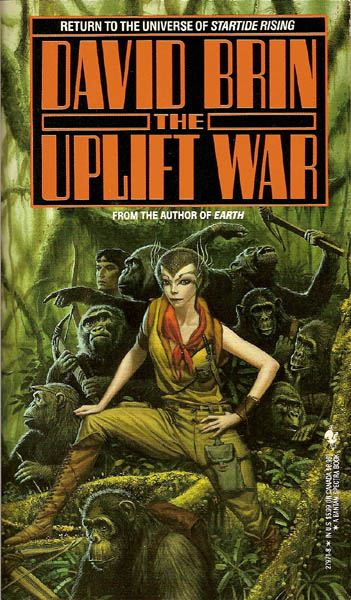
The Uplift War by David Brin
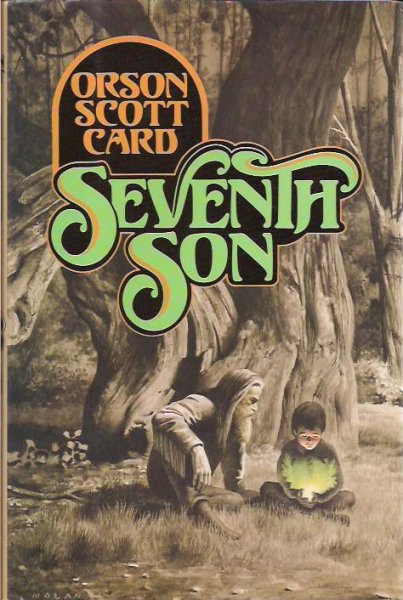
Seventh Son by Orson Scott Card

When Gravity Fails by George Alec Effinger
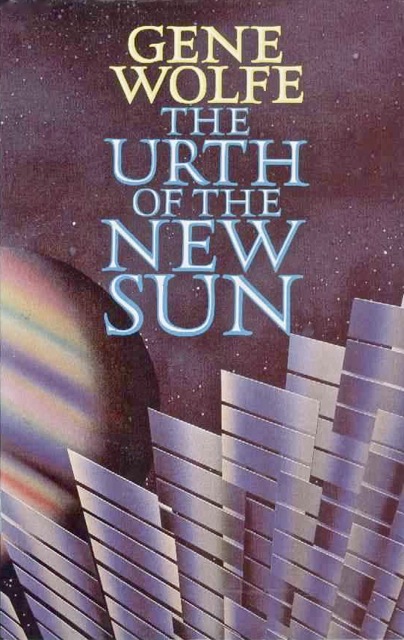
The Urth of the New Sun by Gene Wolfe
The Actual Results
- The Uplift War by David Brin
- When Gravity Fails by George Alec Effinger
- Seventh Son by Orson Scott Card
- The Forge of God by Greg Bear
- The Urth of the New Sun by Gene Wolfe
How I Would Have Voted
- Seventh Son by Orson Scott Card
Explanation
This wasn’t a terrible year for me. With that said, there’s only one book I can positively vote for, and that’s Orson Scott Card’s Seventh Son, the first book in his Alvin Maker Saga—and after all these years, it looks like he’s finally releasing the last book in the series! See, George R.R. Martin? It’s not that hard.
Card likes to play with a lot of Mormon themes in his books, and the whole Alvin Maker series is interesting because it’s basically the story of Joseph Smith in an alternate history America where magic is real and the United States never actually formed. So all of the different European colonies, some of which have achieved quasi-independence, are all vying against each other, while the Indian nations are using their magic to drive the white man out (or build an Indian New Jerusalem, though that doesn’t come into play until the later books). But the guy at the center of it all is this seventh son of a seventh son, which basically makes him the magical chosen one. And he’s basically Joseph Smith.
Card is often hit or miss for me. I didn’t enjoy his Homecoming series as much, because it’s basically the Book of Mormon in space, except he took the plot of the Book of Mormon and not much else, and tried to force it too much, to the point where it was way too on the nose. There were lines of dialogue that were almost line for line identical to the Book of Mormon, except without the deeper spiritual significance, and that turned me off. But hey, it was still way more interesting than most of the sci-fi stuff that wins the Hugos these days.
The Alvin Maker series, on the other hand, is much more subtle and nuanced with the Mormon elements—not on the nose at all. So I enjoyed Seventh Son, and plan to read the rest of the series, including the final book when it comes out. It’s good stuff. Kind of similar to Dave Butler’s Witchy Eye, if you’ve read that too. Except with a fantasy Joseph Smith.
As for the other books: I didn’t read The Urth of the New Sun, because I couldn’t really get into the first book. Everyone says Gene Wolfe’s writing is some of the best, but that book was just too macabre for my sensibilities, so I DNFed the book and the series. But I might be willing to try it again, with a strong enough recommendation. There weren’t any overt content or political issues that made me choose to skip it.
The Uplift War is also a series that I DNFed with the first book. I got about halfway through Sundiver before I gave up on it. The thing that really got to me was David Brin’s dogmatic atheism: basically, after first contact, all religions have been proven false, so everyone who still holds onto some religious faith is an obvious crackpot or wacko, according to the author. Which really just shows that Brin is the kind of atheist who hates religion because he doesn’t understand it.
Would first contact with an intelligent alien species send shockwaves through the religious world? Yes, but it wouldn’t necessarily prove the non-existence (or conversely, the existence) of God. In fact, it would actually confirm the truth of some Latter-day Saint scriptures that explicitly state that God has created “worlds without number” and peopled them with His children.
Brin’s dogmatic atheism isn’t super explicit in these books, but there was just enough of an undercurrent there that it turned me off. After all, why should I feel obligated to read an author who’s incapable of nuance in an area of life that matters so much to me? And if he’s incapable of nuance in one area, how can I have confidence that he’ll be nuanced in other areas?
As for When Gravity Fails, I screened that one with ChatGPT and decided to skip it. Here’s what the AI said:
🔞 Explicit Content
Graphic Violence & GoreProtagonist encounters brutal, explicit violence: victims are mutilated, tortured, including scenes involving child and adult victims.
Strong Language
Abundant profanity—including frequent use of the F‑word—used naturally to reflect the raw, urban setting.
Sexual & Cybernetic Body Mods
Includes prostitution, sexual violence, and explicit sexual interactions. Characters frequently undergo body modifications: gender swaps, personality “moddies,” and cosmetic changes central to character and plot.
✊ Progressive & Social Themes
Gender Fluidity & IdentityCyberpunk tech enables characters to alter their gender, identity, and personality, challenging fixed notions of self.
All of those things are pretty bad, but if the only issue was violence against children, that would still be enough for me to give it a hard pass. Ever since I became a father, I do not do violence against children anymore. Not at all. No.
Which leaves The Forge of God. I really wanted to like this book—truly, I did—but after 200 pages, I just had to give up. It’s got a really good premise, though: basically, two different kinds of aliens land simultaneously, in the United States and in Australia, but the ones in Australia claim that they are there to usher in a new age of great prosperity for humanity, while the one in the US says that the other aliens really want to consume and destroy the Earth. And when the humans confront the aliens in Australia with what they’ve learned from the other alien (who dies pretty early on), the Australian aliens all self-destruct. And then things start to get weird.
It’s a really great premise, but unfortunately the whole story is basically an hour by hour, blow by blow of how the government bureaucracy reacts to and handles the first contact event. Which means that almost all of the characters are government bureaucrats (except for a random sci-fi author, who inexplicably becomes an advisor to the president after crash landing his single engine plane in a restricted zone—author insert much?) and most of the “action” of the novel is really just filing paperwork or passing things up the chain. I kid you not.
The premise alone sustained me for 200 pages, but after that I decided I couldn’t stand the bureaucracy. If the book had been cut to half the length, it would have been a better book.
Adam and… Steve?
My most favorite banned commercial of all time!
Why AI isn’t going to take your job
…but someone who can do it with AI might.
I’ve heard a lot of different takes on how AI is (or isn’t) going to lead to mass unemployment and a total collapse of the economy. Almost all of it is either sensationalist doom-porn, or riddled with unquestioned assumptions and lazy thinking. But this guy brings up some really interesting points, and seems to have a better answer on it than most.
Of course, we won’t really know for sure until this all plays out. And I do know some programmers who really have lost their job due to AI-driven downsizing, so depending on the career path, it’s still a very valid concern.
As for how this will all play out with books and writing, I’m not too concerned. I do think there’s a fair chance that in the long-term, most successful writers will use AI in their creative process. But the tools really aren’t anywhere close to completely replacing authors—not even the frontier models like Fable and Sol. I say that as someone who writes with AI, and who has generated and read more than a million AI words in the last 12 months. And even if the models do become that good, writing is more similar to flying and airplane than operating an elevator. I don’t think AI will ever be able to fully replace an author’s vision and voice.
Goal!
Saw this, though it was cute.
Congrats to Spain for winning the World Cup!