LTUE, current WIP, and other assorted updates

So even though I haven’t been too good about blogging this past month, I have been busy writing. Besides the short story in my last post, I’ve been steadily revising Star Wolf, formerly titled HEART OF THE NEBULA. It took me a while to get back into this story, but I’m fully involved in it now and it’s coming along nicely.

So far, I’ve only been revising through about 2k words per day. I’m hoping to push that up to at least 4k words, though, which means that I should finish it in the first week of February. I definitely want to get it done before LTUE, because there are other projects I’m anxious to get working on, especially Sons of the Starfarers. I want to launch that series this summer, but I still have to write books 2 and 3 … gah! Must … write … faster …

In other news, I recently got my schedule for LTUE. It looks like I’ll be on 5 panels this year, including on one with Eric James Stone and Dave Farland. Am I feeling imposter syndrome right about now? Why, yes, thank you for asking. :p In any case, here’s what the schedule currently looks like:

Thursday, February 13, 2014

4:00 pm — Being a Foreign Speaker
6:00 pm — Planet Building

Friday, February 14, 2014

12:00 pm — Writing Romance

Saturday, February 15, 2014

12:00 pm — ePublishing Short Stories
6:00 pm — Starting the Next Project

I’m definitely excited for this year’s symposium! Orson Scott Card is going to be there, as well as Brandon Sanderson, Dave Farland, LE Modesitt, and pretty much all the regulars (except for Howard Tayler–I heard he’s not coming). I’ve also got a bunch of long-time writer friends who will be there, many of whom are on panels of their own. It’s going to be big this year, and definitely a lot of fun!

In other news, a couple of days after posting about my goal to travel to the Czech Republic, a job landed in my lap that seems like the perfect way to save up the money. It’s with Google Fiber, and involves escorting technicians to the various utility huts scattered throughout the city, opening the doors for them, and sitting around while they do their work. With luck, I’ll be able to get a fair amount of writing done while I’m on the clock. And even though it’s an on-call position that might only go 10 or 20 hours some weeks, I’ll be paid for the full 40 hours (and not at minimum wage).

I have no idea how the job will work out yet, but it seems like a great opportunity to save up a lot of money while still having plenty of time to write. We’ll see how it goes.

In other news, Brothers in Exile is out with my first readers right now. One of them already finished it, which kind of shocked me. If they don’t find any major problems, I’ll go ahead and write the next one, hopefully finishing it before the end of March.

Sons of the Starfarers is going to be another novella series like Star Wanderers, but I’m going to go a bit longer on the individual books, like around the 35k to 45k word range. The omnibus editions will be in groups of three, so books I-III for the first omnibus, IV-VI for the second, VII-IX for the third, etc. I’d like to go to at least nine books in this series, though it could certainly end up going longer. I only have a very loose idea of where it’s going, but it feels like nine books at least.

That just about does it. Right now, I’m up to my knees in Star Wolf, so that definitely takes priority. But I definitely want to get back to Sons of the Starfarers, so I’ll try to finish it as soon as I can. If only I was one of those writers who could knock out 10k words every day … maybe someday. In the meantime, I’ll just keep plugging along as best I can.

Later!
Looking for a new title

So I’m about a quarter of the way through the revisions for the next Gaia Nova book, currently titled Heart of the Nebula. The thing is, the story is changing a lot in the revision, to the point where that title doesn’t really make sense any more.

This tends to happen with most of my longer books. The original working title for Genesis Earth was THE WORMHOLE PARADIGM. Desert Stars started out as HERO IN EXILE, switched to WORLDS AWAY FROM HOME, then simplified briefly to WORLDS AWAY before finally settling on its current tile. Bringing Stella Home is actually the original working title for that book, but it briefly changed to MERCENARY SAVIOR before switching back again. The only novel of mine that hasn’t had two or three different titles is Stars of Blood and Glory, but that book was unusual in a number of ways.

In fact, Heart of the Nebula has already gone through one title change. It started out as “Into the Nebulous Deep,” not the most inspiring title but definitely accurate (perhaps even mildly spoilerific). I thought about changing it to “Into the Heart of the Nebula” before shortening that to the title it has now.

Anyway. For reasons I don’t really care to get into, I need a new title for this one. Here are some of the ones I’ve come up with so far:

  • STAR WOLF
  • THE LONE WOLF OF THE NEBULA
  • HOPE OF THE FREEDOM STAR
  • LEGEND OF THE FREEDOM STAR
  • EXODUS OF THE FREEDOM STAR
  • LONE WOLF OF THE FREEDOM STAR

I really like the words “wolf,” “legend,” “exodus,” and “freedom star,” but I’m not sure how to combine them in the best way. I’m kind of partial to STAR WOLF, just because it’s shortest, but LONE WOLF OF THE FREEDOM STAR has a ring to it that comes closest to what I’m shooting for.

Those are my thoughts for the moment, anyway. What do you guys think?

So what should I work on next?

Now that Star Wanderers: Deliverance (Part VIII) is published, I’m back in the position of trying to figure out what to write next.  Usually, I just do this on my own, but this time I thought I’d run it by my readers and see what you guys have to say.  Here are the options:

Heart of the Nebula — This is a direct sequel to Bringing Stella Home.  It follows James, Lars, Stella, and several new characters as they struggle to keep the Colony from falling apart following the collapse of the New Gaian Empire.  This one is mostly a space opera story, with lots of action and political intrigue.  It also explores the wolf/sheepdog analogy that Danica brought up in Bringing Stella Home, with Lars’s rebuttal.

Mercenary Savior — Another Gaia Nova novel, this one showing the origins of Danica Nova and her band of Tajji mercenaries.  I’ve got a lot of ideas for this one, though I’ve only written the prologue so far.  This is going to be a military sci-fi story, with lots of action, lots of violence, and (hopefully) a few heart-wrenching moments as well.  Danica, Roman, Mikhail, Artyom, and several of the other mercenaries will appear in this one.

Empress of the Free Stars — Yet another Gaia Nova novel, this one a direct sequel of Stars of Blood and Glory.  It brings back Princess Hikaru, now the Empress of Shinihon, and shows her struggle to ensure the safety and freedom of her people in the face of a Federation that is fast transforming into an autocratic, totalitarian empire.  Colonel Webb is at the heart of the political intrigue in this one, and the stakes are as high as they’ve ever been.

Sons of the Starfarers — This is the spinoff series I’m writing to follow up Star Wanderers.  It takes place in the same universe as the Gaia Nova novels, except a thousand years before, and will eventually show the origins of the Hameji and tie all of these books together.  This is the one I’m most excited to write, as it brings back a bunch of characters from Star Wanderers and puts them into some interesting situations.  Hopefully, it will have the same stuff that made Star Wanderers so great while adding a bit more action/adventure stuff into the mix.

Edenfall — This one is the sequel to Genesis Earth, and the second book in what will eventually become a trilogy.  Basically, about fifteen years after Michael and Terra settle down on Icaria, a military expedition arrives from Earth, shattering the idyllic life they’ve made for themselves.  They try to convince the military people that there is no alien threat, but before they can do that, the ghost ship comes back, throwing everything out of balance.  This story is mostly from the point of view of Estee, Michael and Terra’s daughter, whose whole world is changed when the other humans appear.

Lifewalker — I’ve mentioned this one only a couple of times on my blog, but everyone who’s read the first chapter tells me that they want more.  This one is a completely different project from anything else I’ve done.  It’s a post-apocalyptic tale told from the point of view of a man who lives out his natural life where everyone else is infected with a disease that kills them at age 25.  After the first chapter, the he starts down the ruins of I-15 with a bible, a bicycle, and a copy of Brandon Sanderson’s Mistborn, searching for the mythical city of light known by the forefathers as Lavegas.  Little does he know, that place is now populated by cannibals.

The Sword Bearer — An epic fantasy about an ancient brotherhood of sentient swords who pass down the knowledge and skills of each bearer down through the generations.  The brotherhood has been broken, and the few swords that haven’t been lost have driven their bearers insane to the point where they’re now amassing an army to conquer and enslave the whole world.  The only sword who hasn’t gone down that path is the one prophesied to be wielded in the final battle to defeat this great evil, but it hasn’t taken a bearer for almost a thousand years–that is, until a curious young tavern girl from the mountains accidentally stumbles upon it.

Those are pretty much all the major options.  I have a couple ideas for other books, but nothing that I’ve really started.  Even though I have my preferences, I could go almost any way depending on what you guys want to read.  So if there’s one or two that you really want me to work on next, feel free to let me know!

Resolutions and such for 2014

Yes, I know this post is a couple of days late.  Yesterday I was busy publishing Star Wanderers: Deliverance (Part VIII), though, and the day before that I was on the train, and today I had to renew my vehicle registration … enough!  On to the resolutions.

1. Publish something every 6 weeks.

One thing I really need to get better about is publishing new work.  So this year, I’m going to do my damnedest to follow a regular publishing schedule.  I don’t know what I’ll be publishing, exactly, but I have a pretty good idea, and surprisingly enough it actually works out to a lot less work than you’d think:

  • WEEK 1: SW-VIII: Deliverance (already done)
  • WEEK 7: SW V-VIII:  Tales of the Far Outworlds (the second STAR WANDERERS omnibus–basically, I just need to write the Author’s Note and get a cover, since the stories have already been written).
  • WEEK 13: Science Fiction from A to Z (a book version of last year’s A to Z blogging challenge, released just in time for this year’s A to Z, for which I’ve already thought of an awesome theme).
  • WEEK 19: Heart of the Nebula (rough draft already written, just need to rewrite/revise).
  • WEEK 25: Sons of the Starfarers Book I: Brothers in Exile (already written).
  • WEEK 31: Sons of the Starfarers Book II: ??? (this one I still have to write).
  • WEEK 37: Sons of the Starfarers Book III: ??? (also need to write, but both of these are novellas so they shouldn’t take too long).
  • WEEK 43: Open slot–maybe I’ll publish Lifewalker in this slot.
  • WEEK 49: Sons of the Starfarers Omnibus I-III (just in time for Christmas).

Of course, this is all just a tentative schedule–I could definitely change it depending on which stories you guys want me most to write.  The point is that it’s doable–surprisingliy doable.  I might even break the schedule once or twice to release a surprise project, depending on how things go.

Then again, I might need the extra writing time in order to finish my second resolution, which is:

2. Write at least 2 short stories per month and submit them to traditional markets.

In other words, Operation Short Blitz.  Since I’ve already outlined my goals and objectives for that one, on to resolution 3:

3. Read a book every week

Or at least 50 books before the end of the year.  This is a recurring one that I’ve never quite been able to do, but I really need to read more, so I figured I’d bring it back.  It’s also a good excuse to get more active on Goodreads, which I’ve been meaning to do for some time.

Now for some non-writing related resolutions:

4. Keep a detailed weekly personal journal

I’ve kept a journal off and on since 2nd grade, but in the past few years I’ve been really lax about it.  My excuse was that the blog counts sort of as a journal, but that’s not really true, because there are things in my life that I would never want to talk about publically on this platform.  At the same time, I’m not a teenager anymore–I don’t need to keep a super secret diary stashed beneath my mattress in order to cathartically vent my hormones and thus maintain my sanity.

So for this year, I’m going to completely redo the way I do journal writing.  Instead of free-writing, I’m going to keep it deliberately structured.  Instead of writing it only for myself, I’m going to write it for the benefit of my future kids and grandkids.  I’ll include some private stuff in there, but nothing I wouldn’t mind being read years later.

Honestly, I still haven’t figured out exactly what I’m going to do for this goal, but I plan to at least write in it every week.  In any case, it makes for a good Sunday project–not just writing in it, but figuring out exactly where I want to go with it.

5. Get to the point where I can run a mile ever day.

Writing is a sedentary activity, and I definitely need to get out and be more active.  My grandpa got fit and lost a lot of weight later in his life, and one of the things he told me that was key was to run a mile a day.  Currently, I can’t quite do that–I tried that about a month ago, and I pulled something on the third day that put me out for about a week.  But it’s definitely something I can work up to.

My brother-in-law is a runner, and he advised me to start by walking.  Walk at least a mile a day for a week, then the next week walk two, then the week after that walk for most of the days but throw in a running day somewhere in there.  Gradually work up until you’re running more than walking, then soon enough you’ll be running every day.

So that’s what I’m going to do.  I’m starting out with the two-mile walks, since the one-milers are way too easy.  Maybe I’ll hike the Y a few times before I start running, just to build up muscle strength.  And when the snow melts, I’ll definitely be climbing some mountains.

What I’d really like to do is get a treadmill desk.  Those things are expensive, though, and there isn’t much room for them where I’m currently living.  In any case, the best resolutions are the ones that don’t require a huge monetary investment or a massive shift from your current lifestyle, since those are the ones that are most likely to get done.

And just for the heck of it, here’s a crazy impossible stretch goal:

6. Finish hiking the 7 peaks.

Those of you who have been following me for a while probably remember that last year, I made only one resolution, and that was to climb four of the seven peaks here in Utah county.  Well, I only got to two of them: Spanish Fork Peak and Santaquin Peak.  And guys–they were amazing!  Real adventures.  Santaquin peak especially was just spectacular–without a doubt, the most perfect hike of my life.  But then things got busy and I never got around to hiking the other two, blah blah blah lame excuses.

So this year, I want to revisit that goal, and since four is a lame number to stop at, I figure I’ll just shoot for all seven of them.  It’s going to be tough–Cascade Mountain is a beast, and from what I’ve heard, Lone Peak has some cliffs that are especially harrowing–but by golly, I’m going to do it!

And if I hike Mount Timpanogos this year, maybe I’ll finally break the curse that is keeping me trapped here in Provo.

In any case, those are my resolutions for 2014.  What are yours?

Revisions, X-COM, and working on my short game

So I finished putting together the revision notes for Heart of the Nebula on Monday, and started working on those today.  It was interesting to compare the original rough draft (which was completely broken) with the incomplete revised version that I’d worked on about a year ago (which was also completely broken, but in different ways).  Fortunately, even though both drafts are train wrecks, they’re not unsalvageable.  In fact, I think there’s a pretty good story underneath it all.

Usually when I write a big novel like this, the first draft works pretty well up until about the middle, then either it falls apart or the scenes start getting out of order, or both.  In the first revision pass, I take out all the stuff that isn’t working, but struggle to come up with new stuff to replace it.  Usually, I’m just recycling the old stuff, and the result ends up a bit out of place and watered down.  On the third pass, I say “screw it” and come up with a bunch of new stuff, which helps me to see where the story is actually going and arrange the scenes in the correct order.  It’s not always as straightforward as that, but that’s the pattern.

In fact, I’ve learned a lot of interesting things from this revision, which I’ll probably save for another blog post when my thoughts on this are a lot clearer.  The big takeaway is that I need to clearly separate the tasks that should be done in my creative mind (like writing new words and coming up with story) and the ones that should be done in my critical mind (like mapping out what to cut and what to keep or recycle).  But more on that later.

About a week ago, I got X-COM: Enemy Unknown on a Steam sale and I’ve been playing it like crazy.  It’s a really awesome game!  I love the complex tactical thinking and how it really puts you there on the ground with your troops.  And then, an enemy pops out of nowhere, flanks you, gets a critical hit, and the next thing you know your favorite soldier who you’ve been meticulously leveling up over the last thirty missions is DEAD!  NOOOOO!!!

So yeah, that’s been eating up a lot of time–probably too much of it, to be honest.  But I’m still working on various writing projects, including a plan to improve my short game.  I put together a spreadsheet of all the major short story markets in the speculative fiction field, and ranked them in order of preference.  My plan is to write a short story every week (or at least twice a month) and put it on submission, going right down the line until I’ve exhausted all the appropriate markets.  No revisions, no holding stuff back because I think it’s not good enough–just writing and submitting until I’ve mastered that side of the art.

This is something I’ve been wanting to do for a long time, but I’ve been holding back because … well, I don’t know why I’ve been holding back.  Maybe I’ve just had it in my head that I’m not any good at short stories?  Well, maybe right now I’m not, but I’m sure that it’s something I can learn.  It’s a side of creative writing that I haven’t really explored yet, which means that there’s a lot of opportunity to learn and grow.  And if/when I do start getting picked up by the major magazines, that’s going to do a lot to advance my career.

Don’t worry, I still plan to keep working on novels and novellas.  This short story thing is something I’ll probably do when I need a quick break, to start something that I can finish in a day when I’m stuck in the middle of a gargantuan project.  I’ll probably limit my short story writing to Saturdays, so it doesn’t interrupt things too much, and try to write them in one or two sittings if I can.

So that’s what I’ve been up to in the past week.  In other news, it has gotten RIDICULOUSLY COLD out here in Utah, and I love it.  Cold weather means hot chocolate, borscht, and oatmeal!  It also means I need to get myself a bomber jacket–the kind with the awesome pockets on the arm.  It’s been years since I had one of those, and they are good quality jackets.

In any case, that’s enough for now.  I’ll do what I can to keep this blog updated as I move on with revisions and other stuff.  In the meantime, stay warm!

Back to novels again

So yesterday I finished the rough draft of Sons of the Starfarers: Brothers in Exile.  It needs work, but at least I’ve got something to work with.  Of course, before I can do that, I need to take a break and work on something else.

For my next project, I’m going to do a massive revision of a novel I wrote almost three years ago.  Heart of the Nebula is a direct sequel to Bringing Stella Home, and features James McCoy as the main character.  He’s older and (somewhat) wiser, with a lot more responsibility resting on his shoulders as an officer in the Civil Defense Corps of the Colony.  With the Hameji occupation driving them into famine and poverty, the stakes are a lot higher than the first book, and the dangers and intrigue a lot more complex.  Not only are there pirates and criminals to deal with, but the Patrician is playing his own game, and James soon gets caught up in it.

Currently, this book is a real mess.  I’ve attempted numerous revisions of it before, but finished none of them.  The first part of the book is probably pretty close to where it needs to be, but then there are a bunch of broken subplots, characters who were excised from certain sections and left in others, scenes and chapters out of order, and relationships that develop either way too fast or hardly at all.

Before I dive in, I’m reading through the whole draft and making notes on a scene by scene basis.  I’ve got a map set up for where all the scenes need to go, and I’m putting together a checklist of all the changes I have to make.  I did the same thing when I wrote Bringing Stella Home and Genesis Earth (come to think of it, Desert Stars as well).  Hopefully, this will help the revision to go quickly and to fix all the broken elements without watering down or polishing out the good stuff.

Probably the most important thing about revision notes is that they help me to separate my critical mind from my creative mind.  When I’m looking at the book in my critical mind, I want to throw out the stuff that isn’t perfect and make lots of changes to the story.  However, that can be a lot more destructive than constructive, since it’s the creative mind that really makes the good stuff.  By writing a set of notes before diving into revisions, I can keep my critical mind from making too many changes to the actual story, and identify the problems so that when I go back to make the changes, I can switch the critical mind off and keep the creative mind on.  And often, instead of making the changes I told myself to make (or rather, the changes my critical mind told me to make), my creative mind comes up with something else that puts the story on a much better path.

That’s the theory, anyway.  We’ll see how it goes.  The revision notes are going pretty quickly now, and even though things are going to get more complicated deeper into the book, I don’t think it will take me more than three or four days to finish them (unless I get called in to a job somewhere). Once that’s done, I’ll dive right into the book, probably tossing half of it and rewriting from scratch.

Thing is, it’s been a long time since I’ve worked on a novel this way.  All last year, I’ve been writing novellas, and while some of them have required overhauls, it’s never been too complicated.  With novels, though, it can be a mess.  I’m sure I can do it, but I’m not sure how long it will take me.  Hopefully no longer than a month, but I’m not going to stress it.  The important thing is to do it right, and to really immerse myself back into this world.

So that’s what I’m working on now.  I hope these updates on my writing projects aren’t too boring.  They’re really helpful in writing the Author’s Notes at the end of each book, because I can go back to my blog, drill down the categories by book title, and see what I was working on at various different times when other stuff was happening in my life.  For a book like Heart of the Nebula, that’s going to be important, because it’s been almost three years in the making.  For most of that time, it was just sitting on the back burner (or, more accurately, the fridge), but it’s out again now and I’m focusing on it again.  We’ll see how it goes.

I’m not going to talk about nanowrimo

I’m not going to talk about nanowrimo because … yeah, I’m not going to talk about nanowrimo.

I’ve been doing a lot to get the print versions of the Star Wanderers novellas up, but beyond that, not a whole lot of writing.  Still one scene to go in Sons of the Starfarers: Brothers in Exile (that’s the working title, anyway), but I keep putting it off because … I dunno.  So many other things going on, maybe?  Sometimes it’s the easy stuff you put off the longest, sometimes, the hardest stuff.  But I already said I wasn’t going to talk about nanowrimo …

In any case, I set Thanksgiving as the deadline to get all the print versions out for Star Wanderers, and it looks like I’ll be able to hit it.  Outworlder, Fidelity, Sacrifice, and Homeworld are already up, and should propagate to Amazon in the next couple of days.  Dreamweaver is in the proofing process, and I should be able to typeset Benefactor and Reproach in the next couple of days.  It’s a relaxing thing to do while listening to podcasts, and the books are short enough that I can get all the work done in just a few hours.

In December, I hope to release a new Star Wanderers book: Deliverance, which covers the events of Homeworld from Mariya and Lucca’s points of view.  This was a fun one to write, so I’m looking forward to getting it out there for you guys to read.  It’s with my first readers now, who should get back to me by the first week of December or so.  The draft is already pretty clean, so unless they bring up some major issues, I should be able to get it out fairly quickly.

And after that, I think I’m going to take a break from the Star Wanderers universe for a while to work on some novels.  It’s been fun doing the shorter stuff, and I’ll definitely return to the novella form in the future, but there are a bunch of unfinished projects screaming at me to work on them.  First among them is probably Heart of the Nebula, which I haven’t even touched in almost a year.  It needs a huge overhaul–I’ll probably scrap a good half or so from the middle, probably more.  But the ideas behind the story are solid, and I would really like to get another Gaia Nova novel out soon.

But the one that’s calling the most to me is probably Lifewalker.  That’s the post-apocalyptic one with the guy wandering down the ruins of I-15 with a copy of Brandon Sanderson’s Mistborn toward a Las Vegas populated by cannibals.  There’s actually a lot more to it than that, but that’s the 10 second pitch I’ve been giving people.  The voice on that one was so different from anything else I’ve done, I had to take a break from it after I got to a good stopping place.  But recently, it’s been calling out to me to finish it.  I’ll probably move on to that one if I don’t go to Heart of the Nebula first.

Then there’s Edenfall, The Sword Bearer, a couple of other untitled ones, that Sword & Planet story I said I’d write … holy crap, so many unfinished books.  I feel like I’m a bad writer whenever I don’t finish everything I start, but that just seems to be part of my process.  Hopefully none of my readers are too impatient to get any particular book–although, come to think of it, that kind of pressure might be just what I need.

Either way, I really need to get back to writing.  But I already said I wasn’t going to talk about nanowrimo (I wonder if this blog post counts?)

😛 Later.

Trope Tuesday: Eagle Squadron

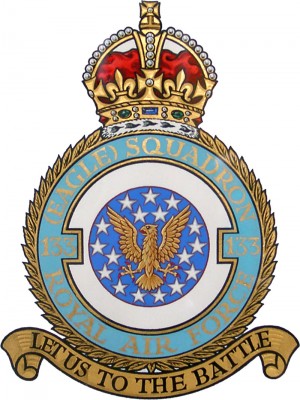
pdrm8846cYou’ve got your standard mercenaries: hired guns who fight for money.  Then you’ve got your fighting for a homeland types: mercenaries (usually) who used to have a cause to fight for, but now all they’ve got is each other, and maybe the hope that someday they’ll find a new homeland to replace the one they’ve lost.  Invert that, and you’ve got an eagle squadron: a ragtag bunch of volunteers who leave their homeland to fight for someone else’s cause, usually a sympathetic rebel faction or band of underdog freedom fighters.

It isn’t really fair to group these guys with mercenaries, since they aren’t fighting for money or fortune.  Far from it.  They believe so totally in the cause they’re fighting for that they’re willing to give up their lives for it, even though they could easily go home and live out their lives peaceably.  At least, that’s how it is on the idealist side of the sliding scale.  On the more cynical side, eagle squadron is really just a Legion of Lost Souls full of thugs and criminals who are hoping to clear their names.  Or, even further down the scale, perhaps they just love killing.

Even on the idealist side, there’s always the possibility that your terrorists are our freedom fighters.  After all, where did Al Qaeda come from?  The Mujahideen, volunteers from all over the Muslim world who joined with the Afghan freedom fighters against the Soviet invasion of the 80s.  When they won, it galvanized their Islamist cause and inspired them to take the fight to their homelands, many of which were ruled by dictators.  Since the United States props up many of these dictatorships, it was only a matter of time before they turned on us as well.

The name from this trope comes from three volunteer squadrons of US fighter pilots in World War II, who joined the RAF in the fight against the Nazis back when the United States was still neutral.  Since the Nazis have pretty much become the standard of all that is evil in the eyes of our modern society, the eagle squadrons are now heroes by default.  War is of course more complicated than that, though there is still room for heroism even in a world of moral ambiguity.

When the eagle squadron makes the ultimate sacrifice, you can count on them being remembered as heroes for all time.  That’s basically what happened with the Alamo: a bunch of frontier Americans sympathetic to the cause of Texan Independence went to join the fight against Santa Anna and made a bloody last stand when the war went out of their favor.  Of course, since history tends to be written by the victors, it’s arguable that this only happens if the survivors go on to win the war.  After all, plenty of expatriates volunteered to fight for the Nazis, but we don’t remember them in quite the same way.

Wow, this post turned out to be way more cynical than I’d intended.  The basic drive behind this trope is the yearning for an ideal, a cause to fight for.  We root for the eagle squadron because we want to believe that all it takes to defeat evil is for good men from across the world to take up arms against it.  If Eagle Squadron is led by the Incorruptible, then that might actually be the case, though it’s difficult to make that kind of a story anything other than black and white, one-dimensional, and utterly inauthentic.

I haven’t played with this trope too much yet, though I’ve been meaning to write a prequel book in the Gaia Nova series that tells the origin story for Danica and her band of Tajji mercenaries.  Her father was an admiral in the Tajji rebellion, and when the star system fell to the Imperials, they killed her entire family.  She escaped, though, and was taken in by an eagle squadron commander that fought alongside her father against the Imperial oppression.  After getting back on her feet, she leaves the Eagle Squadron to start her own military band, intent on getting revenge for the loss of her homeworld.  I’m not sure yet how the eagle squadron will play into that, but I see the commander as trying to dissuade her from this path.

In any case, it’s definitely a trope I want to play with.  I had a lot of fun with fighting for a homeland in Stars of Blood and Glory, so this would be a way to revisit some of the dynamics that made that story interesting.  You can definitely expect to see more of this from me in the future.

Trope Tuesday: Made a Slave

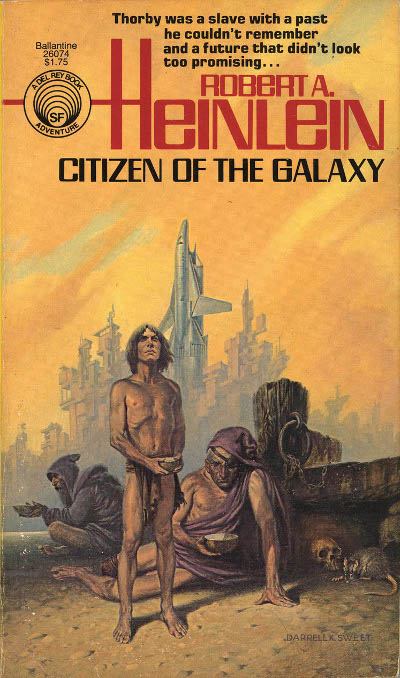
Citizen of the GalaxyJust because something is heinous doesn’t mean that it won’t make a good story.  In fact, the Rule of Drama practically guarantees that it will make a good story.  For some weird reason, we humans are fascinated by things in fiction that would horrify us in real life, and love it when our favorite characters are put into situations where we would never want to find our loved ones.  Perhaps there are many reasons for this, some of them better than others.

One of the worst situations in which anyone can find themselves is slavery, in which they basically become the property of someone else.  Slavery takes many different forms (and has many different tropes), but the thing they all have in common is the denial of freedom, dignity, and the basic human rights that most of us take for granted.  So when a character who’s free gets made a slave, you can usually expect to see some pretty high drama as a result.

As the tvtropes page for this trope explains it:

There is often a scene in which the character is being sold on the slave market, showcasing all the evils of slavery; the protagonist will witness how families are torn apart, will have to undress and be examined like an animal, and will perhaps be beaten … If he looks strong, he will be told that he will go to the galleys or the mines — a Fate Worse Than Death — or perhaps to the Gladiator Games. If she (or occasionally he) is attractive, she will be told that she will make a buyer very happy indeed.

If the main character is a slave, this is usually a part of his (or her) backstory; it’s fairly rare for a character to be born into slavery these days, probably because slavery is no longer considered an acceptable social institution in our modern Western society.  In older stories, the slave character may be of noble birth, setting up a sort of Cinderella story where they realize who they are and eventually come into their own.  That still happens, though usually it’s more about them taking power into their own hands to rise above their awful circumstances.

Surprisingly, this is a trope you’ll see with some frequency in science fiction.  Heinlein wrote a novel about it, pictured to the left (one of his better ones, in my opinion).  It happens quite a bit in the Sword and Planet subgenre, as well as any gladiator-type tale.  You’d think at some point our technology would become sufficiently advanced that we wouldn’t need to enslave each other, but apparently we will use manual labor in the future. Besides, at it’s core, slavery isn’t about acquiring cheap labor–it’s about owning someone, taking away their freedom and control.  Until human nature itself changes, we’re probably going to have to deal with slavery in one form or another for the forseeable future.

In any case, there’s something rousing–perhaps even inspiring–about the story of a character who rises above such an awful situation to win back, against all odds, their rights and freedoms.  That’s probably why we still enjoy retelling this trope.  A character can’t truly rise until they’ve bottomed out somewhere, and as far as hitting rock bottom goes, getting made a slave is pretty dang low.

I’ve played with this trope in a couple of my books.  In Sholpan and Bringing Stella Home, Stella goes through pretty much everything on the tvtropes page, which sets things up pretty well for … well, I won’t spoil it. 😉 In Stars of Blood and Glory, Abaqa tries to make the Princess Hikaru his slave, but since they’re both teenagers and he’s younger than her, it ends up being rather hilarious (she gets rescued soon afterward too, so it doesn’t stick long enough for the really bad stuff to happen.  And then the rescuers … well, I won’t spoil that either).

Right now, I’m playing with it a bit in Sons of the Starfarers, though I’m not sure where it’ll end up exactly.  Probably not so far as this trope, but I never really know what my characters will do–or what will happen to them.

Trope Tuesday: Foolish sibling, responsible sibling

Whenever you’ve got two characters who interact with each other a lot, chances are that one is a foil of the other.  There are a lot of reasons for this, but the big reason is that it helps to highlight certain character traits by providing contrast.  Because the contrast is the important thing, the relationship between the characters can take a variety of possible forms.  It may be that one is the hero and the other the sidekick, or (if they’re villains) perhaps one is the Big Bad and the other is the Dragon.  If enemy mine or one of the other frenemy tropes is in play, they might be on opposing sides.

Foolish sibling, responsible sibling is what happens when the character foils are siblings.  It’s a subtrope of sibling yin-yang that contrasts the character traits of responsibility and recklessness, duty and prodigality, and how the two opposites somehow manage (or not) to live together and stand up for each other in spite of their differences.

It may be used to set up an aesop, usually along the lines of “be like the responsible sibling, not the foolish one,” but that’s not always the case.  It might be that the younger sibling is closer to earth and the uptight responsible one needs to learn how to loosen up.  Simon from Firefly kind of fits that mold, though he learns to loosen up not from his sister River so much as from the rest of Mal’s crew.

In a lot of stories, it’s not necessarily meant to send a message so much as set up an interesting dynamic between two equally sympathetic characters.  In the movie Gettysburg, for example, Lawrence Chamberlain is the commanding officer of the regiment, and thus has to lead the men, follow military protocol, etc, while his annoying younger brother Tom calls him by name and forgets to salute him, runs around chatting it up with union soldiers and rebel prisoners alike, and generally seems a lot more loose and carefree.

Usually, the responsible character is the older sibling, for reasons that should be fairly obvious to anyone who grew up with siblings.  As the oldest child in my own family, I can readily sympathize with the dutiful son, since I more or less was one.  That’s not always the case, though.  In sitcoms where the middle child is the main character, usually it falls on them to thanklessly pick up the slack (yeah, being the middle child pretty much sucks).  Bart and Lisa from The Simpsons are a good example of this.

I played with this a little in Desert Stars with some of the minor characters: as the second oldest, Surayya generally tries to do things by the book, whereas Amina tends to be more mischievous and conniving.  Michelle and Lars also fall into this trope, with Lars a carefree academy dropout and Michelle a hardworking (though also fun-loving) mechanic on her father’s ship.  Between Desert Stars and Bringing Stella Home, though, Lars completely turns around, so that by Heart of the Nebula (not yet published) he’s quite possibly one of the most responsible characters in the book (and I still have yet to give him a viewpoint … hmmm).

In Sons of the Starfarers, I’m playing with this character dynamic a lot.  Isaac is the oldest son, who always knew he would leave on his father’s starship to fulfill the Outworld traditions and seek his fortune as a star wanderer.  Aaron, on the other hand, kind of got roped into the whole thing unexpectedly (see Star Wanderers: Benefactor) and hasn’t yet matured.  The events of the story will no doubt give him a growth arc, but in the meantime, the dynamic between the two of them is a lot of fun to write.

There are a lot of other issues in that relationship to play with too, such as promotion to parent and always someone better, but I’ll save those for another Tuesday.