After the hero crosses the threshold of adventure and finally sets out on his journey, he passes through a long phase that Campbell called “the road of trials.” This is often where the meat of the story happens, but it doesn’t fit squarely into any one trope because of all the possible directions where the story can go. For that reason, I think it’s more useful to think in terms of who the hero meets, not what the hero does.
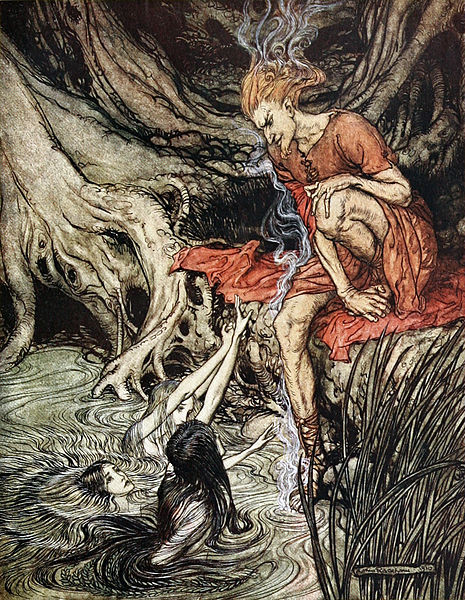
The Trickster is often (though not always) one of the first characters the hero encounters upon entering the lands of adventure. He is almost always male, though sometimes he can change shapes and even sexes (for example, Loki, who turned into a mare and conceived Odin’s horse). His role in the story, though, can range from mentor (Merlin, Yoda, Mary Poppins) to bad guy (the Joker, the Homonculi, Grand Admiral Thrawn) to the hero himself (Prometheus, Bugs Bunny, Bilbo Baggins).
Obviously, the Trickster is a very slippery character. You can tell who he is, though, by whether he meets these two basic criteria:
completely unpredictable
not beholden to any authority
In this way, the Trickster often stands in stark contrast to the people of the ordinary world that the hero left behind. Which makes sense–having just crossed the threshold of adventure, the hero needs to leave his old mentality behind and be exposed to new experiences and ideas. For that reason, the Trickster’s antics often serve to teach the hero an Aesop, helping him to learn and grow.
That doesn’t mean that the Trickser is harmless. Quite the contrary–he’s a dirty, lying cheat, capable of taking any disguise and throwing the victims of his pranks into any moral quandary just for laughs. He’s not necessarily a jerkass–he may even be more of an ally than an enemy–but he definitely is not to be trusted.
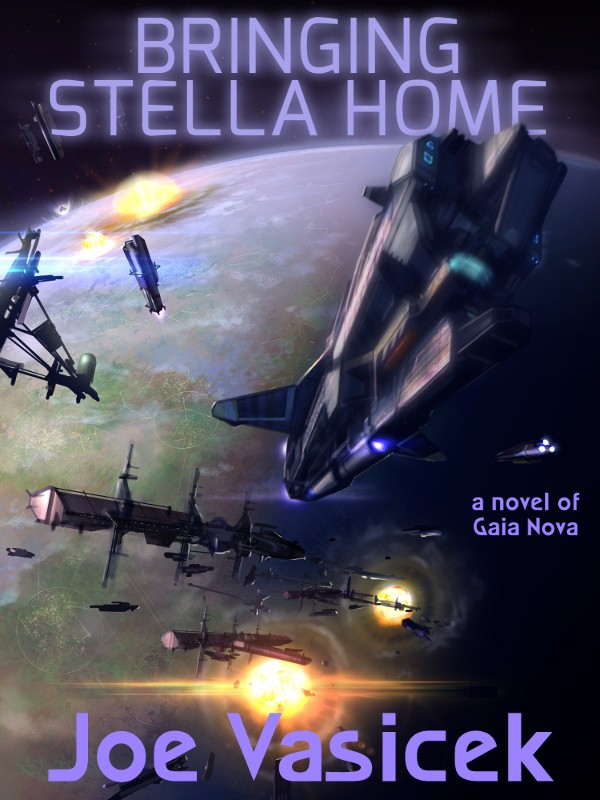
Like most things associated with the hero’s journey, the amazing thing is just how prevalent this trope is. It’s even cropped up in some of my own work. For example, in Bringing Stella Home, Ilya Ayvazyan is a trickster of the playful hacker variety. In Star Wanderers, Samson is a blithe spirit who doesn’t necessarily have Jeremiah’s best interests at heart…though his girlfriend (the one at Alpha Oriana) is a lot more sinister. I’m not sure if anyone fits this trope in Desert Stars, but you could probably make a case for Lena or Amina–or better yet, Ibrahim.
Of all the major character archetypes, though, the Trickster is the one I feel like I know the least about. If you have anything else to add, I would like to hear it!
I recently read an amazing blog post by Shannon Hale titled “Why boys don’t read girls (sometimes).” In it, she makes a number of excellent points about how our society stigmatizes boys who read “girlie books,” and why that’s harmful.
Perhaps the most moving part of the post was at the end, where she described an experience at one of her book signings where she saw a boy hanging back and asked him if he would like her to sign one of his books. The boy’s mother jumped in and said “yeah, Isaac, would you like her to put your name in a girl book?” The boy’s sisters all laughed at him, shaming him for reading anything that ran against their strictly defined gender roles.
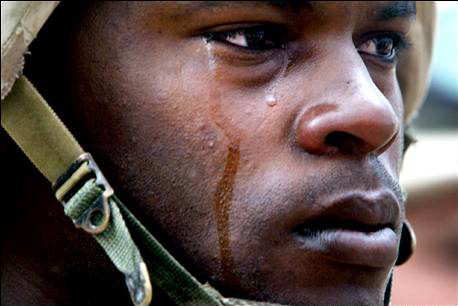
Whatever problem [the character has]—whether terminal disease or sociopathic neighbor or anything else—the problem must be faced with courage. This means that your character can’t cry about it, no matter what the source of pain…Any time that a character breaks down, we as an audience may cast judgment upon that character.
Now, I have nothing but respect for Dave Farland. I’ve been following his “daily kick” emails for years, attended dozens of his convention panels, and even interviewed him once for an online magazine. He’s been a very influential writer to me personally, and his advice has had a huge impact on my writing.
But on this issue, I think he’s dead wrong.
Even if you don’t have any problem with the idea that men should never cry–a disturbing belief that harms men by forcing them to hide their true feelings, and harms women by teaching men that compassion and empathy are signs of weakness–even if you’re comfortable living in a culture that accepts this belief, there are still instances where having a man cry in your story can be both moving and poignant.
Cross his woman, and he’ll blow your brains out–quoting scripture while he does it.
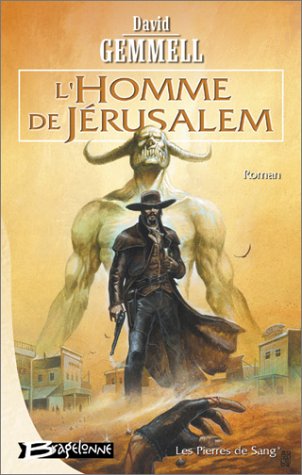
The best example of this that I can think of comes from David Gemmell’s The Jerusalem Man. No one–and I mean no one–writes manlier heroes than David Gemmell. And among his characters, Jon Shannow ranks as one of the manliest.
In The Jerusalem Man, Jon Shannow is a lone gunman roving the post-apocalyptic wastelands of Earth on a spiritual quest for the city of Jerusalem. Near the beginning of the book, he comes across a frontier woman under attack from bandits. He stops to defend her homestead, and she shows her gratitude by inviting him into her bed.
Jon Shannow is a middle aged man, but because of the post-apocalyptic setting, this is his first sexual experience, and it moves him to tears. For me, that was one of the most poignant moments of the book. It didn’t take away anything from his masculinity throughout the rest of the story–indeed, it added significantly to it when the woman got kidnapped and he determined to rescue her.
I’m sure there are other examples that you can think of. Certainly in real life, this notion that men should never show their feelings is both harmful and outdated. To say that in fiction, no characters should ever cry–female characters as well as male characters–that’s just so wrong it’s infuriating. If crying is so taboo that it’s even forbidden in the pages of a book, then something is wrong with the culture, not the story.
In 2008, I attended a fascinating panel at LTUE in which Tracy Hickman and a number of romance and fantasy writers discussed how to write romance in science fiction and fantasy. Tracy explained that in all the novels he writes with Margaret Weis, she does the fight scenes and he does the romantic ones.
He then went on to talk about how there’s a whole side of life that our culture has shut men off from–a feminine side which is present in all of us, men as well as women. The way he explained it, romance is not just the “kissy bits,” but a vital and enriching way to see the world–a paradigm that infuses everything with feeling and passion.
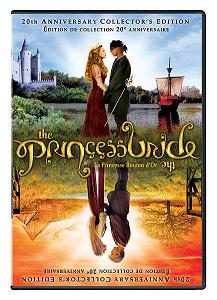
It makes me think of The Princess Bride, where even the action scenes with Inigo Montoya have a certain romantic flair to them. In the old days, the term “romance” described not only love stories, but action & adventure stories as well. In modern times, we seem to have forgotten all the old qualities like honor, love, sacrifice, loyalty, heroism, and compassion–even though they still make for the best stories.
Of course, our characters need to have courage. But courage is not the absence of fear–it’s pressing on in spite of it. And crying is not always a sign of weakness–it can actually be a sign of great emotional strength. And if it’s true that the best literature helps us to see our world in a new light, giving us a greater understanding and appreciation for the human condition, how is it “courage” for anyone to hide their true feelings?
So do the characters in my stories cry? Hell, yeah! I don’t have them hide their feelings just because some readers might look askance. Some of them cry more than others, and many of them don’t hardly cry at all, but those who do cry do so because the story demands it.
Even though I write science fiction, I do my best to infuse my stories with romance–not just the “kissy bits,” but that depth of feeling and passion for life that made me fall in love with books and reading in the first place. Star Wanderers is a great example of that, and so is Desert Stars.
And yes, in case you’re wondering, I’ve read a lot of “girlie books.” They’re some of my all-time favorites.
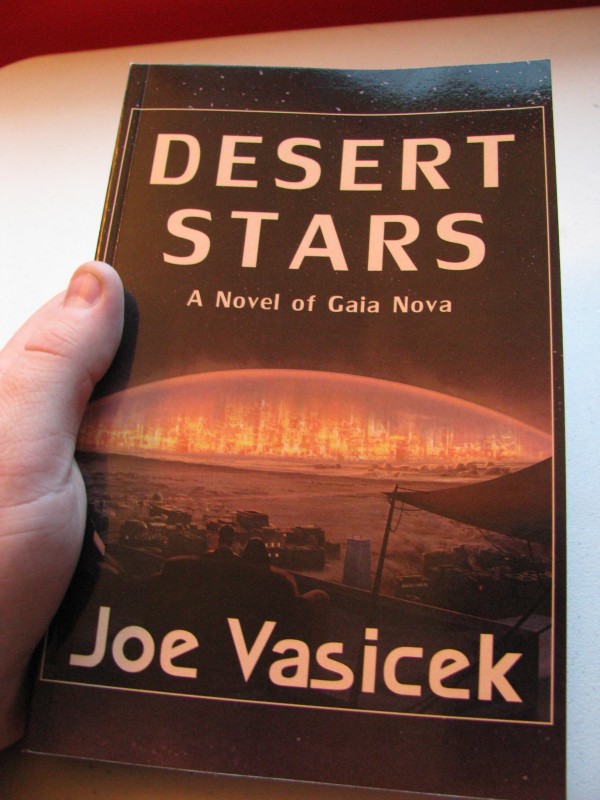
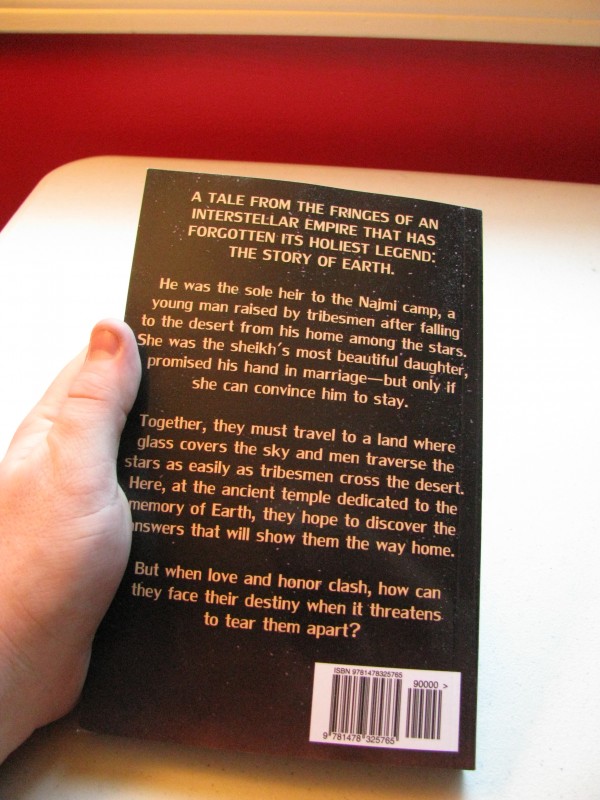
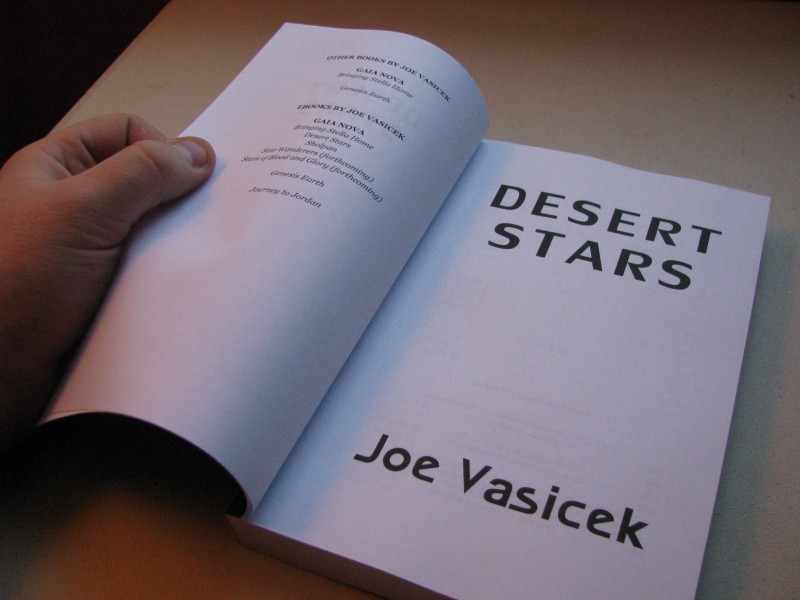
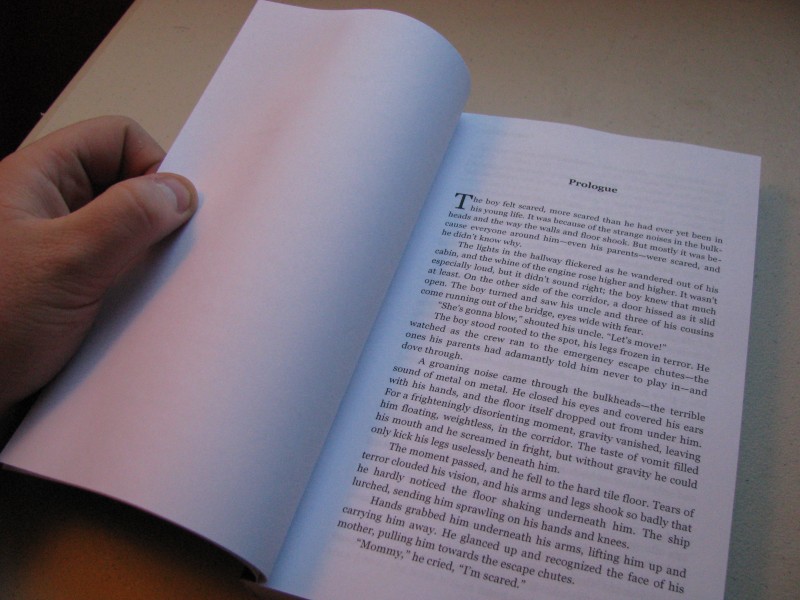
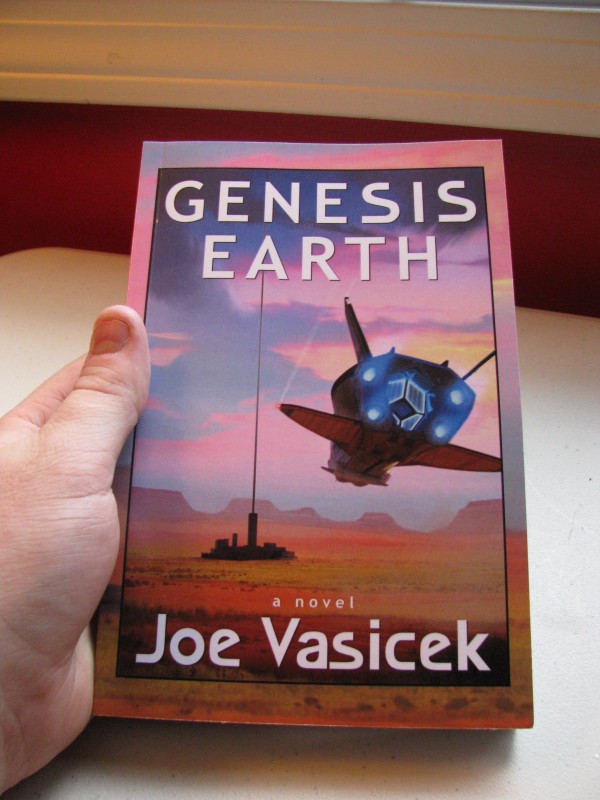
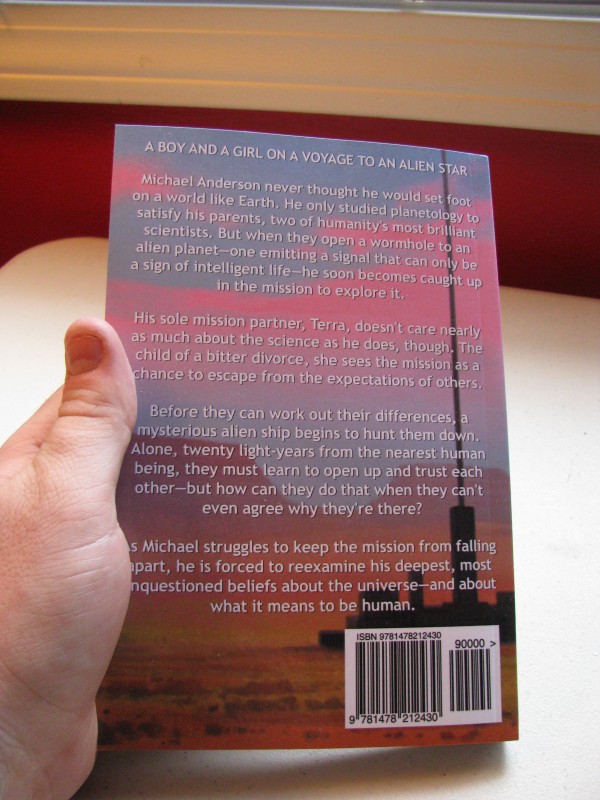
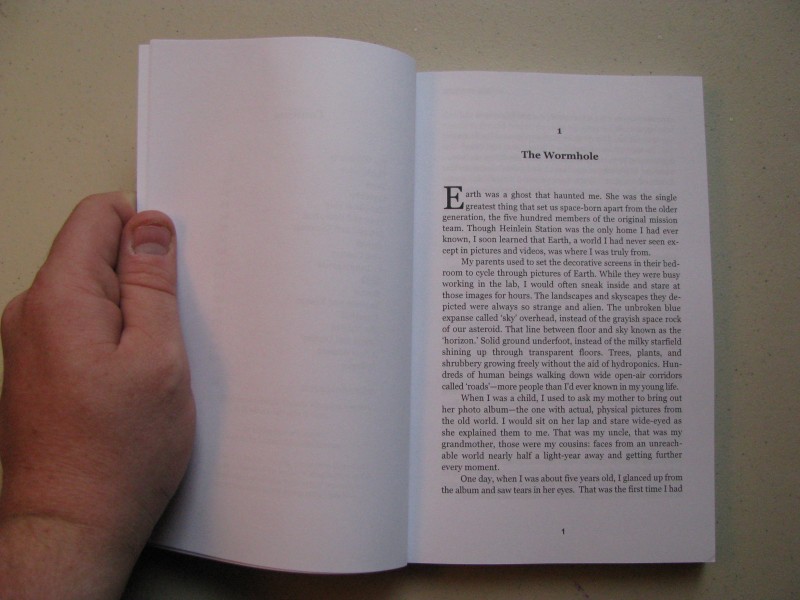
So the proof for Desert Stars came in the mail today, and it looks great!
The front cover.The back cover.Title page.First page.No matter how much I do this, it never gets old. 🙂
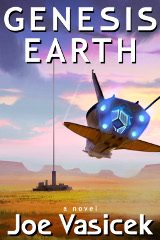
It’s available now from CreateSpace, if you want to pick up a copy. If you’d rather buy it on Amazon, it should go live there in a few days. And if you want to buy an autographed copy of this one or Genesis Earth, let me know ASAP: I can order author copies and ship them wherever you want me to, but I’m leaving again for Georgia at the end of August, so I can only do that for the next two or three weeks.
As for Star Wanderers: Part II, I finished the major revisions just yesterday, and plan to go through it again this next week before publishing, mostly to fix typos and get it ready for publication. There weren’t too many story issues, but my first readers helped me to see a couple of areas where things were unclear (especially Laura–thanks for the awesome feedback!).
After going through this latest draft, I’ve got to say I am way excited to finish Part III and Part IV. It’s going to take a little more work, and it’ll definitely need some feedback before publishing, but I think I can have the first round of revisions done before the end of August. A couple of scenes are missing, and there are some key elments I need to change, but I definitely know where this story is going and I’m excited to tell it!
That’s about it for now. I’ve gotten some initial feedback from my first readers on Stars of Blood and Glory, and so far it’s been surprisingly positive. I may post the prologue here for you guys, or release it as an extra through the newsletter. The unpublished prologue for Bringing Stella Home would also make good newsletter content too, come to think of it…
Electronic publishing is like playing a really awesome video game. Once things get going and you really start getting into it, you just don’t want to stop!
On Tuesday, I finished the second draft of my latest writing project, Stars of Blood and Glory! Here are the basic stats:
words: 78,746 pages: 372 chapters: 20, epilogue, and prologue start date: 3 July 2012 end date: 24 July 2012
Also, this is probably really dorky, but I made a logo for the title:
They say to use only Courier or Times New Roman in your manuscript, but whatever. I think it looks pretty cool.
This was a lightning-fast revision, compared with the ones I did for Bringing Stella Home and Desert Stars. Part of that is because I want to try and follow Heinlein’s rules more closely. I recently looked back at how I’ve spent my writing time over the past three years, and found out that as much as 3/4ths of it was tied up in revisions, not in producing new material. Yeah…that’s something that needs to change.
For this draft, I resisted the urge to do a line-by-line edit, and instead focused on rearranging the scenes in their proper order and inserting new ones that were essential to the story but missing from the first draft. That’s probably why it only took three weeks to finish.
I don’t think there are any glaring holes in the story, but if my first readers find any, I’ll probably do another scene rearranging draft much like this one. If they give me the green light, though, I’ll do a quick pass to fix any errors and send it off to my editor to start the publication process.
Two things about Stars of Blood and Glory have really surprised me: first, how little time it’s taken to write it (two months for the first draft, a little less than one for this one), and second, how short it is. Even with five viewpoint characters, it’s less than 80k (Bringing Stella Home was 110k). The pacing feels right, though, so that’s probably its natural length–it’s just that I seem to be writing shorter and shorter novels lately instead of longer ones. Maybe it has something to do with all those David Gemmell novels I love to read.
There’s more I could say, but I don’t want to bore you guys too much. Besides, you probably want me to move on to the next one.
My next writing project is Star Wanderers: Part II, which should take me about a week to revise and another week or two to finalize and publish. If any of you want to help me proofread the final draft, let me know–I’m willing to exchange services and/or give you a free copy.
So after a month of waiting, Kobo’s publishing platform, Writing Life, is finally up! I just finished uploading all of my titles (except my short stories–I’ll just continue to distribute through Smashwords for now). Genesis Earth is already available, and the others should be up soon.
For those of you who are readers, this means that you’ll be able to find my books on Kobo almost as soon as they go up on Amazon. The formatting will (hopefully) be cleaner, since I’ll have direct control. Prices will generally be the same as on other platforms, but when I change the price on Amazon, I’ll change it simultaneously on Kobo, too–no waiting for weeks on end for the price to drop.
For those of you who are writers, I’ll be sure to keep you updated with thoughts on my experience. So far, it looks pretty good: the royalty rates are better than Amazon (70% for titles priced $1.99 – $12.99, 45% for all other titles), the publishing process is faster, and the upload formats (.epub, .doc, .docx, .mobi, and .odt) are generally more flexible. Downsides include a higher minimum threshold for direct deposit ($100 or every 6 months), fewer category choices, and what appears to be a forced 2:3 aspect ratio for cover art.
Besides that–oh, look, Bringing Stella Home and Journey to Jordan just went up too! Man, that’s fast! And it looks like the aspect ratios went back to 3:4, so I won’t have to redo the covers. That’s a relief! So yeah, I’ll be sure to keep you updated.
Also, in preparing my books for upload to Kobo, I discovered some pretty egregious formatting errors for the Barnes & Noble copies of Bringing Stella Home and Sholpan. I’m not sure what happened–probably it had something to do with an older version of Calibre or Open Office, since I was overseas at the time and only had access to my netbook. So yeah, if you downloaded one of the broken copies, just shoot me an email and I’ll send you the updated epub version, no questions asked.
In general, I need to revamp my publishing process. Currently, it resembles jumping through a ring of fire while juggling half a dozen angry poodles. Open Office, Mobipocket, Notepad, Calibre, KindleGen, DOS prompts, and Kindle for PC–yeah, I’d better get on that. If you have any suggestions for free/open source software that does .mobi and .epub, please let me know.
In other news, I finished my first pass through Stars of Blood and Glory, and should be finished with draft 2.0 by the end of the week. After that, it’s back to Star Home and Star Wanderers.
The proof for the print edition of my first novel, Genesis Earth, just came in the mail–and it looks AWESOME! Check it out!
Front cover.Back cover.Page 1, Chapter 1.
Holy crap, it is so cool to have a book in my hands THAT I ACTUALLY WROTE. So cool!
I approved the proof a couple of hours ago. It’s currently up for sale on CreateSpace (where I get a higher royalty), but it should also be up on Amazon in 5-7 business days. I haven’t opted for the extended distribution, which means that those are the only places where it’s going to be available for a while. I might opt in a little later, but I haven’t made a decision just yet.
Next step: put out print editions for Bringing Stella Home and Desert Stars. Those should be coming soon, probably by mid-August.
So one of my goals this summer is to release POD (print-on-demand) editions for the three novels I currently have up as ebooks (Genesis Earth, Bringing Stella Home, and Desert Stars). I started with Genesis Earth a couple of days ago, and wow! I had no idea that getting a book ready for print could be so much fun!
I just finished formatting and typesetting the interior today, and it looks pretty awesome! Drop caps, chapter headings, page numbers, a pleasingly arranged text–there’s something immensely satisfying about paper, an experience that ebooks (as awesome as they are) just don’t quite capture. If I weren’t a writer, I’d be a typesetter–but because I’m an indie, I can be both!
As with ebooks, the learning curve for print formatting is pretty steep, but I think I’ve got the hang of it. The guys over at Kindle Boards gave me a lot of helpful advice, and sent me a really awesome POD guide that’s been a lifesaver. My editor (who’s also trained in typesetting) gave it a once over too, so I think we’re in good shape.
Barring any unforeseen complications, the print version of Genesis Earth should be up in a couple of weeks. The cover art is more or less done–I just need to revise the blurb, send the PDFs out to CreateSpace, and wait for the proof to come in the mail.
One thing I’m wondering is whether to go with the free ISBN (which will list CreateSpace as the publisher) or to spend $10 and go with my own imprint. My gut tells me to go with the free option–not because it’s cheap so much as because it’s less complicated–but I wonder if there might be some advantages down the road to taking the other.
ISBNs, imprints, and distribution channels, oh my…I’ll have to save that for another post a little later. 🙂
They say that the three main perks to being a teacher are June, July, and August, and that’s as true for TEFL teachers as it is for any other kind. I’m spending June in Georgia, but for July and August, I’ll be back in the States. Instead of vacationing, though, I plan to be working hard at my main career, which is writing.
Here’s what I hope to accomplish:
Set up a separate business checking account.
Release POD editions of Genesis Earth, Bringing Stella Home, and Desert Stars.
Set up an online bookstore to sell direct.
Redo cover art for Bringing Stella Home. Completed 2 June 2012.
Redo blurbs for all titles.
Identify and submit Genesis Earth, Bringing Stella Home, and Desert Stars to prominent sf&f book bloggers.
The list might seem a little daunting, but two months should be enough to do most of it, especially considering that I don’t really have any other obligations. Basically, I want to get everything done that needs to be done in the States, then get back out and spend the rest of the year abroad.
As for writing, don’t worry! I plan to do that too, as always. Here’s what my project list currently looks like:
Finish the unnamed WOTF project and start publishing it serially.
Finish the 3.0 draft of Heart of the Nebula.
Send out Stars of Blood and Glory to first readers.
Get ready to start Edenfall in the fall.
That last one might be of interest to fans of Genesis Earth. The reason I haven’t finished Edenfall yet is because…well, this might sound kind of wishy-washy, but it’s because the story hasn’t really called out to me. For that reason, I decided to put it off and work on other projects that have.
Recently, however, I’ve started to feel the whispering of an intimation that it’s time–that the story is almost ready to come onto the page. Once it does, I have a feeling that it’s going to be quick–much like the first draft of Genesis Earth.
It’s hard to tell, though, and it may still be too early to know for sure. The unnamed WOTF project has something to do with it, as well as living here in Georgia. I have a feeling that rereading Genesis Earth is going to make everything fall into place, but it’s impossible to say. I’ll try doing it at the end of the summer, after I’ve cleaned up my plate a bit, and see what happens from there.
Gah, this sounds so wishy-washy! I’m a professional writer, after all–why can’t I just pound words out on demand? But as a creative-type, I’ve learned that that just isn’t the way I work. There’s such a thing as starting a book too early, and for Edenfall to really shine, I feel like I need to give it a little more time–just a little.
I’m sorry for those of you who have been waiting, but don’t worry! I definitely haven’t forgotten about it. And once Edenfall comes to me, I have a feeling that the final book in the trilogy, The Stars of Redemption, won’t be far behind.
That’s the plan for now, anyway. It’s definitely going to be a busy summer!
I decided to redo the cover in preparation for a print-on-demand edition which I hope to release at some point this summer. The artist is Hideyoshi, who also did the cover art for Genesis Earth and Desert Stars. He’s great to work with and does some seriously awesome work, so I’m glad he was up for the project!
The other version was okay, but based on the feedback I was getting, I didn’t think it did a good job capturing the real essence of the story. Oh well–live and learn, I guess. And when it comes to cover art, I still have a lot to learn.
I just uploaded the new ebook version to Amazon, B&N, and Smashwords. Those sites should update in the next 24 to 72 hours (Smashwords is updated already), while the Kobo, Sony, iTunes, and other versions should update in the next couple of weeks.
I’m not sure if I’ll do desktop backgrounds for this one, but if there’s demand, I’d be willing to do it. Just shoot me an email and let me know. My netbook is starting to go, so I probably won’t get to it until July when I’m back in the States, but if/when I do, I’ll release it through the email newsletter, same as the Desert Stars backgrounds.
That’s just about it. I think I’ve spent more time today staring at this cover than actually writing, so I’d better get back to that. More good stuff to come–stay tuned!
A neutral character does what seems to be a good idea. She doesn’t feel strongly one way or the other when it comes to good vs. evil or law vs. chaos. Most neutral characters exhibit a lack of conviction or bias rather than a commitment to neutrality.
Some neutral characters, on the other hand, commit themselves philosophically to neutrality. They see good, evil, law, and chaos as prejudices and dangerous extremes. They advocate the middle way of neutrality as the best, most balanced road in the long run.
As you might expect, this alignment doesn’t describe just one type of character. In fact, there are many different archetypes that fall under True Neutral. They include:
That’s quite a spread, isn’t it? The main thing to keep in mind is that these are the characters who refuse to take sides–not just in whatever overworld conflict is driving the story, but in the ethical questions that the story raises (unless neutrality itself is their answer).
My favorite example of this trope is the Childlike Empress from The Neverending Story. As the very embodiment of Fantasia, she transcends good and evil so completely that her power, the Auryn, cannot be used to forbid a monster from acting on its own evil nature. Truth from Fullmetal Alchemist is another good example of a transcendent True Neutral.
With everyday, down-to-earth characters, though, this alignment tends to tick me off. The Ents, for example, very much fall under this trope (as does Tom Bombadil…unless you subscribe to this theory). Most others examples either come across as weak, selfish, or cowardly to me, so I don’t really care much for this alignment–unless it’s the starting point of a well-constructed character arc.
For that reason, in my own work, most True Neutrals are either straight-up antagonists or gradually shift in alignment as the story progresses. In Genesis Earth, Michael Anderson starts out as one of the weaker True Neutral types, but changes as events in the story make him grow. In Desert Stars, Sathi probably falls into this type, though I’m not so sure; either way, he’s very easily manipulated by his Neutral Evil wife. In Bringing Stella Home, Ilya falls under this alignment due to his moral cowardice, and Anya might as well, though more as a Selfish Good than anything else. Roman probably does too, but more because he’s old and wants to give up the fight; that’s something I’m currently working on in Stars of Blood and Glory.
I haven’t done a transcendent True Neutral yet, but if I ever write a heroic fantasy tale with gods and demons, I probably will. After all, if Michael Ende did it in my favorite novel of all time, how can I resist?
 After the hero crosses the threshold of adventure and finally sets out on his journey, he passes through a long phase that Campbell called “the road of trials.” This is often where the meat of the story happens, but it doesn’t fit squarely into any one trope because of all the possible directions where the story can go. For that reason, I think it’s more useful to think in terms of who the hero meets, not what the hero does.