LTUE 2013

Man, LTUE 2013 was this weekend, and it was AWESOME.  One of the best conventions I’ve ever attended.  I spoke on my first panel, attended my first book signing event as an author, and got to meet up with some old friends, as well as some amazing new people.

Since I live tweeted most of the panels I attended, I thought it might be interesting to repost a few of those here, with some additional thoughts.  So…here goes!

THURSDAY

I believe this was Scott Parkin from the “What Do You Write?” panel. Good advice. Megan Whalen Turner also had some very interesting things to say on the subject of genre, which I have since forgotten. But I recorded it, and the recording will eventually be made publicly available in the LTUE conference archives, or so I’ve been told.

This one was from the “What Is ‘Punk’ Literature and Its Many Genres?” panel. David Butler and Larry Correia were HILARIOUS. Nearly got into a wrestling match right in front of us.

And when the esteemed Mr. Butler began to describe his book, I swear, a choir of steampunk angel Moronis somewhere began to sing a heavenly chorus. I mean, he had me with Edgar Allen Poe faking his death to become a secret agent, but Orson Pratt’s phlogiston guns? Eliza R. Snow as chief counterintelligence officer for the Kingdom of Deseret? I will definitely be checking out this book, City of the Saints (which is apparently a finalist for the 2013 Whitney Award).

David Butler is also a way cool guy. I hung out with him a bit in the dealer’s room, chatting about Mormon history, Lyman Wight (“shoot and be damned!”), Sir Richard Francis Burton’s expedition to Salt Lake City, and all sorts of other crazy zany stuff. And the whole time, he was playing a guitar. So yeah, definitely a way cool guy.

This discovery CHANGED MY LIFE. Also, it helped me to save immensely on lunch money, as well as join in on some way cool conversations with other panelists as they desperately tried to escape their fans. Okay, not really, but the green room was AWESOME.

Howard Taylor’s presentation on teasers was tremendously insightful. In a nutshell, he said that a teaser (aka book description on Amazon / back cover) should have or at least point to the following things:

  1. The inciting incident
  2. Character action
  3. Conflict
  4. Hook

We then went over a few examples, including some good ones that broke these rules, and finished up by doctoring a couple of teasers volunteered from the audience. Howard Taylor admitted to me later that he wasn’t entirely satisfied with the way he presented it, but I get the impression that he’s never entirely satisfied with anything less than perfection. It was a great workshop.

From “Engaging the Reader.” Great panel. Lisa Mangum described the planning / drafting / revising process for each of her first three novels, and they were all wildly different. With seven novels under my belt so far, I can definitely relate. Some, like Genesis Earth and Stars of Blood and Glory, practically write themselves. Others are like having a c-section with a hacksaw. And others…yeah, I’m not going to go there.

FRIDAY

Okay, maybe I said one useful thing: when there’s a language barrier, little things become big obstacles. One of the other panelists, Anna Del C. Dye, also had a bunch of stories about adapting to a foreign language and culture (in her case, the United States).

Overall, the panel was really, really fun! I also had some cards out for Star Wanderers: Outworlder, and a bunch of people came up afterward to get them. Guess I must have said something interesting. I hope you guys enjoy the book!


From “Current Trends in SF.” Great panel–it totally wasn’t just another over-hyped discussion about what’s hot right now. I asked how the panelists think the trend cycle will change in the age of self-published ebooks, and they had some very interesting things to say. They all agreed that speed to market, while it may give some advantages, isn’t a make-or-break game changer, or even really a good strategy (unless you really love the trend you’re writing to). Some things change, others remain the same. It will be interesting to give this one a re-listen.


From “Creators in the Community.” Probably one of the best panels of the entire convention. Tracy Hickman is really on top of the changes in the publishing world, and had a lot of interesting things to say about it in all of his panels. As for the subject of writerly communities, much wisdom and insight was shared by all of the panelists. Definitely look for this one.

Man, I’d forgotten how cool the guys at Dungeon Crawlers Radio are! They interviewed me back in 2011, when I was just getting ready to publish Genesis Earth. This time, we talked about space opera, sci-fi romance, language barriers in marriage and all the crazy things I have to look forward to, and a bunch of other stuff. I also shared some of my thoughts and opinions on self-publishing myths, especially regarding the “tsunami of crap.” We coined a new word, “nerdaissance,” to describe all the awesome new stuff that’s coming out now, thanks to the ease of self-publishing.

So yeah, it was a great interview! I’ll definitely be cross-linking once it goes live.

From “Effective Book Covers.” Great panel with some very good artists and cover designers, including Isaac Stewart who does all the maps for Brandon Sanderson. Although some parts were geared toward illustrators, most of the advice was for writers (especially self-pubbing writers) who are looking to design their own covers. Lots of great and insightful perspectives from the visual arts side of things.

FRIDAY NIGHT BOOK SIGNING

Okay, I’ve got to be honest: when I went into the mass signing with my cardboard box of CreateSpace POD novels, I didn’t expect to sell anything. I figured that was just my ticket to get a seat at a table and hand out cards for Star Wanderers: Outworlder to some of the casual book browsers.

Well, I was pleasantly surprised! An uncle of one of my old mission companions was impressed enough to buy a couple of copies. I think he’s one of these guys who likes to buy things from new authors to help encourage them. It’s great to see people like that. He told me to keep writing, and I told him I definitely would!

Lots of people snagged the card for Outworlder, and I came up with a pretty decent pitch: “it’s about a starship pilot who accidentally marries a girl who doesn’t speak his language.” That raised a lot of eyebrows! A lot of people were really happy to see a science fiction story, especially a space adventure. I get the impression that there’s a craving for this kind of stuff in the market that isn’t currently being satisfied. So yeah, that was very encouraging!

After things wound down a bit, I wandered around the signing checking out some of the other books. Saw a couple that I recognized from the Kindle Boards, which was interesting. Chatted with them, as well as a bunch of geeky guys about chain mail, Halo, Frank Herbert, and all sorts of awesome stuff. Man, the best part about sci-fi/fantasy conventions is the chance to just talk with people! So much interesting stuff. It was great.

SATURDAY


From “Write For the Market or Write What You Know?” Another great panel. Definitely will be re-listening to that one.

From the main address with Megan Whalen Turner. She talked about book censorship and the need to teach children how to make their own reading choices, rather than keeping them sheltered and making the choice for them. She pointed out how every time a New York Times article comes out bemoaning some YA book for inappropriate content, it’s kind of hypocritical because there are so many other books they miss. The Golden Compass, for example, didn’t even pop up on their radar until the movie came out. Kids don’t magically become mature, well-adjusted adults when they turn 18–we have to teach them to make these choices (and mistakes) for themselves.

From “How Does Your Story Mean?” Great discussion on the writing process. Saw a lot of other good live-tweets during this one.

Okay, I take back what I said about the best panel of the convention. THIS was definitely the best. “The Engines of Exploration,” with Howard Taylor, Megan Whalen Turner, Roger White, James Owen, Kevin Evans, and Charles Stanford–the panel was packed. It basically turned into a round-robin discussion of which commodities are most essential to modern civilization, which ones will be the most valuable in the event of a societal collapse, and which ones will take us to the stars. The eventual consensus on each of these eventually came down to goats. Seriously. GOATS!


From “Writing Romance Without Erotica.” Lots of delicious awkwardness, as well as some really interesting thoughts and perspectives on the subject of romance. One of the panelists talked about the importance of “character penetration” without realizing about halfway through the panel how hilarious that phrase sounded in this context. But yeah, there was also a lot of wisdom in there as well. There are a lot of strong opinions about sex and romance floating around in this part of the world, so it was a very spirited and interesting panel.


The last panel of the convention (technically, symposium, but whatever) was “eBook Publishing” with some highly successful indies like Michaelbrent Collings. As you can tell from the tweets, it was a bit controversial, but very, very interesting. Questions were flying all over the place, on subjects ranging from formatting to building an audience. The biggest shock to me was that none of the panelists (none of them!) are on Smashwords. It’s a wild, wild west out here in indie-land. Makes me wonder, maybe I should publish to iTunes through another venue? Hmmmm…

So yeah, that was pretty much the whole convention/symposium. I finished it out by playing Alhambra with a bunch of friends from Kindal Debenham’s writing group who came down from Seattle and Idaho. Good, good times–it was actually kind of sad to say goodbye. Definitely worth coming 11 time zones to attend.

All I can say is that I am STOKED for Conduit!
4:04 hours and 2.8k words. Not bad!

You know, sometimes I miss the days when I would churn out 1,000+ badly written words and throw up a badly written blog post, still reeling in awe from a white-hot creative heat.

Well, I think those days are coming back!  Except hopefully, my writing has improved since then.  Today was the first day I hit my four hour writing goal, and it was awesome.  Also, I wrote over a thousand words in two different projects: The Sword Keeper (which is my primary project right now) and Star Wanderers: Benefactor (a secondary project, though that may change in a month or so).  Not bad!

The really cool thing, though, is that when I woke up, my brain was actually wordsmithing.  It was weird–I was actually crafting sentences in my sleep.  Of course, being an idiot, I didn’t actually sit my butt in the chair until around 11:00 am.  Still, the words came out all right, and they didn’t stop coming all day.

I think my new time tracking goal is going to work out really well.  For most days this week, I managed to get at least 3:00 hours in.  Also, I noticed a lot of interesting things about the way I write.  Starting is the hardest part, especially first thing in the day.  Frequent short breaks can help, but the internet is a huge trap and should definitely be cut from my writing computer.  If I can’t manage 500 words/hour, chances are I’m not going to stay put for very long, but once I hit 800 wph, it’s smooth sailing.

Keeping a daily time goal also makes me conscious of a lot of things.  For example, when I first wake up, I look at the clock and think “if I do my full four hours right now, I’ll be finished by XX:XX.” That motivates me to start earlier, since it means I can finish earlier (or at least have less pressure later when I’m tired).  Also, it motivates me to write for longer lengths at a time, rather than writing in short, less productive bursts.  And even though I’m still keeping track of how many words I write, the pressure to hit a certain word count is less, since once the four hours are up, the goal is accomplished no matter what’s on the page.

Of course, all this mean I’m actually writing more.  Even on the days when I didn’t hit the full four hours, I wrote a lot more than I otherwise would have.  And the neat thing about writing is that the more you do it, the easier it comes.  It takes a while to build momentum, of course, but if you can just ease back on your inner editor and let the words come, they really will come.

So the next few days are going to be interesting.  I’m leaving Massachusetts on Sunday, to take the train across the country.  That will give me plenty of writing time, I’m sure, but once I arrive in Utah, things are going to get tricky.

My first priority will be finding an apartment, then a job–probably a crap job, though in this economy even those can be hard to find.  From what I’ve heard, things haven’t changed much since I left.  My writing is starting to take off, though, so I’m not too worried about the long-term–it’s the short-term that’s going to be a challenge.

I don’t know how long I’ll stay in Utah this time, but definitely until the summer.  There’s a lot of old friends to look up, and writing conferences to attend.  If I’m not totally broke by August, I’ll do my best to attend Worldcon as well.

That’s just about it for now.  I’ve got a lot of chores tomorrow, so I’d better get some sleep.  Later!

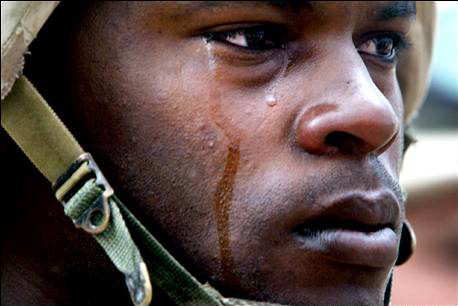
When men cry, or in defense of damaged characters

I recently read an amazing blog post by Shannon Hale titled “Why boys don’t read girls (sometimes).” In it, she makes a number of excellent points about how our society stigmatizes boys who read “girlie books,” and why that’s harmful.

Perhaps the most moving part of the post was at the end, where she described an experience at one of her book signings where she saw a boy hanging back and asked him if he would like her to sign one of his books.  The boy’s mother jumped in and said “yeah, Isaac, would you like her to put your name in a girl book?” The boy’s sisters all laughed at him, shaming him for reading anything that ran against their strictly defined gender roles.

In direct contrast to Shannon Hale, Dave Farland released a “daily kick” newsletter a couple of days ago where he advises writers to never let their characters cry.  In it,  he states:

Whatever problem [the character has]—whether terminal disease or sociopathic neighbor or anything else—the problem must be faced with courage. This means that your character can’t cry about it, no matter what the source of pain…Any time that a character breaks down, we as an audience may cast judgment upon that character.

Now, I have nothing but respect for Dave Farland.  I’ve been following his “daily kick” emails for years, attended dozens of his convention panels, and even interviewed him once for an online magazine.  He’s been a very influential writer to me personally, and his advice has had a huge impact on my writing.

But on this issue, I think he’s dead wrong.

Even if you don’t have any problem with the idea that men should never cry–a disturbing belief that harms men by forcing them to hide their true feelings, and harms women by teaching men that compassion and empathy are signs of weakness–even if you’re comfortable living in a culture that accepts this belief, there are still instances where having a man cry in your story can be both moving and poignant.

Cross his woman, and he’ll blow your brains out–quoting scripture while he does it.

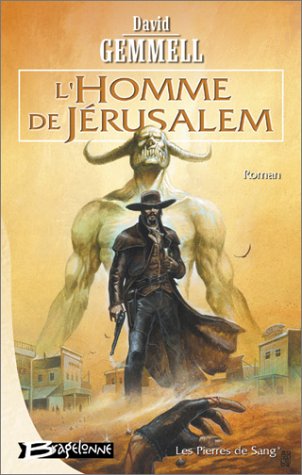
The best example of this that I can think of comes from David Gemmell’s The Jerusalem Man.  No one–and I mean no one–writes manlier heroes than David Gemmell.  And among his characters, Jon Shannow ranks as one of the manliest.

In The Jerusalem Man, Jon Shannow is a lone gunman roving the post-apocalyptic wastelands of Earth on a spiritual quest for the city of Jerusalem.  Near the beginning of the book, he comes across a frontier woman under attack from bandits.  He stops to defend her homestead, and she shows her gratitude by inviting him into her bed.

Jon Shannow is a middle aged man, but because of the post-apocalyptic setting, this is his first sexual experience, and it moves him to tears.  For me, that was one of the most poignant moments of the book.  It didn’t take away anything from his masculinity throughout the rest of the story–indeed, it added significantly to it when the woman got kidnapped and he determined to rescue her.

I’m sure there are other examples that you can think of.  Certainly in real life, this notion that men should never show their feelings is both harmful and outdated.  To say that in fiction, no characters should ever cry–female characters as well as male characters–that’s just so wrong it’s infuriating.  If crying is so taboo that it’s even forbidden in the pages of a book, then something is wrong with the culture, not the story.

In 2008, I attended a fascinating panel at LTUE in which Tracy Hickman and a number of romance and fantasy writers discussed how to write romance in science fiction and fantasy.  Tracy explained that in all the novels he writes with Margaret Weis, she does the fight scenes and he does the romantic ones.

He then went on to talk about how there’s a whole side of life that our culture has shut men off from–a feminine side which is present in all of us, men as well as women.  The way he explained it, romance is not just the “kissy bits,” but a vital and enriching way to see the world–a paradigm that infuses everything with feeling and passion.

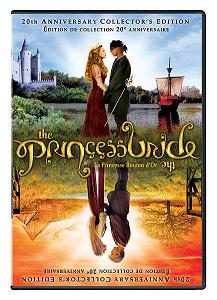
It makes me think of The Princess Bride, where even the action scenes with Inigo Montoya have a certain romantic flair to them.  In the old days, the term “romance” described not only love stories, but action & adventure stories as well.  In modern times, we seem to have forgotten all the old qualities like honor, love, sacrifice, loyalty, heroism, and compassion–even though they still make for the best stories.

Of course, our characters need to have courage.  But courage is not the absence of fear–it’s pressing on in spite of it.  And crying is not always a sign of weakness–it can actually be a sign of great emotional strength.  And if it’s true that the best literature helps us to see our world in a new light, giving us a greater understanding and appreciation for the human condition, how is it “courage” for anyone to hide their true feelings?

So do the characters in my stories cry?  Hell, yeah!  I don’t have them hide their feelings just because some readers might look askance.  Some of them cry more than others, and many of them don’t hardly cry at all, but those who do cry do so because the story demands it.

Even though I write science fiction, I do my best to infuse my stories with romance–not just the “kissy bits,” but that depth of feeling and passion for life that made me fall in love with books and reading in the first place.  Star Wanderers is a great example of that, and so is Desert Stars.

And yes, in case you’re wondering, I’ve read a lot of “girlie books.” They’re some of my all-time favorites.

Form rejection and WOTF closure

So I finally got an email from the Writers of the Future contest.  It reads:

Dear Entrant,

Your story has now been judged and did not win or place in the 1st quarter. Even though you have never had to wait for results in order to submit for the next quarter, this hopefully gives you incentive to submit again. The more often you enter, the better chance you have of winning, and improving  your skills.

I do urge you to join our forum if you have not already, or subscribe to our judge, David Farland’s newsletter. Lots of great tips at both locations to help you.

I do hope you are already working on that next story and do let me know that you did get this e-mail.

Best regards,

Joni Labaqui

I’m not going to lie: it’s a pretty disappointing way to end an 8+ month wait.  But when you’re a writer, rejection is just a normal part of the business.  I was hoping to get at least an honorable mention, but oh well.

Stories are fundamentally subjective: what might work really well for one reader might not for another.   The important thing is to write the best stories that you can, and to send them out into the world until they grow into their audience.  I still feel confident that Star Wanderers represents some of my best work to date, so I plan to make it available as soon as I can.

I’m flying back to the States on Friday, but Part I is already edited and formatted, so I’ll probably publish it over the weekend.  In the meantime, I’ll finish the first draft of the complete novel somewhere between Tbilisi and New York.  That’s one good thing about the long wait–it helped me to finish the story and work out some of the kinks before publishing it.

So yeah, the WOTF rejection is a bit of a setback, but at the same time, it’s also quite liberating.  All I really wanted was to get this story out to the readers, and now I can finally do that!  If you like my other stories, I think this is one you’re really going to enjoy.

Expect to hear more about it soon!

My Muse

A long time ago, I did a whimsical post about my muse and what she is like.  Imagine my surprise when I found a picture of her on Deviant Art!

I had a lot of fun with that post, so I thought I’d revisit it.  Enjoy!


Young Universe by *DestinyBlue on deviantART
My muse is about fifteen years younger than me and three thousand years older. She listens to my philosophical dabblings like a younger sister, but is a lot closer to the pulse and rhythm of this world than I have ever been.

She has a soft spot for Homer and the old Greek epics (I suppose that’s right around the time when she got her start at being a muse), but she’s been deeply in love with space adventures since the days of Wells, Burroughs, and Heinlein. Her love of the stars must have started back in the days of the Greeks and Romans, because that’s the only thing that’s ever on her mind. She’s definitely a night owl and I think she spends her nights stargazing while I’m asleep.

In contrast to my blunt, forward, and sometimes overly-aggressive manner, she doesn’t really speak to me unless she knows that I’m listening. She doesn’t slap me upside the head to get me working, and she usually doesn’t come to me until I’ve been slaving away for a good long while. If I choose not to listen to her, she shrugs and walks away without an argument.

As much as I love to toy with ideas, she likes to touch, taste, see, and smell things directly with her own senses. She’s the kind of person who would take off her shoes to walk barefoot in the grass, even if it makes her late to where she’s going. She’s easily distracted and she never really lets me know where she’s going until we get there. However, if I listen and humbly follow her, she always leads me someplace worthwhile.

My muse is very mischievous. Her favorite thing is to give me random flashes of inspiration when I’m in the middle of something else. I can’t tell you how many crazy ideas I’ve had while driving on the highway, or taking a class, or working a mind-numbing job. She teases me, too–if I don’t write everything down in the moment of inspiration, she won’t tell me again until I fall on my knees and beg her.

My muse looks young and innocent, but don’t be deceived. She’s a wanderer who isn’t likely to settle down anytime soon. Blood, violence, battle, and death excite her. She gleefully urges me to torture and confuse my characters as much as I can. Still, deep down, I think she wants the good to win out in the end, and the evil to be revealed for what it really is.

I have no idea why she chose me out of all the writers out there, but she’s been with me long as I can remember. Whatever I do and wherever I go, I know she’ll always be there.

Thoughts after finishing Vortex by Robert Charles Wilson

Whoa.

If I had to sum up my thoughts with one word, that would be it–though of course, by itself that word is hopelessly inadequate.  Let’s just say that, for me at least, this  was a truly astounding book, a literary journey that left me wide-eyed with my mouth hanging open, blinking wearily as I looked up from the last page and returned, reluctantly, to the world of physical reality.

I don’t plan to spend this blog post talking about how awesome this book is, however; I’ll save that for a review.  Rather, I want to spend some time talking about how this book has influenced the way I think about science fiction and my own writing, and to share a few of my thoughts having just finished it less than an hour ago.

If anything, this book has shown me that science fiction–real science fiction–is about staring into the unblinking void of the cosmos with a deep and abiding need to find answers, or perhaps more accurately, to ask questions.  This inevitably produces a sense of wonder, but that’s merely incidental; the genre is really about fulfilling an almost religious need to connect with something greater than oneself.

I enjoy reading science fiction and experiencing that connection, but I don’t need it–not in the way that I sense some of the grand masters of the genre truly did.  Instead, I hunger for the sense of wonder and adventure that is more characteristic of fantasy.  In my own writing, it’s not so much the grand sweep of the cosmos that interests me as much as the intimacies of human nature–which isn’t to say that the two are incompatible, but that my preferences lean more to the one than the other.

What I’m saying is that it’s not science fiction that I write, so much as science fantasy.  I still feel drawn to space adventures and the trappings of science fiction–I’m not at all interested in writing about elves or dragons–but at their heart, the books I write are more fantasy than true science fiction.

Which might be a purely esoteric distinction to the average reader, but if it helps me to understand my own writing, it’s a distinction worth making.  If science fantasy is the sub-genre that really speaks to me, then that’s the kind of literature that I should explore.  Of course, it’s important to be well-read in multiple genres, but if there’s a particular one in which you want to write, it stands to reason that that’s the one on which you need to be an expert.

So that’s my new goal: to explore fantasy, science fantasy in particular, and the ways in which other sub-genres like space opera and space adventure lean more toward the fantasy side of things than pure science fiction. And to keep reading really awesome books.

The gulf between the generations

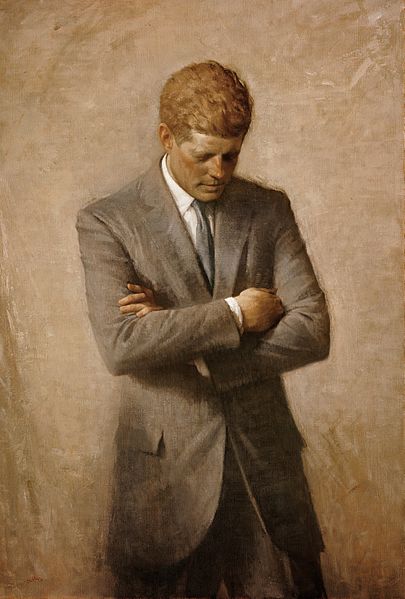
I just watched a fascinating interview with a 1960s White House intern who claimed to have an eighteen month affair with President John F. Kennedy.  But the most interesting thing wasn’t the affair itself, but the way the President’s staff, the “fourth branch” of government (AKA the media), and the entire general public of 1960s America seemed more intent on keeping the secret than on facing the truth about JFK’s many affairs.

It seems that my parents’ generation had so much trust in their government that nobody would even raise the question–that to raise doubts about the integrity of the man who held the highest office in this country would itself be unconscionable.  Rather than face the facts, the American public seemed unwilling to do anything that would shatter the gilded image of the man who led the free world.  And that, quite frankly, is a mindset that I simply cannot understand.

In contrast, my own generation has very little trust in our government.  We’ve been raised in an age of ambiguity, where the enemy doesn’t wear a uniform or pledge allegiance to a flag, but live quietly among us, until they strap a bomb to their bodies or turn a commercial airplane into a weapon of terror.  Or at least, that’s the excuse our government gives us for an increasingly invasive security regime that infringes on our basic liberties, enables the military to hold us in detention indefinitely, and sends our soldiers overseas to fight increasingly senseless wars to “liberate” the people of oil-rich nations who don’t even want us there.  As if that weren’t enough, the economic crash has taught us that all that stuff our parents taught us about equality and opportunity is really just a pack of lies–that the rich get bailouts while the rest of us foot the bill, and all that stuff about changing the world and being whatever you want to be…yeah.  Lies, all of it.

My Dad had an interesting rebuttal to all this, though.  He said that it wasn’t his generation that put the president on a pedestal–it was his generation that tore the pedestal down.  During the 60s and 70s, the Vietnam era and the rise of the hippy movement, his generation fought back and made it acceptable for us to question the president, or to criticize the government, or to do all the things that we take for granted today.  In fact, he said that we’re the ones who are backsliding into complacency, with our deafening echo chambers, our social media inanities, our reactive attachment to corporate brands and advertising, and our almost religious sense of  entitlement.

I’m not totally convinced he’s right, but I do think there’s a fundamental gulf between these three generations.  Our grandparents’ was the silent generation, where people were expected to keep to their own business and not rock the boat.  Our parents’ generation was one of top-down media, where ABC, NBC, and CBS ruled the airwaves and told us all what to think, buy, and believe.

Ours is a much more peer-to-peer generation, but I worry that we’re turning into a collection of mindless herds who are turning the culture wars into a messy riot where we abandon civil dialog and rational thinking for a much more destructive mob mentality that isn’t really building anything, but tearing it all down.

Sometimes, it gets so frustrating that it makes me yearn for the days of the frontier, when anyone could leave it all behind and reinvent themselves somewhere out in the west.  That’s probably why I’m so drawn to science fiction, where space is the final frontier.  There really are times when I wish I could go to the stars and escape to it all, and I think that shows in my writing.

Maybe that’s why I feel so compelled to write Star Wanderers.  It’s basically 80% wish fulfillment, about a guy who goes from planet to planet on the kind of spaceship I wish I had.  It’s not all rosy, of course–space can be a cold, dark, and lonely place–but so can this world, when you’re lost and you don’t really know what you’re doing with your life.

Anyhow, those are just some of my random late-night thoughts about the situation in this country and how much things have changed over the decades.  If I had a time machine and got a chance to go back to the 60s (after seeing The Empire Strikes Back on opening night, of course), I don’t know I’d be able to recognize this as my own country.  But really, I don’t think I recognize anything as my own country anymore.  Like Van Gogh, all I can say is the sight of the stars makes me dream.

Tomorrow, tomorrow

So, I was going to finish Stars of Blood and Glory today…and then I went and spent some time with an old friend, had some dinner and spent the evening with the missionaries…long story short, I think it would be better just to wait until tomorrow than to do a rush job tonight.

I’ve only got two scenes and an epilogue left, which is very strange, because the novel isn’t even 75k words long yet.  Something definitely seems to be missing, and it probably has to do with the storyline of the new characters I introduced.  They’re the prince and princess of a futuristic Japanese culture (with a mix of Polynesian elements) that’s built on giant floating cities on a water world that never fell to the Hameji.  I think I skipped a little too much on the research, so the culture doesn’t feel fleshed out enough at this point.  Also, there’s a whole host of minor characters that I neglected to even give names; in the next draft, I’ll have to work out who they are and how they fit into things.

I’ll definitely finish this book tomorrow, though.  There’s nothing stopping me, and I really need to get it done.

After that, the plan is to immerse myself in the world of Star Wanderers.  I’ve got to be honest, I’m really looking forward to it.  This story came to me like a love child: completely unexpected at a time when I was supposed to be working on other things.  And yet, few other projects I’ve worked on have given me so much satisfaction.  When I let my mind wander, I inevitably find myself daydreaming about it.  And yet, it’s not a story I can force.  I tried that once, and it was as if the characters just refused to cooperate; the answer, quite firmly, was “no.”

As for my next publishing project, I’m going to try to get the illustrated version of Journey to Jordan formatted and up on Amazon and Barnes & Noble before the end of the week. It’s a little intimidating, because I don’t yet know how to add pictures in html such that they turn out well in ebook format.  However, I think it will be a good learning experience, once I climb the learning curve.  Expect to see some news about that very soon.

And as for my New Year’s goal to read a book every week…I know, I know, I missed it last week.  But I plan to make up for it with a couple of really good books in the next couple of days.  Both of them are indie published, and they’re both really fun reads.  The only reason I haven’t finished them is because I’ve been too busy working on my own projects.

So on that note, I think I’m going to retire for the evening with a good book while I wait with baited breath for Kris Rusch’s next Business Rusch post to go live.  Have a good night!

Halfway to 10k

I was going to post my ebook numbers for December and a report for the last quarter, but then I got caught away in my latest novel, Stars of Blood and Glory and wrote over 5.6k words for the day.

This is probably the most new material I’ve written in a single day since 2009–perhaps ever.  Revising tends to come a lot easier for me, so I’ve spent a lot of time in the past doing that, but this indie publishing gig is making me up my game.  I’m working my way up each day; hopefully I’ll be able to write even more tomorrow and keep up the pace until the book is finished.

Of course, it helps that I’m hanging out at my parents’ place without any obligations or time commitments.  I finished my application to the TLG program last week, and they just sent it out today; with luck, I’ll hear back that I’ve been accepted within the next five days, and then I’ll have a definite idea of how much time I have left before I’m off on the next adventure.  It probably won’t be much longer than two or three weeks at that point.

My (rather lofty) goal is to finish the rough draft of Stars of Blood and Glory while I’m here in Massachusetts, seeing as I have nothing else to compete for my time.  Once I’m overseas, it’ll be a flurry of activity and I’ll probably be lucky just to manage one or two thousand words per day, at least until things settle into some kind of routine.

So that’s the plan for the next few days.  In order to finish this book by the end of January, I’ll have to average over 3k words per day, but I think I can do it.  This story is so much fun–the characters are practically leaping off the page at me, and I’ve got some awesome twists planned.  Space battles, mercenaries, a runaway princess, and opposing princes who are determined to prove themselves men–it’s going to be a clash of epic proportions!  I can hardly wait to write it!

Desert Stars is now published!

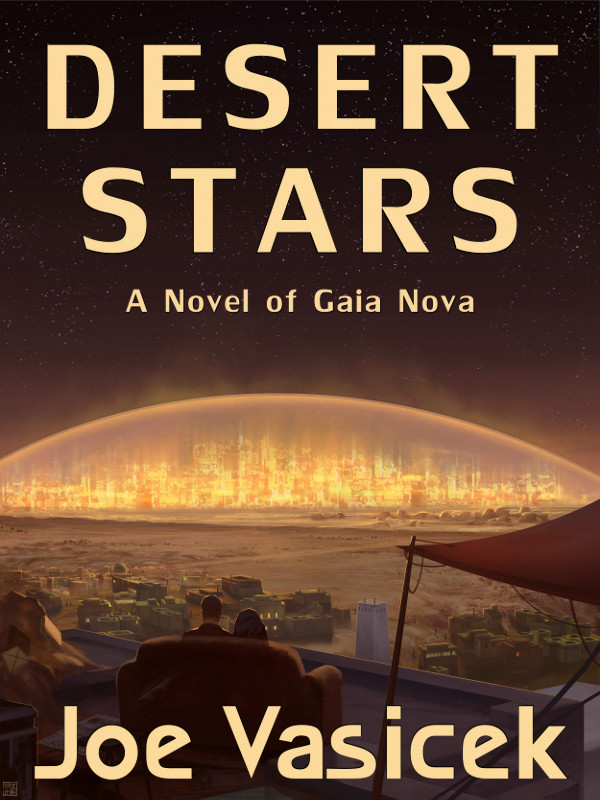
Desert Stars, my third novel (and second in the Gaia Nova series), is now available as an independently published ebook from Amazon, Barnes & Noble, and Smashwords.  Within the next couple of weeks, it’ll be available through Kobo, iTunes, Diesel, Sony, and Xinxii as well.

It’s been a long journey, and I’m thrilled to finally see it come through.  I started the first draft back in the fall of 2008, but had been working on ideas for the world since 2005, when I returned from my LDS church mission in California.  Spending the summer of 2008 in Jordan was a major catalyst for my imagination, and I soon was bursting with ideas for a far-future story on a desert world.

I got stuck in the winter of 2009, however–right before taking Brandon Sanderson’s English 318 class.  Since he encourages all of his students to work on something new, I decided to write a book in the same universe in order to work through some of the world-building things that were holding me up.  That book became Bringing Stella Home, which was a thrill to write all of its own.

The strategy worked; by the time I’d finished that one, I had a much clearer idea where to go with Desert Stars, and an awesome ending that was nothing like anything I’d planned in the first draft.  And so, after graduating in April 2010, I soldiered through and finished the rough draft that summer.

It still had a lot of problems, though.  Fortunately, my first readers were extremely helpful both in pointing those out and in giving me fantastic ideas for other things I could do.  In the second draft that winter, I completely scrapped a major subplot in the second half of the book and focused on perfecting the character arcs for the two main characters: Jalil and Mira.

Around this time, I made the paradigm shift from traditional to indie publishing.  Other projects like Genesis Earth and Bringing Stella Home took my attention for a while, as I learned the basics of the new world and prepared those books for publication.  However, I always kept coming back to Desert Stars: I knew I had a good story there, and I was just itching to bring it to its full potential.

In the fall of 2011, I finally had that opportunity.  The last draft flew by in three weeks, and was one of the funnest writing experiences I’ve had since I started writing seriously in 2007.  By the end, I knew it was ready.  I sent it out to my editor, Josh Leavitt, and started to prepare it for publication.

In writing any book, there are always moments that stand out; experiences where things come together in an unexpected yet memorable way.  One of those came to me in Jordan, while I was walking down Queen Rania street from the University of Jordan to Al-Dustour, and the phrase “Temple of a Thousand Suns” flashed into my mind and sparked the whole novel.  Another of those moments happened while I was driving from Salt Lake to Provo, and Mira’s final words in the last chapter came to me; I literally could not stop screaming for two or three minutes.

I could share more, but if I did, I’d find it difficult to maintain the illusion that I’m not a loony psychopath. 🙂

In any case, it’s just awesome to see the story come to maturity and embark out into the world.  I’m sure this isn’t the end of the journey, but it’s definitely entering a new and exciting phase.  I sincerely believe that this is my best book yet, and I hope you find it as worthwhile to read as I have found it worthwhile to write.  If you do, I would appreciate it greatly if you took the time to post a review, or share it with a friend.  Every little bit helps, and I’m grateful for whatever support you can give!

In the next couple of days, I’m going to send out a newsletter with some freebies including desktop backgrounds of the cover art.  If you’d like to get in on that, be sure to sign up for the email newsletter via the form on the sidebar; you’ll also receive notices for other giveaways, as well as new releases.  It costs nothing and you can always unsubscribe, so there’s no pressure or obligation.

And that just about wraps it up.  Now: on to the next book!