Trope Tuesday: The Three Faces of Eve

Why do so many character combinations come in groups of three?  Unlike love triangles, where the combo is primarily a way to build conflict, the characters in power trios all build on each other in some way.  They might be foils for each other, but as complementary archetypes, they do far more to drive the story together than they ever would apart.

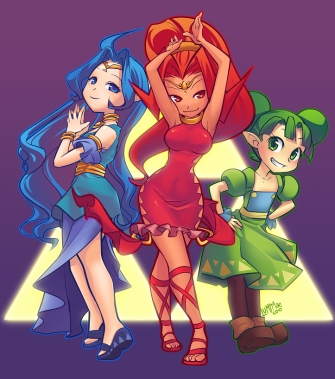
One of the most interesting all-female power trios is the Three Faces of Eve, which combines the archetypes of child, seductress, and wife:

The “child” (who does not have to be a child literally) will be seen as innocent, perhaps to the point of naïveté. The wife, the wiser, calmer aspect, someone around whom one could build a home life. The third, the seductress, is sexually experienced and independent.

Roughly speaking, the characters in the trio correspond to:

  • The Ingenue: A naive, innocent, childlike girl who is just setting out into the world.  In a Freudian Trio, this would be the Ego.
  • The Femme Fatale: A seductive, alluring, mysterious woman who is experienced in the ways of the world.  Unlike the Vamp, she may or may not use her feminine wiles for evil.  In a Freudian Trio, this would be the Id.
  • The Yamato Nadeshiko: A calm, steady, faithful wife, who provides the kind of marital stability and maternal strength that is ideal for settling down and raising a family.  In a Freudian Trio, this would be the Superego.

You’d be surprised to see how often this trope shows up, even in works of science fiction.  In Star Wars, Leia was the child in A New Hope, the wife/mother in Empire Strikes Back, and (what else?) the seductress in Return of the Jedi.  Just about every Star Trek series featured some alignment of these archetypes.

Squaresoft played with this trope a lot in their Final Fantasy series, which may be illustrative to examine in greater depth.  I’ve only played through FF IV, VI, VII, and Chrono Trigger, but each  of these titles features some interesting variations (warning: spoilers!).

Final Fantasy IV: Porom (child), Rydia (seductress), Rosa (wife).

Porom is pretty solidly the child, though Rydia starts out as this and later grows up into the seductress role.  She doesn’t get the guy in the end, though: that would be Rosa, who pretty much starts out with him as well.

In terms of story, the characters don’t really seem to build much on each other, though in terms of gameplay you definitely want to have Rydia and Rosa/Porom in your party (though not Rosa and Porom together–you only need one white mage, after all).

Final Fantasy VI: Relm (child) , Celes (seductress), Terra (wife).

This is my personal favorite in the series.  Unlike IV and VII, which both center around male protagonists, Final Fantasy VI revolves around Terra (world of balance) and Celes (world of ruin) as the central protagonists.  Because they also play a role in the power trio, their characters are quite complex, especially in the second half of the game.  Relm is arguably more of a Mary Sue, but her relation to the other characters, especially Shadow, also makes her role more complex and interesting.

In the end, the romantic subplot is fulfilled by Celes, not Terra, which was something of a surprise to me in my first playthrough.  It works really well, though, because of Celes’s heel face turn and subsequent reformation (in which Locke is arguably a Manic Pixie Dream Girl Spear Counterpart).  Does that also translate into a shift from seductress to wife as well?  I’m not sure, but I’d probably say no–after all, it’s Terra who takes on the mother role in the world of ruin.

Final Fantasy VII: Yuffie (child), Aeris (seductress), Tifa (wife).

The main twist with this one is that visually, you’d think Tifa is the seductress and Aeris is the wife.  In terms of story archetypes, however, it’s just the opposite: Tifa is the one whom Cloud depends on, the one who helps him work through his problems, while Aeris is the shifty, mysterious one.

Unlike IV, where Rosa and Cecil are set up from the very beginning, for a while it actually looks like Aeris and Cloud are going to end up together.  But then, in perhaps the most tragically gut-wrenching moment in all of video game history, Aeris dies (and doesn’t come back).  Since Yuffie is kind of, well, crazy, Tifa and Cloud are pretty much garanteed to get together after that point (and as for Sephiroth…I don’t even want to go there).

Chrono Trigger: Marle (child), Ayla (seductress), Lucca (wife).

Chrono Trigger is interesting because the girl who ends up with the guy in the end (Chrono) is actually the one who fulfills the child archetype, Marle.  It works, though, because of the childlike feel of the story.  Unlike FF VI and IV, Chrono Trigger is not a dark or an edgy tale–it’s heartwarming innocence at its best.  I always did feel that Lucca got the short end of the stick, though–but she did get a cameo in Xenogears, so perhaps the last laugh was hers after all.

Ah, Xenogears. <sigh>

Anyhow, long story short, the Three Faces of Eve power trio is a fascinating way to play with feminine archetypes.  Recently, I’ve become quite interested in it because it showed up quite inadvertently in my current project, Heart of the Nebula.  It’s funny how tropes can sneak up on you like that, especially some of the more archetypal ones.

Anyhow, in its current form the novel is a piece of trash, but now that I’ve recognized the potential to set up this particular power trio, I think I can really make it shine.  If you have any insights, please share–I’m very interested in this trope right now!
Up to my elbows in book surgery

That’s probably the best term for what I’m doing with Heart of the Nebula right now.  Basically, I let some of my darlings live, and they grew some extra limbs and started drooling acid without my realizing it.  But now, I’ve put enough distance between myself and the first draft that I have no qualms about grabbing the axe and chopping off heads.

Don’t worry; this is all a normal part of my creative process.  Maybe someday, stories will burst fully formed from my head like Athena from the brow of Zeus, but for now, my ideas are a lot more like baby turtles–if I’m lucky, one or two out of a dozen will actually reach the water and survive.  Protip: don’t follow the lights.

Speaking of ancient mythology, I’m reading the Argonautica right now, and I can’t help but notice that it would make a really, really, REALLY awesome science fiction story.  No, seriously–think about it.  A group of legendary heroes sets out on an epic voyage in search of some applied phlebotinum macguffin, have all sorts of adventures on strange and distant planets, get the girl to fall in love with the captain, and bring her back with them to their homeworld.  It would also work well as a heroic fantasy, but space is so much more awesome.

Incidently, Kutaisi was the capital of ancient Colchis, where Jason and the Argonauts came seeking the golden fleece.  People still speak of Medea as if she were a real person–generally, they think she was a dirty traitor who sold out her own people.  But people still enjoy the love story, and if you keep your eyes open you can see restaurants and hotels named after her.

So yeah.  Ancient Greek mythology + science fiction = win.  You can definitely expect to see some more of that in my own writing in the future.

In other news, I recently did an interview on fellow indie author Ty Johnston’s blog.  In it, I talk a little about my travel writing, what draws me to speculative fiction, my favorite number (hint: it’s 12), and my insights into the ancient Mayan calendar and the 2012 apocalypse.  It was a lot of fun–you should definitely check it out.

If you would like to host me for an interview on your blog, shoot me an email!  I’m always up for stuff like that.  Otherwise, I’d better roll up my sleeves and get back to hacking up operating on my book.

Trope Tuesday: Hoist By His Own Petard

One of the most satisfying ways to defeat the villain is to have his own nefarious scheme bring about his downfall.  In Hamlet, Shakespeare described this as “hoist by his own petard,” or blown up by his own bomb.  Basically, it’s a self-deposing villain whose evil plans have gone horribly right.

Not only is this a delicious form of death by irony, it’s also a satisfying way to show cosmic justice in action while allowing the heroes to keep their hands clean.  When done best, the villain keeps the tension notched up to eleven and only commits his fatal mistake after the heroes have made their last stand.  Bonus points if the petard takes the form of a minion who decides to switch sides.

Perhaps unsurprisingly, you’ll often find this trope in stories geared towards a younger audience, which generally try to avoid messy endings and shades of gray.  In some ways, it almost resembles a Disney Villain Death, in that the heroes often come out with clean hands and an unambiguously clear conscience.

However, this isn’t always the case–sometimes, it’s precisely because of the shades of gray that the villain’s plans become self-defeating.  Case in point, Pride and Kimblee from Fullmetal Alchemist: Brotherhood.  You’d think that both characters are totally evil–and perhaps they are–but that doesn’t stop the one from undermining the other at just the right moment.

When done right, this is an incredibly satisfying way to defeat a bad guy.  When done poorly, however, it undermines the villain altogether, or turns the story into just another Aesop.  As always, your mileage may vary, so when writing one of these stories it’s important to keep your audience in mind.

In my own books, it’s probably more common for this to happen to the heroes, which probably makes it a form of Two Rights Make A Wrong or Nice Job Breaking It, Hero.  I do enjoy hoisting the villains as well, though, and will almost certainly use this trope in the future.

Trope Tuesday: The Cavalry

Things look bleak: the Big Bad is on the verge of conquering the world, and the heroes have gathered for one last stand.  Just when it looks like all hope is lost, a horn sounds in the distance, and the cavalry arrive to save the day.  Whether a ragtag bunch of minor characters, an army of unlikely heroes, or the ultra-heroic Eagle Squadron, the timely reinforcements use their overwhelming force to crush the villains and save the day.

When done right, this trope can be one of the defining moments of greatness of the entire work.  When done wrong, however, it becomes little more than a Deus Ex Machina of the most unsatisfying kind.  How, then, can this moment be done right?

As with any Deus Ex, one of the keys is to adequately foreshadow the end.  This often takes the form of Gondor Calls For Aid, when the heroes petition the cavalry for assistance before going into battle. To make things interesting, the relationship between the two parties is often complicated and ambiguous, making it doubtable that the cavalry will actually show up.

However, I think it goes deeper than this.  In order for the arrival of the cavalry to be satisfying, it needs to not invalidate everything that the heroes have already gone through.  If the cavalry shows up after the heroes have defeated the Big Bad, and essentially rescue them from a heroic sacrifice, that’s satisfying.  If the heroes are still fighting the Big Bad and the cavalry comes out of nowhere to hand them an unearned victory, that’s cheap.

In English 318R, Brandon Sanderson often used the film versions of the Lord of the Rings Trilogy to illustrate this.  The Battle of Helm’s Deep was satisfying, because the entire premise was to hold out until the third day.  When Eomer arrived with the Rohirrim on the morning of the third day and swept away the Uruk-Hai, that didn’t invalidate King Theoden’s efforts because all he was trying to do was survive.

In the Battle of Minas Tirith, however, Aragorn’s arrival with the unbeatable army of the dead was kind of cheap, because the premise was to defeat the orcs, not to hold out for reinforcements.  Gondor could have just stood down and let the orc army capture the city, and they still would have won in the end.

The two genres where you’re most likely to see this trope are westerns (trope namer) and heroic fantasy. Just about every David Gemmell novel involves a cavalry moment of some kind, and I looove it.  It’s also quite common in military science fiction, too–basically, any story where war is a major part of the narrative.

The variations on this trope are also quite fascinating.  For example:

Trope Tuesday: Language of Love

Oh look!  While traveling in distant lands, the hero met a girl–probably the chief’s daughter–and fell (or rather, stumbled) in love.  The catch?  Neither of them speak the same language.

That’s okay, though: through the power of love, the two of them will somehow find a way to understand each other.  Whether through touch, music, math, or a montage filled with magical sparkles, they come to discover that love itself is a language, one which they know fluently.

To be honest, I was a little disappointed in the page for this trope.  It’s pretty dang sparse, though it does make a couple of good points.  The main one is that this type of story almost always has the male character speak the language of  the audience, with the female character being the foreign or exotic one.  That might be because the seductress is such a powerful character archetype…but then again, it might just be because everything sounds sexier in French.

My favorite example of this trope is in the film Jeremiah Johnson, where the hero unwittingly stumbles into a marriage with–you guessed it–the chief’s daughter.  What starts out as an awkward pairing, to say the least, turns into a wonderfully endearing love story, as Jeremiah builds a cabin for the two of them (and the mute boy he picked up earlier…long story) and together they become a family.

Because this is a major driving element in Star Wanderers, the novel I’m currently writing, I’m especially conscious of this trope right now.  However, I can’t think of many good examples where this trope came into play.  Do you have any ideas that you can share?  Favorite stories where love overcame a major language barrier?  If so, I would love to hear about it.  Because in spite of my tongue-in-cheek comment about the sparkles, I think this trope has some really awesome potential.

Image by Kevin Jackson.  Taken from here.

Trope Tuesday: Abduction is Love

In real life, abduction is an awful, violent thing that we hope would never happen to us or anyone we know.  But in fiction, the Rule of Romantic can make abduction the basis of a wonderful, heartwarming love storyat least for some of us.

This is actually a more common trope than you might think.  It’s the underlying premise for Beauty and the Beast, though Disney rewrote that part out of it.  It’s a major plot element in Watership Down, as well as The Courtship of Princess Leia.  More recently, Twilight featured a few variations on this trope, though considering the source, that probably isn’t surprising.

In G and PG rated versions, this often leads to And Now You Must Marry Me.  In PG-13 and R rated versions, leads to Rape Is Love, with many unfortunate implications.  Due to the violent nature of the story, it often involves a lot of Slap-Slap-Kiss.  Stockholm Syndrome, the psychological phenomenon whereby victims of abduction develop an emotional connection with their captors, is the overarching theme, making any abduction love story a match made in Stockholm.

In the West, this trope tends to be a lot less prominent than it used to be.  However, if you look at the trappings of our marriage customs, you start to notice some disturbing trends that point to a time when abduction-as-romance was much more common.  For example, what was the original function of the best man at a wedding?  Quite possibly, it was to keep the bride from escaping (or being rescued).  And why does the groom whisk the bride away to a remote, isolated place to consummate the marriage?  To evade the bride’s angry family, of course.

Here in Georgia, this trope is alive and well, not just in fiction but in real life–seriously.  It’s called motatseba, and is often discussed with a wink and a nod.  In the family that’s hosting me, the mother married her husband after he abducted her, then bore him four children.  Now, they both seem to remember it rather fondly.

This is such a bizarre tradition that I’m going to dedicate an entire post to it…after I figure out just what the hell is going on.  Seriously, I can barely make sense of the practice–it’s like a twisted game of tag involving sex and arranged marriage.  How it can possibly lead to love…that’s what I’m trying to figure out.

However, I’m sure it involves some interesting variation of this trope.

Trope Tuesday: Chess Motifs

Chess is quite possibly the oldest, deepest, most well known and widely played board game in the world.  It should come as no surprise, then, that it’s often used as a motif in works of fiction.

The interesting thing is how well the pieces fit some of the classic character archetypes:

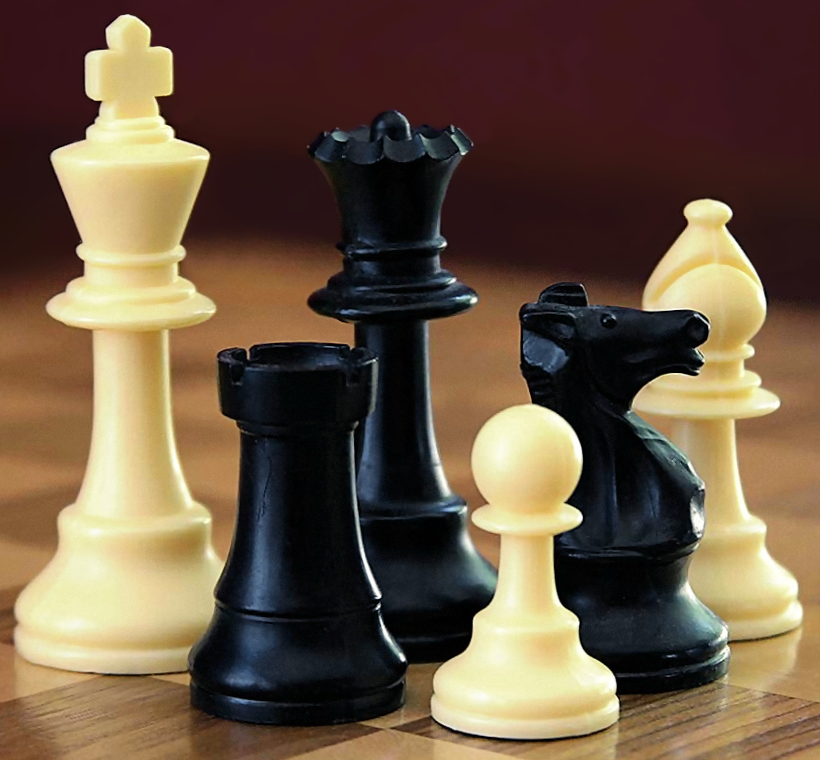
  • The King is like the Hero: the most indispensable character around whom the story revolves.
  • The Queen is like the Chick (or perhaps the Heart): less appreciated than the Hero but a powerful character who holds the team together (and whose loss often makes the team fall apart).
  • The Rook is like the Big Guy: the stoic, straightforward heavy-lifter who might not be quick (rooks are often the last pieces to be developed) but pulls a lot of weight, especially in the endgame.
  • The Bishop is like the Smart Guy: quick and versatile, mystical and unpredictable, striking from a long distance and often performing two or three jobs at once, but lacking the power by himself to achieve victory.
  • The Knight is like the Lancer: likely to go over the others’ heads and the one most likely to sacrifice himself for the cause (knights before bishops, after all).
  • The Pawns are like the Red Shirts: expendable minor characters who may, if they push forward bravely and stay faithful to the end, eventually become queens.

And that’s not all.  The major chess strategies also correlate loosely to major story tropes.  For example, at the beginning of the game, it’s important to move the king to safety, while in the endgame, the king becomes a much more important offensive piece.  Likewise, the hero often spends the first half of the story running away from the bad guys, while in the second half, he starts to take real action.

And the list goes on.  The more I learn about chess, the more parallels I see.  It’s gotten to the point where I want to try diagramming a novel, or perhaps a series, according to a chess game, with that fact being part of the big reveal.  Or perhaps to have one of the major characters have a long-standing chess rivalry with another character who ends up being a major bad guy.

Or something.  I’m just starting a new novel, so everything looks fresh and exciting.  The story will probably change and evolve considerably over the course of writing it, but since it’s a fantasy novel, I think that some chess motifs may be especially appropriate.  Fantasy, after all, is about taking the reader back to a golden age of magic lost in the pages of history, and chess is perhaps the oldest popular game in the world.

In the meantime, is anyone up for a game of chess?

Image (cc) from wikimedia commons.

Trope Tuesday: True Neutral

The True Neutral is something of an enigma.  They generally take no side, either because they have moved beyond good and evil, or because they simply don’t see good and evil the way we do.  Or because this isn’t their war and they just want to be left alone.  Or…well, let’s get to it.

From the easydamus character alignment page:

A neutral character does what seems to be a good idea. She doesn’t feel strongly one way or the other when it comes to good vs. evil or law vs. chaos. Most neutral characters exhibit a lack of conviction or bias rather than a commitment to neutrality.

Some neutral characters, on the other hand, commit themselves philosophically to neutrality. They see good, evil, law, and chaos as prejudices and dangerous extremes. They advocate the middle way of neutrality as the best, most balanced road in the long run.

As you might expect, this alignment doesn’t describe just one type of character.  In fact, there are many different archetypes that fall under True Neutral.  They include:

That’s quite a spread, isn’t it?  The main thing to keep in mind is that these are the characters who refuse to take sides–not just in whatever overworld conflict is driving the story, but in the ethical questions that the story raises (unless neutrality itself is their answer).

My favorite example of this trope is the Childlike Empress from The Neverending Story.  As the very embodiment of Fantasia, she transcends good and evil so completely that her power, the Auryn, cannot be used to forbid a monster from acting on its own evil nature.  Truth from Fullmetal Alchemist is another good example of a transcendent True Neutral.

With everyday, down-to-earth characters, though, this alignment tends to tick me off.  The Ents, for example, very much fall under this trope (as does Tom Bombadil…unless you subscribe to this theory).  Most others examples either come across as weak, selfish, or cowardly to me, so I don’t really care much for this alignment–unless it’s the starting point of a well-constructed character arc.

For that reason, in my own work, most True Neutrals are either straight-up antagonists or gradually shift in alignment as the story progresses.  In Genesis Earth, Michael Anderson starts out as one of the weaker True Neutral types, but changes as events in the story make him grow.  In Desert Stars, Sathi probably falls into this type, though I’m not so sure; either way, he’s very easily manipulated by his Neutral Evil wife.  In Bringing Stella Home, Ilya falls under this alignment due to his moral cowardice, and Anya might as well, though more as a Selfish Good than anything else.  Roman probably does too, but more because he’s old and wants to give up the fight; that’s something I’m currently working on in Stars of Blood and Glory.

I haven’t done a transcendent True Neutral yet, but if I ever write a heroic fantasy tale with gods and demons, I probably will.  After all, if Michael Ende did it in my favorite novel of all time, how can I resist?

Trope Tuesday: Lawful Neutral

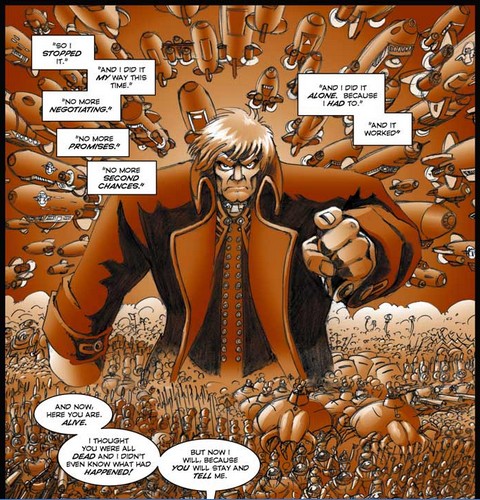
Hey, SOMEONE had to bring order to Europa.

Unlike the Lawful Good, the Lawful Neutral has no qualms about committing heinous acts to maintain order.  Whether for country, for position or for the preservation of the English language, these characters believe in law above all else, giving stern chase or sacrificing their own personal feelings to achieve it.

From the easydamus character alignment page:

A lawful neutral character acts as law, tradition, or a personal code directs her. Order and organization are paramount to her. She may believe in personal order and live by a code or standard, or she may believe in order for all and favor a strong, organized government.

Interestingly, while Lawful Neutrals believe in upholding some form of law, it doesn’t always have to be the law.  Characters who follow a strict personal code of honor often fall under this alignment, even if that code of honor runs contrary to the law of the land.  The most extreme example of this is the Übermensch, who transcends the laws of society and becomes a law unto himself (though in a lot of cases, the Übermensch ends up being Lawful Evil).

While it may seem like most Lawful Neutrals would be antagonists, that’s not always the case.  In Fullmetal Alchemist, General Olivier Armstrong may be stern and austere, but she spends most of the story on the side of the good guys.  And in Girl Genius, Klaus might seem like a bad guy at first, but really, he just wants to restore order and defeat the Other.  Both Death and Lord Vetinari in the Discworld series are also Lawful Neutrals, but they’re never on the bad guys’ side or the good guys’ side…they’re neutral.

In my own work, the best example of this would probably be the Patrician from Heart of the Nebula. I haven’t published this one yet, but I hope to have it out later this year.  Abaqa from Stars of Blood and Glory is another good example, the son of Qasar and Sholpan.  But in the works I’ve already published, Ben from Bringing Stella Home is probably the most prominent Lawful Neutral.

Trope Tuesday: Neutral Evil

Have you ever encountered a villain who you just hated? One who only cares about himself (or herself), who has no real loyalties and will sell out his friends, or even his master?  One who treats people as means to an end, and will use whatever means necessary to achieve those ends?  Chances are, that villain is a Neutral Evil.

From magnificent bastards to dirty cowards, from card carrying villains to seductresses and bounty hunters, this character alignment can take many different shapes and forms.  The one thing they have in common, however, is that they’ll do just about anything to further their own evil ends–including pitting the other villains against themselves.  Like the Chaotic Neutral, the Neutral Evil always looks out for #1–though entirely out of pure selfishness, as opposed to a love for free will and individuality.

From the easydamus character alignment page:

A neutral evil villain does whatever she can get away with. She is out for herself, pure and simple. She sheds no tears for those she kills, whether for profit, sport, or convenience. She has no love of order and holds no illusion that following laws, traditions, or codes would make her any better or more noble. On the other hand, she doesn’t have the restless nature or love of conflict that a chaotic evil villain has.

Of all the alignments, Neutral Evil can be the most dangerous because characters with this alignment have no qualms about doing whatever needs to be done to achieve their evil goals.  However, characters with this alignment also tend not to become evil overlords, because they backstab each other too much and don’t have what it takes to run a large organization.  Within their limited spheres of influence, however, they can be deadly.

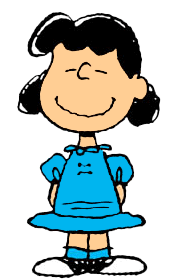
There are a lot of Neutral Evils who I love to hate, but Lucy van Pelt from Peanuts is definitely near the top of the list.  Saruman is another one, though he’s less of a magnificent bastard than Sephiroth (Why did you have to kill Aeris?  WHY???).  And of all the Neutral Evils, Voldemort is probably the most ambitious.

In my own works, my favorite Neutral Evil would have to be Shira from Desert Stars.  Man, I hated her so much…once I got her character down, it was a real joy to write. 🙂 From Bringing Stella Home / Sholpan, Borta is definitely a Neutral Evil.  Qasar leans more to the lawful side, while Gazan leans to the chaotic, but Borta is squarely neutral–and she’s vicious.  Genesis Earth and Star Wanderers, however, are generally feel-good stories, so they don’t really have anyone with this character alignment.