Trope Tuesday postponed again

Sorry, but no Trope Tuesday post this week.  Long story short, more internet problems–I’m blogging right now from the McDonald’s on Tch’avtch’avadze Street.  Since my battery’s running out, this is going to have to be a quick post.

I suppose I should ask, though: what tropes do you want me to cover in the future?  I’m open to pretty much anything, as long as it’s got a tvtropes page.  Together, we can enable our addictions have some productive story research.

In other news, I finished part III of Star Wanderers, and I’m putting that project on hold for a while.  Writing a novel in serial parts is proving to be a lot more difficult than writing it straight.  Not only do I hit a wall at the 2/3rds mark, but I have difficulty moving on to the next part until the part before it is free of major problems.  Because I have to take a break and distance myself before I can really address those problems, I think it will be better to move on to something else.

On the upside, it only takes two or three weeks to knock out each draft, so I’m not too concerned about finishing this project before the end of the year.  Part I is already set to go, and Part II just needs some vetting before I feel it’s ready.  If you’re one of my first readers and you’re up for a quick novella-sized work, let me know.

That’s about all for now. I also signed up to do a couple of blog interviews, so those should be up in a couple of weeks.  And I’ve also got some more posts coming about Georgia and Turkey, so that should be interesting.  Stay tuned!
Trope Tuesday: Language of Love

Oh look!  While traveling in distant lands, the hero met a girl–probably the chief’s daughter–and fell (or rather, stumbled) in love.  The catch?  Neither of them speak the same language.

That’s okay, though: through the power of love, the two of them will somehow find a way to understand each other.  Whether through touch, music, math, or a montage filled with magical sparkles, they come to discover that love itself is a language, one which they know fluently.

To be honest, I was a little disappointed in the page for this trope.  It’s pretty dang sparse, though it does make a couple of good points.  The main one is that this type of story almost always has the male character speak the language of  the audience, with the female character being the foreign or exotic one.  That might be because the seductress is such a powerful character archetype…but then again, it might just be because everything sounds sexier in French.

My favorite example of this trope is in the film Jeremiah Johnson, where the hero unwittingly stumbles into a marriage with–you guessed it–the chief’s daughter.  What starts out as an awkward pairing, to say the least, turns into a wonderfully endearing love story, as Jeremiah builds a cabin for the two of them (and the mute boy he picked up earlier…long story) and together they become a family.

Because this is a major driving element in Star Wanderers, the novel I’m currently writing, I’m especially conscious of this trope right now.  However, I can’t think of many good examples where this trope came into play.  Do you have any ideas that you can share?  Favorite stories where love overcame a major language barrier?  If so, I would love to hear about it.  Because in spite of my tongue-in-cheek comment about the sparkles, I think this trope has some really awesome potential.

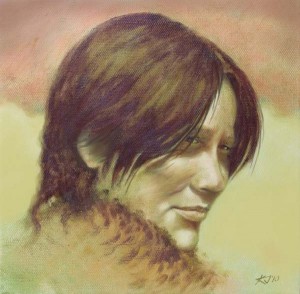
Image by Kevin Jackson.  Taken from here.

Trope Tuesday: Abduction is Love

In real life, abduction is an awful, violent thing that we hope would never happen to us or anyone we know.  But in fiction, the Rule of Romantic can make abduction the basis of a wonderful, heartwarming love storyat least for some of us.

This is actually a more common trope than you might think.  It’s the underlying premise for Beauty and the Beast, though Disney rewrote that part out of it.  It’s a major plot element in Watership Down, as well as The Courtship of Princess Leia.  More recently, Twilight featured a few variations on this trope, though considering the source, that probably isn’t surprising.

In G and PG rated versions, this often leads to And Now You Must Marry Me.  In PG-13 and R rated versions, leads to Rape Is Love, with many unfortunate implications.  Due to the violent nature of the story, it often involves a lot of Slap-Slap-Kiss.  Stockholm Syndrome, the psychological phenomenon whereby victims of abduction develop an emotional connection with their captors, is the overarching theme, making any abduction love story a match made in Stockholm.

In the West, this trope tends to be a lot less prominent than it used to be.  However, if you look at the trappings of our marriage customs, you start to notice some disturbing trends that point to a time when abduction-as-romance was much more common.  For example, what was the original function of the best man at a wedding?  Quite possibly, it was to keep the bride from escaping (or being rescued).  And why does the groom whisk the bride away to a remote, isolated place to consummate the marriage?  To evade the bride’s angry family, of course.

Here in Georgia, this trope is alive and well, not just in fiction but in real life–seriously.  It’s called motatseba, and is often discussed with a wink and a nod.  In the family that’s hosting me, the mother married her husband after he abducted her, then bore him four children.  Now, they both seem to remember it rather fondly.

This is such a bizarre tradition that I’m going to dedicate an entire post to it…after I figure out just what the hell is going on.  Seriously, I can barely make sense of the practice–it’s like a twisted game of tag involving sex and arranged marriage.  How it can possibly lead to love…that’s what I’m trying to figure out.

However, I’m sure it involves some interesting variation of this trope.

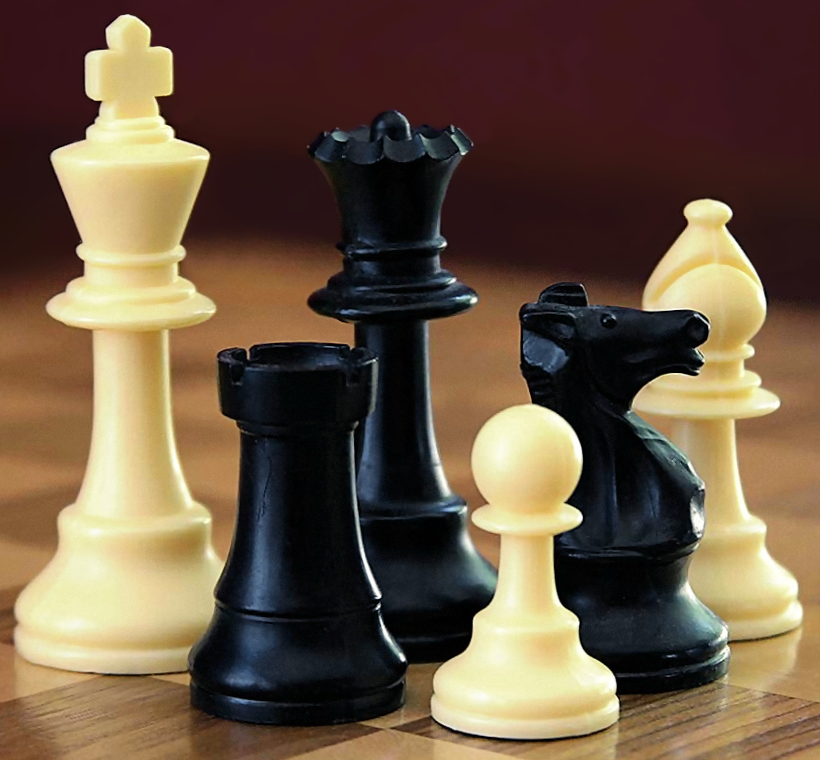
Trope Tuesday: Chess Motifs

Chess is quite possibly the oldest, deepest, most well known and widely played board game in the world.  It should come as no surprise, then, that it’s often used as a motif in works of fiction.

The interesting thing is how well the pieces fit some of the classic character archetypes:

  • The King is like the Hero: the most indispensable character around whom the story revolves.
  • The Queen is like the Chick (or perhaps the Heart): less appreciated than the Hero but a powerful character who holds the team together (and whose loss often makes the team fall apart).
  • The Rook is like the Big Guy: the stoic, straightforward heavy-lifter who might not be quick (rooks are often the last pieces to be developed) but pulls a lot of weight, especially in the endgame.
  • The Bishop is like the Smart Guy: quick and versatile, mystical and unpredictable, striking from a long distance and often performing two or three jobs at once, but lacking the power by himself to achieve victory.
  • The Knight is like the Lancer: likely to go over the others’ heads and the one most likely to sacrifice himself for the cause (knights before bishops, after all).
  • The Pawns are like the Red Shirts: expendable minor characters who may, if they push forward bravely and stay faithful to the end, eventually become queens.

And that’s not all.  The major chess strategies also correlate loosely to major story tropes.  For example, at the beginning of the game, it’s important to move the king to safety, while in the endgame, the king becomes a much more important offensive piece.  Likewise, the hero often spends the first half of the story running away from the bad guys, while in the second half, he starts to take real action.

And the list goes on.  The more I learn about chess, the more parallels I see.  It’s gotten to the point where I want to try diagramming a novel, or perhaps a series, according to a chess game, with that fact being part of the big reveal.  Or perhaps to have one of the major characters have a long-standing chess rivalry with another character who ends up being a major bad guy.

Or something.  I’m just starting a new novel, so everything looks fresh and exciting.  The story will probably change and evolve considerably over the course of writing it, but since it’s a fantasy novel, I think that some chess motifs may be especially appropriate.  Fantasy, after all, is about taking the reader back to a golden age of magic lost in the pages of history, and chess is perhaps the oldest popular game in the world.

In the meantime, is anyone up for a game of chess?

Image (cc) from wikimedia commons.

Trope Tuesday: True Neutral

The True Neutral is something of an enigma.  They generally take no side, either because they have moved beyond good and evil, or because they simply don’t see good and evil the way we do.  Or because this isn’t their war and they just want to be left alone.  Or…well, let’s get to it.

From the easydamus character alignment page:

A neutral character does what seems to be a good idea. She doesn’t feel strongly one way or the other when it comes to good vs. evil or law vs. chaos. Most neutral characters exhibit a lack of conviction or bias rather than a commitment to neutrality.

Some neutral characters, on the other hand, commit themselves philosophically to neutrality. They see good, evil, law, and chaos as prejudices and dangerous extremes. They advocate the middle way of neutrality as the best, most balanced road in the long run.

As you might expect, this alignment doesn’t describe just one type of character.  In fact, there are many different archetypes that fall under True Neutral.  They include:

That’s quite a spread, isn’t it?  The main thing to keep in mind is that these are the characters who refuse to take sides–not just in whatever overworld conflict is driving the story, but in the ethical questions that the story raises (unless neutrality itself is their answer).

My favorite example of this trope is the Childlike Empress from The Neverending Story.  As the very embodiment of Fantasia, she transcends good and evil so completely that her power, the Auryn, cannot be used to forbid a monster from acting on its own evil nature.  Truth from Fullmetal Alchemist is another good example of a transcendent True Neutral.

With everyday, down-to-earth characters, though, this alignment tends to tick me off.  The Ents, for example, very much fall under this trope (as does Tom Bombadil…unless you subscribe to this theory).  Most others examples either come across as weak, selfish, or cowardly to me, so I don’t really care much for this alignment–unless it’s the starting point of a well-constructed character arc.

For that reason, in my own work, most True Neutrals are either straight-up antagonists or gradually shift in alignment as the story progresses.  In Genesis Earth, Michael Anderson starts out as one of the weaker True Neutral types, but changes as events in the story make him grow.  In Desert Stars, Sathi probably falls into this type, though I’m not so sure; either way, he’s very easily manipulated by his Neutral Evil wife.  In Bringing Stella Home, Ilya falls under this alignment due to his moral cowardice, and Anya might as well, though more as a Selfish Good than anything else.  Roman probably does too, but more because he’s old and wants to give up the fight; that’s something I’m currently working on in Stars of Blood and Glory.

I haven’t done a transcendent True Neutral yet, but if I ever write a heroic fantasy tale with gods and demons, I probably will.  After all, if Michael Ende did it in my favorite novel of all time, how can I resist?

Trope Tuesday: Lawful Neutral

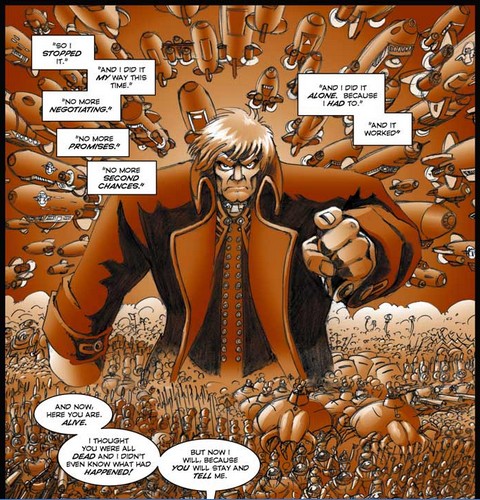
Hey, SOMEONE had to bring order to Europa.

Unlike the Lawful Good, the Lawful Neutral has no qualms about committing heinous acts to maintain order.  Whether for country, for position or for the preservation of the English language, these characters believe in law above all else, giving stern chase or sacrificing their own personal feelings to achieve it.

From the easydamus character alignment page:

A lawful neutral character acts as law, tradition, or a personal code directs her. Order and organization are paramount to her. She may believe in personal order and live by a code or standard, or she may believe in order for all and favor a strong, organized government.

Interestingly, while Lawful Neutrals believe in upholding some form of law, it doesn’t always have to be the law.  Characters who follow a strict personal code of honor often fall under this alignment, even if that code of honor runs contrary to the law of the land.  The most extreme example of this is the Übermensch, who transcends the laws of society and becomes a law unto himself (though in a lot of cases, the Übermensch ends up being Lawful Evil).

While it may seem like most Lawful Neutrals would be antagonists, that’s not always the case.  In Fullmetal Alchemist, General Olivier Armstrong may be stern and austere, but she spends most of the story on the side of the good guys.  And in Girl Genius, Klaus might seem like a bad guy at first, but really, he just wants to restore order and defeat the Other.  Both Death and Lord Vetinari in the Discworld series are also Lawful Neutrals, but they’re never on the bad guys’ side or the good guys’ side…they’re neutral.

In my own work, the best example of this would probably be the Patrician from Heart of the Nebula. I haven’t published this one yet, but I hope to have it out later this year.  Abaqa from Stars of Blood and Glory is another good example, the son of Qasar and Sholpan.  But in the works I’ve already published, Ben from Bringing Stella Home is probably the most prominent Lawful Neutral.

Trope Tuesday: Neutral Evil

Have you ever encountered a villain who you just hated? One who only cares about himself (or herself), who has no real loyalties and will sell out his friends, or even his master?  One who treats people as means to an end, and will use whatever means necessary to achieve those ends?  Chances are, that villain is a Neutral Evil.

From magnificent bastards to dirty cowards, from card carrying villains to seductresses and bounty hunters, this character alignment can take many different shapes and forms.  The one thing they have in common, however, is that they’ll do just about anything to further their own evil ends–including pitting the other villains against themselves.  Like the Chaotic Neutral, the Neutral Evil always looks out for #1–though entirely out of pure selfishness, as opposed to a love for free will and individuality.

From the easydamus character alignment page:

A neutral evil villain does whatever she can get away with. She is out for herself, pure and simple. She sheds no tears for those she kills, whether for profit, sport, or convenience. She has no love of order and holds no illusion that following laws, traditions, or codes would make her any better or more noble. On the other hand, she doesn’t have the restless nature or love of conflict that a chaotic evil villain has.

Of all the alignments, Neutral Evil can be the most dangerous because characters with this alignment have no qualms about doing whatever needs to be done to achieve their evil goals.  However, characters with this alignment also tend not to become evil overlords, because they backstab each other too much and don’t have what it takes to run a large organization.  Within their limited spheres of influence, however, they can be deadly.

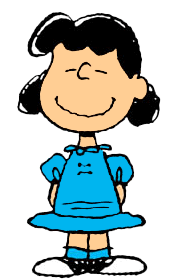
There are a lot of Neutral Evils who I love to hate, but Lucy van Pelt from Peanuts is definitely near the top of the list.  Saruman is another one, though he’s less of a magnificent bastard than Sephiroth (Why did you have to kill Aeris?  WHY???).  And of all the Neutral Evils, Voldemort is probably the most ambitious.

In my own works, my favorite Neutral Evil would have to be Shira from Desert Stars.  Man, I hated her so much…once I got her character down, it was a real joy to write. 🙂 From Bringing Stella Home / Sholpan, Borta is definitely a Neutral Evil.  Qasar leans more to the lawful side, while Gazan leans to the chaotic, but Borta is squarely neutral–and she’s vicious.  Genesis Earth and Star Wanderers, however, are generally feel-good stories, so they don’t really have anyone with this character alignment.

Trope Tuesday: Chaotic Neutral

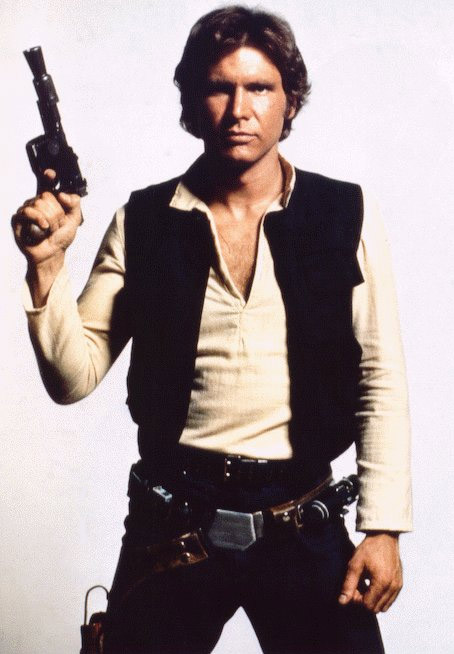
Look, I ain't in this for your revolution, and I'm not in it for you, Princess. I expect to be well paid--I'm in it for the money.

If you’ve ever read a space adventure with smugglers and pirates, or a sword & sorcery with rogue thieves and master-less swordsmen, or a western with gritty outlaws and mountain men, you know this character alignment.  If you’re a fan of any of these genres, chances are you love him, too.

The Chaotic Neutral‘s one consistent rule is to always look out for #1.  Beyond that, he’s a free spirit who believes in individuality and resists anyone or anything that tries to control him.  Rebellious spirits and lovable rogues tend to fall into this alignment, but so do tricksters and wild cards.  Their resistance to any form of personal restriction makes them unreliable allies, despite what Jack Sparrow says.

From the easydamus alignment page:

A chaotic neutral character follows his whims. He is an individualist first and last. He values his own liberty but doesn’t strive to protect others’ freedom. He avoids authority, resents restrictions, and challenges traditions.

A lot of characters start out as this but tend to shift as the story progresses.  Han Solo, for example, shifts from Chaotic Neutral to Chaotic Good as he becomes more and more involved with the Rebellion.  The Jägers from Girl Genius are Chaotic Neutral until they have a Heterodyne to lead them.  But in other stories, such as Pirates of the Caribbean and Schlock Mercenary, the Chaotic Neutral serves as an anchor.

My favorite Chaotic Neutral is probably Waylander from David Gemmell’s Drenai series.  The Jerusalem Man is another good one–in fact, just about every one of his books has a Chaotic Neutral that I love.  Haruhi Suzumiya is an excellent example of a female Chaotic Neutral–in fact, she’s probably the queen of this particular character alignment.

In my own work, the best example of a Chaotic Neutral would probably be Tamu from Bringing Stella Home / Sholpan.  Even though she’s technically a slave, she doesn’t really mind it because she has everything she wants and doesn’t have to be beholden to anybody (not even Qasar, really, since she’s his favorite).  Amina from Desert Stars is also Chaotic Neutral, in contrast with Surayya, who is more of a Lawful Neutral, though sometimes it’s hard to tell.  And in Genesis Earth, Terra is definitely a Chaotic Neutral at the beginning, though she shifts a little somewhere around the middle.

I’m hesitant to admit this, but when I took the character alignment test for myself, I tested out as a Chaotic Neutral.  As to what that means, exactly…I’m not going to say. o.0

Trope Tuesday: Neutral Good

Arguably the best of the good-aligned characters, the Neutral Good can always be counted on to do the right thing, whether that means working within the system or rebelling against it.  Whether young or old, soft or shrewd, nice or not so nice, these are the guys (and girls) most likely to save the world and defeat the enemy with love.

From the easydamus character alignment page:

A neutral good character does the best that a good person can do. He is devoted to helping others. He works with kings and magistrates but does not feel beholden to them.

The Neutral Good is not devoid of weaknesses, of course.  Although they are devoted to good, their lack of commitment to law means that they are not always willing to enforce it.  Also, for those who just want to get things done, this alignment can be somewhat limiting, in the way that a commitment to any higher ideal usually is.

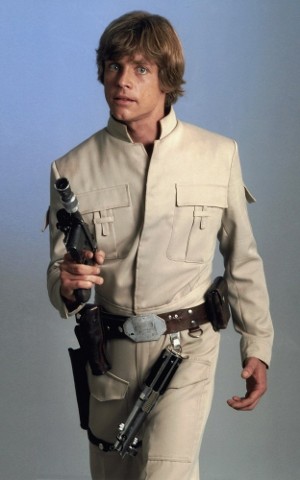
Interestingly, this is a very common alignment for heroes in space opera stories.  Case in point, Luke Skywalker: even though he’s young and reckless, he’s not above learning the ways of the force and joining the Jedi order.  Miles Vorkosigan from Lois McMaster Bujold’s Vorkosigan series also falls squarely into the Neutral Good camp.  Moving on to manga and webcomics, Alphonse and Winry from Fullmetal Alchemist both fall under this alignment, giving balance to Edward’s more chaotic outbursts.  Agatha from Girl Genius is also a Neutral Good…at least, when there aren’t any wrenches nearby.

There are quite a few characters with this alignment in my own work.  Even though she’s a mercenary captain, Danica from Bringing Stella Home falls squarely into this alignment; she’s got a tough outer shell, but she’ll do anything for her men, even…well, I don’t want to ruin Stars of Blood and Glory. 😉 Also from Bringing Stella Home / Sholpan, Stella is solidly Neutral Good, which is part of why the ending is so deliciously twisted.  In Star Wanderers, Jeremiah falls into this alignment mostly through default, which is good for Noemi because the circumstances of the novel put her totally at his mercy.  And in Desert Stars, this is probably Mira’s alignment, though she’s easily manipulated by her Neutral Evil mother.

What can I say?  I’ve got a soft spot for Neutral Goods.  Considering how well this kind of a hero fits in to a classic space adventure, it shouldn’t come as any surprise.

Trope Tuesday: Lawful Evil

If the term “villain” applies to anyone, it applies to the Lawful Evil.  Whether the evil overlord, his trusted right-hand man, or one of his devoted minions, these characters are dedicated wholeheartedly to their cause, whether they believe it will lead to a better world or not.  Taking over the world is often a major obsession, because hey, someone’s got to do it.  A staple of the evil empire, these guys often turn their country into an industrialized wasteland, though they often have propaganda machines to take care of any bad press.  Bonus points if they can transform into a freakish monster in battle.

From the easydamus character alignment page:

A lawful evil villain methodically takes what he wants within the limits of his code of conduct without regard for whom it hurts. He cares about tradition, loyalty, and order but not about freedom, dignity, or life. He plays by the rules but without mercy or compassion. He is comfortable in a hierarchy and would like to rule, but is willing to serve. He condemns others not according to their actions but according to race, religion, homeland, or social rank. He is loath to break laws or promises.

While Lawful Evils believe in following rules and keeping their word, they’re not above emotional manipulation, negotiating unfavorable contracts, or following the law in letter only.  Even so, they tend to suffer from genre blindness and bureaucratic stupidity (as well as megalomania–but hey, that’s part of the job description).

According to tvtropes, Lawful Evils come in four types:

  1. The supreme ruler, dedicated to establishing and maintaining a civic order that is itself evil.  A good example of this would be Sauron from The Lord of the Rings.
  2. A zealot or übermensch whose moral code falls outside of established social norms.  Khan from The Wrath of Khan is a pretty good example of this, as is Tyler Durden from Fight Club (though your mileage may vary).
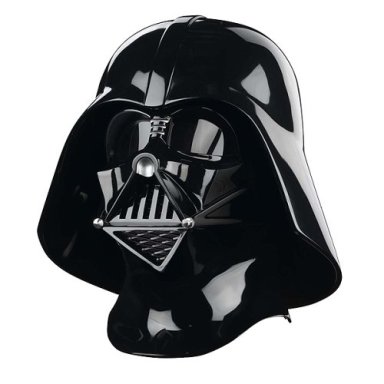
  3. The Dragon or other minion who may have their own goals, but answers to the big bad.  Darth Vader is probably the most well-known example.
  4. A complete monster who is dedicated to the destruction of free will and liberty.  The Mormon conception of Satan fits this perfectly.

The scary thing about this trope is that it actually exists in real life.  In fact, outside of our sheltered middle-class, liberal democratic existence (a relatively recent and unusual development in the eyes of history), this type of overlord tends to be the rule and not the exception.  You don’t have to look any further than North Korea, Burma, or Syria for examples of this–which is to say nothing of the Soviet Union, the Third Reich, or the British Empire.

My favorite example of this trope is probably Darth Vader, not just because of how badass he is, but because of his heel face turn at the end of Return of the Jedi.  Ignoring how bad episodes I, II, and III were, his character arc really is the thing that makes that story.  And while we’re on the subject of history, let’s not forget this epic showdown between Stalin and Hitler.  Seriously, click that link.

In my own work, the best example of a Lawful Evil would probably be Qasar from Bringing Stella Home / Sholpan.  He’s more of the affable type than a true evil overlord, though; that would be Tagatai, who doesn’t really come to power until Stars of Blood and Glory. A much more sinister example would be Emile from Heart of the Nebula, or the villain I have planned for Edenfall–I’d better finish those!  And of course, there’s Sheikh Sathi from Desert Stars, though he’s mostly a type 3 Lawful Evil under the thumb of his Neutral Evil wife.

Perhaps one of the reasons I haven’t done a truly despicable Lawful Evil yet is because I’ve been kind of sheltered here in the states.  It will be interesting to see how my writing changes after spending some time in Eastern Europe; Georgia, after all, is the homeland of Stalin.

Darth Vader helmet taken from this site.