Thoughts on writing characters

A couple months ago, I was listening to one of my personal recordings of Brandon Sanderson’s English 318 lectures from last  year’s class.  The topic was writing characters.

Brandon outlined several techniques for making characters sympathetic.  He also outlined how to round them out: give them flaws and handicaps, as well as little quirks to make them unique and memorable.

However, I couldn’t help thinking that something was missing in his formulation.

Before I continue, let me say that I’m not disparaging or criticizing Brandon Sanderson’s abilities to write compelling, well-rounded characters.  As his novel Mistborn shows, writing characters is one of his strengths.

At the same time, I feel that the “checklist” approach to writing characters can be dangerously counter-productive.  Too often, characters in sub-par novels feel like a patchwork of characteristics and personality traits, not like actual, real people.

When I asked Brandon about this, he said that his techniques should be seen as tools, not as fundamentals.  He then went on to say that the most important thing to keep in mind is the character’s motivations–why they want what they want.  Beyond that, you just have to tweak the character until they fit into their role.

After thinking about it for some time, I came to the conclusion that the best way to write characters is to keep two essential rules in mind:

Rule #1: Every character is the hero of their own story.

Rule #2: Every story is composed of three parts: beginning, middle, and end.

The first rule is straightforward: every character sees their life as a story in which they are the main character.  This is because all of us, as human beings, view our own lives in this way.  We may look at other people and consider them nothing but extras in the story of our life, but they certainly do not think of themselves in this way.

To apply this rule, however, we need to understand what it exactly means to be the hero of one’s own story.  We can only understand this when we realize that a story is composed of three basic parts: beginning, middle, and end (or, as we see ourselves: past, present, and future).

Every hero has an origin and a destiny.  Without these, they don’t have a story; they don’t have a beginning and they can’t have a meaningful end.  This is why the hero cycle begins with the miraculous birth and ends with ascension and apotheosis.

Writers should keep this in mind as they sketch their characters.  If you don’t know where your character came from–who their parents are, where they  grew up, what were their major formative experiences, etc–your characters are going to fall flat because they’re just extras in someone else’s story; they have no story of their own.

Likewise, your characters need to have a destiny.  If you’re a discovery writer (like me), this might be harder because you don’t know, from the outset, where everyone’s going to end up.  Keep in mind, though, that rule #1 applies to the story the characters tell themselves just as much as the story you’re telling the reader.

Each character’s individual story is like a thread, which the writer weaves together with other threads to form a beautiful tapestry.  That tapestry is the novel; without the individual characters’ stories, the work would feel week, shallow–threadbare.

Of course, it’s not always possible (or a good idea) to reveal everything about every character.  It’s also not always possible to outline every character in great depth–not without catching “worldbuilder’s disease.” Instead, the rules of worldbuilding should apply–only use 10% of your worldbuilding in the actual story, no info dumps, etc.

I don’t think that’s a comprehensive theory of character just yet, but I think it’s a step closer to one.  If you have any ideas or suggestions of your own, please do share.

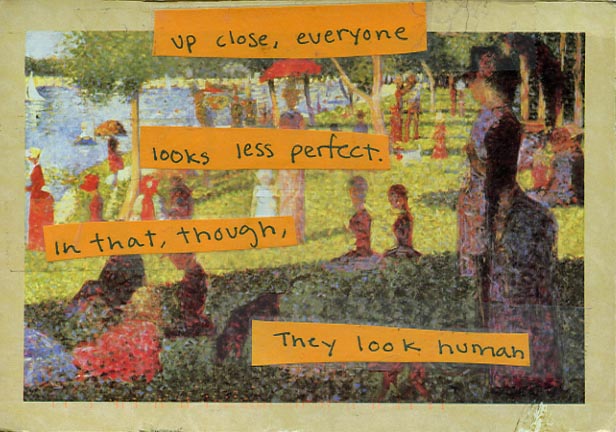
Image courtesy Postsecret

It’s full of stars!

I have a confession to make…

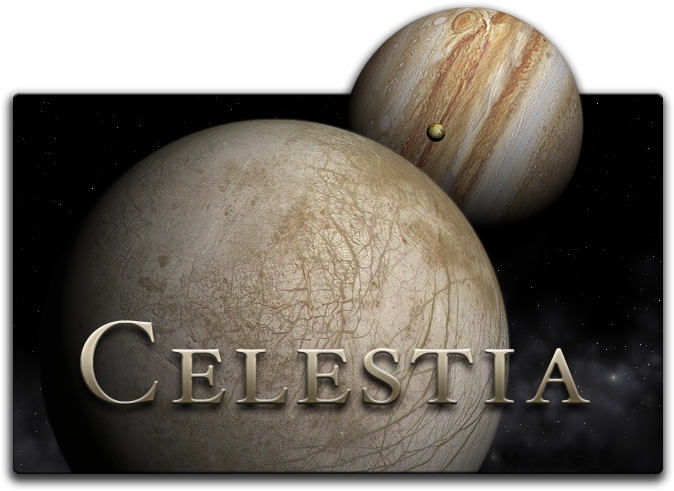
I should have been writing these past three hours.  I really should have been writing.  But a couple of days ago, I downloaded this awesome program called Celestia.  And when I say awesome, I mean awesome!

Imagine Google Earth.  Now, imagine Google Earth…for the Universe.

I told you it was awesome.

Anyway, I just downloaded all the messier objects , gps satellites, and some other random addons, and spent the last two hours playing with them when I should have been writing. Gah!

Oh well, I guess you can call it research. 🙂

My goodness–words cannot describe how cool this stuff is.  It’s like…like a planetarium on my computer.  I’ve never felt so small in such an incredibly vast universe!  And oh my heck, do you know what it’s like outside of our galaxy?  No stars–just blackness everywhere!  It’s so freaking scary!  And inside of those massive globular clusters, like M13–holy cow!  What would it be like to live on a planet in one of those clusters??

I should probably stop rambling.  But…but…it’s just so awesome!

This is the kind of stuff I’ve been writing all my life!  Stars and galaxies and planets, other worlds–and now, at last, I can get some kind of a tiny picture of what it all looks like.  I feel like the nexus 6 soldier from Blade Runner: “I’ve seen things…” Seriously, this has the potential to revolutionize my writing.  The things I’ve seen…

But anyway, time to get my mind off the stars (at least temporarily) and write!

Career chat at high tea

So my Turkish supervisor at WINEP took us new interns (all four of us) out to the Mayflower hotel last week for high tea, where we talked about how things have been going for us at the institute so far.  It was interesting–the first time this Mormon boy has been out to tea, particularly in such an upscale setting.
One of the questions he asked was “what are your long term career goals?” I don’t remember exactly what I said, but I know what I didn’t say–that I wanted to break into publishing and become a novelist.

(Just in cast my supervisor reads this, I want to make it clear I wasn’t uncomfortable talking about my literary aspirations with him; it was just that the conversation at the table seemed to be headed in a very different direction, and I didn’t want to derail it.  Everyone else was talking about grad school, study abroad, government, that sort of thing–and I got the sense that that’s really what my supervisor wanted to talk about.)

My experiences in the past three weeks in Washington DC have only confirmed and strengthened my goals to pursue writing as a full-time career.  At the same time, though, I’m starting to realize that I don’t have to limit myself to one career track; many people in this “town” (as everyone calls it) bounce around in multiple careers, some of them quite different.  It’s not so much about working a “day job” until you get published, so much as doing multiple things and being ambitious.

That said, I don’t see myself pursuing a career in policy-making.  Everyone I see doing that is working overtime, all the time.  Instead, I want to find something that’s going to facilitate and reinforce my writing career.

There are some things I like very much about where I’m working, though. One of those is the emphasis on the Middle East–such a fascinating and dynamic part of the world, rich in history and culture. Another thing I love is how informed I am about current events–never in my life have I been so up to date in what’s going on in the region. The news really comes to life when you’re keeping up with it on an hour by hour basis. And I also enjoy the more academic-ish feel to the place here–the emphasis on research and scholarly pursuits.

Some things, though, I really don’t like. One of those is being stuck in an office all day. The people I work with are great–I couldn’t ask for better. But the office environment, with its dynamics…I don’t enjoy being in an office all day. The same goes for wearing a suit and a tie–I’m not a big fan.

In short, I really don’t know where I’m headed in my non-writing career; nothing has really “clicked” yet (if anything, just the opposite). But whatever I do, it’s probably going to involve something Middle East, and something that helps to facilitate my literary aspirations. That’s all I know for now.

Falling in love: does it actually happen?

I like to tell people that I don’t believe in the concept of “falling in love”–that true love isn’t something you fall into, it’s something you grow into.  The thing you fall into is called “infatuation,” which by itself doesn’t last long.  It’s happened to me many times, and look at how single I am.

However, I was listening to this week’s episode of This American Life, and the first story got me to think about the concept of “falling in love.” The story was about an American exchange student in China who went back a year later in order to chase down this girl he’d met over there.  Miraculously, he found her, and in a short period of time, they married each other.

The story doesn’t end there, though, nor does it gloss over or ignore their struggles since getting married.  In fact, they’re both surprisingly candid.  Even though they could have broken up, though, they said that the incredible story of how they got together kept them going until they worked through the crisis.  The narrator finished:

..Eric and Yuen-Yuen had to make that same transition that all couples do, from the crazy, in-love stage to the other thing—the hard part of love. And it’s when you’re in that struggle that you most need the story of how you’re meant to be, because the alternative–that the person you’re with could be one any one of hundreds or thousands of other people–well, if that’s true, then why even try?

This got me to wondering–is there something besides sentimental hogwash to the notion of falling in love? Is it a necessary myth? Or is it more than a myth? Growth is generally something you control, but if all you can say is that you and your significant other “grew” into where you are today, is that enough to keep you going?

Snarkiness aside, I suppose it’s different for everybody. Some people have to believe they were fated to be together, while others abhor anything but the idea that love is something that grew slowly and steadily, without crazy flashes in the pan.

The important thing, I suppose, is that when it comes to love, we all have to have a story that we tell ourselves. Without a story to help us make sense why we’re with our significant other, it’s possible to think about leaving them.

By definition, every story has a beginning, a middle, and an end. In a love story, I suppose that “falling in love” happens in the beginning, while “growing in love” has to do with the middle, while the end is this hopeful, optimistic future, full of wonderful possibility. No one part makes any sense without the two others, but together they must give a comforting sense of direction, of destiny.

So maybe there is something to the idea of “falling in love.” I don’t think for one second that the initial “falling in love” is the most important part of any functional romance, but I’ll grant that it has its place in the story.

Thoughts on future career

Just a few quick, scattered thoughts before I run off to work.

Working a desk job has convinced me that if at all possible, I want to make my full time living as a novelist.  I don’t see myself doing what I’m doing in this internship for the rest of my life, or even for a major part of it.

Don’t get me wrong–WINEP is a great place to work.  The people are great, the organization is prestigious and very well run, the public events are fascinating and frequent, and the stuff we produce is good, well-researched material.  I’m not writing this in response to anything specific I’ve encountered at the institute–just a realization after being immersed for two weeks in an office environment.

I’ve only been averaging about 500 words a day since I came here–but I’ve been writing every day, because now, more than ever, I see this as the path I want to take.  The path I need to take.  I don’t want to be stuck in a desk job the rest of my life.

How Avatar should have ended

Before I came out to Washington DC, I saw Avatar in the theaters.  AWESOME movie.  Loved the concept, loved the characters, LOVED the science fiction elements and how well they were woven into the story.

However, like much of the stuff that comes out of Hollywood, I was disappointed with the ending.  It felt too cheap–kind of like Matrix: Revolutions.

ONCE AND FUTURE SPOILER WARNING!  MAJOR SPOILERS AHEAD!

The ending of the story didn’t really solve the initial problem–it only put off the inevitable defeat of the good guys.  Do you REALLY think that the corporations of Earth are going to let a band of primitive aliens keep them from exploiting the natural resources of Pandora?  No way–they’ll be back, and with much bigger guns than before.  The ending solves nothing.

What they should have done was created an interstellar authority that the corporation needed to answer to–a weak, toothless one, at least initially, but one that becomes more important as the movie progresses.  This is because the real bad guy was the CEO, not the colonel–the colonel always answered back to the guy running the company.  HE was the one who made all the real decisions for the bad guys.

Things started to get cheesy once the rogue pilot sprung Jake, Norm, and Dr. Grace from the holding cell.  She should have hidden the trailer for the outpost, then sprung them out, since the only place they would go after leaving the base was the remote outpost. Where else could they go to access the avatars?

Moreover, Jake and his allies wouldn’t want to hide the trailer near the alien holy place.  That’s one of the last places they’d want to go–the aliens would just kill them, after the destruction of the mother tree.

Capturing the red and yellow dragon bird was a good way to get the legitimacy Jake needed to lead the aliens, but would the young prince really cave in so easily? I think not–especially after Jake stole his betrothed.

And summoning all the other alien tribes from across the planet? This was when I thought things had gone too far–no way was a coalition of bow and arrow wielding blue people take down the human armada.

This is where the interstellar authority comes in.  Without any oversight, the corporation can do whatever it wants.  Even if the aliens drive them off the planet, they or someone else will just come back.  Instead, the authority should have played the key role in defeating the evil corporate bad guys.

The scientists working for the corporation should have been in connection with scientists back at Earth from the very beginning.  Once the corporation pulled the plug on the science operation, it would have created discontent back home–only among the scientific elite at first, but as knowledge of Pandoran biology and its secrets begins to spread, public sympathy for the alien’s cause would grow–and with it, political capital that the scientists could leverage to stop the corporation.

Knowing this, the CEO would do everything in his power to keep the alien sympathizers from sharing their full discoveries with the scientists back on Earth.  To counter this, the good guys would have to either use their spy or covertly break into the facility to transmit the information to the people who can leverage it.

This sets up a “time bomb,” so that the goal of the good guys is no longer to defeat the bad guys in one last spectacular battle (which, let’s face it, they never could have realistically won), but instead to hold out until the cavalry arrives to save them.

There’d be a show down with the colonel, and a big epic battle to save the holy place, but the REAL victory would come when the interstellar authority comes in, arrests the CEO and his staff, freezes their operations, and slaps a whole host of regulations on the corporation, effectively saving Pandora–FOR GOOD.

That’s the way I think it should have ended.  I look forward to seeing how the guys at How It Should Have Ended.com handle it.

In the meantime, check out their take on Twilight:

I agree 110%!

New city, new life, new writing project

This is going to be a quick post (very quick), since it’s 1:00 am and I am TIRED.  FYI, it might not be edited all that much.   What the heck–it’s my blog anyway.

So today I left home to move into the Barlow Center for the Washington Seminar!  Took the train (Dad had an accident a block from the station–yikes!  A minor one, but still…); left around 6:30 am and arrived at 1:30 pm.  Took the metro to the Barlow Center, unpacked, walked up to the office for my internship (it’s only a 15 minute walk!), then made new friends and hit up the city!

It’s going to be a good semester.

I’ll probably start a separate blog for all the stuff that I’m doing in Washington DC.  It might be a little while before I get it all set up, but I’ll probably run it roughly the same way as my Jordan 2008 study abroad blog.  Still thinking about that.

But, more importantly (at least as concerns the stuff I write about on this blog), I started a new novel today!  After much deliberation, I settled on the title To Search the Starry Sea. It’s a space opera science fiction novel that rough parallels The Odyssey, at least in the first part.

The main character is a girl named (at least for now) Katrione.  She lives with her mother on the family estate, a medium sized moon orbiting a gas giant planet far from civilized society.  Her father was lord of the estate, but he went off to war a long time ago and hasn’t returned.

The novel starts when a woman starship captain piloting the ship Minerva arrives with some limited news of Katrione’s father’s survival, and gives her the encouragement she needs to be more aggressive and proactive about rescuing her father, even if it means crossing some gender-based boundaries in the starfaring society.

I’m totally discovering this story as I write it.  I got stuck on the second paragraph, wondering what sort of things Katrione would be doing before the Minerva arrives–what she does in her spare time–and when the answer came to me (reading a novel), it opened up about a dozen interesting story possibilities.  Things just flowed…at least until I realized I need to come up with more character names.  Blech.

Also, after working so hard to polish and revise Genesis Earth and Bringing Stella Home, it is very difficult to get over the fact that this draft doesn’t need to be immaculate.  I’m writing down sentences and paragraphs and thinking “this is SO telly,” but I can’t do any better at this point because I don’t know the story.

The important thing at this point is not to perfect the craft but to perfect the story, and that’s a HUGE transition from everything I’ve been doing the last 6 months.  I just need to tell myself that until I believe it.

Anyway, I am definitely excited for this story.  VERY excited!  And excited about Washington DC–it is going to be a very, very interesting semester.  And hopefully fun as well!

Christmas break 2009

Christmas was great this year!  I spent it in Texas, with my extended family–the family on my dad’s side, who I almost never see.  The break has been a lot of fun so far!  No school or work obligations, lots of time to lay back and relax, plenty of games to play and books to read, plus fun people to hang out with–it’s been great!

Most of my cousins are young teenagers right now, and are a lot different than I remember.  However, I was able to get some presents for them that I think worked out well.  David is into his iPod, so I got him some U2 albums (How to Dismantle an Atomic Bomb and Joshua Tree).  Savannah and Nash are both avid fantasy readers, so I got Savannah Mistborn: The Final Empire and Nash Victory of Eagles (the one chain bookstore in Midland didn’t have His Majesty’s Dragon, so I got him another from the series).  Daniel, I didn’t know what to get, so I gave him my old camera.

Ashley (who is older) was telling me about how she lived abroad and wants to spend some time in Australia, so I got a travelogue on Australia by the same guy who did A Walk in the Woods. Based on her reaction, I think she’s going to like it!

It was much easier to get stuff for direct family, since I know them better.  For Kate, I got Soulless, a steampunk / paranormal mystery novel that had an awesome release party at World Fantasy 2009.  I don’t know if she’ll like the book, but the party was very steampunk / regency fantasy with the cosplayers, so I think she will.  I got Danny The Screwtape Letters, since I know he likes that kind of religious fiction–turns out he’s been meaning to read it for a while!  Mykle, I got the first book in C. S. Friedman’s latest series, since I know that she’s his favorite author–24 hours after Christmas, he’s already 200+ pages into it!  And for Sarah and Mykle, I got them both $20 gift certificates to Pioneer Book in downtown Provo.  They were very happy with that!

I wish I’d had the time to get presents for everyone in the family, but with moving out, coming here so quickly, and not having a car (or much of an idea what they wanted), it just wasn’t very practical.  I did get my mom a gift certificate to B&N, but I haven’t gotten anything for my dad yet.  I will, though–he wants stuff from our Christmas memories, and I happen to have all my old childhood journals in my carry on luggage.  Lots of Christmas memories in those!

I’m satisfied with what I got, even though it wasn’t all that much.  Besides the generic clothes, socks, ties, candy, popcorn, and other stuff, I got a spiffy tool kit from Robin and a flexible tripod from pop.  Very nice!  They will add some weight to my luggage, but I think I can give some of it to mom or pop to bring home.

As far as writing goes, I’m less than 13k words from the end of Bringing Stella Home 2.0.  It’s not quite ready for alpha readers yet, but I want to get it ready soon (it’s going to take so much work! <sob>).  If I average 2.6k words over the next five days, I’ll have it finished in time to start something new by new years!

That’s the goal.  As for what the next novel is going to be about…let’s just say it’s Homer’s Odyssey meets C. J. Cherryh and Ursula K. Le Guin in space, where Telemachus is a girl and the story is primarily from her point of view.

I hope I can pull it off!

Finishing and beginning

Classes for this semester are over, I’ve turned in all my papers, taken all my exams but one, and now I feel like I have this giant void in my life.  I was walking around on campus today with literally no idea where I was going or what I should do.

It was…strange.

With school out, I’m getting ready to leave Provo for good.  I won’t be coming back for the winter, seeing as I’ll be in Washington DC.  As for post graduation plans, nothing’s solid, but I probably won’t be coming back to Utah.  Not for a while, at least.

It’s exciting and scary, but mostly exciting.  2010 is going to mark the end of my academic career and my first venture into the real world.  Beyond this internship, I have no idea what I’m going to do, but I’m starting to formulate some plans.  Here’s what I’ve got so far:

Post-graduation options:

  • Go to grad school
  • Work side jobs while writing novels
  • Travel across the Middle East for a year or two
  • Start a career in Washington DC

The first option (grad school) isn’t going to happen right away.  I’ve already decided that I’m not going to go to grad school until I have a definite plan for what I want to accomplish with it (an “exit strategy,” if you will).  Interning in Washington might give me an idea of what I want to study, but I’ll probably take a year off from academics just the same.

The second option (side jobs & writing) is an interesting option that I haven’t really thought through.  It would involve a lot more focus on writing and trying to get published, but it would also involve a lot of uncertainty until my writing career really gets launched.  However, I’d have a lot of flexibility in where I could live.  I could stay in Washington DC, or move back to Massachusetts, or come back to Utah.

The third option (travel) is definitely the most exciting and adventurous of the four.  It would involve living in a Middle Eastern country for a year or two, teaching English to support myself while I see the country and work on my writing.  Syria, Lebanon, Jordan, Egypt, even the Gulf…man, it would be awesome!  I have friends from the MESA program who are doing it, too.

Man, that would be fun–and definitely give me a lot to write about, besides awesome life experiences!  Finding a girl and settling down, though…probably not going to happen until I get back.  That’s the downside.

The fourth option (career) is entirely dependent on what happens this winter in Washington.  If I find that I love what I’m doing with my internship, I’ll probably look to get a job with WINEP or an organization like it.   I’ve got to admit, it would certainly give me a comforting degree of direction and certainty if such were the case–to graduate with a job in hand, doing something that I love.

At the same time, however, there’s a danger that a career in this field might not leave me with much time to pursue my writing.  My dream job is still to be a full-time novelist, and I need to remember that while I’m in Washington.  If I find that my work with WINEP leaves me with little to no time to write, I’ll have to re-evaluate my plans.

So really, this internship in Washington is going to be more about testing the waters than anything else.  I’m going to have to periodically ask myself 1) whether this is the kind of work I find enjoyment and personal fulfillment doing, 2) whether this is the kind of work I can balance with a writing career, and 3) what opportunities are available for me in this particular field.  Since it all depends on how the internship goes, I can anticipate one of three things happening:

Possible reactions to my internship:

  1. I love the work that I do for my internship.
  2. I hate the work that I do for my internship.
  3. I am utterly indifferent to the work I do for my internship.

If #1 is the case, I should focus on getting a job from my internship connections, provided I can still make time to write while doing this kind of work.  If not, I can probably still find a similar career path that does allow me enough time to pursue a writing career on the side.

If #2 is the case, it means that policy making and research is not my thing, but I still have a passion for the Middle East.  Taking a year or two off to travel will become a very appealing option at that point.

If #3 is the case, it means that I’m going to have to completely retool.  I have no idea what I’ll end up doing if this happens.  Travel, maybe–but what good would it do me, if a Middle East related career doesn’t interest me?  Maybe I’ll take a year off to work on my math and go back to grad school for astronomy.  Maybe I’ll work odd jobs like Robert Charles Wilson until I get published.  Maybe I’ll become a hobo and vanish into obscurity.  I don’t know.

Whatever happens, writing is going to be a priority.  If I can make an adequate living writing fiction, I’m going to do it.  Which makes me wonder–what does that mean about all my other plans?  Is all of this Middle East stuff just a temporary fix until I get published, hopefully in the next five years?  Or is it something more permanent?

I have absoultely no idea, but this post is already getting pretty long, so I’ll cut it here.  Regardless what happens, however, I’m 100% confident that everything will work out in the way that it should.  These life changes are more exciting than they are scary.  I’m looking forward to the new year very much!