B is for Space Battles

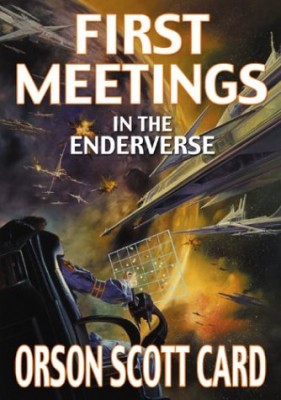
osc_first_meetingsIf you fell in love with science fiction when you were twelve, chances were it was because of the awesome space battles.  That was certainly the case with me.  When I saw Star Wars for the first time, I spent hours running around the house pretending I was flying my own starfighter.  In some ways, I’ve never really stopped. 😛
Ever since space opera became its own subgenre, space warfare has featured prominently in it, probably for the same reasons that Homer and Tolstoy framed their sprawling epics with a tale of war.  Where else are you going to find enough drama to fill volumes?  The fact that it’s set in space makes it so much cooler.

There are a lot of things about the space setting that make war stories different from those set here on Earth.  For one thing, there’s a huge element of exploration and unknown.  Even before we took the first photographs of Earth from space, there pretty much isn’t any corner on this planet that hasn’t been discovered by somebody.  In space, though, it’s still possible to stumble on a hidden planet, or find a mysterious alien artifact that can turn the tide of the war (Halo, anyone?).

For another thing, the dynamics of battle are completely different.  Sure, some stories treat space like an ocean, and there’s certainly a place for that kind of story, but the more interesting ones (at least to me) take into account all the profound differences.  For one thing, the zero gravity means that there is no “up” or “down,” which means that you have to deal with the possibility of attack coming from any direction, not just along a horizontal plane.  That concept alone drives the battles in Orson Scott Card’s Ender’s Game series, where “the enemy’s gate is down.”

One thing that really tickles me is when the story takes things a step further and incorporates things like orbital mechanics and delta-v.  I haven’t seen many books or games that do this, but the ones that do have really engrossed me by making the world feel that much more real.  Glen Cook did it in Passage At Arms, and the new Battlestar Galactica did it in the viper dogfights (though I’m not sure if they did it on the ship-to-ship scale).

The implications of real-world space physics on warfare are quite fascinating.  Rocketpunk Manifesto is an excellent blog that’s almost entirely dedicated to exploring them all, with all sorts of fascinating discussions on what the “plausible mid-future” may look like.  But even if all you’re looking for is an entertaining romp through space, the story telling possibilities are so much greater when you take the constraints of physics into account.

For example, if it takes months or even years to travel between planets, and orbital trajectories are fairly straightforward to figure out, how does it affect things if you can see the enemy fleet coming at your planet that long in advance?  If escape velocity from a gravity well like Earth is so difficult to achieve, what does that mean about the possibility of long-term planetary sieges?  And if starships are so far apart and moving so fast as to make full-on broadsides unlikely, how does that shape the battle tactics and strategy?  In spite of the physical constraints (or indeed, perhaps because of them), the possibilities are endless.

Man, I love me some good space battles.  One of my recent sci-fi favorites that features some epic battles is Wolfhound by my friend Kindal Debenham.  In my own work, you’ll find lots of them, especially in the Gaia Nova series (Bringing Stella Home, Stars of Blood and Glory, and to a lesser extent Desert Stars).  They say that the golden age for science fiction is about twelve years old, and that’s definitely true for me.  Expect to see lots more space battles from me in the future.

A is for Aliens

cantinaAlien races–what would science fiction be without them?  They’re as fundamental to the genre as elves and dwarves are to fantasy.  If you’re reading a book and an alien being from another planet shows up on the page, that in itself is usually enough to make the story science fiction.

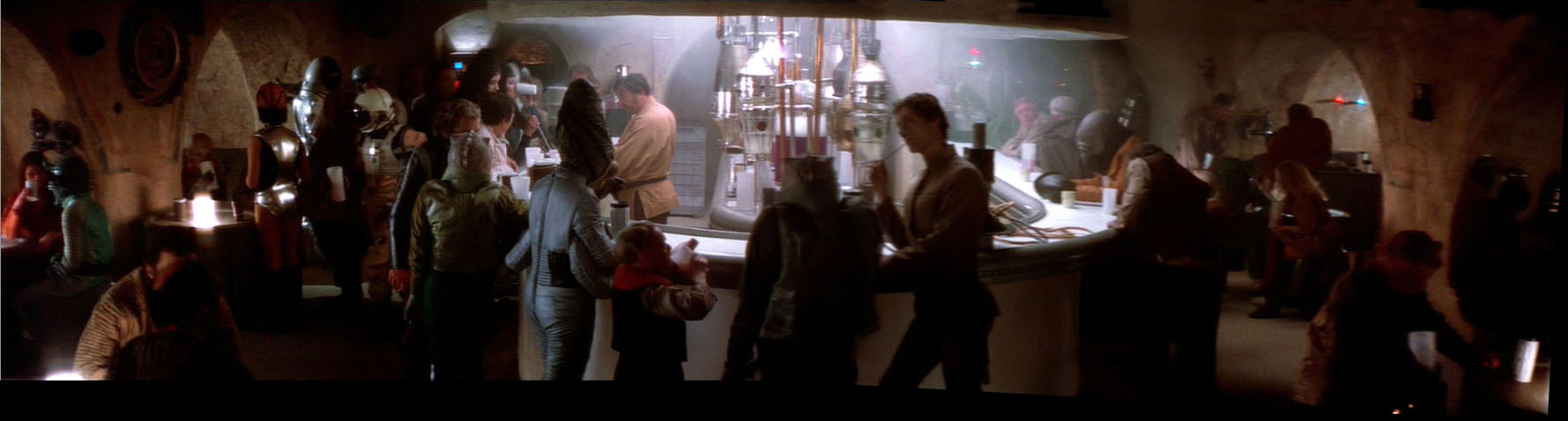
My first exposure to aliens came from Star Wars IV: A New Hope, which I saw as a kid sometime back in the early nineties.  The cantina scene with the weird, catchy music and all the frighteningly creatures both scared and fascinated me.  Here were a bunch of humans, mingling with these things that looked like monsters as if nothing were strange or unusual.  In fact, it soon became clear that these weren’t monsters at all, but regular people–that is, as regular as you can be without being human.

I think the main reason for including aliens in a space opera story is that it makes the setting feel more exotic and otherworldly.  It can also add all sorts of interesting possibilities for plot and character, depending on the different capabilities of the various alien races and the way their culture shapes them.  Babylon 5 is a great example of this, with the characters from each alien race interacting with each other in ways unique to their various cultures.

One way to think of science fictional aliens is to put them on a spectrum with two extremes.  On the one side, you have the more familiar aliens–the races from Star Trek, for example, which are basically human-like except with weird skin or bone ridges to physically distinguish them.  On the other side, you have the truly bizarre–the kinds of aliens that are so different from us, we cannot possibly conceive their thoughts or the way they see the world.

The main advantage of the more familiar alien types is that they’re easy to understand and relate to.  Yeah, they may look weird, but they don’t think or act much differently than the Russians, or the Arabs, or whatever human culture they roughly parallel.  In fact, it’s not uncommon in fiction of this type for the aliens to be less “alien” than the Japanese (at least, in Western fiction–obviously, it’s different in manga and anime).  This, in turn, is the main weakness with aliens of this type: they are so readily understandable that it’s easy to lose that sense of otherness.

The main advantage of the more extreme kind of alien is that it can make a much stronger impact, which makes for a more compelling and thought-provoking story.  For example, the Hypotheticals in Robert Charles Wilson’s Spin trilogy are so fascinating because we know so little about them.  They have the power to shape entire worlds, manipulating space and time itself, and yet none of the reasons behind what they’re doing make sense–if indeed there’s any reason behind it at all.  Or in Octavia Butler’s Xenogensis trilogy, it’s not too hard to figure out what the aliens are trying to do, but the way in which they do it, impregnating the main character through their tri-sexual biological capabilities makes for a profoundly disturbing story.

The disadvantage, of course, is that aliens of this kind are much more difficult for readers to relate to.  If the aliens are so advanced that their thoughts transcend our own, or if their sensory organs are so different that we cannot possibly conceive of how they see the world, then it’s very difficult for us to get inside of their heads.  For this reason, aliens of this kind tend to become more of a force of nature than actual characters–or characters in the aggregate, in the way that humanity is the main character of most of Arthur C. Clarke’s books.

Personally, I’m more of a fan of the extreme alien type.  The universe is so vast, and our understanding of it is so lacking, that it rings a lot truer to me.  The odds that we are alone in the universe are so infinitesimally small that refusing to believe in the existence of aliens would be akin to believing in 1492 that the Earth is flat, and yet if/when we ever make contact, I can’t help but wonder how different from us they’ll be.  So much of what we take for granted is just a fluke of our particular circumstances here on this planet–the chance combination of so many variables that changing any one of them would completely rewrite the story of how our species evolved, much less our civilization.

There is a place for the more familiar aliens of space opera, though. They make for some very entertaining stories, provide a fun escape from this world when that’s what we need.  They also give us a chance to look at ourselves through a lens that strips away our stereotypes and prejudices.  We might have some very strong opinions about immigrants, for example, or people of a different race or color, but none of us are prejudiced against Sand People, or Klingons, or Androsynth.  In space opera, most alien races are loosely based on real-world cultures, so it’s possible to draw parallels without all the cultural and historical baggage.

In a sense, all fiction is just the culture speaking to itself, so when we read about aliens we are really reading about ourselves.  Encountering the Other in a non-threatening fictional world enables us to face the real-world Other with understanding and compassion.

I haven’t written very many alien stories yet, but I have a couple cooking in the back of my mind.  Genesis Earth has an alien encounter with a bit of a twist to it, but the characters in my Star Wanderers and Gaia Nova series are all human (well, mostly).  If/when I do introduce an alien race, I plan to do it right, which will almost certainly involve a first contact story.  But that’s for Saturday’s blog post, not today’s.

Trope Tuesday: Fridge Logic, Fridge Horror, and Fridge Brilliance

It's amazing how many existential story questions arise from this view.
It’s amazing how many stories suddenly stop making sense from this point of view.

You know that moment after the end of the show, when the credits are rolling and the glory of that crowning moment of awesome is just beginning to fade?  When you go to the fridge to get something to eat, and all of a sudden that gaping plot hole or internal consistency problem with the story hits you?  Yeah, that’s fridge logic.

The key, though, is that it’s not something you normally question while you’re reading the book or watching the show.  While you’re in the story itself, the narrative is so compelling that you just don’t question it–that, or rule of cool is in play.  It’s only after the story is over that those questions start to arise.

It doesn’t have to come from bad writing.  Sometimes, it’s a result of values dissonance, especially for stories written in a different time or culture (although by no means is this phenomenon immune to bad writing).  Sometimes, it’s a result of a tomato surprise, where a reveal of something the characters have known all along completely changes the audience’s understanding of the story (though certainly, this isn’t immune to bad writing either).

Not all fridge logic is bad.  Fridge horror happens when a story becomes even more terrifying the more you think about it.  Some of the scariest horror stories have done this to me, as well as some that weren’t really intended to finish on downer endings but kinda sorta did.  Cracked.com did an interesting article on six movies that went that way.

But the best is when a story turns around and gives you fridge brilliance–that moment when you realize that that thing that bothered you actually changes the nature of the story in a way that suddenly makes it your favorite.

My favorite novel of all time, The Neverending Story, totally did this to me.  When I first read it in fourth grade, there were so many things that made the story awesome: the Temple of a Thousand Doors, the test of the three gates, the old man who is the exact opposite of the Childlike Empress in every way, and of course the signature phrase “but that is another story and shall be told another time.” But when I reread it in college, I realized that the real story–the underlying story that brings everything together–isn’t about a loser kid having all sorts of adventures in a fantastic world, but about the power of storytelling itself, and how it can fill the world with love.

Another moment of fridge brilliance came to me when I learned the story behind the writing of Legend, my favorite novel by David Gemmell, my favorite fantasy writer.  The book is about a hopeless battle that everyone knows cannot be won, and the people who decide to go and fight it anyway.  That’s all well and good, except that David Gemmell wrote it immediately after he was diagnosed with terminal cancer.  The story of the battle itself was a metaphor for his own life, and his struggle with his own impending death.  Lucky for all of us, after he finished writing it the doctor came back and told him that the first test was a false positive–that he was going to live after all.  He then went on to write almost thirty more books, all of them off-the-charts awesome.

So yeah, there you have it.  These are more reader tropes than writer tropes, but as a writer it’s good to keep them in mind.  Don’t be lazy, otherwise your fans will pick your stories apart (or if you have to leave a hole, be sure to hang a lampshade on it).  And if you find yourself smacking your forehead over something you’ve already written and published, see if you can’t revisit it in later books in the series and turn it into fridge brilliance.

Why I am not afraid of the Noise part III

These days, it seems as if everyone is terrified by the fact that anyone can publish a book.  Indies, self-published writers, authors with traditional book contracts–it doesn’t matter.  Everyone is mortified by the sheer volume of crap books coming out nowadays, as if Sturgeon’s Law is a new thing.  The assumption is that all this noise is making it harder to get noticed–that readers have to slog through all the crap to find the good stuff.

I’ve blogged about this twice before, here and here.  My views haven’t changed–I still think that the flood of crap ebooks is nothing for writers or readers to fear.  However, I’ve found a new way to think about it.

Message in a Bottle Washed AshoreIt’s been almost two years since I tested the waters of self/indie publishing.  Since then, I’ve learned that an ebook is like a message in a bottle, floating in the midst of a stormy sea.  Readers make up the ocean, and the vicissitudes of the market are the storms that rage across it.

A good book will tend to float, whereas a bad book will tend to sink.  Gimmicks like Select freebies and other promotional activities may pull the bottle back up to the surface, but they won’t make it float.  And maybe, if a bottle sinks to the bottom of the ocean, someone will come trawling for sunken treasure and haul it up, but more likely than not it will just stay there.

Most readers don’t go to the bottom of the ocean to find their books.  They go to the beaches, where the bottles eventually wash up. These represent communities like book clubs or Goodreads, or just groups of friends who like to talk about books.  When a bottle does wash up on a beach, that represents a book coming into its natural audience.  It might take years, but if the book is good enough to float, eventually it will wash up somewhere.

As long as the bottle floats, it doesn’t matter how deep the ocean is beneath it.  Similarly, as long as a book is selling a handful of copies a month, it doesn’t matter that there are ten million bazillion crap ebooks on Amazon, or Smashwords, or Kobo, or wherever.  Those books are all at the bottom of the ocean, where the waters are calm and cold.

When I was a kid, I was terrified of deep water.  Then I had a swimming instructor who told me that it didn’t matter how deep the water was–so long as I could swim, the ocean could be a mile deep and it wouldn’t matter.  Since then, I’ve swum in some pretty deep waters, and I can say with complete confidence that my swimming instructor was right.

Discoverability and visibility are challenges for authors everywhere, but the problem is not the flood of crap that everyone always worries about.  It doesn’t matter how deep the ocean is, or how many ebooks are being published.  Instead, the problem is making sure that your writing is good enough to float.  If it is, then with enough courage and perseverance, you’re going to make it.

Right now, I feel like most of my books are floating on the face of that stormy ocean.  A couple of them have sunk, mostly the short stories.  I’m not much of a short story writer, though, so that makes sense–I still have a lot to learn in that area.  But the novels and novellas are all selling, with no promotion other than the first title in the series set to perma-free.  That tells me that they aren’t crap.  So long as I can keep telling good stories, I’m confident that my books will find their audience.  When and where they’ll wash up, I have no idea, but one thing is certain: all the crap at the bottom of the ebook ocean isn’t going to keep me from making it.

Image taken from this site here, which I recommend checking out.  Interesting stories!

Thoughts on Twitter

twitterOh man, I used to hate Twitter so much.  It’s amusing (and a little bit embarrassing) to look back on some old threads on the Kindle Boards and see how snippy I would get with everyone who raved about it.  I guess it’s just my contrarian nature.

Well, in the last month or so, my opinion of Twitter has done a 180.  Most of that has to do with getting a smart phone and having quick and easy access to it.  Back when I first signed up, I had lots of ideas for short, pithy tweets, but mostly when I was away from a computer.  Because of that, Twitter became just another chore, like checking email or keeping up with Facebook updates.  But now that I have easy, instant access, I can drop in whenever I want, without opening a browser and starting up another relentless cycle of timesucks.

About a year ago, I got involved in a huge discussion on the Kindle Boards with Nathan Lowell.  It all started when he credited his success as a writer to Twitter.  That hit me like a bombshell, since he’s following a very similar career path, and has had a tremendous amount of success at it.  He shared a ton of helpful tips on that thread, all of which I carefully filed away for later.  I didn’t really have much of an opportunity to try them out, since I was in Georgia and had limited internet access, but since getting back I’ve been slowly trying them out.

What I’ve found in the last few weeks is that Twitter is a great way to get into interesting online conversations that don’t require a high degree of time or commitment.  The 140 character requirement makes it hard to say anything of any substance, but that’s actually a strength, because it makes it easier to follow what others have to say.  Instead of channeling all your time and energy into a handful of comment / forum threads, you can start a dozen new conversations, or follow a dozen new people, or drop out for a while and do something else.  Less substance means less commitment and more flexibility.

It makes me think of something Cory Doctorow mentioned on a panel at Worldcon 2011.  He called Facebook the high fructose corn syrup of the internet–which is actually a very relevant comparison.  Facebook is very information dense the same way that HFCS is very calorie dense.  Both of them are fairly addictive (“compelling without being satisfying” is the way that Cory Doctorow put it).  And just as HFCS is not very nutritive, Facebook is not a very good way to stay genuinely close to the most important people in your life, especially when you’re following hundreds of people whom you barely even know.

Unlike Facebook, Twitter is a great way to connect with people who aren’t much more than strangers or casual acquaintances.  The value is not in what you’re able to share, but how many people you’re able to connect with.  If I tried to make myself accessible to everyone via Facebook, I would quickly become overwhelmed.  With Twitter, I am accessible simply by being there, and I can reach out to just about anyone and expect a response.

Some things I’ve found that have helped improve my Twitter experience:

  • Follow anyone who seems interesting, and unfollow them as soon as they stop being interesting.  If you’re not getting much from Twitter, it’s probably because you’re following the wrong people and not following the right people.  A follow isn’t a huge commitment, so no hard feelings if you break it off.
  • Reply to tweets that strike a chord with you.  Don’t just consume–start a conversation.  Add something, and you’ll get even more in return.
  • If you’re going to include a hashtag, try to offer something of value.  Don’t just do it to get attention, or to draw people to some link or something.  Do it because you want to contribute something meaningful.
  • Don’t approach it like a chore.  If you want to bow out for a while, that’s fine–you don’t have to follow every tweet, or reply to everyone who tweets at you (at least, not right away).  There isn’t any “right” or “wrong” way to use it–there’s just the way you use it.

So yeah, I plan to be much more active on Twitter in the future.  I probably won’t go crazy fanatic with it like some people do, but I’ll be on there, so if you want a quick and easy way to keep in touch, that’s a great way to do it.

And as for Facebook, that’s pretty much only for my close friends now.  When I got back from Georgia, I deleted more than half of my Facebook friends.  With Facebook, Dunbar’s number (aka the 150 friend rule) is probably a good upper limit.  With Twitter, I now agree with Nathan Lowell that it’s more of a lower limit than anything.

A not-so-obligatory New Year’s resolution

First of all, happy New Years!  I hope you’re all looking forward to 2013 as much as I am.  Last year was full of awesome life-changing experiences, but I have a feeling that this one is going to be even better.

So after chatting about resolutions with some old friends, I’ve decided that a good new year’s resolution should be more than just another mundane daily goal.  Those are great, but you shouldn’t just set them at the beginning of the year and forget about them around February or March, you should adjust and rework them constantly no matter what time of the year it is.

Instead, a good resolution is some extraordinary task or challenge with a deadline of December 31st.  Basically, it’s something from your bucket list that you hope to accomplish that year.  Because it’s extraordinary, it’s not something that you forget in a month or two.  And the deadline gives you a sense of urgency, so you don’t put it off for “someday.”

With that in mind, here’s my 2013 resolution:

Hike four of the seven peaks of Utah County.

I was originally going to go for all seven, but I’m not (yet) an experienced climber, and some of the peaks look a little difficult.  Others, though, seem pretty doable.  I’ve hiked Y Mountain several times, and got a chance to do a little hiking in Georgia.  Four shouldn’t be too much, even with my relatively limited skill level right now.

Here are the seven peaks:

Of course, I’ll wait until June to make the first hike (probably Provo Peak).  In the meantime, I’ll do what I can to get ready: eat healthy, climb a few smaller mountains, and otherwise get in shape for the big ones.

As far as writing goes, I’m going to go back on the early morning writing schedule and shoot for three hours of writing new words per day.  My monthly goal is to start / finish / publish at least one thing, and my yearly goal is still to finish at least two novel-length works (2012 was Star Wanderers I-IV and Stars of Blood and Glory).

But it’s hard to call any of those goals resolutions, since most of them are probably going to change over the coming weeks and months.  It’s hard to know exactly what life’s going to throw at me once I get back in Utah, so I’m going to stay flexible and just try to do the best I can.

I do want to publish Stars of Blood and Glory next month, and I think I can finish The Sword Keeper before then–if not, then definitely Star Wanderers: Benefactor.  After that, I’d like to do a print version of Star Wanderers I-IV with some decent cover art.  And Star Wanderers: Dreamweaver will probably be out sometime in the spring.

Beyond that, who knows?  It all depends on where the muse takes me.  One thing’s for sure, though–I’ll definitely keep writing.

Someday…

Someday I will settle down, probably in southern Utah or somewhere else in the American West.  I will live with my wife and kids in a small house in the country, one that I’ve built with my own hands. It won’t be larger than 1,000 square feet, but we’ll have at least five acres of land–a small house with a big yard.

We will keep a sizeable garden and grow at least half of the food we eat.  We’ll start with tomatoes, peas, cucumbers, and zucchini, then move on to other crops as our tastes change and our gardening skills improve.  We will keep live chickens, and maybe a cow if it’s not too difficult.  We will eat what we love, love what we eat, and live by the maxim: “Eat food.  Not too much.  Mostly plants.”

In the winter, we’ll stay warm with a wood burning stove.  Everything in our house will all be centered around one main room, which will help to keep our family close.  We’ll sleep in the loft, with the kids on the other side.  Daddy’s writing space will be off in the corner, but not cut off from the rest of the family.

Our house will be well-insulated, so it will be warm in the winter and cool in the summer.  We’ll get our water from a well on our property.  Like good old-fashioned Mormons, we’ll grind our own wheat and bake fresh bread every week.  We won’t own a lot of material things, but we won’t waste anything either.  The people in our lives will always be more important than the things.

When we aren’t at home, we’ll be on the road.  Our children will see the whole country, from the rolling hills of New England to the oil fields of West Texas, from the orchards of California to the skyscrapers of New York.  My wife and I will have seen the world together, and we’ll visit our international friends as often as we can.

Above all else, we will be independent.  No one will own us, and we’ll stay out of debt as much as possible.  Our failures will be our own, as well as our successes.  And when our friends and family need us, we’ll be there.

All of this will happen someday.  That’s my dream.  Someday soon, I’ll find a girl who shares this dream, and together we’ll make it a reality.

A Letter From My 2013 Self

tomy2012selfSo shortly after writing up my last blog post, I got an email from myself marked December 27, 2013.  How freaky is that?I don’t know if it’s a glitch or a feature, but apparently in 2013, you can use gmail to send messages back in time.

In any case, the letter is pretty interesting, so I thought I’d post it.  Here it is:

Dear Joe,

Well, it’s been an interesting decade so far, hasn’t it? Not a bad time to be alive–and that’s going to be even clearer by the end of 2013.

Right now, you’re still in the Republic of Georgia, anxious to get on that flight and head back home. Don’t be. You’re going to miss that place, even though it’s hard to feel that way right now. Your time there has changed you a lot more than you realize, though it’s going to take most of the year for you to figure that out.

You’ve picked up some bad habits, mostly from the other expats. Swearing is one of them. Clean up your language–it’s not going to do you any favors, especially back in Utah. Personal hygiene is another. Just because you could go for days without showering back in Rokhi doesn’t mean that you can get away with it in the States.

Money issues are on your mind right now. That’s good. You’ve learned how to be extremely frugal in the past two years, and that skill will serve you well. Don’t be afraid to get a crap job–that’s actually one of the best things you can do right now. The economy hasn’t improved much since you left, but if you look in the right places and speak with the right people, you’ll be able to make ends meet without too much trouble.

Remember, your writing career should be your main focus. Don’t go chasing after the dollar. You’ve experienced a taste of success in the last few months, and you’re going to taste it again. It comes in spurts, though, so be prepared for that. You’ll figure it out–in fact, you’re already most of the way there. Just remember to keep your butt in that chair, and you’ll be all right.

By the way, you really should spend more time on your business plan. Don’t just use it as motivation to write something else–that stuff is actually important. In Georgia, you can get away with winging it, but not in the States. That’s going to take some getting used to as well.

Your biggest anxiety right now is your supposed lack of self-discipline. That’s actually not as much of a problem as you think. After spending a year in Georgia, you might feel incapable of working another honest day in your life, but that feeling will soon pass. In fact, 2013 is going to be a very productive year for you. All that self-discovery is going to pay off in a big way soon. So don’t worry about it so much, and remember, you haven’t written your best book yet.

Perhaps the most important thing about your year in Georgia is that it really lit a fire under your butt. You know what I’m talking about. If you can travel alone to a foreign country, you can work up the courage to ask her out. No, I’m not going to tell you who. You’ll know her when you see her. But you may have to trim the beard. Just sayin’.

You won’t spend the entire year back in the States, but when you do go overseas again, you won’t be alone. No, I won’t tell you who you’ll go with, or where. Some surprises are better left unspoiled.

There’s more I could tell you, but that’s enough for now. You’ll figure things out on your own, same as you always have. Hope for the best, plan for the worst. Follow the path of least regret.

Joe

A Letter To My 2011 Self

Dear Joe,

Well, 2011 has been an eventful year, hasn’t it? It sure didn’t feel like it when you were down in the trenches, but now that it’s over, you’ve got to admit, you sure came a long way.

You’ve discovered a lot of things about yourself since January. In your quest for economic security, you’ve learned that you’d rather work for yourself as a freelancer than be anyone else’s employee. You took the plunge and self-published, something you thought you’d never do (and yes, it’s okay to call it ‘self-published’–the stigma will be dead in another year). You attended your first Wordcon, made a couple of cross-country road trips, worked a ton of crap-jobs just to make ends meet, and now you’re on your way out of the country to try your hand teaching English. It sure seems like a lot, doesn’t it? Just wait. Next year is going to be just as full of changes, though it won’t always seem like it at the time.

I know, I know–cut to the chase and give me some advice already. Well, looking back on what you’re going to go through in 2012, here’s what I have to tell you.

First, don’t stress out so much about the whole self-publishing thing. You’ll figure it out all right. No, I can’t say whether you’re going to hit the turning point before the end of the year. In fact, that’s not even a healthy way to look at it, so stop thinking about it that way. Follow the slow growth model, and don’t angst about sales or price points so much. Keep your butt in that chair, because writing new words is still the most important thing you can do.

Don’t beat up on yourself so much for failing to meet your ridiculously high goals. You’re going to write a novel in the next six weeks, and the rest of the year is going to be a struggle. Right now, you place too much emphasis on your daily word count. Relax a bit, and don’t be too hard on yourself. You’ve still got a lot to learn about your own creative process, so take the time to figure it out.

By the way, you totally rock the beard. Growing it out was a great idea, no matter what your sisters told you back in 2010.

About your upcoming excursion to Georgia, the best advice I can give you is to remember what Spencer told you back in 2008. Adventures are like stories–they each have a beginning, a middle, and an end. You’re going to experience all of that in the next year. No, you probably won’t write another travel journal. Most of your experiences are going to be too personal for that kind of thing anyway. You’re going to accomplish all of your goals, though, so don’t worry–things are going to be just fine.

The most important thing you can do is keep yourself grounded spiritually. I know, I know, that’s always the most important thing. Well, it’s especially true now. Where you’re headed, you’re not only going to be the only Mormon, but the first Mormon to live there. Sundays are going to be a struggle. Everyone is going to think you’re crazy because you don’t drink. You’re going to make wine, though, and that’s going to be an interesting story for your friends back in Utah. Just be sure to keep doing the things you know you should be doing, and everything will turn out all right.

You’re going to love teaching English. Oh, you won’t love everything about it, but it’s something you’re naturally good at, so don’t worry about that. Just try to listen to your Georgian co-teachers and be more considerate of them. And don’t worry about the language. You’ll pick it up pretty quick. Just realize that Georgian verbs are impossible to conjugate unless you’re a native speaker.

I could tell you what your biggest mistake is going to be, but I think it’ll be better if you go ahead and make it. Just be sure to hope for the best, even as you plan for the worst. Follow the path of least regret, and you’ll make some really awesome memories–not to mention some truly amazing friendships.

At this point, I’d tell you you’re on the right path, but that isn’t exactly true. There is no ‘right’ or ‘wrong’ path for you right now, but you’re on a good one, so keep it up and see it through to the end. You’ll be glad you did.

Take care!

Joe

Some thoughts on internet access, self-discipline, and productivity

As many of you probably know, for the past four months I’ve been living in a small Georgian village in the foothills of the Caucasus Mountains.  It isn’t as remote as some places in this country (like Tusheti, where some people still practice pagan animal sacrifices), but my internet access has been limited, especially compared to the 24/7 access I had back in the States.

I knew that coming in, and was actually looking forward to it.  I had the option to buy a USB stick from the phone company that would give me service, but I wanted to experience living off the grid for a while to see if that would increase my writing productivity.  Long story short: it didn’t.

In order to use the internet, I have to take a marshrutka (small passenger bus) about half an hour to Kutaisi, where the most convenient place to get wifi is McDonalds.  I can usually go for two or three days without internet, but so many other things in my life (work, family, publishing) are tied up in it that it’s not a good idea to go much longer.

Since each trip takes a huge chunk out of my day, it’s become a lot harder to keep and maintain any sort of momentum on any of my writing projects.  Also, cutting out the internet hasn’t increased my self-discipline at all, it’s just driven me to find different ways to distract myself.

In the end, I think I actually would have been more productive if I’d ponied up the 70 GEL and bought a USB stick from the phone company.  I certainly would have saved a lot of money, considering all that I’ve spent on these trips to Kutaisi.  But at least I’ve learned a few things from the experience.

First, I’ve learned that all of the high-priority things that I absolutely must do on the internet only amount to an hour or two each week.  And even for most of those things, it isn’t a disaster if I put them off for a day or two.  It’s possible to structure your internet time around everything else in your life, rather than vice versa.  In fact, that’s almost certainly a better way to live.

Second, the enjoyment I get from recreational internet usage maxes out after about two hours.  Anything beyond that, and I become something of a zombie.  It’s a weird feeling when you run out of things to do on the internet, but when you realize that you don’t actually enjoy scrolling down an endless list of photos and status updates, it’s a lot easier to pull back and say “no.”

Third, you don’t need social media to sell books.  I made more in book sales in the first week of this month than I did in the first quarter of this year, and my Facebook and Twitter pages are a wasteland.  It might help you if you already enjoy that sort of thing, but it’s not an absolute requirement for success.  Certainly, you don’t have to open a vein and spill everything.

Fourth, exercising good self-discipline doesn’t mean cutting something completely out of your life, but learning how to properly manage it.  The internet isn’t an either/or thing, it’s a matter of finding and maintaining the proper balance.  In the future, I plan to do what Dean and Kris recommend, which is to have two computers: one for internet usage, and one for writing.

Fifth, for me personally, it’s actually healthy to have a couple of harmless distractions available while I write.  I deleted all of the games off of my computer about a month ago, and I haven’t been able to write more than a thousand words a day ever since–often, much less.  Before, whenever I hit a rough patch, I would play a quick round of super-melee in Star Control II and come back to it with fresh eyes.  Without that, I find myself taking my butt out of the proverbial chair and wandering around until I find something else to do, which inevitably takes more time and energy.  A lot of games (Tetris, Spider Solitaire) are addicting and should be nixed, but for me personally at least, opening up something that isn’t a time-sink can actually help to keep me going.

That’s just about all I can come up with now.  I’m sure there are other lessons to be had, but these are the major ones.  I’m coming back to the States on the 31st, and should be back in Utah in time for LTUE and Conduit.  It’s going to be interesting living with 24/7 internet access again; hopefully, it won’t be too hard to adapt back.