Some new thoughts on productivity

I’ve been thinking a lot about writing and productivity, mostly because I seem to be struggling a lot with it lately. With nanowrimo just starting, this is a pretty topical thing to blog about, but I also want to look at it from a long-term career perspective, since that’s what I’m personally more interested in.

As writers, when we spend all our time procrastinating or fail to meet our word count goals, we tend to beat ourselves up and frame the problem in terms of a lack of self-discipline. If only we had greater will power, we could buckle down and pound out five or ten thousand words a day like those super-prolific authors.

While there’s definitely something to say for raw self-discipline, though, I think there’s another dimension to writing productivity that we tend to miss. Not all writing-related activities are productive–and not all non-writing related activities are totally unproductive. In order to make the most efficient use of our writing time, I think it’s more important to understand and respect our individual creative process than it is to merely force ourselves to produce more words.

To better understand my own creative process, I took a little time to group every writing-related thing I do into four different categories:

  • Writing activities
  • Fill-the-well activities
  • Publishing chores
  • Procrastinating

WRITING ACTIVITIES

This should be pretty self-explanatory. It’s basically all the stuff that leads directly to a finished manuscript. It requires the highest amount of energy and produces the most important content.

Activities in this category include:

  • Writing new material
  • Making substantial revisions (putting in and taking out)
  • Updating chapter and scene outlines

FILL-THE-WELL ACTIVITIES

This is the non-writing stuff I do that helps me to be more productive when I switch back to the writing activities. Basically, it’s the stuff I do before and after I write that helps me to maintain a creative momentum.

Activities in this category include:

  • Reading
  • Blogging
  • Catching up on blogs
  • Listening to podcasts
  • Doing mindles chores
  • Going on walks
  • Exploring new places
  • Watching movies
  • Playing RPGs
  • Talking with friends
  • Reviewing first reader feedback
  • Writing character outlines
  • Making book soundtracks

PUBLISHING CHORES

This is all the professional stuff that I have to do, which may feel productive while I’m doing it, but actually takes time away from the stuff I should be doing. I still have to do it, but I should waste as little time doing it as possible.

Activities in this cateogry include:

  • Ebook formatting
  • Producing cover art
  • Writing blurbs and book descriptions
  • Writing author’s notes
  • POD typesetting
  • Handing financial stuff (royalties, invoices, etc)
  • Researching the publishing industry
  • Processing copy edits
  • Sending out email newsletter

PROCRASTINATION

Again, pretty self-explanatory. This is the stuff I shouldn’t do, but end up doing anyway in order to avoid stuff that feels like work. It’s all the stuff that I need to cut out entirely if I want to maximize my productivity.

Activities in this category include:

  • Minecraft
  • Alpha Centauri
  • Any other game that I can’t stop thinking about
  • Checking ebook sales numbers
  • Dicking around on Facebook and Twitter
  • Browsing the Kindle Boards
  • Watching TV and Youtube
  • Minecraft

So now that that’s done, what next?

I’m still figuring this part out, but I think the best thing to do would be to put as much distance as possible between the stuff that boosts productivity (writing and filling the well) and the stuff that doesn’t (publishing chores and procrastination).

The way I see it, there are basically two ways to do this:

  • Physically separate the activities. Do all your writing on a machine that’s disconnected from the internet and doesn’t have any games installed, and do everything else on a separate computer.
  • Set aside blocks of time specifically for writing. Organize your schedule so that writing is a priority, while acknowledging the need to take breaks and refill the creative well.

I can’t really do the first one while I’m here in Georgia, but I definitely can do the second. So far, I’ve found that waking up early to start the day with an hour of writing helps me a ton to build and keep momentum. However, I need to do a better job setting time aside in the afternoon, both for writing and for refilling the well. If I don’t, I usually end up procrastinating by default without realizing it until it’s too late.

So anyhow, those are some of my latest thoughts on writing and productivity. What are yours? Does this square with your experience, or is there a better way to think about it that I’ve missed?

Trope Tuesday: Mentor Occupational Hazard

Being a mentor to the hero can be a pretty tough job.  Don’t believe me?  Check out the tvtropes page:

If you don’t have to convince The Chosen One who just wants to be normal to grow a spine and accept the Call to Adventure, you have to convince your blindly excited and dangerously eager young pupil that You Are Not Ready to learn the Dangerous Forbidden Technique. When you try to protect The Hero from the Awful Truth, you end up facing their Rage Against the Mentor. You have to maintain an ongoing conspiracy to keep The Hero Locked Out of the LoopIf they’re an orphan, you have to find them a set of Muggle Foster Parents while keeping social services in the dark. You have to endure accusations of insanity when you’re trying to teach your charge that Your Eyes Can Deceive You, give them advice on how to tell a love interest “It’s Not You, It’s My Enemies,” and keep a close eye on them 24/7.

And what is your reward for all this patience and effort?

You die.

And that right there is the heart of the matter: mentors tend to die.  And stay dead.  Even if they do figure later in the story, they tend to be spirit advisors from the other side with little or no chance of coming back from the grave–even if everyone else does.

So why does this happen?

The most obvious reason is that if the mentor and the hero are both working toward the same goal, the mentor cannot overshadow the hero–otherwise, why not forget the hero and send the mentor off to save the world?  The hero may start off weak, which is why he needs the mentor in the first place, but at some point in the growth arc, he’s  going to have to stand on his own two feet.  Oftentimes, the most poignant (and convenient) way to mark that transition is to knock the mentor off.

That doesn’t explain everything, though.  If the only reason for killing the mentor is to give the hero a growth arc, you can accomplish that just as well by putting him on a bus.  So why does he have to die?

Lots of reasons!  Character growth, increasing tension, making the story more meaningful–the list goes on and on.  For an in-depth discussion on killing off characters, I’d recommend checking out this last week’s episode of Writing Excuses.  My own personal take is that everyone dies eventually–even the immortal characters have to pass through some sort of transition from this world to the next–so the best thing I can do for a character isn’t to keep them alive, but to make their lives and their deaths actually mean something.

It’s also worth pointing out that in most stories, the mentor isn’t actually fighting against the big bad, but the dragon–the big bad’s lancer.  Again, the main reason for this is to keep him from overshadowing the hero.  But the dragon is a character in his own right, with his own agenda that may run counter to his boss–think Darth Vader from Star Wars.  And in a lot of stories, the dragon actually tries to tempt the hero to come around and join him.

Perhaps that’s another reason why mentors often die–if they didn’t, then the bad guys wouldn’t ever be able to dissuade the hero through temptation.  The hero would be so protected that he’d never have the opportunity to switch sides, or at least he’d never have to face any moral ambiguity because of the guardian mentor constantly guiding him.

So those are some of the reasons why mentors tend to have a short life expectancy.  Can you think of any good ones?

Trope Tuesday: A Man is Not a Virgin

I’m back from vacation, but I’m going to take a break from the Hero’s Journey trope posts to talk about something that I really feel passionate about.  I hope you’ll forgive me if this turns into a rant, but I think this is an important issue that has some very dangerous implications that need to be explored.

In modern fiction, there’s a very prominent trope that a man is not a virgin.  The basic idea is this: if the protagonist is an adult male and he hasn’t yet had sex with a woman, there’s something fundamentally wrong with him.  Of course, because of his adventurous lifestyle, he can’t be tied down in a committed relationship–that would spoil the story.  But he can’t be holding himself back, either, lest his manhood come into question.  And most of the time, he doesn’t really want to, anyway.

This trope has a whole host of unfortunate implications, though, all of which serve to reinforce constrictive gender roles, disempower both men and women, drive a gulf of misunderstanding between the sexes, and emasculate true manhood and its role in our society.

To demonstrate this, let’s take this trope to the logical conclusions that our society seems to have come to.

If a man is not a virgin, then sex is a rite of passage, and it isn’t rape if it’s female on male.

In fiction, the sex as rite of passage trope is often seen in stories about angsty teenagers trying desperately to get laid. These are not typically stories about love–they are stories about peer pressure, objectification, and power.  By equating sex as a rite of passage in this way, it actually divorces sex from any concept of love or commitment, and turns any form of physical intimacy into a caricature of itself.

It doesn’t stop there, though.  If sex is a rite of passage, then it’s only reasonable that the young novice should have an older mentor to help him through the initiation process.  Thus we get the professional sex-ed trope, where the boy’s mentors or guardians help guide him through his first sexual encounter.  The implications for pedophilia and underage sex are more than a little disturbing.

We can see this trope in action in the way we treat female sex offenders.  If a 30-something male teacher has sex with one of his female students, he gets a lengthy prison sentence and spends the rest of his life stigmatized as a predator.  If a 30-something female teacher has sex with one of her male students, she gets a slap on the wrist and TV spot.  She’s not a sexual predator–she’s just having a personal crisis.

Needless to say, this double standard is extremely destructive for the victims of such abuse.

If a man is not a virginthen men cannot help themselves.  Therefore, all men are perverts.

If a true man is not a virgin, then a true man doesn’t say no to sex.  Even if he can say no, he won’t because that’s just not what men do.  Therefore, being a man is functionally synonymous with being a pervert.

The danger here is that it reduces men to their basic animal urges.  If being a man means finding a warm, inviting place for your penis each night, then you might as well go out to the pasture and eat grass.  Whatever happened to self control and delayed gratification?  Do you think anything meaningful would ever have come out of our civilization if we couldn’t keep our pants on?

And yet, both men and women seem perfectly willing to believe that it’s not only unmanly for a man to control his animal urges, it’s impossible.  On the Kindle Boards forum about a month ago, there was a thread on erotica and marriage and one of the members posted this:

I used to work as a forums admin on a large women’s forum (over 100,000 members) and the relationships forum had a lot of heated discussions on this topic. I won’t of course refer to any specific threads, but the discussions went a lot like this:

One woman concerned that her husband was spending too much time watching porn
A massive amount of women telling her that it’s ok, that ‘all men watch porn’
A small amount of women saying either they don’t agree with it or that their men don’t view it
A percentage of women saying their men are addicted to porn and would rather watch it than go to bed with a willing wife
A percentage of women saying it’s not the porn itself that concerns them, but the type of porn their husbands watch
Another group of women saying they either watch it themselves, or watch it with their husbands
Yet another small group of women who either were or are prostitutes/strippers/involved in amateur porn (who are either for or against based on their experiences)
A very vocal percentage of women saying that if your man says he doesn’t watch it, he’s a liar
A heated discussion ensuing….

How does it possibly empower men to tell them that they cannot control their own sexual impulses?  It’s a self-fulfilling prophecy, which harms not only men but women as well.  If all men are perverts, then women can’t afford to wait for a decent man and should settle instead for a deadbeat porn addict.

But that’s not even the worst of it:

…and if all men are perverts and all women are prudes, then men and women are two entirely different species that are completely incapable of understanding one another.

This one really gets to me.  I hear it everywhere, even from people who don’t consciously buy into the logic behind it.  I used to buy into it myself.  It’s the idea that women are so complicated that they are impossible to understand, whereas men are as simple as an on/off switch.

In my experience, men and woman are both human.  Both of them are equally complex and equally emotional.  Yes, they are different, but in such a way that it’s equally difficult (or equally easy) for the one to understand the other.  Generally, women tend to externalize their complexity, whereas men tend to internalize it.  At least,  that’s what I’ve found.

Our society takes this to the next level, however, and teaches men that they should just swallow their emotions.  If they don’t, they risk being seen as weak or effeminate (never mind that equating weakness with femininity is a whole other can of worms in itself).  And after a lifetime of living this way, it can be hard not to believe that that’s just the way men are.

But this is perhaps the most insidious danger of all.  It’s the falsehood that real men don’t cry, or show emotion, or have any capacity for compassion or tenderness.  It’s the fallacy of equating strength with violence.  It’s the destructive belief that men will never rise above the lowest common denominator of their hormones, and should never even try.  And because men are so obviously different from women in this regard, any attempt to understand them would be futile.

But how can you have a committed relationship with someone you can’t understand?  How can you possibly hope to make the necessary sacrifices for each other to make the thing work out?  And if you can’t reach the understanding necessary for a committed, loving relationship, how can you ever hope to raise a family together?

So yeah, sorry for the rant, but this trope REALLY gets under my skin.  It doesn’t help that one of my favorite authors, David Gemmell, is a big fan of it.  I tried to get into his Rigante series, but this trope was so strong that I couldn’t finish the first book.

I should also clarify that the thing that irks me isn’t just the trope, but how much our society has bought into it.  By themselves, tropes are neither good nor bad, but when something like this becomes so prevalent that it defines the entire operating system on which our society is based, that’s when someone needs to speak out.

And for the record, I am a 28 year old single male who is not ashamed to say that he is still saving himself for marriage.  Am I gay?  No.  Has it been difficult?  Yes.  Am I anything less than a man because of it?  Hell, no.  In fact, I would argue that the wait has made me more of a man than I otherwise would have been, and I’m sure that my future wife will agree.

Real men aren’t defined by their hormones or their sexual history.  They’re defined by the way they treat the people around them, especially the ones who are most important in their lives.

If you’re thinking of self publishing, read this. All of it.

I just read a fascinating Q&A on Reddit with Hugh Howey, author of the self-published phenomenon Wool.  After six trancelike hours reading through all the comments, all I can say is “wow.”

Okay, I guess I can say a little more.  Yesterday, I listened to Brandon Sanderson’s lecture on self-publishing from his English 318 class this year.  While I agree with much of what he says, a lot of it is already out of date.  Probably the biggest thing is whether it’s still advantageous for indies to go with a traditional publisher after making a name for themselves.  In 2011, Amanda Hocking had some good reasons for going traditional.  In 2012, Hugh Howey has some very good reasons not to.

The other big thing, though, is this idea of author platform–that to be a successful indie, you have to find some way to drive large numbers of people to your books.  Well, not necessarily.  Hugh Howey was a nobody for three years, and the title that finally pushed him over the tipping point was the one he promoted the least.  To me, that shows:

  1. current sales are not a predictor of future sales, and
  2. a great book will grow into its audience independent of its author.

Granted, there may be a threshold that needs to be crossed before word-of-mouth really starts to kick in, but if a nobody with passable cover art and no author platform can cross it, that threshold isn’t very high–and that’s good news for all of us.

The way I see it, there are three big myths that writers struggle with in making the shift from traditional to indie publishing:

1) The flood of crap books will keep you from getting noticed

This grows out of the paradigm of limited shelf space–that the best way to get noticed is to have your book occupy more space relative to all the other books on the shelf.  This might be true in the brick and mortar world, but the rules are much different in the digital realm.

Think about it: how many new blogs are launched every single day?  Thousands, if not hundreds of thousands.  And yet people still find the good content amid the sea of crap.  On Youtube, an average of one hour of video content is uploaded every single second.  And yet there are still entertainers making a lot of money through their Youtube channels.

The rules in the digital realm are completely different from everything in the physical world.  Figuring that out requires a huge paradigm shift, one that even indie writers struggle with.

2) Publishing a book is an event that must be promoted

This grows out of the paradigm of velocity, or as Kris Rusch puts it, the “produce model” of publishing:

Every month publishing comes out with brand new product. Shelf space is limited in every single brick-and-mortar bookstore.  Big Publishing makes the bulk of its money during the first few months of a book’s existence.  So if a book sits on a bookstore’s shelf until the book sells and that sale takes six months to a  year, the bookstore and the publisher lose money.

Better to dump the old inventory on a monthly basis—for full credit for unsold items—than it is to have the inventory sit on the shelves and grow “stale.”

Of course, the flaw in this logic is that digital shelf space is unlimited, therefore books do not “spoil.” No matter how much time passes, an ebook can still be found in the same place.

Therefore, does it really make sense to make a big deal over an indie book release?  Maybe to jump start some word-of-mouth, but it’s not like your career is going to be harmed if you do nothing.  In fact, it might be better to hold off until you have a few more titles up, so that when you give the first one that push, readers will have something else to read once they’ve finished it.

3) To succeed you need to find a way to “break in”

This grows out of the gatekeeper paradigm, where the system is closed and the few entry points are guarded by a select group of taste makers whose job is to bestow legitimacy on those who meet the qualifications to get in.  It’s the concept of patronage, where success comes from being chosen by a wealthy benefactor, and it’s connected with the idea that you haven’t truly “arrived” until <fill in the blank>.

The flaw with this paradigm, of course, is that publishing is no longer a closed system.  The gates haven’t just been flung open, the walls themselves have been torn down.  The job of the taste makers is no longer to protect readers from the dross, but to lead them to the gems–which is honestly much closer to what it should have been in the first place.

So what does this mean for creators?  It means that there’s no longer a system to break into.  You don’t need to write better than everyone else, you just need to find (and keep) your 1,000 true fans.  Success isn’t bestowed upon you by some higher authority, it’s something that you discover on your own as you hone your craft and build your business.

Honestly, this is one that I still have a lot of trouble with.  When I left to teach English in Georgia, in the back of my mind I had this vague notion that I was going into a self-imposed exile, and wouldn’t come back or settle down until I’d “broken in.” Of course, this made me quite discouraged, because it felt like things were out of my control–or worse, that I’d somehow failed.

But listening to Brandon’s lecture and reading Howey’s Q&A session helped me to remember that it’s all still in my control.  I don’t need a benefactor, I just need a good plan, if that makes any sense.  So right now, I’m thinking things through and making the necessary revisions to that plan.  There probably won’t be any big ones–I still think I’m more or less on the right track–but it will be good to update my paradigm.

By the way, the title of this post applies to the Q&A with Hugh Howey, not to the post itself.  Though if you are thinking of self publishing, I hope it’s helped out in some way.

Also, I just finished part I of Wool, and it deserves every bit of praise that it’s got.  Expect to see a review of the omnibus shortly.

Last day of school

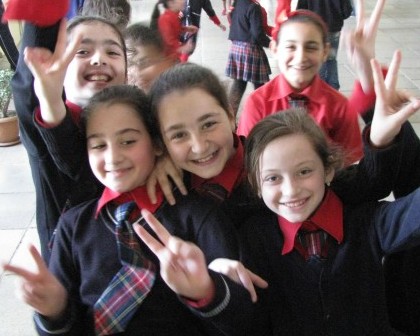
So today was the last day of school in Georgia, with all of the craziness that that entails.  It was kind of sad to say goodbye, even though I’ll probably be coming back to the same school in September.  In the meantime, I’m going to miss being a rockstar to all the 7-12 year olds and giving them high fives after class and in the hallways.

I haven’t posted much about my teaching experience, but it’s generally been positive, though not without its ups and downs.  I’ve met a lot of great people, taught a lot of great kids, and lived in a culture very different from my own.  I’m not sure how I’ve grown yet, or what I’ve learned from the experience, but it isn’t over–I’ll be back after the summer, for a least one more semester.

I asked to be placed in the same school again, though I’ll be changing homestay families.  If they can’t find another family in this district, I asked to be placed in a village near Kutaisi.  It’s impossible at this point to say what will happen, though, and things in this country tend to change without notice.

When I came to Georgia, my goals were to find out if I could balance teaching English with my writing career, to get some useful teaching experience, and to gain some cultural exposure that would enhance my writing.  On all three counts, I think I’ve had success.

My writing productivity has gone down  slightly since coming out here, but I think that has more to do with the homestay and finding a good, quiet place to write.  I’m still writing every day, just 1.5k words instead of 2.5k.  Teaching English isn’t the problem–in fact, it’s probably one of the best careers for aspiring writers, just so long as you know your creative process and have a modicum of self-discipline.  I’ll probably do another post on that later.

As far as teaching experience, I don’t know how much my time here in Georgia is going to help my resume, but it has helped me to have a bit more confidence when it comes to teaching.  I still feel like there’s a lot of room for professional improvement, though, and it’s going to be difficult to get that here.  I like Georgia, though, so I’ll be happy to come back.  If anything, I figure one year looks better on a resume than six months.

And as for cultural exposure, coming out here was definitely a good move.  Living in a developing country changes your perspective in a lot of interesting ways, and Georgia is so different from America that I’m sure I’ll be talking about it for years to come.  How all of this will affect my writing, I don’t exactly know, but I’m sure it will only enhance it.

So yeah, that’s been my experience so far.  The last day of school was kind of bittersweet, but I’m definitely looking forward to coming back!

My Muse

A long time ago, I did a whimsical post about my muse and what she is like.  Imagine my surprise when I found a picture of her on Deviant Art!

I had a lot of fun with that post, so I thought I’d revisit it.  Enjoy!


Young Universe by *DestinyBlue on deviantART
My muse is about fifteen years younger than me and three thousand years older. She listens to my philosophical dabblings like a younger sister, but is a lot closer to the pulse and rhythm of this world than I have ever been.

She has a soft spot for Homer and the old Greek epics (I suppose that’s right around the time when she got her start at being a muse), but she’s been deeply in love with space adventures since the days of Wells, Burroughs, and Heinlein. Her love of the stars must have started back in the days of the Greeks and Romans, because that’s the only thing that’s ever on her mind. She’s definitely a night owl and I think she spends her nights stargazing while I’m asleep.

In contrast to my blunt, forward, and sometimes overly-aggressive manner, she doesn’t really speak to me unless she knows that I’m listening. She doesn’t slap me upside the head to get me working, and she usually doesn’t come to me until I’ve been slaving away for a good long while. If I choose not to listen to her, she shrugs and walks away without an argument.

As much as I love to toy with ideas, she likes to touch, taste, see, and smell things directly with her own senses. She’s the kind of person who would take off her shoes to walk barefoot in the grass, even if it makes her late to where she’s going. She’s easily distracted and she never really lets me know where she’s going until we get there. However, if I listen and humbly follow her, she always leads me someplace worthwhile.

My muse is very mischievous. Her favorite thing is to give me random flashes of inspiration when I’m in the middle of something else. I can’t tell you how many crazy ideas I’ve had while driving on the highway, or taking a class, or working a mind-numbing job. She teases me, too–if I don’t write everything down in the moment of inspiration, she won’t tell me again until I fall on my knees and beg her.

My muse looks young and innocent, but don’t be deceived. She’s a wanderer who isn’t likely to settle down anytime soon. Blood, violence, battle, and death excite her. She gleefully urges me to torture and confuse my characters as much as I can. Still, deep down, I think she wants the good to win out in the end, and the evil to be revealed for what it really is.

I have no idea why she chose me out of all the writers out there, but she’s been with me long as I can remember. Whatever I do and wherever I go, I know she’ll always be there.

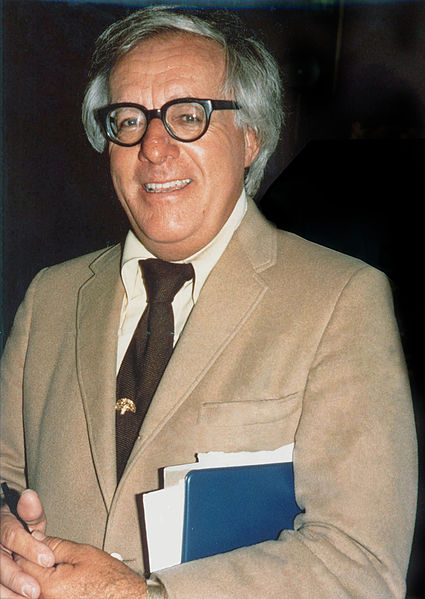
Ray Bradbury, 1920-2012

Ray Bradbury, 1920-2012

Wow.  Ray Bradbury, one of the greatest writers of our time, just passed away at the age of 91.  The news is affecting me a lot more than I thought it would.

My first exposure to Bradbury’s work came in seventh grade, when I read Farenheit 451 as part of the required summer reading.  Most of the books I read in middle school and high school were quite forgettable, but that one stuck with me, especially the scene with the professors scholars sitting around homeless in front of the fire.

Later in college, when I was just starting to find my footing as a writer, I read Zen and the Art of Writing, and it had quite a positive impact while I was still largely insecure about my own writing.  The most memorable piece of advice I gleaned from it was to write about the stuff that really moved me–to infuse all my writing with passion, and not give a damn about those who told me otherwise.  That helped give me the strength to tell the stories that I love, which is now a huge part of everything I do.

My favorite Bradbury work is his collection The Martian Chronicles.  The stories in that book are just amazing, and infused to the core with passion.  I remember breathlessly reading the one about the astronauts who land on Mars, only to find a beautiful Ohio village populated with all of the friends and family that they’d left behind.  Wow.

Whenever I pick up a Bradbury story, it’s like having this little old man clasp his hands on my shoulders and, with a gleam in his eye, shake me until I’m sure I’ll never forget it.  Every story is like a roller coaster, with stunning heights, beautiful views, and drops that make you scream for your life.  It’s awesome.

It brings tears to my eyes to know that he’s gone, but they’re bittersweet tears of the best kind.  The man had a rich, full life, and lived to see his work appreciated for how great it truly is.  At 27 novels and over 600 short stories, with more than 8 million copies in print in at least 36 languages, he has truly left us a great wealth of literature.  Some mourn that the world is a poorer place because of his passing, but I rejoice for how rich the world is because he lived at all.

Goodbye, Ray Bradbury.  Your stories truly changed the world.

Trope Tuesday: The Three Faces of Eve

Why do so many character combinations come in groups of three?  Unlike love triangles, where the combo is primarily a way to build conflict, the characters in power trios all build on each other in some way.  They might be foils for each other, but as complementary archetypes, they do far more to drive the story together than they ever would apart.

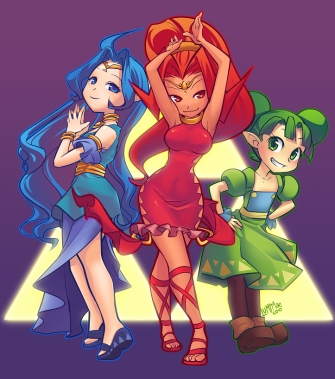
One of the most interesting all-female power trios is the Three Faces of Eve, which combines the archetypes of child, seductress, and wife:

The “child” (who does not have to be a child literally) will be seen as innocent, perhaps to the point of naïveté. The wife, the wiser, calmer aspect, someone around whom one could build a home life. The third, the seductress, is sexually experienced and independent.

Roughly speaking, the characters in the trio correspond to:

  • The Ingenue: A naive, innocent, childlike girl who is just setting out into the world.  In a Freudian Trio, this would be the Ego.
  • The Femme Fatale: A seductive, alluring, mysterious woman who is experienced in the ways of the world.  Unlike the Vamp, she may or may not use her feminine wiles for evil.  In a Freudian Trio, this would be the Id.
  • The Yamato Nadeshiko: A calm, steady, faithful wife, who provides the kind of marital stability and maternal strength that is ideal for settling down and raising a family.  In a Freudian Trio, this would be the Superego.

You’d be surprised to see how often this trope shows up, even in works of science fiction.  In Star Wars, Leia was the child in A New Hope, the wife/mother in Empire Strikes Back, and (what else?) the seductress in Return of the Jedi.  Just about every Star Trek series featured some alignment of these archetypes.

Squaresoft played with this trope a lot in their Final Fantasy series, which may be illustrative to examine in greater depth.  I’ve only played through FF IV, VI, VII, and Chrono Trigger, but each  of these titles features some interesting variations (warning: spoilers!).

Final Fantasy IV: Porom (child), Rydia (seductress), Rosa (wife).

Porom is pretty solidly the child, though Rydia starts out as this and later grows up into the seductress role.  She doesn’t get the guy in the end, though: that would be Rosa, who pretty much starts out with him as well.

In terms of story, the characters don’t really seem to build much on each other, though in terms of gameplay you definitely want to have Rydia and Rosa/Porom in your party (though not Rosa and Porom together–you only need one white mage, after all).

Final Fantasy VI: Relm (child) , Celes (seductress), Terra (wife).

This is my personal favorite in the series.  Unlike IV and VII, which both center around male protagonists, Final Fantasy VI revolves around Terra (world of balance) and Celes (world of ruin) as the central protagonists.  Because they also play a role in the power trio, their characters are quite complex, especially in the second half of the game.  Relm is arguably more of a Mary Sue, but her relation to the other characters, especially Shadow, also makes her role more complex and interesting.

In the end, the romantic subplot is fulfilled by Celes, not Terra, which was something of a surprise to me in my first playthrough.  It works really well, though, because of Celes’s heel face turn and subsequent reformation (in which Locke is arguably a Manic Pixie Dream Girl Spear Counterpart).  Does that also translate into a shift from seductress to wife as well?  I’m not sure, but I’d probably say no–after all, it’s Terra who takes on the mother role in the world of ruin.

Final Fantasy VII: Yuffie (child), Aeris (seductress), Tifa (wife).

The main twist with this one is that visually, you’d think Tifa is the seductress and Aeris is the wife.  In terms of story archetypes, however, it’s just the opposite: Tifa is the one whom Cloud depends on, the one who helps him work through his problems, while Aeris is the shifty, mysterious one.

Unlike IV, where Rosa and Cecil are set up from the very beginning, for a while it actually looks like Aeris and Cloud are going to end up together.  But then, in perhaps the most tragically gut-wrenching moment in all of video game history, Aeris dies (and doesn’t come back).  Since Yuffie is kind of, well, crazy, Tifa and Cloud are pretty much garanteed to get together after that point (and as for Sephiroth…I don’t even want to go there).

Chrono Trigger: Marle (child), Ayla (seductress), Lucca (wife).

Chrono Trigger is interesting because the girl who ends up with the guy in the end (Chrono) is actually the one who fulfills the child archetype, Marle.  It works, though, because of the childlike feel of the story.  Unlike FF VI and IV, Chrono Trigger is not a dark or an edgy tale–it’s heartwarming innocence at its best.  I always did feel that Lucca got the short end of the stick, though–but she did get a cameo in Xenogears, so perhaps the last laugh was hers after all.

Ah, Xenogears. <sigh>

Anyhow, long story short, the Three Faces of Eve power trio is a fascinating way to play with feminine archetypes.  Recently, I’ve become quite interested in it because it showed up quite inadvertently in my current project, Heart of the Nebula.  It’s funny how tropes can sneak up on you like that, especially some of the more archetypal ones.

Anyhow, in its current form the novel is a piece of trash, but now that I’ve recognized the potential to set up this particular power trio, I think I can really make it shine.  If you have any insights, please share–I’m very interested in this trope right now!

მე ♥ ქუთაისი (I ♥ Kutaisi)

Medea Cafe & Bar, a popular expat hangout in downtown Kutaisi. It’s also something of a landmark because of the conspicuously English street sign.

That’s Georgian for “I ♥ Kutaisi.” Like the New York City ad campaign on which it’s based, it’s become a part of the local culture.  You can see it on billboards, street signs, stickers, t-shirts–unlike the US, where it’s uncool to wear a band’s t-shirt at their own concert, everyone was wearing their “I ♥ Kutaisi” shirts at Kutaisoba last week.

So since I’ve been living here in Kutaisi for almost three months, I thought I’d give you all a virtual tour of the city–or at least the downtown area, since Kutaisi is really more like a very big village with a city in the middle.  But that’s why I love it.

Tsitelikhidi, or Red Bridge Station.

Our tour starts at the main marshrutka terminal downtown, Tsitelikhidi, or Red Bridge Station.  The place is a wonderfully chaotic mess of taxis, buses, and marshrutkas, while their drivers pass the time by smoking cigarettes and yelling at each other.  Old women wander around the crowds selling khatchapuri and lavash, while people are constantly coming and going.  Interestingly enough, this is also where you can find one of the largest concentrations of apothekas (pharmacies) in the city.

I bought an earwax removal kit from this apotheka, along with a bulb syringe obviously meant for babies. The pharmacist thought that was hilarious.
For street performers in Kutaisi, the accordion is the instrument of choice.

The sidewalk leading away from the station leads into a long narrow corridor typical of most Georgian street markets, with stalls and vendors packing every available space.  Here you can find cookies, ice cream, and cold drinks, both soft and hard; candles, religious icons, and other “souvenirs,” as the vendors like to call them; cheap plastic goods from China, wrapped in dusty plastic; freshly killed meat hanging from butcher’s windows; and all sorts of other random things.  But as busy as this place seems, it’s nothing compared to the main marketplace.

I have no idea what’s all on this frieze, but it looks pretty cool.  Also, bangs are very much in fashion.
This is actually a pretty good place to buy a belt.

The corridor opens up at the end of the block, to a tunnel which leads underneath the main road (Rustaveli, named after the great medieval Georgian writer) to Mirzani restaurant on the far side.  At the mouth of the tunnel, tarps and blankets stretch haphazardly over vendors selling clothes, cheap shoes and cigarettes.  Further down the tunnel, you can find more clothes, belts, brassieres, more shoes, and all sorts of fabrics.

We continue past an old building with a giant frieze, presumably depicting scenes from the history of the city.  There’s a lot of history to choose from–Kutaisi was the capital of ancient Colchis, and a major regional center throughout the Middle Ages, when locally-born King David the Builder united all of Georgia, turning it into a “land between two seas.”

Alas, no hot peppers.
This is where you come to buy flour.
The candle-like stuff hanging from the top is churchkhela, strings of hazelnuts dipped in congealed grape extract. I assume the jars immediately beneath them contain wine.

Next, we take a left and promptly get lost in a giant bazaar.  Here, you can find all sorts of fruits and vegetables, beef and chicken, bread and cheese, wine and beer–basically, anything that you would usually get from a grocery store in the US.  Georgians have grocery stores too, but the bazaars are usually cheaper and fresher.  Plus, they’re a whole lot more fun.  I’ve heard that you can haggle with the vendors, though the prices are so low (1.5 GEL for a kilo of apples) that I’ve never felt a need.

Rustaveli Avenue.
Las Vegas casino. Gambling is big in Georgia.
The book market. If I could read Georgian, this is where I would spend most of my time.

We spend a little bit of time wandering around before going to the main city park.  Heading up towards Jatchviskhidi, you can find all sorts of pawn shops, casinos, and money exchanging places, while near the library (at least, that’s what I think it is) there’s a mini-bazaar with all sorts of books.  Of course, that’s one of my favorite places to check out!

Along Rustaveli Avenue, however, the city takes on a pleasant European feel, with attractive cobblestone streets, wide boulevards, and Napoleonic architecture.  Here, you’ll find the opera house, the mayor’s mansion, and the central school (of 44 public schools citywide).

The view from just outside Medea Cafe.
One of the many flower gardens in central park.
One thing Georgians (or at least, Kutaisians) know how to do right is their public parks.

Next we come to Bulvari, the main central park of Kutaisi.  On a hot, muggy day, this is the perfect place to relax, with shady palm and pine trees, attractive public fountains, and plenty of benches to go around.  Vendors sell balloons, candy, and ice cream, while at the center, old men with cheap plastic cars take children for a ride around the main circle.

The new fountain at the main square. Some TLGers think it looks kind of tacky, but I think it’s a pretty good attempt to capture some of Kutaisi’s ancient heritage. There’s certainly plenty to choose from.

The main city square is on the other side of the park, with the theater on the left, the banking district on the right, and a giant fountain in the center depicting replicas of ancient Colchian artifacts found in Imereti province.  It’s one of the many interesting ways the city has been trying to reinvent itself since the end of the Soviet Union.  The statue of David the Builder that once graced this square now stands in front of the train station, at the end of the boulevard that bears the same king’s name.

You can see the back of Mirzani’s across the river. It’s probably the best restaurant in town.
Tetrikhidi (White Bridge), with a wedding party posing for photos.
The Kutaisi gondola. I don’t know why, but Georgians seem to have a thing for gondolas.

Looping back around, we return to the Rioni river and the neighborhood immediately surrounding Tsitelikhidi.  There are actually three bridges here: Tsitelikhidi (Red Bridge), Rustaveliskhidi (Rustaveli Bridge), and Tetrikhidi (White Bridge), a pedestrian bridge next to another attractive garden.  From here, a gondola takes visitors over the river to an amusement park at the top of a hill.  On the weekends, wedding parties often stop here to take pictures, then speed around the city honking their horns and making noise.

Bagrati Cathedral in the spring.
Close up of Bagrati. The reconstruction is actually progressing fairly rapidly.

Heading north, we pass through the markets again and cross over Jatchviskhidi (Chain Bridge) to the right bank of the Rioni.  After passing another curbside station–this one for marshrutkas heading to the northern villages–we climb a 200 step staircase and find ourselves at the foot of Bagrati Cathedral.

Bagrati is a thousand year-old Georgian Orthodox church, the largest and most important in the city.  After the Turks razed it in the 18th century, it lay in ruins for hundreds of years.  But now, with Georgia’s newly-won independence and the economic boom fueled by the IMF and other foreign investors, the historic cathedral is under reconstruction.  I probably won’t be here when it’s finished, but I definitely want to come back and see it when it is.

The view looking southeast.
The view looking southwest. The mountains in the distance are the Lesser Caucasus, about 4000 meters above the elevation of the city.
View from the steps leading up to Bagrati. Kutaisi has a lot of churches.

Bagrati Cathedral sits on an imposing hill with a magnificent view of the whole city.  Here, you get a sense of just how big Kutaisi really is.  It’s not a tall city, or a particularly busy city, but compared to the rest of Georgia outside of Tbilisi, it’s pretty huge.

Unlike Tbilisi, however, the city has had very little exposure to the West.  People still stop to stare curiously at foreigners, and hardly anyone speaks English.  It’s much quieter than Tbilisi, too, with fewer cars, more parks, and lots of gardens and orchards, even in the more crowded districts.  People live closer to the land, and travel often to the outlying villages where they still have friends and family.

Perhaps the best way to put it is that Kutaisi still possesses that sense of rustic Caucasian innocence that Tbilisi has since lost.  You can hear it in the way people laugh and see it in the way they kiss and are kissed by their children.  For a city that was legendary long before the maps showed America as a separate continent, that’s no small thing.

მე ♥ ქუთაისი


Life in Georgia is like a game of backgammon

Just another game of high stakes backgammon.

Everywhere I go, I see people playing ნარდი (“nardi”), known in English as backgammon.  Men and women, children and the elderly–everyone knows how to play, and just about every family owns a backgammon set.  It’s popular everywhere in Georgia, but it’s especially popular here in Kutaisi, where it’s not uncommon to see clusters of old men playing on the side of the street.

I recently played in a nardi tournament at my school.  Long story short, I was massacred (I still want a rematch with the principal), but the experience got me thinking about how the game kind of parallels what life is like in Georgia.  As a foreigner, I’m sure I don’t have a complete picture, but it’s an interesting way to look at things, and I don’t think it’s completely off base.

So anyways, here’s my theory on how life in Georgia is like a game of backgammon:

1: Everything is driven by chance.

In backgammon, every turn starts with a roll of the dice.  Likewise, in Georgia, people tend to approach life like a game of chance.  Good things happen, bad things happen, but you’re never totally in control of your own destiny.  When your luck turns sour, the best thing you can do is just resign yourself to it until things get better.

One thing I’ve noticed about my host family is that they play the lottery almost every day.  Even when they aren’t playing, they usually tune in to see the results, probably just from force of habit.  I don’t know if every family is like this, but there are stands to buy lottery tickets in every major district of the city, and every kiosk sells them.

It’s not just the lottery, either–there are tons of casinos too.  In fact, Georgia is a very popular tourist destination for Israelis simply because of all the gambling.  That doesn’t mean that everyone in the country is a hardcore gambler, though–but if life is ultimately a game of chance, you might as well put a line or two in the water, right?

2: Skill is the ability to manipulate chance in your favor.

Even though backgammon is essentially a game of chance, there’s a lot of strategy to it too.  The key is to maximize your own options while limiting the options of your opponent.  It’s all about knowing when to move aggressively, and when to protect your own interests.

Likewise, even though Georgians put a lot of trust in luck, they also know that it’s better to make your own luck than to wait for luck to find you.  While my host family does spend a little bit on the lottery, they spend a lot more on physical improvements and their kids’ education.  My host dad works until 8pm every night, sometimes later.  They aren’t rich, but they’re taking advantage of opportunities their parents didn’t have, and making sure their children have more opportunities than they did.

3: No amount of skill can change the established pattern.

There’s not a whole lot of variation in backgammon.  Every game starts with the same setup, and follows the same general pattern: block your opponent while doing your best to advance.  Once your last piece passes your opponent’s last piece, it becomes a race to see who can get all their pieces home first.  Short of changing the rules, there’s really no way to break the game.

Likewise, life in Georgia is still very much about tradition.  If you were born in Kutaisi, you’ll probably die in Kutaisi.  If your parents are Orthodox, then that’s what you are, too.  If you’re a woman, you live under a certain set of restrictions and expectations.  Likewise, if you’re a man, there are certain things you’re expected to do to prove your manhood.

No matter how much Georgia changes to become part of the modern world, it’s an ancient country with a very, very long memory.  Most social norms aren’t going to change overnight, and some of them probably won’t change at all.  While this might seem incredibly stifling to us in the West, it does have its advantages, such as offering everyone a sense of identity and giving them a place where they know that they belong.

So that’s my theory.  I don’t know if this is why backgammon resonates so much with the people here, but it’s a fun way to look at it.  Now I just need to figure out which game is the most like life in the US.  Poker?  Monopoly?  Dungeons & Dragons?