Thoughts on the danger of falling in love with your characters

As a writer, I spend so much time in the heads of my viewpoint characters that I can’t help but like them. So it sometimes comes as a surprise when readers get frustrated and want to slap my characters around.

To be fair, sometimes I do that on purpose. For example, in Stars of Blood and Glory, Princess Hikaru does some incredibly stupid and naive things that end up getting everyone else in a lot of trouble. There’s a reason for it, though: she’s been sheltered in the palace all her life and knows nothing of the outside universe. Over the course of the story, she comes to realize just how naive and sheltered she’s been, and has something of a transformation.

Jeremiah from Star Wanderers is another character that readers sometimes get frustrated with. He’s very passive and lacks a strong backbone, at least at the beginning of the series. I did try to make sure that each story in his viewpoint was driven by his choices, rather than the things that happen to him. But he isn’t your typical alpha male starship pilot—far from it.

With Jeremiah, I tried to lean towards writing an “everyman” rather than a “superman.” In a lot of ways, he was also a case study in human nature for me, since I’m not a passive person and in real life tend to get frustrated with passive people. When I dove into Jeremiah’s head, though, I found it almost impossible not to like him, even with all his flaws.

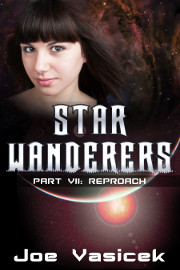
SW-VII (thumb)Another good example from Star Wanderers is Mariya. Some of my readers absolutely hate her. Given her role in the story, it’s not hard to see why: she basically tries to steal away the love interest from the main female protagonist of the series.

In her head, though, she’s not stealing—she’s sharing. Everything she does makes sense for her perspective, and when she realizes how much she’s hurt everyone, she feels genuine remorse and regret. As a character, she fascinated me so much that that was one of the main reasons I decided to write a book solely from her point of view.

To be fair, one of the other reasons readers get frustrated with her is because she’s an angsty teenager. Her life is either amazingly awesome or on the verge of falling apart (the latter being much more common). I can’t fault readers at all for getting frustrated with that—all I can do is hope that the payoff is greater than the pain.

Looking back on all this, I think that one of the potential traps of being a writer is falling in love with your characters more than your readers ever will. That’s not to say that you shouldn’t love your characters, but that you shouldn’t let that love make you blind to how your readers are going to respond to them.

It’s kind of like the central paradox in Orson Scott Card’s Ender’s Game: in order to know an enemy well enough to defeat them, you have to know them well enough to love them as well. But just when you can’t help but love them, you have to destroy them. It can be the same way with your characters: even when you know them well enough to love them in spite of their flaws and weaknesses, you still have to give the readers their moment of schadenfreude.

Of course, a lot of it ultimately comes down to skill. If you truly excel at bringing readers into the character’s head, then perhaps you can get them to love that character as much as you do. But it also depends on the reader. If the reader isn’t particularly interested in falling in love with a character (or in falling in love with that character), then your writing skill probably isn’t going to change that.

It’s interesting to think about, and something I’ll definitely keep in mind as I continue to write. In the meantime, if you have your own thoughts on the subject, please leave a comment—I’d very much like to hear it!

Thoughts on American Sniper

Yesterday, I saw American Sniper. In a word, it was fantastic. Super intense—so much that the friend I went to see it with had to walk out in the middle—but well, well worth it.

The movie is about Chris Kyle, a US sniper in Iraq who had an incredible number of kills. He’s credited with being the most lethal sniper in US history. And yet, at the end of the movie, he states quite openly that he can answer a clear conscience for every shot he took—including the one in the trailer, which was his first combat kill.

Pause for a minute to think about that. What must it be like to have your first ever kill be a child? There you are with your finger on the trigger, wondering if you have it in you to take another human life, and instead of an obvious combatant, you’re presented with a grenade-carrying child. On top of that, add on the fact that you’re a family man. Could you do it?

And that was just the first combat encounter of the film. Things got progressively more intense with each combat tour, with some truly evil people and some truly hard decisions.

At the same time, though, the film didn’t try to dehumanize the enemy. Again and again, Chris goes head-to-head with an enemy sniper named Mustafa who is just as good as he is. Just as we see Chris with his wife and child, we see that Mustafa has a family as well. But there are evil people in the movie—truly evil people, such as the Butcher, whose preferred instrument of death is a power drill—and we see them too. Because guess what? Those people were real, and the atrocities they committed were real as well.

I can’t imagine what it must be like to kill one person, let alone more than two hundred. And yet at the end of the film, I sincerely believe Chris Kyle when he says that he can answer a clear conscience for every shot that he took. That is what made the movie so fascinating. The man was a true hero—I don’t see how you can possibly come to any other conclusion than that.

Still, I couldn’t help but think about the wider context of the war in which Chris Kyle was fighting. Men like the Butcher exist in every society, including our own. If a foreign government had set up a brutal dictator over our country, plunged us into a ten year proxy war in which millions of our people were killed, imposed a punishing sanctions regime on us for another ten years, and finished it off by invading us, would the United States be any different? Because that’s exactly what happened in Iraq. Every enemy that we have in the Middle East is an enemy of our own creation, and the harder we try to fight them, the more enemies we create.

I don’t say this to diminish Chris Kyle at all. I admire the man tremendously, and I can only hope that I would rise to the level of his stature if given the same responsibility to protect American lives. And to be fair, American Sniper didn’t try to defend the Iraq War at all. In fact, it wasn’t even about the Iraq War—it was about a soldier who struggled to do the right thing in combat and not be consumed by the war itself. In that aspect, I think that this film was outstanding. It’s probably the most empathetic war movie that I’ve ever seen, and I would gladly watch it again.

I have tremendous respect for the men and women of the US military, and this movie reminded me why. At the same time, I have very little respect for the politicians who sacrifice the lives of these brave men and women for their political ambitions. My personal views on the subject are best reflected in this 2012 campaign ad for Ron Paul which sums up the history quite succinctly. I don’t agree with Ron Paul on every issue, but on this one, I think he’s spot on:

But yeah, American Sniper was an amazing movie—well worth seeing. It’s rated R mostly for language, so even if you don’t usually see R rated movies, don’t let the rating alone scare you away.

Things I want to learn in 2015

I was going to follow up my retrospective 2014 post with another one, but instead I want to look ahead at the things I hope to learn in 2015. Of course, I’m sure that many of the things I’ll learn are things that I couldn’t have foreseen, but it helps to have some direction to start out with. Here goes!

How to consistently sell books outside of Amazon

If I learn nothing else this year, I want it to be this. In 2014, about 90% of my sales were through Amazon, and when they came out with their Kindle Unlimited subscription service, my income took a big hit (Amazon requires all books in KU to be exclusive, so none of my books qualified). If I can grow my non-Amazon sources of income to more than 50% of my total revenue, that would be fantastic.

So far this year, I’m off to a good start. I have a book featured in Apple’s ongoing First in a Series Free promotion, and that’s given my books on iBooks a huge boost. In fact, I wouldn’t be surprised if I sell more books on iBooks this month than I will on Amazon. But the key here is to sell consistently on the other platforms. Right now, I have no idea how to do that—but I definitely want to learn!

How to turn readers into lifelong fans

I’ve been publishing for the last four years now, and I’ve picked up a few fans along the way, but I get the sense that most of the people who read my books are just casual readers who find my books interesting but tend to move on after they’ve read them. Perhaps this is normal, but I would like to take things a step further and build a strong fanbase around my books.

Up until now, I’ve mostly focused on writing books, not in connecting with the people who actually read them. But I want to do a lot more of that next year—not only in order to sell more books, but also to connect with the fan community in general and make a more lasting contribution to the genre.

How to write (harder) better faster (stronger)

If I could write 10,000 words a day—good words, publishable words—that would absolutely fantastic. So far, the most I’ve managed in a single day is about 5,000. Right now, I’m lucky if I hit 2,000. It’s aggravating, because I feel like I’m so ridiculously slow, and the stuff that I do write usually needs some cleaning up before it’s publishable … basically, I just want to be a robot unicorn who farts rainbows and writes a bestselling novel every 72 hours.

Barring that, I’d just like to learn how to overcome some of the things that get in the way of writing.

How to write memorable characters that readers fall in love with

Of all the areas of craft that I’d like to work on, this is the one that probably needs improvement the most. I’ve had lots of readers tell me that a particular story resonated with them, but I’ve never had a reader tell me that they were crazy about a particular character. I think I’m reasonably good at writing characters that are complex and three-dimensional, but that’s a separate thing from writing a character that readers fall in love with.

I think I’ll stop here for now. There are other things that I’m sure will be good to learn, but these are the ones I especially want to learn in 2015.

Thoughts on the new Star Wars trailer

I have a lot of thoughts on the new Star Wars trailer. But first, a little background.

Growing up in the 90s, I was a huge Star Wars fan. It’s not an exaggeration to say that Star Wars was my life. I played X-Wing every day, I watched at least one of the original trilogy movies every week, I read every Star Wars book in the library that I could get my hands on, and I daydreamed and made up Star Wars stories all the time. I was living in the golden age of science fiction (about age 9-12), and that meant Star Wars.

Then Episode I came out. Like all the other fans, I was super, super excited about it. Like all of the other fans, it was a huge disappointment. Several things ruined that movie for me, but the biggest were Jar-Jar Binks and midichloriens. The most magical aspect of the Star Wars universe, the Force, was singlehandedly ruined by the whole midichlorien thing, and as for Jar-Jar … I don’t even want to go there.

There were a lot of other little things too: like the pod racing sequence, where the sand people were thrown in for a gag, and that part where Obi Wan and Qui Gon Jinn drove a submarine through the center of the planet. My suspension of disbelief was stretched to the breaking point, and this awesome thing that I loved now felt like a little kid story. But the biggest things that broke the movie for me were Jar-Jar and the midochloriens.

But that was Episode I, and Episode II was bound to be better. After all, how could you screw up the Clone Wars? Unfortunately, I was about to find out.

To be fair, Episode II wasn’t nearly the disaster that Episode I was. Not that that’s saying much, but still, it wasn’t horrible–it was just bad. The romance was cringe-worthy, the pace was glacial, and the action sequences had too much flash and not enough substance.
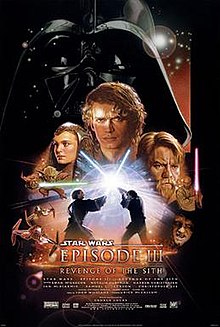
Jar-Jar was gone (thank the stars!), but C-3PO and R2D2 were little better, and the fact that they were in the story at all caused a major sprain to my suspension of disbelief. The lightsaber duel with Yoda and that other guy felt like it was thrown in for a gag, and Anakin … yeah. By the time the big stadium battle happened at the end, all I could do was yawn. The battle of Hoth had a lot less flash to it, and yet was infinitely more engrossing.

By this point, I’d started to phase Star Wars out of my life. I still occasionally watched the original trilogy movies, and played stuff like X-Wing: Alliance from time to time, but I wasn’t nearly as invested in the franchise as before. I’d moved on to stuff like Tolkien and Lord of the Rings, and spent more time playing stuff like Civilization and Alpha Centauri. Star Wars did not hold the same magic as it had before.

Then came Episode III, the final nail in the coffin for me. I can sum it all up in one word: “NOOOOOOOOOOOO!!!!!
Episode III was marginally better than Episode II, but that was only because of Order 66, where all the Jedi died and the Republic transformed into the Empire. Order 66 was pretty cool. But the rest of the movie? I mean, right from the first battle, I knew that it was going to suck. When a ship in orbit tilts to one side, it does NOT cause everything to fall in that direction! Lucas might as well have shown people falling off of the south pole. From that point on, my suspension of disbelief was shattered beyond any hope of recovery.

But the worst part was Anakin’s transformation. Here’s a guy who is supposed to turn from this whiny, annoying brat into the most iconic sci-fi villain of all time … and I just wasn’t buying it. With each progressive step, he just didn’t seem any different than before. Instead of the character driving the story, it felt like the plot was shoehorning the character into a role, and all he could do was passively accept it. The slaughter of the young Jedi knights at the temple, the oath of fealty to Chancellor Palpatine–none of it felt authentic at all. And even after he put on the mask, he was still the whiny, annoying brat from before. Darth Vader, the linchpin of the entire franchise, was ruined.

At that point, I completely checked out. That’s right–the kid whose whole life was tied up with Star Wars now wanted nothing to do with it. I still went back to some of the old, pre-Episode I stuff from time to time, just for nostalgia’s sake, but I had no desire to keep up with any of the new stuff that was coming out. Books, games, TV shows–I was done.

Then Disney bought Star Wars, and rumors started to fly. My expectations at first were pretty low, but George Lucas had done so much to screw it up already that I figured Disney couldn’t do any worse. Then I realized that Disney does a lot more than princesses and fairy tales these days, and my indifference turned to curiosity. When J.J. Abrams was slated to direct it, curiosity turned to the faintest glimmer of hope.

Which brings us to this:

I have to be honest, I’m actually kind of excited. After all that the prequels did to ruin Star Wars for me, that’s saying quite a lot.

First of all, the black stormtrooper. I’ve heard a lot of griping about the fact that he’s black (or more accurately, that he isn’t one of the clones from Episode II), but come on guys–do you really expect the first generation stormtroopers to stay on active duty for fifty-plus years? Of course the Empire is going to replace the clone warriors with newer soldiers (hopefully, ones that can actually shoot).

Personally, I think it’s kind of awesome that he’s black. More than that, though, I think it’s awesome that he has a face. Imperial stormtroopers have always been quintessential mooks, and that’s always bugged me. Just once, I’d like to see the good guys face off against a bunch of stormtroopers who can actually shoot straight–it would add a whole new level of tension and danger. To feature one as an actual character is promising indeed

One of the things I loved the most about Star Wars was the grungy, dirty, second-hand feel of most of the technology. In the original trilogy, you really get the sense that you’re in a used future, especially on the planet Tatooine. From what I can see in the trailer, it looks like they’re bringing that back. Deserts + derelict spaceship wreckages + super fast hovercars that look like they’re about to break down = OMG YES.

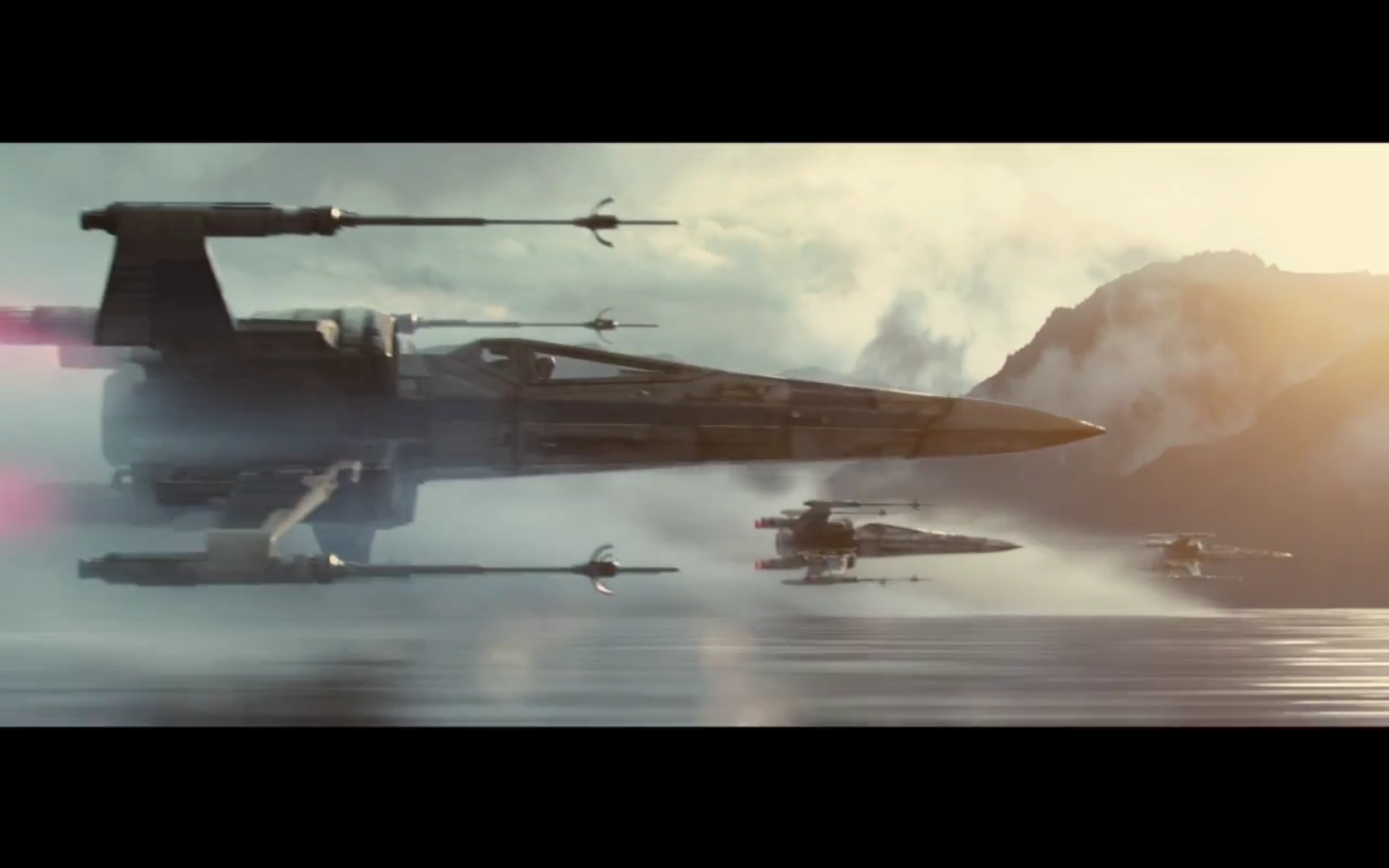
But the part of the trailer that really won me over was this part right here:Screenshot from 2014-12-12 11:12:18Specifically, how realistic the X-Wings look. The way they kick up those clouds of water as they buzz the surface of that lake–you can’t deny, that’s pretty freaking awesome. My biggest running issue with the prequels was how they constantly abused my suspension of disbelief, so the fact that these X-Wings actually look real is perhaps the most promising part of the trailer for me.

Yes, the bad guy’s lightsaber with the dinky little lightsaber spurs looks … well, dinky. No argument there. But the last part, with the Millennium Falcon doing the crazy barrel roll as the music hits you with all of its glory–HOLY CRAP YES!!!!!

There’s not a whole lot of substance in this trailer. It’s only a tease–but wow, what a tease! I’d hate to get my hopes up only to have them dashed as badly as Episode I dashed them, but I’ve got to be honest: I’m actually kind of stoked for this movie now.

Episodes I, II, and III alienated a lot of the older fanbase, but it did appeal to the younger generation that came to the Star Wars universe without any preconceptions or expectations. Before I saw the trailer, I thought that Episode VII would simply continue that trend. Now, I actually think it may turn things around–bring back the old-school fans while showing the younger generation that Star Wars can be so much more.

The next big dream

When I graduated from college, my goal for my writing career was this: to make a living telling stories that I love. It seemed, at the time, like an impossible dream–something so far out of my reach that I couldn’t possibly achieve it without years and years of constantly frustrated effort.

Well, guess what? For the past six months or so, I’ve more or less been doing it. I live below the poverty line in a basement with two other guys, and I have to donate plasma to cover the difference in my expenses each month, but writing is my main gig and I’m making enough to pay all my bills with it. Barely.

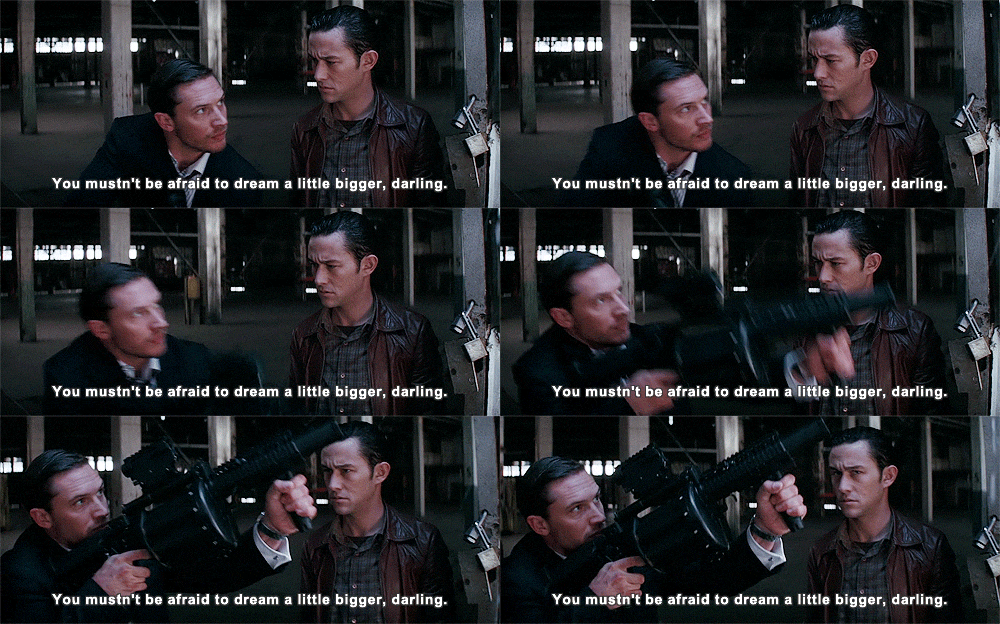
There’s more to life than making a living, though, even doing something that you love. My current month-to-month lifestyle isn’t particularly well suited for anything except, well, living month-to-month. So I need to make some changes, and to do that, I first need to dream a little bigger:

A really good dream should be–or at least seem to be–a little bit impossible. That way, you don’t have to worry about achieving it too soon. At the same time, it shouldn’t be too impossible. If you can’t see myself ever achieving it, then what’s the point?

For example, one of my bucket list goals is to look down on this planet from space. With the awesome advances in spaceflight that companies like SpaceX and Virgin Galactic are making right now, I can totally see that happening in my lifetime. But setting foot on an alien world? Nah, I don’t think that’s in the cards for me.

(Then again, if we figure out how to live forever, maybe it could actually happen. Even just adding another 50 or 100 years to my life would probably let me live to see a permanent base on the Moon or Mars. So maybe impossible is actually better–I don’t know.)

A friend of mine is building a business that he hopes will one day make him a cool seven figures. His mom makes six figures, but her name is also on six mortgages, so she’s pretty much tied to her job. One of his big dreams is to pay off all those mortgages for her so that she can retire.

When that happens, he’s going to celebrate by getting a bunch of friends together on a road trip to Texas. We’ll take a big refrigerated meat truck down there and go wild boar hunting until it’s packed full of pork. Then we’ll come back to Utah and have the mother of all barbecues. 😀

That’s the kind of dream I need to shoot for: something specific and personal that sounds kind of crazy but is still just barely within reach. In other words, it should be something that’ll make a good story when I finally achieve it. Or maybe I won’t achieve it–maybe the dream itself be so awesome that just the act of striving for it will make all the difference. As David Gemmell once wrote:

May all your dreams come true save one, for what is life without a dream?

It’s going to take more than one blog post to figure this whole dream thing out, so I’ll just leave that here for now. It’s definitely going to be on my mind for the next little while. If you have any impossible dreams of your own, please do share!

Excited for a new old project

So a couple of weeks ago, I picked up the manuscript for a novel I’d written years ago, looking to see how much work it would take to salvage it. It’s a direct sequel to Bringing Stella Home, with James McCoy (again) as the main character. Long-time readers of this blog may remember it as Heart of the Nebula.

I wrote the first draft in 2010-2011 (started it almost exactly four years ago, in fact), and right from the start I could tell there were a lot of problems with it. I tried to throw in a romantic subplot that backfired horribly, and several of the major plot points weren’t thought out very well. I pushed through and finished it, though, and in spite of a few extra arms growing out of weird places, there was a lot of stuff in there that I liked.

(Come to think of it, I think this was my NaNoWriMo attempt back in 2010. That would explain why I pushed myself to finish the thing, even though I knew it had problems. I dropped it before the end of November and didn’t pick it up again until March, but since the only other books I had going on at the time were Desert Stars and Bringing Stella Home, I forced myself to finish it just so I had another one. This was back when I was under the impression that every book needs at least five or six revisions to be any good, and that most of the work in writing is actually revising. I no longer labor under those myths).

Over the next few years, I went back to it from time to time to dust it off and run it through a revision pass. Unlike my other novels, though, this one was so broken to begin with that revising wasn’t enough. I changed a lot in the 2.0 revision, cutting out most of the worst problems but not really replacing them with anything better. In the 3.0 revision, I mixed things around a bit but didn’t substantially change the story. Then I went through a bunch of incomplete revision attempts, tweaking scenes and rewriting sentences, but not really changing the story as a whole.

Then last year, I read through all the sundry drafts that I’d written of this story and put together a massive set of revision notes for the 4.0 draft. This time, I tore into the heart of the story itself, reworking plot points and adding new subplots to replace the ones that didn’t work. I went through the whole thing by chapter and scene, making a list of bullet points for all the changes that needed to be made. I also made notes for scenes that I needed to write entirely from scratch, and other notes for scenes that I needed to recycle from previous versions.

It was a massive undertaking, and I got about halfway through it before putting it on hold for other projects. That was nine months ago. Between then and now, enough time passed for me to more or less forget most of my ideas for it.

So earlier this month, I had an opening in my schedule and decided to take a look at this one again. Instead of picking it up where I’d left of, I decided to start from the beginning. Immediately, I was struck by how much better the story was. This wasn’t the three-armed baby I’d stuffed into the closet back in 2011–this was a really compelling story, with an intriguing hook and great potential to go places. The further I got in it, the better it became.

There were a couple of scenes early on that just didn’t work. I could tell that I’d reworked them to death, so I threw them out and wrote completely new ones. This time, they actually worked! By completely getting rid of the problem scenes, amputating those mutated limbs at the base, I was able to free the story from the mess in which it had spawned. For some of these scenes, revision is not enough–they need to be tossed and rewritten from scratch.

Over the last two weeks, I’ve really gotten excited about this project. Not only do I think it’s salvageable, I think I can make a really awesome story from it. I just got to the middle of it today, past the part where I’d stopped back in February. For the next few chapters, I think I’m going to throw out the revision notes entirely and just see where the story goes. I’ll probably write toward the stuff I know I want to keep, but throw out everything else.

So yeah, you can expect to see Heart of the Nebula come out sometime next year, probably in the spring. I still want to run it past my first readers, but I don’t think it’s going to need any major revisions after this one (at least, not any that should take more than a week). Keep an eye out for it!


The Writer by Dosshaus on deviantART

How going indie is like driving a manual (plus a cover reveal)

A couple of weeks ago, I got a new (to me) car. It’s a 2005 Ford Focus / Saleen: a two-door hatchback that drives like a racing car and gets about thirty miles per gallon (WA-A-AY better than the gas guzzler I was driving before). It’s also a manual transmission, which is perhaps the biggest difference between this and my previous car.

This is my first time driving stick shift, and I have to say, it is a lot of fun! When you drive a stick, each hand and each foot is doing something different. There’s a lot more to keep track of, and if you do things in the wrong order (like braking without engaging the clutch, or starting without giving it some gas), you run the risk of making the car stall or doing nasty things to your transmission. On the other hand, driving a manual gives you a much better feel for the engine and what it’s capable of. You can feel when you’re putting too much stress on it–or alternately, when you can push it a little further.

I usually like to walk everywhere, but ever since I got this car, I just want to drive it! It’s way more fun than driving an automatic, even with (or indeed, because of) the extra challenge. So today, while I was walking to BYU campus (alas, the parking situation there makes driving a major pain), I got to thinking about it, and I realized that driving a manual is a lot like being an indie author.

When you’re an indie, you have a lot more things to juggle, just like driving a manual. This gives you much greater control of your career, but it also makes it easier to stall or screw up. At the same time, because of that extra control, you’ve got a much better feel for the market, and probably a better connection with your readers. And for me at least, the extra challenge doesn’t make it less enjoyable, it actually makes me enjoy it more!

Nothing Found

This week, I had the first day where I sold 100+ books in a 24 hour period. That was pretty awesome! I’ve been running a $.99 sale for Star Wanderers: The Jeremiah Chronicles (Omnibus I-IV), and it got picked up by a couple of ebook sites that really pushed it in the right way. Now that I know how to run a sale like that, I hope to do it again, perhaps for Black Friday. And if you haven’t picked up this one yet, it’s on sale for $.99 through Friday.

Marketing and promotion is one of the harder parts about going indie for me, kind of like how finding the clutch point and starting without stalling is hard when you first drive a manual. The more that I practice, though, the better that I get at it, and the more I enjoy it.

Another area where I think I’ve more or less stalled is in my covers. When I put out the first few Gaia Nova novels, I spent a fair amount of money hiring out artists to do the illustrations, but I did the typography myself. On those earlier covers, it definitely shows. For my later books, I worked with a bunch of cover designers, and seeing their work made me realize that there’s definitely room for improvement on those earlier ones, especially for the print editions.

I’ve decided to redo the covers for those three novels (Bringing Stella Home, Desert Stars, and Stars of Blood and Glory), keeping the illustrations but changing the typography. I tried to find a cover designer to do it, but I wasn’t able to find one that did satisfactory work, and after playing around with them for a bit I think I can actually do them myself. I’ve got a lot more experience with covers and cover design now than I did when I was starting out, and I’ve learned a few photoshop tricks as well.

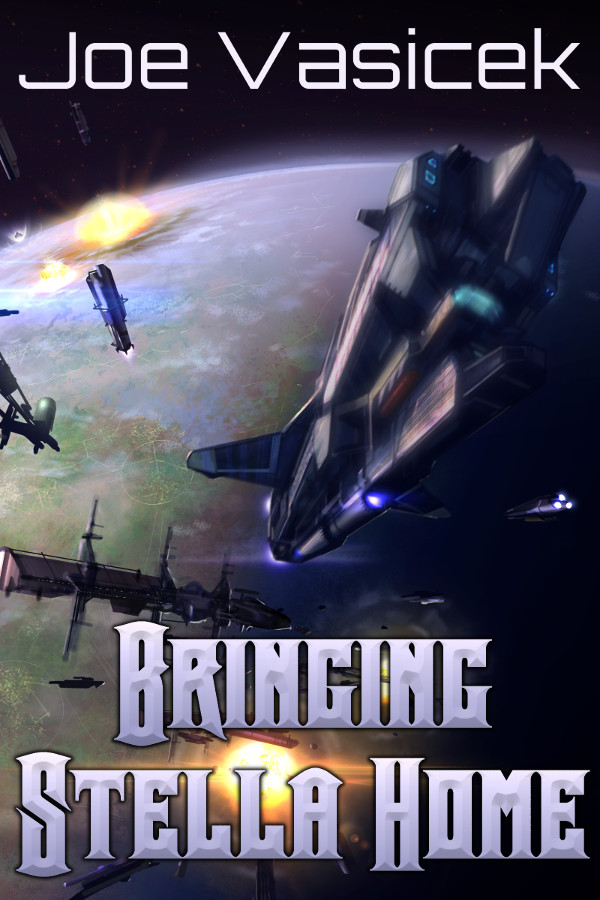
In any case, here is what I came up with for Bringing Stella Home:

BSH (cover)How do you like it? I rather like how it turned out, though I’ll admit I’m still learning. I did the new design just this morning, so I figure I ought to wait a couple of days and maybe seek out some feedback from professional designers before I go through with it.

I hope to have the new edition out before the end of the month. The content and story will all be the same, but the cover and metadata will be updated, and some minor errors such as typos will be fixed. I also hope to do the same thing with Desert Stars and Stars of Blood and Glory. Once the new editions are out, I’ll probably run some sales and giveaways with them, so definitely stay tuned!

As for my other projects, the next book in the Sons of the Starfarers series is out with my first readers, so it’s on track for a January release. My next WIP is The Sword Keeper, a fantasy novel I think I’ve mentioned before, and I hope to get that one knocked out in about a month or so. It’s already halfway finished, so the hard part is just ahead. There are also a couple of Gaia Nova novels that I’ve been meaning to get around to, and probably will before the end of the year.

That just about does it. Look out for more covers soon! I’m definitely having fun with the new ones. 😀

Thoughts on writers, reviewers, and stalkers

catfishnoThe bookish side of the English-speaking internet exploded last week with an article in The Guardian about an author who stalked a Goodreads reviewer, showing up unannounced on the reviewer’s doorstep and going to great lengths to expose the reviewer’s identity. The crazy part–or crazier, I guess, since the whole thing is batshit crazy–is that the Guardian article was written by the author/reviewer herself.

It gets crazier, though. This same author, in another article published a little over a year ago, confessed/bragged to stalking someone else who she perceived as crossing her, this time assaulting her victim both physically and verbally. According to Jezebel, even after she was brought into court and censured for her brazen act of assault, she continued to stalk this person online, to the point where the police intervened a second time.

I normally do my best to stay away from drama like this. However, with the issues that this case raises and the way that it’s rocking the book world right now, I feel that I ought to add my own thoughts to the public discussion that’s happening right now.

First, I think that this author’s actions were completely inexcusable. Period. No book review, however critical, justifies hunting the reviewer down and showing up unannounced on her doorstep. Furthermore, when you read the original review that sparked the whole incident (and the subsequent Goodreads discussion thread), you realize that the author’s characterization of the reviewer is simply untrue. Was the reviewer “bullying” the author? Because she seems perfectly civil (if perhaps a bit enthusiastic) on that thread–much more civil than the author’s fans, in fact.

If there’s any bullying that happened in this case, clearly the worst offender is the author. She not only crossed the line of civility, but she also demonstrated herself to be both dangerous and unpredictable. And after all of that, to write about it in the Guardian–that is crossing a whole new line altogether.

It’s frustrating for me, because bad actors like this completely undermine the review space for all of us. Reviews–honest ones, critical ones–are an important part of a healthy book culture. They are helpful to readers in deciding whether or not to read a book, and they are helpful to authors in guiding our books to the readers who will enjoy them the most.

At the same time, reviews for readers and not for authors. When authors argue with reviewers, it undermines the review space for everyone. Arguing with a reader is not going to change their opinion of a book, and being public about it makes other reviewers think twice about posting anything less than a diabetically saccharine review.

And then you have a case like this, where one batshit-crazy nutcase goes over the deep end so spectacularly that she tarnishes the review space for everyone.

I have to be honest–this story pisses me off, not only as a reader and a reviewer, but as an author as well. Have I received negative reviews? Certainly. Does it sting when I get them? Of course it does–and the ones that sting the most are the ones that bring up good points. Do I engage with negative reviews? Only when I feel that there’s a point that needs clarification, and then only in the most non-intrusive and non-confrontational way possible.

Whenever I hear about reviewers bullying authors, it almost always turns out upon closer examination that the author is behaving just as badly, if not much worse. For that reason, I have very little sympathy for authors in these cases, especially when reviewers everywhere are made to feel unsafe. This narcissistic literary pettiness helps no one, at the ones who get burned the most are almost always the reviewers.

So that’s my $.02. Now time to do something productive with my time and energy–like, y’know, actually write or something. Take care.

What readers want

I’ve been thinking a lot recently about what science fiction and fantasy readers want in the books they read. I’m in the middle of writing and publishing a series of novellas and short novels, so it’s definitely on my mind. After publishing twenty books and completing another novella series, I think I have a pretty good idea.

First and foremost, I think that readers want to have an experience. The exact nature of that experience depends on the genre, but for science fiction and fantasy readers, that experience needs to be out of this world. They want to be transported somewhere and feel that they’re immersed in the world of the story.

I think I’ve done a pretty decent job of this so far. I’ve gotten a lot of feedback from readers who say that they really enjoy the worlds that I’ve created. There’s always room for improvement, but so far, I think I’ve done a pretty good job transporting my readers to other worlds.

Second, readers want characters that they can connect with somehow. That usually means characters that they can relate to, though it can also include larger-than-life characters as long as they don’t feel fake. The characters are especially important for science fiction and fantasy, since they make everything else in the book feel real and authentic. Besides, when you’re visiting a new and unfamiliar place, it’s always good to have a friend.

I think that character is one of my strong points. I love getting into my characters’ heads and showing how they uniquely see the world around them. I also love showing how characters change and grow as they struggle to overcome their weaknesses. I’ve gotten a lot of positive feedback from readers on my characters, even in some of the more critical reviews, so that tells me I’m doing something right that so many readers can connect with them.

Third, readers (especially sf&f readers), want an adventure. They don’t just want an internal struggle as a character wrestles with difficult moral issues, or a transformative growth experience as a character faces a difficult challenge. Both of those can make a good story into a great story, and turn a reader into a fan, but more than that they want stuff to actually happen. They want the plot to move at an exciting pace–to get sucked into a story as they wonder what’s going to happen next.

With the series I’m writing now (Sons of the Starfarers), I’m trying to do just that. Star Wanderers (my other novella series) did pretty well, but I think the conflict was more personal and internal, or had more to do with the relationships between the characters than any sort of adventure that they were having together. There’s a place for that, but I think a lot of readers got bored midway through the series, or didn’t feel a compelling need to finish it. With Sons of the Starfarers, I’ve been careful to keep the action moving at a good clip with every book, and so far almost everyone who reads the second book goes on to the third book.

So those, I think, are the top three things that the majority of readers are looking for. But there’s something else that I don’t think I’ve been as good at, and it has to do with everything above.

I think that most readers, especially sf&f readers, are looking for longer books. They want everything above, but they want it in much bigger doses. The enjoyment they get out of a book doesn’t increase linearly with the page count, it increases exponentially. The longer the book, the deeper the immersion. The characters feel that much more real the longer they get to spend with them, and the adventure feels that much more thrilling.

As I’ve said before, I really enjoy writing novellas. But if my readers want something meatier, I’ll do what I can to satisfy them. I may love writing novellas, but I also love writing novels too. Since they generally take longer to write, with a lot more time between new releases, it’s more of a challenge to market them, but I have enough books out now that I can switch gears.

There are a couple of half-finished novel projects that I’ve had on the back burner for a while. I’ll keep working on Sons of the Starfarers until that series is complete, probably sometime next year, but I’ll also work on the novels in the meantime. Sons of the Starfarers will have nine books (three omnibus editions), and then it will be complete. After that, time to move on to longer books.

Why writing retreats and seminars make me uneasy

Writing retreats and seminars make me uneasy. I’ve never attended one, mostly because the prices tend to run so high, and that’s part of what makes me so uneasy about them. Yes, writing is a business, and yes, the author deserves to be paid, but paid for what exactly? For telling stories, or for telling other people how to tell stories?

There’s an unfortunate tendency in the writing world, especially the SF&F corner of the writing world, for us to elevate authors to a quasi-godlike status and take them as a definitive final authority on the field. Certainly, when Brandon Sanderson or Orson Scott Card gives an opinion, I give it more weight than an anonymous handle on a message board somewhere. At the same time, though, an opinion is just an opinion, no matter where it comes from.

You don’t have to shell out a lot of money to learn the craft of writing. There are lots of excellent books on the subject, as well as online communities, videos on Youtube–I think all of Brandon Sanderson’s lectures from his English 318R class at BYU are now up on Youtube. More importantly, there’s no one stopping you from sitting down in front of a computer (or setting out a pen and paper) and learning from doing it yourself. So why do we need all these huge, expensive retreats and seminars?

Perhaps my view on this subject is different because I’m an indie writer. One of the great things about self-publishing is that it tears down the walls, throws open the gates, and levels the playing field for everyone. Since we all can be authors now, the pedestals are a lot shorter. The old authorities are no longer quite so definitive, because there’s so much room for experimentation in this new marketplace.

In the indie writing community, there’s a very strong ethic of sharing. Hugh Howey is probably the biggest example of this. He repeatedly goes out of his way to help his fellow writers, putting together the Author Earnings Report and being very generous in sharing everything he’s learned. He’s also very modest about it, constantly putting other, lesser-known authors forward as much better writers than he is. Instead of capitalizing on his knowledge by creating artificial scarcity, he puts it all out there on his blog and the internet communities where he participates.

Of course, retreats and seminars are just as useful for the networking opportunities as they are for the actual instruction. The thing is, just how useful is that networking really? The market is open–we all have access to readers now. The gatekeepers no longer have the power to make or break anyone’s career. And if you’re in the business of writing and telling stories, what better way to network is there than doing exactly that? Sure, it can boost your career to be on a first-name basis with a successful author/editor, but if you don’t also have the writing chops to back that up, it’s not going to do you much good.

I don’t want to call in doubt the motivations of those authors who do put on retreats and seminars. I think that for the most part, their motives are pure. But the structure is one of artificial scarcity that props up this legacy model of gatekeepers and pedestals. It makes me uneasy, because it grants too much of an air of solemnity and authority in a field where the brightest new voices are often self-taught.

Perhaps the thing that makes me most uneasy about these retreats and seminars is the fact that I’ve received so much bad writing advice over the years. To the extent that I have succeeded at all, it has been in spite of the advice I’ve received, not because of it. When I see people turning around and selling their advice for top dollar, it makes me very uneasy, regardless of their motivation in doing it.

I never want to participate as an instructor in expensive retreats or seminars. I don’t feel comfortable supporting that sort of thing. If I ever do get to the point where people would pay to hear me pontificate, I’m going to be very careful not to put myself out there as a definitive authority, since I’m sure any of my advice will be just as harmful to the wrong person as it is helpful to the right person. As for networking, I’d much rather do that through collaborating, reviewing, guest blogging, and putting anthologies together.