The state of science fiction is as bad as Australian breakdancing

It seems like most of the internet is talking about the hilariously bad breakdancing performance given by Australia at the Paris Olympics. Apparently, the “athlete” in question is actually a university professor named Rachael Gunn who specializes in breakdancing studies, or some such nonsense, and the main reasons she got the nod to compete are 1) the Australian breakdancing scene is woefully small, 2) she’s (allegedly) an LGBTQ+ woman, with all the right political opinions, and 3) her husband was on the committe that made the decision to qualify her. Taking advantage of those three factors, she’s apparently made a name for herself in Australia, even winning some local competitions—because who would dare criticize such a stunning and brave LGBTQ+ woman? So of course, she went on to compete on the international scene… and made such a mockery of herself and her sport that the judges awarded her straight zeroes, and the Olympics committee pulled breakdancing from the 2028 Los Angelos Olympics. Wah wah.

While this story is rightly hilarious, and proves the eternal truth that wokeness ruins everything, I can’t help but notice the parallels between the state of Australian breakdancing, that someone so inept and untalented could leverage a “studies” degree to dominate it, and the current state of science fiction. Specifically, this is the comment that made me think about this, which is worth reading in full:

The relevant part is this:

Rachael represents so much of what is totally lecherous about cultural studies academics. Pick a subject area that will be under-studied in your context, so you can rise through the ranks quickly (how many break dancing academics will there be in Australia?), and wreak absolute havoc in lives of the people you want to study. There is no limit to the sheer disrespect they will dole out, purely for self-advancement.

Now, I don’t think science fiction was ruined in quite the same way, ie by being dominated and colonized by academia through “studies” degrees. Science fiction was probably too large to be overtaken that way. However, the pattern is still similar, and from what I can tell, it goes something like this:

Step 1: Take over the institutions in the field that are primarily responsible for determining and evaluating excellence.

In Australia, the breakdancing field was small enough that academia was able to dominate and (for lack of a better word) colonize it, becoming the arbiters of excellence within that art. It certainly helped that the professor who had carved out this academic niche for herself was married to one of the judges in the committee that was tasked with determining excellence. This created an incestuous (and ultimately nepotistic) relationship between academia and the judging panels.

In science fiction, something similar happened with SFWA and the Hugo and Nebula awards. I’ve written before about how SFWA ruined science fiction, so I won’t repeat all that here. But the basic gist of it is this: as science fiction became more established, the organizations and publications that talked about science fiction became more authoritative on the subject of the genre than the actual writers themselves. Because of this, achieving recognition for excellence became less about creating works of actual merit, and more about gaining the approval of the people who had built their careers talking about science fiction, rather than actually creating it. And the best way to gain their approval was to join those institutions yourself, rising up in the pecking order until everyone else was beneath you.

This basically describes the career trajectories of John Scalzi and Mary Robinette Kowal, two insanely woke authors who leveraged their tenure as SFWA president for award nominations. Both of them seem to have spent at least as much time and effort talking about science fiction as they have in actually creating it: Scalzi through his blog, which he leveraged to get his first book deal, and MRK through both her blog and the Writing Excuses podcast.

Step 2: Purge those institutions until they are ideologically pure.

This step is critical. So long as the instutitions are focused on merit, the only way to climb the ranks is by creating something of merit. But once the institution has become ideologically possessed, with all of those who reject the dominant ideology being purged from positions of power, then merit no longer matters, and the way to the top becomes clear. Those who are the most ideologically pure, as demonstrated by their virtue signalling, will rise to the top. This has the added benefit of quelling all merit-based criticism, since those beneath you fear having their own ideological purity called into question.

From what I can tell, this is how Rachael Gunn rose to prominence in the Australian breakdancing scene. After all, once academia had colonized the field, who would dare question the merits of such a stunning and brave LGBTQ+ woman? In a similar manner, Scalzi and MRK rose to the top of SFWA by virtue signaling their own ideological purity and intersectional victimhood status, squelching any criticism by labeling their critics racist, sexist, bigots, homophobic, etc.

Step 3: Redefine excellence in your own image.

In the Australian breakdancing scene, this was accomplished through the combination of Rachael Gunn’s academic work and her husband’s position in the committee that qualified the Olympic competitors. And while it probably isn’t quite so blatantly nepotistic in the science fiction world, the pattern still holds true when you look at what the Hugos and Nebulas have become. This was what the Sad Puppies controversy was actually about, and because the Puppies lost, the Hugo and Nebula awards have been insufferably woke ever since:

Step 4: Use the captured institutions to purge the field of potential rivals.

The final step in this projection is to squash all of those people who represent a threat to your domination, because they have merit and you do not. Ignoring her perhaps overly generous assessment of Australian breakdancing, this is what Hannah Berrelli is talking about when she mentions all the “hundreds of Australian athletes who will have dedicated their entire lives to athletic excellence” whose blood, sweat, and tears were overshadowed and rendered irrelevant by Rachael Gunn’s Olympic stunt.

In science fiction, we see this in the fact that David Weber has never been nominated for a Hugo or a Nebula, or that Jim Butcher’s sole Hugo nomination lost to No Award. Both of these men are far better writers than the majority of award-winning authors, especially in our current era. You could make a solid argument that Dan Simmons or Orson Scott Card were superior, but Scalzi? Jemisin? Kingfisher?

And what about all of the new and relatively unknown authors? At least Weber and Butcher already have large followings, which they have rightfully earned through their merit. But when merit is no longer the determining factor in recognizing excellence within the field, what chance do talented up-and-coming authors have if they aren’t willing to play the ideological purity games? Answer: not a hell of a lot.

So while you laugh at how ridiculous Australia’s breakdancing performance was at the Olympics, understand that the same dynamic has been playing out in modern science fiction for years. And honestly, the results are no less ridiculous.

How I would vote now: 2023 Hugo Award (Best Novel)

Alright, let’s tackle the most controversial Hugo awards since Sad Puppies 3—and possibly the most controversial Hugos ever!

The Nominees

Legends & Lattes by Travis Baldree

Nettle & Bone by T. Kingfisher

The Spare Man by Mary Robinette Kowal

The Daughter of Doctor Moreau by Silvia Moreno-Garcia

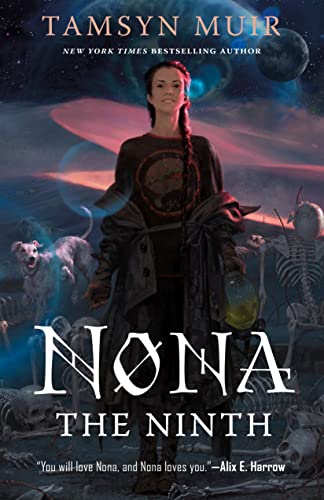
Nona the Ninth by Tamsyn Muir

The Kaiju Preservation Society by John Scalzi

The Actual Results

  1. Nettle & Bone by T. Kingfisher
  2. Legends & Lattes by Travis Baldree
  3. The Kaiju Preservation Society by John Scalzi
  4. The Daughter of Doctor Moreau by Silvia Moreno-Garcia
  5. The Spare Man by Mary Robinette Kowal
  6. Nona the Ninth by Tamsyn Muir

How I Would Have Voted

  1. No Award
  2. The Daughter of Doctor Moreau by Silvia Moreno-Garcia
  3. Legends & Lattes by Travis Baldree

Explanation

The 2023 Hugo Awards were an epic clusterfuck, from which the Hugos might never recover (and honestly, I kind of hope they don’t). Not only did the organizers exclude a bunch of titles like Babel by R.F. Kuang that probably would have placed very high, if not outright won first place—excluded them for no other discernible reason other than that they might have offended the Chinese Communist Party, since China was hosting the awards—but they also disqualified thousands of Chinese ballots for the same reason that they disqualified thousands of Sad Puppy ballots in subsequent years since the big kerfluffle in 2015: namely, that they were Wrongfans having Wrongfun.

Apparently, to get on the Hugo ballot, you have to either 1) pander to or be a member of the SFWA mean girls club (for crying out loud, two of the authors on this year’s ballot were former SFWA presidents), or 2) write a lesbian love story. I suppose you can also get on the ballot if you write a love story that’s gay, transgender, polyamorous, or some other flavor of queer, but lesbians are easier because the male readers are less likely to be grossed out or confused by it.

Anyways, I didn’t enjoy any of these books, though I have to admit that I didn’t even try to read The Kaiju Preservation Society (because I cannot stand Scalzi, either as an author or a human. The Collapsing Empire with its random throwaway sex scene in the second or third chapter was the last straw for me) and The Spare Man (my wife picked it up and was so confused and turned off by the non-gendered pronoun dickery that I knew it was too woke for me). I DNFed Tamsyn Muir’s Locked Tomb series with Gideon the Ninth, for reasons that I detailed in my recap of the 2021 Hugo Awards.

As for Nettle & Bone, I was pleasantly surprised at first, because the love interest was heterosexual—which, for the Hugos, is very unusual these days. But there were other things about the book that turned me off, such as the anachronism of a religious medieval world that’s been gutted of anything religious that might offend a non-religious reader in 2023, and a very anti-natalist bias with some lines that could have come straight from Margaret Sanger. So that’s why I put Nettle & Bone below No Award, and didn’t even bother ranking it anywhere on my ballot.

Legends & Lattes wasn’t terrible, but I got bored after the first couple of chapters, and because of the lesbian love story I’m not too keen to try it again (though I suppose I could be persuaded otherwise). As for The Daughter of Doctor Moreau, I didn’t find anything objectionable with that one, and actually got about halfway through, but… I just didn’t care about any of the characters. Not a terrible book, but it just wasn’t for me.

Of the two, I think I liked The Daughter of Doctor Moreau better, or disliked it less, which is why I put it on the ballot above Legend & Lattes and below No Award. Why include anything on a ballot below No Award? Because the way that ranked choice voting works, you can still influence the outcome that way even if No Award is eliminated during the counting. It’s basically like saying: “I don’t think any of these books deserve an award, but if I had to award one of them, I’d give it to (1) and (2), in that order.”

So that’s my take on the infamous 2023 Hugo Awards. Frankly, I think it would have been much better if the Chinese wrongfans had completely taken it over, and made it so that Worldcon was held in China every other year, with Chinese authors dominating the Hugos from now on. There are certainly enough Chinese sci-fi readers to justify such a move. But alas, it seems that the Trufans are going to keep clutching the Hugos with a deathgrip until 1) they’re all dead (since most of them are boomers anyway), or 2) the Trufans and the Hugos both become culturally irrelevant, if indeed they aren’t already.

(Speaking of China, hi Mike Glyer! Still buying views from Chinese clickfarms to boost your online rankings? It must be a real slow news week if you pick up this blog for your File 770 pixel scroll.)

A hot take for Carl

One of the members of my writing group recently posted on Facebook that for his birthday, he wants his friends to share their most controversial and/or hilarious “hot takes.” Here’s mine:

SFWA (The Science Fiction & Fantasy Writer’s Association, or whatever the hell it is now) was founded by perverts and communists to purge the science fiction and fantasy genres of any authors who love America, believe the Bible, and oppose the genocide of the unborn.

SFWA was also created to suppress any stories that might challenge the philosophies of Karl Marx, Charles Darwin, Thomas Malthus, Sigmund Freud, John Money, Michelle Foucault, Herbert Marcuse, and the Marquis de Sade.

Their ultimate goal was to prevent another George Orwell from writing a book as effective at setting back their political project as Animal Farm and 1984, and to make the world safe for the normalization of pedophilia.

TL;DR: SFWA was created by perverts and communists to ruin science fiction for anyone who isn’t a pervert or a communist, and they largely succeeded.

Reading Resolution Update: After Action Report

My 2022 reading resolution: Read or DNF every novel that has won a Hugo or a Nebula award, and acquire all the good ones.

Earlier this month, I finished my last Hugo/Nebula book and ordered the last two ones that I hadn’t yet acquired. The first of those (Powers by Ursula K. Le Guin) arrived just this morning, and the other one (Way Station by Clifford D. Simak) is supposed to arrive next week, so I think that now is a good time to do a retrospective and share some of my thoughts.

There were 104 books in total, including the most recent award winners (I decided not to count the retro-Hugos midway through the year). Of those, I’ve read 35 through from start to finish, and decided that 24 were worth keeping. The rest of them (69, or almost exactly two thirds) I DNFed.

Finishing one in three books is actually about on par for me. I’ve found that if I don’t allow myself to DNF books early and often, I just don’t read. Also, it doesn’t really surprise me that nearly one third of the books I read all the way through didn’t really impress me. What can I say—I’ve a very opinionated man.

Of the 28 books that have won both a Hugo and a Nebula, I finished 12 (or about two-fifths) and found that eight (or a little over a quarter) were worth keeping. So not much different than the overall totals.

Of the 45 books that won only a Hugo, I finished 18 (exactly two-fifths) and found that 14 (about a third) were worth keeping. So my personal taste seems to be tilted more toward the Hugo than the Nebula. The difference becomes even more stark when you take out the 20 books that were nominated for (but did not win) a Nebula, a whopping 16 of which I DNFed. Excluding those, we’re left with 25 books, 14 (or more than half) of which I finished, and 11 (or just under half) I thought were worth keeping.

The contrast becomes even sharper when we look at the Nebula-only winners. Out of the 31 books that didn’t win a Hugo but did win the Nebula, I finished only five (less than one-sixth) and found that only two were worth keeping. Both of those were books that weren’t even nominated for the Hugo. When we look at the 16 Nebula-winners that were nominated for a Hugo but didn’t win, I finished only two of them (one-eight) and didn’t think that any of them were worth keeping.

So the best predictor that I wouldn’t like a book is if it won a Nebula and was nominated for a Hugo, but didn’t win. In other words, if the SFWA crowd (which is mostly authors) said “this is the best novel published this year!” and the denizens of Worldcon said “yeah… no,” that almost guaranteed I would hate it. In fact, just getting nominated for a Nebula is enough to make a book suspect.

This is why, earlier in the year, I posited the theory that SFWA has done more to ruin science fiction than any other organization. I saw this trend coming all the way back in the spring, when I was only halfway through the reading list. In the early years, SFWA was all about politicizing science fiction, and in the last few years, it’s basically turned into a nasty bunch of mean girls all trying to get a Nebula for themselves.

I tracked a few other awards just to see if there were any correlations. For the 18 books that placed in any category in the Goodreads Awards, there were only four books that I finished and two that I thought were worth keeping. Network Effect by Martha Wells received 22,971 votes in the Science Fiction category in 2020, which came to 9.69%. Blackout by Connie Willis gained only 337 votes in 2010, but that was 9.19% back then. Both of those books were keepers. The only other book that got a higher percentage for its year was Redshirts by John Scalzi, with 4,618 votes at 10.82%, but I DNFed that one. Most Hugo/Nebula winning books didn’t even clear the 5% threshold in the Goodreads Choice Awards, and in my experience anything under 10% that doesn’t immediately jump out to me probably isn’t worth reading.

Of the six Hugo/Nebula books that were nominated for a Dragon Award, the only one I even really finished was Network Effect by Martha Wells. But that makes sense, since it’s no great secret that the Hugo/Nebula crowd is trying to sabotage the Dragons by pulling exactly the same shenanigans that they accused the Sad Puppies of doing. Accusation is projection is confession, after all. As of 2022, there has never been a Hugo/Nebula winning book that has also won a Dragon, and while part of me hopes that it stays that way, another part of me is very curious to read the first book that does.

Almost all of the 104 Hugo/Nebula winning books placed somewhere in the various Locus recommended reading lists, which isn’t surprising since those lists are generally regarded as feeders for the Hugos and Nebulas (and used to get more people voting in them, too). Of the seven books that weren’t on a Locus list, the only one I finished was They’d Rather Be Right by Mark Clifton and Frank Riley, which also has the distinction of being the most difficult book to find.

(A lot of people think They’d Rather Be Right was the worst book to ever win a Hugo, but I actually enjoyed it. Unlike most Hugo/Nebula books, it was remarkably anti-Malthusian, which is probably why it’s so hated. As for the worst book to ever win a Hugo, I personally grant that distinction to Dreamsnake by Vonda N. McIntyre.)

There were only ten Hugo/Nebula books that won or were nominated for a World Fantasy Award, and I only finished two of them (and didn’t think either were worth keeping). Perhaps that means that makes it the actual best predictor that I’ll hate a book, but ten is a pretty small sample size, so I’m holding off judgment for now.

The best two decades for me were the 50s (7 books, 4 keepers) and the 00s (16 books, 6 keepers), though the 80s came in close with five keepers out of sixteen books—and let’s be honest, Blackout and All Clear by Connie Willis are basically two halves of the same book. In contrast, the worst two decades were the 70s (only one keeper out of 13 total books) and the most recent decade, the 10s (15 books, 2 keepers).

So far, the 20s aren’t shaping up to be much better. In fact, I think it’s entirely fair to say that given the state of fandom since the election of President Trump (and the general state of insanity in this post-Trump era), a Hugo or a Nebula should count as a mark against a book, rather than for it. That is, the primary value of these awards is to tell you which books to avoid. Perhaps this will change at some point in the future, like it did after the madness of the 70s or the malaise of the 90s (not a good decade for science fiction, apart from books published by Baen), but I’m not holding my breath.

So that was my reading resolution for 2022. If I hadn’t allowed myself to DNF, I can guarantee that I never would have accomplished it. As it stands, though, I’m pretty satisfied with how it turned out.

What sort of reading resolution should I set for 2023?

September Shorts 2022: Hunter, Lover, Cyborg, Slave

Whenever I do these short story challenges, the first one always feels like it’s super hard, and I end up spending way more time on it than I thought I would. It also usually ends up a lot longer than I would like. Hopefully the rest of them come faster and easier than this one did.

With that said, I’m actually fairly happy with how this one turned out. It’s kind of a cyberpunk space opera story, dark and gritty, but hopefully with some interesting twists and turns. Also, it’s not a nihilistic story at all, so it kind of breaks from a lot of cyberpunk with that. I really can’t stand nihilistic fiction.

Once again, I used the Mythulu cards to come up with the main story idea. Here are the cards that I drew:

  • JUNGLE: Supports a broad spectrum of life, so competition is fierce. Naturally brings out the strongest, biggest, brightest in everyone.
  • BIOLUMINESCENT: Light emitted by a living organism.
  • HUNTER: Searching with intent to kill. Draw +1 Relationship to explore motive.
    • FAMILIAR: Conduit for magic. Both parties are powerless and ordinary when alone. Represents how relationships transform us for the better.
  • MAN AND MAKER: Maker transforms a raw, useless thing into something extraordinary. Maker’s relationship with creation reveals narcissism or humility.
  • WANTED: Politically important and resisting subpoena or arrest. Authorities are willing to pay bounty to locate.
  • CYBORG: Trades a pound of flesh for superhuman advantage.
  • CHAOS: Source of evolution. Self-aware beings require background chaos for sanity. The amount needed varies.

That last card, CHAOS, got me to think about everything else in a certain way, but by the time the story was finished I don’t think I’d explicitly included that element in the story. That usually happens with at least one of the cards when I do this exercise: it influences how I think about everything else, but then I forget it while writing the actual story.

The thing that made everything come together was the idea of having an AI familiar, like a magic familiar, except with artificial intelligence. This AI is really just a projection of the user’s own subconscious, but augmented with artificial processes so that it interacts with the user like an intelligent, autonomous being.

My wife is getting her PhD in computer science, and she believes that we may never create a superintelligent AI because there appears to be a tradeoff between specialists and generalists. In other words, AI is very good at specializing in specific tasks or areas, but humans are very good at generalizing across all tasks or areas. It may simply be that to create an AI that is good at generalizing, you have to sacrifice its ability to specialize.

The idea of an AI familiar gets around that, because it piggybacks on the user’s own mental processes to do its generalizing, without the user being able to notice. That’s probably not how it works in real life, but this is a sufficiently advanced technology that I don’t feel bad about using a little hand-wavium to explain it. Besides, it makes for a pretty interesting story.

Final word count for the rough draft clocks in at just under 8,200 words. I will probably cut that down below 7,000 after workshopping it, making it a short story by SFWA’s definitions, which (unfortunately) are industry standard.

How SFWA ruined science fiction (and why it needs to die)

There was a time when science fiction was bigger than fantasy. More people read it, more authors wrote it, and more editors demanded it. Would-be fantasy authors were steered toward writing science fiction, because they knew that it would sell better than the stuff they actually wanted to write.

Now, the roles are reversed. More people read fantasy, more authors write it, and more editors are demanding it (except in the short story world, but none of them are in it for the money, which proves my point). For every year of the Goodreads Choice Awards, the fantasy section has gotten more total votes than the science fiction section. And authors like me, who often prefer to write science fiction, are instead veering more toward fantasy, because we can see that it sells better.

I’m not decrying this shift. I enjoy fantasy differently than I enjoy science fiction, but I genuinely enjoy them both. And as science fiction writers have pivoted to writing fantasy, I think it’s improved fantasy considerably, with magic systems that actually have rules and fantasy worlds that are actually realistic, given our understanding of physics, geography, etc. So just to be clear, I’m not complaining about this.

But I have wondered more than once how it got to be this way. What caused science fiction to fall out of favor? What made readers turn toward fantasy instead? Why has science fiction been on a general decline for the better part of half a century?

There was a time when science fiction was fun and inspiring. When scientists, engineers, inventors, and pioneers cited their favorite science fiction stories as major inspiration for their work. These were the people who put satellites in orbit, who put a man on the moon, who invented computers and the internet and in many ways built our modern world. And it worked both ways: not only did the fiction writers inspire the scientists and pioneers, but the new discoveries and inventions inspired the next generation of science fiction writers to write fun and inspiring stories about that.

What broke the cycle? What got us to the point where today’s kids no longer dream about becoming astronauts or paleontologists, but about being YouTube stars and “influencers,” whatever the hell that means? Why is there such a dearth of truly inspiring science fiction nowadays?

To be sure, there are a lot of factors at play, and no one single person or organization bears all of the responsibility. But if I had to point to just one thing as the primary cause, it would be SFWA.

The Science Fiction and Fantasy Writer’s Association, formerly known as the Science Fiction and Fantasy Writers of America, formerly known as the Science Fiction Writers of America, was started in 1965 by noted author and Futurian member Damon Knight. (Who were the Futurians? We’ll come to that later.) It is a professional organization for writers with a membership requirement of making at least 3 professional short story sales (only from SFWA-approved markets, of course), or a professional novel sale (also only from SFWA-approved markets), or to make something like $5,000 in sales on a single title if you’re self-published (which involves opening the kimono to these sleazeballs), or… frankly, I don’t know what the membership requirements are these days, and I don’t think SFWA does either, because their membership requirements page currently says that they have “a plan to create a comprehensive market matrix or scorecard to better guide creators toward professional publishers,” and that they are just now “starting with short fiction markets on this rollout.” Whatever the hell that means.

In practice, SFWA is a very snobbish club of “important” science fiction (and fantasy?) writers, or rather, a club of snobbish people who consider themselves to be important. Every year, they give us the Nebula Awards, which are supposed to represent the “best of the best” that science fiction (and fantasy?) has to offer.

The reason I’m keeping “fantasy” in parentheses is because the organization was very clearly founded with a focus on science fiction, and to the extent that it later expanded to include fantasy, it did so as a means to stay relevant in a world where fantasy had come to dominate science fiction. At least, that’s what I gather. But even if I’m wrong about that, I’m not wrong that the SF in SFWA originally standed for “science fiction,” and that the addition of fantasy came much later—and not without a ridiculous amount of controversy typical of this toxic and disfunctional organization.

Those of you who have been following the devolution of the genre since the dumpster fire that was the response to the Sad Puppies will no doubt agree that SFWA is a major part of the problem. But the thing that may (or may not) surprise you is that SFWA was toxic from the moment of its inception, and was always the primary factor in science fiction’s decline.

To see why, let’s go back to the Futurians. This was a small but tight-knit community of superfans, kind of like the Inklings, whose members went on to found Worldcon, the Hugos, DAW books, the Nebulas—and yes, SFWA itself. These were all people who grew up with the pulps, were active during the golden age, and became the movers and shakers in the field in the latter half of the 20th century: people like Donald A. Wollheim, Frederik Pohl, Isaac Asimov, Damon Knight, and others.

The key thing to know about the Futurians is that they were left-wing radicals. In the 1930s, when communism was a very dirty word, Pohl was literally a communist. Wollheim was also a believer in communism, and stated that science fiction writers and fans “should actively work for the realization of the scientific world-state as the only genuine justification for their activities and existence.” (Carr, Terry (1979). Classic Science Fiction: The First Golden Age p430) According to Asimov, the Futurians broke off from the Greater New York Science Fiction Club precisely because of their political and ideological differences. In short, the Futurians were all true blue, dyed-in-the-wool, die-hard Marxists of one stripe or another, and they were very overt about bringing their politics into their fiction.

When I first started to get involved in fandom, I heard an apocryphal story that at the very first Worlcon, there was a schism between the group of fans who wanted science fiction to advance the cause of global communism—basically, the Futurians’ view—and the majority of fans, who just wanted to read and talk about fun science fiction stories. That first major schism (or so the story goes) became the root cause of every fannish conflict and controversy that has ever happened since.

Now, if we had to sum up the chaos and insanity of the last ten years in just three words, most of us would probably agree that “politics ruins everything” is a fair assessment. For science fiction, it was no different. The science fiction of the golden age, for all its flaws, was fun, adventurous, inspiring—and not overtly political (for the most part). Then, in the 60s and 70s, science fiction took a strong turn to the political left, glorifying sexual liberation and Marxist utopias, and pounding the idea that the world was going to end very soon in some sort of climate catastrophe, or a nuclear holocaust brought on by politicians like Goldwater and Reagan.

I used to think that science fiction was an inherently political genre, but why should it be? After all, there is nothing inherently political about science. If the pandemic has taught us anything, it’s that the moment science becomes politicized into “The Science,” it becomes toxic and unreliable. And the more I read, the more I’m convinced that this is true of science fiction as well. The difference between art and propaganda, truth and narrative, is the same difference between science and “The Science.”

What happened in the 60s and 70s was science fiction’s version of the long march through the institutions, as the Futurians and their ideological allies came to dominate the professional side of the field. Even though they were outnumbered and their political views put them solidly in the minority, they took their love of science fiction way more seriously than everyone else, and so while a lot of those early fans of the 40s and 50s either grew out of science fiction or moved on to other things, the Futurians and their allies stayed. Science fiction was their life. Science fiction was their passion. And thus they became the next generation of authors, editors, and publishers.

Through SFWA, they were able to leverage their position and influence into real power. With Worldcon and the Hugos, anyone who was willing to shell out the money could vote or join the convention, and a lot of people did. It was much more democratic that way. But with SFWA, you had to sell enough stories to the qualifying markets—and increasingly, all of those qualifying markets came to be run by left-wing political ideologues.

In a recent Project Veritas expose, an engineer at Twitter explained that one of the reasons why Twitter has such a left-wing bias is because the left-wing extremists refuse to compromise on any of their views. According to the engineer, right-wingers tend to say “I disagree with what the other side is saying, but I don’t think they should be silenced for it,” whereas left-wingers tend to say “that’s violence and hate speech, and if you don’t censor it, I won’t use your platform.” Because the left-wingers are the super-users, Twitter is more likely to cater to them, and thus rewards their extremism instead of limiting it.

A similar dynamic emerged in science fiction, where the left-wing editors and publishers—many of whom had always viewed science fiction as a means to achieving their ideological ends—rewarded politically like-minded authors with story sales, publishing contracts, favorable reviews, and the Nebula Award. These left-wing authors went on to join SFWA and vote for other left-wing authors in the Nebulas, feeding the cycle.

Meanwhile, all the other authors and fans—the ones who cared more about telling good stories than conveying a political message—only stuck around so long as the quality of the stories hit a certain minimum threshold. And I’ll be the first to point out that there were many left-wing authors who wrote genuinely good stories: Ursula K. Le Guin, for example. But there were also some real hacks who were awarded the Nebula mainly because of their politics. Since the minimum threshold was different for every reader, as the stories got more political, more and more readers abandoned science fiction.

In other words, the reason why science fiction became so political was because the institutions—most notably, SFWA—rewarded political purity more than they rewarded telling a good story. From the beginning, SFWA had this toxic dynamic, because it was founded by political ideologues who wanted to use science fiction to achieve their ideological ends. And because politics ruins everything, SFWA ruined science fiction.

How does all of this end? With an insanely toxic purity spiral and a collapse into cultural irrelevance. That is what we are witnessing right now, with the recent brouhaha over Mercedes Lackey accidentally saying “colored people” instead of “people of color.” (Both terms are equally racist, by the way: it’s just that the one flavor of racism is more fashionable right now.) The purity spiral has been ongoing for years, perhaps since SFWA’s inception, and the collapse into cultural irrelevance is well underway. The only questions left are 1) how much damage will be done before SFWA fades into much-deserved obscurity, and 2) if science fiction has a comeback from its long decline, who or what will turn it around?

As to the second question, it’s possible that the damage is permanent and nothing will stem the genre’s decline. That’s what ultimately happened to the western, after all. Or maybe it will follow the same path that horror did, with some authors adapting to the changing market and rebranding as something else (ie urban fantasy, paranormal romance), while the genre purists languish, at least in terms of commercial viability.

Or maybe, if SFWA just dies, science fiction will begin to experience a renaissance. Same thing at this point if Worldcon doesn’t survive the pandemic (or gets totally captured by the Chinese, which honestly would be an improvement). With the advent of indie publishing, the field is very different right now, and we’ve already seen some amazing indie authors like Andy Weir and Hugh Howey take the field by storm. Without the toxicity of SFWA holding us back, I think we will see some very good things come out of the genre in the coming years.

But for that to happen, SFWA really does need to die, or at least fade into cultural irrelevance like the Author’s Guild and the Libertarian Party. Starve the beast. Don’t let them have any of your money. Mock the organization relentlessly, both online and offline, or else ignore them entirely. And if a book or a story wins a Nebula, take that as a mark against it. I’ve read all but five of the Hugo and Nebula award winning novels, and now I can say with certainty that the best predictor that I will personally hate a book is if it won a Nebula but not a Hugo. Test that out for yourself. If you haven’t been red-pilled yet, you’ll probably be surprised.

Also, check out this podcast if you haven’t already. Good stuff as always from Steve Diamond and Larry Correia.

Why I love writing novellas

Star Wanderers I (thumb)Star Wanderers II (thumb)Star Wanderers III (thumb)Star Wanderers IV (thumb)SW-V Dreamweaver (thumb)SW-VI Benefactor (thumb)thumb (Sholpan)

For the first half of this year, almost every project I’ve worked on (with the exception of an unfinished short novel) has been a novella.  It’s not a form I was familiar with when I first started writing, but I’ve come to enjoy it immensely, and look forward to writing much more in the future.

The technical definition of a novella is pretty simple, at least according to SFWA.  It mainly has to do with word length:

  • Novel — 40,000 words or more
  • Novella — 17,500–39,999 words
  • Novelette — 7,500–17,499 words
  • Short Story — 7,499 words or fewer

That one simple distinction leads to a host of other differences, though, since words and story length are so crucial to the different types of stories you can tell.

Short stories tend to be more situational.  A good short story writer (which I am not) can use the form to explore all sorts of other story elements, but there’s always something of a tradeoff.  A good short story will have strong characterization but a simplistic or nonexistent plot, or center around a compelling concept but not provide an immersive setting.  It’s a very minimalistic form–there’s always something of a sacrifice.

A good short story can pack a real punch, but it doesn’t really immerse you in another world.  It might resonate for a long time after you read it, but you finish it almost as soon as you start it.  It’s a form that I enjoy in audio form, but don’t actually read very much.  It’s great for the commute or a road trip, but not so great when I’m curled up in the lovesack looking to get lost in a book.

That’s just me, at least.  And as for writing them, I need a lot more practice before I have anything useful to say on that.

With novels, it’s exactly the opposite.  They are so expansive that they tend to have multiple viewpoints, subplots, character arcs, and setting elements all woven together in one sprawling whole.  There are differences, of course, between a 200k word fantasy epic and a short 60k word thriller, but complexity is an important part of the form.  It’s not enough to have an interesting situation, or a single mind-blowing idea–you have to have several, and they have to work together.

When done well, the effect can be tremendous.  A good novel is much more than just the sum of its parts, and the climactic moments when everything comes together can be truly spectacular.  They’re incredibly immersive, too–I’m pretty sure that some of my childhood memories are things that never happened except in the pages of a book.

But sometimes, it can be hard to get into a novel, either because it starts off slow or because from the very beginning it’s so complex.  Also, it requires much more of an investment, especially in time.  I can’t tell you how many novels I’ve checked out from the library, only to return a few weeks later with a hefty overdue fine on my account–not because I didn’t like them, but because I just couldn’t find the time to finish.

In terms of writing, all of that storytelling complexity can make the task positively gargantuan.  It depends on the length of the novel, of course, but the longer it gets, the harder it is to keep everything straight.  And when something is off and the story just doesn’t seem to be coming together, it can be incredibly difficult to figure out exactly what is broken.  Even if it’s small, or something that’s easy to fix, you can easily find yourself revising in circles.

The novella falls more or less in the “Goldilocks” zone of these other forms.  It’s long enough to give you the space you need to play with things on a novelistic scale, but short enough that you don’t have to worry about bringing all that complexity to the page.

Generally, I’ve found that there isn’t much of a difference between novellas and novelettes.  I’ve dabbled with both, and found that the difference has more to do with brevity and less to do with actual structure or form.  A well-written novelette can do all (or at least most) of the things a novella can do, just in a slightly more economical fashion.  And of course, the differences in all of these forms is subjective and fuzzy.  Your experience could very well be different.

But personally, I find novellas (and novelettes) much more fun to write because it allows me, sometimes even forces me, to get a lot more intimate with my characters and their individual points of view.  A situation or idea alone is not enough to carry the story for the required length, but exploring multiple viewpoints (or at least more than two) tends to push the story too far.  Consequently, I find myself really diving into my characters and trying to see things from their perspective.

It’s similar with novels, but without all the other subplots or character arcs, there are fewer distractions–and fewer ways to screw up.  I can stay in the character’s head without having to break out to fix something else.  Also, my first drafts tend to be a lot cleaner, with less need for massive substantial revisions.  And even if the draft is irredeemable, I can toss it out and rewrite from scratch with a lot less pain, since it’s only 30k or 40k words.

So yeah, I really love writing novellas, which is something that would have surprised me only three or four years ago.  There aren’t a whole lot of traditional markets to sell them to, but that doesn’t matter because they’re perfect for ebooks and self-publishing.  It’s also a lot easier to take a loss on a perma-free novella than it is on a full-length novel.

I’ve found that I can write a good first draft of a novella in anywhere between two and six weeks.  I wish I could do it quicker, but I’m not a very fast writer, so thirty days is a pretty good cap for a deadline.  And because they’re shorter, they tend to be quicker to revise, and easier to hand off to alpha readers who will give you a good turn-around time for feedback.

For those of you who prefer more long-form stories, don’t worry–I haven’t given up on writing novels.  In fact, I’ve got a half-finished epic fantasy novel that I’ll probably work on next, once Star Wanderers: Benefactor (Part VI) has gone through a major revision pass.  But if you enjoy reading novellas as much as I enjoy writing them, then you’ve got a treat, because I’ve got a bunch of Star Wanderers novellas that will be coming out in the next few months!

And after that?  Who knows …

Thoughts on the recent drama in the SF&F community

NOTE: I’ve since changed my views and retracted many of the things I said in this blog post. You can find a link to the retraction here.

Oh, boy, has there been a lot of drama in the science fiction & fantasy community recently.  From the trouble with the SFWA bulletin to the revelation of accusations of serial sexual harassment by a senior editor at Tor, it seems like the whole community (or at least, the part that sees itself as part of a wider community) is up in arms.  And while a lot of the response has been balanced and civil, I’ve also seen some things that I find troubling.

For the benefit of the doubt, let me just say that I support the people who are coming forward with stories of harassment and abuse.  It’s clear that this is a problem, and that it needs to be addressed in a way that brings about real change.  Also, I agree that the community has a history of demeaning or undervaluing the women within it, making it a lot more difficult for female writers to earn the same level of respect as their male counterparts.  That, too, needs to change.

But guys … can’t we get along?  Can’t we come together and get back to what this community is really about–sharing and telling good, fun stories?

Don’t get me wrong–I’m not trying to minimize any of the problems causing this drama.  They need to be fixed, and it’s going to take time to do so.  But are they going to become the focus of everything we talk about, or are we going to turn back to the things that unite us, and pull together as a stronger and better community than we were to start out with?

Right now, I get the impression that the majority of members who are active in the SF&F community mean well and want it to be a welcoming space.  They may have their faults, but they’re working on them.  And most of their faults are not causing direct harm to others.

Then there’s a small but outspoken minority who wants change, wants it now, and wants it so badly that they see problems everywhere.  Many of them have legitimate concerns, and people from the less outspoken majority are coming out and confirming that.  But many of them are dangerously overzealous–and since we have in this community some of the most imaginative minds in the world, it doesn’t take much for people to start projecting onto people they disagree with, or reading things into comments that aren’t actually there, or seeing those who question or disagree as The Enemy.

I cannot control how others perceive me.  I cannot speak without risking that someone is going to misconstrue my intent and feel “silenced,” or “afraid,” or whatever.  I can reach out to people privately, though, so if you feel like I’m part of the problem, please contact me and let me know.

This whole thing reminds me of my time from ’03 to ’05 as a Mormon missionary.  Oh boy, was there drama.  Imagine a couple hundred sexually repressed, 19-21 year-old boys (and a couple dozen young women) in a rigidly structured environment, with tremendous emotional pressures and very little direct supervision.  There was drama, and I hated it.  The best times on my mission were when I never saw anyone but my companion (Mormon missionaries live and work together in pairs) and maybe the four or six other members of the district once a week or so.

But the way things are playing out right now, I wonder if the outspoken minority is so determined to reshape the SF&F community in their own image that they’re tearing it apart.  Orson Scott Card, for example, has been tarred and feathered multiple times and thrown out of the community on a rail.  And yet, Ender’s Game is still one of the best (and bestselling) science fiction books ever written.  Mike Resnick, for all his chauvinism, has written a lot of really good books and stories too.  Jim Frenkel, for all his creepiness, has been instrumental in bringing us great books from Tor.

Does this excuse their faults?  Of course not.  But guys, these authors and editors aren’t The Enemy–they’re part of the community just as much as you are.  And you deal with offenders within the community differently than you do with offenders who are not.

A lot of people are congratulating themselves and saying that we’re doing a good job rooting out these problems and dealing with them in an open and reasonable way.  And to an extent, I think that’s true. But if there’s one thing I’ve learned from all this drama, it’s that the SF&F community is a lot more fractious than I’d previously realized, and that the ties that bind us really aren’t that strong at all.  And that makes me wonder if it’s better just to forget the whole thing–forget the conventions, forget SFWA, forget the major blogs–and just do my own thing independently of everyone else.

And honestly, it would appear that a large number (perhaps even a majority) of SF&F writers are doing just that, especially the self-published ones who don’t really care about courting publishers or winning awards.  For these guys, it’s all about the readers–and isn’t that the way it should be?

Sholpan, or The Great Novella Experiment

So now that I’m finished with Desert Stars, the next project I’m working on is a companion novella to Bringing Stella Home titled Sholpan.  While Bringing Stella Home is about James and his quest to rescue his brother and sister, Sholpan is entirely from Stella’s point of view and traces her rise in Hameji society, from prisoner and slave to…well, I won’t ruin it for you.

I started writing it on Monday, and so far it’s been a lot of fun.  In some ways, it’s kind of a break for me, since I already know the story (most of the material is lifted straight from Bringing Stella Home, with a few extra changes to make the viewpoint tighter and build more character development).

At the same time, though, it’s a challenge because I’ve never written in the novella format before.  The definition as given by SFWA, has mostly to do with length:

For the purposes of the Nebula Awards, the categories are defined as follows:

  • Novel — 40,000 words or more
  • Novella — 17,500–39,999 words
  • Novelette — 7,500–17,499 words
  • Short Story — 7,499 words or fewer

However, I can’t help but feel that there are many other artistic elements to consider.  For example, the Oxford Dictionary of Literary Terms gives this definition:

novella [nŏ‐vel‐ă], a fictional tale in prose, intermediate in length and complexity between a short story and a novel, and usually concentrating on a single event or chain of events, with a surprising turning point.

Other sites I’ve browsed (including this post from The Galaxy Express, this review from 2009 of several small press novellas, and another interesting post on short stories vs. novellas vs. novels) leave me with the impression that novellas typically

  • can be read in one long sitting, such as a train ride,
  • center around one major conflict, idea, or issue,
  • have more room for rich settings and lavish descriptions,
  • tend to focus more intimately on character,
  • are compact enough to take risks with voice and theme, and
  • can end without a definitive conclusion to the central idea or conflict.

I must confess, I’m not an avid reader of novellas.  I’ve read some of the classics, of course: Dr. Jekyll & Mr. HydeThe Time Machine, Animal Farm, etc, but in terms of modern sf novellas, all I’ve really read is I Am Legend (and a few golden/silver age “novels,” if you count them).  Point is, I’m not an expert on novellas by any means.

However, the novella seems like a very promising format for epublishing, especially in conjunction with a novel.  Readers can pick up the novella for $.99 and get both a sample of the writer’s longer novel-length stuff, as well as a complete story in itself.

That’s what I want to do with Sholpan.  I want to write a less-expensive derivative work that’s artistically sound in its own right, while also driving interest in the full length novel.  Besides, it’s just fun to experiment with new styles and formats.

If this is successful, I can see myself writing a companion novella to most, if not all of my novels.  And who knows?  Maybe I’ll be able to sell some of those to more traditional print and electronic markets.  It’s worth a shot, and no matter what happens, I’m bound to learn something new.

So yeah, that’s my current writing project.  If all goes well, expect to see it out sometime this fall.  And if you have any comments or suggestions regarding novellas, please share!  I’m very interested to learn anything I can.

Thoughts on traditional vs. indie publishing

In case you didn’t know, the publishing industry is in the throes of a major revolution.  With the growing popularity of e-books and the collapse of distribution channels and chain bookstores such as Borders, traditional business models are proving simply untenable.

I’ve been perusing several internet sources to make sense of all the craziness, among them Joe Konrath’s blog (a midlister who is now making six figures via ebooks), Writer Beware (which still emphasizes caution with self-publishing), the Adventures in Sci Fi Publishing podcast (which has recently started interviewing several successful indie authors), Dean Wesley Smith’s blog, and his wife Kristine Rusch’s series on the changing business of publishing (which I highly recommend–seriously, if you read nothing else, read this).

Some of these people predict the imminent collapse of the big publishers, and have selected (ironically enough) 2012 as the predicted date of the collapse.  Others agree that many traditional publishers will collapse, but believe that most will survive and evolve into something different (the “dinosaurs evolved into birds” theory vs. the giant meteor).  All of them agree, however, that whatever new form the publishing industry takes, ebooks will dominate.

For someone in my position–a budding author looking to break in in the next few years–all of this is simultaneously thrilling and unnerving.  Should I venture into indie publishing and risk having my work lost in the flood?  Or should I spend the next five years toiling endlessly to break into traditional publishing, only to see my rights get tied up in a bankruptcy?

Thus far, my strategy has been to a reputable agent, or a new agent at a reputable agency.  I’ve been holding back from submitting directly to publishers, out of fear that getting rejected from publishers would make it difficult for an agent to do her job.

That was the orthodox model under the traditional system, when the big six (HBGUSA, HarperCollins, McMillan, Penguin, Random House, and Simon & Schuster) dominated the industry.  For the time being, they still dominate, but I’m wondering whether it’s such a good idea to go with them.

The big six have been swallowing up independent presses and imprints for years, and as a result, they’re now major corporations.  As such, they aren’t looking for moderate midlisters who sell consistently–those kinds of writers would drive them bankrupt.  No, in order to support their corporate expenses (like multimillion dollar office space and executive bonuses), they need bestsellers like Stephen King or J.K. Rowling.

Trouble is, they often lose when they gamble on new writers, which means that the next bestseller needs to be even more spectacular than the first.  And with the ebook revolution underway, they’re getting desperate.

Agent Kristin Nelson recently lambasted McMillan for claiming rights to all “derivative works” in their new boilerplate (a bad faith move comparable, IMO, with the worst scams on Writer Beware), while Kristine Rusch recently noted how the big publishers are becoming increasing hostile to new writers.  Advances as low as $1,500, or single book only contracts, or nebulous clauses that ensure publishers keep ebook rights for decades, even with the author barely making $20 per year on royalties?

How am I ever going to make it full time in a business like this?

Well, according to Joe Konrath, every day my books aren’t up as indie published ebooks, I’m losing big money.  His views are pretty extreme, but he makes a very compelling argument, especially for someone in my position.  Yes, there will be a flood of crap, but good stuff inevitably rises to the top.  Yes, sales start out slow, but that’s simply part of the new model–and they build over time.  For a minimal investment of time and money, I could launch my books and start earning an income from them now.

But money (such as I may or may not make as an indie) isn’t everything in this business.  At this point in my career, gaining prestige and making a name for myself is just as much if not more important than income.  Granted, I can build some prestige through indie publishing if my books sell enough, but I don’t want to have to depend on that, especially if it takes years for sales to build.

For the science fiction and fantasy genres, the professional standard is set by SFWA, or the Science Fiction & Fantasy Writers of America.  In order to become a member, you have to have your work published in one of their approved markets.

Last night, I did some research on those publishers.  Of those that specialize specifically in science fiction and fantasy, seven of them are affiliated with the big six (Tor, Ace, Baen, Bantam Spectra, Roc, Del Ray, and Orbit).  Thirteen others are independent presses that might conceivably be interested in my work.

Now, just because a science fiction and fantasy imprint is affiliated with the big six doesn’t mean it’s a bad idea to submit to them.  Tor, after all, is the undisputed king of the genre–the company has won the Hugo for “best publisher” every year since 1988.  I also tend to think (though I have no data to support it) that the bad contracts are more common with mainstream fiction.  Science fiction, after all, has always been small potatoes to the rest of the publishing world.

But precisely because science fiction is so small, I’m starting to wonder if it’s a bad idea to submit to agents first.  Agents go where the money is–in LDS publishing, virtually every author is unagented.  While there’s still a national market for science fiction, it’s definitely a small one, and all the agents I’ve found always tend to list it as an afterthought, focusing instead on YA/MG, thrillers, romance, or the ubiquitous “commercial fiction.”

In other words, I think that part of the reason agents have been so reluctant to pick me up, even after showing some interest, is that they just don’t see enough money to justify taking a risk on me.  Granted, it may also be the quality of my work, but the bulk of the rejections I’ve accrued seem to point more to subjective factors, like the agent’s personal tastes (the ubiquitous “I don’t feel I’m the right agent for this work”).

Which is not to say that I don’t think it’s a good idea to get agent–not at all.  Even Amanda Hocking, who has turned down several big publishing deals, has an agent.

No, what I’m saying is that in today’s market, it might be easier for a science fiction writer to attract an agent by getting picked up by a publisher, rather than attract a publisher by getting picked up by an agent.

And, of course, the only big reason to do any of this is to make a name for myself.  At some point, I will go indie, even if only with a few of my works.  The revolution has arrived, and I’d be a fool not to capitalize on it–the only question is when, and how.

(images from Postsecret)