How I would vote now: 2009 Hugo Award (Best Novel)

The Nominees

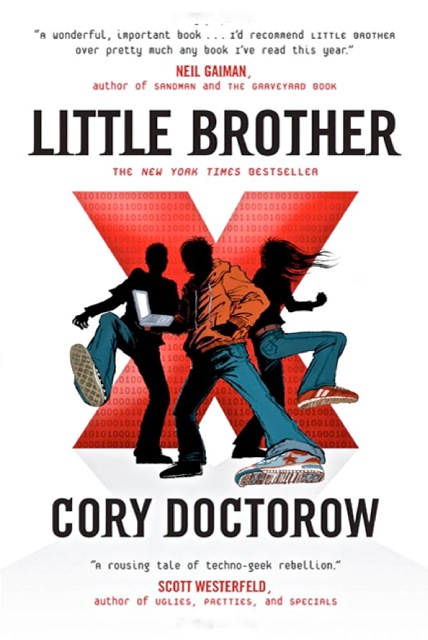
Little Brother by Cory Doctorow
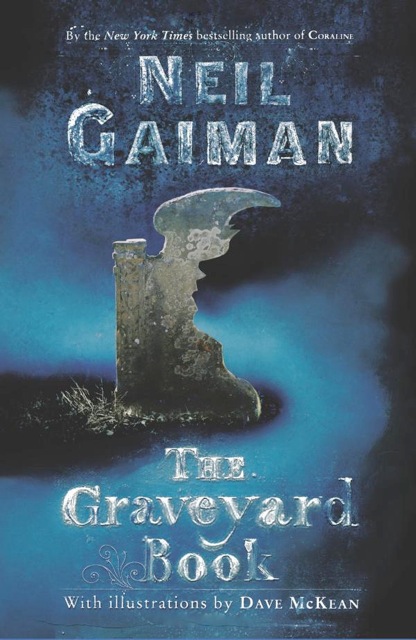
The Graveyard Book by Neil Gaiman
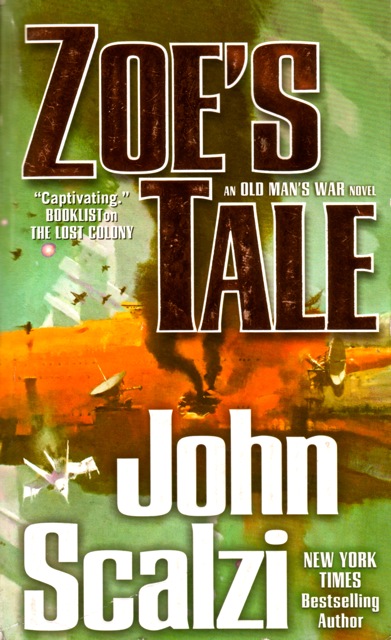
Zoe’s Tale by John Scalzi
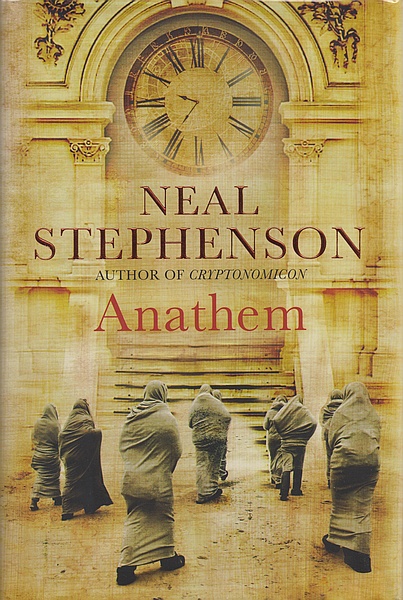
Anathem by Neal Stephenson

Saturn’s Children by Charles Stross

The Actual Results

  1. The Graveyard Book by Neil Gaiman
  2. Little Brother by Cory Doctorow
  3. Anathem by Neal Stephenson
  4. Saturn’s Children by Charles Stross
  5. Zoe’s Tale by John Scalzi

How I Would Have Voted

  1. No Award
  2. The Graveyard Book by Neil Gaiman
  3. Little Brother by Cory Doctorow

Explanation

I’ve found that Hugo Award winning / nominated books tend to fluctuate in decade-long waves, in terms of how much I enjoy them. Some decades are pretty good, others are just downright terrible. Generally speaking, the books from the 50s and early 60s were good if not great (though Dune is certainly a masterpiece), the late 70s had a couple of years with some hits and misses, and most of the books from the late 80s and early 90s were actually pretty good. But from the mid 60s through most of the 70s (and into the early 80s), the Hugos were generally garbage, mostly because of how they were saturated with radical feminism, Malthusian economics, and global cooling global warming climate change hysteria. Also, there were lots of communist “fellow travelers” writing during that era. After the mid 90s, it seems like the Hugos tried to become “dark and gritty,” just like comic books and epic fantasy. A lot of those old political trends from the 60s and 70s came back with a vengeance, and from the late 90s through the early 2010s, the books are really hit and miss for me.

The year 2009 was a complete and total miss, in my opinion. I didn’t like any of the books or authors that were nominated that year, though I will admit that I skipped all but two of them. I’ve written before about how much I cannot stand Scalzi as either an author or a human being, and after trying to read his Interdependency novels, I’ve just completely sworn him off. Zoe’s War is technically a sequel to Old Man’s War, which I enjoyed at the time, but after all of Scalzi’s shenanigans I have no desire to finish that series. As for Neal Stephenson and Charles Stross, everything I’ve read from them is so loaded with gratiutous sex, graphic violence, and sheer unadulterated nihilism that I’ve sworn them off as well. Dark and gritty is almost always overrated.

Moving on to Little Brother… how can I put this? The book is about a teenage hacker and his high school buddies who fight back against an insidious surveillance state, which seeks to control every aspect of its citizens’ lives. Great concept… except that if you went back in a time machine and brought Cory Doctorow from 2009 into a debate with Cory Doctorow today, one of two things would happen: 1) the debate would turn into a vicious cage match, from which only one of them would leave alive, or 2) the older Doctorow would say “but a police surveillance state isn’t bad if the Democrats are in charge,” to which the younger Doctorow would say “you make a very good point, sir,” and the two would leave as best of friends. Which is to say that Cory Doctorow is a massive hypocrite when it comes to the lucrative merger of Big Tech and the state, and I can’t tell if his hypocrisy goes back all the way to the Bush years, or whether the election of 2016 broke him. Either way, I just could not get into Little Brother because of how thoroughly he’s flip-flopped on his views.

(As a side note, I really would like to see someone train two large language models on Doctorow’s writings, one from everything pre-Trump, and the other from everything post-Trump. It would be fascinating to pit those two models against each other in a simulated debate, because of how thoroughly he’s flip-flopped. Also, it would be entertaining to watch the real Cory Doctorow’s reaction to this simulated debate, because he’s written extensively about how much he hates ChatGPT and generative AI.)

With all of that said, however, I didn’t think Little Brother was terrible, even though I couldn’t finish it. As with Scalzi, it had less to do with the book itself and more to do with my opinion of the author, which is why I’ve decided to rank it above the other books below No Award. But I put it below The Graveyard Book, because there wasn’t really anything political or offensive in that one; it just wasn’t for me. I can’t affirmatively vote for The Graveyard Book, because I didn’t enjoy it enough to finish it, but if it had been a different year, I simply would have abstained instead of putting it below No Award.

How I would vote now: 2021 Hugo Award (Best Novel)

The Nominees

Piranesi by Susanna Clarke

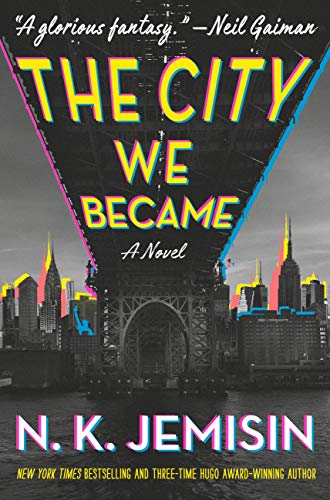
The City We Became by N.K. Jemisin

The Relentless Moon by Mary Robinette Kowal

Harrow the Ninth by Tamsyn Muir

Black Sun by Rebecca Roanhorse

Network Effect by Martha Wells

The Actual Results

  1. The Network Effect by Martha Wells
  2. The City We Became by N.K. Jemisin
  3. Piranesi by Susanna Clarke
  4. Black Sun by Rebecca Roanhorse
  5. The Relentless Moon by Mary Robinette Kowal
  6. Harrow the Ninth by Tamsyn Muir

How I Would Have Voted

  1. Network Effect by Martha Wells
  2. No Award
  3. Piranesi by Susanna Clarke

Explanation

Network Effect was pretty good. In fact, it’s my favorite Murderbot book. There was a little bit of wokery, mostly in the form of the polyamorous relationships of the humans, but that didn’t bother me as much because part of the point of the Murderbot books is that the humans are (for the most part) aggravatingly dumb and slow, so the polyamory kind of blended into the rest of the nonsense that muderbot constantly has to deal with. But I can see how it would bother some readers.

I DNFed all the other books, but I didn’t want to lump Piranesi in with all the others because it just wasn’t my kind of book. All the other ones had woke themes or tropes or other issues that turned me off immensely. I DNFed the first Lady Astronauts book when it turned into a story about the brave little woman that could and her band of misfit minorities fighting back against Captain Patriarchy. The City We Became dropped half a dozen f-bombs in the first chapter, and I think it had a gay rape scene too. Also, I have no love whatsoever for New York City. As for Black Sun and Harrow the Ninth, they both suffer from the trope that I call “death is chic.” At best, it’s an aesthetic that turns me off, and at worst it’s just a cover for outright nihilism and a pro-death, anti-life worldview that undergirds everything that I hate about our current culture.

As a side note, I just want to say that when it comes to book blurbs, Neil Gaiman is one of the best contrarian indicators for my own personal tastes that I’ve found. He may have blurbed a book or two that I actually enjoyed, but for every book or author that I can remember, if he gave them praise, I not only didn’t like it, but actively hated it. He may actually be a better indicator for me than the Hugo Award itself, since I actually enjoyed the book that won this year—but I cannot think of a single book that Neil Gaiman blurbed that I didn’t despise.

Reading Resolution Update: May

My 2022 reading resolution: Read or DNF every novel that has won a Hugo or a Nebula award, and acquire all the good ones.

When I first got the idea for this new year’s resolution six months ago, I was reading maybe 30-60 pages every other day, with no real goal or direction. My wife and I had already decided to change our routine so we could read in bed for an hour before going to sleep, but we weren’t very good at keeping to that routine.

I set this goal because I knew that I needed to read more books—specifically, books in my genre. So I decided: why not set my sights high and aim for the best of the best? Not that I still believe that the Hugos and Nebulas represent the best of SF&F, but at one point I did genuinely believe that, or acted as if I did, which amounts to the same thing. So why not aim to read them all?

I thought it would take a lot longer to get this far, but here it is, June already, and I’ve almost read them all. When I started, I’d read only 36 out of 110 books. I did find a few new-to-me books that were really fantastic, but most of them were books I didn’t like. However, in a weird sort of way that actually helped me to read more, because it helped me to better understand my own tastes. So when I hit a small reading slump in March-April, I was able to branch out and read some books that I did enjoy, which helped to keep the momentum strong.

Several things have helped me to read a lot more over the course of this challenge:

First, having a reading list really helped. It provided me with a long-term, measurable goal that I could use to keep track of my progress. For me, that was highly motivational.

Second, DNFing early and often, and skipping to the last chapter before marking it as DNF. Often, I would find confirmation in the last chapter that I had indeed made the right choice not to read the rest of it. This taught me to trust my own judgment and to better understand my own tastes, which reaped dividends later.

Third, learning how to read in a way that worked with my own ADHD, not against it. This helped me to turn a great weakness, which had foiled my previous resolutions to read more books, into an advantage. But it required developing a better accountability system, which brings us to…

Fourth, using a reading log to track my progress. I got this idea from my wife, who is very good with spreadsheets. I know it doesn’t work for everyone to track everything down to how many pages per day you need to read of each book you’re currently reading, but for me, it really worked. Finally…

Fifth, starting a reading journal to track my own progress and record my own thoughts and impressions about what I’m reading. This is a topic that deserves its own blog post, but I’ve been doing it for a couple of months now, and I find that it really helps me to get a lot more out of what I read, as well as motivating me to read more. Among other things, I keep track of which books I read and DNF each month, my impressions of each book after reading or DNFing it, and any quotes from what I’m reading that stand out as being particularly memorable.

At the rate that I’m going, I will probably achieve this resolution (or at least the reading part of it) before the end of June. It might take a little more time to finish the Uplift Trilogy if I don’t DNF it, but I’ll certainly have finished before the end of the year. Consequently, I’m already drawing up other reading lists for awards like the Dragons and Goodread’s Choice, but I’m still trying to figure out exactly how I want to proceed. Most likely, I will expand those lists to include nominees, but also pick and choose which ones to read.

In any case, here are all of the Hugo and Nebula award-winning books I read or DNFed in May:

Books that I read and plan to or have already aquired

  • The Speed of Dark by Elizabeth Moon (2004 Nebula)
  • Powers by Ursula K. Le Guin (2009 Nebula)
  • All Clear by Connie Willis (2011 Hugo and Nebula)
  • Blackout by Connie Willis (2011 Hugo and Nebula) (Technically I read this one in April and listed it under “Books that I read and don’t plan to acquire,” but after giving the sequel a chance I’ve decided to move it up here. Really, they should all be one book.)

Books that I read and don’t plan to acquire

  • The Terminal Experiment by Robert J. Sawyer (1996 Nebula)

Books that I did not finish

  • Timescape by Gregory Benford (1981 Nebula)
  • No Enemy but Time by Michael Bishop (1983 Nebula)
  • The Falling Woman by Pat Murphy (1988 Nebula)
  • Slow River by Nicola Griffith (1997 Nebula)
  • The Quantum Rose by Catherine Asaro (2002 Nebula)
  • Hominids by Robert J. Sawyer (2003 Hugo)
  • Paladin of Souls by Lois McMaster Bujold (2004 Hugo and 2005 Nebula)
  • Seeker by Jack McDevitt (2007 Nebula)
  • The Graveyard Book by Neil Gaiman (2009 Hugo)
  • Among Others by Jo Walton (2012 Hugo and Nebula)
  • Uprooted by Naomi Novik (2016 Nebula)

Total books remaining: 11 out of 111 (currently reading 5 and listening to 1).

Reading Resolution Update: Before 2022

My 2022 Reading Resolution: Read or DNF every novel that has won a Hugo or a Nebula award, and acquire all the good ones.

I was going to keep track of my reading resolution this year by mentioning each book and what I liked or didn’t like about it, why I DNFed it if I did, etc… and then I thought about it a little more and realized that that’s a terrible idea. Perhaps if I weren’t an author myself, I could risk bringing down the wrath of the internet by broadcasting everything that I really think about these books, but that’s still a really stupid thing to do—not to mention, a great way to burn a bunch of bridges that, as a writer, I really shouldn’t burn.

Instead, I’m going to post a monthly update where I list all of the books that I read and want to acquire, all the books that I read and probably won’t acquire, and all of the books that I DNFed, without any book-specific commentary. I do think that having some public accountability will help me to keep this resolution, and I do intend to keep it. But because I anticipate DNFing a lot of books that have very, um, merciless fans, this seems like a better way to do it.

So here is how things stood on the morning of January 1st, 2022:

Books that I read and want to / have already acquired:

  • Double Star by Robert A. Heinlein (1956 Hugo)
  • Starship Troopers by Robert A. Heinlein (1960 Hugo)
  • A Canticle for Leibowitz by Walter M. Miller Jr. (1961 Hugo)
  • The Man in the High Castle by Phillip K. Dick (1963 Hugo)
  • Dune by Frank Herbert (1966 Hugo and Nebula)
  • The Left Hand of Darkness by Ursula K. Le Guin (1970 Hugo and Nebula)
  • The Dispossessed by Ursula K. Le Guin (1975 Hugo and Nebula)
  • Downbelow Station by C.J. Cherryh (1982 Hugo)
  • Neuromancer by William Gibson (1985 Hugo and Nebula)
  • Ender’s Game by Orson Scott Card (1986 Hugo and Nebula)
  • Speaker for the Dead by Orson Scott Card (1987 Hugo and Nebula)
  • Barrayar by Lois McMaster Bujold (1992 Hugo)
  • Mirror Dance by Lois McMaster Bujold (1995 Hugo)
  • The Mule (included in Foundation and Empire) by Isaac Asimov (1946 Retro Hugo, awarded in 1996)
  • Harry Potter and the Goblet of Fire by J.K. Rowling (2001 Hugo)
  • Farmer in the Sky by Robert A. Heinlein (1951 Retro Hugo, awarded in 2001)
  • Fahrenheit 451 by Ray Bradbury (1954 Retro Hugo, awarded in 2004)
  • Spin by Robert Charles Wilson (2006 Hugo)
  • The Sword in the Stone by T.H. White (1939 Retro Hugo, awarded in 2014)
  • Network Effect by Martha Wells (2021 Hugo and Nebula)

Books that I read and don’t plan to acquire:

  • The Demolished Man by Alfred Bester (1952 Hugo)
  • The Forever War by Joe Haldeman (1975 Hugo and Nebula)
  • Gateway by Frederik Pohl (1977 Hugo and Nebula)
  • Red Mars by Kim Stanley Robinson (1993 Nebula)
  • American Gods by Neil Gaiman (2001 Hugo)

Books that I did not finish:

  • The Moon is a Harsh Mistress by Robert A. Heinlein (1966 Hugo)
  • Flowers for Algernon by Daniel Keyes (1966 Nebula)
  • Lord of Light by Roger Zelazny (1967 Hugo)
  • Ringworld by Larry Niven (1970 Hugo and Nebula)
  • Rendezvous with Rama by Arthur C. Clarke (1973 Hugo and Nebula)
  • Green Mars by Kim Stanley Robinson (1993 Hugo)
  • Blue Mars by Kim Stanley Robinson (1996 Hugo)
  • Forever Peace by Joe Haldeman (1997 Hugo, 1998 Nebula)
  • The Fifth Season by N.K. Jemisin (2015 Hugo)
  • The Obelisk Gate by N.K. Jemisin (2016 Hugo)
  • The Stone Sky by N.K. Jemisin (2017 Hugo and Nebula)

George R.R. Martin may not be your bitch, but I am

Last week, George R.R. Martin surprised no one and disappointed everyone when he announced that The Winds of Winter would not come out before the next season of the Game of Thrones TV series that covers the events in that book. He apologized profusely to his fans, most of whom seemed to take it graciously, at least to his face. However, it spawned some heated discussions in the online communities that I frequent (most notably The Passive Voice) about the implicit contract between writers and reades.

This discussion is not new, even with regard to Mr. Martin. Way back in 2009, Neil Gaiman addressed this issue in a blog post where he stated quite memorably that “George R.R. Martin is not your bitch”:

People are not machines. Writers and artists aren’t machines.

You’re complaining about George doing other things than writing the books you want to read as if your buying the first book in the series was a contract with him: that you would pay over your ten dollars, and George for his part would spend every waking hour until the series was done, writing the rest of the books for you.

No such contract existed. You were paying your ten dollars for the book you were reading, and I assume that you enjoyed it because you want to know what happens next.

So that’s one end of the spectrum: that writing is an art, that it can’t be forced, that trying to force it is wrong, and that writers have no obligation to their readers to force anything. Readers should not stalk their favorite writers or tell them what they should or should not be doing to produce the next book. As Mr. Martin said in his latest post:

Unfortunately, the writing did not go as fast or as well as I would have liked. You can blame my travels or my blog posts or the distractions of other projects and the Cocteau and whatever, but maybe all that had an impact… you can blame my age, and maybe that had an impact too…but if truth be told, sometimes the writing goes well and sometimes it doesn’t, and that was true for me even when I was in my 20s.

On the other end of the spectrum, we have Larry Correia. Two days after Mr. Martin announced that The Winds of Winter would not be finished in time for the TV series, Mr. Correia announced his own plans for the year: which of his books are coming out, which books he plans to write, which project he’s going to collaborate on, and which conventions and events he will (or more notably, will not) be attending.

I don’t know whether he meant this as a dig at Mr. Martin specifically, but he included the following statement:

To all those sensitive artist types who whine about how they can’t rush art, and can’t get any writing done, oh, BS. Quit your crying, put your big girl panties on, and treat it like your job. Because it is a REAL JOB. And like all real jobs, if you don’t work then you shouldn’t GET PAID. So shut up, quit screwing around, and get back to work.

The part that really stood out to me, though, was his announcement that he would not be at DragonCon or GenCon this year:

I’m skipping DragonCon and GenCon this year, which pains me because I love those, but again, I’m trying to up the novel production, and all those cons in a row over the summer kick my butt.

I found it interesting because George R.R. Martin is well-known as a frequent convention attendee, to the point that by his own admission attending these conventions is his “way of life.” Larry Correia knows that his writing productivity takes a hit when he attends too many conventions, but George R.R. Martin either doesn’t know or has chosen to prioritize attending fannish events over his own writing.

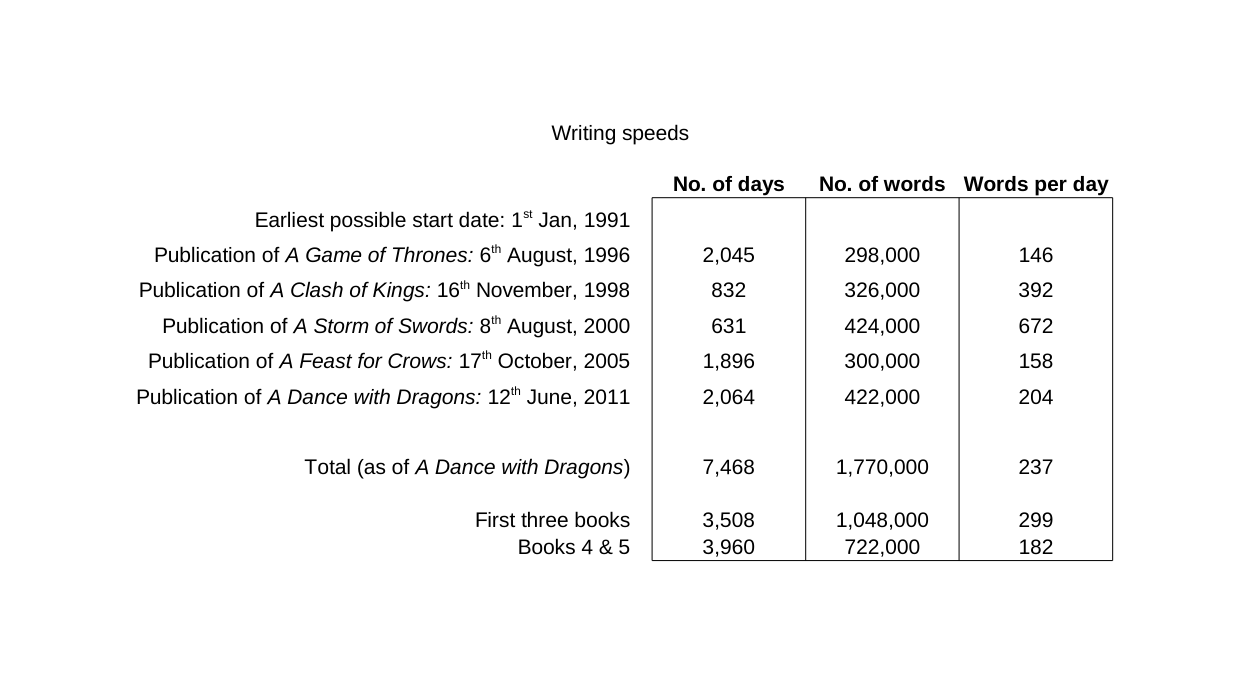
This made me curious about Mr. Martin’s writing productivity, so I did a little digging and found the following figures, calculated by his fans:

grrm_wordcount

Those numbers are rather stunning. He averaged only 200 words a day when writing A Dance with Dragons? Just for reference, this blog post is about seven hundred words so far, and I’m writing it while taking a break from my other writing (word count so far today: 1,100 words, and that’s a little low). Even if we allow for five drafts written at the same speed, five drafts still only comes to 1,000 words a day.

Now, I do think Mr. Gaiman makes a good point that it is neither healthy nor helpful to try and micromanage everything that a writer does. We can’t spend every waking hour working on the next book, and even if we did, it probably wouldn’t turn out as well, because refilling the creative well is an important part of the writing process. And I also have to admit that if you ran a similar calculation on my own books (especially the early ones), you would probably find some similarly embarrassing figures.

(Though to be fair to myself, I tend to have multiple irons in the fire at any given time, so a straight start date to publication date calculation doesn’t tell the whole story—and it probably doesn’t tell the whole story with George R.R. Martin as well. But still, even if those figures were twice as high, they would still be absurdly low for a working writer.)

When Mr. Gaiman and Mr. Martin say that the writing “comes when it comes” and there’s nothing they can do about it, I think they’re wrong. Dead wrong. Writing is an art, but it is also a craft. It can’t be forced, but it can be structured. Mr. Correia has evaluated how productively he writes and structured his convention-going plans accordingly. Has Mr. Martin?

I also think they’re dead wrong about the writer having no obligation to the reader. That’s total bunk. Reading is an act of collaboration between the writer and the reader: without readers, stories would never exist. They would just be markings on a page, or electrons on a drive, or at best ideas and daydreams in the writer’s head. If a tree falls in the forest, does it really make a sound? If a book is never opened, does it ever tell a story?

Part of this may be the difference in perspective between indie writers and traditionally published writers. In the traditional system, writers were paid an advance on royalties by their publishers. The contract also allowed for royalties, but those figures were set so low that most books never earned out their advance. Publishers made up for it by raising the advances for the writers they wanted to keep.

In contrast, indie writers live and die by their royalty checks. Had a good month? Congratulations, you can afford to eat. Had a bad month? Tsk, tsk. Better hurry up with that WIP of yours, because the longer it takes to publish it, the longer it takes for you to get paid.

But even for the fantastically successful writers who never have to worry about how they’ll pay their bills, I still believe that they have as much of an obligation to their readers as the rest of us. Without readers, we would not be able to do what we do. Without readers, it would be impossible to pursue writing as a career. We all want to live the dream, and the only way to do that is by treating our readers well.

So George R.R. Martin may not be your bitch, but I most certainly am. Writing is not something that happens only sometimes: it’s my job, and I do it every day. And as for accountability, I absolutely feel that I’m accountable to my readers. They are the whole reason I am able to do this in the first place. If that makes me their bitch, then so be it.

Trope Tuesday: Bittersweet Ending

WARNING! CONTAINS SPOILERS FOR AMERICAN GODS, LAGAAN, LORD OF THE RINGS, TREASURE ISLAND, AND CROUCHING TIGER HIDDEN DRAGON.

And he sang to them, now in the Elven-tongue, now in the speech of the West, until their hearts, wounded with sweet words, overflowed, and their joy was like swords, and they passed in thought out to regions where pain and delight flow together and tears are the very wine of blessedness.

Tolkien, J.R.R. The Return of the King.

I love bittersweet endings.  I love stories that warm my heart even as they make me cry.  There’s something about reading them that makes me feel alive, and something about writing them that makes me feel like I’ve truly told a story worth telling.

The tvtropes page claims that bittersweet endings fall more to the cynical side of the sliding scale of idealism vs cynicism, but I disagree.  Without tasting the bitter, how can we know the sweet?  Too many of our modern stories are like high fructose corn syrup, where everything gets tied up with a pretty bow and the characters remain essentially unchanged.  I firmly believe that it’s only through sacrifice that we can know true joy, and stories that follow this often end up being bittersweet on some level, even if they are idealistic.

The tvtropes page lists six types of bittersweet endings, which are:

  • Did Not Get the Girl: When the hero either loses the girl or has to give her up to win the day.  American Gods is a good example of this, I think: Shadow never actually gets back with Laura, even though he spends most of the book looking for a way to bring her back.
  • The Greatest Story Never Told: When the hero fades into obscurity after winning the day.  Lagaan, one of my favorite Bollywood movies, is an excellent example of this.  The last line of the movie is the narrator explaining how after the events of the story, the village faded into history until it was forgotten.
  • End of an Age: When the triumph over evil transforms the world so completely that there is no going back to the way things used to be.  Lord of the Rings is the best example of this: after the one ring is destroyed, all the other rings lose their power, and the elves must pass into the west.
  • Heroic Sacrifice: When victory comes only after the death of many or all of the main characters.  This is basically every David Gemmell book ever written, which is why I can’t get enough of him.
  • Only the Leads Get a Happy Ending: Where life is great for the main characters but everyone else ends up suffering.  I can’t think of any examples where this is done well; it’s probably just bad storytelling.
  • Karma Houdini: When the bad guy doesn’t get what’s coming to him.  The best example of this is probably Treasure Island, where Long John Silver gets away with the treasure in the end, leaving the good guys to say “I can almost find it in my heart to hope he makes it.”

It’s important to point out that this trope is not simply a tragic tale with a heart-wrenching twist.  Crouching Tiger Hidden Dragon, for example, is a straight up tragedy: even though Mu Bai confesses his love to Shu Lien, he promptly dies, and Jen commits suicide.  It’s an awesome ending to an awesome story, but there is no sweet in it.

When done poorly, a bittersweet ending can feel confusing or anti-climactic.  When done well, however, I think it adds a wealth of depth and feeling, as well as a degree of believability and realism.  After all, how many of our victories are complete?  How often do we have to give up something good for something greater?

So yeah, I love this trope.

Trope Tuesday: Pet the Dog

Awwwww!!

The basic principle behind this trope is that when you want your readers to feel some kind of sympathy toward a character, have them pet a puppy / puppy equivalent.  Often used to show who the good guy is, but can also be used to add depth to a villain.

I first learned about this trope in Brandon Sanderson’s English 318 class, where he taught it as a way to build immediate sympathy when introducing a major character.  A good example from his own work is Mistborn, where Kelsier’s first scene shows him giving the manor lord’s food to the skaa.  From that moment on, there’s never really any doubt that Kelsier is the good guy.

Although often used to introduce a good guy, this trope can also be used quite effectively in the middle of the story, especially in a gray and black world where it seems that everyone’s a bad guy.  A good example of this is Shadow from American Gods, who flips a coin with a hitchhiker to see who pays for dinner.  Even though he’s a thief and an ex-convict, he rigs the coin toss so that he can pay for her.  Through little gestures like this, Gaiman maintains rooting interest in his protagonist, even though everyone else in the novel is basically a jerk.

Another good example from a darker work is Angelo Osic from On My Way to Paradise.  On the very first page, a fugitive shows up at his pharmacy booth, asking him to grow her a new hand.  Even though he knows it’s dangerous, he takes her in and does what he can to help her.  Later on, this same character rips out a man’s testicles and guts him like a fish.  As repulsive as that is, however, I still keep rooting for him because I know that at his heart, he’s a good person.

Of course, when used most effectively, the pet-a-puppy moment has to grow naturally out of a person’s character.  Even though Shadow is an ex-con, he served his time and feels genuinely sorry for what he did.  Angelo Osic is a doctor, so it’s natural for him to try to help others; whenever he commits an act of violence, a part of his humanity dies, which becomes a major driving conflict throughout the book.

Don't. Touch. Me.

Finally, though this trope is often used to create rooting interest in a protagonist, it can also be used to add depth to a villain.  A prime example for this is Captain Nemo from 20,000 Leagues Under the Sea.  The first moment happens when he rescues the main characters after their ship sinks, but it happens many more times too, such as when Arronax finds him weeping over a picture of his family.  At the end of the book, even though we know that Nemo is the bad guy, we can’t help but feel a little sorry for him after he’s gone.

Puppy image courtesy Wikimedia.  Cat image taken by me.