The state of science fiction is as bad as Australian breakdancing

It seems like most of the internet is talking about the hilariously bad breakdancing performance given by Australia at the Paris Olympics. Apparently, the “athlete” in question is actually a university professor named Rachael Gunn who specializes in breakdancing studies, or some such nonsense, and the main reasons she got the nod to compete are 1) the Australian breakdancing scene is woefully small, 2) she’s (allegedly) an LGBTQ+ woman, with all the right political opinions, and 3) her husband was on the committe that made the decision to qualify her. Taking advantage of those three factors, she’s apparently made a name for herself in Australia, even winning some local competitions—because who would dare criticize such a stunning and brave LGBTQ+ woman? So of course, she went on to compete on the international scene… and made such a mockery of herself and her sport that the judges awarded her straight zeroes, and the Olympics committee pulled breakdancing from the 2028 Los Angelos Olympics. Wah wah.

While this story is rightly hilarious, and proves the eternal truth that wokeness ruins everything, I can’t help but notice the parallels between the state of Australian breakdancing, that someone so inept and untalented could leverage a “studies” degree to dominate it, and the current state of science fiction. Specifically, this is the comment that made me think about this, which is worth reading in full:

The relevant part is this:

Rachael represents so much of what is totally lecherous about cultural studies academics. Pick a subject area that will be under-studied in your context, so you can rise through the ranks quickly (how many break dancing academics will there be in Australia?), and wreak absolute havoc in lives of the people you want to study. There is no limit to the sheer disrespect they will dole out, purely for self-advancement.

Now, I don’t think science fiction was ruined in quite the same way, ie by being dominated and colonized by academia through “studies” degrees. Science fiction was probably too large to be overtaken that way. However, the pattern is still similar, and from what I can tell, it goes something like this:

Step 1: Take over the institutions in the field that are primarily responsible for determining and evaluating excellence.

In Australia, the breakdancing field was small enough that academia was able to dominate and (for lack of a better word) colonize it, becoming the arbiters of excellence within that art. It certainly helped that the professor who had carved out this academic niche for herself was married to one of the judges in the committee that was tasked with determining excellence. This created an incestuous (and ultimately nepotistic) relationship between academia and the judging panels.

In science fiction, something similar happened with SFWA and the Hugo and Nebula awards. I’ve written before about how SFWA ruined science fiction, so I won’t repeat all that here. But the basic gist of it is this: as science fiction became more established, the organizations and publications that talked about science fiction became more authoritative on the subject of the genre than the actual writers themselves. Because of this, achieving recognition for excellence became less about creating works of actual merit, and more about gaining the approval of the people who had built their careers talking about science fiction, rather than actually creating it. And the best way to gain their approval was to join those institutions yourself, rising up in the pecking order until everyone else was beneath you.

This basically describes the career trajectories of John Scalzi and Mary Robinette Kowal, two insanely woke authors who leveraged their tenure as SFWA president for award nominations. Both of them seem to have spent at least as much time and effort talking about science fiction as they have in actually creating it: Scalzi through his blog, which he leveraged to get his first book deal, and MRK through both her blog and the Writing Excuses podcast.

Step 2: Purge those institutions until they are ideologically pure.

This step is critical. So long as the instutitions are focused on merit, the only way to climb the ranks is by creating something of merit. But once the institution has become ideologically possessed, with all of those who reject the dominant ideology being purged from positions of power, then merit no longer matters, and the way to the top becomes clear. Those who are the most ideologically pure, as demonstrated by their virtue signalling, will rise to the top. This has the added benefit of quelling all merit-based criticism, since those beneath you fear having their own ideological purity called into question.

From what I can tell, this is how Rachael Gunn rose to prominence in the Australian breakdancing scene. After all, once academia had colonized the field, who would dare question the merits of such a stunning and brave LGBTQ+ woman? In a similar manner, Scalzi and MRK rose to the top of SFWA by virtue signaling their own ideological purity and intersectional victimhood status, squelching any criticism by labeling their critics racist, sexist, bigots, homophobic, etc.

Step 3: Redefine excellence in your own image.

In the Australian breakdancing scene, this was accomplished through the combination of Rachael Gunn’s academic work and her husband’s position in the committee that qualified the Olympic competitors. And while it probably isn’t quite so blatantly nepotistic in the science fiction world, the pattern still holds true when you look at what the Hugos and Nebulas have become. This was what the Sad Puppies controversy was actually about, and because the Puppies lost, the Hugo and Nebula awards have been insufferably woke ever since:

Step 4: Use the captured institutions to purge the field of potential rivals.

The final step in this projection is to squash all of those people who represent a threat to your domination, because they have merit and you do not. Ignoring her perhaps overly generous assessment of Australian breakdancing, this is what Hannah Berrelli is talking about when she mentions all the “hundreds of Australian athletes who will have dedicated their entire lives to athletic excellence” whose blood, sweat, and tears were overshadowed and rendered irrelevant by Rachael Gunn’s Olympic stunt.

In science fiction, we see this in the fact that David Weber has never been nominated for a Hugo or a Nebula, or that Jim Butcher’s sole Hugo nomination lost to No Award. Both of these men are far better writers than the majority of award-winning authors, especially in our current era. You could make a solid argument that Dan Simmons or Orson Scott Card were superior, but Scalzi? Jemisin? Kingfisher?

And what about all of the new and relatively unknown authors? At least Weber and Butcher already have large followings, which they have rightfully earned through their merit. But when merit is no longer the determining factor in recognizing excellence within the field, what chance do talented up-and-coming authors have if they aren’t willing to play the ideological purity games? Answer: not a hell of a lot.

So while you laugh at how ridiculous Australia’s breakdancing performance was at the Olympics, understand that the same dynamic has been playing out in modern science fiction for years. And honestly, the results are no less ridiculous.
How I would vote now: 2019 Hugo Award (Best Novel)

The Nominees

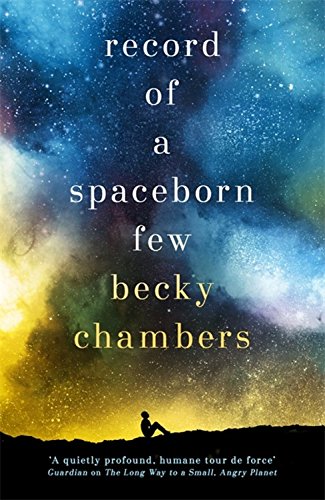
Record of a Spaceborn Few by Becky Chambers

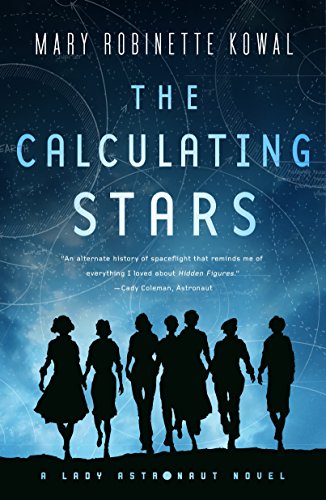
The Calculating Stars by Mary Robinette Kowal

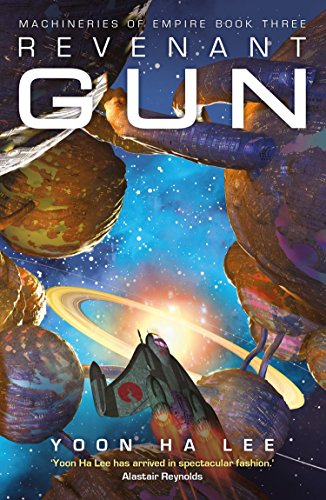
Revenant Gun by Yoon Ha Lee

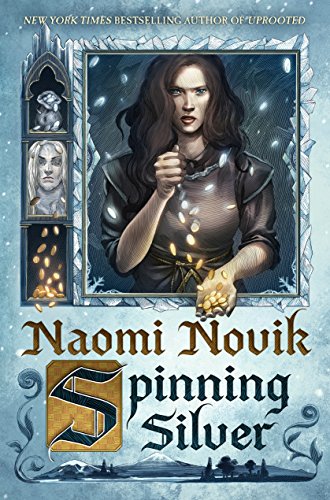
Spinning Silver by Naomi Novik

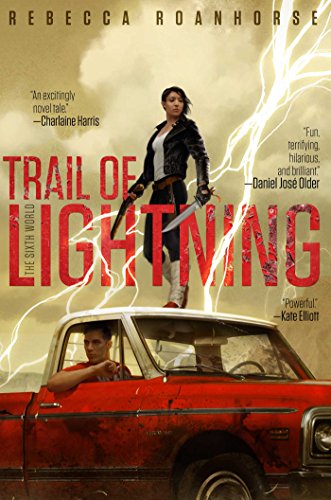
Trail of Lightning by Rebecca Roanhorse

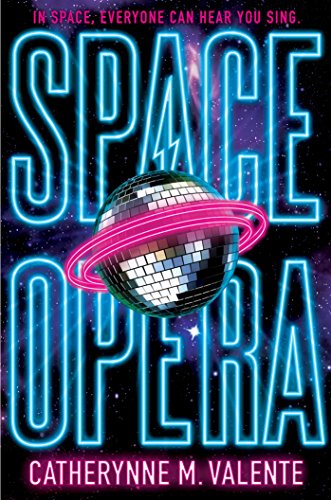
Space Opera by Catherynne M. Valente

The Actual Results

  1. The Calculating Stars by Mary Robinette Kowal
  2. Spinning Silver by Naomi Novik
  3. Record of a Spaceborn Few by Becky Chambers
  4. Trail of Lightning by Rebecca Roanhorse
  5. Revenant Gun by Yoon Ha Lee
  6. Space Opera by Catherynne M. Valente

How I Would Have Voted

  1. Spinning Silver by Naomi Novik
  2. No Award
  3. Space Opera by Catherynne M. Valente

Explanation

The Calculating Stars actually started out pretty good. Mary Robinette Kowal is a very skilled writer, and her main character in this book was both likeable and interesting—something that seems to be increasing rare in Hugo-nominated books. It also didn’t hurt that in the very first chapter, a giant meteor wiped out Washington DC and most of the eastern seaboard. But then it gradually turned into a story about the little woman who roared and her band of misfit minorities who team up to fight Captain Patriarchy, and the super-woke feminism just ruined it for me.

I didn’t read Revenant Gun or Record of a Spaceborn Few because I DNFed both series with the first book. With Yoon Ha Lee’s Machineries of Empire series, I don’t remember much, except that the first book made absolutely no sense to me, with so much meaningless violence that it bordered on the absurd. With Becky Chambers’s Wayfarers series, it started off as an interesting space opera, but the ship quickly turned into a lesbian love boat, with lots of queer and transgender aliens to boot. Wokery ensues.

As for Trail of Lightning, I honestly don’t remember much about that one, other than that it started to give me woke vibes and I didn’t really like any of the characters. I think it also played the Death is Chic and Life is Not Worth Saving trope, which I personally cannot stand. If the main character had struck me as a good and decent person, I probably would have kept reading, but so many books that suffer from wokeness also suffer from having protagonists who are just terrible human beings in general. I don’t think the two are unrelated.

The first chapter of Space Opera was laugh out loud hilarious, and I actually enjoyed it quite a lot. Valente’s gonzo humor is a lot of fun! Then… I don’t know quite how to put this, but the story just started to feel depressing, and I’m not sure why. Also, the gonzo writing style started to grate on me after a while, kind of like Chuck Wendig’s writing does for anything longer than a blog article. It wasn’t a terrible book, but I didn’t end up finishing it.

But I really loved Spinning Silver, much more than I was expecting to. I’m not generally into fairy tell retellings, but this one stirred something primal in my Slavic roots and scratched an itch I didn’t even know that I had. Besides all that, it’s just a damn good story. The villains were genuinely villainous, the peril was genuinely perilous, the good guys all had satisfying growth arcs, and the ending was a crowning moment of awesome that brought everything full circle in the best possible way. Really great book.

How I would vote now: 2023 Hugo Award (Best Novel)

Alright, let’s tackle the most controversial Hugo awards since Sad Puppies 3—and possibly the most controversial Hugos ever!

The Nominees

Legends & Lattes by Travis Baldree

Nettle & Bone by T. Kingfisher

The Spare Man by Mary Robinette Kowal

The Daughter of Doctor Moreau by Silvia Moreno-Garcia

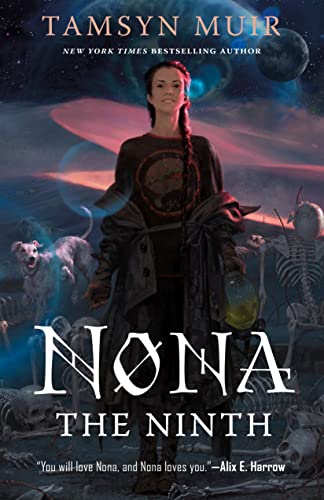
Nona the Ninth by Tamsyn Muir

The Kaiju Preservation Society by John Scalzi

The Actual Results

  1. Nettle & Bone by T. Kingfisher
  2. Legends & Lattes by Travis Baldree
  3. The Kaiju Preservation Society by John Scalzi
  4. The Daughter of Doctor Moreau by Silvia Moreno-Garcia
  5. The Spare Man by Mary Robinette Kowal
  6. Nona the Ninth by Tamsyn Muir

How I Would Have Voted

  1. No Award
  2. The Daughter of Doctor Moreau by Silvia Moreno-Garcia
  3. Legends & Lattes by Travis Baldree

Explanation

The 2023 Hugo Awards were an epic clusterfuck, from which the Hugos might never recover (and honestly, I kind of hope they don’t). Not only did the organizers exclude a bunch of titles like Babel by R.F. Kuang that probably would have placed very high, if not outright won first place—excluded them for no other discernible reason other than that they might have offended the Chinese Communist Party, since China was hosting the awards—but they also disqualified thousands of Chinese ballots for the same reason that they disqualified thousands of Sad Puppy ballots in subsequent years since the big kerfluffle in 2015: namely, that they were Wrongfans having Wrongfun.

Apparently, to get on the Hugo ballot, you have to either 1) pander to or be a member of the SFWA mean girls club (for crying out loud, two of the authors on this year’s ballot were former SFWA presidents), or 2) write a lesbian love story. I suppose you can also get on the ballot if you write a love story that’s gay, transgender, polyamorous, or some other flavor of queer, but lesbians are easier because the male readers are less likely to be grossed out or confused by it.

Anyways, I didn’t enjoy any of these books, though I have to admit that I didn’t even try to read The Kaiju Preservation Society (because I cannot stand Scalzi, either as an author or a human. The Collapsing Empire with its random throwaway sex scene in the second or third chapter was the last straw for me) and The Spare Man (my wife picked it up and was so confused and turned off by the non-gendered pronoun dickery that I knew it was too woke for me). I DNFed Tamsyn Muir’s Locked Tomb series with Gideon the Ninth, for reasons that I detailed in my recap of the 2021 Hugo Awards.

As for Nettle & Bone, I was pleasantly surprised at first, because the love interest was heterosexual—which, for the Hugos, is very unusual these days. But there were other things about the book that turned me off, such as the anachronism of a religious medieval world that’s been gutted of anything religious that might offend a non-religious reader in 2023, and a very anti-natalist bias with some lines that could have come straight from Margaret Sanger. So that’s why I put Nettle & Bone below No Award, and didn’t even bother ranking it anywhere on my ballot.

Legends & Lattes wasn’t terrible, but I got bored after the first couple of chapters, and because of the lesbian love story I’m not too keen to try it again (though I suppose I could be persuaded otherwise). As for The Daughter of Doctor Moreau, I didn’t find anything objectionable with that one, and actually got about halfway through, but… I just didn’t care about any of the characters. Not a terrible book, but it just wasn’t for me.

Of the two, I think I liked The Daughter of Doctor Moreau better, or disliked it less, which is why I put it on the ballot above Legend & Lattes and below No Award. Why include anything on a ballot below No Award? Because the way that ranked choice voting works, you can still influence the outcome that way even if No Award is eliminated during the counting. It’s basically like saying: “I don’t think any of these books deserve an award, but if I had to award one of them, I’d give it to (1) and (2), in that order.”

So that’s my take on the infamous 2023 Hugo Awards. Frankly, I think it would have been much better if the Chinese wrongfans had completely taken it over, and made it so that Worldcon was held in China every other year, with Chinese authors dominating the Hugos from now on. There are certainly enough Chinese sci-fi readers to justify such a move. But alas, it seems that the Trufans are going to keep clutching the Hugos with a deathgrip until 1) they’re all dead (since most of them are boomers anyway), or 2) the Trufans and the Hugos both become culturally irrelevant, if indeed they aren’t already.

(Speaking of China, hi Mike Glyer! Still buying views from Chinese clickfarms to boost your online rankings? It must be a real slow news week if you pick up this blog for your File 770 pixel scroll.)

How I would vote now: 2021 Hugo Award (Best Novel)

The Nominees

Piranesi by Susanna Clarke

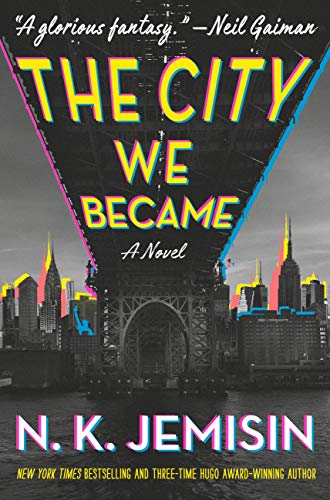
The City We Became by N.K. Jemisin

The Relentless Moon by Mary Robinette Kowal

Harrow the Ninth by Tamsyn Muir

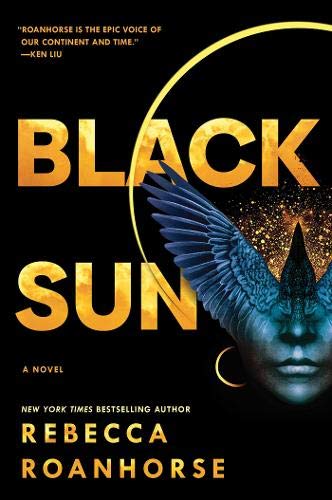
Black Sun by Rebecca Roanhorse

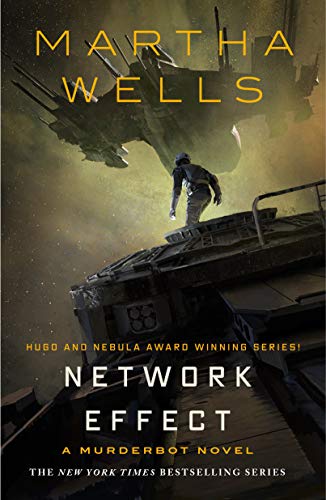
Network Effect by Martha Wells

The Actual Results

  1. The Network Effect by Martha Wells
  2. The City We Became by N.K. Jemisin
  3. Piranesi by Susanna Clarke
  4. Black Sun by Rebecca Roanhorse
  5. The Relentless Moon by Mary Robinette Kowal
  6. Harrow the Ninth by Tamsyn Muir

How I Would Have Voted

  1. Network Effect by Martha Wells
  2. No Award
  3. Piranesi by Susanna Clarke

Explanation

Network Effect was pretty good. In fact, it’s my favorite Murderbot book. There was a little bit of wokery, mostly in the form of the polyamorous relationships of the humans, but that didn’t bother me as much because part of the point of the Murderbot books is that the humans are (for the most part) aggravatingly dumb and slow, so the polyamory kind of blended into the rest of the nonsense that muderbot constantly has to deal with. But I can see how it would bother some readers.

I DNFed all the other books, but I didn’t want to lump Piranesi in with all the others because it just wasn’t my kind of book. All the other ones had woke themes or tropes or other issues that turned me off immensely. I DNFed the first Lady Astronauts book when it turned into a story about the brave little woman that could and her band of misfit minorities fighting back against Captain Patriarchy. The City We Became dropped half a dozen f-bombs in the first chapter, and I think it had a gay rape scene too. Also, I have no love whatsoever for New York City. As for Black Sun and Harrow the Ninth, they both suffer from the trope that I call “death is chic.” At best, it’s an aesthetic that turns me off, and at worst it’s just a cover for outright nihilism and a pro-death, anti-life worldview that undergirds everything that I hate about our current culture.

As a side note, I just want to say that when it comes to book blurbs, Neil Gaiman is one of the best contrarian indicators for my own personal tastes that I’ve found. He may have blurbed a book or two that I actually enjoyed, but for every book or author that I can remember, if he gave them praise, I not only didn’t like it, but actively hated it. He may actually be a better indicator for me than the Hugo Award itself, since I actually enjoyed the book that won this year—but I cannot think of a single book that Neil Gaiman blurbed that I didn’t despise.

Reading Resolution Update: January

My 2022 reading resolution: Read or DNF every novel that has won a Hugo or a Nebula award, and acquire all the good ones.

I had expected to DNF a lot of these books, but I was a little dismayed at how terrible they are. Or rather, how some of them can be so well-written and yet so idelogically possessed.

For a while, I worried that I was pre-judging some of these books too harshly, based on my opinions of the author. After all, shouldn’t art be treated separately from the artist? But then I decided that it would be better to lean into that bias, and trust my intuition. After all, it’s impossible to approach reading without a personal bias—and even if it were possible, it wouldn’t be advisable.

One of the key things I’m hoping to take away from reading these books is a better understanding of my own personal tastes. Toward that end, it’s much better to DNF early and often, since that tells me something valuable about my own tastes. I’ll get much more out of this exercise if I pay attention to that than whether or not I’m being “fair” to a particular book or author.

As for how my bias against an author might prejudice me against a book, I don’t think that’s too much of a problem so long as I’m aware of those biases. Yes, it makes it more likely that I’ll read a book with a critical eye, and not in the way that I typically read for enjoyment, but that goes both ways, since if I do enjoy a book, that’s going to improve my opinion of the author (or at least make me reconsider my opinion). So long as I’m aware of my biases and make sure that they aren’t set in stone, I think it should be fine

Besides, it’s not like I have anything to prove. Sure, China Mike Glyer might pull out an excerpt from this post to use as content (hi China Mike!), but I couldn’t care less what that particular corner of fandom thinks about my public ruminations. I will know if I’m being too “unfair” to a book or an author, and the only criterion that really matters is whether I have a clear reason for DNFing the book, separate from my biases about the author.

And honestly, what I’ve found so far is that my biases are pretty spot on. Authors who behave insufferably in public or on the internet tend to write some pretty insufferable books, especially if they’re woke.

Fortunately, I have found a few new-to-me books and authors who are really fantastic. And my decision to DNF early and often is helping to keep it from becoming too much of a slog, which is good. It also means that I may complete this resolution a lot sooner than I’d expected, at which point I’ll probably move on to the Dragons or the Prometheus awards.

In any case, here are all the Hugo and Nebula awared-winning novels that I read or DNFed in January 2022:

Books that I read and plan to / have already acquired:

  • Way Station by Clifford D. Simak (1964 Hugo)
  • Foundation’s Edge by Isaac Asimov (1983 Hugo)
  • The Vor Game by Lois McMaster Bujold (1991 Hugo)
  • Annihilation by Jeff VanderMeer (2015 Nebula)

Books that I read and don’t plan to acquire:

  • None

Books that I did not finish:

  • The Big Time by Fritz Leiber (1958 Hugo)
  • A Case of Conscience by James Blish (1959 Hugo)
  • The Wanderer by Fritz Leiber (1965 Hugo)
  • The Einstein Intersection by Samuel R. Delany (1968 Nebula)
  • Stand on Zanzibar by John Brunner (1969 Hugo)
  • Rite of Passage by Alexei Panshin (1969 Nebula)
  • Man Plus by Frederik Pohl (1977 Nebula)
  • Dreamsnake by Vonda N. McIntyre (1979 Hugo and Nebula)
  • A Deepness in the Sky by Vernor Vinge (20000 Hugo) (My wife recommended this one, and I will probably try it again, since I took a break midway through and forgot who all of the characters were. But for now, I’m counting it as a soft DNF.)
  • Camouflage by Joe Haldeman (2006 Nebula)
  • The Windup Girl by Paolo Bacigalupi (2010 Hugo and Nebula)
  • Redshirts by John Scalzi (2013 Hugo)
  • Ancillary Justice by Ann Leckie (2014 Hugo and Nebula)
  • All the Birds in the Sky by Charlie Jane Anders (2017 Nebula)
  • The Calculating Stars by Mary Robinette Kowal (2019 Hugo and Nebula)
  • A Memory Called Empire by Arkady Martine (2020 Hugo)
  • A Song for a New Day by Sarah Pinsker (2021 Nebula)

Further thoughts on the drama in the SF&F community and a rescinding of some previous thoughts

About a year ago, there was a big discussion in the science fiction & fantasy community about sexual harassment and sci-fi conventions. As a result of that discussion, allegations were thrown out about a certain senior editor at Tor, rumors began to fly, and through what some might characterize as popular justice and others might characterize as an internet bullying campaign, the editor was fired.

That disturbed me, so after engaging in a rather heated discussion on Mary Robinette Kowal’s blog about it, I wrote a blog post of my own, which I then took down (though not before it was picked up elsewhere) after some private email correspondences that were rather toxic. Even though I had an opinion, I decided that this wasn’t where I wanted to plant my flag, especially since it looked like I’d be hard-pressed to defend it.

Well, at the risk of taking some rightly earned flak, I want to bring back that post in order to give myself an opportunity to respond to it. My views and opinions have changed since then, and I don’t think I was right.

First of all, it’s come to my attention that this isn’t the first instance of high drama within the SF&F community. In fact, there have been so many inane kerfluffles and genuine spats over the years that for lifelong, hardcore fen, engaging in them is practically a sport. So now, I can see that my concerns about the community “tearing itself apart” were naive at best, and concern trolling at worst.

Second, through the efforts of writers like Jim C. Hines and Cora Buhlert, through following various discussions on Twitter, KBoards, and blogs like The Passive Voice, and through various conversations on-line and off-line with personal friends, I’ve come to realize that bigotry, sexism, and sexual harassment are much bigger problems within the SF&F community than I thought they were. The majority of voices now being raised are not trying to advance some nefarious PC agenda, but are simply pushing back against some very legitimate grievances. If we’re only hearing about those grievances now, it’s because they’ve been swept under the rug for too long.

Whether or not there is a faction in the SF&F community with an overt political agenda, that’s an entirely separate and disconnected issue from sexism, sexual harassment, and the stigmatization of minorities. Just because it’s not as visible to me as a white male author and fan doesn’t mean that there isn’t a major problem. If anything, I’m the least qualified person to make that judgment. The people who are complaining about these issues should be taken entirely at their word.

The science fiction & fantasy community as a whole is maturing and diversifying, and that’s a very good thing. It’s bringing in a rich influx of wildly imaginative stories, which strengthens the genre tremendously. Whatever your worldview, whatever your gender, whatever your preferred fandom, you should feel like there’s a place for you here if that’s what you want to read and write. Anything that makes people feel harassed or unsafe, stigmatized, or unwelcome is a much bigger threat to the genre than anything else.

As the SF&F community continues to mature and epublishing brings in a whole new generation of writers, there’s going to be a lot more drama as issues that have been swept under the rug for years are brought into public view. As this happens, I think it’s important to keep in mind what makes our genre strong: a rich variety of visionary and imaginative voices. The message should always be “there’s a place for you here,” not “you’re only welcome if you look and think like me.”

So yeah, I want to go on the public record and take back what I said in that previous post. There’s a much bigger issue here that should not be overshadowed, and it was wrong for me not to acknowledge it. I hope that no one feels that I’m disparaging of women, minorities, transgendered individuals, or any other group within fandom, because that’s not what I stand for. I may not agree with all of your views–in fact, I expect I’ll disagree with many of them–but that’s what makes the genre strong, and I don’t want anyone to feel like their voice is being silenced.

As for the other issues, I’m not quite so worried about the internet bullying aspect anymore because it’s clear that most of the pushback is not malicious, even if it can become quite vocal and heated at times. I don’t condone internet bullying at all, and I reserve the right to be critical where I believe the intent is malicious. At the same time, I don’t think there can be much credibility when gender-normative white male writers cast themselves as the victims.

If you felt demeaned or angered by what I said, either here on my blog or by my comments somewhere else, I’m sorry. My views on these issues are evolving, so I hope you’ll take that into account. And I hope that we can all keep an eye on what makes the community strong, which is a wide diversity of visionary and imaginative voices.

World Fantasy 2009 — second day

Friday was a long, awesome day  at World Fantasy.  I feel like I’m floating around on a sea full of big names and interesting people, and it’s surprisingly less intimidating than I thought it would be.

The day started with a number of panels.  I attended “Writing human characters, whether or not they’re human” and “VaanderMeer on VanderMeer.”

The VanderMeer panel was very enjoyable–Ann and Jeff are down-to-Earth good people, and it was interesting hearing their stories, especially Ann on her experiences as an editor.  At one point, she could have shared any number of slushpile horror stories, but she didn’t.

Took lunch at Lee’s Sandwiches, for no other reasons than price and nostalgia. I used to eat at Lee’s all the time when I lived in San Jose, because it was so cheap.  It’s been so long, but it was exactly as I remembered it.  Good times.

Met up with Daniel Alonso, another writer friend from LTUE/CONduit.  It was good to see him.  We wandered around the dealer’s room for a while and struck up conversations with various people, including David Drake.  Talked with Drake about the difference between him and Haldeman–apparently, in Haldeman’s novels, nobody trusts anybody, whereas in David Drake’s novels, people mistrust everyone but the comrades in their unit.  Interesting.

Let me just say, once again, that I am surprised how many people from the Utah scene are here at World Fantasy.  On the “Writing non-conciliatory fantasy” panel, I recognized at least a dozen other Utah writers, and there were probably at least as many there that I didn’t recognize!  Surprising, when you consider the panel was about anti-heroes.

Besides the “Writing non-conciliatory fantasy” panel, I attended “Invention vs. tradition” and “The last resort” in the afternoon.  Both were very interesting, but unfortunately I was very tired after the last one, so didn’t catch as much from it.  That’s what happens for late afternoon / early evening panels, generally.

Went to a book release party for Edge publishing.  It was an interesting event.  Barbara Galler-Smith and Josh Langston wrote Druids together long-distance, having only met over the internet.  They both seem like pretty cool people, just from running into them.  From the readings, the book reminded me a bit of David Gemmell.

Had dinner with some other writers from the Utah scene–Josh, Isaac, and Jancy.  Talked with Jancy for quite a while–turns out she’s from Santa Clara, got a master’s degree from BYU with John Bennion as her advisor.  It also turns out that she recently switched agents; she’s represented by Eddie now, Joshua Bilmes’s old assistant.  We talked about my book and whether it’s YA or not,  which went on to a very interesting discussion of YA themes.  Jancy’s a way cool person.

The evening event was a giant mass autographing party in the ballroom.  Everyone was there doing a signing.  I hung out at Dan Wells’s booth and met Mary Robinette Kowal.  She was way cool, easy to talk with, interesting and humble.  Yet another down-to-Earth good person at this convention.

Met a lot more people from the Utah scene in the evening, such as J. Aleta Clegg, who was around when LTUEThe Leading Edge, and Quark were founded.  Also talked with Julie Wright, found out that she’s an editor as well as a writer, talked about the blog she co-authors and Leading Edge.  Yet more down-to-Earth good people.

After that, drifted from party to party, until everyone was so drunk that my attempts to make useful contacts started to become counterproductive.  Had fun at the same time, though.  Good people, good times.

I’m looking forward to tomorrow!