How I would vote now: 2024 Hugo Award (Best Novel)

The Nominees

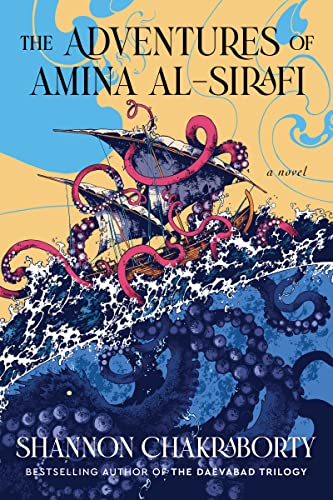
The Adventures of Amina al-Sirafi by Shannon Chakraborty

The Saint of Bright Doors by Vajra Chandrasekera

Translation State by Ann Leckie

Starter Villain by John Scalzi

Some Desperate Glory by Emily Tesh

Witch King by Martha Wells

The Actual Results

(To be determined…)

How I Would Vote

  1. No Award

Explanation

For reasons that should be obvious after last week’s rant, I will not be voting in the actual Hugo Awards this year, principally because there’s no way in hell that I’m going to let these snobby wokescold blowhards have any of my money. But if I were going to vote in the 2024 Hugos, this is what my ballot would look like.

I did not even attempt to read Starter Villain by John Scalzi, because I knew that I would hate it, since 1) it was written by John Scalzi, the most insufferable former SFWA president (an impressive achievement), and 2) Daniel Greene did such a brutal takedown of the novel that I felt no need to read it afterward. But all of the other books I picked up and started, even though I ended up DNFing them all for various reasons.

The one that I feel most conflicted about is Some Desperate Glory by Emily Tesh, a debut novel. It didn’t hook me hard enough to push on past the red flags, but it did have an interesting start that made me want to read more. However, there were a lot of signs that this was the sort of book that I would throw across the room in disgust (“strong” female characters, fascist caricatures, anti-natalist Malthusian vibes (though I may be wrong about that), etc). Even after I read a spoiler-filled online synopsis, though, I still couldn’t tell if that would be the case. The thing that ultimately convinced me to DNF it, though, was the blurb that called it a “queer coming of age story.” A synonymous phrase for that would be “sexual grooming of a minor,” which I have absolutely no desire to read.

The one that I feel least conflicted about is Translation State by Ann Leckie. To demonstrate why, here is everything I read right up to the moment when I decided to DNF it:

Enae

Athtur House, Saeniss Polity

The last stragglers in the funeral procession were barely out the ghost door before the mason bots unfolded their long legs and reached for the pile of stones they’d removed from the wall so painstakingly the day before. Enae hadn’t looked back to see the door being sealed up, but sie could hear it

Yet another novel from Ann Leckie where the fake transgender pronouns are the most interesting and compelling thing about her characters, and also the basis for the entire book. Hard DNF.

The Adventures of Amina al-Sirafi had an interesting start, but like Some Desperate Glory, there were enough red flags to make me reluctant to keep reading, so I read a spoiler-filled synopsis and discovered that one of the characters who is central to the plot decides that she’s a boy instead of a girl, and socially transitions her gender as a major plot point. Which means that Chakraborty, a liberal white woman who converted to Islam, is writing less for a Muslim readership (which could have actually been interesting) and more for a woke white liberal woman readership, which is probably how this book got nominated for the Hugo in the first place. These days, if there are no lesbians, it’s gotta be trannies. Hard pass.

The Saint of Bright Doors is a textbook case of two tropes that I cannot abide in contemporary science fiction: “a profane and vulgar childhood” and “all true love is LGBTQ love.” In real life, childhood innocence is something that should be sacred and pure, but in fiction that purity is often sullied deliberately for purposes of plot and character development. Which is fine if it happens occasionally, or with a nod to the tragedy of it—if all of our characters had perfect lives, there would be no conflict worth writing about. But these days, it seems like every child in every book has a screwed up childhood, to the point where the authors seem to treat it with casual indifference. As for “all true love is LGBTQ love,” homosexual relationships are so overrepresented in fiction these days that the moment it’s casually dropped that the main character has a gay lover, my guard immediately goes up. Call me a homophobe if you want to. I don’t really care.

Witch King frankly just bored me. There was nothing about the main character that I found interesting or compelling, which is a shame, because Murderbot from Martha Wells’s series of the same name is one of the most interesting and compelling characters I’ve read in recent years. Also, there was just too much worldbuilding information dropped in the first couple of chapters, before I was really hooked to the story, that I found it difficult to follow. I had the same problem with Wells’s early fantasy novels, where it felt too much like work just to read them. If I’m going to do the work to get invested in a complex fantasy world, I want to know that there’s going to be a payoff at the end, and if the initial hook is weak, I have very little faith that the author can pull it off. Granted, Wells did pull off a satisfying ending with her murderbot novel, Network Effect, but the last two installments in the Murderbot series have disappointed me.

So who is actually going to win the Hugo Award this year?

Probably not Scalzi, because he’s a straight white male.

Vajra Chandrasekera has a much stronger position, given that 1) he’s brown, 2) he edited Strange Horizons for several years when it was a contender for the Hugos, and 3) The Saint of Bright Doors won the Nebula Award last year. However, his LGBTQ characters are of the vanilla variety, which works against him, and he’s not openly LGBTQ on any of his bios.

Martha Wells can probably pull a lot of votes from her Murderbot fans, but she’s also straight and white, which works against her.

Ann Leckie is also white, but she’s really inovative with those fake transgender pronouns, which gives her an edge… I suppose it depends on whether our current transgender moment is waxing or waning. And even if it is waning in the culture generally, science fiction has been so thoroughly captured by the wokescolds that it may still be enough to push her over the top.

S.A. Chakraborty is a straight white woman, which works against her, but she’s also a convert to Islam, which may give her an edge if she can play to the anti-semitic pro-Palestinian hysteria that’s the Current Thing right now. Even that might be a bit of a stretch, though, and I don’t see anything else that gives her an edge.

As for Emily Tesh, she’s more or less the dark horse in this race: an author so new that she doesn’t have a Wikipedia page yet, and she’s already won the Astounding Award and a World Fantasy Award. If her bio declared that she’s a lesbian, I would bet that she’s the favorite, since Arkady Martine pulled the same dark horse trick in 2019. But if she’s just another straight white woman, that dampens her odds considerably.

My prediction is that the Hugo will go to Vajra Chandrasekera for The Saint of Bright Doors, just because it’s already won the Nebula, and the same people who vote for the Nebulas also vote for the Hugos—even more so as the Hugos become increasingly irrelevant. Also, he’s the only non-white author on the ballot, and there’s probably going to be a lot of virtue signalling angst after the obvious racism that happened with the Hugos last year.

But the book with the best cover art is definitely Some Desperate Glory, followed closely by The Adventures of Amina al-Sirafi. The other covers are either mediocre or garbage (especially Translation State, which looks like 70s diarrhea).

How I would vote now: 2021 Hugo Award (Best Novel)

The Nominees

Piranesi by Susanna Clarke

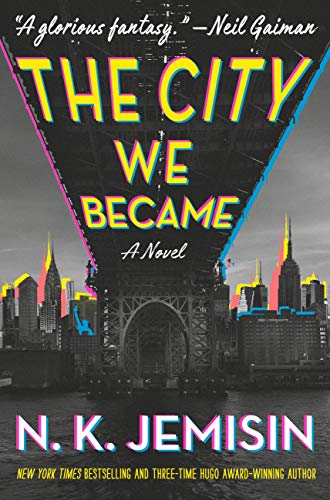
The City We Became by N.K. Jemisin

The Relentless Moon by Mary Robinette Kowal

Harrow the Ninth by Tamsyn Muir

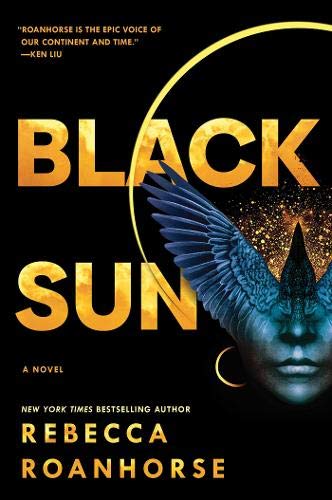
Black Sun by Rebecca Roanhorse

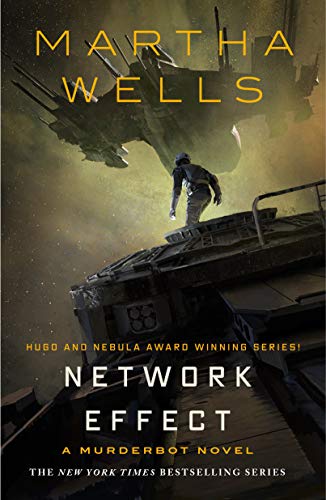
Network Effect by Martha Wells

The Actual Results

  1. The Network Effect by Martha Wells
  2. The City We Became by N.K. Jemisin
  3. Piranesi by Susanna Clarke
  4. Black Sun by Rebecca Roanhorse
  5. The Relentless Moon by Mary Robinette Kowal
  6. Harrow the Ninth by Tamsyn Muir

How I Would Have Voted

  1. Network Effect by Martha Wells
  2. No Award
  3. Piranesi by Susanna Clarke

Explanation

Network Effect was pretty good. In fact, it’s my favorite Murderbot book. There was a little bit of wokery, mostly in the form of the polyamorous relationships of the humans, but that didn’t bother me as much because part of the point of the Murderbot books is that the humans are (for the most part) aggravatingly dumb and slow, so the polyamory kind of blended into the rest of the nonsense that muderbot constantly has to deal with. But I can see how it would bother some readers.

I DNFed all the other books, but I didn’t want to lump Piranesi in with all the others because it just wasn’t my kind of book. All the other ones had woke themes or tropes or other issues that turned me off immensely. I DNFed the first Lady Astronauts book when it turned into a story about the brave little woman that could and her band of misfit minorities fighting back against Captain Patriarchy. The City We Became dropped half a dozen f-bombs in the first chapter, and I think it had a gay rape scene too. Also, I have no love whatsoever for New York City. As for Black Sun and Harrow the Ninth, they both suffer from the trope that I call “death is chic.” At best, it’s an aesthetic that turns me off, and at worst it’s just a cover for outright nihilism and a pro-death, anti-life worldview that undergirds everything that I hate about our current culture.

As a side note, I just want to say that when it comes to book blurbs, Neil Gaiman is one of the best contrarian indicators for my own personal tastes that I’ve found. He may have blurbed a book or two that I actually enjoyed, but for every book or author that I can remember, if he gave them praise, I not only didn’t like it, but actively hated it. He may actually be a better indicator for me than the Hugo Award itself, since I actually enjoyed the book that won this year—but I cannot think of a single book that Neil Gaiman blurbed that I didn’t despise.

Oh, Murderbot…

Why I initially enjoyed the Murderbot books

  • The character of murderbot was an interesting and highly entertaining take on the “depressed robot” trope.
  • I found the contrast between murderbot’s competence and the humans’ incompetence to be hilarious.
  • The futuristic sci-fi universe was interesting and immersive.
  • The politics, legal structure, and social/cultural makeup of the Corporate Rim was mildly fascinating.
  • Murderbot had a lot of cool gadgets/weapons and knew how to use them.
  • I really loved ART as a character: smart, competent, deadly, and possessing all the emotional maturity of a five year-old.
  • The alien infections subplot kept me interested.
  • There were lots of great plot twists, especially in Book 5.

Why I’ve decided I don’t enjoy them any more

  • The worldbuilding is super, super woke:
    • Way too much emphasis on fantasy genders and made-up pronouns—in fact, I would say that the clunkiness of “te/ter” and “vi/vir” inadvertently proves that using any other pronouns than those that are biologically derived is nonsensical and inherently ridiculous.
    • We’re supposed to understand that the Corporate Rim is evil because… capitalism, I guess? Anyone with power in the CR is the 21st century equivalent of a mustache-twirling victim, and everyone from the free colony resisting the CR is a good guy by default. Boring.
    • The good guys are all happily engaged in a polyamorous relationship, and to the extent that there’s ever any friction because of the arrangement, it’s solved when the wise mentor offers some trite and cliched advice about human relationships, like the moral at the end of an episode of Mister Rogers (if Mister Rogers had aired in an alternate free love universe).
  • As fun as Murderbot is as a character, the humans are all flat and uninteresting and blend together. Seriously, I can’t keep any of them straight.
  • Book 6 is a prequel novella to book 5, with a murder mystery plot that is really a side quest with no bearing whatsoever on the main series arc. Then, book 7 picks up immediately where book 5 left off, without any sort of setup or summarization to ease us back into what’s happening and remind us where everything stands. Way too much in media res.
    • Furthermore, book 5 has major spoilers for book 6.
  • By book 7, Murderbot’s snarkiness consists mainly of dropping f-bombs on every other page. That’s how we’re supposed to know that murderbot is funny. Because, fuck it. Ha ha ha.
  • Why are we supposed to care about this story or the world or any of the characters again? I forget.
  • The novellas are way too expensive.
    • Also, I personally think the first four novellas would work better if they had been written as a single novel, rather than four shorter books. But if that were the case, the publisher wouldn’t have made 4x profits. Remind me again how capitalism is totally evil? Right.

Reading Resolution Update: After Action Report

My 2022 reading resolution: Read or DNF every novel that has won a Hugo or a Nebula award, and acquire all the good ones.

Earlier this month, I finished my last Hugo/Nebula book and ordered the last two ones that I hadn’t yet acquired. The first of those (Powers by Ursula K. Le Guin) arrived just this morning, and the other one (Way Station by Clifford D. Simak) is supposed to arrive next week, so I think that now is a good time to do a retrospective and share some of my thoughts.

There were 104 books in total, including the most recent award winners (I decided not to count the retro-Hugos midway through the year). Of those, I’ve read 35 through from start to finish, and decided that 24 were worth keeping. The rest of them (69, or almost exactly two thirds) I DNFed.

Finishing one in three books is actually about on par for me. I’ve found that if I don’t allow myself to DNF books early and often, I just don’t read. Also, it doesn’t really surprise me that nearly one third of the books I read all the way through didn’t really impress me. What can I say—I’ve a very opinionated man.

Of the 28 books that have won both a Hugo and a Nebula, I finished 12 (or about two-fifths) and found that eight (or a little over a quarter) were worth keeping. So not much different than the overall totals.

Of the 45 books that won only a Hugo, I finished 18 (exactly two-fifths) and found that 14 (about a third) were worth keeping. So my personal taste seems to be tilted more toward the Hugo than the Nebula. The difference becomes even more stark when you take out the 20 books that were nominated for (but did not win) a Nebula, a whopping 16 of which I DNFed. Excluding those, we’re left with 25 books, 14 (or more than half) of which I finished, and 11 (or just under half) I thought were worth keeping.

The contrast becomes even sharper when we look at the Nebula-only winners. Out of the 31 books that didn’t win a Hugo but did win the Nebula, I finished only five (less than one-sixth) and found that only two were worth keeping. Both of those were books that weren’t even nominated for the Hugo. When we look at the 16 Nebula-winners that were nominated for a Hugo but didn’t win, I finished only two of them (one-eight) and didn’t think that any of them were worth keeping.

So the best predictor that I wouldn’t like a book is if it won a Nebula and was nominated for a Hugo, but didn’t win. In other words, if the SFWA crowd (which is mostly authors) said “this is the best novel published this year!” and the denizens of Worldcon said “yeah… no,” that almost guaranteed I would hate it. In fact, just getting nominated for a Nebula is enough to make a book suspect.

This is why, earlier in the year, I posited the theory that SFWA has done more to ruin science fiction than any other organization. I saw this trend coming all the way back in the spring, when I was only halfway through the reading list. In the early years, SFWA was all about politicizing science fiction, and in the last few years, it’s basically turned into a nasty bunch of mean girls all trying to get a Nebula for themselves.

I tracked a few other awards just to see if there were any correlations. For the 18 books that placed in any category in the Goodreads Awards, there were only four books that I finished and two that I thought were worth keeping. Network Effect by Martha Wells received 22,971 votes in the Science Fiction category in 2020, which came to 9.69%. Blackout by Connie Willis gained only 337 votes in 2010, but that was 9.19% back then. Both of those books were keepers. The only other book that got a higher percentage for its year was Redshirts by John Scalzi, with 4,618 votes at 10.82%, but I DNFed that one. Most Hugo/Nebula winning books didn’t even clear the 5% threshold in the Goodreads Choice Awards, and in my experience anything under 10% that doesn’t immediately jump out to me probably isn’t worth reading.

Of the six Hugo/Nebula books that were nominated for a Dragon Award, the only one I even really finished was Network Effect by Martha Wells. But that makes sense, since it’s no great secret that the Hugo/Nebula crowd is trying to sabotage the Dragons by pulling exactly the same shenanigans that they accused the Sad Puppies of doing. Accusation is projection is confession, after all. As of 2022, there has never been a Hugo/Nebula winning book that has also won a Dragon, and while part of me hopes that it stays that way, another part of me is very curious to read the first book that does.

Almost all of the 104 Hugo/Nebula winning books placed somewhere in the various Locus recommended reading lists, which isn’t surprising since those lists are generally regarded as feeders for the Hugos and Nebulas (and used to get more people voting in them, too). Of the seven books that weren’t on a Locus list, the only one I finished was They’d Rather Be Right by Mark Clifton and Frank Riley, which also has the distinction of being the most difficult book to find.

(A lot of people think They’d Rather Be Right was the worst book to ever win a Hugo, but I actually enjoyed it. Unlike most Hugo/Nebula books, it was remarkably anti-Malthusian, which is probably why it’s so hated. As for the worst book to ever win a Hugo, I personally grant that distinction to Dreamsnake by Vonda N. McIntyre.)

There were only ten Hugo/Nebula books that won or were nominated for a World Fantasy Award, and I only finished two of them (and didn’t think either were worth keeping). Perhaps that means that makes it the actual best predictor that I’ll hate a book, but ten is a pretty small sample size, so I’m holding off judgment for now.

The best two decades for me were the 50s (7 books, 4 keepers) and the 00s (16 books, 6 keepers), though the 80s came in close with five keepers out of sixteen books—and let’s be honest, Blackout and All Clear by Connie Willis are basically two halves of the same book. In contrast, the worst two decades were the 70s (only one keeper out of 13 total books) and the most recent decade, the 10s (15 books, 2 keepers).

So far, the 20s aren’t shaping up to be much better. In fact, I think it’s entirely fair to say that given the state of fandom since the election of President Trump (and the general state of insanity in this post-Trump era), a Hugo or a Nebula should count as a mark against a book, rather than for it. That is, the primary value of these awards is to tell you which books to avoid. Perhaps this will change at some point in the future, like it did after the madness of the 70s or the malaise of the 90s (not a good decade for science fiction, apart from books published by Baen), but I’m not holding my breath.

So that was my reading resolution for 2022. If I hadn’t allowed myself to DNF, I can guarantee that I never would have accomplished it. As it stands, though, I’m pretty satisfied with how it turned out.

What sort of reading resolution should I set for 2023?

An interesting personal discovery

I just made a very interesting personal discovery, gleaned from the data on my reading of the Hugo and Nebula winning books. Of the 110 novels that have won either award, I have now read all but 16 of them, which is enough data to get some reprentative results.

One of the best predictors that I will DNF a book is whether the author is a childless woman. Of the 18 books written by childless women, I have DNFed all but three of them (Downbelow Station by C.J. Cherryh, which I read years ago and would probably DNF today, and Network Effect by Martha Wells, which is a genuinely entertaining read, and Jonathan Strange & Mr. Norell by Susanna Clarke, which I haven’t read yet). For childless men, it’s a little bit more of a crapshoot: of the 31 books written by childless men, I’ve DNFed 16 of them and read 11, but only 6 of those are books I thought were worth owning.

Conversely, one of the best predictors that I will enjoy a book is whether the author is a mother. Of the 20 books written by mothers, I have DNFed only 6 of them and read 8, all of which I think are worth owning. Of the six remaining books that I haven’t read yet, I will almost certainly finish four of them, and may finish all six. The only book by an author I haven’t already read and enjoyed is The Speed of Dark by Elizabeth Moon, which I am currently reading and will probably finish next week.

For fathers, it’s more of a mixed bag. Of the 40 books written by fathers, I have DNFed 19 of them and read 16 (12 of which I think are worth owning). Of the five that I haven’t read yet, I’ll probably DNF at least one or two, so it’s safe to assume that there’s only a 50/50 chance I’ll enjoy a book if it’s written by a father, a little better than if it’s written by a childless man but not by much.

So there’s something about female authors that makes me much more likely to enjoy their books if they’ve decided to have children, and much less likely to enjoy them if they haven’t.

But I have to couch this discovery by saying “one of the best,” because so far, the best predictor that I will DNF a book is whether it won a Nebula without also winning a Hugo. Of the 31 books that have only won the Nebula, I have DNFed a whopping 23 and finished only 3 of them, none of which I thought was worth owning. Of the remaining five, however, I will probably finish at least another three of them, and all are books that I will probably decide are worth owning (Falling Free by Lois McMaster Bujold, The Speed of Dark by Elizabeth Moon, and Powers by Ursula K. Le Guin—all of them written by mothers). If that is the case, then the child-rearing status of the author (provided that she’s a woman) will indeed be the best predictor as to whether I’ll enjoy the book.

As for the decade in which the book came out, I’m slightly more likely to enjoy it if it was written between the mid-40s (counting retro-Hugos) and the mid-60s. From the mid-60s through the 70s, I thought almost all of the award-winning books were terrible (the only exceptions were Dune by Frank Herbert, which is more a creation of the early 60s, and The Left Hand of Darkness and The Dispossessed by Ursula K. Le Guin).

I haven’t yet read all of the books that came out in the 80s and 90s, but it generally looks like a 50/50 split, slightly favoring books from the mid-80s and disfavoring books from the late 90s. For the 00s, there isn’t enough data right now to say one way or the other. It’s the one decade left where most of the Hugo and Nebula award-winning books are still on my TBR.

But starting in 2010, the books all seem to become terrible again. The only exceptions are Blackout and All Clear by Connie Willis (whose heyday for the awards was really more in the 80s and 90s), The Three-Body Problem by Cixin Liu (a Chinese author who isn’t caught up in all of the culture war baggage here in the West), and The Network Effect by Martha Wells, which once again seems to be the exception that proves the rule.

Reading Resolution Update: Before 2022

My 2022 Reading Resolution: Read or DNF every novel that has won a Hugo or a Nebula award, and acquire all the good ones.

I was going to keep track of my reading resolution this year by mentioning each book and what I liked or didn’t like about it, why I DNFed it if I did, etc… and then I thought about it a little more and realized that that’s a terrible idea. Perhaps if I weren’t an author myself, I could risk bringing down the wrath of the internet by broadcasting everything that I really think about these books, but that’s still a really stupid thing to do—not to mention, a great way to burn a bunch of bridges that, as a writer, I really shouldn’t burn.

Instead, I’m going to post a monthly update where I list all of the books that I read and want to acquire, all the books that I read and probably won’t acquire, and all of the books that I DNFed, without any book-specific commentary. I do think that having some public accountability will help me to keep this resolution, and I do intend to keep it. But because I anticipate DNFing a lot of books that have very, um, merciless fans, this seems like a better way to do it.

So here is how things stood on the morning of January 1st, 2022:

Books that I read and want to / have already acquired:

  • Double Star by Robert A. Heinlein (1956 Hugo)
  • Starship Troopers by Robert A. Heinlein (1960 Hugo)
  • A Canticle for Leibowitz by Walter M. Miller Jr. (1961 Hugo)
  • The Man in the High Castle by Phillip K. Dick (1963 Hugo)
  • Dune by Frank Herbert (1966 Hugo and Nebula)
  • The Left Hand of Darkness by Ursula K. Le Guin (1970 Hugo and Nebula)
  • The Dispossessed by Ursula K. Le Guin (1975 Hugo and Nebula)
  • Downbelow Station by C.J. Cherryh (1982 Hugo)
  • Neuromancer by William Gibson (1985 Hugo and Nebula)
  • Ender’s Game by Orson Scott Card (1986 Hugo and Nebula)
  • Speaker for the Dead by Orson Scott Card (1987 Hugo and Nebula)
  • Barrayar by Lois McMaster Bujold (1992 Hugo)
  • Mirror Dance by Lois McMaster Bujold (1995 Hugo)
  • The Mule (included in Foundation and Empire) by Isaac Asimov (1946 Retro Hugo, awarded in 1996)
  • Harry Potter and the Goblet of Fire by J.K. Rowling (2001 Hugo)
  • Farmer in the Sky by Robert A. Heinlein (1951 Retro Hugo, awarded in 2001)
  • Fahrenheit 451 by Ray Bradbury (1954 Retro Hugo, awarded in 2004)
  • Spin by Robert Charles Wilson (2006 Hugo)
  • The Sword in the Stone by T.H. White (1939 Retro Hugo, awarded in 2014)
  • Network Effect by Martha Wells (2021 Hugo and Nebula)

Books that I read and don’t plan to acquire:

  • The Demolished Man by Alfred Bester (1952 Hugo)
  • The Forever War by Joe Haldeman (1975 Hugo and Nebula)
  • Gateway by Frederik Pohl (1977 Hugo and Nebula)
  • Red Mars by Kim Stanley Robinson (1993 Nebula)
  • American Gods by Neil Gaiman (2001 Hugo)

Books that I did not finish:

  • The Moon is a Harsh Mistress by Robert A. Heinlein (1966 Hugo)
  • Flowers for Algernon by Daniel Keyes (1966 Nebula)
  • Lord of Light by Roger Zelazny (1967 Hugo)
  • Ringworld by Larry Niven (1970 Hugo and Nebula)
  • Rendezvous with Rama by Arthur C. Clarke (1973 Hugo and Nebula)
  • Green Mars by Kim Stanley Robinson (1993 Hugo)
  • Blue Mars by Kim Stanley Robinson (1996 Hugo)
  • Forever Peace by Joe Haldeman (1997 Hugo, 1998 Nebula)
  • The Fifth Season by N.K. Jemisin (2015 Hugo)
  • The Obelisk Gate by N.K. Jemisin (2016 Hugo)
  • The Stone Sky by N.K. Jemisin (2017 Hugo and Nebula)