Breaking the Time Paradox in The Stars of Redemption

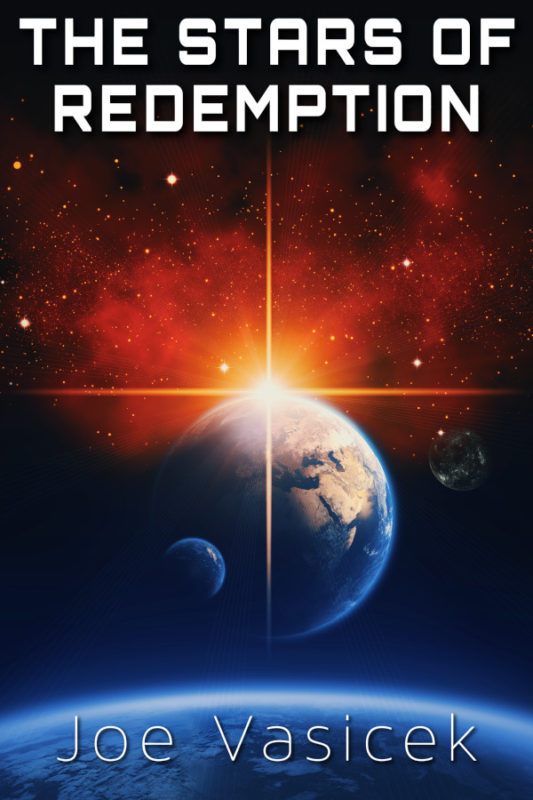
What if the deadliest threat humanity ever faced wasn’t an alien invasion or a rogue AI… but a mistake we keep repeating that always ends with the destruction of Earth? The Stars of Redemption, the last book in my young adult science fiction trilogy, explores this question.

At its core, The Stars of Redemption is about the struggle to break a closed time loop, stop a rogue superintelligence, and rewrite a future that seems unchangeable. This makes The Stars of Redemption a classic time-loop science fiction story, built around temporal paradoxes, fate-versus-free-will dilemmas, and the struggle to break a repeating extinction cycle. It is a story about escaping destructive cycles, choosing hope, and fighting for a future that isn’t predetermined.

Where the Idea Came From

The idea for this theme grew out of my long, tangled journey to finish the trilogy. As I write in the author’s note, the trilogy stalled until I became a husband and father. Holding my newborn daughter for the first time made me realize that the story needed to be about cycles—time loops, family patterns, repeating trauma—and the hope that they can be broken. Only then did I understand how to write about ending the loop and choosing a new future.

How Breaking the Time Paradox Shapes the Story

The entire plot of this sci-fi book revolves around a temporal paradox created by a wormhole, a derelict starship, and a fragmented AI superintelligence. The ghost ship is both the catalyst and the prison of a machine intelligence born from the loop—a being that believes humanity must be wiped out to prevent another cycle of suffering. Every conflict Estee and Khalil face—from warped corridors to shifting timelines—exists because they are trapped inside this repeating extinction loop.

For Estee, breaking the time loop becomes a confrontation with her family’s past and her people’s future. She must decide whether humanity deserves redemption and whether history can be changed. Khalil must confront his own emotional loop: guilt, self-sacrifice, and the belief that his fate is fixed. Together, they face a question at the heart of all time-loop fiction:

Are we doomed to repeat our worst mistakes, or can we rewrite the future?

What the Time Paradox Says About Us

Time loops are powerful metaphors because we all face cycles—personal, cultural, generational—that feel impossible to escape. The paradox in this story mirrors the real world: destructive systems repeat unless someone chooses differently. By facing a machine intelligence convinced that humanity is irredeemable, the characters confront the fear that our past defines us. The book suggests a hopeful alternative: the future changes when we do.

Why This Theme Matters to Me

I didn’t truly understand this story until I became a father. My daughter made the theme real: breaking cycles isn’t abstract—it’s something we do for the next generation. That moment of holding her and realizing this is her story now, not yours helped me finish the book. The Stars of Redemption is my way of saying that even in the darkest timelines—even in repeating loops—hope is possible, and the future can be rewritten.

Where to Get the Book

Related Posts and Pages

Explore the series index for the Genesis Earth Trilogy.

Visit the book page for Genesis Earth for more details.
Find out if The Stars of Redemption is for you.

See all of my books in series order.

Trope Tuesday: After the End

i am legend2It’s the end of the world as we know it … so why do we feel fine?

On the apocalyptic scale of world destruction, when the thing that wipes out civilization doesn’t quite kill everyone, we’re left with an After the End type setting.  Depending on where the writers fall on the sliding scale of idealism vs. cynicism, this may range from a futuristic Arcadia to a crapsack post- hell on Earth.

Whatever the case, expect to see lots of modern ruins and schizo tech mashups (horse-driven cars?  Wood-wheeled bicycles?).  If anarchism reigns, expect to see lots of punks roaming the wastelands in muscle cars and motorcycles.  If Ragnarok Proofing is in effect and the ruins of civilization haven’t quite decayed yet, expect some variation of a scavenger world.  And if someone from our modern era finds himself lost in this bizarre post-apocalyptic future, expect him to find some sort of constant to reinforce that he’s not in Kansas anymore.

Unlike dystopian settings, where society evolves (or is deliberately turned) into a horrible, hellish place, a post-apocalyptic setting represents a reboot of civilization itself, where one society has passed away and a new one is slowly picking itself up from the ashes.  It has the potential to be a lot more hopeful, and to give the reader a lot more wish fulfillment.  After all, who wouldn’t want to be one of the lucky survivors tasked with rebuilding civilization?  Sure there may be zombies or nuclear nasties wandering about, but on the plus side, you don’t have to worry about your bills or your deadbeat job anymore.

Douglas Rushkoff has some interesting ideas about why this type of story is becoming more and more popular nowadays.  In his new book Present Shock which he’s been promoting recently, he argues that many of us are so overwhelmed by a world where everything happens now that we wish we could end it all and start over.  When we live in an ever-changing present without a coherent narrative to reference our past or our future, we long for something to restore that sense that we’re part of a larger story, even if that story is racing towards a horrible, tragic end.

But every ending is a new beginning, and that’s what lies at the very core of this trope.  When our world passes away, what will the new world look like that takes its place?  Will we learn from our mistakes, or are we doomed to repeat our worst atrocities?  Will we eat each other like dogs, or will we tap into some deeper part of human nature where mercy and compassion lie?

This is all on my mind right now, because I’m writing a post-apocalyptic novel (with the working title Lifewalker) that takes place in Utah 200 years after the end.  Humanity was hit by a plague that kills everyone over the age of 25, so that the only people left are orphans, teenage adults, and their babies.  It’s fascinating to wonder what from our era would fall apart and what would remain, or what would be preserved and how the new society will take shape.

But it’s not the apocalypse itself that I’m interested in, so much as what happens after things stabilize.  The main character is one of the few people who’s immune to the plague, so naturally he feels like a complete outcast.  He’s walking the Earth, riding down the ruins of I-15 with a copy of Brandon Sanderson’s Mistborn in his saddlebag.  And the people he meets … well, let’s just say I wasn’t very kind to Las Vegas.

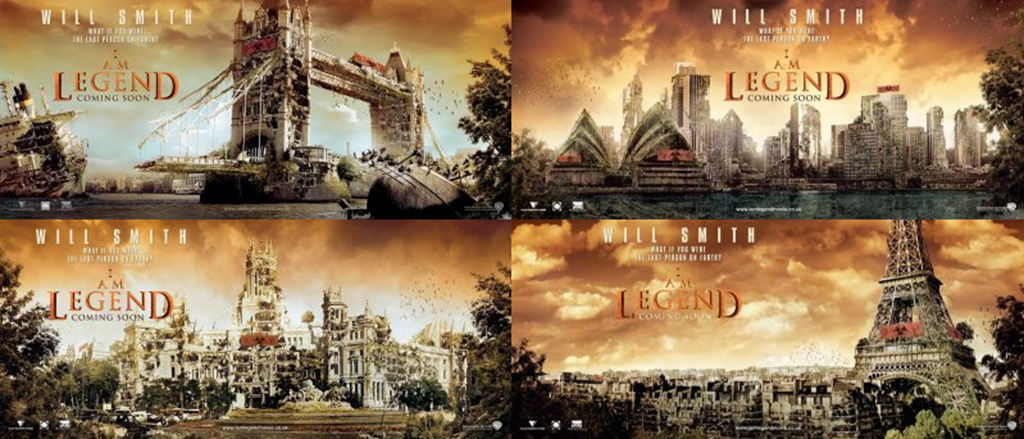
I think that’s another part of the appeal of this trope: it takes our own world and twists it into something fantastic, so that instead of having to wrap our minds around a whole new set of history and physics, we can build on the familiar in wild and interesting ways.  A Canticle for Leibowitz did this very well, with another post-apocalyptic tale set in Utah.  However, the most famous popular example is probably the movie I Am Legend.  I love those long panoramic shots with Will Smith hunting deer in Times Square, or hitting golf balls off the wing of a fighter jet.  Stuff like that really sparks the imagination because it combines something familiar with something wild and different.

Believe it or not, this trope has actually happened in real life.  After the bubonic plague swept across Europe, whole cities were depopulated, with as much as 60% casualties in some places.  When the Pilgrims settled at Plymouth, they were actually building over the ruins of a large Indian settlement that had been wiped out by smallpox just a few years before.  And using DNA evidence, scientists now believe that all of modern humanity is descended from a small group of just 50 females who survived a global volcanic eruption some 70,000 years ago.

So yeah, this is definitely a trope I like playing with.  I’m on track to finish Lifewalker by the end of May, so you can definitely expect to hear more about it in the weeks and months to come.

Also, for those of you looking for resources to help you visualize what the world will look like after the end of human civilization, here are a couple of excellent resources I’ve found.  First, check out The World Without Us, an excellent book written by an environmentalist that poses a basic thought experiment: what would happen if all humans everywhere magically vanished, and all that was left was the stuff that we’ve built?  What, if anything, would remain? (spoilers: not much) If you want to explore that idea but you don’t want to read the whole book, check out this wiki on Life After People, a series of History Channel documentaries that basically posed the same question.  The answers may surprise you.

Trope Tuesday: New Year Has Come

Just like a story, every year has a beginning and an end.  For this reason, New Years has become a time to celebrate change, renewal, and the setting of impossible goals which we will all probably break by March.  Over time, this tradition has become so ingrained in our culture that it’s only natural for it to pop up in our fiction.

Most stories that feature a New Year subplot are episodic, such as cartoons, comics, anime/manga, and television shows.  They usually reflect real-world holiday traditions, such as the practice of setting New Year’s resolutions.  Because all stories need conflict (but also because fiction sometimes reflects reality), the characters in these stories are often just setting themselves up for failure in some hilarious way.

At first glance, this might seem depressing.  After all, if most of us will never reach our goals, why do we even bother setting them?  Why torture ourselves with guilt when, in all likelihood, we’re just setting ourselves up for failure?

In some ways, I think it comes down to this quote from David Gemmell:

May all your dreams come true save one; for what is life without a dream?

One of the things that makes us human is that we all need to have some impossible dream to strive for, some sense of hope for the future.  Through our New Year’s resolutions, we tap into that sense that anything is possible, and that we can change who we are and become better people.

For some of us, those resolutions are an effective tool to turn their lives around.  For those of us who lack that kind of will or self-discipline, the act of setting resolutions still helps us reflect on our lives and change in ways that perhaps we don’t immediately perceive.  After all, the truest measure of success isn’t whether you’ve accomplished all your goals, but how much you’ve changed through striving to meet them.

That’s my take on it, anyway.  In any case, a New Year’s story is a great way to give your characters some time for reflection, since it’s probably the most introspective holiday in our Western culture.  It’s a time for beginnings, endings, and chasing impossible dreams.

Happy New Year!

Let the job hunt begin!

Pull!

All right, I just updated my resume to account for the last year or so, and I’m ready to start looking aggressively for work.  Given the state of the economy, I’m not optimistic that it will lead anywhere, but hey might as well give it a shot.

The ideal job would be something part time that allows me to write on the side while teaching me useful skills like book selling or copywriting.  Oh, and it wouldn’t hurt to have interesting coworkers (especially female coworkers) and a fun work environment, too.

I’ve got to be honest, though; there aren’t very many jobs here in Utah Valley that are awesome enough to keep me here.  In September, I finally got my TEFL certification, which means that I could probably land a decent job teaching English abroad if I were to look for one.  In fact, if I showed up in Cairo or Amman with $500 USD in my pocket, I’ll bet I could establish myself.

So while there are a few jobs here in Utah that would make me decide to stay, if I can’t find anything satisfactory in the next few weeks, I’m probably going to go with teaching English abroad.  My friends who have done it say that it gives you tons of free time to write, though generally more if you have a private apartment than if you’re living in a homestay.  Even so, I think I’ll try out the Teach and Learn with Georgia program first for a few months, just to test the waters and see if this is something I actually want to do for a career.

That’s the tentative plan anyways.  Things that could derail it include:

  • Finding an awesome job here in Utah.
  • Getting signed with my band.
  • Selling a bazillion ebooks.
  • Falling in love.

But either way, something’s gotta change.

Bringing Stella Home 5.0 is finished!

That’s right; I finished the fifth draft just tonight.  110,000+ words and 550+ pages in three weeks–not bad.  Here are the stats:

ms pages: 556
words: 110,000
file size: 264 KB
chapters: 27
start date: 21 Dec 2010
end date: 11 Jan 2011

And the wordle:

Wordle: Bringing Stella Home 5.0

The song that best represents my experience with this particular draft would probably be a chip tune remix I discovered recently (as in, yesterday). It’s called “Milk in Veins,” and the only version I have is in .xm (extended module) format. I don’t yet know how to export it to mp3, but here it is:

Raina — Milk in Veins

This draft was mostly just a quick polish, but I did get some useful feedback from some World Fantasy friends; some of Stella’s reactions were off, and Anya’s parts needed better development. I don’t know if it’s publishable as is, but it’s definitely as good as I can make it without a professional editor.

I had a good time with this draft. I feel confident that I’ve got an exceptional story here, and I think I did a good job telling it. At the end of the day, it’s great to have something you can look back on and say “yeah, I accomplished that.”

Now, to send it out into the publishing world and see if it gets any takers. Who knows–maybe this could be my debut novel! Only one way to find out…

Some thoughts on the future

I went to the first class of English 318 yesterday, and the lecture got me to thinking about my mid- to long-term future as a writer.

Brandon spent most of the period organizing the class, which was made doubly difficult by the ridiculously small classroom size.  I swear, bureaucracies exist only to make life difficult.  This year, for the sole sake of screwing with everyone, they are trying to limit his class size to thirty people (twenty students, ten auditors), but that’s a whole other rant in and of itself.

Oh well–at least there’s still room on the floor.

Anyhow, after getting all the administrative stuff done, Brandon talked about the practicalities of being a writer.  He made the very interesting point that as a writer, it doesn’t matter where you live–moving further away from the city won’t negatively affect your earnings, unlike most jobs.  That means you can save a lot of money on a house if you’re willing to live 50 to 100 miles away from a major population center.

That got me to thinking: maybe, once my writing career starts taking off, I’ll move down to southern Utah for a while.  The country is absolutely gorgeous down there, and the people don’t seem hard to live with.  Small house with lots of space, maybe a garden, lots of outdoor stuff all over, plenty of privacy–sounds great!

So here’s a tentative map of the next few years:

present–fall 2011: Get a job, build some credit, get TEFL certified.  Keep writing, attend some cons (LTUE, Worldcon), develop new projects.

fall 2011–2012: Teach English abroad for a while (Korea, Japan, etc), build up some savings, have some adventures.  Keep writing and submitting.

2013–2014: Get a teaching job in the Middle East (gulf region), have some adventures down there, continue to build savings and gain experience.  Hopefully I’ll have broken in to publishing at this point; if not, keep on trying.

2015–2020: Come back to Utah (maybe Salt Lake), live off of savings for a while and really focus on building the writing career.  Attend cons and workshops, network, write like crazy (the adventures will probably give me lots of material), work on promotion if I’ve already got a publishing deal, etc.

2020–????: Hopefully, somewhere along the line I’ll meet my wife and get married.  Also by this time, my writing career will hopefully be earning me a living–enough, at least, to support a family.  With all these things in place, we’ll select a home out in southern Utah, settle down, and start having kids.

That’s one plan, at least.  When 2020 rolls around, I’ll probably laugh at my naive and short-sighted view of the future–but at least it’s something to work with.

Brandon did make the point that it’s not as hard to make a living as a science fiction & fantasy writer as most people say–which isn’t to say it’s easy, but it is possible.

According to Brandon, about 1,000 to 2,000 writers in sf&f are currently making a full-time living.  Most of them are mid listers–authors you probably haven’t heard of, but see their books occasionally in the stores.  If your books sell about 5,000 copies in hardcover over the first three years in print, your publisher won’t cut you–and with the way ebooks are changing things, new business models will certainly evolve, presenting a whole new host of challenges and opportunities.

Bottom line, this is something achievable, so long as I keep producing consistently and work hard to improve my craft.  I’m very optimistic about the long-term.

Now, all I need is to find a job…ugggggggh.

(image courtesy Postsecret)

The Obligatory New Year’s Post

So I guess I was lying when I said that my last post was the second to last post of the year.  Oh well–better late than never, I suppose.

Last night at a party, I told someone that 2010 wasn’t that bad…but it was also the worst year of my life.  I suppose that’s true: I got kicked out of my Washington DC internship, almost failed all my classes, spent most of the year unemployed, and never quite achieved full financial independence.

At the same time, I made a bunch of new friends, started two novels and finished another, published an article about the BYU sf&f community that’s garnered some major attention, and generally had a fun time, in spite of the setbacks.

So really, what is there to complain about?  Not much.  Still, I’m glad it’s over.

As far as new year’s resolutions go, I’ve found that the best way to do them is to make one or two of them–otherwise, come February, you lose steam and none of them get done.

I’ve got a couple private resolutions, but here’s the big one I want to focus on:

Resolved: Read a minimum of one book per week.

I made this resolution back in 2008, but it only lasted until mid-March or so–not so much because I wasn’t reading, but because I didn’t understand how I read.

I’m not the kind of person who finishes every book they pick up; in fact, I only finish about 3/4s of them.  If I don’t think a book is good, I stop reading it.  Sometimes, even if a book isn’t bad, I end up putting it down just because I lose interest.  I’m also really picky; I don’t usually read any fiction that isn’t fantasy or science fiction, because the real world bores me.

At the same time, though, if I want to write well, I’ve got to be constantly reading.  And as I’ve written book reviews for this blog, I’ve found that reading widely has helped me to hone my craft.

So anyway, that’s my major resolution for this year.  Other things I would like to do:

1 ) get Army fit
2 ) live in another country
3 ) write a novel entirely in longhand, with actual pen and paper
4 ) get three new publications (two are already in the works)
5 ) fall in love with someone–and then make it grow into real love
6 ) get a MIDI keyboard and compose original 8-bit music
7 ) get a digital SLR and become an amateur astral photographer
8 ) get an agent
9 ) land a publishing deal
10) honestly, it’s just an honor to be read

Do these goals sound a little outlandish?  Sure…but who cares?  We’ve got a whole new year in front of us; anything can happen between now and December 31st!

Happy New Year!

What have you learned from reading science fiction?

While trolling around the new Facebook questions app, I came across this interesting question.  Unable to resist, I spent the next hour crafting my answer.

This is what I wrote:

Gosh, what HAVEN’T I learned from science fiction?

Because of science fiction, I do not fear the alien. I do not feel threatened by people of different places or cultures, but take great interest in learning from them. I look at them and love them, because I can see myself in them.

Because of science fiction, I can look out at the vast expanse of the universe and not despair because of my insignificance. I know my place within it, and can appreciate the wonders and endless possibilities all around me.

Because of science fiction, I can look at the world and know which questions to ask. I can see through the lies that society constantly feeds me, and know how to fight against them.

Because of science fiction, I can look to the future with hope. Having seen the best and the worst of all possible worlds, I know which paths to avoid and which paths to follow. With this knowledge I can inspire my fellow men, because I know that nothing is inevitable.

Because of science fiction, I have a deep and endearing love for the world in which I live. I know better what it means to be human, and knowing this helps me to take no human life for granted. I have a greater capacity to love those around me, and that is the most important thing of all.

Science fiction has enriched my life beyond measure. By constantly stretching the bounds of my imagination, science fiction has led me to more truth than any other literary genre–and not only led me to that truth, but helped me to incorporate it into all that I do. So long as I live, I will always be a reader and a writer of science fiction.

Answering this question reminded me of my interview with Shayne Bell a couple weeks ago.  In it, he talked about how rich and vibrant science fiction is as a literary genre, and how it deeply impacted his own life.  Listening to him speak, I couldn’t help but feel that I was in the presence of a great man.

I don’t think he’d be comfortable with me posting the full audio of that interview, but many of his comments will appear in the article I’m putting together for the December issue of Mormon Artist.  Between working full time and trying to finish the fourth draft of Mercenary Savior in time for World Fantasy, I haven’t had much time to work on it, but it’s going to be awesome.

What have YOU learned from science fiction?  How has it enriched your life?

End in sight

Things are winding down for my current work in progress, Worlds Away from Home–or should I say winding up, since I’m just a chapter or two from the major climax?  In any case, by the end of the week, inshallah, the rough draft will be finished. <crosses fingers>
It’s been tough, but I’m cautiously optimistic that I’ll be able to salvage it, probably sometime after World Fantasy 2010.  Drafting is not my strongest point; I’m much better at revision.  My goal is to have a fully polished draft before the end of 2011.

As far as the real world goes, things are starting to come together as well.  I’m going home at the end of the month to get my teeth checked before my Mom’s insurance no longer covers me, and when I get back this temp agency should have a warehouse job lined up for a while, if I can’t find anything else.  I’m cautiously optimistic that my sister will help me get a job at the residential treatment center where she works, which would be awesome, and of course there’s always the possibility that BYU will lift the hiring freeze (pretty soon, they’ll have to).

So here’s my plan for the next few months: quit my job at the call center and go home in two weeks, then either work through the temp agency through September/October or find something better.  The wilderness job I was looking at has their training in November, so I’ll start the application process now in order to have that option in case everything else falls through.  And if all else fails, I’ll go teach English in Asia for a year.

Meanwhile, I hope to stay in Utah until at least February, preferably until April.  There are a lot of good resources here for writers, and I hope to take advantage of them.  After I finish the rough draft of Worlds, I will throw everything behind Mercenary Savior and get it polished in time for World Fantasy 2010.

And then?  Who knows.  I’d kind of like to try my hand at a fantasy novel; I’ve got the start of an idea for a magic system, and enough knowledge of Middle Eastern history to throw in a sweet medieval Arab flavor in the mix.

In terms of the real world, my plan is to reteach myself Algebra, Geometry, and Calculus using some excellent resources my Dad is sending me, then go back to school in a hard science…probably.  Still not sure what I want to do school-wise, but hopefully I’ll figure that out in the next year or two and head back soon.

That is, if I don’t get published and launch my writing career by then.

So that’s what my life is looking like right now.  If you’re still reading and aren’t bored stiff (or if you just skipped to the end of the post, which is what I would have done), here’s an excellent song from one of my favorite Celtic bands, The Rogues:

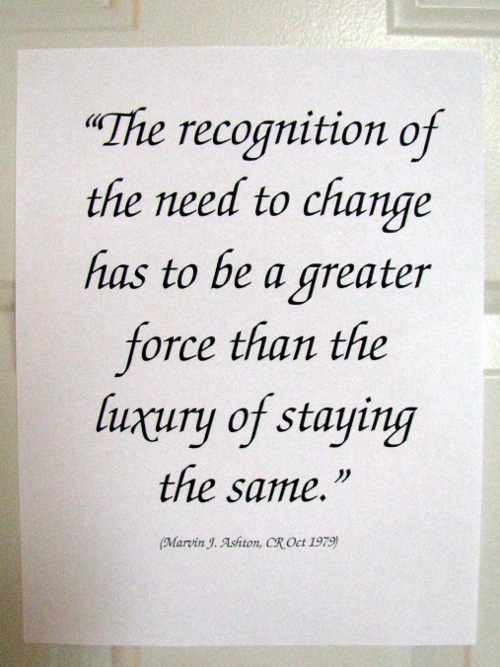
The need to change

I picked up this sign at institute last Wednesday. The lesson was on our desires; specifically, how the thing that we truly desire deep down is often the thing that we get.

The main reason I posted this sign on the door was to motivate me to get a better job than my current one.  However, it applies to so many other things as well.

Take writing, for example: if I’m going to actually turn this writing thing into a full time career, I’ve got to bust my butt to make it happen.  Writing a paltry 250 words each day on a novel you’ve been working on for the past twenty years just isn’t going to cut it.

I got two form rejections today, and that made me realize that I need to be more serious about submitting my work.  So instead of working of working on Worlds Away From Home, I researched a slew of agents, rewrote my query letter for Genesis Earth, and sent out four carefully prepared and researched submissions.  I don’t want to spend any more time bouncing around from job to job than I have to–I want to break in and make this writing career take off.

So far, I’ve gotten approximately 14 rejections for Genesis Earth: ten form rejections, one personalized rejection, one rejection after the partial was requested, and two that I haven’t heard back on but have been out for so long they’ve probably been rejected.  Interestingly enough, rejection itself is not that hard for me to deal with: it’s building the motivation and nerve to submit to the next place that’s tough.

But I’ve got to do it.  I feel kind of like Hachimaki from the anime series Planetes, who quits his job without taking the severance package when he applies for the Jupiter mission.  If he has the safety net, he knows that he’ll get lazy, so breaks goes out on his own, even sleeping on the streets for a while during the initial tryouts.

I haven’t quite fallen that low yet–I’ve got an apartment, a bike, and a job, even if it’s only a subsistence level one.  But when it comes to long term careers, I’m putting everything into my writing right now–there isn’t anything else.

It’s still discouraging to get rejected, but I’m still very optimistic that things will work out.  Even if everyone rejects Genesis Earth, I’ll have Mercenary Savior ready to submit before the end of the year.  It’s just a matter of time–I just hope it happens soon.

In the meantime, here’s the opening sequence from Planetes.  Such an awesome series–I’d take a job with Debris Section in an instant!  Even garbage collecting is cool when it’s IN SPAAACE!!