Trope Tuesday: Gone Horribly Wrong

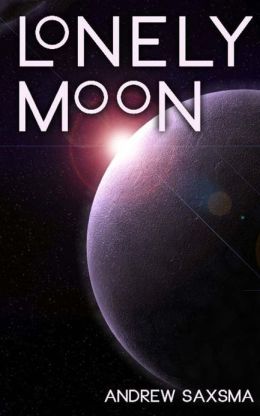
For this week’s Trope Tuesday post, I’ve invited a guest blogger to come on and discuss one of the tropes in his most recent book.  Andrew Saxsma is the author of Lonely Moon, a space opera / horror novel.  I haven’t read it yet so I can’t say much about it, but it looks interesting, and I’m a sucker for space opera.  So without further ado, here we go!

==================================================

saxsmaandrewThis trope is all about Science gone horribly, sometimes violently wrong.  Morality’s been thrown out of the window, compromised in favor of delicious success. Maybe the Mad Scientist played God; maybe mankind has accidentally awakened a Sleeping Giant.

This trope has many faces and masks and plays out in many different ways. In all cases, ethics are thrown to the wolves, and the big payoff is not as much a payoff as it is a new impeding doom the hero must now overcome.

Classically, this trope is mostly derived, if not invented, by Mary Shelley in her novel Frankenstein. Dr. Frankenstein’s obsession leads him to create what would eventually become the bane of his very existence. He unwittingly unleashes the mad dog from its dormant cage and makes it his mission to put it down. You might also recognize this trope from Deep Blue Sea, where scientists genetically enhance sharks for cancer research, but the predators get loose and begin eating their masters.

The key element is the backfire, the unforeseen consequence. It’s born of an innate character flaw, the inability to see beyond one’s good intentions. The character has a vision of a greater good in sight–to cheat death, to cure cancer. They’re so focused they never stop to think: was it worth it? Is this a line we should cross?

To make matters worse, this trope can become complicated when one’s intentions are infused with emotions. A dead loved one, revenge, a preemptive strike. Sometimes the choice is long decided before it is made.

In my book, Lonely Moon, the hero, Captain Hane, has a crisis of the monster. He faces a morally weighted fork in the road. Does he open a forbidden gate, opening our galaxy to a potentially devastating entity in an attempt to save us from an equally evil threat, or does he choose the path of uncertainty in hopes of finding a safer, less dangerous option?

Gone Horribly Wrong is a particularly fun trope to play with from a writer’s aspect, and I’m not sure if it’s a one and done. I plan on playing with this one again in the future.
lonely_moon

==================================================

Thanks, Andrew.  I think the Rule of Drama is one of the keys to doing this trope well.  Never pass up an opportunity to make things go wrong for your characters.  And if the problems are of their own making, that makes it all the juicier, especially when it adds the internal conflict of knowing that they’re the ones to blame.  We all love to watch a train wreck, especially in the world of fiction.

What do you guys think of bringing on more guest bloggers for the Trope Tuesday posts?  It’s something I’ve done occasionally in the past, but I’m thinking of doing it much more in the future.  I think it could be interesting to get some different points of view besides my own, and maybe introduce you guys to some new authors you might like.  Maybe it’s something I could rotate every other week.
Trope Tuesday: Sinister Surveillance

secure
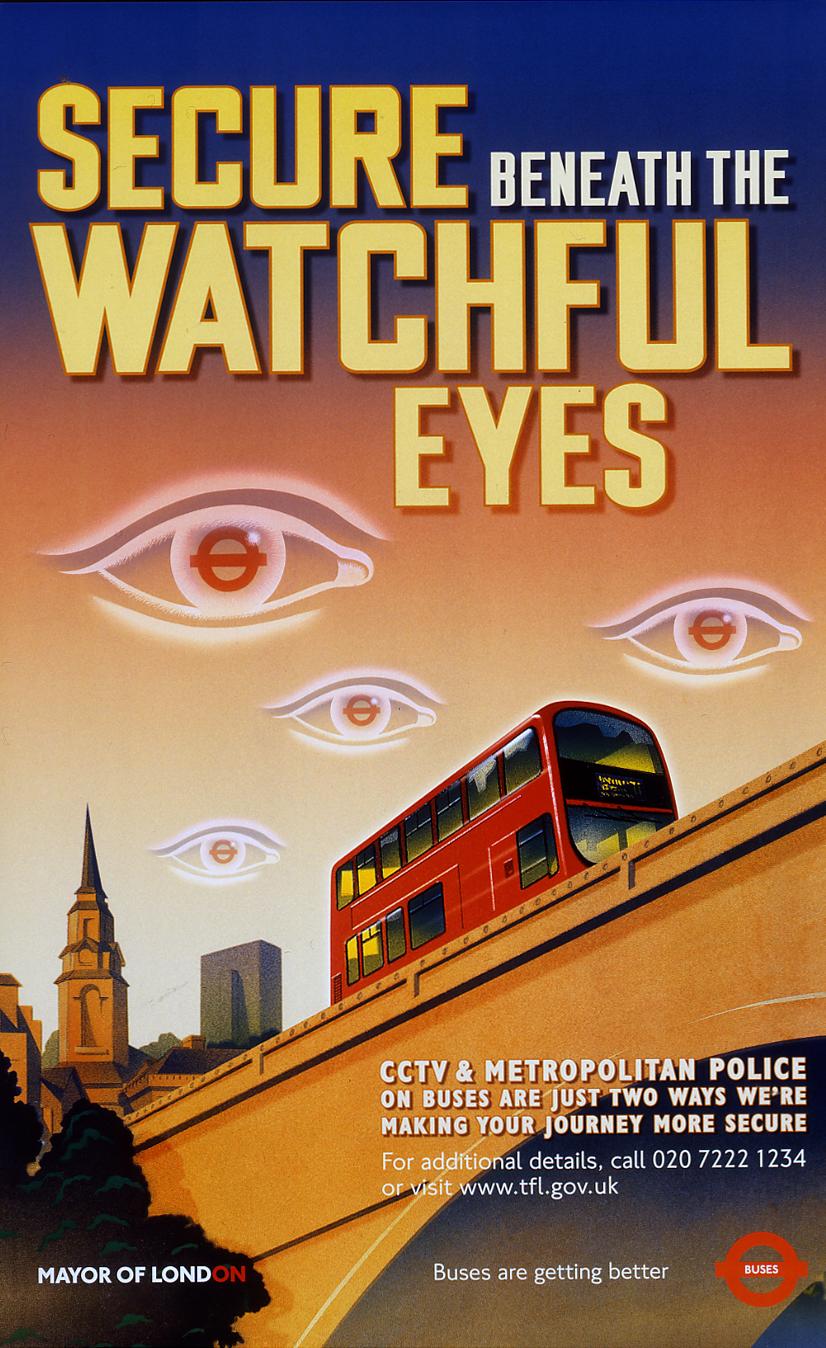
This was actually a real poster.

Someone is watching you.  Their eyes are everywhereEverything you do, everything you say … it’s all being recorded in a giant database.  But don’t worry–you can trust the ones watching youThey have your best interests at heartThey’re only after the bad guys.  You won’t even know that they’re there.

Sinister Surveillance is a hallmark of Dystopia, as essential to the genre as the Crapsack World and the Police Brutality tropes.  Often, you’ll find all three in the same story together.  It’s closely related to Big Brother is Watching, where the government is so powerful, and reaches into so many aspects of everyday life, that they see and record everything you do.  Where Big Brother shapes every aspect of the society, however, down to the language of the citizens and the basic truths accepted as facts, Sinister Surveillance is more about the surveillance itself, and the ulterior motives behind it.

It’s not enough for the government to simply watch you, though.  Even more important in some ways is the idea that you don’t know what they can and can’t see.  The reason for this is the same reason why, in horror stories, we almost never see the monster until the very end–because our imagination makes things a lot scarier than they really are.  If we the bad guys know the limitations of our government surveillance, we they can safeguard our privacy and basic rights game the system.  We’re all afraid of the dark, not because of what’s actually there, but what could be.

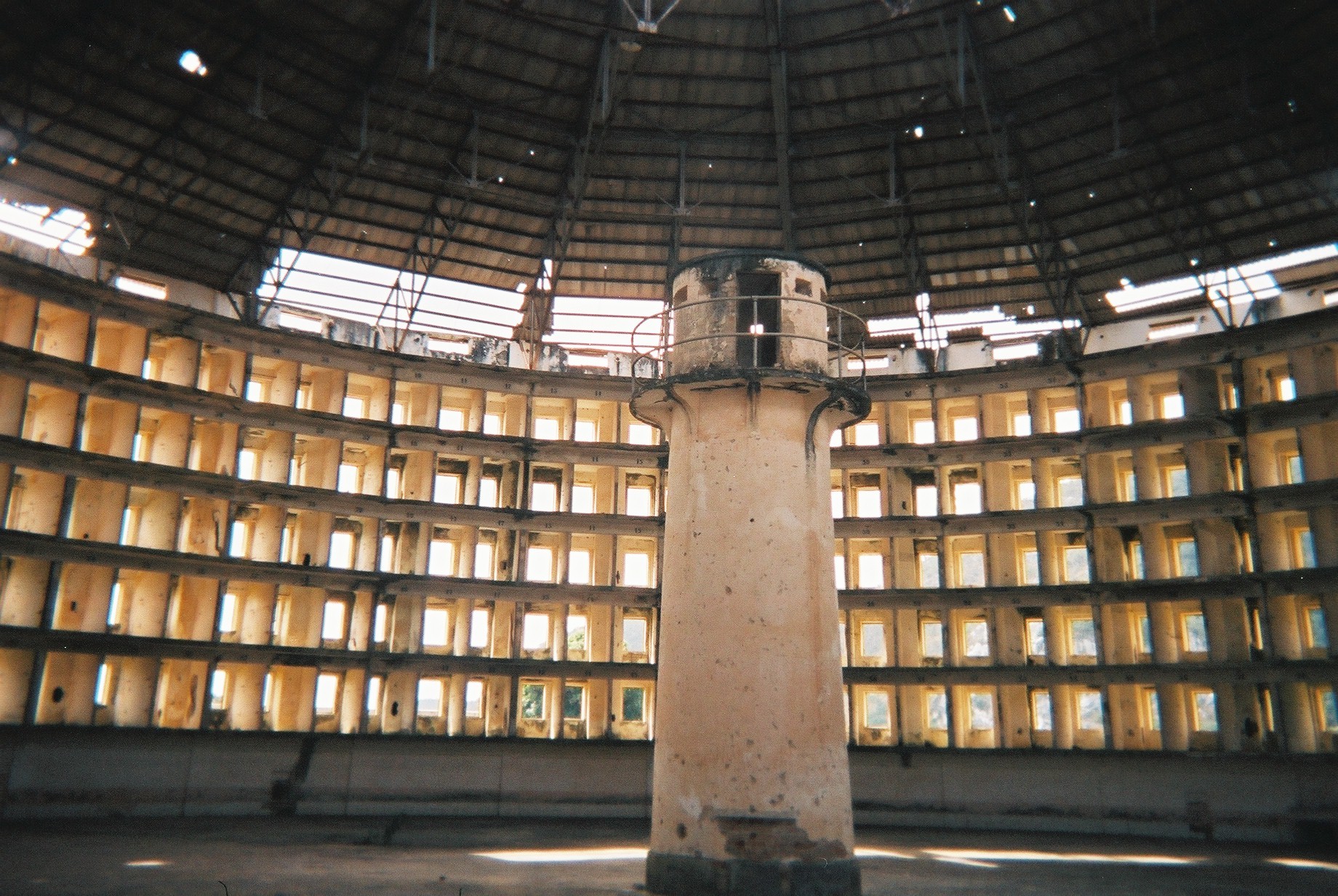
The concept behind all this goes back to the Panopticon, a hypothetical prison where the prisoners know that the guards are constantly watching them, but can’t actually see any of the guards themselves.  Proposed by the British philosopher Jeremy Bentham in the 1700s, the idea is to disempower the prisoners and empower the guards simply through the act of surveillance.  If everything you do can be seen, and you don’t know exactly who’s watching, that puts a tremendous amount of social pressure on you to conform.  As Michel Foucault put it:

The Panopticon creates a consciousness of permanent visibility as a form of power, where no bars, chains, and heavy locks are necessary for domination any more.

But if the prisoners are the citizens, and the guards are the government, how can such a system ever be democratic?  How can the citizens of such a society ever give their informed consent?  Well, that’s kind of the point.  The government in dystopian stories is rarely democratic–it’s usually a dictatorship of some kind, or a system that turns well-meaning people into Knights Templar, showing how even the best of us die like animals when the game is rigged.

As benevolent the intentions of the government may initially be, it is nonetheless true that power corrupts, and absolute power corrupts absolutely.  Just as the Panopticon takes power from the prisoners and concentrates it with the guards, so does universal surveillance grant dangerous amounts of power to the government–not because the act of surveillance is dangerous in itself, but because it brings out the worst in the people doing the surveillance.

In The Road to Serfdom, Freidrich Von Hayek pointed out that self-serving, ambitious, power-hungry people tend to rise in government a lot faster than people who have others’ best interests at heart, especially when so much power is concentrated in the government.  That’s one of the biggest dangers of surveillance–and in stories where Sinister Surveillance is in play, the government has already passed that point.

I wish I could say that this trope is limited mostly to the realm of fiction, but unfortunately, that does not appear to be the case.  These days, it’s impossible to talk about surveillance without getting political, even on a blog dedicated to books and writing.  Because everything these days is online, it’s easier now than ever before for our governments to watch us.  And if Edward Snowden’s claims are even partially correct, that’s exactly what they’re trying to do.  Even more worrying are the indicators that they’re trying to do it in secret, such as this recent letter from Senators Wyden and Udall.  The United States government has lied to us in the past about the extent of the PRISM surveillance program, and it would appear that they’re continuing to do just that.

Wherever you fall politically on PRISM or the Edward Snowden case, I think that Sinister Surveillance is a trope that we should all find profoundly disturbing.  When George Orwell took this trope to its extreme logical conclusions in 1984, he did so to prevent that horrific social order from ever coming to pass.  I wonder: only two or three generations after that book came out, have we forgotten its lessons already?  Or do we need a new retelling to remind us?  I fear that that retelling is taking place, not in the pages of a novel, but in real time on the major blogs and news sites.

The Legend of Deathwalker by David Gemmell

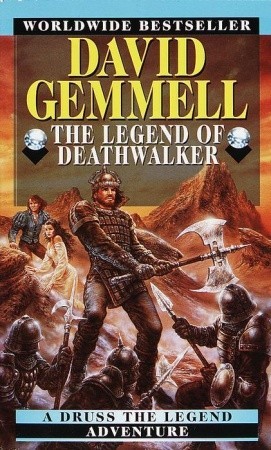
legend_of_deathwalkerI’m not even going to try to write a synopsis of this story.  It’s just like all the other books in the Drenai series, which is why I love it so much.  Basically, this one gives the story behind the rise of Ulric, khan of the Nadir, and the origin of the Nadir people.  Interestingly enough, Druss the Legend plays a major role.
This was the last book in the Drenai Saga that I hadn’t read, so reading it was a very bittersweet experience.  On the one hand, this one is just as good as all the other books in the series, and made me want to revisit Legend and some of the others.  On the other hand, I knew that once I’d finished it, there wouldn’t be any more Drenai books left.  So I took it slow for the first half, but naturally I finished it at a breathless late-night sprint a day or two later.

I’ve been thinking a lot lately about why I love David Gemmell’s books so much.  There are many reasons, but I think the main reason is that his writing is honest.  He strips away all the incidental stuff and gets right at the heart of the stuff that matters.  He doesn’t pussyfoot around, either–if his characters do something despicable, he doesn’t make any excuses for them.  He tells it like it is.  This can make for a very brutal story, but it also makes for a very cathartic one.

The other reason I love his books so much is because he does such a good job depicting raw, unrepressed manhood–not the stupid stuff like driving big cars and eating meat, but manning up and facing your greatest fears.  It’s about friendship, and honor, and fighting with all of your strength for something you believe in.  It’s about all that raw, pent-up energy we all have, that animal urge that drives us to competitive sports and first person shooters, and channeling it for a heroic cause.

The craziest thing is that the fight itself is actually more important than whatever side the characters are fighting on.  In this book, Druss is actually fighting to help bring about the rise of the Nadir khan who later invades his homeland and kills him on the walls of Dros Delnoch.  None of that matters, though, because Druss doesn’t fight with malice.  For him, it’s all about fighting for something, not against something, and the battle itself is just as important as the victory.  I don’t think I can put it better than this:

“Can we win here?” Sieben asked, as the shaman’s image began to fade.

“Winning and losing are entirely dependent on what you are fighting for,” answered Shaoshad. “All men here could die, yet you could still win. Or all men could live and you could lose. Fare you well, poet.”

The best thing about David Gemmell’s books is the fact that none of the characters–not even the bad guys–are defined by their own evil.  The Nadir are supposed to be the evil chaotic race of the Drenai universe, but when you come to understand what they’re fighting for, their hopes and dreams for a better future, you can really see what’s good in them.  Likewise, the more civilized Gothir are kind of like the evil white men who want to put down the savages and keep them in their place, but there are good and honorable men among them too.

And yet, even though the two sides clash, and good men die on both sides, it somehow isn’t tragic.  That’s the crazy part.  It’s almost like you can feel the characters salute each other as they die in a good cause, the way Ulric gave Druss a proper funeral in Legend, even though the two were blood-sworn enemies.  In David Gemmell’s world, honor and courage are more important than life or money.  Everyone dies; dying well is more important than living without honor.

This book is incredible.  As I was reading it, I decided it was the best David Gemmell book I’ve ever read–which is something I do every time I read one of his books.  I feel like I’m a better man for having read them.  If he had written a hundred books in this series, I would happily read them all.  The fact that there are no more new ones deeply saddens me, but I know I’ll revisit these stories again in the future.

E is for Empire

terran_empireAlmost every far future science fiction story has a galactic empire of some kind.  From Dune to Foundation, from Star Wars to Firefly, there’s always someone trying to rule the galaxy, often in a way that makes life difficult for the protagonists.

Why?  Rule of drama, of course, but also because it gives the story a truly epic scope.  Just as the classics such as Homer’s Iliad and Tolstoy’s War and Peace are as much about entire civilizations as they are about the people characters within them, so it is with science fiction, especially space opera.  Combine that with science fiction’s forward-thinking nature, and you have the potential for some truly amazing stories about humanity’s destiny among the stars.

But why empire?  Because even if we make it out to the stars, we’ll probably still take with us all of the baggage that makes us human.  Science fiction may be forward looking, but history repeats itself, and you can’t have a clear view of the future without understanding and acknowledging the past.

Not all galactic empires are evil, but most of them are.  We shouldn’t have to look further than the real-world history of Imperialism to see why.  Oppression, exploitation, slavery, genocide–all of these have been done in the name of Empire, and many more evils besides.  Even benevolent hegemonic powers (such as, I would argue, the United States of America) often end up doing great harm, either through action or inaction.

Of course, all of this makes for some really great stories.  When Asimov wrote his Foundation series, he quite literally based it on The History of the Decline and Fall of the Roman Empire by Edward Gibbon.  When Frank Herbert wrote Dune, he drew extensively from his background as an orientalist and based the overworld story on the Muslim conquests of the 7th and 8th centuries.  Star Wars is based loosely on the collapse of the Roman Republic, and Firefly echoes many of the old Western tales of former Confederate soldiers heading west after the US Civil War.

It’s worth pointing out that the Galactic Empire is by no means the only form of political organization in space opera.  There are actually several, including:

  • The FederationA loose organization of stars and planets that usually exists to foster cooperation and mutual peace between galactic civilizations.  Rarely evil, but can be crippled by red tape.
  • The RepublicA more centralized version of the Federation, typically.  Exercises more control over its citizens, but not in an oppressive way.  Usually features some form of representative government.
  • The AllianceA team of political underdogs united to overthrow the Empire and establish a more just form of government in its place.  If they win, they usually become the Republic or the Federation.
  • The KingdomA smaller government within the larger political system, often struggling for survival against more powerful forces. Not always democratic, but is often good, at least to its own citizens.
  • The Hegemonic EmpireLike the Empire, but rules primarily through soft power, ie co-opting their enemies rather than crushing them.  May overlap with the Republic or the Federation.
  • The People’s Republic of TyrannyThe Empire pretending to be the Federation.
  • The Vestigial EmpireWhat the Empire becomes when it’s been defeated but not yet destroyed.  Still oppressive and evil, but rules a smaller territory and struggles for relevance and survival.
  • The RemnantAn element from the Alliance that’s gone rogue.  The war may be over, but these guys are still fighting it, even if they’ve lost sight of what they’re fighting for.
  • The HordeA highly aggressive and expansionist warlord state.  By far the most violent and brutal of any political organization, it seeks to conquer and subjugate the entire galaxy.

As a political science major, all these forms of government really fascinate me.  I’ve played with quite a few of them, especially the Horde (Bringing Stella Home), the Empire (Desert Stars), the Hegemonic Empire (Star Wanderers), the Kingdom (Stars of Blood and Glory), and the Remnant (also Stars of Blood and Glory).  You can definitely expect to see me play with them again in the future.

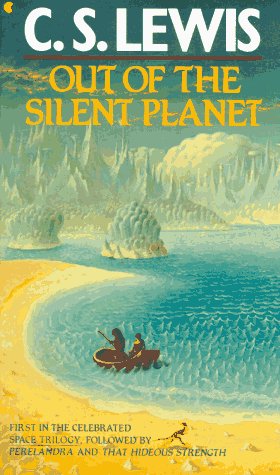
Out of the Silent Planet by C.S. Lewis

out_of_the_silent_planetWhen Doctor Elwin Ransom went on a spontaneous walking tour of rural England, he wasn’t expecting to be kidnapped by a mad scientist and taken to Mars.  He soon escapes, only to find himself lost without any way to return home.

Fortunately, the native Martians soon take him in, teaching the otherworldly stranger of their peaceful, utopian ways.  They are just as astonished to have a visitor from Earth as Ransom is astonished to be their guest.  To them, Earth is a silent planet–the only world with no spiritual connection to the rest of the universe.

The more Ransom learns about the gentle people of Mars, the more he realizes that something evil lurks in the heart of our world–and that contact between the worlds can only hasten the showdown between the forces of good and evil.

I decided to read this book after chatting with Norman Cates at Worldcon 2011, following the “When Faith and Science Meet” panel.  Some fascinating questions had popped up toward the end, especially regarding science fictional universes that are not incompatible with millenialist religions.  Norman asked if I’d read C.S. Lewis’s Space Trilogy, and when I said that most people had told me it isn’t as good as Lewis’s other work, he kind of rolled his eyes and said that it was worth checking it out and deciding for myself.

Well, I didn’t get around to reading it until this summer, but I’m glad I did.  It’s a short read, no more than 180 pages or so, and I finished it in a couple of days.  The world it describes is quite fascinating–a fantastical version of Mars that I’d actually like to visit, perhaps even more than Bradbury’s and Burrough’s.  The kidnapping in the beginning was compelling enough to hook me, but it was the immersive feel of the world that really made the book for me.

This being C.S. Lewis, the more spiritual and allegorical elements of the story lie fairly close to the surface, but it didn’t detract much from the reading experience for me.  It became fairly obvious towards the end that the whole story is basically an attempt to incorporate the Christian millenialist mythos into a mainstream science fictional setting, which is probably where most of the criticism comes from.  If you know that up front, however, and are willing to go along with it, it shouldn’t take much away from the story.  In fact, that might just be what draws you to it.

It’s interesting, because Orson Scott Card tried to do something very similar with the story of Lehi in his Earthbound series, and I think he actually failed where Lewis succeeded.  When I read A Memory of Earth, I felt that Card actually lost the best parts of both the Book of Mormon mythos and his own science fictional world by trying to force them together.  In contrast, Out of the Silent Planet feels much more coherent and compelling, and not artificial at all.

I do feel like things sped up a bit too much at the end, though.  The experience became a little less immersive for me when Lewis went from describing the alien world to bringing the millenialist themes to the forefront.  It’s almost as if the focus of the book itself shifted, and that was a little bit jarring.  I’m a big fan of metaphor, but allegory is a more difficult pill for me to swallow.

That said, I enjoyed the book, and am definitely interested in finishing the rest of the trilogy.  It’s got a lot of merit to it, and is definitely worth checking out no matter what the critics may say.

Trope Tuesday: Hoist By His Own Petard

One of the most satisfying ways to defeat the villain is to have his own nefarious scheme bring about his downfall.  In Hamlet, Shakespeare described this as “hoist by his own petard,” or blown up by his own bomb.  Basically, it’s a self-deposing villain whose evil plans have gone horribly right.

Not only is this a delicious form of death by irony, it’s also a satisfying way to show cosmic justice in action while allowing the heroes to keep their hands clean.  When done best, the villain keeps the tension notched up to eleven and only commits his fatal mistake after the heroes have made their last stand.  Bonus points if the petard takes the form of a minion who decides to switch sides.

Perhaps unsurprisingly, you’ll often find this trope in stories geared towards a younger audience, which generally try to avoid messy endings and shades of gray.  In some ways, it almost resembles a Disney Villain Death, in that the heroes often come out with clean hands and an unambiguously clear conscience.

However, this isn’t always the case–sometimes, it’s precisely because of the shades of gray that the villain’s plans become self-defeating.  Case in point, Pride and Kimblee from Fullmetal Alchemist: Brotherhood.  You’d think that both characters are totally evil–and perhaps they are–but that doesn’t stop the one from undermining the other at just the right moment.

When done right, this is an incredibly satisfying way to defeat a bad guy.  When done poorly, however, it undermines the villain altogether, or turns the story into just another Aesop.  As always, your mileage may vary, so when writing one of these stories it’s important to keep your audience in mind.

In my own books, it’s probably more common for this to happen to the heroes, which probably makes it a form of Two Rights Make A Wrong or Nice Job Breaking It, Hero.  I do enjoy hoisting the villains as well, though, and will almost certainly use this trope in the future.

Trope Tuesday: True Neutral

The True Neutral is something of an enigma.  They generally take no side, either because they have moved beyond good and evil, or because they simply don’t see good and evil the way we do.  Or because this isn’t their war and they just want to be left alone.  Or…well, let’s get to it.

From the easydamus character alignment page:

A neutral character does what seems to be a good idea. She doesn’t feel strongly one way or the other when it comes to good vs. evil or law vs. chaos. Most neutral characters exhibit a lack of conviction or bias rather than a commitment to neutrality.

Some neutral characters, on the other hand, commit themselves philosophically to neutrality. They see good, evil, law, and chaos as prejudices and dangerous extremes. They advocate the middle way of neutrality as the best, most balanced road in the long run.

As you might expect, this alignment doesn’t describe just one type of character.  In fact, there are many different archetypes that fall under True Neutral.  They include:

That’s quite a spread, isn’t it?  The main thing to keep in mind is that these are the characters who refuse to take sides–not just in whatever overworld conflict is driving the story, but in the ethical questions that the story raises (unless neutrality itself is their answer).

My favorite example of this trope is the Childlike Empress from The Neverending Story.  As the very embodiment of Fantasia, she transcends good and evil so completely that her power, the Auryn, cannot be used to forbid a monster from acting on its own evil nature.  Truth from Fullmetal Alchemist is another good example of a transcendent True Neutral.

With everyday, down-to-earth characters, though, this alignment tends to tick me off.  The Ents, for example, very much fall under this trope (as does Tom Bombadil…unless you subscribe to this theory).  Most others examples either come across as weak, selfish, or cowardly to me, so I don’t really care much for this alignment–unless it’s the starting point of a well-constructed character arc.

For that reason, in my own work, most True Neutrals are either straight-up antagonists or gradually shift in alignment as the story progresses.  In Genesis Earth, Michael Anderson starts out as one of the weaker True Neutral types, but changes as events in the story make him grow.  In Desert Stars, Sathi probably falls into this type, though I’m not so sure; either way, he’s very easily manipulated by his Neutral Evil wife.  In Bringing Stella Home, Ilya falls under this alignment due to his moral cowardice, and Anya might as well, though more as a Selfish Good than anything else.  Roman probably does too, but more because he’s old and wants to give up the fight; that’s something I’m currently working on in Stars of Blood and Glory.

I haven’t done a transcendent True Neutral yet, but if I ever write a heroic fantasy tale with gods and demons, I probably will.  After all, if Michael Ende did it in my favorite novel of all time, how can I resist?

Trope Tuesday: Lawful Neutral

Hey, SOMEONE had to bring order to Europa.

Unlike the Lawful Good, the Lawful Neutral has no qualms about committing heinous acts to maintain order.  Whether for country, for position or for the preservation of the English language, these characters believe in law above all else, giving stern chase or sacrificing their own personal feelings to achieve it.

From the easydamus character alignment page:

A lawful neutral character acts as law, tradition, or a personal code directs her. Order and organization are paramount to her. She may believe in personal order and live by a code or standard, or she may believe in order for all and favor a strong, organized government.

Interestingly, while Lawful Neutrals believe in upholding some form of law, it doesn’t always have to be the law.  Characters who follow a strict personal code of honor often fall under this alignment, even if that code of honor runs contrary to the law of the land.  The most extreme example of this is the Übermensch, who transcends the laws of society and becomes a law unto himself (though in a lot of cases, the Übermensch ends up being Lawful Evil).

While it may seem like most Lawful Neutrals would be antagonists, that’s not always the case.  In Fullmetal Alchemist, General Olivier Armstrong may be stern and austere, but she spends most of the story on the side of the good guys.  And in Girl Genius, Klaus might seem like a bad guy at first, but really, he just wants to restore order and defeat the Other.  Both Death and Lord Vetinari in the Discworld series are also Lawful Neutrals, but they’re never on the bad guys’ side or the good guys’ side…they’re neutral.

In my own work, the best example of this would probably be the Patrician from Heart of the Nebula. I haven’t published this one yet, but I hope to have it out later this year.  Abaqa from Stars of Blood and Glory is another good example, the son of Qasar and Sholpan.  But in the works I’ve already published, Ben from Bringing Stella Home is probably the most prominent Lawful Neutral.

Trope Tuesday: Neutral Evil

Have you ever encountered a villain who you just hated? One who only cares about himself (or herself), who has no real loyalties and will sell out his friends, or even his master?  One who treats people as means to an end, and will use whatever means necessary to achieve those ends?  Chances are, that villain is a Neutral Evil.

From magnificent bastards to dirty cowards, from card carrying villains to seductresses and bounty hunters, this character alignment can take many different shapes and forms.  The one thing they have in common, however, is that they’ll do just about anything to further their own evil ends–including pitting the other villains against themselves.  Like the Chaotic Neutral, the Neutral Evil always looks out for #1–though entirely out of pure selfishness, as opposed to a love for free will and individuality.

From the easydamus character alignment page:

A neutral evil villain does whatever she can get away with. She is out for herself, pure and simple. She sheds no tears for those she kills, whether for profit, sport, or convenience. She has no love of order and holds no illusion that following laws, traditions, or codes would make her any better or more noble. On the other hand, she doesn’t have the restless nature or love of conflict that a chaotic evil villain has.

Of all the alignments, Neutral Evil can be the most dangerous because characters with this alignment have no qualms about doing whatever needs to be done to achieve their evil goals.  However, characters with this alignment also tend not to become evil overlords, because they backstab each other too much and don’t have what it takes to run a large organization.  Within their limited spheres of influence, however, they can be deadly.

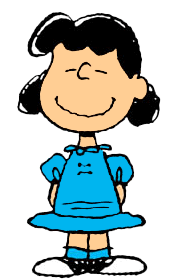
There are a lot of Neutral Evils who I love to hate, but Lucy van Pelt from Peanuts is definitely near the top of the list.  Saruman is another one, though he’s less of a magnificent bastard than Sephiroth (Why did you have to kill Aeris?  WHY???).  And of all the Neutral Evils, Voldemort is probably the most ambitious.

In my own works, my favorite Neutral Evil would have to be Shira from Desert Stars.  Man, I hated her so much…once I got her character down, it was a real joy to write. 🙂 From Bringing Stella Home / Sholpan, Borta is definitely a Neutral Evil.  Qasar leans more to the lawful side, while Gazan leans to the chaotic, but Borta is squarely neutral–and she’s vicious.  Genesis Earth and Star Wanderers, however, are generally feel-good stories, so they don’t really have anyone with this character alignment.

Trope Tuesday: Neutral Good

Arguably the best of the good-aligned characters, the Neutral Good can always be counted on to do the right thing, whether that means working within the system or rebelling against it.  Whether young or old, soft or shrewd, nice or not so nice, these are the guys (and girls) most likely to save the world and defeat the enemy with love.

From the easydamus character alignment page:

A neutral good character does the best that a good person can do. He is devoted to helping others. He works with kings and magistrates but does not feel beholden to them.

The Neutral Good is not devoid of weaknesses, of course.  Although they are devoted to good, their lack of commitment to law means that they are not always willing to enforce it.  Also, for those who just want to get things done, this alignment can be somewhat limiting, in the way that a commitment to any higher ideal usually is.

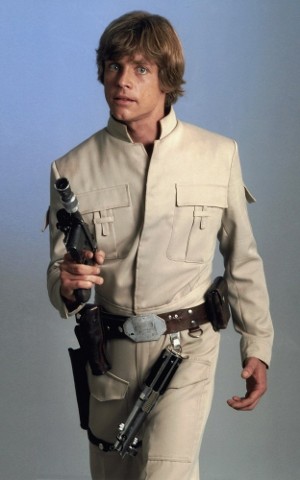
Interestingly, this is a very common alignment for heroes in space opera stories.  Case in point, Luke Skywalker: even though he’s young and reckless, he’s not above learning the ways of the force and joining the Jedi order.  Miles Vorkosigan from Lois McMaster Bujold’s Vorkosigan series also falls squarely into the Neutral Good camp.  Moving on to manga and webcomics, Alphonse and Winry from Fullmetal Alchemist both fall under this alignment, giving balance to Edward’s more chaotic outbursts.  Agatha from Girl Genius is also a Neutral Good…at least, when there aren’t any wrenches nearby.

There are quite a few characters with this alignment in my own work.  Even though she’s a mercenary captain, Danica from Bringing Stella Home falls squarely into this alignment; she’s got a tough outer shell, but she’ll do anything for her men, even…well, I don’t want to ruin Stars of Blood and Glory. 😉 Also from Bringing Stella Home / Sholpan, Stella is solidly Neutral Good, which is part of why the ending is so deliciously twisted.  In Star Wanderers, Jeremiah falls into this alignment mostly through default, which is good for Noemi because the circumstances of the novel put her totally at his mercy.  And in Desert Stars, this is probably Mira’s alignment, though she’s easily manipulated by her Neutral Evil mother.

What can I say?  I’ve got a soft spot for Neutral Goods.  Considering how well this kind of a hero fits in to a classic space adventure, it shouldn’t come as any surprise.