2019-09-19 Newsletter Author’s Note

This author’s note originally appeared in the September 19th edition of my author newsletter. To subscribe to my newsletter, click here.

It’s September, which means (among other things) that it’s time to revisit my business plan and update it for the next year. Every January 1st, I print out a new and revised copy of my business plan, which provides a great opportunity to evaluate my efforts and hone in on the things I need to do better.

For the last couple of weeks, I’ve been working on the section titled “What I Write.” In this year’s business plan, it was a pretty straightforward breakdown of all of the series in my catalog. But for next year, I took a few steps back to address things like what is a Joe Vasicek book? or what are some of my books’ recurring themes? or what kind of science fiction and fantasy do I write specifically, and how does my work contribute to the genre?

The exercise really got me to think about why I write. In the day to day life of a writer, it’s very easy to lose sight of the forest for the trees. Deadlines and daily word count goals keep the focus on the page right in front of you, and when you do think ahead it’s usually just to the next chapter. But without taking time to step back and look at the bigger picture, it’s easy to lose that creative drive, or settle for second-rate work.

So what is a Joe Vasicek book? I hope it’s a book that’s memorable and meaningful. It may be dark, but never dismal. It may push you out of your comfort zone, but it also leaves you feeling rejuvenated and inspired. It features interesting characters wrestling with complex ethical dilemmas and struggling to do the right thing as best as they know how.

What are some of my books’ recurring themes? The balance between liberty and responsibility is a huge one. Actions have consequences, and true liberty is taking ownership of those consequences as well as your actions. Another is the sanctity of sex, contrasting selfish gratification with the affirmation of commitment and love. The yearning for God is another recurring theme, with a great deal of religious diversity in the starfaring civilizations of my books. Another theme I keep coming back to is the call of the frontier.

I’m curious, though, to hear what you guys think. What do you think makes a Joe Vasicek book? What tropes or recurring themes have you enjoyed in my books? As a writer, I’m often too close to my own work to see what’s obvious to everyone else. What do you think is my biggest contribution to the genre?

Will A Song of Ice and Fire stand the test of time?

A while ago, I wrote a blog post titled Why I don’t like George R.R. Martin, in which I laid out some of the issues I had with the Song of Ice and Fire series, and why I decided not to read past the first book. That post has been getting a lot of traffic lately, probably because the last season of Game of Thrones is coming out and there’s a lot of hype right now about it.

At FanX a couple of weeks ago, I attended an interesting panel with Steve Grad from Pawn Stars on the do’s and don’ts of collecting. On that panel, he expressed some skepticism that Game of Thrones signatures and collectibles would hold their value over time. This made me wonder: will the books this TV series is based on stand the test of time?

Full disclosure: I have only read the first book, A Game of Thrones, and have not watched any episodes of the miniseries. I’ve watched a few of the more important scenes on YouTube and occasionally follow discussions about it on online forums. After reading the first book, I decided that this series was not the sort of thing I wanted to watch or read. See the blog post linked above.

People have been calling George R.R. Martin the American Tolkien for years now, but I’ve always been skeptical of that claim. Tolkien’s books are timeless because they are so archetypal, with the classic struggle of good vs. evil permeating every page. In contrast, Martin rejects the archtypes of good and evil for a nihilistic black-and-gray morality, where there are no heroes, only victimizers and victims.

Why, then, is A Song of Ice and Fire so popular? First of all, because the writing and storytelling really are top notch. For all my criticism of George R.R. Martin, I fully recognize that he is a master. But there are a lot of excellent, masterful books that never capture the public imagination quite like Game of Thrones and A Song of Ice and Fire. What, then, makes Martin’s work so different?

I believe it’s because George R.R. Martin has struck a nerve with the current zeitgeist, and scratches a uniquely contemporary itch in a way that none of the great works by the old masters can. What is that zeitgeist? It is spirit of a culture in the late stages of decadence, where wealth disparity, big government, endless wars, easy credit, runaway debt, moral decline, and corruption are the defining aspects of the age.

In a world where, in so many ways, we are shielded from the consequences of our own actions, morality becomes irrelevant and entertainment shifts to serve our basest, most carnal lusts. In such a world, we turn to nihilistic stories like Game of Thrones, which are saturated with sex and violence. They reinforce the view that good and evil don’t exist, that honor and integrity are for fools, and that wealth, power, and sexual indulgence are all ends in themselves. “Eat, drink, and be merry, for tomorrow we die, and it shall be well with us.”

At the same time, these stories satisfy a deep sense of self-loathing that arises out of the very nihilism that they celebrate. In those few moments when we are honest with ourselves, the decadence of our age profoundly disgusts us. As Haruki Murakami put it, “secretly everyone is waiting for the end of the world.” That is exactly what stories like Game of Thrones give us: gleeful destruction and total collapse, with blood, fire, ice, and steel. No one is safe. Anyone can die, even our most beloved characters. Winter is coming.

Every empire collapses, however, and every age of dedadence comes to an end. The very nihilistic elements that make stories like A Game of Thrones so appealing ultimately cause them to fall away and vanish, along with the culture itself. To stand the test of time, stories must be built upon archetypes that transcend the spirit of the age, rather than indulge it. Does George R.R. Martin do this? I don’t believe that he does.

A Song of Ice and Fire has an added disadvantage in that the TV series has overtaken the books. How many people will simply give up on the books after watching the season 8 finale? A Dance with Dragons averaged a 2.9-star rating on Amazon the year it came out, with thousands of reviews. It takes George R.R. Martin so long to write these books that it’s already become a meme, and his health isn’t all that great.

Personally, I think we’ve already reached peak George R.R. Martin. The season 8 finale will be an enormous affair, but after that the show’s popularity will steadily decline, and the books will not renew the public interest. I still think the books will do well compared to other books in the fantasy genre, but compared to previous installments, I think the Song of Ice and Fire series will go out with a loud and plaintive whimper.

A generation from now, when the current age of decadence is over and our children and grandchildren are rebuilding the world, I believe they will look at these books and scratch their heads—if they even bother to read them at all.

Extra Sci-Fi S3E4: The Return of the King

Okay, I think the folks at Extra Credits got it wrong with this one in a really big way.

Gollum didn’t redeem himself. That’s the entire point. Redemption is an important and very Christian theme of Lord of the Rings, but so is the problem of evil. Several comments on the video point this out:

I disagree about Gollum. He gave into the temptation of the Ring. I think more he is there for how God can turn evil into a good.

MJBull515

Gollum is more a Judas figure. Judas was not redeemed for betraying Jesus, but his evil actions did allow for the salvation of Man through Christ’s sacrifice.

Isacc Avila

“A traitor may betray himself and do good he does not intend.” Judas betraying Jesus was the catalyst that led to salvation. Gollum’s final act of greed was the catalyst that led to the destruction of the Ring.

Jet Tanyag

The thing that really gets to me, though, and the part where I think the folks at Extra Credits really do a disservice to these books, is how they argue, very subtly, that Gollum shouldn’t be held responsible for his own actions, that it wasn’t really his fault that he was addicted to the ring—that he “couldn’t escape his own sin.” (4:50)

No. Just, no.

The entire point of redemption is that we CAN escape from our sins. We see that with Theoden, we see that with the Dead Men of Dunharrow, and we see that in all the other examples of redemption that were not discussed in this video, like Boromir. In fact, Boromir is a far better example of “redemption through a single, all-important act.”

But it goes much deeper than that. In order to be meaningful, sacrifice must be intentional. It’s not just the act that matters, but the intention behind the act.

With that in mind, consider Gollum’s intentions when he bit off Frodo’s finger. The only way you can argue that his intentions weren’t evil is that the Smeagol half of his split-personality overcame the Gollum half, and flung him into the lava. But the support for that reading is ambigous at best. And if that isn’t true, and Gollum simply fell into the lava by accident, then it wasn’t a sacrifice on his part, and therefore there was no redemption.

To say that Gollum made an “accidental” sacrifice is nonsense. And to say that he redeemed himself through that sacrifice is not only a faulty argument—it completely undermines the themes of redemption and sacrifice throughout the entire book.

Gollum was never redeemed. Through him, Middle Earth was saved, but he was never personally redeemed, and that’s the point:

I’ve heard a different interpretation where Gollum’s sacrifice wasn’t an act of redemption, and was never meant to be. In the end, it was the ring’s own power that caused it to be destroyed; not Frodo, not Gollum, it was an accidental suicide. As far as I understand it, the message wasn’t “good triumphs over evil”, instead it was “evil is more powerful than good, but all it can do is destroy; in the end it will always destroy itself”.

EvilBarrels

Would you kill baby Hitler?

So the March for Life happened recently, and Ben Shapiro did a live show where he used a thought experiment about going back in a time machine to kill baby Hitler to make a pro-life argument. His argument was that you shouldn’t kill baby Hitler; instead, you should raise baby Hitler in a more loving home so that he doesn’t grow up to be Hitler. In other words, you shouldn’t kill baby Hitler because babies are always innocent, and killing babies is wrong. Fair enough.

But the left immediately went crazy over this argument, calling Shapiro a nazi for defending Hitler, or just making fun of him for coming up with such a ridiculous idea. Never mind that it’s a thought experiment. Never mind that it raises valid moral and ethical questions, which those on the far left refuses to address.

Everything you need to know about this controversy is basically summed up in the video above, where Sargon of Akkad does a point-by-point critique of The Young Turk’s cringeworthy reaction. At this point, Sargon’s video has more views than TYT’s original video, and YouTube is deleting downvotes on the original.

I think Sargon is right. I think that Ben really hit a sore spot on the left, because they’d all kill baby Hitler if given a chance, and they don’t want to admit it. Not only is it bad optics, but it also points out the lack of moral foundation or principles on the far left. After all, if they’d go so far as to kill a baby, simply because of what that baby might turn out to be, what else are they going to do?

For the left, Nazis aren’t merely on the extreme end of the scale of good and evil; they are the scale. This is what gets to me. Black Pigeon Speaks put out a video on YouTube that has since been taken down, because it is true, and because it gets to the heart of this issue. Civilizations always have founding myths, which accomplish three things:

  1. they tell the civilization’s origin story,
  2. they define, in cultural terms, the difference between good and evil, and
  3. they describe what the civilization holds to be sacred.

For example, traditionally in the United States, our founding myth has to do with the founding fathers, the Constitution, and the Revolutionary War. Our civilization was founded by pilgrims and pioneers, who lived under British rule until the King became tyrannical and we rose up to declare our independence. In cultural terms, good and evil are set out clearly in the Declaration of Independence, the Constitution, and the Bill of Rights. The thing we hold most sacred is our liberty.

You can also see this reflected in our coinage:

  • E Pluribus Unum — “from one, many,” harkening back to the Revolutionary War and our civilization’s origin story.
  • In God We Trust — recognizing the Judeo-Christian values that informed our founding documents, including the Constitution and Bill of Rights.
  • Liberty — the thing that American civilization holds most sacred.

In the Black Pigeon Speaks video which has since been taken down, he argues that Western civilization adopted a new founding myth after World War II, and that this new founding myth is responsible for much of the cultural and moral decay we’ve experienced in subsequent decades. In this new myth:

  • our civilization was born out of the horror and devastation of the world wars,
  • Nazism became the definition of evil, and
  • the Holocaust became the most sacred aspect of our civilization.

The Nazis were clearly evil. I’m not disputing that, or the reality of the holocaust. Killing six million Jews, Roma, Jehovah’s Witnesses, political dissidents, and mentally and physically handicapped in gas chambers designed specifically as engines of mass genocide is incredibly heinous, on a scale that is difficult to comprehend. There is no downplaying or excusing that kind of horror.

But without defending the Nazis in the slightest, that doesn’t make them the most evil regime in history, or even the most evil regime of the 20th century. Stalin was just as genocidal, possibly even more so, and I would argue that he was worse than Hitler. Mao was arguably worse than both of them.

Hitler wasn’t just a monster: he was a man, like any of us. Jordan Peterson is right: we should never make the mistake of thinking that we’re morally superior to the Nazis, because if we were in similar circumstances, we’d probably make similar choices. That’s simply the reality. Hitler isn’t the boogeyman, and the Nazis are not the definition of evil. They fall on an extreme end of the scale of good and evil, but we should never mistake the Nazis for the scale.

Which brings us back full circle to the pro-life argument. How do we know that we aren’t more evil than the Nazis? The Nazis exterminated the Jews out of fear and hatred, but we’re killing our own babies in many cases out of nothing more than apathy. The Nazis at least believed that the Jews were behind the collapse of German civilization, and used that argument to justify their argument that Jews were non-people. What argument do we use to justify treating the unborn as non-people? Certainly not a scientific argument. And we’ve aborted ten times as many victims of the Holocaust, so it’s not like the Nazis were worse in terms of scale.

I genuinely believe that future generations will look back on us with the same horror and revulsion that we look back on the Nazis. And honestly, I can’t say they’ll be wrong.

So would you kill baby Hitler? It’s a valid question that raises some very important points. Not only would I not kill baby Hitler, but I wrote a short story about a time traveler who stopped Hitler not by killing him, but by altering the course of history in a very different way. If you haven’t already, you should check it out: “Killing Mister Wilson.”

Anyways, those are my thoughts on the subject. Also, TYT has hit a new low for cringe. I suppose that’s par for the course when your network is named after a genocidal regime.

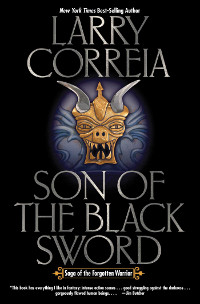
Son of the Black Sword by Larry Correia

This was a damn good book. One of the best epic fantasy books I’ve read. I started listening to it on the Baen Free Radio Hour, where it’s currently being serialized, and decided to pick up a copy. It did not disappoint.

This book reminds me of Brandon Sanderson’s Mistborn, in the sense that it takes place in a dystopian fantasy world where things didn’t turn out all that well after the hero of prophecy saved the world. It’s not difficult to imagine that after hearing Brandon pitch his book, Larry turned to the guy next to him and said “hold my beer.”

That said, Son of the Black Sword is very different from Mistborn. For one, it’s brutal and violent in a way that Mistborn never was. I wouldn’t exactly call it grimdark, since there is still an underlying sense of honor, and even a fair bit of optimism if you dig deeply enough.

However, you really can tell that Larry gets the kind of person who does terrible, violent things for a living. He knows how those people think, he knows how they see the world, and he knows how they interact with each other. He also knows what world dominated by those people looks like, which is definitely the world of Son of the Black Sword.

More than that, Larry understands and respects the relationship that exists between a warrior and his weapon. My favorite character was the sword Angruvadal, and I didn’t even realize it until the end. Angruvadal is a magic sword with a mind of its own, but it never really speaks or has any independent thought, other than whether its bearer is worthy and how best to serve its bearer if he is.

For me, the thing that makes or breaks a good fantasy book is whether the story is meaningful. I don’t really care for books that preach, but I don’t like books that are nihilistic and cynical either, which is why I never really got into George R.R. Martin’s A Song of Ice and Fire. Son of the Black Sword scratches that same itch for dark and gritty fantasy, but there’s still a sense of meaning beneath it all. Good doesn’t always triumph over evil, but the author still acknowledges that good and evil exist within the hearts of the characters.

I am so freaking excited to read the next book!

Trope Tuesday: Knight in Sour Armor

What happens when the knight in shining armor realizes that war is hell and he lives in a crapsack world? When everything he believes about morality and honor is shattered?

Does he suffer a heroic BSOD and become a shell shocked veteran?

Does he cross the moral event horizon and become the one who hunts monsters?

Does he turn lawful evil and become the knight templar?

Or does he put on his jade-colored glasses, pick up his sword, and soldier on?

It’s one thing to follow a code of honor when you believe that people are basically good. It’s another thing entirely when you realize that people are filthy scumbags. Yet we often mistake starry-eyed idealism for the real thing. Underneath his hardened and deeply cynical demeanor, the knight in sour armor is driven by honor and ideals far more than he lets on.

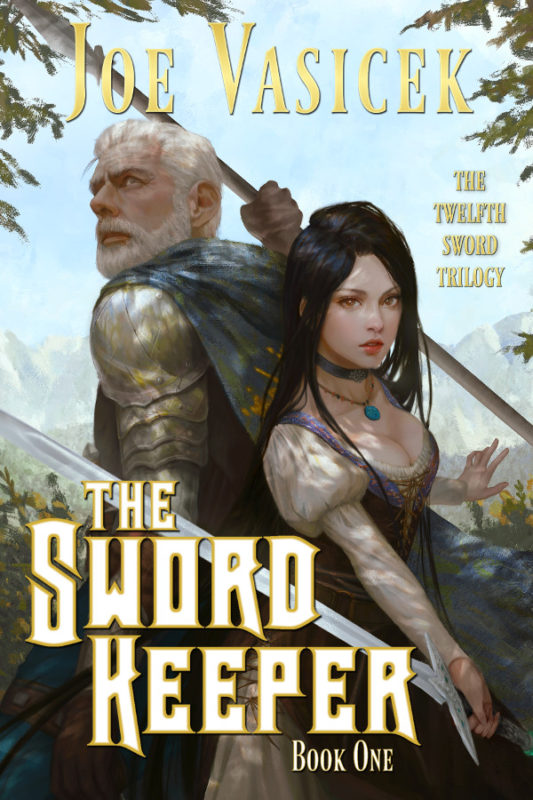
In The Sword Keeper, one of the viewpoint characters, Alex Andretzek, is a young warrior prince who has lost his kingdom. He’s pledged his life to the service of the sword Imeris, with the understanding that one day he will be the new sword keeper. Then Tamuna comes into the picture, and all of that suddenly changes.

The most aggravating thing for Alex is that he has no idea why the sword choose Tamuna over him. Was he not worthy, or has the sword chosen poorly? It’s hard for him to tell which one is worse.

Of course, there is a third option: that there’s some hidden quality in Tamuna that he doesn’t yet see. But the same sour armor that allows him to cope with the injustice of the world also fills him with doubts. It’s a difficult balance to strike.

Underneath it all, though, Alex is a good and honorable man. Without his sour armor, he would have given all that up years ago.

To me, Alex is the embodiment of the saying that you should assume that everyone you meet is struggling through the most difficult challenge of their lives. If you do, you’ll be right about half of the time. On the outside, Alex is cold, aloof, and even somewhat rude. But beneath his sour armor, the struggle is real.


The Sword Keeper comes out in 18 days! Preorder the ebook now!

The Sword Keeper

The Sword Keeper

$12.99eBook: $4.99
Author: Joe Vasicek
Series: The Twelfth Sword Trilogy, Book 1
Genres: Epic, Fantasy
Tag: 2017 Release

Tamuna Leladze always dreamed of adventure, but never expected to answer its call. That changes when a wandering knight arrives at her aunt's tavern. He is the keeper of a magic sword that vanished from the pages of history more than a thousand years ago. The sword has a mind and a memory, and it has chosen Tamuna for purpose far greater than she knows.

More info →

Playing with Tropes: Pragmatic Villainy

So as part of my effort to blog more often, I’ve decided to bring back the trope posts. If you’ve been reading this blog for a while, perhaps you remember the Trope Tuesday series that I used to do. Those were mostly just a rehashing of each trope’s tvtropes page, with a bit of commentary at the end. For this new series, though, I’m going to assume you’ve already read the page and are familiar with the trope, and focus on the commentary. I’m calling this series Playing with Tropes, and I’ll do a new post on the first and third Monday of each month.

To start off this new series, I’d like to take a look at Pragmatic Villainy. There’s something especially chilling about a villain who not only possesses power, but knows how to wield it too. In fact, one of the scariest villains is the guy who rises up the ranks through sheer ruthlessness and ambition, starting as an underling and rising to the top. These villains know how to inspire and manipulate their followers, how to use their limited resources efficiently, how to form secret alliances and backstab their enemies, and how to keep a strategic perspective while making brilliant tactical plays. It doesn’t matter whether they command an empire or whether all they’ve got is a cargo-cult following on some far-off backwater. No matter where you put them, these are the guys who are truly dangerous.

It’s worth pointing out that there are a lot of figures from history who fit this trope. A badass colonel when the French Revolution began, he took advantage of the chaos to rise to power, declaring himself emperor and restoring order to his broken country. He then took his armies and conquered nearly the whole of Europe and the Mediterranean, destroying the Holy Roman Empire, invading as far as Egypt and the Nile, and leading his troops through the gates of Moscow before suffering defeat before the Russian Winter. Ever the pragmatist, he developed the modern canning process in order to supply his troops with food. And even after the European powers crushed his armies and exiled him to the island of Elba, he still found a way to escape and very nearly did it all again.

And Napoleon is by no means the most prominent historical example. Hitler was extremely pragmatic, and probably would have won the war if he’d actually listened to his generals and not interfered with their ability to do their jobs. Stalin was also quite pragmatic, identifying and removing his rivals and ruling with an iron fist. Today, Vladimir Putin and Xi Jinping are some of the best examples of this trope.

Sometimes, it’s difficult to tell whether a pragmatic villain is really a villain at all. This is because pragmatic villains often see evil as a means, not an end. You won’t see a lot of gratuitous puppy-kicking with these guys—in fact, you may even see them pet the puppy for the cameras… before quietly taking it out back to skin it.

That’s not to say that pragmatic villains are more redeemable than your average big bad. Far from it, in fact. As Darth Vader put it, “if only you knew the power of the dark side!” In the clash between good and evil, evil often has the upper hand right until the middle of the third act. Even when evil doesn’t have the upper hand, the old poem often applies:

Might and Right are always fighting
In our youth it seems exciting.
Right is always nearly winning.
Might can hardly keep from grinning.

—Clarence Day, “Might and Right”

To really pull off a pragmatic villain, it’s important to make sure that your villain is truly evil. Grand Admiral Thrawn from the old Star Wars Expanded Universe was a great example of this, as was Admiral Ysanne Isard. Even with limited resources, they pulled off some brilliant moves: Thrawn by placing a cloaked warship beneath a planetary shield, to make it appear that he had shield-busting weapons, and Isard by spreading a lethal pandemic that, while curable, was extremely expensive to treat, thus spreading panic and instability as everyone fought over the cure. Yet in spite of their pragmatism, it was clear that neither of them would stop at nothing in their rise to power.

What’s really awesome is when a pragmatic villain manages to pull off a Xanatos Gambit. In fact, pragmatic villains are the only kinds of villains who can pull that kind of gambit, simply because of all the planning and foresight that must necessarily go into it. For the same reason, there tends to be a lot of overlap between this trope and the Chessmaster.

When a villain falls short, it’s often because they were lacking in this trope. A huge example of this for me was The Hunger Games. When the villains in that book backpedaled after Peta and Katniss threatened to kill each other, I pretty much threw the book at the wall. The kind of people who can be manipulated by angsty lovestruck teenagers are not the kind of people who rise to power in a totalitarian dictatorship. And while there’s certainly a place for B movie villains, the Evil Overlord List exists for a reason.


Trope Tuesday: Eagle Squadron

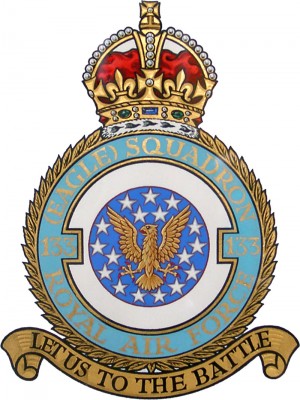
pdrm8846cYou’ve got your standard mercenaries: hired guns who fight for money.  Then you’ve got your fighting for a homeland types: mercenaries (usually) who used to have a cause to fight for, but now all they’ve got is each other, and maybe the hope that someday they’ll find a new homeland to replace the one they’ve lost.  Invert that, and you’ve got an eagle squadron: a ragtag bunch of volunteers who leave their homeland to fight for someone else’s cause, usually a sympathetic rebel faction or band of underdog freedom fighters.

It isn’t really fair to group these guys with mercenaries, since they aren’t fighting for money or fortune.  Far from it.  They believe so totally in the cause they’re fighting for that they’re willing to give up their lives for it, even though they could easily go home and live out their lives peaceably.  At least, that’s how it is on the idealist side of the sliding scale.  On the more cynical side, eagle squadron is really just a Legion of Lost Souls full of thugs and criminals who are hoping to clear their names.  Or, even further down the scale, perhaps they just love killing.

Even on the idealist side, there’s always the possibility that your terrorists are our freedom fighters.  After all, where did Al Qaeda come from?  The Mujahideen, volunteers from all over the Muslim world who joined with the Afghan freedom fighters against the Soviet invasion of the 80s.  When they won, it galvanized their Islamist cause and inspired them to take the fight to their homelands, many of which were ruled by dictators.  Since the United States props up many of these dictatorships, it was only a matter of time before they turned on us as well.

The name from this trope comes from three volunteer squadrons of US fighter pilots in World War II, who joined the RAF in the fight against the Nazis back when the United States was still neutral.  Since the Nazis have pretty much become the standard of all that is evil in the eyes of our modern society, the eagle squadrons are now heroes by default.  War is of course more complicated than that, though there is still room for heroism even in a world of moral ambiguity.

When the eagle squadron makes the ultimate sacrifice, you can count on them being remembered as heroes for all time.  That’s basically what happened with the Alamo: a bunch of frontier Americans sympathetic to the cause of Texan Independence went to join the fight against Santa Anna and made a bloody last stand when the war went out of their favor.  Of course, since history tends to be written by the victors, it’s arguable that this only happens if the survivors go on to win the war.  After all, plenty of expatriates volunteered to fight for the Nazis, but we don’t remember them in quite the same way.

Wow, this post turned out to be way more cynical than I’d intended.  The basic drive behind this trope is the yearning for an ideal, a cause to fight for.  We root for the eagle squadron because we want to believe that all it takes to defeat evil is for good men from across the world to take up arms against it.  If Eagle Squadron is led by the Incorruptible, then that might actually be the case, though it’s difficult to make that kind of a story anything other than black and white, one-dimensional, and utterly inauthentic.

I haven’t played with this trope too much yet, though I’ve been meaning to write a prequel book in the Gaia Nova series that tells the origin story for Danica and her band of Tajji mercenaries.  Her father was an admiral in the Tajji rebellion, and when the star system fell to the Imperials, they killed her entire family.  She escaped, though, and was taken in by an eagle squadron commander that fought alongside her father against the Imperial oppression.  After getting back on her feet, she leaves the Eagle Squadron to start her own military band, intent on getting revenge for the loss of her homeworld.  I’m not sure yet how the eagle squadron will play into that, but I see the commander as trying to dissuade her from this path.

In any case, it’s definitely a trope I want to play with.  I had a lot of fun with fighting for a homeland in Stars of Blood and Glory, so this would be a way to revisit some of the dynamics that made that story interesting.  You can definitely expect to see more of this from me in the future.

Why I don’t like George R.R. Martin

I was thinking today about George R.R. Martin’s A Game of Thrones and the fact that I’ve more or less given up on the series after reading the first book.  A lot of my friends are rabid-at-the-mouth crazy about it, both the books and the TV miniseries, but I’m just not all that into it.

Don’t get me wrong—I can see why other people like it so much.  The story is engaging, the political intrigue is deliciously complex, the world building is wonderful and immersive, and the fantasy tropes are played quite well.  I enjoyed a lot of things about the first book, and intended to read the rest of the series after finishing it.  After all, it’s one of the most important works of epic fantasy to come out in the last few decades, with people calling George R.R. Martin an American Tolkien.

But the truth is, I just wasn’t all that into it.  And the more I think about it now, the more I’ve realized that this isn’t the kind of series I would enjoy at all.

The strange thing is, I’m a HUGE fan of David Gemmell, who writes almost the exact same sort of thing.  Immersive fantasy worlds, dark and gritty characters, shades of gray, lots of fighting, lots of sex, lots of brutality, the realization that anyone can die off at any time … the list goes on and on.  And yet, there’s something about David Gemmell’s books that turns me rabid-at-the-mouth and has me squeeing like an otaku fangirl, whereas with George R.R. Martin, all I can manage is “meh.”

I think the reason for this is that Martin’s characters basically fall into one or both of two camps: victim or victimizer.  There isn’t any middle ground—at least, none that anyone can stand on for long without dying in some horrific and brutal way.  The story requires the characters to all become monsters, and anyone who isn’t willing to do that meets a horrible, tragic end.

There were only two characters in A Game of Thrones that I really cared about: Arya and Ned Stark.  Ned was the only character who really tried to stand for something, and Arya was just a spunky little girl who resisted all the stupid girly stuff in favor of more practical stuff like street smarts.

<spoilers ahoy>

The trouble was that Ned was a complete idiot, trusting in the honor of a guy who explicitly said “do not trust me” and making stupid decisions that ended up getting half of House Stark killed or captured.  It’s almost as if Martin purposefully set him up to be a straw man character—that he wanted this one character to represent all the goody-goodies of the world, and knocked him off in the most brutal way possible.  It’s like Martin killed him off to make a point, and had the story drive the character rather than the character drive his own story.

And Arya … I forget exactly what happened to her, but she basically became a victim in such a horrible, twisted way that I could tell she’d be scarred for the rest of the series.  If she didn’t die off herself, she’d probably become a dirty street rat—the slit-your-throat-for-a-copper kind, not the Disney version.  So yeah, I pretty much gave up on her.

Jon Snow was okay, but he was so far removed from everything else in the story that I just got bored with him.  Tyrion was funny, but he was also a pervert, and all the reasons to sympathize with him basically revolved around “I’m a dwarf, everyone mistreats me”—again, the victim vs. victimizer thing.  Lady Catelyn was pretty cool, but I always saw her as more of a supporting character, and while I found myself rooting for Daenerys at the end, it was only out of frustration with all of the other douchebags in Westeros—I just wanted her to come over the sea and claim the throne so that everyone else would die.

It was a pretty good book, I’ll admit—other than the fact that I didn’t really like any of the characters, everything else was quite enjoyable.  It certainly held my attention long enough to finish the thing.  But I didn’t really feel compelled to read the next one because I frankly didn’t care what happened to any of the characters.  You could give me a list of all of the ones who die off, and I would just shrug and say “oh well.”

In contrast, with every David Gemmell book I’ve read, I fall in love with the characters after reading just a paragraph or two in their viewpoint.  Drenai or Nadir, civilized or barbarian, I not only like the characters, I fall deeply in love with them.  I care about them right from the outset, even the ones with a dark past, like Skilgannon or Waylander.  In fact, Waylander is probably my favorite of them all.

The fact that I know that some of these guys are going to die only makes me more invested, because even though Gemmell kills of most of his characters in any given book, the main characters’ deaths almost always mean something.  Maybe they have some awful secret that they finally are able to give up, or maybe they’ve been running from a fate that they finally gather the courage to face.  Or maybe they just happen to be in a circumstance that requires them to give up their lives, and they rise to meet the occasion.  Not every death is cathartic, but Gemmell never kills off a character merely for the sake of killing off a character, whereas with Martin, I get the sense that that’s sometimes the only reason.

But the biggest difference between the two is that with Gemmell, the victim vs. victimizer paradigm just doesn’t exist.  Gemmell’s books are all about unlikely heroism—characters in situations that require them to be something more, or do something beyond looking out for just themselves.  Anyone can be a hero, because a hero is nothing more than someone who does something heroic.  No matter your past, no matter your fears, no matter your weaknesses, when the chips are down, we’re not all that different.

The counter argument I’ve heard is that all of this heroism stuff is superfluous, and Martin is trying to get beyond it, kind of like the 19th and 20th century philosophers who were trying to get beyond morality.  The thing is, if that’s the case, then Martin has to have the darkest and most depressing view of human nature of almost any fantasy writer alive.  If his point is that there’s nothing intrinsically heroic about anyone, that being a hero is just a matter of rising to a role and becoming a figure in one of the stories that people tell to make sense of the world—if his point is to show that every hero is really just a douchebag, there’s something about the world that he’s really missing.

In Gemmell’s books, there are douchebags who rise to the heroic roles required of them—but in the act of filling that role, something about them changes, and you see that they’re really not as evil as you thought they were.  Because in Gemmell’s view, people are essentially good and everyone is redeemable, even the rapists and murderers.  One of his darkest characters, Skilgannon the Damned, learns at the end of his story that the difference between salvation and damnation is allowing yourself to receive the light—that the only thing damning you is yourself.  Whether or not you agree with that, you have to admit that’s a pretty optimistic way of seeing the world.

In the end, that’s why I love David Gemmell’s books so much—not just because anyone can die, but because anyone can be redeemed too, sometimes at the very same time.  From what I’ve read of George R.R. Martin, it seems that he redeems no one—that to the extent I’m rooting for any one character, it’s only because I can’t wait for them to kill or brutalize all the other horrible monsters in the book.  And frankly, I find that pointless and tiresome.

There are moments in almost every David Gemmell book I’ve read that stand out to me with great clarity, so that sometimes while I’m standing in line at the grocery store, or walking down the street to the library, they pop into my head completely unbidden.  With George R.R. Martin, that has never happened to me, even for the books of his that I’ve enjoyed.

I dunno.  Everyone is different.  Maybe George R.R. Martin really strikes a chord in you, so that you feel for him like I do for David Gemmell.  Maybe you actually like some of the characters whom I’ve dismissed as douchebags.  Or maybe you don’t read fantasy for the same things I do.  This post isn’t to knock you for that, it’s just to point out and analyze why I don’t like George R.R. Martin’s stuff as much as most other fantasy fans seem to.  And if you do feel about this the same way that I do, then my point is to declare that that’s all right.  You can still be a fantasy geek and not like A Sword of Ice and Fire or anything else by George R.R. Martin, no matter how much it’s hyped.  That’s perfectly okay.

I’m writing an epic fantasy right now, and it’s not going to be anything like A Sword of Ice and Fire.  It’s probably not going to be much like any of David Gemmell’s books either, but Gemmell is certainly a bigger influence on me than Martin.  We’ll have to see how it turns out.

Trope Tuesday: Knight Templar

For this one, I’m going to pull the description straight from tvtropes itself, since the whole page is pretty good:

Sometimes, the Forces of Light and Goodness get too hardcore. In a deadly combination of Well-Intentioned Extremist, The Fundamentalist and, generally speaking, not so different, they get blinded by themselves and their ideals, and this extreme becomes tyrannical sociopathy.

Usually, the Knight Templar’s primary step (or objective) to his perceived “utopia” is to get rid of that pesky “free will” thing that is the cause of crime and evil. Many Knight Templar types are utterly merciless in dealing with those whom they consider evil, and are prone to consider all crimes to be equal. The lightest offenses are met with Draconian punishments such as full imprisonment, death, brainwashing, or eternal torture.

It’s important to note that despite being villains/villainous within the context of the story, Knights Templar believe fully that they are on the side of righteousness and draw strength from that, and that their opponents are not. Trying to reason with one isn’t much good either, because many Knight Templar types believe that if you’re not with them, you’re against them. Invoking actual goodness and decency will have no effect, save for making Knights Templar demonize your cause as the work of the Devil. After all, they are certain that their own cause is just and noble, and anyone who stands in the way is a deluded fool at best.

Basically, this is what happens when the villain not only believes that he is the hero of the story, but a heroic hero.  It’s not himself he’s fighting for, but his cause–and because the righteousness of his cause is unassailable, anything that stands in the way of achieving it must be destroyed.

The name of the trope comes from the Knights Templar, the medieval military order established during the Crusades to maintain European dominance in the Middle East.  They were an elite fighting force that became associated with many of the atrocities of the Crusades.  When Saladin conquered the Kingdom of Jerusalem, he was careful to avoid civilian casualties but took no prisoners among the Templars and Hospitaliers.

Of all the story tropes I’ve studied, this one reflects reality more accurately than most.  When people believe unquestioningly that they’re right, they tend to stop listening to anyone who disagrees with them.  They turn the space around them into an echo chamber, like a one-sided Facebook feed or a narrow message board community.  When their beliefs reach a certain degree of fervency, they start to become angry not only with those who disagree, but with those who fail to agree with or support them.  Once their cause compels them to action, it doesn’t take long for the ends to justify the means.  Give them a little power, and you’ve got yourself a real life Knight Templar.

It’s precisely because this trope so closely reflects reality that it’s one of the better ways to create motivations for the villain.  It’s not enough to want to take over the world, you’ve got to have some reason to take it over–and what better reason than a cause you firmly believe in?  Assuming, of course, that the cause is believable–it’s still quite easy to botch things in the execution.

This is precisely the sort of thing Gandalf was trying to avoid when he refused to take the ring:

Understand. I would use this ring out of a desire to do good. But through me, it would wield a power too great and terrible to imagine!

Galadriel and Faramir refused the ring for similar reasons.  Boromir succumbed to the temptation, but repented for it by giving his life to defend the hobbits against the attack of Saruman’s Uruk-Hai.

In Christopher Nolan’s Batman trilogy, this is also a recurring trope.  It’s the main motivation behind Razalgul in Batman Begins, and describes Harvey Dent’s face-heel turn as he transforms from Gotham’s white knight into Two Face.  Come to think of it, it seems that the superhero genre in general is teeming with this trope.

There aren’t very many true Knights Templar in my own books, but I’m writing a fantasy series that should feature a few of them.  In The Sword Keeper, a brotherhood of sentient swords has passed on the fighting skills of generations of warriors, enabling their bearers to unite the world into a peaceful empire.  Then, one by one, the swords go insane, driving their bearers insane with them.  It all starts when one of them goes Templar, and ends when all the swords are lost or destroyed … all, that is, except the one whom the hero of prophecy will take up to save the world.  And that hero happens to be a backwoods tavern wench who isn’t even strong enough to lift it, much less wield it in battle.

So yeah, even though this isn’t a trope that I’ve played with much, it’s one that really irks me in real life, so that probably means you’ll be seeing it soon my own fiction.  If you have any other thoughts or examples to share, please be sure to drop a comment.  I’d be very much interested to hear your thoughts on this one.

Image source: Templar Knight in Battle Dress