My next impossible dream

If I keep doing what I’m doing, writing and publishing my books, and building a steadily growing readership, eventually I’m going to come into some money. My readership will reach a critical mass, one of my books will hit the market in just the right way, and I’ll find myself riding the rocket to career heights that were previously unthinkable. Writing is very much a feast or famine thing, and the feast years will come if I keep at it long enough.

When the money comes, I will invest it in something more stable, like a rental property. Provo is a college town with a high demand for student housing, so it shouldn’t be too hard to find a couple properties and improve them myself. The DIY aspect is crucial, because everything that comes next will build on it.

Once I’ve got a couple rental properties that are producing a steady income stream, I’ll use that money to buy some cheap land. This land will be deep in the mountains a couple of hours southeast of here, far enough to be in the middle of nowhere, but close enough to grow in value as the cities along the Wasatch Front expand. The land will be pretty much useless for anything except future development, which will actually make it fairly valuable in fifty or so years, so long as things go well.

If things don’t go well—if the economy collapses and the country falls apart, our runaway national debt catches up to us, a fascist tyrant comes to power, a war devastates us, cyber-terrorists take down the electical grid, or a massive pandemic breaks out—if any of these things happen, this property will be an ideal place for a bug out location. That’s important. When crap hits the fan, I want to be like the father in Farnham’s Freehold, with a cool-headed plan. I want to be able to rebuild civilization with my family if I have to.

Of course, in the event that things don’t get that bad, it will still be really great to have a vacation home way up in the mountains. This home will also double as a cabin for writing retreats and weekend getaways. When I die, my kids can either keep it in the family or sell it for a tidy profit, after all the improvements I intend to make.

The first year, I plan to build a small hangar shed and dig a well. I’ll install a thousand gallon tank, which I’ll use for storing water until I can build a proper cystern (at which point I’ll probably convert the tank into a septic tank). I’ll plant several fruit and nut trees, since the best time to plant a tree is twenty years ago (but the second best time is today). I’ll build a modular watering system and plant at least ten trees each year thereafter.

In either the first or second year, I’ll buy some heavy earthmoving equipment and keep it in the shed. I’ll use that equipment to start improving the property, laying the foundation for things to come.

The first thing will be a tiny house, maybe 200 or 300 square feet, with solar power, a composting toilet, a small water tower hooked up to the well, and another tower for cellular internet. This house will have a loft for mom and dad, roll-out cots for the kids, a living/kitchen/everything room, and shelves built into the walls for food storage. In a lot of ways, it will basically be the dream house I wrote about here.

There will be several garden plots, though they will probably lay fallow unless crap hits the fan and we have to move in permanently. If I can afford it, though, it would be really cool to set up some self-regulating aquaponics systems, with computer monitoring that can alert me remotely if anything goes wrong. The property will be close enough for a weekend visit, so it won’t be hard to make a trip up if I have to. However, the idea is to design it in such a way that it can be mothballed until needed.

When the tiny house is complete, my dream will be mostly realized. However, I don’t plan to stop there. With the skills I’ve learned from improving the rental properties, and with help from some of my contractor plans, I’ll use the heavy equipment to build a proper house. This house will be off-grid just like the tiny house, with solar powers, well-water and rainwater collection, a root cellar, a greenhouse, a couple of freezers full of game meat, etc. etc. It will be the ideal mountain cabin, serving not only as a bug out location, but as a place for weekend getaways, writing retreats, long family vacations, and perhaps even a retirement home.

I plan to be as self-sufficient as possible on this property. Everything will be designed with self-reliance in mind. Rainwater collection, greywater reclamation systems, solar power, a wood-fired oven and furnace—it will be rustic and self-sufficient, satisfying all of my family’s needs.

I don’t know how bad it’s going to be when crap hits the fan. There are some scenarios (Yellowstone caldera) that kill everyone pretty much instantly. Others are so long and drawn out that the sheltered elites may deny that it’s even happening (sounds like the Great Recession, eh?). Regardless, it will be good to have a castle that I can retreat to, along with my family.

That’s the dream right now: to make it big enough to get the ball rolling on this project. It’s going to take decades to reach full maturity, but even after just a few years, it will start to bear fruit.

And who knows what will happen in future? If you’d told me fifteen years ago that I’d be where I am today, writing for a living and selling books all over the world, I’d get all bug-eyed just thinking about it. A lot can happen in ten to fifteen years.

Whatever else happens, I’ll still be writing.
General update and new short story goals

I may not have blogged much in the past couple of weeks, but I have been busy.

First of all, I’ve renewed work on The Sword Keeper, and this time I’m going to finish the damn thing. Too much time has passed already, and the story is too good to let it languish on my hard drive(s) any longer. As of now, the goal is to finish the 1.0 draft by the end of April. I haven’t put up a progress bar yet, but I will in the next few days.

Second, I’ve been busy writing some new short stories. On Monday, I finished “Lizzie-99XT,” a hard military SF piece about a starfighter pilot whose intelligence merges with the AI of her starfighter, giving her a very different perspective on space, time, and the heavens. And yesterday, I finished “Time and Space in Amish Country,” an Amish Sci-Fi Time Travel Romance that’s been sitting unfinished on my hard drive for a long, long time.

I’ve been thinking a lot ever since writing that post about making a living as a short story writer. While long-form fiction is still my bread and butter, I would like to work on my short form and make that an important part of what I do. Towards that end, I’ve set some new goals.

My biggest goal at this point is to write a new short story every week, on top of my other writing. If I can keep that up for a year, that’s 50 short stories that I didn’t have the year before. Even if most of them aren’t any good, the exercise will help to make me a better writer.

Writing short stories takes a slightly different skill set than writing novels and novellas, but there’s enough of an overlap that the two can feed into each other. In my experience, it’s a little bit like the difference between driving a car and riding a motorcycle. In some ways, they’re very different, but fundamentally they’re both driving. In a similar way, writing short stories and novels is still just storytelling.

My other goal is to read at least one short story every day. I didn’t realize this until recently, but almost every major SF magazine publishes all of their stories in full online (except for the two oldest ‘zines, Analog and Asimov’s—go figure). It takes only half an hour at most to read a short story, and because there are so many available online for free, I can read them on my phone from just about anywhere.

So that’s the plan. I’ll probably review a couple of short stories from time to time, as I find the really good ones. Should be something interesting to blog about, which is something else I need to be better about. Expect to see more posts in the near future.

On the way to 10k

A couple of weeks ago, I wrote about how I plan to achieve my writing goal of hitting 10k words of fiction in a single day. The steps I laid out to getting there were:

  1. Write first thing every day.
  2. Write in timed, focused sessions.
  3. Strive to achieve 2k words per hour.
  4. Strive to hit at least 6 writing sessions.
  5. Pre-write each day for the next day.

I’m happy to report that the writing has been coming along very well! Ever since I started timing my sessions and keeping track of how much and how fast I write, it’s been as if someone turned on a switch inside my brain. The words are flowing, the story is coming along very well, and I’m a lot happier and more productive than I was only a month ago.

The main thing that does it is, ironically, forcing myself to stop every half hour or so. When I wake up in the morning and thing of how much I want to write that day, it can be a little daunting. By writing in short bursts, it helps to break the big goal down into parts. When you think too much about all the writing you want to achieve, it’s very easy to get caught up in the procrastination trap. But when you think of it as just a half-hour session of 400-600 words, it seems a lot more doable. And it is!

So things are coming along very well with Gunslinger to the Stars. My goal is to finish the first draft by February 6th and send it out to my first readers shortly thereafter. If things keep going the way they have been, I may actually finish it sooner.

As for reaching 10k words, I’m still a ways off but headed in the right direction. For now, I’m laying the foundation for it: building good habits and hitting a consistent stride. Once I’ve got that laid out, I’ll start to stretch myself, pushing the limits further and further until I’m ready to make the final approach to the summit. No sense in pushing too hard and burning out along the way.

In other news, I’ve sent Captives in Obscurity (Sons of the Starfarers: Book V) off to my editor, and should be getting it back in early February. The cover art should be ready around the same time. If all goes well, the book should be up for pre-order by the end of February, with a release date of May 15th.

I’m not sure when Patriots in Retreat (Book VI) will come out, since I’m still writing it, but as of right now I’m tentatively planning for a release sometime in August. After I’ve finished with Gunslinger to the Stars, I’ll move on to Patriots and see if I can’t knock that out before the end of February. If so, I might actually push the release date up to July.

As for other WIPs I intend to tackle, The Sword Keeper and Edenfall are on the top of the list. The free month for Genesis Earth went a lot better than I had expected, leading me to believe that there’s enough potential to make finishing the trilogy worthwhile. Besides, Edenfall is already plotted out, so if I can keep up the 10k pace it should be a cinch to write. Same with The Sword Keeper.

That just about does it for this post. I intended to write another Self-Sufficient Writer post responding to some of the craziness going on in the world right now, but that will have to hold off until next week. I’ve also got another trope post planned for Monday, so that should be interesting.

In the meantime, I’ll leave you with this video about how many twinkies it would take to power the Death Star. Take care!

Resolution: 10k in 2016

Back in 2012, I set a resolution to write 10k words of fiction in a single day. I had read Rachel Aaron’s semi-famous blog post about it, and decided to give it a shot myself. The most I managed, however, was a handful of 5k writing days—impressive, but still far short.

In the years since, my writing pace has slowed down a lot more than I would like—not because of writing-related reasons, but because of things like procrastination, poor time management, and general disorganization. Well, it’s time for a change, and the new year seems like the best time to shake things up.

Rather than set a goal like “write every day” or “write X,XXX words per week,” I think this goal will do a lot more to put me in the right direction. It’s the difference between setting a goal to go to the moon vs. put something new in orbit every few months. When NASA set the moon as their primary goal, it not only provided them with the single-minded focus that they needed to get stuff done, but it led to a tremendous amount of scientific and engineering breakthroughs in the process. I’m hoping that something similar will happen with me.

So here’s the deal:

I can type at a maximum speed of about 100 WPM. Logistically, that means that the absolute minimum time needed to physically hit 10k words is 100 minutes, or 1:40 hours. That’s typing at top speed with no breaks, no mistakes, and no time to slow down and think.

I’ve measured my writing in the past, and found that my typical fiction writing speed is between 800 and 1,000 words per hour. To hit 10k words at that rate, I would have to work for an excruciating 10 to 12 hours a day—and that’s pure writing time. It doesn’t include things like breaks, water cooler chats, dinking around on social media, or any of the numerous other ways that regular employees waste time while on the clock.

Clearly, if I’m ever going to hit 10k words in a single day, I need to increase the speed at which I write. But how?

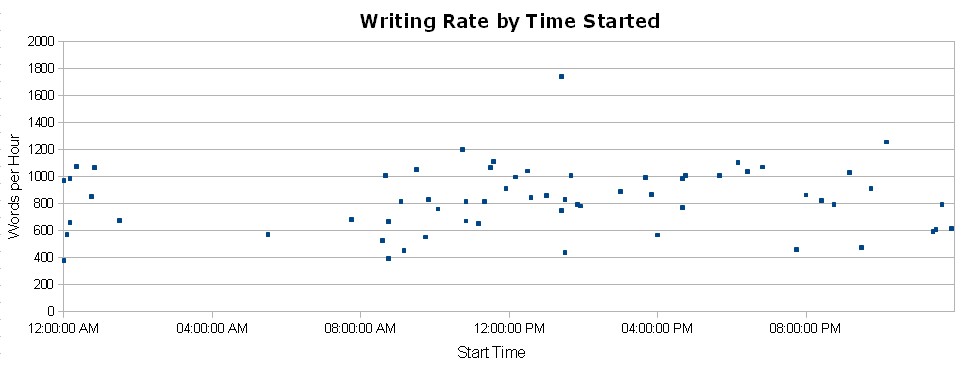
writingrate_by_starttimeWell, I know from my writing log experiment that the time of day doesn’t really affect my writing speed. That means I can start as early as I need to, and the earlier I can start the better. So that pretty much sets up the first step to achieving this 10k goal:

Step 1: Start off each day by writing as soon as possible.

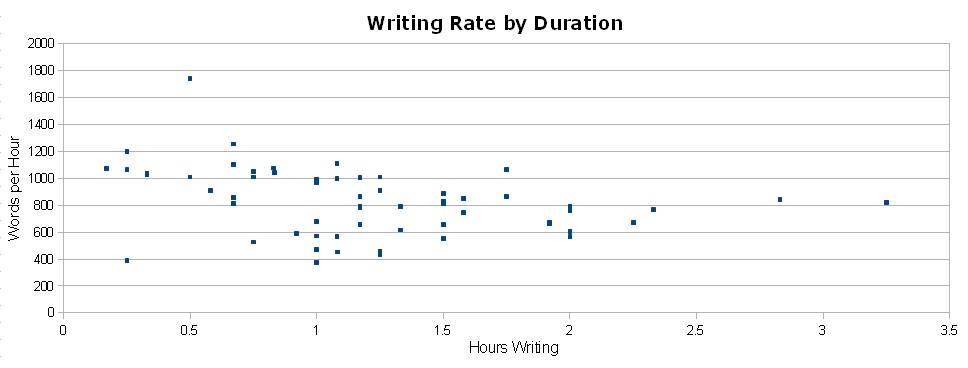
writingrate_by_durationFrom the writing log, it looks like I tend to write fastest in short sprints that are less than one hour. That makes sense: the longer the writing session, the easier it is to get distracted and fall into the procrastination trap.

I have a hunch that the best way to increase my writing speed is to write in short, focused bursts. I’ve never actually tried to limit my writing time before, but it seems that I could really achieve a lot more focus by doing so. It will take some experimentation to figure out the optimal session length, but judging from the data it will probably be less than one hour.

Step 2: Increase speed by writing in short, focused sessions.

Obviously 10 to 12 hours of pure writing time is unreasonable. Even without a day job or other time obligations, burn-out would be a major issue. A much more reasonable amount of time to plan for would be 4-6 hours of pure writing time per day.

At 6 hours, to reach 10k words I would have to write at about 1.6k words per hour, which is reasonable. At 4 hours, I would have to write 2.5k words per hour, which is a lot tougher but still well below the 6k WPH physical limit, especially if I’m writing in short, focused bursts. From this, it’s not difficult to derive the next couple of steps.

Step 3: Increase average writing speed to 2,000 words per hour.

Step 4: Structure each day to achieve 6+ writing sessions.

The real trick to achieving this, as Rachel Aaron and numerous others have pointed out, is to take care of all the non-writing things that make the writing possible. This involves having an outline of some sort, or at least some idea of what is going to go on the page.

I’m a pantser, so I don’t write detailed outlines. However, I’ve found that it can help a lot to sketch out the next few scenes before I write them, and to browse tvtropes like a menu. In addition, long walks really help me to flesh out the story in my head. Without these pre-writing activities, the blank page can be really oppressive.

In more specific terms, I think it’s reasonable to allot 1-2 hours each day to pre-writing activities. Anything more than that would encroach on my actual writing time. Fortunately, I can usually hit two birds with one stone: for example, using my time on tvtropes to find material for blog posts, or outline the next few scenes in my head while hiking or exercising. But it’s important to make time for these things.

Step 5: Spend time each day in pre-writing activities for the next day.

These five steps seem like a good place to start. I’ll post them on my wall and revisit them in a month or so to see how they’re working out.

Ten thousand words in a single day is going to be tough, but if I can hit it at least once this year, I think it will remove a major block in my head and allow the words to really flow. It’s not just about writing faster, it’s about proving to myself that this is something I can do, and to use that as motivation to accomplish much more.

Best of luck with your own resolutions in 2016!

State of the Vasicek 2015

I recently read a post over on Brandon Sanderson’s blog where he did an exhaustive recap on his writing and update on all of his WIPs, and called it State of the Sanderson. Since it’s the end of the year and I’m already looking back in order to make some new resolutions for 2016, it seems like a good opportunity to do something similar myself.

In 2015, I managed to publish five books, including two novels, a novelette, and two short stories:

In addition, I wrote a number of short stories that are currently on submission to the major markets, and will probably be published (by myself or in the magazines) sometime in 2016. These include:

  • Killing Mr. Wilson — Time Travel (950 words)
  • My Name Is For My Friends — Sword & Sorcery (2,000 words)
  • Utahraptors at Dawn — Cyberpunk (1,950 words)
  • Welcome to Condescension — Sci-fi Humor (750 words)
  • A Less Than Perfect Game — Sword & Sorcery (1,250 words)
  • Elusive Eden — LDS Science Fiction (2,200 words)
  • The Janus Anomaly — Space Opera (4,400 words)

All of these stories will get out eventually, though it may take a while. I’m putting them on submission to the short story magazines and anthologies that pay at least semi-professional rates, since none of them buy exclusive rights to the stories. Why rush to self-publish if I can get paid twice?

In a lot of ways, it was a pretty decent year. In other ways, I wish it had been more productive. I didn’t publish anything for the first six months, except for A Hill on Which to Die, which I later unpublished in order to take it out of Kindle Unlimited (the first and probably last time I will ever experiment with exclusivity). I made up for it later, but still.

Next year is going to be a lot more productive, I hope. I started a lot more projects this year than I finished, so in 2016 I plan to refocus on the writing and substantially increase my output.

As for writing projects, here is what I’m working on:

Major Projects

Sons of the Starfarers

There are five more books before this series is complete, and while I know more or less how the series is going to end, I’m still in the process of writing it. However, I’m making good enough progress to publish at least two more books in the series this year, possibly three or four.

Captives in Obscurity (Book V) is already written and ready to send off to the editor. Trouble is, cash is kind of tight right now and I probably won’t be able to send it off until after I’ve filed my taxes, which I hope to do early February (I always try to get a jump on tax season each year). For now, that means I’m looking for a launch in May.

Patriots in Retreat (Book VI) is my current WIP, and I hope to have the first draft finished before the end of January. A lot of stuff happens in this book—it’s kind of like the Empire Strikes Back episode, where crap hits the fan and things get real. Then again, Friends in Command (Book IV) was kind of like that too, and Captives in Obscurity has some really crazy developments… point is, I think you guys are going to like these books.

Haven’t outlined any of the other books in the series yet, but I’m a pantser so that’s normal. I do have a climactic ending that I’m working toward, which will tie in this series with all of my other books in the same universe. It’s going to be great to see it all come together, and I expect it will over the course of the next year!

STATUS: Book VI currently in progress.

Gunslinger to the Stars

I started this book in earnest a few months ago, then hit chapter 2 and realized I had a beginning and an end but no idea what to put in the middle. So I put the project on the back burner, letting the ideas percolate until I’m ready to pick it up again and go full throttle. With luck, that will happen very soon.

This is a really awesome project, and one of the ones I’m most excited about. I’ll post a few excerpts in the next few weeks to give you guys a taste, and I think you’re really going to like it!

STATUS: On the back burner, will resume again soon.

Queen of the Falconstar

A few of the readers who enjoyed my Star Wanderers books have mentioned that they wish Jeremiah, Noemi, and Mariya had ended up in a polygamous relationship. While I don’t think that would have worked for that particular story, in Queen of the Falconstar, it’s a major plot point. In addition, the book is an origin story for the Hameji, which should be a lot of fun for readers of my other books as well.

I’ve been working on this project off and on for the last year or so, and while I have a pretty good handle on the main storyline, I’m still a little iffy about how to proceed. It may have some promise as a hybrid between Space Opera and Sword and Planet (sword and starship? Is that even a thing?). The Princess of Mars books are on my reading list, so I’ll probably revisit this project after reading through some of those.

STATUS: On the back burner.

The Sword Keeper

I really need to finish this book. It’s already more than half written, and has some really fantastic potential. For the last three years, I’ve been working on it off and on, but 2016 will definitely be the year that I finish it (though it might still be a while before it’s published).

STATUS: On the back burner.

Secondary Projects

Starship Lachoneus

In spite of finishing the prologue and publishing it as “Worlds Without Number” under my J.M. Wight pen name, I haven’t yet made a serious attempt to write this book. The main reason is that it’s a passion project that I don’t expect to pay off very well or earn me much prestige. Still, when my career is at a point where I can afford more time for a passion project, I will probably pick it up.

STATUS: On the back burner.

The Genesis Earth Trilogy

Genesis Earth is a standalone book, but I realized soon after finishing it that I could easily turn it into a trilogy. Back in 2011, I even started writing the second book: Edenfall. But one thing led to another, and it got put on hold in favor of Star Wanderers.

The trilogy is still on hold, but if there is enough interest, I could certainly resume work on it. I made Genesis Earth free for the month of December, and it’s had a much stronger free run than I’d anticipated (especially with almost no advertising). Depending on the feedback I get from readers, I’ll finish this project sooner or later.

STATUS: On hold, may resume soon.

Mercenary Savior

This is a prequel to Bringing Stella Home that I’ve had kicking around in my head for the last two years. The interest in Heart of the Nebula has been surprisingly steady, even more than a month after publication. If either of those books starts to break out, then I will definitely pick up this project. Otherwise, I can’t justify making it a priority.

STATUS: On hold.

Empress of the Free Stars

Empress of the Free Stars is a sequel to Stars of Blood and Glory that I started back in 2013 but never got further than the prologue. Again, unless my Gaia Nova books start to break out, I can’t justify prioritizing this over my other WIPs.

STATUS: On hold.

Children of the Starry Sea

This one is a novelized sequel to Star Wanderers, with all of the major characters from that series. I know there’s some interest in this one, but for now I think my time would better be spent launching new series rather than returning to old ones. But in 2016, that may well change.

STATUS: On hold.

Lifewalker

This is a standalone I started back in 2013, and I even got several chapters into it before I put it on the back burner. Haven’t touched it since, so right now it’s really more on hold, but my Dad keeps bugging me to finish it (he read the first chapter and really liked it). So yeah. Someday.

I will say this, though: if the short story that’s derived from this book gets picked up by one of the magazines, I will definitely move it up in the writing queue.

STATUS: On hold.

A Brotherhood of Swords

This book is supposed to be a Sword & Sorcery prequel to The Sword Keeper, but since I already have plans for that book, this one is on hold. I did get a really good short story out of it, though.

STATUS: On hold.

That pretty much does it. This next year is going to be super, super busy, and hopefully productive as well. My goal for 2016 is to get back in the saddle, writing full-time again as soon as I can. There are other resolutions I plan to make as well, but those can wait until Thursday.

The Self-Sufficient Writer: Lifestyle Choices

Before I go on with this series, I feel I should take a step back and discuss the topic of lifestyle choices.

The Merriam-Webster dictionary defines lifestyle as “the typical way of life of an individual, group, or culture.” According to Wikipedia, this includes “interests, opinions, behaviors, and behavioral orientations,” and is constrained by things like demographic background, personal values, preferences, and outlooks.

In other words, your lifestyle is the way you choose to live your life within the constraints of your own circumstances. Some circumstances can be more constraining than others, but still, lifestyle is fundamentally a choice. Even in abject poverty, there are people who choose to live differently than others.

So what sort of constraints does a writing career place on your lifestyle? Well, let’s talk shop for a minute.

If you’re a writer, you’re going to need the tools of the trade. Today, that normally means a computer with a word processor, though you can also use a typewriter or pen and paper. If you have a publisher, you’re going to need some way to contact them, either by snail mail or email. If you are your own publisher, you’ll need an internet connection, a bank account, and a computer with basic formatting and image editing software (Calibre, Gimp, Blender, etc).

In other words, all you really need to be a professional writer is a computer, an internet connection, and a bank account. You may need more depending on what you’re writing and who you’re writing it for, but those are the basic tools.

So what does this mean in terms of lifestyle choices? It means that writers have a lot of options. For most careers, your income earning potential gets lower the farther out you live from a large city. Not so for writing. You could actually live in rural Mongolia with nothing but a backpack and a horse, and so long as you can come into Ulaanbataar every couple of months and find an internet cafe, you can self-publish just like anyone else.

In other words, there is no “writing lifestyle.” There are only writers who have adapted their writing careers to the kind of life they want to live.

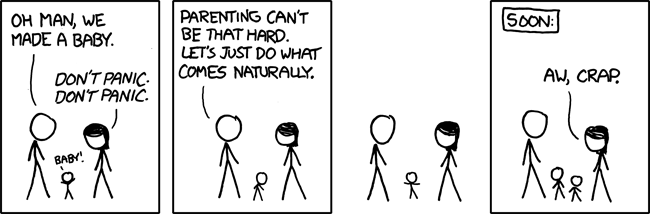
On one hand, every single one of my ancestors going back billions of years has managed to figure it out. On the other hand, that's the mother of all sampling biases.This makes it all the more important to consciously choose what sort of lifestyle you’re going to live, rather than letting circumstance choose it for you. If you don’t, it won’t be long before you find yourself in your underwear, eating nutella straight out of the jar, sitting in front of a grease-stained monitor clicking through an endless loop of Youtube videos. Just like no one is going to force you to meet your deadlines or write everyday, no one is going to force you to put your life in order.

Self-sufficiency is a lifestyle choice. It’s not a life hack, or a weird trick, or something you can learn in an afternoon. It takes work. It requires change. You will have to pay tuition by making mistakes along the way. And even though it can be fun, it can also be frustrating and painful.

When making a lifestyle change, it’s generally a good idea to take a step back first and figure out your goals and vision. By having a vision of what you want for your life, you’re much more likely to get there. This vision will be a reflection of your values and your deepest desires. Specific, measurable goals will help you to translate this vision into action, and provide the direction that you need to achieve your vision.

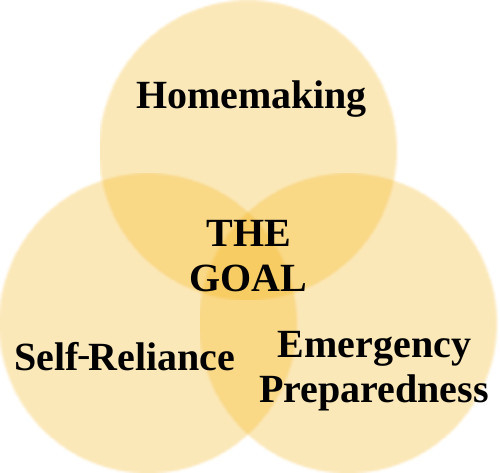
I have three main goals for the kind of lifestyle I hope to live. I haven’t achieved these goals yet, but I’m working toward them and hope to achieve them in the next three to five years.

Goal 1: Prepare my family well enough to survive any disaster and rebuild.

Emergency preparedness is a very important thing to me. It gives me both a sense of security and a sense of independence to know that if crap ever hits the fan, I won’t be a helpless victim.

Disasters come in a variety of flavors. There are natural disasters like hurricanes and earthquakes, man-made disasters like an economic collapse, and personal disasters like bankruptcy or the unexpected death of close family members. While it’s important to have contingency plans for each one, it’s also important to recognize that every plan falls apart upon contact with the enemy.

I plan to blog extensively about preparedness later on in this series. In the meantime, I’d recommend checking out Listening to Katrina for some very interesting perspectives on this subject. I learned a lot from reading that blog.

One of the most important things I learned is that prepping is about more than just surviving the disaster: it’s about surviving it well enough to rebuild. As much as I love reading post-apocalyptic stories, I don’t want to be stuck in a fallout shelter eating canned beans forever. We invented civilization for a reason, and if it ever falls, I want to be one of the guys who helps to rebuild it.

As a writer, I feel that emergency preparedness is even more important because the likelihood of facing a personal disaster is that much greater. If my writing career ever takes a wrong turn and falls out from under me, I want my family to be able to survive that long enough for me to successfully reinvent myself. According to Kristine Katherine Rusch, it’s common for working writers to face a major career crisis every ten to fifteen years or so, and I don’t think I’ll be an exception to that rule.

Goal 2: Develop a home economy that can provide for my family’s basic needs.

Most households in the United States produce consumer debt and not much else. If the US dollar became worthless and we all had to live off of what we had at home, within a couple of weeks, most of us would be screwed.

In a previous post, I talked a little bit about the concept of a home economy and how I experienced that concept while living overseas. It’s one of the things that I hope to implement once I have a family of my own. Instead of producing nothing but debt, I want my home economy to produce food, water, and even things like electricity and heating if it ever becomes necessary.

For me, one of the most important components of self-sufficiency is being able to produce most, if not all, of the food my family eats. Growing a garden, keeping chickens, baking bread, making cheese and yogurt—these are all things that I hope to do, and am working now to learn.

Two books that helped me get started on this path were The Forgotten Skills of Self-Sufficiency and More Forgotten Skills of Self-Sufficiency by Caleb Warnock. I’m also sharecropping this season with a local friend, building garden plots in his yard and growing cabbage, peas, radishes, broccoli, tomatoes, peppers, and zucchini. In a few weeks, we’ll build a chicken coop and get some bantams, which should make for an interesting blog post.

The goal here is not to become 100% self-sufficient in absolutely everything, but to produce enough that we can barter for the things we can’t produce on our own. For example, I don’t expect to ever own my own cow, but I do want to produce enough of a surplus of other things that I could barter with someone who does. Also, while I might not own the cow that produces the milk, I do want to have the capacity to turn that milk into things like cheese and yogurt.

This goal also encompasses being able to live off-grid. At some point, I’d like to switch to solar and become energy self-sufficient. Here in Utah, it’s legal to own and operate your own solar panels, so long as you don’t sell back so much energy to the grid that your electricity bill becomes negative. In other states, though, you have to lease your roof to a third party that technically owns the panels. I’m still learning up on all that, so I’ll probably invite a friend who knows more than me to come on with a guest post.

Goal 3: Make my home a refuge from the world where my family can feel close to God at all times.

This is the most important thing, and the one that will probably make everything else come together. Wherever I live, I want it to actually feel like a home, not just the place I live. I want it to be a safe zone for everyone in my family—a place apart from all of the bad things happening elsewhere. Most importantly, I want it to be a place of love where we can all feel close to God.

I grew up in a home that was very much like this, so for a large part of my life, it’s something that I’ve taken for granted. Having lived on my own for more than a decade and moved on average two or three times each year, I know that it’s something you’ve got to work towards.

Homemaking is often considered to be a womanly thing, but that’s exactly what this goal encompasses. At some point, I’d like to have a woman in my life who could help out with that aspect, but it’s something that I’m sure we’ll both be working on together. In the meantime, I have a sister whose brain I can rack whenever I have a question on the subject.

goalSo that is the kind of self-sufficient lifestyle that I personally want to live. As you can probably tell, family is one of the main themes running through everything. I’m single right now, but I do want to have a family of my own and that’s what I’m working towards.
And while my writing career isn’t explicitly mentioned in any of those goals, it’s definitely wrapped up in all of them. As a writer, my income earning potential is not dependent on how close I live to a major city. That means I can live a little farther out in the country, where we can have enough land to support a substantial home economy. Also, the flexibility of a writing career means that I can be home to spend time with my family, or still have an income if a major disaster happens and we have to bug out.

It’s quite a journey that I’ve set out on. I stumbled onto the path rather accidentally, but have since decided that this is what I want to do—that this is the kind of life I want to live. Your goals will probably look different, based on your own values and desires. If there’s anything about these goals that you find interest, though, I hope you’ll stay for the rest of this blog series where I share some of the more specific aspects of self-sufficiency that I’ve learned and how it all ties in to being a writer.

The Self-Sufficient Writer (Index)

Things I want to learn in 2015

I was going to follow up my retrospective 2014 post with another one, but instead I want to look ahead at the things I hope to learn in 2015. Of course, I’m sure that many of the things I’ll learn are things that I couldn’t have foreseen, but it helps to have some direction to start out with. Here goes!

How to consistently sell books outside of Amazon

If I learn nothing else this year, I want it to be this. In 2014, about 90% of my sales were through Amazon, and when they came out with their Kindle Unlimited subscription service, my income took a big hit (Amazon requires all books in KU to be exclusive, so none of my books qualified). If I can grow my non-Amazon sources of income to more than 50% of my total revenue, that would be fantastic.

So far this year, I’m off to a good start. I have a book featured in Apple’s ongoing First in a Series Free promotion, and that’s given my books on iBooks a huge boost. In fact, I wouldn’t be surprised if I sell more books on iBooks this month than I will on Amazon. But the key here is to sell consistently on the other platforms. Right now, I have no idea how to do that—but I definitely want to learn!

How to turn readers into lifelong fans

I’ve been publishing for the last four years now, and I’ve picked up a few fans along the way, but I get the sense that most of the people who read my books are just casual readers who find my books interesting but tend to move on after they’ve read them. Perhaps this is normal, but I would like to take things a step further and build a strong fanbase around my books.

Up until now, I’ve mostly focused on writing books, not in connecting with the people who actually read them. But I want to do a lot more of that next year—not only in order to sell more books, but also to connect with the fan community in general and make a more lasting contribution to the genre.

How to write (harder) better faster (stronger)

If I could write 10,000 words a day—good words, publishable words—that would absolutely fantastic. So far, the most I’ve managed in a single day is about 5,000. Right now, I’m lucky if I hit 2,000. It’s aggravating, because I feel like I’m so ridiculously slow, and the stuff that I do write usually needs some cleaning up before it’s publishable … basically, I just want to be a robot unicorn who farts rainbows and writes a bestselling novel every 72 hours.

Barring that, I’d just like to learn how to overcome some of the things that get in the way of writing.

How to write memorable characters that readers fall in love with

Of all the areas of craft that I’d like to work on, this is the one that probably needs improvement the most. I’ve had lots of readers tell me that a particular story resonated with them, but I’ve never had a reader tell me that they were crazy about a particular character. I think I’m reasonably good at writing characters that are complex and three-dimensional, but that’s a separate thing from writing a character that readers fall in love with.

I think I’ll stop here for now. There are other things that I’m sure will be good to learn, but these are the ones I especially want to learn in 2015.

Upcoming plans for 2015

I think my favorite time of the year is the week between Christmas and New Year’s. It’s a time for reflection, of looking at what you accomplished in the previous year and setting resolutions for the next one. In that spirit, here are some of the writing and publishing things I’d like to accomplish in 2015:

  • Publish at least six new books
  • Put out print editions of all of my books (except for short stories)
  • Get to the point where at least 50% of my book sales are outside of Amazon

I’ve got a lot of projects on the back burner, and I’m sure that I’ll start lots of new ones in the coming year, but these are the ones I really want to focus on in 2015:

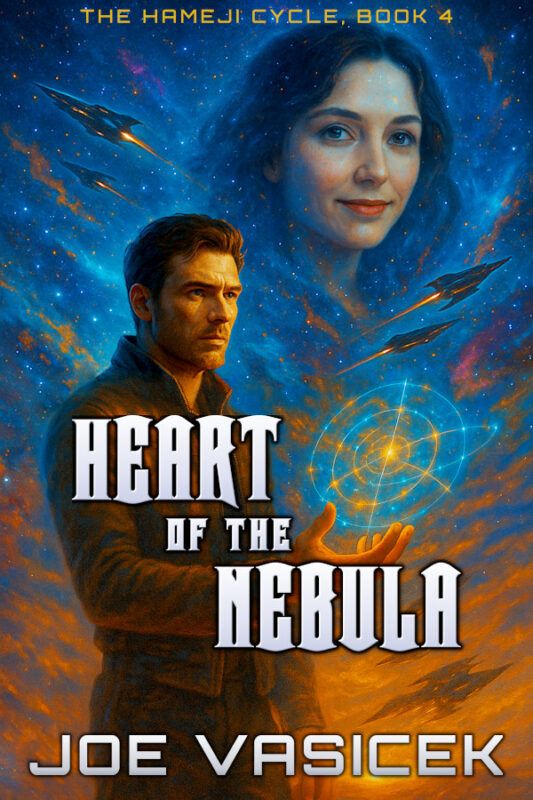
Heart of the Nebula — This is one that I definitely want to release this year. It’s the fourth novel in the Gaia Nova universe, a direct sequel to Bringing Stella Home, and I’m really, really excited about it. For the past month or so, I’ve been in “finish this damn book mode” (which is why I haven’t blogged much), but I’m set to finish it by the end of this week and send it out to my first readers. You can definitely expect to see this one soon.

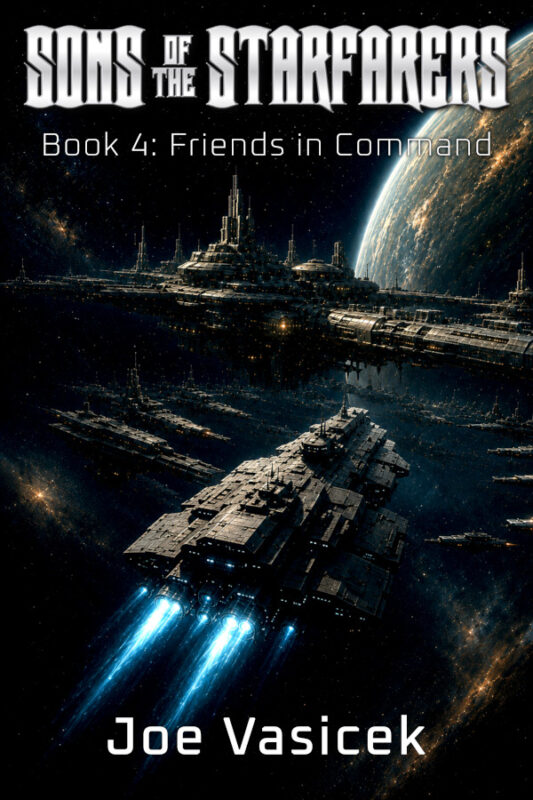
Sons of the Starfarers — The main reason I haven’t released Friends in Command (Book IV) yet is because my first readers told me it has some serious issues, which need to be fixed by adding another viewpoint character. It shouldn’t be too hard to do that, but before I do a major revision I always try to take a month or two off to work on other things so that I can come at the project with new eyes. I’ll pick up Friends in Command in January, and write the next one, Captives in Obscurity (Book V) immediately after.

Will I finish this series in 2015? I honestly don’t know. The books started as novellas, but each one has been a little longer than the last one, so by the end they’ll all probably end up as full novels. I could probably still do it if this was the only series I worked on all year, but I don’t want to limit myself in that way. Definitely, though, you can expect to see at least the next three books before the end of 2015.

The Sword Keeper — This unfinished fantasy novel has been sitting on my hard drive for about two years, and it’s time that I buckled down and put it out there. I tried to finish it last summer, and the main obstacle was that I had to do some serious world building. For a speculative fiction writer, that should be easy, right? Well … I’m kind of weird in that I tend to do most of my world building from the seat of my pants. But now that I’ve figured out what the holdup was, it shouldn’t be too hard to fix.

These are all books that I want to release before the end of 2015. I’m sure there will be others—perhaps even for story ideas that I haven’t come up with yet. It will be exciting to see how the year turns out!

STRANGERS IN FLIGHT coming out soon! (and other updates)

SSF-III (thumb)So, I have great news! Sons of the Starfarers, Book III: Strangers in Flight will be coming out in just a couple of days. Everything is squared away for the release–all I need to do is finish approving the edits, write a teaser for the next book, and put the ebook together!

This will probably be the last time that I publish a book without putting it on pre-order first. From now on, I want to have the next book out on pre-order before the last one is released, so that my readers can pre-order the next book while it’s still fresh in their minds. Also, this will give each book a firm release date, so that readers know when the next book is going to come out.

Until now, there’s been no advantage in holding a book until it’s ready to be published. Smashwords and the iBookstore started allowing pre-orders about a year ago, but since most of my sales are on Amazon at this point, I held off from taking advantage of that option. Perhaps that was a mistake.

In any case, now that Amazon allows pre-orders, I plan to retool my publishing process in order to make that a part of how I do things. However, since I’m still writing Book IV: Friends in Command, that means that it probably won’t be until Christmas when that book comes out. I don’t want to upload anything less than a finished product for pre-order, so I need to build up a queue in order to get things going.

However, the first Sons of the Starfarers omnibus should be available for pre-order in just a couple of weeks. All I really need is the cover, and my cover designer is already working on it. So if you haven’t bought the first book yet, or don’t mind waiting until October, the omnibus should be a few bucks cheaper than buying all three books individually.

In other news, I’m back in Utah, getting into the swing of things after a lengthy family vacation. I’ve got a bunch of short stories on submission now, which should be interesting if/when they get picked up by the magazines, but that’s more of a long-term thing (and besides, I still have a lot to learn when it comes to writing short stories–it’s much harder in some ways than writing novels!). There’s a couple of other side projects that I have simmering on the back burner, but right now, Sons of the Starfarers is definitely taking most of my focus.

That just about does it for now. I’ve got some chili cooking on the stove, so I’d better get back to that and then finish those edits. Later!

Towards a new measure of writing productivity

When I decided back in college that I wanted to write professionally, I made a point of tracking my daily word counts. I even made graphs with the data, showing both my daily count and a seven-day rolling total (some of you may remember how I used to post those graphs on this blog). Tracking my daily word count like that was very helpful when I first started out. It helped me to develop the discipline to write daily, and gave me the encouragement I needed to push ahead even when I didn’t feel like writing. It also gave me a lot of satisfaction to see how much I had written over time.

But then I started to notice some problems with that system. For one thing, it didn’t track revisions very well. I eventually decided to count progress on a revision the same as counting new words, but that meant that whenever I revised something, my word count shot up dramatically. Consequently, I focused more on revising old stuff than on writing new words, since that was the fastest way to boost my word count. Also, because I didn’t feel as much pressure to push forward, I sometimes spent months at a time on revisions that should have taken just a couple of weeks.

Then I went overseas, and everything about the old system threw me into a funk. Adjusting to a new culture can be difficult and exhausting, not to mention that it takes up a lot of mental headspace. These made writing extremely difficult, but because of the daily word count tracking, I didn’t feel like I could take a break. But when I tried to write, it didn’t come out well because of all the stress I was going through. Of course, the more I failed to meet my word count expectations, the worse I felt for it. The thing that had been such a great motivator at the start of my career now threatened to drag me down.

So I did what all good creative people do and abandoned the routine that wasn’t working. And it helped–it really did. Without all the useless pressures and misplaced incentives, I wrote a novella in little less than a month.

But then I started to feel lost. Without those word counts, I had no way of measuring my productivity. The pressures were gone, sure, but so was any sense of orientation. I had no idea whether I was writing as much as I could reasonably expect to, or whether I was falling behind. My daily rhythms would fall out of whack at the slightest interruption. The self-imposed deadlines that I thought would keep me in line instead gave me one more thing to procrastinate about–and I am a master of procrastination.

So I looked for other metrics that I could use to gauge my productivity. For a while, I tried using a timer, with the idea that measuring time spent writing would be better than measuring raw word count. That experiment ended in disaster. It added even more pressure than the word counts did, and drove me so hard to busywork that my creativity was almost stifled. For some people, the clock might be a good source of motivation, but for me it was absolutely horrible.

I looked around for something better than word count, and never really found it. Eventually, I learned how to do my work without a direct way to measure it. When writing is your calling, you can’t not write, so I learned how to listen to my own creative rhythms and nurture them. That worked pretty well when I was excited about a project, but when I ran into a block, everything took a hit. And even when everything was going well, I still felt kind of lost without a concrete way to measure my productivity.

Last month, I ran into a pretty big block with Strangers in Flight (Sons of the Starfarers: Book III). I had expected to finish that book by the end of May, but instead I ran into some problems and had to go back and rewrite a few chapters. That should have taken two or three days, but instead it took two or three weeks. And during those weeks, I figured that I needed to change things up a bit.

I decided to base my new system on word count, since that seems to be the most reliable and objective measure of writing productivity. Instead of measuring it quantitatively, though, I decided to set a daily minimum word count, and mark on a calendar the days where I reach it. For new words, that minimum is 2,000, and for revised words, it’s 4,000. That seems to work with my natural rhythms–just enough so that I have to push myself, but not so much that I put it off and procrastinate instead.

So far, the new system seems to be working. As soon as I implemented it, progress on Strangers in Flight took off, to the point where it should be finished in just a couple of days. This past week, my daily routine was thrown off a bit from getting Comrades in Hope ready for publication, but even while I was busy with formatting and uploading, I managed to get 2k words written (on the author’s note and a short story). That surprised me, and makes me wonder if maybe the next time I publish a book, I can still manage to keep my writing routine intact.

The really nice thing about having a concrete way to measure your daily productivity is that it helps you to separate your work life from your personal life. When you’re self-employed, the two tend to blend into each other a lot, so that you’re always wondering if you should be spending your time doing something work related. But by keeping a daily minimum word count, I can say to myself “all right, today’s work is done–time to go play” and not feel guilty about it.

The danger, of course, is that the daily minimum will become a ceiling instead of a floor, holding me back from being as productive as I could be instead of pushing me to do that last little bit. However, I think I have a way around that. On the calendar that I’m using to keep track of all this, I’ll mark down not only the days where I hit my minimum word count, but the days where I double (or even triple) it. That way, if I hit the 2k mark a little early, I’ll still have incentive to push farther. Besides, that 2k minimum isn’t set in stone. I plan to review it each month, and change it accordingly.

In any case, that’s my new system. If you guys want an update in a month or two on how it’s working, let me know–I’d be happy to share any insights I might have. But blog posts don’t count toward my daily word count, and since the rest of my afternoon is wide open, I’d better get cracking at it!